
Summer is officially underway, and the season is synonymous with family vacation, road trips, and carefree adventures. Though the ways we travel have evolved over time, the thrill of the journey endures.
Planes
Since the beginning of time, humans have been obsessed with flight. At first, their attempts were based on the way birds flew. Next the hot air and hydrogen balloons gave us a means of navigating the skies. But it was two bicycle manufacturers from Dayton, Ohio who would introduce the airplane. The Wright brothers revolutionized travel, war, and commerce with their invention.
The Call of the Clouds
 Edson Gallaudet formed the first aircraft engineering office in 1908. Two years later, Gallaudet Engineering Office had begun building planes under contract. The company was reorganized as the Gallaudet Aircraft Corporation in 1917 and offered its first product, the Curtis floatplane, the following year. This rare trade catalogue, The Call of the Clouds, presents the Gallaudet Chummy Flyabout Sport Model–which sold for the low price of $3,500. We’ve found no evidence that this plane was ever actually produced, making the catalogue a fascinating record of a machine that could have been.
Pilot’s Flight Operating Instructions
 Our collection includes three pilot’s’ flight operating instructions for Army planes, published in 1945. These flight manuals address both American and British planes used during the World War II era, such as the P-51 and B-29. They incorporate numerous charts and graphs for pilots, along with a few annotations from the original owner. For those interested in aviation or military history, this collection of documents are quite fascinating.
Aeroplanes
 A rare early aviation trade catalogue, Aeroplanes presents models manufactured by Aug. C. Gomes & Cie, with specifications, illustrations, and performance records for Henry Farman, Sommer, Bleriot, Tellier, Voisin, Antoinette, Maurice Farman, REP, and Hanriot models. A powerplant section follows, and the catalogue concludes with a variety of other aircraft accessories and components. The company even offers hangar facilities for some airplane models. We’ve found no listing for this particular catalogue in either OCLC or KVK.
Trains
As early as 1550, roads with wooden rails were built in Germany to make it easier for horse-drawn carriages to move. These wagonways, as they were called, were the precursor to the modern railroad. Two centuries later, iron had replaced wood. But the railroad truly became an efficient means of transportation with the introduction of the steam locomotive. Today, trains evoke the romance and nostalgia of leisurely travel.
Baldwin Locomotive Works Photographs
This photo album apparently belonged to SM Vauclain, locomotive designer and eventual president of Baldwin Locomotive. It’s possibly unique, with 18 pasted-in albumen prints of various Baldwin locomotives. Identified models include “Nacional Mexicano,” “Northern Pacific,” “Companhia Paulista,” “EFOM,” “Ramal Dumont,” “WNY & PRR,” and “Estrada de Ferro Central do Brazil.” The photo quality is very good to fine.

War of the Gauges
I n December, 1853, the city of Erie and its neighboring township Harborcreek waged an interesting battle against rail travel. They tore up tracks of the Erie and North-East Railroad, wherever the tracks intersected the public highway or city streets. While their actions were ostensibly promulgated by a debated over track width, it indicated an underlying struggle for economic advantage. For two months, rail travel between New York and the West was interrupted, but the inconveniences lasted a full two years. The War of the Gaugesis the first book publication documenting this exciting time in Erie history, complete with court testimony and individual statements.
The Union Pacific Railroad
 This Union Pacific Railroad brochure served as both a progress report and a promotional brochure. Because the railroad fell under the auspices of the federal government, it issued regular updates for Congress. Issued in 1868, this one includes information through December, 1867. It outlines the progress of the railroad west of Omaha, Nebraska, which resulted in an unbroken line from the Atlantic to the Pacific. The report’s frontis features a “Map of the Union Pacific Rail Road and its connections.”
Automobiles
Though Henry Ford is widely credited with inventing the automobile, the machine’s history is actually much more complex. Back in the 15th century, Leonardo da Vinci created designs and models for vehicles that foreshadow the modern-day automotive. Many suggest that Karl Benz actually invented the first true automobile, and it was his wife, Bertha, who undertook the first road trip to demonstrate the road-worthiness of her husband’s invention.
Locomobile
 Founded in 1899, the Locomobile Company manufactured small, affordable steam cars for only four years before offering only internal combustion-powered luxury cars. This brochure, one of the first the company issued, notes the demand for “a self-propelling vehicle that will combine the qualities of lightness, speed, economy, and ease of operation.” It describes the advantages and attributes of the vehicle and includes images of several models. The last, Model 6, is billed as “the Fastest Racing Machine in the World.” OCLC records only three institutional holdings of this item, making it uncommon in the trade.
A Joy Ride of 1911
 Generously illustrated with both photographs and postcards, “A Joy Ride of 1911” is a charming amateur account of one family’s Chalmers automobile trip through New Jersey up through New England. Their objective is to reach the White Mountains. Recorded by the anonymous wife/mother of the family, the vacation is engagingly chronicled.
1936 Report of Bonneville Salt Flats Speed Runs
JB Jenkins Robinson made a typewritten report to HC Bougey, Chief Chemist of General Motors, detailing the results of sponsored speed runs in 1936. Their aim: “To establish Worlds’ speed records with a view of utilizing results for advertising and sales promotion.” Over four testing periods, 19 speed records were set. Seven carbon copies of Robinson’s report exist; this one is bound in a manilla folder along with a facsimile log-sheet for Jenkins’ 24-hour run (Sept 21-23) and 16 captioned black-and-white snapshots.

As we look back in time at the history of transportation, we wonder what the future holds. What mode of transportation will be next to captivate the world with its promise of adventure?






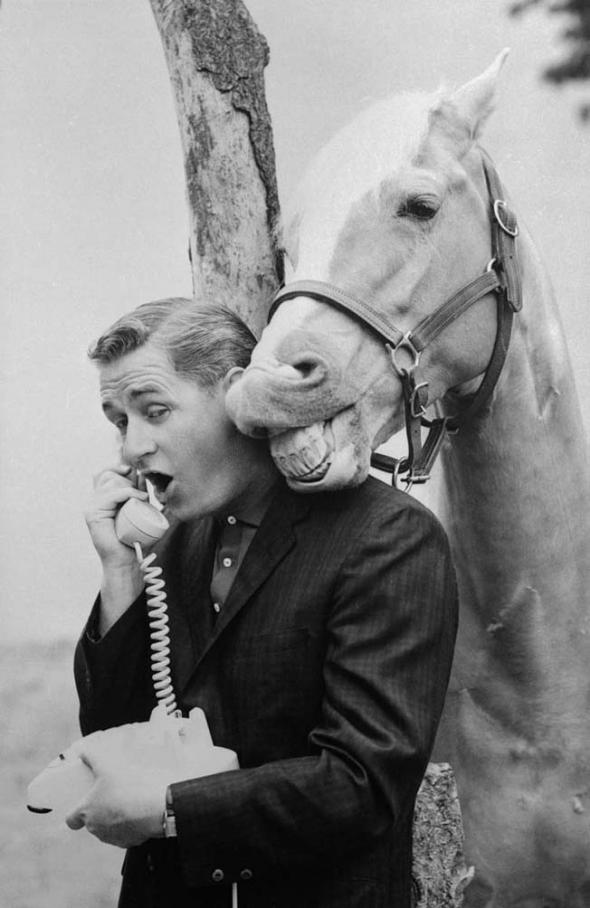 The year 1910 found Brooks in an entirely new field; he worked for Frank Du Noyer advertising agency in Utica. His tenure there proved short, however. In 1911, Brooks “retired.” It’s speculated that when his maiden aunts passed away, Brooks inherited a significant sum. He turned his attention to writing. Brooks was published for the first time in 1915, when his sonnet “Haunted” was printed in Century magazine. That same year, his short story “Harden’s Chance” appeared in Forum magazine. Two years later, Brooks joined the American Red Cross as a publicist. He continued writing short stories, however, and in 1934 began selling stories to Esquire. In total, Brooks published more than 100 short stories, 25 of which featured Ed the talking horse–the inspiration for the TV series “Mr. Ed.”
 The Freddy books were by far Brooks’ most popular, and they sold quite well. Set on the Bean Farm in upstate New York, they included both human and animal characters–and the humans never seemed too surprised that the animals could talk. Freddy isn’t a likely hero; he’s quite lazy and manages to accomplish anything only because it’s easier to keep going once he’s gotten started. The novels’ villains frequently represent some form of the Establishment, and the novels’ conflicts generally appeal to children’s sense of fairness and equality.


