Author Archives: tavistock_books

Workings of the Antiquarian Book Trade: A Talk in Tulsa

A week ago this evening saw me standing at a podium in front of 60 Friends of the University of Tulsa’s McFarlin library. I was there, for last June, Adrian Alexander, the McFarlin’s dean, and Marc Carlson, Head of McFarlin Special Collections, had invited me to speak to the group on the Workings of the Antiquarian Book Trade. I [obviously] accepted.

In case you were interested... taken from the Denver airport. Ouch!

In case you were interested… taken from the Denver airport. Ouch!

Getting there was not without some trepidation… I flew out on Wednesday, through Denver, which at the time I landed, was reporting blowing snow, with visibility less than a quarter mile. Guess they’re used to such weather, for we got in and out with any big problems, only a short departure delay.

The next day dawned clear in Tulsa, and after a nice lunch with the McFarlin folks, I visited Special Collections, and while there had the opportunity to see their wonderful exhibit on comics in popular culture, Comic Books, Up Up and Away, an overview of American Comic Books. Which, in turn, reminded me that my collection of such [including Daredevil #1] went missing when I returned from my first semester in college…. wonder what that Daredevil would bring today?

Caption here

From left to right: Adrian Alexander (Dean of the McFarlin Library) with his wife Nicole, Vic Zoschak of Tavistock Books in the middle, and Melinda & Mitch Adwon (President of the “Friends” group).

That personal musing aside, the evening was soon upon us, and it started with a convivial cocktail hour where all mingled, sipped wine & caught up with each other as people are wont to do at such events. A tasty lamb dinner followed [seriously, it was quite good, and when was the last time you could say that about a banquet dinner?]. Then it was my turn…

The Workings of the Antiquarian Book Trade… I started by quoting the old adage, “Want to make one million dollars by bookselling? Start with two.” For the next 45 minutes, I talked about various aspects of the trade, factors that give books commercial value (“Condition, condition, condition!”) and other mundane matters relevant to this quaint business of ours. My formal talk concluded with the traditional Q & A, and from the subsequent informal conversations, I infer the talk was well received.

caption here

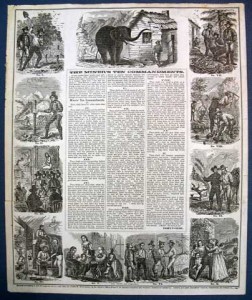
“Murder by the Indians of a Mother and Ten Children”: A broadside acquired by the McFarlin Library (from Tavistock Books) in 2013, detailing the brutal torture and murder of  William Bond’s family in Upper Louisiana, 1810. One of two copies known. 

I’ll conclude this blog piece by saying that the one point I took considerable pains to convey that evening was the importance of groups such as the McFarlin Friends, by applauding their efforts in support of the library. I did this by talking of two [for all practical purposes] unique items that now reside in their library due to the Friends’ largesse (one of which can be seen to the left).

As to the Workings of the Antiquarian Book Trade… I can confidently say there would not be such a profession without institutions such as the McFarlin Library, and folks such as the McFarlin Friends.

My thanks to both for their hospitality last week.

– Vic Zoschak Jr., Proprietor, Tavistock Books


Share

Possible Effects of Prohibition on 1920s American Literature and Wit (Dorothy Parker and her Vicious Circle, in Particular)

“I love to have a martini, two at the very most. Three and I’m under the table…

Four and I’m under the host!”

An "Everything Must Go!" Prohibition Sale, June 24th, 1920.

An “Everything Must Go!” Prohibition Sale, June 24th, 1920.

Though we don’t expect you all to know this, we recently acquired (in collaboration with The Book Shop, LLC) a large collection of Temperance-related material. We have songbooks, cookbooks, pamphlets, announcements, postcards – all devoted to the righteous Temperance movement! The sheer amount of information on the dangers of alcohol got us thinking about the Prohibition and the 1920s. How was the lifestyle of some of the literary geniuses of “the day” influenced by the government’s chains? More specifically, did it actually affect the writing of the “Algonquin Round Table” – a group of popular and (usually) similar-minded 1920s authors, playwrights, actresses & editors who met daily at New York’s Hotel Algonquin and traded barbs, insults and witticisms until the entirety of America was aware of their eccentric and deviant lifestyle. The unofficial daily luncheon of the Algonquin table began 1919. Just one year later the Prohibition Ban was instituted, and remained in effect until 1933, long after the “Vicious Circle” had dispersed. Is it merely coincidence that the rise of the group known for their wit and sharp tongues coincides with the onset of a strict government law? Or did interference of administration in the personal lives of the American people somehow help these writers achieve the greatness they were to be known for?

Art Samuels, Charles MacArthur, Harpo Marx, Dorothy Parker & Alexander Woollcott - some of the founding members of the Algonquin Round Table or the "Vicious Circle" as they came to be known.

Art Samuels, Charles MacArthur, Harpo Marx, Dorothy Parker & Alexander Woollcott – some of the founding members of the Algonquin Round Table or the “Vicious Circle” as they came to be known.

As to a small background on the Algonquin Round Table mentioned above, the members included several well-known names, not only Dorothy Parker but also Robert Benchley, Franklin Pierce Adams, Marc Connelly, Ruth Hale, Robert E. Sherwood, John Peter Toohey, Harold Ross (founder of The New Yorker magazine), Harpo Marx, Edna Ferber & Alexander Woollcott. Other members drifted in-and-out of the original circle throughout the years. The daily luncheon was not the only interaction of these people, however. They constantly wove through each other’s circles, working together, playing together, writing together… basically they never left each other’s sides (or stayed out of each other’s personal lives, it seems). What does the Prohibition have to do with the Vicious Circle, you may ask?

Dorothy Parker in 1943.

                  Dorothy Parker in 1943.

Kathleen Morgan Drowne has written a book entitled Spirits of Defiance: National Prohibition and Jazz Age Literature, 1920 – 1933. Not only is it an easy read, it is a fantastic fount of information about the references to the Prohibition and illegal behavior in Jazz Age Literature. She mentions members of the Algonquin Round Table, with a slight focus on Dorothy Parker. Parker, as one of the founders of the Vicious Circle, was becoming well-known for her quick wit, thinly veiled barbs and sardonic one liners (“You can lead a horticulture, but you can’t make her think” is one of the many attributed to Dottie Parker), as well as her often scathing performance reviews, such as the ones she wrote for Vanity Fair at the beginning of her career. It is well-known that members of the Vicious Circle frequented New York speakeasies (of which, throughout the 1920s numbered above 30,000… and no, that is not a typo). Drowne argues that Parker and her contemporaries used speakeasies “as places where their characters willingly make themselves vulnerable to the consequences of law enforcement… important spaces in which they can act outside the law, demonstrate their disdain for outdated behavioral codes, boost their social status in certain circles, and, of course, satisfy their desire to drink… demonstrat[ing] how characters who defy Prohibition by patronizing speakeasies come to see lawbreaking itself as casual – even insignificant- behavior” (Drowne, p. 99). Many of Dorothy Parker’s poems and short stories contain alcohol references (to champagne, “bathtub gin”, and martinis, specifically), and the Algonquin Round Table group were regulars at speakeasies throughout the Prohibition (Dorothy Parker’s signature drink apparently a Johnny Walker whiskey, neat… in case you were wondering). Parker’s slightly crude and roguish attitude towards sex and drinking made her immensely popular at the height of the Jazz Age. Using Parker as an example, you could argue that wit, a sense of humor, a caustic style of writing and an affinity for breaking the rules (the author even divorced in the late 20s) seemed the recipe for success within the Vicious Circle.

Did Prohibition suddenly become an obsolete subject in literature once the repeal was enacted? Of course not! The intense interference of the government in the personal lives of Americans and the fanatical response it triggered in the desperation for alcohol and breaking the rules cannot deny having endured. Times like the magnificent yet seedy house-parties held by Jay Gatsby in F. Scott Fitzgerald’s most famous work were later recalled by authors who wrote about the 30s as full of corruption and alcoholism. Drowne mentions John O’Hara’s 1934 work Appointment in Samarra, for example, and the explicit portrait the writer paints of seedy and unprincipled American following the Prohibition. Not seemingly written as a knock on the repeal, but more as a telling of what government interference in the personal lives of it’s citizens can accomplish in just a few years – a rise in degradation, desperateness, corruption and immoral behavior. Was this the attitude of the Round Table members? Who can tell! Parker went on to Hollywood following the demise of the Algonquin Vicious Circle and wrote screenplays (many of which see actors at bars with a martini, a choice not unnoticed when delving into the psyche of thoughts on alcohol), her love for drink continuing until her death in 1967.

A Famous Caricature of the Vicious Circle, from a 1962 piece by Al Hirschfeld.

       A Famous Caricature of the Vicious Circle, from a 1962 piece by Al Hirschfeld.

Prohibition was repealed in December of 1933, a few years after the disintegration of the Round Table. Though it caused a good few years of strife in the lives of many average American citizens, it was not to the detriment of all (gangster boss Al Capone reportedly made $60 million a year, untaxed, throughout the Prohibition years). Not only did Al Capone make a splash throughout these years, but perhaps the Prohibition was not the worst thing for these authors to have experienced, seeing as it sharpened their wit & style. Parker’s attitude and behavior (characteristics which one could argue were partially shaped during the Prohibition) were some of the things that made the author so interesting to the general public. In this vein, perhaps the Vicious Circle’s wish to break against the chains of the 1920s and be witty, crude and sometimes even inappropriate is, even if only partially, indebted to the law of Prohibition itself.


No, we are not sure what exactly this picture is about, for or against.

No, we are not sure what exactly this picture is about, for or against. It simply makes me giggle.

Fun Facts About Prohibition:

  • 18,000 people CURRENTLY live in “dry counties” throughout the United States, where Prohibition is virtually still in effect! (Who would’ve thought?!)
  • Some desperate and rather unfortunate people during Prohibition falsely believed that the undrinkable alcohol in antifreeze could be made safe and drinkable by filtering it through a loaf of bread. It couldn’t.
  • In Los Angeles, a jury that had heard a bootlegging case was itself put on trial after it drank the evidence. The jurors argued in their defense that they had simply been sampling the evidence to determine whether or not it contained alcohol, which they determined it did. However, because they consumed all the evidence, the defendant charged with bootlegging had to be acquitted.
  • Prohibition, though cutting down on the amount of liquor consumed in many areas of the United States, corresponded with a startling rise in crime in the US, as gangsters fought over bootlegging rights and butted-heads with the US government on many occasions, and regular civilians were put in jail for trying to have a good time. Not only were the gangsters and bootleggers in constant conflict, but the sudden desperate desire for illegal substances placed thousands of lives at stake due to the imperfect or contaminated bootlegged alcohol that was consumed. Thousands died, went blind or were paralyzed from imbibing contaminated bootlegged liquor throughout the United States.
  • After Prohibition was repealed (at 4:31pm on December 5th, 1933… not that we’ve been counting the minutes since or anything), President Franklin D. Roosevelt is said to have declared, “What America needs now is a drink.” (ProhibitionRepeal.com)


Share

Fair Acquisitions at Tavistock Books

One of the best aspects regarding the back-to-back California Antiquarian book fairs is the shop’s New Acquisitions! In other words, items that we find at the fair hit our online database in a matter of weeks afterwards. We picked up more than a few interesting items in Pasadena and Oakland, and though they are not yet catalogued, they are something to watch out for in the near future!  Here are a few items to intrigue you and keep you coming back for more (even though our wit and charm does that already, I’m sure):

menupic1. 1793 British Pub Menu, with Pricing Inked In. This menu looks to be from a Pub or Restaurant of some kind owned by John Hargrave, probably called the “George.” Located in Leek, Staffordshire, England, this small menu printed by F. Hilliard has the pricing for “Eating”, “Wine, and Negus”, “Liquors & Punch”, and “Ale, and Porter” written in. The customer spending a total of 18 shillings, 6 pence (an equivalent of almost an entire British pound when converted. In 1793 that was a lot. Someone clearly had an alcohol dependency.) The menu is in Very Good condition, with little wear and age-tone for its age. Want to know its price? I guess you’ll have to email me for it! Email Margueritte at msp@tavbooks.com


austria2. So You’re Going to Germany and Austria! And if I Were Going with You These are the Things I’d Invite You to Do. by Clara E. Laughlin. “Nowhere else in the bounds of a small and handy volume can the traveler find so accurate and comprehensive and at the same time so sprightly and readable a guide. Miss Laughlin regards the ideal tourist journey as one skillfully blended of movement, of fresh, quick impressions, and of leisurely stays where the ‘feeding’ is richest for your special hunger – whether that hunger be for rest or for inspiration, for shopping or for sports, for museums or for restaurants, for meditation or for dancing…” Laughlin writes in an easy-going manner, with the countries she visits in this handy travel guide separated by city. It includes inserted plates of b/w illustrations and photographic reproductions. A colorful dust jacket on this 1930 volume makes it a beautiful asset to any travel-guide collection!

blue book3. The San Francisco Blue Book… Season 1888-89. Published by the Bancroft Company in 1888. “Being the Fashionable Private Address Directory, and Ladies’ Visiting and Shopping Guide of San Francisco and Surroundings… Containing the Names, Addresses, Reception Days and Country Residences of the Elite of San Francisco…” (yeah, that’s not creepy at all). An extremely early holding of the well-known serial The San Francisco Blue Book, the earliest holding located on OCLC being the 1889-1890 directory.


carthing4. 1963 Chevrolets with the 1963 Chevrolet Finger-Tip Facts: Planned to Help you Sell the Greatest Choice of Chevrolets Ever. This dealer showroom sample catalogue and smaller “Finger-tip Facts” binders are more than just binders with pictures of cars. It includes sections of fabric samples and custom features for passenger cars such as the Corvette, Impala, Bel Air, Biscayne, Chevy II Novas and Corvair Monzas. Many new innovations were introduced to the year’s cars, such as self-adjusting brakes, optional tilt steering, factory AM/FM radios, and vinyl tops in white or black. Also, this was apparently the debut of the 1963 Split-Window Corvette (Vic told me to say that… I’m unsure as to what that means). Very rare to see these two first editions offered together.

Share

Be Still, My Bay-Area Book-Fair Beating Heart

My boss had just about had it with people severely dissing the Oakland Book Fair (or, the 48th California International Antiquarian Book Fair, to be exact) before it ever even happened. Sure, Oakland gets a bad rep in the news – even we know that. But do you know anything about what Oakland does well? Probably not, seeing as the news reports only a bunch of crazy, cruel and creepy happenings in the Bay area city. Let us tell you what Oakland does do well. Baseball, basketball and… Book Fairs.

Look at how beautiful the venue looks behind us. (Yours truly with Hélène Golay of Lorne Bair Rare Books, opening night of the fair. Hence the big smiles. By Sunday afternoon we probably looked more than a little manic).

Look at how beautiful the venue looks behind us. (Yours truly with Hélène Golay of Lorne Bair Rare Books, opening night of the fair. Hence the big smiles. By Sunday afternoon we probably looked more than a little manic).

Some of you may be wondering why the California ABAA fair was in Oakland this year rather than San Francisco, as was in years past. It’s a pretty easy story to tell – two years ago the Northern California Chapter book fair committee learned that the 8th & Brannan Concourse, where the fair had been held in the city, was no longer accepting contracts for exhibitors. Fort Mason was considered in the running for the setting, but its somewhat ill-suited location and extremely hard concrete flooring (which, in heels, all I can say is OUCH) as well as the fact that they had no appropriate dates available… well, let’s just say it easily lost out to the Oakland Convention Center – a venue more nicely appointed with better parking, easier public transportation, a nice Marriott hotel attached and, dare I say it, a non-leaking roof!

Many sellers went into the fair with more than a bit of trepidation – a perfectly understandable emotion at a new venue in a new city. For some booksellers, fairs can make or break your week, month, or even year in terms of revenue. For us at Tavistock Books, I would say that this was one of the better fairs we have exhibited at in quite a while – and, as a matter of fact, quite a good number of booksellers approached us at our booth (even way out in Siberia, where it was located) and in the course of discussing the fair stated that this was the best California fair at which they had ever exhibited. If you ask me, that is a solid mark of a success!

Though load-in did not begin until Thursday afternoon, our week began way before that, as we had a champagne cocktail reception at the store the Wednesday prior. We had quite a few new visitors to the shop – and it was great to get to know some other booksellers a bit better. Not to say that doing this did not cause a certain amount of stress and mess (we currently have 5 unopened champagne bottles sitting in a water bath of ice melted from a week ago behind our main display case); and as we wanted the shop to look at least somewhat nice and not like someone had broken in and raided our shelves, we did not begin to pack for the fair until the Thursday morning of load-in! We, of course, forgot some basic items, such as bookslips, the cashbox (somewhat important since customers seem to get weird and cagey when you tell them that its too bad you can’t give them change), and a calculator (extremely important for those of us who should have failed basic arithmetic long ago). Luckily, the shop was only 1.7 miles from the venue, and therefore we had many opportunities to go back and forth for what we needed.

Booth 100: Before, During, Almost There & After! (Photobomb by Joachim Koch of Books Tell You Why).

Booth 100: Before, During, Almost There & After! (Photobomb by Joachim Koch of Books Tell You Why, Inc.)

Thursday night was the traditional exhibitor reception, which we anti-social & sickly beings at Tavistock Books skipped in favor of a good night’s sleep and a couple Midsomer Murders episodes (oh wait, that was just one of us… and, hint-hint, it wasn’t Vic) – but we were told by word, not to mention the yawns and drooping eyelids seen Friday morning, that it was a great night all around! The fair opened 3pm Friday afternoon, closing at 8. Saturday & Sunday the fair lasted most of the day, and luckily this past weekend buckets of rain poured on the Bay area – driving people away from their paddleboards and tennis games into a Book Fair where it seems they had little choice but to spend money!

Vic and Oakland Mayor Libby Schaaf oooh and ahhh over a map of Downtown Oakland in the late 1800s.

Vic and Oakland Mayor Libby Schaaf oooh and ahhh over a map of Downtown Oakland in the late 1800s.

In regards to the Book Fair in the press, opening evening of the fair Oakland Mayor Libby Schaaf was among the crowd browsing books and being amazed by the treasures to be found around the fair. She was particularly taken with some of the items in the Tavistock Books booth, as a matter of fact, as we had two maps of Oakland and Alameda County from the 1880s. (Would link them here, but they did in fact sell at the Oakland Fair. And no, they did not go to Libby Schaaf!) It was not only great press for the book fair but also felt like a warm welcome to the fair’s change of locale. Click here to read about the mayor’s visit (and see another picture of her and Vic, which he is also really proud of).

Vic Zoschak of Tavistock Books, in Booth 100. (Which is really stupendously set up and decorated, which you are all welcome to comment on...)

Vic Zoschak of Tavistock Books, in Booth 100. (Which is really stupendously set up and decorated, a fact that you are all welcome to comment on…)

Now, my boss insists that you indulge me with a few words about administration at the fair. White Rain Productions puts on a spectacular shindig. (I am amazed that Microsoft Word did not yell at me for “shindig.” I have never, ever written it in a sentence). Load-in on Thursday was easy, and despite the fact that our trophy cases needed to be moved and one entire case had no glass shelves in it (a curious phenomenon, if you ask me) we had at least five people come to help us and the problem was solved in relatively little time at all. The concessions at the fair were exceptional (it is not often that you see a delicious Veggie-filled Soba Noodle salad on the menu right next to: “Hot Dog. $5”), with an Exhibitor Hospitality room (there was popcorn… be jealous) and an espresso stand. Advertising for the fair was spectacular – the colorful poster advert to be seen all over the hotel, with even BART announcing the fair on their signs throughout the Bay Area.

Presentations by Vic Zoschak (we weren't lying).

Presentations by Vic Zoschak (we weren’t lying).

Exhibitors numbered around 190 to 200 (remember, I’m arithmetic challenged, so don’t quote me on the exact number), hailing from all over the world – California to the Czech Republic, Australia to Jolly Old England. Most traveling exhibitors stayed in the Marriot itself, an easy public transport ride (the 12th Street Bart Station just a half block’s walk from the hotel) from there to the city, to Berkeley, or to the airport. Also, a good number of cute restaurants and cafes surround the immediate area within a couple blocks (try Desco – great food, and if you get there, ask them to turn the music down just a notch for me). On Sunday Vic gave two Seminars, one on Book Collecting and the other on valuing your books (Book Collecting 101 and What’s This Book Worth?, respectively), and I had several fair-goers return to our booth later that afternoon especially in order to tell me he didn’t embarrass me, which leads me to believe that my last words to him before he left for his grand entrance (V: “Alright Ms. P, I’m off!” M: “Brilliant. Don’t embarrass me.”) were probably shared with the general public.

However… as I bring this blog to a close, if you ask me my absolute favorite part of the Oakland Book Fair? It’s that every night I got to go home to my own house, sleep in my own bed, and decide what I was going to wear 20 minutes before leaving home the next morning. There is something to be said for having your home base with you!

See you in 2017, for the 50th Anniversary of the ABAA’s California International Antiquarian Book Fair!

Share

Playing Pasadena

The Tavistock Books booth with Vic Zoschak!

The Tavistock Books booth with Vic Zoschak!

What words come to mind when you think of Pasadena? Is it “Roses”? Or how about “Jackie Robinson”? If you are a normal member of the human race, these words apply. If you are a bookseller, however, “Bustamante” should be the first word popping into your head. Bustamante Enterprises, Inc. puts on a fabulous Antiquarian Book, Print, Photo and Paper Fair at least once a year in Pasadena (if the ABAA fair is in the Bay area, they do the whole thing twice!). The motto on the bottom of the fair booklet says it all, “The Shows Worth Waiting For”. The Bustamante Pasadena Book Fair, held this past weekend at the Pasadena Convention Center, was definitely worth the wait and worth the trip. The administration was great, as always. Everything was set up to the specifications promised to the booksellers, help was readily accessible, coffee & pastries were easily available. The well-oiled machine of Bustamante Enterprises allows for a virtually pain-free load-in and move-out, the latter important, for booksellers want to able to get on their way quickly (whether it be to home or to a dinner with wine flowing).

Vic Zoschak of Tavistock Books with two up-n-comers in the trade, Laurelle Swan of Swan's Fine Books and Dessa Kuritz of Churchill Book Collector!

Vic Zoschak of Tavistock Books with two up-n-comers in the trade, Laurelle Swan of Swan’s Fine Books and Dessa Kuritz of Churchill Book Collector!

Set-up and administration isn’t the whole story however, as the Pasadena Book, Print, Photo and Paper fair is held in a very nice venue, easily accessible and attended by a good mix of book collectors and institutional customers. The usual list of suspects was in attendance, Ken Sanders Rare Books, Lizzy Young Bookseller, Brad and Jen Johnson of The Book Shop, LLC, Greg Krisilas of Coconut Rose Books & Autographs, Zhenya Dzhavgova of ZH Books and Kim Herrick of The Book Lair were all among the guilty parties. Tavistock Books shared a booth with the lovely and calm Laurelle Swan of Swan’s Fine Books, a relatively new book store in Walnut Creek, CA. In all, it was a weekend of good fun and easy comaraderie, with a steady flow of customers (well, with the exception of Sunday afternoon…when all the book-lovers took off to go watch the Superbowl!) with stellar management & supervision!

On to the next! In case you haven’t heard, the Oakland ABAA Fair opens this Friday, February 6th and runs until Sunday the 8th. Come and see us at the Oakland Convention Center, Booth 100.

See you there!

Share

Agatha Christie: Unrivaled, Record-Breaking Crime Novelist… And One of My Favorite Authors (Hence this Blog)

Murder on the Orient Express. And Then There Were None. Murder at the Vicarage. The Body in the Library. A Murder is AnnouncedBy the Pricking of My Thumbs. The Murder of Roger Ackroyd4.50 From Paddington. What do all of these titles have in common? Besides great plots, inventive narratives and extremely competent character development? They were all written by the “Queen of Crime”, Dame Agatha Christie. Christie is said to be the best-selling novelist of all time (according to the Guinness Book of World Records) with over 2 billion copies of her novels sold and having been translated into 103 different languages. Reputedly, Christie is the third most popular author of all time, with regard to sales figures, finishing behind just William Shakespeare and the Bible. Furthermore, Christie’s stage-play “The Mousetrap” is the longest running (straight-play) stage production of all time, having opened in London in November 1952 and still being performed, with over 25,000 performances to date. How did this lady crime-novelist get to be so popular? How did her (seemingly average) life influence her writing? And perhaps the most important question of all… Who Killed Roger Ackroyd?!? (Just kidding, no spoiler alerts necessary). Stay tuned.

The "Queen of Crime" herself!

              The “Queen of Crime” herself!

Childhood

Agatha Christie as a child, undated.

      Agatha Christie as a child, undated.

“One of the luckiest things that can happen to you in life is to have a happy childhood. I had a very happy childhood.” Christie was born Agatha Mary Clarissa Miller in 1890 in Torquay, Devon. She was the third child (of three), but spent much of her childhood alone with her parents, as her two siblings were significantly older than she. The author taught herself how to read by the age of 5, though her mother thought to keep Agatha home and untutored until age 8. Christie’s imagination flourished as a child and she spent many years inventing imaginary friends, writing poetry, and reading everything from exciting American thrillers to Little Women.

Christie’s life dramatically changed at the age of 11, with the death of her father and the looming financial hardships endured by her and her mother. Nevertheless, Christie was then educated in Paris for five years, and on returning to England traveled around with her mother. A most impressionable trip for the author occurred in 1910 to Cairo (a popular and affordable destination in the early 20th century for Britons) where Christie unsuccessfully entertained the idea of finding a husband. However, on the return to England the young author attended a party during which she did find a handsome and charming husband, and later in life used her experiences in Cairo as inspiration for some of her works.


First Marriage and Christie’s “Disappearance”

Agatha Miller married Archibald Christie on Christmas Eve, 1914. The beginning of the marriage was slightly erratic, as Christie had joined the Air Service at the start of World War I and was in and out of the country until 1918. Agatha was also very involved with the war effort, as a member of the Voluntary Aid Detachment tending to wounded soldiers in a hospital in Torquay. A very important turning point in the author’s life was when she qualified as an Apothecaries’ Assistant in 1917, as her stretch at the dispensary helping shape her interest in medicine, which assisted her decades later when she began developing an intense knowledge of poisons. In 1920 her first book was published, The Mysterious Affair at Styles, which introduced to her public the now famous detective, Hercule Poirot. Christie was contracted to produce five more books, and thus began her prolific writing career.

Her marriage with Archie Christie was not a happy one, as Christie herself stated that her relationship with her husband began on the “excitement of the stranger” which wore off soon enough. In 1926 Archie announced his desire for a divorce, as he had been having an affair with a family friend, Nancy Neele, and had fallen in love with her. The author’s life was already in a tumultuous emotional state, with the recent death of her mother and a young baby in her care. Though the circumstances behind the Christies’ fight and subsequent events are iffy (at best), what is known is that after her car was found abandoned near Guildford in Surrey over a thousand police officers and 15,000 volunteers scoured the countryside for 10 days looking for the lost author. After a tip was called in, the police discovered Christie at a hotel in Harrogate, Yorkshire, registered as a Mrs. Theresa Neele (the family name of her husband’s mistress not overlooked) from Cape Town, South Africa. Though many speculated that Christie’s disappearance was part of a publicity stunt to embarrass her husband, the only official word of the situation was that the stress of the author’s circumstances sent her into an emotionally unbalanced state of temporary amnesia, forgetting her identity and associations. Though we may never know the truth, as Christie remained extremely tight-lipped about the incident for the rest of her life, the author does seem to have used her situation and failed marriage as inspiration for her March 1934 novel (not-crime fiction) Unfinished Portrait, where the protagonist (a suicidal woman) possesses qualities eerily similar to the author herself.


Popularity and Later Life

Christie and Max Malloway. "An archaeologist is the best husband a woman can have. The older she gets, the more interested he is in her."

Christie and Max Malloway. “An archaeologist is the best husband a woman can have. The older she gets, the more interested he is in her.”    -Agatha Christie

Christie married a slightly younger archeologist named Max Mallowan in 1930, and enjoyed a happy and exciting married life with him until her death in 1976 (during which she was promoted to Dame Agatha Christie and her husband knighted for his archeological works – a couple honored in their own rights). She accompanied her husband on many of his archeological travels and excavations, and even assisted at the dig sites in the afternoons after writing a few chapters of her novels in the morning. It is on these travels and inspired by these travels that Christie wrote some of her most exciting literature.

The onset of World War II saw important influences from Christie’s life once again transposed into her writing. For instance, the author once more joined the war effort and put her apothecary/dispensary skills to good use. She began work at a pharmacy at University College Hospital in London, and her consequent knowledge of poisons would be used in some of her post-war novels. In particular, her “offing” several characters in The Pale Horse by the use of thallium poisoning supposedly helped real baffled doctors figure out what was causing their patients to suffer.

Christie continued to write until quite a late age, passing away from natural causes on January 12th, 1976 at the age of 85. She lived long enough to attend the premiere of the 1974 film version of Murder on the Orient Express (her last official public outing), where she deemed the adaptation good overall, despite the fact that Poirot’s mustache was not up to her luxurious expectations!

1st edition 4.50 From Paddington? Miss Marple doing what she does best. Yes, please!

1st edition 4.50 From Paddington? Miss Marple doing what she does best. Yes, please! Read more here>

Unlike many other authors, Christie never suffered a period of waning popularity. Her 66 novels and 14 short story collections have been continuously in print. The shy and private Christie is still highly regarded as one of the most important novelists in the 20th century, possibly the most important in the genre of crime-fiction. In 2013 her novel The Murder of Roger Ackroyd (published in 1926) was voted the Best Crime Novel Ever by over 600 fellow authors of the Crime Writers’ Association. Christie is remembered today mainly for her crime fiction, but let’s not forget that she was a versatile author and also penned six romance novels (under the pseudonym Mary Westmacott, until 1946 when her cover was blown by an American critic). With her stage-play “The Mousetrap” still entertaining hundreds of audiences a year, it is unlikely that Dame Agatha Christie will be forgotten any time soon!


“It is clear that the books owned the shop rather than the other way about. Everywhere they had run wild and taken possession of their habitat, breeding and multiplying, and clearly lacking any strong hand to keep them down.” (Agatha Christie, The Clocks)

AChristiepic1

Share

New News from Tavistock Books!

First off, we’d like to wish each and every one of you a very Happy New Year from Tavistock Books! Whether you are a customer, colleague, pure bibliophile, or my mother and father, we have appreciated your attention and custom this past year and wish you all the best of luck in 2015! There are a lot of things happening around here in the near future, and we thought we’d send out this update from TB to keep you in the loop.

Most importantly! Upcoming Antiquarian Book Fairs:

Later this January and early February features the annual California book fairs – the 48th California International Antiquarian Book Fair to be held in Oakland, CA (right near us! Check it out here: http://sfbookfair.com/) from February 6th to the 8th, and the Pasadena Book, Print, Photo & Paper Fair the previous weekend (at the Pasadena Convention Center, January 31st & February 1st). The fairs are a great chance to meet with like-minded book-loving folk from all over the United States, and both fairs will be host to a handful of international booksellers as well. Tickets are available for purchase online as well as at the fairs. Come on out and support your local booksellers! OR ELSE.  

A Recent Acquisition:

Why yes, you can purchase me! Please, sir, I need a new home.

Why yes, you can purchase me! Please, sir, please, I need a new home.

Beaumont, Francis [1585? – 1616]. Fletcher, John [1579 – 1625]. Massinger, Philip [1583 – 1640] – Bush attributed to.  BEGGARS BUSH.  A Comedy.  [bound with] The MAID’S TRAGEDY.  London:  Printed for J. T. And Sold by J. Brown at the Black Swan without Temple-Bar. 1717.  56; 64 pp.   Typographical ornaments to t.p.  4to: A – G^4; A – H^4.  8-1/2″ x 6-1/8″.   Early full leather boards, with modern respiniing to style.  Renewed eps.  Raised bands.  Red leather title label in second compartment; author label in 4th compartment.  Date gilt stamped at spine base. Wear & staining to boards, with front paste-down showing faint evidence of prior damping.  Paper aged, with foxing & staining.  Running title occasionally closely trimmed.  An About Very Good – Very Good copy.

Bush: 1st edition thus, the unaltered version (NCBEL I, 1712; Tannenbaum 7).  Maid: 1st edition thus (NCBEL I, 1711; Tannenbaum 293).   Regarding Bush, authorship attributed to Fletcher & Philip Massinger by John H. Dorenkamp in his 1967 edition of the play. The play is one of several works of English Renaissance drama that present a lighthearted, romanticized, Robin Hood-like view of the world of beggars, thieves, and gypsies; in this respect it can be classed with plays of its own era like The Spanish Gypsy, Massinger’s The GuardianSuckling’s The Goblins, and Brome’s A Jovial Crew… Yet the play also contains serious aspects that have caused it to be classified as a tragicomedy by some commentators; ‘Through mixed modes Beggars Bush exhibits serious sociopolitical concerns to earn a classification that at first seems incongruous — a political tragicomedy'” (Clark, The Moral Art of Phillip Massinger, p. 116). Click on the picture to see more!

Lists & Blogs on the Horizon:

Dame Agatha Christie

              Dame Agatha Christie

And folks, despite an upcoming busy schedule for us here at Tavistock Books, we still want to take a little time to give you a short overview of what to expect in your inboxes from us in the near future. Our monthly Tavistock Books newsletter will go out next Tuesday, January 13th. January 21st will be a large blog on the English crime author Agatha Christie, the best-selling novelist of all time (according to the Guinness Book of World Records).  A list of Select Book Fair Highlights featuring a few of the items that we will be presenting at the California fairs will be announced on the 27th of January, closely followed by a small recap blog of the Pasadena Book Fair on February 3rd. Then look out on the 11th of February for our monthly newsletter once more with a large feature on the Oakland ABAA fair front and center!

We do hope to see you all at the California Book Fairs later this month and early next – just remember, these are the biggest book fairs on the west coast of the United States! Feel free to contact us with any questions – and definitely stop by the Tavistock Books (Pasadena Booth #L1 & Oakland Booth #100) booths to say hi!

Share

Happy Holidays from Tavistock Books!

Wishing you and your loved ones a very Happy Holiday Season,

from all of us here at Tavistock Books.

Bah, Humbug.

                                                         Bah, Humbug.

Deadpan is universal here at Tavistock Books.

                                     Deadpan is universal here at Tavistock Books.

Share

Saint Nicholas and the Christmas Spirit: A History of Christmas and its Child-loving, Jolly Icon

The Beginnings of the Christmas Spirit

St. Nicholas "Lipensky" later in life, from a  Russian icon in the Lipnya Church of St. Nicholas in Novgorod, circa 1294.

St. Nicholas “Lipensky” later in life, from a Russian icon in the Lipnya Church of St. Nicholas in Novgorod, circa 1294.

Though the Christmas celebration of gift-giving and caroling falls on the same evening as the Western Church celebrations of the birth of Jesus Christ, the two are not inherently related. At first, the celebration of gift-giving as a treat for the children was celebrated on December 6th, when Saint Nicholas of the Catholic church had his feast day. Legend states that as a young man entering the monastery in the 4th century AD in present-day Turkey, St. Nicholas was required to give up all of his worldly possessions. According to the story, Nicholas did so – and chose a poor family to bestow his “gifts” to in the night – placing gold coins in the shoes of the daughters, as well as leaving items in stockings hung over the bed posts. Saint Nicholas became known for his love of children and as a giver – and thus the traditions of the holiday began.

Many countries have adapted the story of this famous “gift-giver” for their own purposes – and the man so claimed can be identified under many names, including: Sinterklaas (the Netherlands), Father Christmas (United Kingdom), Pelze-Nichol (Germany), San Nikola (Italy), Pere Noel (France), Grandfather Frost (Russia), Niklaus (Austria), Joulupukki (Finland) and even Lan Khoong (China). Some countries have adapted the birth of Jesus Christ to the holiday, transforming the Christ child into the gift-giver. In any case, the holiday celebration has long included the tradition of gift-giving, especially for children.


The Look of Santas around the World! (If you ask me, US Santa could stand for a juice cleanse.)

The Look of Santas around the World! If you ask me (which you didn’t, but I will tell you my opinion anyway), the US Santa could stand for going on a juice cleanse.


The History of Christmas Celebrations in America

Christmas had tenuous beginnings in the new lands settled by the pilgrims. These English separatists, who in 1620 journeyed to what was eventually to become the United States, were conservative in their religious beliefs and frowned upon all mention of the holiday. In fact, from 1659 to 1681, the celebration of Christmas was against the law in Boston.

The Christmas Spirit truly began to be recognized in early America (finally!) in the later part of the 1800s. Christmas was recognized as a federal holiday in 1870 (though states began to recognize it as a legal holiday as early as 1836 with Alabama leading the continent in appreciating the Christmas spirit). In the years following the Civil war, Christmas traditions spread like wildfire across the country – in large part due to the further propagation of children’s literature across the states.


Significant Pieces of Christmas Literature in English

North America had, quite obviously, a bit of a later start with the formation of our idea of Saint Nicholas than European countries did. But with the help of our English-speaking counterparts in the United Kingdom, there are quite a few important English works on the subject of Christmas, Yuletide, and the holiday collectively. Of course, one of the most famous pieces of writing done on the subject of Christmas was the 1822 poem “A Visit from St. Nicholas” or what you might know as “’Twas the Night Before Christmas”, written in New York by Clement Clarke Moore as a bedtime story for his young children. After the (anonymous) publication of this poem in 1823, Christmas stories for children became an even more established writing subject.

Why yes, as a matter of fact this facsimilie of the 1st edition of "A Christmas Carol" is available for purchase through our website!

Why yes, as a matter of fact this facsimilie of the 1st edition of “A Christmas Carol” is available for purchase through our website! Click here>

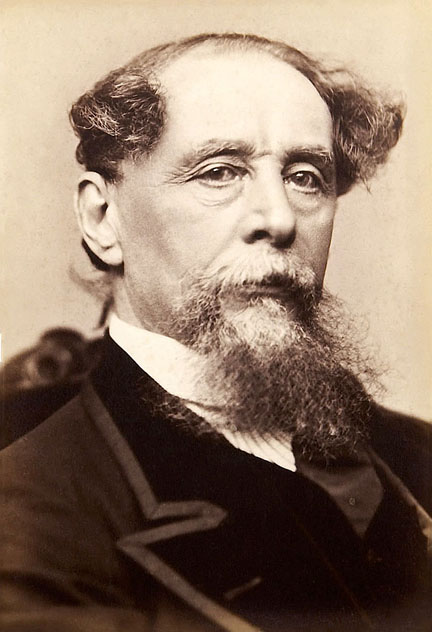
We would not be Tavistock Books if we didn’t, in some way, tie many of our blogs to our main man – Charles Dickens. In Victorian England Christmas reigned supreme, due largely to Queen Victoria and Dickens himself. Queen Victoria reputedly once remarked on her fondness for Christmas Trees covered in candles and presents, which immediately sparked the popularity for such in households around the country. Charles Dickens, penning such Christmas titles as: A Christmas Carol, A Christmas Tree, The Cricket on the Hearth, The Chimes, The Battle of Life & The Haunted Man, largely helped shape the image of Christmas that was taking root across the country in the Victorian period. In fact, Dickens helped fashion a good number of Christmas phrases, including the obvious “Bah! Humbug!” as well as increase the popularity of the expression “Merry Christmas!” through his works.

Popular Christmas titles have been written in almost all languages. In the English-speaking world, holiday literature (mainly for children) has remained a popular genre since the publication of A Visit from St. Nicholas. Some of the non-Dickens popular titles you may recognize are Old Christmas (Washington Irving, 1875), A Kidnapped Santa Claus (Frank L. Baum, 1904), How the Grinch Stole Christmas (Dr. Seuss, 1957), and The Polar Express (1985). While these are just a handful of the more popular titles to emerge in almost the last two centuries, Christmas literature does seem to have skyrocketed in quantity with the popularity of Christmas that has been spreading since the beginning of the 19th century.

And in keeping with the joyous Christmas spirit now permeating the land, we here at Tavistock Books want to wish all our friends, colleagues & customers the very best of holidays, and will close this piece by offering a quote of Tiny Tim’s, “God bless us, every one!”

Happy Christmas!

                           Happy Christmas!

Share

Happy Holidays: NCC Style

Almost 50 Northern California booksellers and their guests gathered last night, as we celebrated at this year’s annual ABAA Northern California Chapter (NCC) meeting/holiday party. The quarterly meeting of the NCC is a combined business meeting and social gathering, with this catered holiday dinner accompanied by a raffle to raise money for the Elisabeth Woodburn Educational Fund (in which the ABAA provides financial support for scholarly research and education relevant to the antiquarian book trade – for scholarships to book schools such as CABS, CalRBS and RBS – click here to learn more). The venue was the Berkeley City Club, a beautiful 1929 building designed by the noted California architect Julia Morgan. It now plays host to visitors to the East Bay, as well as straggler antiquarian booksellers looking for good food, good wine and book talk!

A full house! (Why so serious, M.H.?)

A full house! (Why so serious, M.H.?)

Reflecting the chapters’ geographical diversity, the evening’s participants hailed from all over Northern California, including the central valley, Sonoma county, Marin county, San Francisco and even Monterey. The quarterly meetings of the ABAA NCC chapter are a fantastic chance for collegiality, conviviality and meeting up with like-minded bibliophiles, and yesterday evening was no exception!

The gathering got underway around 6-ish, with drinks and socializing, and an hour later the staff began serving, as Michael Hackenberg, our NCC Chair, kicked off the business portion of the night.

TB's Vic Zoschak giving the Board of Governor's report.

TavBooks’ Vic Zoschak giving the Board of Governor’s report.

As is custom, the first order of business was to introduce any and all guests in attendance (of which Tavistock Books was responsible for a very modest 10 people…), and then the Treasurer/Secretary report, the Board of Governors report (given by our very own Vic Zoschak), followed by a good amount of updates on the upcoming 48th California International Antiquarian Book Fair, to be held in Oakland this coming February 2015. The number of exhibitors is gaining on 190, the event is being highly publicized, and hopefully the new location in the East Bay will be able to draw even more visitors, due to its more central location and easier access to all of Northern California. The ABAA fair Poker Tournament was discussed, with Bibliopolis recently joining Michals Insurance as the event’s primary sponsors. Given the success of the tournament held last February in Pasadena, we are hopeful of raising similar sums for the Woodburn Fund this coming February!

The night flew by as a lovely meal had been consumed, many glasses of wine drunk, a few dozen items raffled, and $1,200 raised for the Woodburn fund. As this holiday season continues its course, we’re happy to report the NCC ABAA started out its holiday season with a warmth & generosity we hope others will match.

Happy Holidays to all from Tavistock Books!

Share