Author Archives: tavistock_books

Top 10 Things We Hear at Tavistock Books

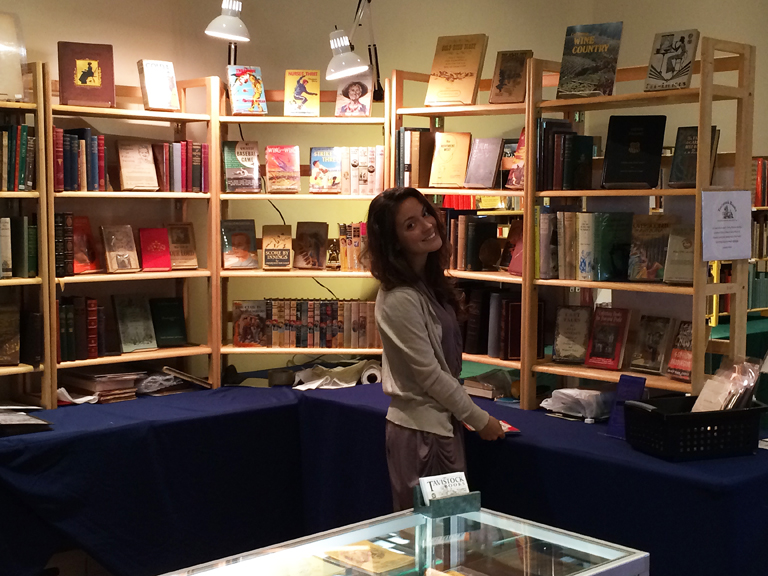
With an open shop since 1997 on a main mercantile street in California’s sunny Alameda, we hear some extremely interesting things from the general public who wander in, not quite sure what antiquarian books are all about… Some of the most popular questions and comments by our shop visitors are included below. Enjoy!

1. “Do you sell books here?” [… No, not nearly often enough.]

2. “I have this really, really old Bible, like from 1850 or something. Is it worth anything?”

3. “My mother left me some old books.” [To which the possibly only sane reply is a very eloquent, “Cool. I mean, I’m sorry for your loss.”]

"Yes, so expensive, in fact, that we make our customers sign a Give-us-your-First-Born-Child agreement when they walk in the door, so we are insured if they break anything."

“Yes. So expensive, in fact, that we make our customers sign a Give-Us-Your-First-Born-Child agreement when they walk in the door, so we are insured if they should break anything. Got a pen?”

4. “So, is like, everything in here really expensive?”

5. “Do you have any books on mushrooms?” [Only in California, right?]

6. “Your blinds are always closed & I never see you open. How do you make any money?” [Appropriate-but-probably-should-not say-it response: “It’s just a front, actually. We’re a drug cartel.”]

7. “I’m looking for a book. It was red. No, sorry, don’t remember the author or title.”

8. “Do you buy books?” [I should preface this one with the fact that any who ask this in person walked past a 3 ft. long sign on our front window that says WE BUY BOOKS.]

9. “I came in here, like, 10 years ago I think. It hasn’t changed at all.” [Umm… thank you?]

10. “Wow. You have some old books in here.” [Really? We hadn’t noticed.]

and an extra for good-luck:

11. “I’ll come back when I have more time to browse.” [If we only had a nickel…]


Strategies for the Antiquarian Bookseller to Not Lose One’s Tolerance for Having an Open Shop

1. Hire an assistant that you pay to be nice to people who walk in the door, especially the ones that ask questions you personally could not possibly answer without copious amounts of sarcasm.

OR

2. Put up the “Closed to the Public” sign when you’ve had all you can take for the day. Even if it is only 9:23 AM, and you started at 9.

Don’t get us wrong, however, we are very thankful for our walk-in customers. If not for their custom, then for the giggles they grant us!

Happy Thanksgiving!

Share

Recent Happenings at Tavistock Books

At the Store:

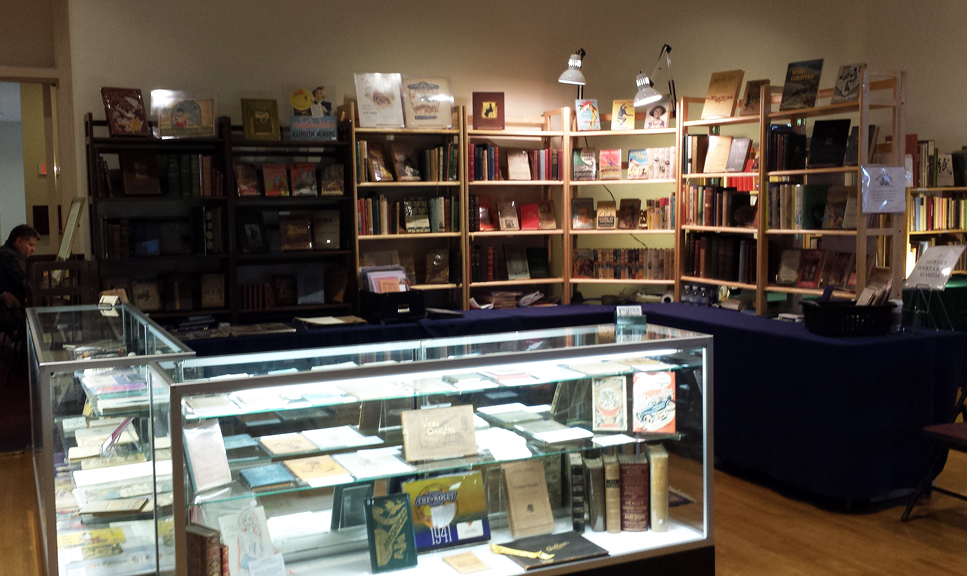
At Tavistock Books we are experiencing a problem that many booksellers before us have seen and many after will encounter. Space. Similar to the phrase “there is not enough time in the day,” there are not enough shelves in our store! We have filled every nook and cranny with books, with dogs, or with Giants bobbleheads. As it stands, in early December we are planning on doing some re-vamping in our store. Mainly, we will be building UP! Come check out our new, organized & feng shui-ed brick-and-mortar in the new year!

Book Fairs to Watch Out For:

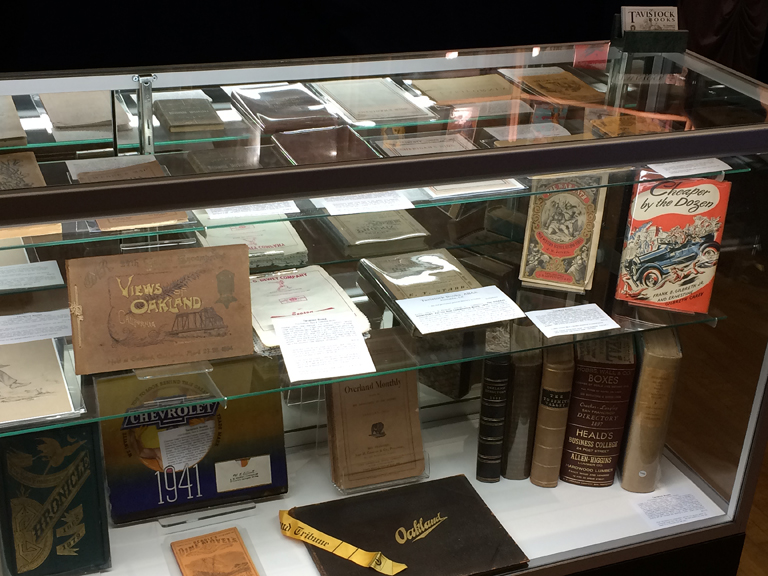
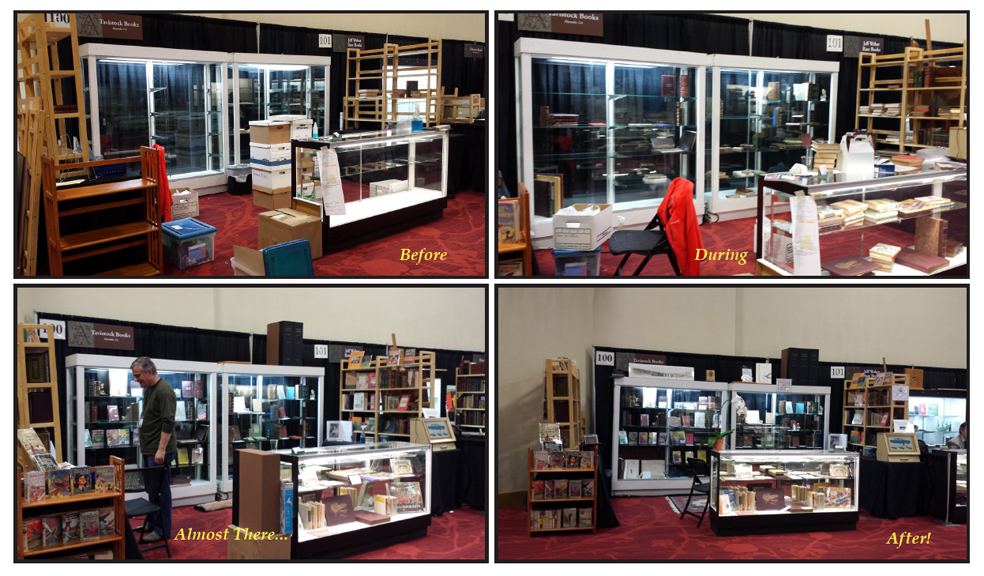
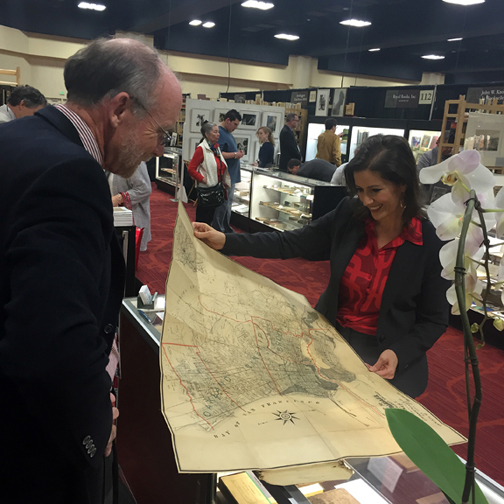
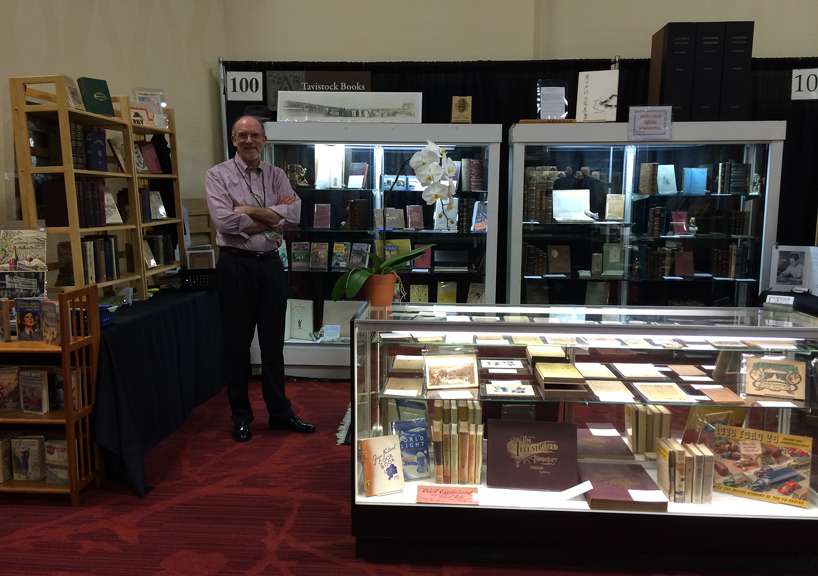
In the Golden State in January & February 2015? Don’t miss out on the 48th California International Antiquarian Book Fair to be held in Oakland, CA February 6th to 8th, and the Pasadena Fair January 31st & February 1st – both of which, you’ll be pleased to know, will sport a Tavistock Books booth!

A Recent Acquisition:

"Men and Memories of SF"

     “Men and Memories of SF”

Barry, T[heodore]. A[ugustus. 1825 – 1881]. Patten, B[enjamin]. A[dam. 1825 – 1877]. Phelan, James Duval [1861 – 1930] – Former Owner.   MEN And MEMORIES Of SAN FRANCISCO, in the “Spring of ’50.”  San Francisco: A. L. Bancroft & Company, 1873. 12mo. 7-5/8″ x 4-7/8″.  Green cloth binding with gilt stamped title lettering to spine & front board. Green eps. Gilt bright. Slight lean, small abrasion to cloth at top of front joint. Foxing to edges. Bookplate of James D. Phelan [former mayor of San Francisco, 1897 – 1902] to front paste-down. Period ownership signature of Mrs M. G. Willson. Withal, a VG+ copy with a nice, associated provenance.  $275.

1st edition (Cowan II, 36; Graff 197; Howes B-192; Kurutz 38a; Rocq 8248; Wheat 12).   Per Cowan I, “a most brilliant panorama of the times…”, and per Wheat, “Informative and engaging gossip respecting old-time personalities and events.” The authors arrived in their adopted state before January 1, 1850 & proudly answer to the moniker, “pioneer”. This book gives those that came later, and without such status, “a detailed picture of the city as it existed a few months before California statehood. They describe the streets and the residences and business that lined each thoroughfare and alley as well as the men and women who owned those homes, boarding-houses, hotels, restaurants, saloons, stores, offices, and shops. They also chronicle the fire of May 1851 which destroyed so many of the structures they describe. While they focus on the city as it was in early 1850, their sketches of its residents extend further, often forming capsule biographies of their subjects.” [OCLC].

Lists & Blogs on the Horizon:

Next Tuesday, the 18th, will see our annual “Holiday List” once more filling your inbox with goodies. Definitely won’t want to miss this one – the pictures are spectacular, as usual! Our next blog will be sent out on November 26th, all about Children and the Christmas Spirit. Be sure to sign up for our mailing list if you would like to be informed of each new blog post from Tavistock Books. Email msp@tavbooks.com here.


Share

“Books of the West” Comes to Alameda

At Tavistock Books, we believe in “book-education.” Not textbooks for kids in school (though those are helpful too, I suppose), but more the education of others, especially members of the trade, on Rare and Antiquarian Books. It is one reason why we hold a yearly workshop on Reference Books (see the blog on our last class here) and why we award a scholarship to one lucky individual each year to attend Joel Silver’s Reference Sources course at Rare Book School in Charlottesville, VA. We are interested in others understanding and appreciating the rare book trade, but more importantly, the rare book world in general. What some often don’t understand about antiquarian books is the sheer amount of history, culture and information held within each volume. The smallest detail can speak a thousand words – the type of cloth used in the binding, the signature on the front fly leaf, the illustrations present within the work – all contribute to turning a single book into a work of art and information from a moment in time. Therefore, we appreciate those who further the education of others on books and the history found within them.

Gary Kurutz: scholar, bibliographer and book collector!

Gary Kurutz: scholar, bibliographer and book collector!

Now that the emotional rant on the beauty of Antiquarian Books and why everyone should like what we like is over, we can get down to business. Yesterday we saw Gary Kurutz, one of the current leading bibliographers on the Far West, bring his California Rare Book School (or CalRBS) class to Tavistock Books after a trip to the Bancroft Library. While we can only imagine the spectacular items they might have beheld in the Special Collections of UC Berkeley, we were at least able to show them a few important Western Americana Reference Books (including Kurutz’s own The California Gold Rush – an indispensable title when researching mid 19th century California). Also here at the store were a few significant historical titles on the counter, available for actual handling, to help put a face to a name (or a binding to a title, as it were) to some of the books represented in the class.

Kurutz’s class is a 5-day long excursion through the depths of “Books of the Far West, with an Emphasis on California” and is very highly recommended by Tavistock Books. The class, which in the past had been held at UCLA, was a couple years ago moved to the California Historical Society in the heart of San Francisco, and is now (obviously) much more accessible to Northern California-based collectors, sellers, librarians and enthusiasts. (Go to www.calrbs.org/program/courses/booksofthewest if you would like to learn more about this in-depth journey through the Books of the West!)

Thanks to all, especially Gary & his class, who continue to keep the Antiquarian Book World alive!

Share

Double, Double, Toil and Trouble: The History of Halloween (Condensed)

Halloween. There can hardly be a more interesting holiday to research, and, in honor of this coming Friday, research it we certainly have done! The deep traditions underlying “All Hallows’ Eve”, the mutations of those traditions over time, and, naturally, the literature following the course of the holiday over the past few hundred years… all of these factors have made for an extremely interesting study of Halloween. This holiday, which is observed (in many different ways) all over the world in some form or fashion, has a history as diverse as the many cultures which celebrate it today.


The History of Hallowe’en (Condensed)

Samhain was celebrated on October 31st/November 1st as the Celtic people observed the end of the harvest season and beginning of the dark & bare winter.

Samhain was celebrated on October 31st, as the Celts observed the end of the harvest season and beginning of the dark & bare winter.

Halloween, as we currently celebrate it, is an eclectic mix of holidays. Its main influences are the Celtic “Samhain” harvest festival, and the Christian “All Hallows’ Day” or “All Saints Day”. The influences of the Celtic harvest festivals are undeniable – as Samhain was viewed as a liminal time, when fairies and spirits could be transported to “our” world and walk amongst the living. These spirits were welcomed home with candles, feasts, dances and offerings. The Christian influence on the holiday came later, when, in 835 A.D., Pope Gregory IV changed the celebration of All Saints Day from May 13th to November 1st, the same day as the Celtic celebration. There are many assumed reasons for this change, some of which may be attributed to Celtic influence, but also for practical reasons – too many pilgrimages made to the Vatican in the summer months, etc. By changing All Hallows’ Day (and All Saints’ Day) to October 31st & November 1st, the Pope effectively gave even more popularity to this end-of-the-season festival established to highlight the beginning of winter.

Quite a few Halloween traditions spread from this merging of the festivals. As Christians viewed All Hallows’ Eve as a time allowing the recently departed a chance to extract revenge on their enemies before advancing to the next world, a tradition of disguise was born. Christened folk dressed up in masks and costume in order to confuse the dead – to give themselves safety against any possible revenge by those seeking vengeance. In the Middle Ages the tradition of “souling” came about, where people (particularly children, and often in disguises) went door to door, parish to parish, to beg for “soul cakes” in exchange for praying for the dead relatives of the rich they begged from – the origin of modern day trick-or-treating was born.

After all, Halloween isn't Halloween without a Jack-O-Lantern to scare away the evil spirits!

After all, Halloween isn’t Halloween without a Jack-O-Lantern to scare away the evil spirits! (Ca. early 20th c.).  

The first history on the holiday printed in the United States was Ruth Edna Kelley’s The Book of Hallowe’en, published in Massachusetts in 1919. The author, using Robert Burns’ famous poem Hallowe’en as a guide (a poem internationally regarded as one of the most historically significant works on the holiday, published in Scotland in 1786), stated that “in short, no custom that was once honored at Hallowe’en is out of fashion now.” Almost a century later, this statement still holds true, as disguising ourselves, begging door to door, and celebrating are still popular today (though we are not sure how many people know why they are doing such strange acts on this day of the year).

Scottish and Irish influence truly made the holiday into what it is today, as their Celtic ancestry but staunch Roman Catholicism merged into the collaborative holiday that we know today. Despite the Puritanical influence on early America, and their dislike of holiday celebrations of almost any kind, the influx of Scottish and Irish immigration in the 19th century dramatically increased the holiday’s popularity in the United States (a popularity which has only increased ever since).


Gothic Fiction in the Romantic Period & Halloween in Literature

"The Nightmare" a 1781 oil-painting by Swiss-Anglo artist Henry Fuseli. This painting gained instant popularity at the beginning of the Gothic literary movement.

“The Nightmare”, a 1781 oil-painting by Swiss-Anglo artist Henry Fuseli. This painting gained instant popularity at the beginning of the Gothic literary movement.

It is a truth universally acknowledged that the human race seems to like to scare themselves silly. The abundance of horror films in modern society and the popularity of said films are proof of the hold that “terror” has on the general public. It is an amazing concept, to willingly give a piece of art (be it a movie, a book, or a photograph) the ability to terrify a human being. This is not a recent notion, however. It is no mere coincidence that gothic and “scary” fiction has reigned supreme since the 1700s when its popularity first emerged. Gothic fiction by popular 18th century writers like Ann Radcliffe and Matthew Lewis (authors of The Romance of the Forest [1791] and The Monk [1796], respectively) helped pave the way for titles such as Frankenstein (1818), The Vampyre (1819), all works of Edgar Allen Poe (early to mid 19th century), Carmilla (1871)The Strange Case of Dr. Jekyll and Mr. Hyde (1886), The Picture of Dorian Gray (1891) and Dracula (1897) to be widely read and devoured by a blood-thirsty public throughout the 1800s. The Victorian period saw a great rise of interest in the supernatural, as evidenced by the popular fiction, but also by the shift of society to an industrial world, which made civilians long for the simple days of old. “The world’s first industrial societies came to hunger for the country… Halloween, as imagined by Victorians – rural, rudimentary, and demanding a certain amount of innocence – was entrancing” (A Halloween Reader by Lesley Bannatyne).

As to Halloween (or simply the dark and unnatural) in American Literature, there are quite a few early works that, when compared to the Halloween celebrated today, exemplifies this shift in belief of Halloween as a waste of time or a hoax to a romanticized, idyllic pastime entrenched in tradition and history. In fact, “The Disappointment” – what is considered to be America’s first opera, performed in 1767 – tells the story of a conjurer duping four Pennsylvania colony folk into believing that he has a magic rod cut on All Hallows’ Eve that will lead the four to pirate treasure. The Halloween reference is placed significantly – to prove the gullibility of the four travelers. Early America saw Halloween as a code word for scam, a time for tricksters and frauds to cheat the public. However, by the end of the 19th century, America was beginning to see the Halloween we were always meant to see – a time for celebration, for honoring the dead, and for being glad to be alive.

This Halloween, as you put on your fishnet stockings or cover your face with a mask guaranteed to terrify the neighbor’s kids, just remember to give a respectful nod to your ancestors and deceased friends or family – as it was for them that this celebration of life was created!

Happy Halloween!!!

                        Happy Halloween!!!

Share

Theatrically Speaking: Charles Dickens, his Amateur Theatricals & his Performances at the Podium

No one reading a Dickens novel can deny the author’s enthusiasm for the theatrical. To see a young orphan used and abused by adults at every turn, to have to bear a young girl dying and her desolate grandfather withering away by her grave, or a miser being shown the error of his ways by ghosts… Dickens captured the hearts and attention of readers all over the world, and was, quite arguably, the most popular writer throughout the Victorian period. However, Dickens “the author” was not merely that – he was a man of many talents, much of which sat in the dramatic arts. A known producer of amateur theatrics, an actor himself, and performer until the day he died – Dickens captivated the world and unfortunately paid the ultimate price for living for his audiences.


A youthful Dickens.

Dickens as a Young Performer

Charles John Huffam Dickens was born in Portsmouth, England in 1812 into what started out as an idyllic childhood that soon turned into a slightly unstable family situation. Because of his father’s debts, the author was forced to leave school at the age of 12 to work in a blacking warehouse where he earned six shillings a week pasting labels on pots of boot blacking. This formative time in Dickens’ childhood gave inspiration to many of the traumas portrayed in his works – most notably Dombey & Son and Old Curiosity Shop. Later on in life, Dickens would live with a fear of his literary talent failing him, and the constant looming possibility of ruin and poverty. One could argue that these fears, when present in the most popular celebrity of Victorian England, stemmed from this early age and his abbreviated childhood, as he was called upon at an early age to contribute to the family earnings.

Dickens grew up with a love of performing, and in 1832 at the age of 20 Dickens gave serious thought to becoming an actor. He went so far as to arrange an audition for himself at the Lyceum Theatre through the help of the then-current stage manager. Unfortunately (for Dickens, rather than for us), he came down with a severe cold the day of the audition and was unable to attend. Dickens continued with a steadfast love of theater and attended as often as he could.


Dickens’ Theatricals and The Frozen Deep

Once Dickens achieved great success with his writings (beginning with Pickwick Papers and Oliver Twist and only becoming more intense and thrilling as installments of his novels went on), his almost super-human energy (the author reportedly walked about 12 miles every day) allowed him to humor his theatrical side and stage amateur performances with the help of family and friends. In 1852, after the author and his family moved to Tavistock House in London, Dickens converted the schoolroom into a miniature theater, “capable of holding an audience of ninety” (Fitzsimmons, The Charles Dickens Show p. 26). He and his children, along with their friends, put on performances every few weeks, and Dickens excelled in as many aspects of the theater as he did in literature. His longtime friendship with Wilkie Collins was often a great inspiration in these times, and Collins even wrote some plays specially to be performed by the Dickens household.

Engraving of the end scene in "The Frozen Deep", Dickens as the wild Wardour lying on the frozen ground. (Illustrated London News, 17th Jan. 1857).

Engraving of the end scene in “The Frozen Deep”, Dickens as the wild Wardour lying on the frozen ground. (Illustrated London News, 17th Jan. 1857).

One of the last amateur performances Dickens was to participate in was The Frozen Deep, a tragic theatrical written by Collins (with the significant editing and assistance of Dickens) in which Dickens played the role of Richard Wardour, as well as stage manager. Not only would this production prove to be significant in the way of theater (its success warranted a performance in front of Queen Victoria and Prince Albert), but it also was the momentous occasion that brought Dickens together with his later love, Ellen Ternan. Ellen, an 18-year-old young actress that was hired by Dickens, along with her mother and older sister Maria to play in The Frozen Deep, would soon become the scandal that the public blamed for the dissolution of Charles’ marriage to his wife, Catherine Hogarth.

Though the home theatricals soon dissipated, as Dickens bought the country home “Gad’s Hill Place” in Kent and, though very much frowned upon, separated from his wife, Dickens was soon to begin the next phase in his thespian career with a series of Reading Tours that he would continue until a few months before his death.


Dickens and his custom-made podium, specially designed by himself so as to not cut his body language off from his audience!

Dickens and his custom-made podium, specially designed by himself so as not to cut his body language off from his audience.

A One Man Show

“For the readings were an entertainment. They were not readings in the literal sense of the word. Dickens was a magnificent actor, with a wonderful talent for mimicry. He seemed able to alter not only his voice, his features and his carriage but also his stature. He disappeared and the audience saw, as the case might be, Fagin, Scrooge, Pickwick, Mrs. Gamp… or a host of others. Character after character appeared on the platform, living and breathing in the flesh” (Fitzsimmons p. 15). Dickens began reading professionally at a time when some say his literary powers were beginning to decline. Though he got some serious negative feedback from a few close friends about the idea (his longtime friend John Forster, for one, told Dickens that it was demeaning for an author to perform his own work), Dickens persisted. After reading in Edinburgh to an audience of over 2000, Dickens explained his euphoria at performing his work to Forster in a letter, “I must do something, or I shall wear my heart away. I can see no better thing to do that is half so hopeful in itself, or half so well suited to my restless state.” Fitzsimmons attributes much of Dickens’ wish to read (and possibly rightfully so) to its use as an outlet for his restlessness and miserable situation at home, and to the idea that he could make use of his theatrical talents and desire to be a thespian, all the while earning money to assuage his fear of living in poverty.

Dickens’ readings, however, exacted a great emotional strain on the author, and were obviously a direct contributor to his much too early demise. He performed many “shows” in a very small period of time, and the constant traveling, worry and keeping up of a charming & animated façade took its toll. However, Dickens refused to relent and disappoint his audiences. Reportedly, while giving a reading in Baltimore on his birthday in February of 1868, the distinguished statesman Charles Sumner came to visit the author at his hotel at 5 in the afternoon, and found Dickens in a right state, “covered in mustard poultices and apparently voiceless” (Fawcett, Dickens the Dramatist p. 171). At Sumner’s protestations against the author performing that evening, Dickens’ traveling manager George Dolby stated that, though he had told the author that it was ill-advised to perform that evening, Dickens would take the stage despite his ill health. In the words of Dolby to the statesman, “You have no idea how he will change when he gets to that little table.”

It was during this intense scheduled period of readings that Dickens was involved in the Staplehurst rail crash, an incident that left the author in even poorer health from the strain on his nerves and his subsequent mistrust of the rail system. Directly after the accident, Dickens helped tend to the wounded and dying, and got back on the train to rescue his unfinished manuscript of Our Mutual Friend. Little known to the public, Ellen Ternan and her mother were traveling with Dickens from Paris when the accident happened, and Dickens was able to avoid an appearance at the inquest in order to save Ternan the scandal such a fact would immediately produce.

The front page of The Penny Illustrated Paper, dated March 19th, 1870 - just four days after Dickens' final public reading.

The front page of The Penny Illustrated Paper, dated March 19th, 1870 – just four days after Dickens’ final public reading.

One of the continued strains on the author, with regard to his reading performances, was his portrayal of Nancy’s murder by Bill Sikes, taken from Oliver Twist. The absolute terror and melodrama of the scene took a great toll on Dickens, so much so that Dolby wrote, “That the frequency with which he persisted in giving this Reading was affecting him seriously, nobody could judge better than myself, living and travelling with him as I was.” Disregarding this constant strain on his nerves and his extreme bouts of depression and illness, Dickens persisted. If anything, this obsession with portraying the murder scene with voice as well as action just perfectly for his audiences shows the energetic state of his mind, despite a failing body and spirit.

Ignoring his declining health and personal turmoil, Dickens continued to read publicly until just three months before he suffered a fatal stroke, with his last public reading given on 15 March 1870. Dickens was to conduct reading tours for over a decade – and not any single performance to less than a full house. There is no doubt in our minds that should this literary icon have chosen the stage rather than the pen, he would have found similar great success and admiration for his work.


Dickens the Renaissance Man

Dickens will always be remembered for his literary genius – the man who created universal and beloved characters and stories, the man who became the face of English literature. Additionally, Dickens should also be remembered for his all-around charm and allure, for his ability to captivate audiences with more than just words, but with his entire being.

Tavistock Books maintains a specialty in the works of Charles Dickens – first editions of his work, Dickens in parts, his plays, his biographical works, and even letters, pictures, and items related to the author and his life. Hence the name of our shop after the London home Dickens turned into an amateur theater for his friends and family. Look out next week for our monthly list of “Select Acquisitions”, also titled “Theatrically Speaking” – a list of crossovers between literature and the performing arts. Email Margueritte at msp@tavbooks.com to be added to our Mailing List! 

An older Charles Dickens.

Click here to see our Dickens items in shop –>

Share

The Seattle Antiquarian Book Fair (Galoshes Optional)

Yes, we took this picture ourselves. No, we don't do weddings.

Yes, we took this picture ourselves. No, we don’t do weddings.

I do believe (with my rawther limited experience to back me up) that the Seattle Fair is the perfect Antiquarian Book Fair. I don’t mean to slam any other fair in the world (I still love the coziness of Sacramento, and I just adore the blisters I get from my heels in Pasadena). I just mean to say that out of the fairs that I have been to and worked at so far, Seattle seems to be the perfect blend. First off, the exhibition center is a beautiful venue that is somehow bright and peaceful at the same time, the people are kind and helpful, the town interesting and alive.

Now the truth is, we cannot give a good account of load in and move out, as we had some very kind friends drive our books up and back, and they basically made it one of the easiest fairs we have ever packed out of. This time around the buying was a bit scanty, nevertheless, there is a perfect combination of style & class, but also a fun and easy-going nature displayed by the booksellers, by the fair staff, and by the customers. I don’t think I am explaining it well – but let’s just say that it was one of the best book-filled weekends I have had in quite a while!

Once you're done setting up, you may as well take a  moment to be alone. When your boss isn't snapping pictures of you not-working to use against you later, that is.

Once you’re done setting up, you may as well take a moment to be alone. Take my advice though, and maybe don’t do it when your boss is snapping pictures of you not-working to use against you later.

I will say that my favorite part of the fairs is set up. I know many booksellers moan and groan about putting the books on their shelves, but the part of me that takes after my mother wants to make it “pretty” almost as fast as possible. There are no breaks. There are no survivors. So help me God if my boss comes back into the booth before it’s all done… and ever again casually mention that “that volume shouldn’t be there, it should be displayed with the front board to us.” He knows better than that now. My second favorite part of the fairs is walking around with a nametag on. I know it is silly (and possibly rather petty of me) but I like looking important to customers meandering around the booths. I’m not sure most booksellers realize this, as many have been in the trade for quite a while, but take it from a newbie – to people overwhelmed by the size and sheer amount of “stuff” at the book fair, name tags make you seem quite spectacularly intelligent and useful. All you need is a haughty expression and WHAM! It’s like you’re the president.

Vic, looking pleased to have arrived in Seattle in one piece.

All kidding aside, the Seattle fair truly does have it down pat. There seems to be a dressy day and a dress down day. There are customers actually buying, there are institutions actually looking, there is lots of space and light – but most of all, there is a very good attitude around the fair. Booksellers seem to be there to have fun, and are excited to sell some books. While some book fairs can be rather expensive for the bookseller to exhibit at, Seattle is a great venue for an affordable price – one that a seller might actually be able to make back in his or her sales.

The city itself boasts quite a few great restaurants, bars, and rain (which, in my super humble opinion, are the 3 things every great city needs). Of course, the fact that we had dinner at the Space Needle, went to see the Seattle Symphony, and then proceeded to get bumped up to first class on the flight home didn’t hurt my feelings on the weekend whatsoever. Tavistock Books is definitely looking forward to the Seattle fair next year!

The Seattle Antiquarian Book Fair. Let's play Where's Waldo with Vic! First to find him gets a 2% discount (What? I said we made money, not that we were bathing in it).

The Seattle Antiquarian Book Fair. Let’s play Where’s Waldo with Vic! First to find him gets a 2% discount (What? I said we made money, not that we were bathing in it).

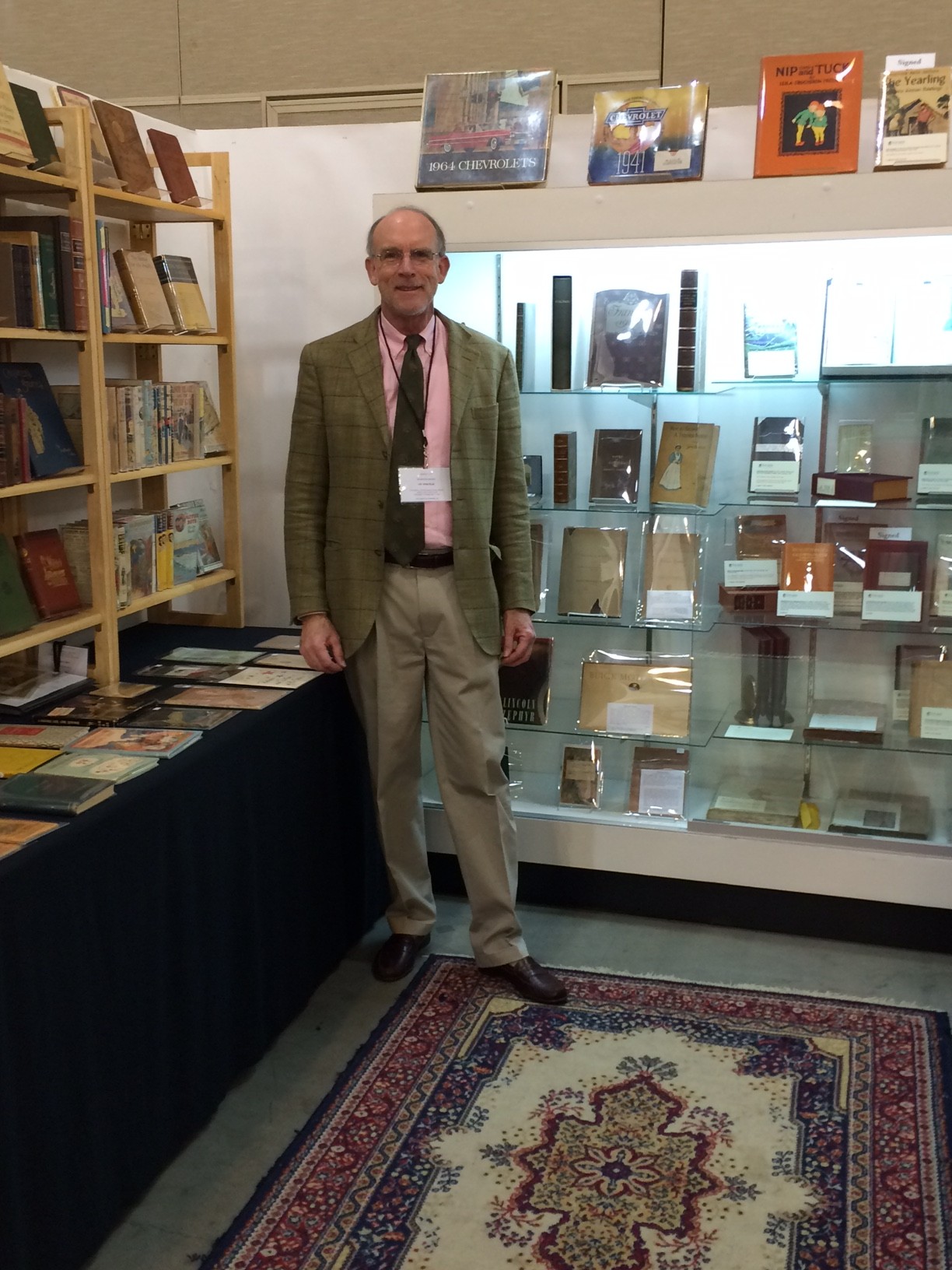
Vic Zoschak. Further remarks unnecessary.

Vic Zoschak. Further remarks unnecessary.

Share

Gourmets, Drunks & a (Short) History of Cookery Books

Tavistock Books’ recent acquisitions contain a large focus on Cookery titles. Not only have we recently had in stock the cookbook with the 1st English Language recipe for tacos, but also The Cook’s Oracle, the first cookery book published out of Stockton, California (a more exciting purchase than you might think, which generated enthusiasm from around the country). The influx of interest in the food genre persuaded us to write this short, slightly perverse and tongue-in-cheek history of Cookery Books.


The Roman Gourmet

An error of 19th c. scholarship attributed the work API CAE to an "Apicius Coelius", but modern scholarship shows that the name is almost certainly Marcus Gavius Apicius.

An error of 19th c. scholarship attributed the work API CAE to an “Apicius Coelius”, but modern scholarship shows that the name is almost certainly Marcus Gavius Apicius.

We can assume that the first person to ever cook something (let’s face it… most likely a woolly mammoth or something equally as strange) probably did it completely accidentally – perhaps by dropping their meat on an open flame and deciding to eat it anyway. Lo and behold! It’s so much better when it isn’t dripping blood on you! (Unless it’s steak tartar, which I highly doubt cave men had, but what do I know?) The first cookery book and collection of recipes known to man is a work falsely attributed to Marcus Gavius Apicius (falsely, as the surviving copy dates from the 4th or 5th century AD, and Apicius lived in the 1st, but that’s a whole different can of worms and I don’t really feel like going into it), a Roman gourmet and lover of food in the time of the Emperor Tiberius. Though impossible to prove his connection to the cook book “Apicius” (yet quite obviously named in his honor), it should be understood that this man was quite possibly the most food-obsessed person in the world. Legend has it that Apicius poisoned himself after realizing with horror that out of his fortune of some hundred million sesterces, he was down to his last million – having spent the majority on lavish feasts and immense amounts of food and drink. With the “prospect of starvation before him,” the Roman gourmet ended his life. Now that is devotion to the art of cookery!

Though M. G. Apicius is not the author of the 4th/5th century work API CAE (a title on the famous manuscript of the cook book), it is said that he did produce cookery recipes in his time, and gave many tips & hints in the art of cooking to those in his inner circle. It is said that Apicius himself developed a way of producing pork liver, in a similar fashion to how goose liver was served at the time. The name “Apicius” has been attributed to several gluttons (I mean “foodies”) since, with at least 3 in Ancient Rome alone.


The Grotesque Middle Ages

In preparing for this blog article, I read Old Cook Books, An Illustrated History by Eric Quayle. It is recommended that everyone read this book, as it is filled to the brim with fun anecdotes about the history of cooking and writing about it. BE WARNED, however, that you shouldn’t read the first few chapters when about to eat, when thinking about eating, or just after eating. Maybe read it when you’re on some kind of juice cleanse. Not only did the recipes included for Grilled Womb, Boiled Parrot & Stuffed Dormice pretty much determine that I was going to be drinking water for dinner after, but Quayle’s description of feasting in the Middle Ages was, to me, positively disgusting.

She really loves her life right now.

She really loves her life right now.

Apparently in the Middle Ages everyone was obese and drunk all the time, and it was a competition to see who could walk away from the feasting area without passing out in their dishes. You know what? I’m not doing it justice. Let’s quote some of Quayle’s write-up on Medieval feasts, shall we? (Just remember what I said about not eating at this time, you’ll thank me later). “In Medieval days, the banquets and feasts enjoyed depended for their success almost entirely on the ravenous appetites and unrefined palates of the unwashed mobs that thronged the rough-hewn tables… The over-filling of empty bellies and the immediate allaying of pangs of hunger… were the prime objectives of the sweating cooks and minions who dished out the helpings… Anything even remotely edible had been tossed into these same cauldrons… in the background, the spits turned with their heavy carcasses, dripping with fat, before glowing fires of heaped-up logs. When the revels commenced, immense quantities of food and strong drink were consumed at a single sitting, the plates being scooped clean in greasy handfuls as each new course arrived… The less stalwart were the first to go, as many collapsing across the tables as slid beneath them. Great pride was taken in being the last to submit” (Quayle, Ch. 2). In translation… everyone was plastered and unsightly in the Middle Ages and it wasn’t half as sexy as TV makes it out to be.

This quote had basically nothing to do with this blog subject, it simply pleased me to force you all to share my current pain. Let us return to the matter at hand. It was in the Middle Ages that the first work of cookery in English is known to have been printed. The Boke of Cokery, printed by Richard Pynson in 1500, is known in only 1 copy throughout the world (at the Library of the Marquess of Bath). This work not only gives the reader recipes for use at feasts or in an aristocratic household, but is a historically significant work. Pynson, possibly with the help of others, details many royal feasts that allow us 21st century minions to know exactly what was served to King Henry IV with the Spaniards and Frenchmen as they jousted in Smyth Felde! This noteworthy work, the first of its kind in the English vernacular, opened a door for publishing English-language recipe books – a genre that has remained popular ever since.


Cook Books in the United States when it was Not the United States Yet

Our 1796 edition of the states' early work, "The Frugal Housewife."

Our 1796 edition of the states’ early work, “The Frugal Housewife.”

The idea of printing recipes in a book only grew in popularity with this publication from Pynson in 1500. Once printing for the masses became commonplace, cookery books entered the fray same as political broadsides and religious prayer books. The earliest American Cookery Book (to our knowledge) was printed in 1742, before the United States had broken away from our meat pie loving friends (Still bitter about this… I love meat pies). This book, entitled The Compleat Housewife; or, Accomplish’d Gentlewoman’s Companion was printed in Williamsburg and was a publication of the original British work printed in 1727 of the same name. Other early cookbooks were to follow, in 1762 with The Cyder-Maker’s Instructor, Sweet-Maker’s Assistant, and Victualler’s and Housekeeper’s Director and The Frugal Housewife, or Complete Woman Cook in 1772 (which, oh, we happen to have a copy of for sale!). These books have, in actuality, exceedingly long titles (as was common for books – see Eleanor Lowenstein’s Bibliography of American Cookery Books 1742 – 1860 to view full write-ups) that describe the multitude of foods whose recipes you will find inside their volumes (pastries, soups, stews, creams… even methods of roasting, boiling, frying, potting, preserving, candying and pickling). These all-around instruction manuals were important to the ladies of early American households, as help with recipes or household chores could be difficult for some early communities to find when in remote areas.


Charitable Cooks in the later 19th and early 20th Centuries

Let’s skip ahead a few hundred years (because continuing down this road will only ensure that you will all end up passing out on top of your desks… or under them, apparently), to the 19th and 20th centuries of “Charitable” Cooks and their publications. Cook Books began to be readily available to the average civilian in the later 19th century, as the literacy rate grew and cook books were written for chefs in average households, not purely for aristocratic or wealthy ones. In America in the 1860s, the first fund-raising “receipt books” were compiled and sold at Sanitary Fairs held to raise money for military casualties and their families during the Civil War. This idea of publishing cook books to raise money for the war effort spread like wild-fire. After the war came to an end, the Ladies’ Aid Societies around the country found a myriad of other local charities to devote their efforts to – hospitals, churches, schools, temperance organizations, etc. Throughout the United States, benefit cookery books continued to be printed well into the 20th century. As Margaret Cook states in her foreword to America’s Charitable Cooks: A Bibliography of Fund-Raising Cook Books Published in the United States, “Though the recipes in early locally-published cookery books are often amateurish, they reflect the cooking fashions of the period in various parts of the United States more accurately than the standard works by professional authors… the great fascination of these early regional cookery books for collectors and local historians is their elusiveness” (p. 7). Charitable cook books in California alone make up the 359 titles in Liselotte & William Glozer’s compilation California in the Kitchen – proving their immense popularity as the hundreds of titles extend merely from 1870 to 1932. Seldom copy-righted, these amateur cook books present a window in time to the average American household fare – and ought to be cherished as such!

Tavistock Books has just issued a Cookery List, full of Charitable Cook Books, Cookery Advertisements, Pamphlets, Brochures, Cookery Education – the whole nine yards – to a handful of cookery customers. If you would like to receive this list privately, please contact Margueritte at msp@tavbooks.com. We promise… there are no recipes for Grilled Womb anywhere in those titles.

(However, if you’d like us to scan that recipe and send it to you, that is a definite possibility – and we promise not to tell TOO many people what you’re having for dinner.)

The same recipe can be used for flamingos?!?! Well why didn't you say so before??

The same recipe can be used for flamingos?!?! Why didn’t you say so before??

Share

Selling, Socializing & Getting Served in Sacto

The bookcases at the stupendous Tavistock Books booth

The bookcases at the stupendous Tavistock Books booth.

The Sacramento Antiquarian Book Fair is a bookseller’s fair. I’m not sure that you’ll know what I mean when I say that (hell, I’m not even sure what I mean when I say it), so I shall explain as best I can. It seems to me that the Sacramento fair is catered, all-around, to the bookselling trade. It is marketed extremely well, the load-in and take down is the simplest I’ve experienced so far, the management kind and accessible, the food amazing… it is a great local fair for booksellers to congregate at and socialize, but it is also a great fair for buying. Notice I did not state that it is always a great fair for selling. Not through any bookseller or promoter’s fault, it is not always a joy to crunch the numbers on returning home and see red writing all over your legal pad. For buying though? Many booksellers will attest to the great finds made over the years at this small local fair.

The Sacramento Antiquarian Book Fair

The Sacramento Antiquarian Book Fair

This is not to say that the fair is not also made accessible to the public (the civilians who are not us alien-life-forms of the book trade). What I’m trying to say is this… the Sacramento Antiquarian Book Fair is a wonderful weekend activity, whether you are a bookseller or a non-alien life form.

That all being said, let’s gossip.

Every time I get handed an invoice for something my boss found the day before and I write a check, I get very scared. I feel nervous that it’s for something really weird, as it feels as though I’m being served with some kind of lawsuit. This is completely unwarranted, seeing as Vic has been in this trade for quite a while and obviously knows what he’s doing. It is also absolutely ridiculous seeing as I’m the one that tells perfect strangers that I like to look at books on the dead (the more grotesque the images, the better).

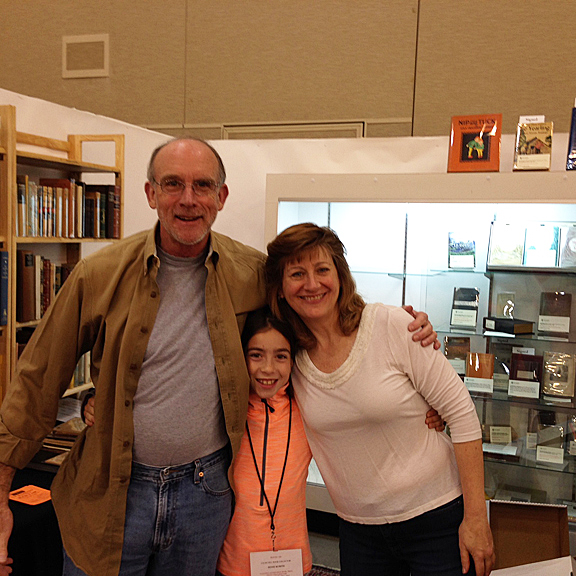
My parents are super proud right now.

My parents are super proud right now.

That fear aside, my favorite thing to do at the Sacramento fair is to make strange faces at random people passing by our booth. I would never do such a thing at an ABAA fair where I’m mainly worrying about how much my feet hurt having stood in heels for 7 hours and trying to come across as extremely serious and mature. This says nothing against either fair, merely that the general public who attend the Sacramento fair seem to be easily amused and ready to smile, and when they catch me at my game, there are laughs and they move on (or, I mean, hopefully come into our booth to see what the weirdo is selling). As I said, it is a very easy, jovial local fair.

This time around, there were a couple new booksellers exhibiting for the first time, most notably Kim Herrick of The Book Lair. Many sellers returned for another weekend (no matter how poorly or magnificently they did at the last Sacramento fair… which in my opinion shows the dedication and patience exhibited by so many of our trade). A few sellers not exhibiting were to be found wandering the aisles and scouting, and many repeat customers could be located due to the loud exclamations akin to “Bob! How have you been? How’s Susan?” In my opinion, the attitude of the masses at the Sacramento fair (and don’t be fooled, just because it is a local fair and the selling is not always a selling-point… pun intended… it gets quite a crowd) is one to be admired. An easy-going few hours of bookselling, book-buying, drinking, finding that specific something that you didn’t know you needed but now cannot possibly live without… a weekend like that is certainly something to be cherished.

Socializing in Sacramento

Socializing in Sacramento

(Even if you spend your day making cross-eyed fish faces to people you don’t know and breaking out in a sweat every time you see an invoice.)


Share

On Identifying Photographic Prints and the History of Early Photography

 Photographic Prints in an Antiquarian Bookshop

Without a doubt, every antique store and flea market from California to New York somewhere has a box of photographs – black and white, early Kodaks, or even tintypes… often warped, mirrored, faded – if you are reading this blog it is assumed that at some point or another your interest in antiquarian books and materials has drawn you to such an establishment, and you have at least fingered through a box of photographs labeled “.10 each or 15 for $1.00”. Why is it, then, that those photographs are (seemingly) worthless, while there are photograph albums offered by booksellers with the same types of prints for thousands of dollars? As with all things antiquarian – provenance, condition and interest levels dictate the differences between a bin full of late 19th century silver-gelatin prints and an album full of un-faded, unaltered albumen photographs.


Photography in the Early 19th Century

William Henry Fox Talbot in 1864

William Henry Fox Talbot in 1864 by Moffat.

The name William Henry Fox Talbot is known throughout the world as a British inventor, author and photographer of great significance. Talbot claimed experiments in photography as early as 1834, and in 1841 announced his invention of the calotype (also called the Talbotype) process, a process that reflected the work of many of Talbot’s predecessors, such as John Herschel and Thomas Wedgwood. One of Talbot’s main contributions to this fledgling art included creating a photographic image through the use of a negative from which a positive print could be made (though those terms were previously coined by Herschel, Talbot demonstrated the technique with ease). Talbot’s early discoveries culminated in his pioneer finding that silver chloride was the silver compound “most suitable for photographic printing, and to discover how to use it most effectively” (O’Reilly, p. 1). Talbot’s negative to positive printing could also be said to be one of the most important inventions in the field of photography as it allowed the photographer to create numerous prints off of a single negative, simply by exposing more paper to the image. As you will see later, other early forms of photography (such as the popular Daguerreotype process), were not able to form several images from a single exposure.

Now, the art of photography has developed significantly since Talbot began his experiments in rural England. If this blog were to describe every type of photographic print process and the differences and nuances between them all, we would quickly lose the followers we have so far gained. Suffice to say, the history of photographic prints is as diverse and intricate as any popular invention might be. Unfortunately, identifying photographic prints is particularly difficult for the untrained eye as even the slightest changes in the process (and in the final product) can be difficult to observe if you are not sure what to look for.


Identifying Photographic Prints in the Late 19th and Early 20th Centuries

Photography in this time falls into two distinct categories, True Photographs and Photomechanical Prints. Photomechanical Prints are images not formed directly from exposure to light or from a negative, and are rather more often “mass-produced.” These mechanical techniques include Halftone Illustrations (which some may recognize by their dotted appearance when viewed with a scope) and Photogravure, among others. These prints, while still able to be artistic and popular in their own right, are not usually as desirable as True Photographs when it comes to collectors and institutions. True Photographs encompass many other types.

Evidence of Silver Mirroring is seen in the darker portions of this image (IPI).

Evidence of Silver Mirroring is seen in the darker portions of this image (IPI).

True Photographs include, as stated, many other processes. Some of their results may sound familiar, some not so much. Salted Paper Prints, Cyanotypes, Platinotypes, Albumen Prints, Gelatin and Collodion Printing-Out Papers, Gelatin Developing-Out Papers… all of these, despite their somewhat extreme differences, are examples of True Photographs. They are placed into categories depending on characteristics such as the appearance of their paper fibers, their hues, and, most interestingly, their condition. Signs of fading, mirroring (the slight silvery hue to the darker areas of the photograph due to silver oxidation), warping and cracking can all contribute to telling the difference between the many types of “true” photography.


Curious about an image you have? Try http://www.graphicsatlas.org/ to help you identify your items.


Photography as a Popular Pastime
A typical Albumen Cabinet Card

A typical 19th century Albumen Carte-de-Visite.

The Daguerreotype studio boomed early in the photographic print age in the mid 1800s. Other early photographic processes included the Salted Paper Print and the Albumen Print. Albumen Prints were quite possibly the most popular type of photographic process, as they are the most widely found today. Around the 1860s and 1870s a certain type of photographic style emerged, a Carte de Visite (quite literally, a Visiting Card) that was traded between friends and family, and most notably took the place of the general “Calling Card” that social guests would deliver to households they stopped in to see. Along with these Cartes de Visite and their cousins “Cabinet Cards”, photography moved into an age of cabinet cards and other studio portraits. Silver gelatin and Matte Collodion Printing-Out Papers and Developing-Out Papers (whose main differences lie in the process by which the image appears – DOP images appear during chemical development, whereas POP images appear on their exposure to sunlight) were quite popular as forms of portraiture, and were also some of the most popular forms of photography for the average civilian to produce at home.


Photography in Books

The first book ever to be illustrated through the photographic process was produced by none other than William Henry Fox Talbot, with his book The Pencil of Nature, published in 1844 with his own calotypes pasted into the book. The text within the book details Talbot’s calotype process used for each individual photograph. Each photograph within Talbot’s work were laid in and pasted by hand, not to mention taken and developed by the inventor as well. Though the book was less popular than Talbot expected, it paved the way for an idea that (eventually) became a bit of a phenomenon – illustrating books with photographic prints. Despite the fact that many “jumped on the bandwagon” and illustrated works with photography in mid-to-late 19th C, “in many traditional libraries the illustrations to a book, and its illustrator, were often placed in a role secondary to the author – even in situations when the illustrations were the dominant concern of that work” (Johnson, Nineteenth-Century Photography). This is no longer so. The book trade often sees works collected solely for the photographer or the images represented within a work, the text often being of little to no concern to such a collector.

One of the photos included in Talbot's "Pencil of Nature", published in 1844

One of the photos included in Talbot’s “Pencil of     Nature”, published in 1844.

Photograph albums, on the other hand, can be a different story. Eugenia Parry Janis writes “A love of subject matter leads the bookseller to photographs. He is satisfied to present photographic discoveries which have engaged his attention as they act in collaboration with needs of descriptive science, exploration, documentation or poetic evocation. It is a special quality of photographs to be able to enter into reciprocal relationships with words… The most discriminating private collections of photographs today owe much to booksellers’ at times obsessive, and even indiscriminate salvaging and rescuing of photographs destined for the incinerator. Photographs were not saved because they necessarily conformed to prevailing standards of beauty; they were saved for the richness of what they presented.” (Charles B. Wood III, Catalogue 37). Therefore, when looking through photographic albums, individual photographs, and books illustrated with photographs, it is a great find when the photos are in impeccable condition. However, more often than not, photographs are collected for what they represent – a moment in history, a fashion style, an area of the world, a political event – rather than because of their condition and artistic beauty.

In a catalogue later this month we will offer examples of all of the above – individual photographs, photo albums, and books illustrated with true photographs. Featuring a wide range of subjects, from military bases to train catalogues to family vacations, there is certain to be something of interest to everyone.

*The only reason we at Tavistock Books know any of this information on Photographic Prints is from taking James M. Reilly and Ryan Boatright’s course on these processes at University of Virginia’s Rare Book School. A fair warning – this has been a highly condensed and extremely terse outline in comparison to their course, a course officially endorsed by Tavistock Books!

Photo-WHFTalbot


Share

Tavistock Books’ Almost-Annual Reference Book Workshop

There is a significant difference between booksellers who advertise their wares with professional descriptions, a clear understanding of the item in question, an honest assessment with regard to the item’s condition… and your typical eBay/Amazon blasters: “FREE SHIPPING! May or may not have highlighting and/or missing pages.” The pride in being a Good (or VG+) bookseller comes from the ability to sell something about which you are knowledgeable and which is priced confidently and accurately.

Oftentimes, as booksellers, we hear the question “Why?” Why is this book worth $495? Why would I pay that much for a book which Joe Shmoe, Bookseller offers for $29.99? There is no shame in asking these questions. Even booksellers can look at their colleagues’ wares and stare confusedly at the screen while waiting for the computer to sprout tiny-computer legs and giggle, while simultaneously erasing that last 0 or two. All that being said, however…. what can give booksellers the ability to price confidently and describe accurately? Two words.

Reference Books.Reference Books

If you are reading this blog, there is a good chance you have looked at listings of antiquarian books before and have noticed some crazy notations in our write-ups. What is a BAL11092? Or a Gabler G2390? An average person has a good chance of not particularly understanding what the numbers mean. Heck, another bookseller might not even have a clue to what you are referring. A good bookseller will know, however, that the inclusion of those small jumbles of letters and numbers beyond their edition statements represent the dedication and honesty of the person offering the item. They have gone to the trouble of understanding what they hold in their hands, so that their customer can have the guarantee and peace-of-mind that they are buying a 1st/1st, a 1st edition thus, or a reprint. What allows a reference book to (sometimes) up the price or (often) lower the price? Well… I guess you’ll just have to take the Tavistock Books’ Reference Book Workshop to find out!

This year’s course took place this past Saturday, the 23rd of August. The day-long course consists of an intense look at different genres of reference books, their scope, and their usefulness to the book-selling, book-collecting and book-cataloguing trades. Sections covered include Literature (do the acronyms NUC or NCBEL mean anything to you? Here’s where you will find them explained!), Americana (with an emphasis on Western Americana & California… can you say Kurutz three times fast?), Children’s Books, Early Printed Books, and Online Reference Tools. This course is a fast-paced survey, useful for any bookseller, collector, or librarian interested in understanding the tools booksellers use to identify and price their books.

Workshop 2014

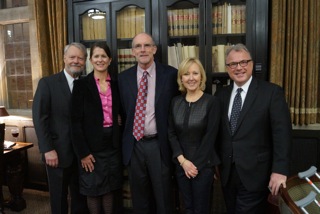
This year’s workshop was attended by 4 booksellers (some new, some slightly seasoned), two librarians, and a lover of all things book-related. Intelligent questions were asked, anecdotes shared, and quite a bit of knowledge imparted on these smiling (though, by the end of the day, slightly haggard) faces. Due to the limited amount of space in the shop (where the workshop is held), we cap the number of “pupils” at 7 per year. Should you be interested in attending, please email msp@tavbooks.com and ask to be included on our mailing list, so that when the reminder comes about next spring to sign up, you can be first on the list!

The workshop truly is helpful to those dealing with the book-trade, and the Tavistock Books Reference Collection of over 3,000 reference volumes alone are worth the trip to see! And, as per tradition, lunch is on us at a great sushi place on our charming island of Alameda, CA. Interested in attending a workshop one day? Let us know!


Share