Category Archives: Uncategorized

Two Faces of 20th Century Chinese Painting: Qi Baishi & Zhang Dagian

These days, it seems as though you could walk into your local coffee shop, shout out names like Matisse, Monet, Picasso, Van Gogh, Pollock, Klimt, Rembrandt, Renoir, Degas, Munch, Chagall, Kahlo, Vermeer, or Dali and every single person there would know what these 14 people had in common. They are painters! They have different styles, are from different cultures, different countries, different eras and have different backgrounds, yet we know them all, despite – probably – never having taken an art history class in our lives. Now for a test! What do the names Xu Beihong, Bada Shanren, Lin Fengmian, Wu Guanzhong, Ren Bonian and Wang Hui have in common? Now, I hope 15% of the people reading this blog know at least one or two of these names already. I assume 35% of you have absolutely no idea, and the last 50% are possibly clever enough to realize that they are Chinese painters, given the subject of this blog. Yes, they are indeed Chinese painters, with those names alone ranging in history from 701 AD to the present day. Chinese painting too has a tradition spanning centuries, with artists today continuing the traditional style of Chinese painting just as often as they push the boundaries of modern art. Two of China’s most renowned and legendary artists from more recent times are Qi Baishi and Zhang Dagian (or Chang Dai-Chien), the darlings of the Chinese Art World in the early to mid 20th century.

Qi-Baishi, beloved figure in the art world from the late 19th and early 20th centuries. An example of his work shows behind him.

Qi-Baishi, beloved figure in the art world from the late 19th and early 20th centuries. An example of his work shows behind him.

Qi Baishi was born in 1864 to a peasant family in Hunan, China. Despite only one year of formal schooling, he became a carpenter at the age of 14 and taught himself the art of painting. Baishi had a humble outlook, and was popular throughout his life for his passion and belief in his work. He was notorious for bringing beauty to the ordinary, with little to no exaggeration of the subject matter. The lyrical simplicity to his paintings, be they of humans, of flowers, or of a coy, helped him be elected to President of the China Artists Association in 1953. A fan of Qi Baishi’s work, Wang Chao-Wen, said of the artist, “he based his work on reality while experimenting ceaselessly in new ways of expression, to integrate truth and beauty.” He is often praised for the lack of Western influence found in his work, at a time when Eastern artists were often trying to mimic nuances of their popular counterparts. Qi Baishi has monuments to his lifetime of work all over China and even a Soviet postage stamp with his face on it. He fathered nine children through his wife and mistress, many of which followed in his footsteps and became painters of all styles.

An example of one of Qi-Baishi's simple and beautiful works, found in our copy (the only one currently on the market in the Western hemisphere) of the Selected Works of Qi Baishi. View it here>

An example of one of Qi-Baishi’s simple and beautiful works, found in our copy (the only one currently on the market in the Western hemisphere) of the Selected Works of Qi Baishi. View it here>

Qi Baishi’s work, as singular as it was at the time when he was most prolific, is nowadays often forged and quite frequently misattributed to him when they were made by another artist attempting to imitate Baishi’s unusual style. As he created thousands of works (possibly up to 15,000 pieces) throughout his lifetime, it is often very difficult to authenticate possible works by him. In fact, in 2011 one of “his” paintings, Eagle Standing on Pine Tree, was sold at auction for $65.5 million US dollars, making it, at the time, one of the most expensive paintings ever sold at auction (though later on the bidder raised doubts over the painting’s authenticity). At this time, 3,000 of Qi Baishi’s works reside in museums and exhibitions.

chineseartblog2

Zhang Dagian, or Chang Dai-Chien, famous artist and skilled forger.

Zhang Daqian (or Chang Dai-Chien), our other Chinese artist, was born in 1899 in Sichuan, China. One could argue that Dai-Chien (as his name appears in our works by him) was more of a rebel than the sweetheart art world fans found in Qi Baishi. Dai-Chien was a well-respected painter in China, even after he moved away in 1949 due to the growing political unrest within the country. As much as Qi Baishi had his own unique style that sometimes gave him heartache (at times it was difficult for him to convince others that his break from a more traditional style was alright), Dai-Chien as an artist is much more difficult to categorize – the man had a myriad of skills. His painted subjects were as diverse as Qi Baishi’s, for he painted landscapes, human figures, plants, flowers, birds, animals and fish in both the more elaborate and the hsieh yi (brush painting based on purity) styles.

A couple example leaves from our 1967 Chang Dai-Chien's Paintings. The book places his works chronologically, so the viewer is able to see the maturation of Dai-Chien's style as he ages.

A couple example leaves from our 1967 Chang Dai-Chien’s Paintings. The book places his works chronologically, so the viewer is able to see the maturation of Dai-Chien’s style as he ages.

Dai-Chien, however, possessed an amazing and terrible skill – the art of forgery. As skilled and gifted a painter as he was in his own right, Dai-Chien was one of the most prominent forgers in the Asian Art world. His works of Shitao, a 17th century painter, have fooled customers the world over. In his article China’s Broken Art Market, Felix Salmon revisits a moment in 1967, when Dai-Chien visited the University of Michigan to view on exhibition of the works of Shitao, and to (I’m sure) the tour guides’ dismay, Dai-Chien “began to laugh and point to various works on the wall, saying: ‘I did that! And that.’” Strangely enough, despite extensive research on our end, we were unable to find out whether Dai-Chien was ever held responsible for his forgeries. As no criminal allegations were found, we are led to believe that he was open and honest about his forgeries to those he directly gave or sold them to – that it was probably in the next round of sales that any shady business was conducted. In any event, though his forgeries do seem to be at the heart of much of his remembered life, Dai-Chien was a talented artist, and well-studied in many artistic styles, including: paper, ink, brushes, pigments and seals, among other techniques and historical art styles.

Dai-Chien and Qi Baishi both belong to a specific time in Chinese Art History. This blog report is merely cursory, a sampling, if you will, of these specific artists’ lives. In truth, as early as 475 BC artists in the Eastern world were beginning to paint scenes around them. By 200 AD they were painting figures and the human form. The sheer amount of art history in China is much larger than some European countries that we now consider Masters of Art could ever hope to imagine. These two artists alone represent only a small segment of a short period of Chinese art history – and yet both influenced painting in a grand way that appoints them as two of the most well-known Chinese painters in recent past.

39330

Share

“Words don’t change their shape, they change their meaning, their function…” Marguerite Duras and the Minimal Novel

Throughout history, writers have been known to cause a stir. The Marquis de Sade was incarcerated in an insane asylum for his erotic tales. Oscar Wilde self-exiled himself to Paris for the unimaginable treatment he received for the “crime” of homosexuality. Harriet Beecher Stowe caused a flurry of activity around the anti-slavery act in the United States. Vladimir Nabokov’s Lolita was banned in many different countries, including France (you know it’s controversial when even the French consider it obscene…). In modern day we have parents and schools banning books by authors like Judy Blume and Laurie Halse Anderson because they deal with sex and coming-of-age experiences in young adult fiction. We can only imagine the hell-fire that would begin to burn should any school library choose to keep a holding of The Lover or The Ravishing of Lol Stein on hand! Marguerite Duras, a French novelist, essayist, playwright and film director, could certainly be considered controversial in both work (like the Marquis) and life (like Wilde). Despite the often explicit and controversial themes and plots in her novels, many of which were drawn from her real-life experiences, Duras has been a beloved figure in the field of “serious literature” (a genre I just made up, you’ll be pleased to know) for decades.

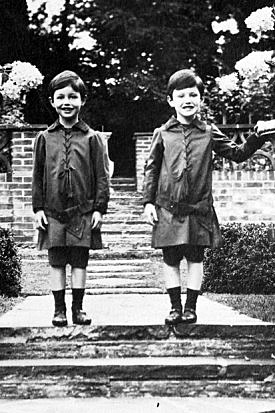
Margueritte as a young girl in Indochina, pictured here with her brothers Pierre and Paulo and a friend.

Marguerite as a young girl in Indochina, pictured here with her brothers Pierre and Paulo and a friend.

Marguerite Donnadieu (pen name Duras, taken after the French town where her father passed away) was born in Saigon (at that time in an area called Gia-Dinh), French Indochina in April of 1914. Duras’ father died when she was only 4, and Duras and her two brothers were raised in relative poverty by her mother. Duras made frequent allusions to having always wanted to be a writer, though had fewer literary influences on her writing in early life than other children her age. It is very likely that this lack of a compass for creative writing helped shape her singular style later. Duras’ childhood was anything but average, as growing up French but poor in Indochina was far from ideal. According to Duras, her older brother Pierre had a mean streak and bullied his two younger siblings mercilessly. Her younger brother Paulo seemed a touch mentally challenged and was, supposedly, the only thing she cared for as a child and teenager. As a teenager, Duras began an affair with an older Chinese merchant, Huynh Thuy Le, a time in her life that would often be revisted in her later work. Two of the works she is most famous for, in fact, are her novels The Lover and The North China Lover, throughout both of which she uses her minimal style to describe her teen years and her sexual awakening with Huynh Thuy Le.

Duras around the age of 17.

Duras around the age of 17.

When Duras was 17 she left Saigon for Paris, where she began studying for a degree in mathematics (before changing her mind and trying political science and law, as well). She was an active supporter of the French Communist Party (the PCF), and in her mid to late twenties she worked representing the colony of Indochina for the French government. A member of the French Resistance during World War II, Duras experienced even further pain and hardship when her brother Paulo died in 1942, and then when her new husband Robert Antelme was deported to Buchenwald concentration camp for his involvement with the Resistance, and scarcely survived the experience.

By the 1950s, Duras had established herself as a writer and has continued to be published ever since. In the 1960s, she began to write plays and film scripts, but also continued writing essays and novels. As Leslie Garis of the New York Times writes, “The form of a typical Duras novel is minimal, with no character description, and much dialogue, often unattributed and without quotation marks. The novel is not driven by narrative, but by a detached psychological probing, which, with its complexity and contradictory emotions, has its own urgency… a chronic underlying panic…” Though often Duras’ work is considered part of the Nouveau Roman literary movement begun in the 1950s, the truth is that, though appreciating and using the conceptual flowing of time as modern literature often did, she was not preoccupied by some of the more grammatical and literary principles as other writers of the movement were. Once again, perhaps this disinterest in contemporary writing styles, fads or “correctness” can be attributed to her meager literary influences as a young girl.

Duras later in life.

                 Duras later in life.

Some of Duras’ other well-known works include Moderato Cantabile (1958), Hiroshima Mon Amour (1960), The Ravishing of Lol Stein (1964), India Song (1976), The Malady of Death (1982), The Lover (1984), and No More (1995 – published just a year before the author’s death). Many of her works deal with sexuality, but a central theme in her works is transition – whether it be the growth of her characters from children to adult, from place to place or even from “normal” to “artist” (one could argue that her novel The Lover encompasses all of these themes). Her film scripts are well-known, the most famous of which is her film adaptation of her own novel Hiroshima Mon Amour, with striking dialogue that not all authors of novels could have produced. Duras felt that words were in constant fluctuation, that words themselves had more power than the author wielding them did, as books and stories of the same writer could be read differently by many. In her novel Summer Rain (1992), Duras writes, “Words don’t change their shape, they change their meaning, their function… They don’t have a meaning of their own any more, they refer to other words that you don’t know, that you’ve never read of heard… you’ve never seen their shape, but you feel… you suspect… they correspond to an empty space inside you… or in the universe.”

Duras struggled with alcoholism her whole life. In October of 1988 at the age of 74, Duras fell into a coma that she miraculously woke up from 5 months later. The author continued to write, and to fight, until she died in 1996 of throat cancer. Her legacy as one of the great writers of the 20th century is not soon to be forgotten, and her stories (of love, lust, awakening, transition, madness and pain) speak to readers across the world.

Share

Literature of the Dirigible… If it’s all just hot air, what is there to write about?

airship

I assume all here have heard the humorous (if ridiculously sincere) question, “Where have all the anvils gone?” Cartoons and period films seem to have us convinced that, at one point, anvils outnumbered humans at least 10 to 1. And in the blink of an eye, they vanished. (Spoiler Alert: Of course in reality many were eventually melted down [despite the fact that their whole point was that they wouldn’t melt], and made into more useful things. Like munitions. But opening with that would have ruined this whole blog.) Similar to the anvil is the dirigible. At one point in time, the dirigible was talk of the town, the greatest invention in history. Books were written, pamphlets distributed, and it was the most exciting contraption created. And now? They may not be as popular as they once were, but we’d like to revisit them and show a bit of history from an exciting and creative time in aeronautical engineering.

For those of you that don’t know what a dirigible is, it is an airship. For those of you who don’t know what an airship is, it’s basically a blimp. There is really nothing I can say to those of you who don’t know what a blimp is, because this blog will be lost on you and you might as well exit out of the screen and do something more useful with your time. Like make a sandwich. Or go anvil hunting.

A dirigible, by definition, is a type of lighter-than-air aircraft that navigates through the air under its own power. They gain their lift from large bags filled with a lifting gas that is less dense than the surrounding air. There can be non-rigid, semi-rigid and rigid airships, depending on how structured the inside of the gas filled “envelope” is. The airship was the first aircraft capable of controlled powered flight, a phrase that means it was the first flying transportation device controlled by man inside the vessel (as in, precursor to the airplane).

Original sketch for an aerial ship by "Father of Aeronautics" Jesuit priest Francesco Lana de Terzi in 1670.

Original sketch for an aerial ship by “Father of Aeronautics” Jesuit priest Francesco Lana de Terzi in 1670.

As early as 1670, a Jesuit Father named Francesco Lana de Terzi drew up plans for a boat lifted into the air by balloons. In 1785 Frenchman Jean-Pierre Blanchard crossed the English channel with a balloon propelled by a hand-powered propeller and wings and a tail for propulsion and steering. It was not until 1852, however, when French engineer Henri Giffard became the first person to make an engine-powered flight when he flew 17 miles in a steam-powered airship. Once Giffard made that trip, dirigibles turned into the hot new engineering transportation device. By 1878, engineer Charles F. Ritchel made a public demonstration flying his hand-powered one-man rigid airship, and went on to build and sell five of his aircrafts. In 1883 Frenchman Gaston Tissandier (lots of French people were really into airships) attached an electric motor to an airship and went down in history with the first electric-powered flight ever made.

Our holding of "A Thousand Miles an Hour" - in theory, a great idea, if only slightly* unrealistic!

Our holding of A Thousand Miles an Hour – in theory, a great idea, if only slightly* unrealistic!

Airships continued to be developed and advances in the field of aeronautical engineering were seen all over the world. Many inventors and engineers gained funds for their research by advertising on the envelope of the airship (similar to blimps today, displaying Coors Light adverts trailing behind them) or by participating in races and publicity stunts. The craze for airships truly reached its peak in the early 1900s, with Count Zeppelin’s rigid airships and the continuous developments to dirigibles throughout their existence. In a title published in 1913, A Thousand Miles an Hour (which, oh, we just happen to have a copy of for sale), enthusiastic author Robert C. Givins has high hopes and the story centers around an idea that “in 1925… [there is] the invention of an airship which launches itself vertically a short distance into space and achieves its travelling by letting the Earth rotate underneath it” (Locke I, p. 91).

A page of "D'Orcy's Airship Manual - which contains illustrations and photographic reproductions of early airships and those used in the Great War.

A page of D’Orcy’s Airship Manual – which contains illustrations and photographic reproductions of early airships and those used in the Great War.

Airships proved eminently useful throughout World War I, having been described for that purpose years before the war even began in H.G. Wells’ The War in the Air (published in 1908), where the author speaks of the obliteration of entire fleets and cities by airship attack. Many countries did end up using airships for scouting and tactical bombing roles early on in the war, but by 1917 airship operations directly supporting armies ceased by all countries. Acute curiosity, despite the fear airships presented, prevailed about the use of these aircrafts throughout the war (as their role in bombing, and the inexact way it was carried out during the war, served to truly freak out most citizens of every country), and books such as our D’Orcy’s Airship Manual were published, “to furnish here the most up-to-date information regarding the gigantic fleet of airships built by Germany since the beginning of the Great War, a feature which may, in a certain measure, repay the reader for the utter lack of data on the Allies’ recent airship constructions, which had to be withheld for military reasons.”

The Detroit Aircraft Corporation's airship. Caption reads: "Showing vertical method of assembly of world's first all-metal airship."

The Detroit Aircraft Corporation‘s airship. Caption reads: “Showing vertical method of assembly of world’s first all-metal airship.”

Dirigibles enjoyed almost a century of popularity before World War II sparked further aeronautical developments and a series of airship accidents precipitated its waning popularity. After the end of the Great War, dirigible advancements continued (see photograph to the right of the Detroit Aircraft Corporation’s 1929 metal-clad rigid airship) and although the ships were used once again during World War II and thereafter, mainly for surveillance, and the escorting and organization of troops, a series of accidents leading up to an infamous incident in 1937 sparked an international mistrust of dirigibles for public transportation and entertainment. The Hindenberg LZ-129 (of the Luftschiffbau Zeppelin Company) burst into flames (as it used highly flammable hydrogen gas for lift rather than the safer, but much more costly, helium gas) and crashed mere minutes before approaching the mooring site at the end of its journey. Reporters and citizens were there to record and observe the landing, and instead were treated to a horrific display that resulted in the deaths of 36 of its 97 passengers on board (in reality a smaller death toll compared to some other dirigible disasters, but being caught on film certainly intensified the terror).

However, despite the unpredictability and safety complications involved in the first airships, what was once a source of both wonder and apprehension in spectators has actually been turned into an almost catastrophe-proof platform for communication and transport, mainly due to the use of helium (or even hot air) within the main envelope. Though quite obviously production of dirigibles is not as in demand as say, the production of airplanes, they actually are still in operation and are being manufactured for fresh and interesting uses all the time. In any event, the importance of the dirigible as the first aircraft capable of controlled powered flight – paving the way for all kinds of aeronautical developments – cannot be overlooked. The literature of, manuals for and guides to this great invention have served as inspiration for generations of aviation enthusiasts.

Now if only we could find a manual explaining the extremely suspicious disappearance of all of the anvils in the world…

anvil

Share

Sacramento Antiquarian Book Fair: Heels Not Required

Do you want to know the great thing about the Sacramento Antiquarian Book Fair? (I presume you do, seeing as you are reading this blog.) The great thing about the Sacramento fair is how really and truly a laid back environment it is. The big fairs are beautiful – the sheer amount of awe-inspiring items at an ABAA fair is enough to make your eyes pop. Everyone likes to play dress up from time to time (including me, no matter how I complain), and everyone likes to be served wine and nice salads and walk around like we own the place.

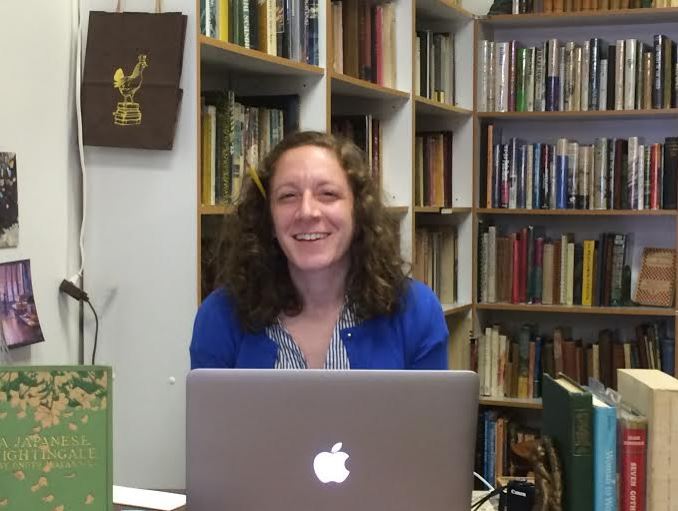
Yours truly. Deception alert: it may look like I am working hard, but in reality I was using my phone to take a picture of "The Right Answers to Tennage Boys' Sex Questions" - a hilarious great find at the Sacto fair.

Yours truly. Deception alert: it may look like I am working hard, but in reality I was using my phone to take a picture of “The Right Answers to Tennage Boys’ Sex Questions” to text to my brothers – a hilariously great find at the Sacto fair.

At Sacramento? You wear heels? Then you should be automatically labeled an outcast (not that anyone there cares besides me) – and I, personally, would laugh at you (mainly because I totally tried to wear heels to my first Sacramento fair, of course). It is so casual you could almost swear that half the people there just wandered in from a cornfield or from a local coffee shop simply to gawk at some “old books”. It’s amazing. Another great thing about the Sacramento fair is that it is only a day-long! Short, sweet, and to the point. A seller doesn’t even have enough time to begin complaining about her lower back pain and constant wooziness from standing up so long before – Poof! – it’s over! You load out, you go home, and maybe you watch television with your roommate. (Spouse, friend, children… any of the above, really).

Finished product! Beautiful, no?

                   Finished product! Beautiful, no?

So I presume that you did not click on this blog to simply hear my thoughts on the dress-code and my old-lady medical problems. You want to hear about the fair itself, right? Load-in, unpacking, and set-up took Vic and me about 2 to 3 hours to complete. That afternoon, fair Promoter Jim Kay offers free pizza and sodas to his hot and sweaty exhibitors, and usually there is a dinner Friday night at Bandera’s that we at Tavistock Books attend with a handful of other Northern California Booksellers (including, this time around, Bookseller Nick Aretakis, Zhenya Dzhavgova of ZH Books, Kim Herrick of The Book Lair, Bookseller Andy Langer, Chris Lowenstein of Book Hunter’s Holiday, and for the first time, special guest Ken Karmiole of Kenneth Karmiole, Bookseller in Santa Monica, CA).

And that brings us to fair day! Thanks to Jim’s promotional efforts, there were a steady stream of customers throughout the day, a friendly and collegial environment between booksellers and customers alike. With 61 exhibitors present, it was easy to stay up-to-date with those we don’t see all that often (and staying-up-to-date for me of course means to get in my quota of sarcasm and cuteness – a little something for everyone – before the day is out).

Up-close and personal layout of our display case.

    Up-close and personal view of our display case.

In regards to overall sales, we at Tavistock Books can say that we made back our money spent to exhibit at the fair, with even a slim profit besides. However, as Vic will swear to any who ask, he does not exhibit at the Sacramento fair to sell his way out. He does it to “buy” his way out – a phrase which in the bookseller world refers to when you pick up something priceless at the fair and are able to turn it around and make your money back after the fact, rather than making money at the fair itself. Really, the beauty of the Sacramento fair is how there is something there for everyone. Of course, if you only have the dedication and determination to rifle through shelves and boxes while standing next to a man who you would more expect to see nursing a Budweiser in the local pub and not milling about an antiquarian book fair, who then turns to you and asks what you think about Percy Bysshe Shelley’s poetic work “The Witch of Atlas”… well, let’s just say that the Sacramento Antiquarian Book Fair is a great day filled with lots of surprises! Plan to be in Sacramento September 12th, for that’s the next one!

Share

A Gathering in Albany: the Quarterly Meeting of the ABAA’s Northern California Chapter

The Banquet Room of the Solano Grill & Bar in Albany, California.

The Banquet Room of the Solano Grill & Bar in Albany, California.

The Solano Grill & Bar, on Solano Avenue in Albany, is now used to hordes of booksellers crowding their bar area and taking up the entire top floor for their quarterly meeting. A great gathering of ABAA booksellers and their guests, it gives booksellers a chance to talk about business, upcoming & past fairs, and share recent anecdotes about the goings-on in the antiquarian book trade.

Beginning with cocktail hour starting at 6pm (which is great, unless you are stuck in rush hour traffic near Emeryville and happen to be 40 minutes late to cocktail hour), booksellers eventually take their seats in the Banquet Room (good & liquored up, at this point), and the meeting begins. The food is more than acceptable at Solano, especially given the sheer number of orders they are passing out to one (rather large) table. After salad and entrees (of which the booksellers could choose, in advance, from 4 options), Michael Hackenberg, Steve Blackmer, John Windle and our own Vic Zoschak took the stage to discuss recent booktrade events. First there was the introduction of guests (of which Tavistock Books, as always, had a healthy helping – Kim Herrick of The Book Lair, Zhenya Dzhavgova of ZH Books, Andy Langer Bookseller, and, of course, me), and then Chair of the NCC Michael Hackenberg took the stage. Over the course of the evening Mr. Hackenberg discussed the recent Oakland fair (and the exciting news that we turned a profit at such, despite being 10% down in the exhibitor category) and showed us a memento that will be sent to Oakland mayor Libby Schaaf as a thank you for attending opening night of the Oakland ABAA fair this past February. Hackenberg also discussed the upcoming NCC Scholarship for educational opportunities for Northern California booksellers, where a lucky nominee will win tuition to a Rare Book course of their choosing (be is RBS, CalRBS or CABS).

Steve Blackmer, treasurer of the NCC, and owner of Chanticleer Books, stated the chapter’s solvent status (yay!), and John Windle (John Windle Antiquarian Bookseller) made a few headline announcements! Rachel Eley (of John Windle Antiquarian Bookseller) has given birth to a healthy baby boy (a future bookseller, hopefully!), and also has recently been made an Associate Member of the ABAA. Windle also proudly announced the great news that his Tour-de-Force wife Chris Loker, curator of the recent Grolier Exhibition “One Hundred Books Famous in Childrens’ Literature”, has now sold out of the printed catalogue of the exhibition after only a short 4 months! Vic, as Vice Chair and chapter representative to the ABAA board, then advised the chapter that the minutes were out and available on the website, that RBMS (the Rare Book & Manuscript Society conference) will be in June and held in Oakland at the Marriott Convention Center (the same as was used recently for the Oakland fair), and therefore holds a possible sponsorship opportunity for the chapter. Also, Vic spoke of the current ABAA investigation of a possible educational opportunity for RBS that hopefully we will be able to hear more of in the coming months.

NCCpicNCCpicAs the dinner came to a close and all of us booksellers returned to our caves (just kidding… I sleep in a display case), another get-together had come and gone in the blink of an eye. Luckily, however, booksellers get together somewhat often, as book fairs and events are spread out throughout the year. Next up: the Sacramento Antiquarian Book Fair on Saturday, March 28th! Come out and support your local booksellers!

Share

Announce: A Bit of March Madness…

Tavistock Books is pleased to announce its first catalogue of 2015, our Spring Miscellany… a bit of March Madness, if you will. As is our custom & wont, we list 30 items that reflect our eclectic & diverse inventory, from Jack London [in jacket] to my guy Charles, from WWI to a nice engraving of “The Lady with the Lamp”, from dolls to Cadets, from Mexico to New Zealand. Prices range from a modest $150 to a more robust $7,500.

And throughout, flashes of Ms. P’s humorous touch are evident.

http://www.tavbooks.com/tavistock/images/pdfcatalogs/10_catalog.pdf

A PDF file of the list also available, and may be secured on application to vjz@tavbooks.com or msp@tavbooks.com, where also any queries & questions may be addressed.

Enjoy.

Vic Zoschak (Principal)

Margueritte Peterson (Aide-de-Camp)


Tavistock Books
First Editions, Rare & Collectible Books
with a Special Focus on Charles Dickens
1503 Webster St.
Alameda, CA  94501
510-814-0480
vjz@tavbooks.com
http://www.tavbooks.com

Share

The Father of California Viticulture’s Middle Child: Arpad Haraszthy & Wine Writing in California

Agoston Haraszthy, pioneer wine maker, "Father of California Viticulture" & also father of Arpad Haraszthy.

Agoston Haraszthy, pioneer wine maker, “Father of California Viticulture” & also father of Arpad Haraszthy.

In hindsight, we know Arpad Haraszthy was born to make wine. His father, Agoston Haraszthy (also known as “The Father of California Viticulture”), founded the Buena Vista Vinicultural Society in California after the 1857 establishment of his Buena Vista vineyard in Sonoma. Hungarian-American wine maker, writer and world traveler, Agoston Haraszthy moved to the United States in 1842 (when his son Arpad was only 2 years old), first settling in Wisconsin, there founding the first Wisconsin vineyards. A challenging endeavor, he gave up his attempts to grow grapes in the mid-west and moved his family to San Diego, California. Though he was active in political town-goings-on in San Diego, Agoston found he was once again disappointed in the local viticulture possibilities, and the family once more relocated to the San Francisco Bay Area, settling (this time for good) in Sonoma. To make a long (& mobile) story short, Agoston finally found what he was looking for in the Sonoma Valley. He and his family settled down. So Arpad Haraszthy grew up surrounded by wine aficionados (for example, Charles Krug was employed at the winery) – it seemed merely a matter of time before he himself entered the profession.

winepic1

A stereoview photograph of the I. Landsberger & Co. Display of Dr. Henley’s IXL Bitters at the Mechanic’s Institute’s 14th Industrial Exhibition. A bit after Haraszthy’s time there.

However, Arpad did not immediately follow in his father’s footsteps. As a young man, Haraszthy toyed with the idea of becoming an engineer, going so far as to study engineering at the École Polytechnique, France’s then most prestigious engineering school, in 1857. Two years later, however, the young Haraszthy went north to the Champagne region to study the art of wine making. He returned to the United States in 1862, finally ready to begin his work in the vineyards of California. Arpad’s first foray into wine making was not a success, however, and his first sparkling wines were the reason for the board’s refusal to sanction his further champagne making while a member of his father’s Buena Vista Vinicultural Society. Arpad resigned from the organization. Nonetheless, Arpad persevered and, at the offer of a job in Isidor Landsberger’s wine business, moved his own young family to bustling San Francisco to try his hand at his trade once more.

An original set of Haraszthy's four part Overland Monthly series "Wine Making in California" is for sale on our website.

An original set of Haraszthy’s four part Overland Monthly series “Wine Making in California” is for sale on our website.

It was in San Francisco that Haraszthy and his partner developed the sparkling wine that would become California’s first commercially successful Champagne. By 1871, Arpad was not only producing very popular wines and champagnes, but was taking part in the social and academic experiences that being a wine maker afforded him. In 1871 and 1872, Overland Monthly published a four-part series of Haraszthy’s own hand, called “Wine Making in California”. This publication consisted of much research into the art of viniculture, with sections on the history of the introduction of the vine to California, the Golden State’s advantages to growing over other areas, the average prices of grapes and other materials, along with statistics in comparing European wines to California varieties. In Part Four of his research Haraszthy states, “We have endeavored to lay before the reader the true value, actual merit, and real qualities of our wines, without the slightest exaggeration… the circle will continue to narrow until California will proudly place the name of that future-discovered vineyard among those of the choicest of the earth. It will not be overshadowed by the crumbling walls of castle of monastery, whose very dampness is replete with memories… It will be the modest home of an American, surrounded by all the civilizing influences of our bright age, and with no past history but that of the peaceful, patient and noble toils of its founder!” (A copy of the original series for sale here>)

A middle-aged Arpad Haraszthy.

     A middle-aged Arpad Haraszthy.

Arpad Haraszthy continued to be a well-known gentleman around the San Francisco “scene” (e.g., he was a founding member of San Francisco’s Bohemian Club), and carried on his quest to make great wines, despite the fact that the rest of his world seemed to be on the verge of collapse. His wife, Juanita Vallejo, threatened to divorce the winemaker in 1877, and only the persistent imploring of her father on her children’s behalf could dissuade her from leaving. One could only assume that Haraszthy’s social nature had led him astray, as he wrote in one letter to his wife, “With feelings of kindness, I address you this time and ask you once again to forget the past and return to me as my wife. I am not only willing but even anxious to acknowledge to you, all those errors I have committed…” In any case, Juanita returned to her husband, though only for a short time, as she unexpectedly died the following May shortly after childbirth (the child suddenly dying shortly before Juanita). Still, life went on for Haraszthy, and though he raised two children on his own for the rest of his life (he never remarried), he somehow found time to continue dazzling wine-lovers and wine makers with his viniculture research.

San Francisco Evening Bulletin, June 9th, 1888. Arpad Haraszthy's article on California Viticulture is front and center! View this item for sale here>

SF Evening Bulletin, June 9th, 1888. Arpad Haraszthy’s article on California Viticulture is front and center! View this item for sale here>

In 1878 Haraszthy was elected president of the State Vinicultural Society and “led its campaign for tariff protection against French wines” (Teiser and Harroun, p.10). He also became, not only a member on the Board of State Viticultural Commissioners (which he appeared before state legislature to help create), but its president. The particular cause for the Board was to rally forces against the pest known as phylloxera, which was devastating vineyards all over Europe and California. The pest was eventually vanquished (not before it had time to do significant damage), but strangely the popular Haraszthy was removed from the Board in 1888, with no reasoning (at least to present-day researchers) as to why. After his removal, Haraszthy wrote a detailed review of the Board’s endeavors throughout its first eight years.

In the last few years of his life, Haraszthy did not experience the same popularity with his sparkling wines as he had in his past. In 1900 he went on a mining trip in Alaska with his brother Bela, trying to locate other profitable sources of income, but getting ill forced him back home earlier than expected. In November of 1900, Haraszthy collapsed on a sidewalk in San Francisco on his way home from visiting a friend, and was pronounced dead on arrival at the San Francisco Receiving Hospital.


Arpad Haraszthy’s contributions to the wine-growing community of California cannot be denied any more than his father’s. As a consistent writer on wine and viniculture, he is still considered one of the most important contributors to the California wine community. His contributions were significant enough that in 1978 the Book Club of California published his 1871 – 1872 Overland Monthly essays, Wine Making in California, as a separate volume, thereby paying a modest tribute to this pillar of the California wine trade.

Beautiful rolling hills of vineyards in California wine country. The Buena Vista Winery begun by Agoston Haraszthy is still in operation, by the way. And only a short hour drive from Tavistock Books!!

Beautiful rolling hills of vineyards in California wine country. The Buena Vista Winery begun by Agoston Haraszthy is still in operation, by the way, and only an hour-long drive from Tavistock Books!!

Share

Workings of the Antiquarian Book Trade: A Talk in Tulsa

A week ago this evening saw me standing at a podium in front of 60 Friends of the University of Tulsa’s McFarlin library. I was there, for last June, Adrian Alexander, the McFarlin’s dean, and Marc Carlson, Head of McFarlin Special Collections, had invited me to speak to the group on the Workings of the Antiquarian Book Trade. I [obviously] accepted.

In case you were interested... taken from the Denver airport. Ouch!

In case you were interested… taken from the Denver airport. Ouch!

Getting there was not without some trepidation… I flew out on Wednesday, through Denver, which at the time I landed, was reporting blowing snow, with visibility less than a quarter mile. Guess they’re used to such weather, for we got in and out with any big problems, only a short departure delay.

The next day dawned clear in Tulsa, and after a nice lunch with the McFarlin folks, I visited Special Collections, and while there had the opportunity to see their wonderful exhibit on comics in popular culture, Comic Books, Up Up and Away, an overview of American Comic Books. Which, in turn, reminded me that my collection of such [including Daredevil #1] went missing when I returned from my first semester in college…. wonder what that Daredevil would bring today?

Caption here

From left to right: Adrian Alexander (Dean of the McFarlin Library) with his wife Nicole, Vic Zoschak of Tavistock Books in the middle, and Melinda & Mitch Adwon (President of the “Friends” group).

That personal musing aside, the evening was soon upon us, and it started with a convivial cocktail hour where all mingled, sipped wine & caught up with each other as people are wont to do at such events. A tasty lamb dinner followed [seriously, it was quite good, and when was the last time you could say that about a banquet dinner?]. Then it was my turn…

The Workings of the Antiquarian Book Trade… I started by quoting the old adage, “Want to make one million dollars by bookselling? Start with two.” For the next 45 minutes, I talked about various aspects of the trade, factors that give books commercial value (“Condition, condition, condition!”) and other mundane matters relevant to this quaint business of ours. My formal talk concluded with the traditional Q & A, and from the subsequent informal conversations, I infer the talk was well received.

caption here

“Murder by the Indians of a Mother and Ten Children”: A broadside acquired by the McFarlin Library (from Tavistock Books) in 2013, detailing the brutal torture and murder of  William Bond’s family in Upper Louisiana, 1810. One of two copies known. 

I’ll conclude this blog piece by saying that the one point I took considerable pains to convey that evening was the importance of groups such as the McFarlin Friends, by applauding their efforts in support of the library. I did this by talking of two [for all practical purposes] unique items that now reside in their library due to the Friends’ largesse (one of which can be seen to the left).

As to the Workings of the Antiquarian Book Trade… I can confidently say there would not be such a profession without institutions such as the McFarlin Library, and folks such as the McFarlin Friends.

My thanks to both for their hospitality last week.

– Vic Zoschak Jr., Proprietor, Tavistock Books


Share

Possible Effects of Prohibition on 1920s American Literature and Wit (Dorothy Parker and her Vicious Circle, in Particular)

“I love to have a martini, two at the very most. Three and I’m under the table…

Four and I’m under the host!”

An "Everything Must Go!" Prohibition Sale, June 24th, 1920.

An “Everything Must Go!” Prohibition Sale, June 24th, 1920.

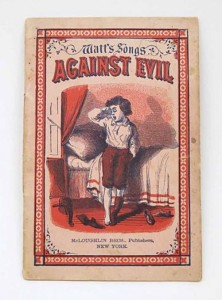
Though we don’t expect you all to know this, we recently acquired (in collaboration with The Book Shop, LLC) a large collection of Temperance-related material. We have songbooks, cookbooks, pamphlets, announcements, postcards – all devoted to the righteous Temperance movement! The sheer amount of information on the dangers of alcohol got us thinking about the Prohibition and the 1920s. How was the lifestyle of some of the literary geniuses of “the day” influenced by the government’s chains? More specifically, did it actually affect the writing of the “Algonquin Round Table” – a group of popular and (usually) similar-minded 1920s authors, playwrights, actresses & editors who met daily at New York’s Hotel Algonquin and traded barbs, insults and witticisms until the entirety of America was aware of their eccentric and deviant lifestyle. The unofficial daily luncheon of the Algonquin table began 1919. Just one year later the Prohibition Ban was instituted, and remained in effect until 1933, long after the “Vicious Circle” had dispersed. Is it merely coincidence that the rise of the group known for their wit and sharp tongues coincides with the onset of a strict government law? Or did interference of administration in the personal lives of the American people somehow help these writers achieve the greatness they were to be known for?

Art Samuels, Charles MacArthur, Harpo Marx, Dorothy Parker & Alexander Woollcott - some of the founding members of the Algonquin Round Table or the "Vicious Circle" as they came to be known.

Art Samuels, Charles MacArthur, Harpo Marx, Dorothy Parker & Alexander Woollcott – some of the founding members of the Algonquin Round Table or the “Vicious Circle” as they came to be known.

As to a small background on the Algonquin Round Table mentioned above, the members included several well-known names, not only Dorothy Parker but also Robert Benchley, Franklin Pierce Adams, Marc Connelly, Ruth Hale, Robert E. Sherwood, John Peter Toohey, Harold Ross (founder of The New Yorker magazine), Harpo Marx, Edna Ferber & Alexander Woollcott. Other members drifted in-and-out of the original circle throughout the years. The daily luncheon was not the only interaction of these people, however. They constantly wove through each other’s circles, working together, playing together, writing together… basically they never left each other’s sides (or stayed out of each other’s personal lives, it seems). What does the Prohibition have to do with the Vicious Circle, you may ask?

Dorothy Parker in 1943.

                  Dorothy Parker in 1943.

Kathleen Morgan Drowne has written a book entitled Spirits of Defiance: National Prohibition and Jazz Age Literature, 1920 – 1933. Not only is it an easy read, it is a fantastic fount of information about the references to the Prohibition and illegal behavior in Jazz Age Literature. She mentions members of the Algonquin Round Table, with a slight focus on Dorothy Parker. Parker, as one of the founders of the Vicious Circle, was becoming well-known for her quick wit, thinly veiled barbs and sardonic one liners (“You can lead a horticulture, but you can’t make her think” is one of the many attributed to Dottie Parker), as well as her often scathing performance reviews, such as the ones she wrote for Vanity Fair at the beginning of her career. It is well-known that members of the Vicious Circle frequented New York speakeasies (of which, throughout the 1920s numbered above 30,000… and no, that is not a typo). Drowne argues that Parker and her contemporaries used speakeasies “as places where their characters willingly make themselves vulnerable to the consequences of law enforcement… important spaces in which they can act outside the law, demonstrate their disdain for outdated behavioral codes, boost their social status in certain circles, and, of course, satisfy their desire to drink… demonstrat[ing] how characters who defy Prohibition by patronizing speakeasies come to see lawbreaking itself as casual – even insignificant- behavior” (Drowne, p. 99). Many of Dorothy Parker’s poems and short stories contain alcohol references (to champagne, “bathtub gin”, and martinis, specifically), and the Algonquin Round Table group were regulars at speakeasies throughout the Prohibition (Dorothy Parker’s signature drink apparently a Johnny Walker whiskey, neat… in case you were wondering). Parker’s slightly crude and roguish attitude towards sex and drinking made her immensely popular at the height of the Jazz Age. Using Parker as an example, you could argue that wit, a sense of humor, a caustic style of writing and an affinity for breaking the rules (the author even divorced in the late 20s) seemed the recipe for success within the Vicious Circle.

Did Prohibition suddenly become an obsolete subject in literature once the repeal was enacted? Of course not! The intense interference of the government in the personal lives of Americans and the fanatical response it triggered in the desperation for alcohol and breaking the rules cannot deny having endured. Times like the magnificent yet seedy house-parties held by Jay Gatsby in F. Scott Fitzgerald’s most famous work were later recalled by authors who wrote about the 30s as full of corruption and alcoholism. Drowne mentions John O’Hara’s 1934 work Appointment in Samarra, for example, and the explicit portrait the writer paints of seedy and unprincipled American following the Prohibition. Not seemingly written as a knock on the repeal, but more as a telling of what government interference in the personal lives of it’s citizens can accomplish in just a few years – a rise in degradation, desperateness, corruption and immoral behavior. Was this the attitude of the Round Table members? Who can tell! Parker went on to Hollywood following the demise of the Algonquin Vicious Circle and wrote screenplays (many of which see actors at bars with a martini, a choice not unnoticed when delving into the psyche of thoughts on alcohol), her love for drink continuing until her death in 1967.

A Famous Caricature of the Vicious Circle, from a 1962 piece by Al Hirschfeld.

       A Famous Caricature of the Vicious Circle, from a 1962 piece by Al Hirschfeld.

Prohibition was repealed in December of 1933, a few years after the disintegration of the Round Table. Though it caused a good few years of strife in the lives of many average American citizens, it was not to the detriment of all (gangster boss Al Capone reportedly made $60 million a year, untaxed, throughout the Prohibition years). Not only did Al Capone make a splash throughout these years, but perhaps the Prohibition was not the worst thing for these authors to have experienced, seeing as it sharpened their wit & style. Parker’s attitude and behavior (characteristics which one could argue were partially shaped during the Prohibition) were some of the things that made the author so interesting to the general public. In this vein, perhaps the Vicious Circle’s wish to break against the chains of the 1920s and be witty, crude and sometimes even inappropriate is, even if only partially, indebted to the law of Prohibition itself.


No, we are not sure what exactly this picture is about, for or against.

No, we are not sure what exactly this picture is about, for or against. It simply makes me giggle.

Fun Facts About Prohibition:

  • 18,000 people CURRENTLY live in “dry counties” throughout the United States, where Prohibition is virtually still in effect! (Who would’ve thought?!)
  • Some desperate and rather unfortunate people during Prohibition falsely believed that the undrinkable alcohol in antifreeze could be made safe and drinkable by filtering it through a loaf of bread. It couldn’t.
  • In Los Angeles, a jury that had heard a bootlegging case was itself put on trial after it drank the evidence. The jurors argued in their defense that they had simply been sampling the evidence to determine whether or not it contained alcohol, which they determined it did. However, because they consumed all the evidence, the defendant charged with bootlegging had to be acquitted.
  • Prohibition, though cutting down on the amount of liquor consumed in many areas of the United States, corresponded with a startling rise in crime in the US, as gangsters fought over bootlegging rights and butted-heads with the US government on many occasions, and regular civilians were put in jail for trying to have a good time. Not only were the gangsters and bootleggers in constant conflict, but the sudden desperate desire for illegal substances placed thousands of lives at stake due to the imperfect or contaminated bootlegged alcohol that was consumed. Thousands died, went blind or were paralyzed from imbibing contaminated bootlegged liquor throughout the United States.
  • After Prohibition was repealed (at 4:31pm on December 5th, 1933… not that we’ve been counting the minutes since or anything), President Franklin D. Roosevelt is said to have declared, “What America needs now is a drink.” (ProhibitionRepeal.com)


Share

Fair Acquisitions at Tavistock Books

One of the best aspects regarding the back-to-back California Antiquarian book fairs is the shop’s New Acquisitions! In other words, items that we find at the fair hit our online database in a matter of weeks afterwards. We picked up more than a few interesting items in Pasadena and Oakland, and though they are not yet catalogued, they are something to watch out for in the near future!  Here are a few items to intrigue you and keep you coming back for more (even though our wit and charm does that already, I’m sure):

menupic1. 1793 British Pub Menu, with Pricing Inked In. This menu looks to be from a Pub or Restaurant of some kind owned by John Hargrave, probably called the “George.” Located in Leek, Staffordshire, England, this small menu printed by F. Hilliard has the pricing for “Eating”, “Wine, and Negus”, “Liquors & Punch”, and “Ale, and Porter” written in. The customer spending a total of 18 shillings, 6 pence (an equivalent of almost an entire British pound when converted. In 1793 that was a lot. Someone clearly had an alcohol dependency.) The menu is in Very Good condition, with little wear and age-tone for its age. Want to know its price? I guess you’ll have to email me for it! Email Margueritte at msp@tavbooks.com


austria2. So You’re Going to Germany and Austria! And if I Were Going with You These are the Things I’d Invite You to Do. by Clara E. Laughlin. “Nowhere else in the bounds of a small and handy volume can the traveler find so accurate and comprehensive and at the same time so sprightly and readable a guide. Miss Laughlin regards the ideal tourist journey as one skillfully blended of movement, of fresh, quick impressions, and of leisurely stays where the ‘feeding’ is richest for your special hunger – whether that hunger be for rest or for inspiration, for shopping or for sports, for museums or for restaurants, for meditation or for dancing…” Laughlin writes in an easy-going manner, with the countries she visits in this handy travel guide separated by city. It includes inserted plates of b/w illustrations and photographic reproductions. A colorful dust jacket on this 1930 volume makes it a beautiful asset to any travel-guide collection!

blue book3. The San Francisco Blue Book… Season 1888-89. Published by the Bancroft Company in 1888. “Being the Fashionable Private Address Directory, and Ladies’ Visiting and Shopping Guide of San Francisco and Surroundings… Containing the Names, Addresses, Reception Days and Country Residences of the Elite of San Francisco…” (yeah, that’s not creepy at all). An extremely early holding of the well-known serial The San Francisco Blue Book, the earliest holding located on OCLC being the 1889-1890 directory.


carthing4. 1963 Chevrolets with the 1963 Chevrolet Finger-Tip Facts: Planned to Help you Sell the Greatest Choice of Chevrolets Ever. This dealer showroom sample catalogue and smaller “Finger-tip Facts” binders are more than just binders with pictures of cars. It includes sections of fabric samples and custom features for passenger cars such as the Corvette, Impala, Bel Air, Biscayne, Chevy II Novas and Corvair Monzas. Many new innovations were introduced to the year’s cars, such as self-adjusting brakes, optional tilt steering, factory AM/FM radios, and vinyl tops in white or black. Also, this was apparently the debut of the 1963 Split-Window Corvette (Vic told me to say that… I’m unsure as to what that means). Very rare to see these two first editions offered together.

Share