Category Archives: Events
Protected: A Post-CABS Report from Margueritte Peterson
A Post-RBS Report from Tavistock Books Scholarship Winner Travis Low
This year Tavistock Books was pleased to offer a scholarship to Joel Silver’s excellent course, “Reference Sources for Researching Rare Books,” at Rare Book School (RBS). We found a worthy winner in Travis Low of Ken Sanders Rare Books. Travis started out as a shipping clerk and has taken advantage of numerous opportunities to expand his role. His new responsibilities often include researching new inventory, making this RBS course ideal. Travis checked in with us to share his RBS experience.
TavBooks: Tell us a little about the class you took, “Reference Sources for Researching Rare Books,” with Joel Silver.
Travis: A group of us sat around a large table taking copious notes while Mr. Silver imparted his reference book wizardry, guiding us through labyrinths of bibliographies, exhibition and auction catalogues, various lists of books, etc. While we mainly focused on reference books, we also learned a lot of valuable information about reliable online sources for researching books. This was extremely useful for the booksellers (like me), librarians, and collectors in the class, giving us the tools to do better research in any field for collecting or selling. For me, the class also sparked a lot of new ideas and strategies for cataloguing and book buying and selling.
TavBooks: How was the class structured? What was the learning environment like?
Travis: It was a fairly traditional lecture and discussion class, but with a lot of interaction with the books under discussion. We also had two very useful workbooks to interact with and take notes in. The floor was always open for questions and discussions. Mr. Silver’s knowledge base and ability to teach through instruction, interaction with material, storytelling, and personal anecdote were very impressive.
TavBooks: What was the most useful or immediately applicable lesson you learned?
Travis: It quickly became clear to me that, to some extent, any bookseller, librarian, or collector is about as good as their abilities to navigate and effectively use the reference materials in their relative fields and specialties. The class really opened my mind to the wealth of resources that are available in all fields. So, I’ve immediately become more interested in familiarizing myself with the reference literature in new and unfamiliar fields of interest, while making sure that I have all my bases covered in the fields that I already deal in on a regular basis.
TavBooks: What was the most challenging part of the course? The most interesting?
Travis: The most challenging part is simply grasping the breadth and depth of information that is available and learning the best methods and practices for engaging the material that is available. Sometimes it takes a clever mind to figure out which resources to consult to do effective research, especially with new or obscure material. The most interesting parts of the class were the stories that Mr. Silver shared about the formation of notable and well known collections, or the processes by which many of the bibliographies and catalogues were produced and the eccentric personalities that created them. These stories gave interesting perspectives and insight into various ways of approaching book collecting and selling. I find this very valuable as I continue to try to learn and grow and find my way in the book trade.
TavBooks: How did RBS complement your experience at the Colorado Antiquarian Book Seminar (CABS)?
Travis: CABS was amazing for giving a broad and general overview of many of the aspects of the book trade — a detailed map of the book world and how to engage with it. RBS goes deep into the details and particularities of specific subjects and areas of interests. I felt that CABS was the perfect gateway to attend RBS. Many of the things that I learned at CABS prepared me and gave me the proper background and context to be able to make the most out of my experience at RBS.
TavBooks: How would you describe RBS to someone who’d never heard of it before?
Travis: It is an enlightening and invigorating experience. Be sure that you are ready to absorb a lot of information, and take a lot of notes that you can use later. The classes go into a lot of depth, are very detailed, and are taught by the most interesting and knowledgeable professionals in the field. The campus and the living experience are a lot of fun at the University of Virginia, especially on ‘The Lawn’ where I stayed. The social experience is a lot of fun, providing many great opportunities for networking between classes, at lunches and dinners, and at other evening events, etc.
TavBooks: Which course are you hoping to take next?
Travis: I’m currently forming and deciding on a personalized course of action for the RBS’s new Certificate of Proficiency Program, which “allows students to create a specialized focus for their coursework at RBS and to earn formal recognition for their concentrated studies at the School.” My next class will probably be either “Introduction to the Principles of Bibliographic Description” or “Printed Books Since 1800: Description and Analysis.” But so many of the courses sound interesting! I hope to eventually take “Developing Collections: Donors, Libraries, and Booksellers,” and several of the courses that explore various aspects of illustration.
Based at the University of Virginia in Charlottesville, Rare Book School offers a wide variety of courses addressing the art, history, and bibliography of the book. Taught by world experts in the field, these classes are geared not only toward antiquarian book sellers, but also librarians, collectors, and anyone else who embraces the book as an object. Please visit RBS online for more information.
Are You Ready for the Pasadena Antiquarian Book Fair?
Photo: Bustamante Shows
On August 10 and 11, over 60 exhibitors will come together at the Pasadena Center for the 14th Annual Pasadena International Antiquarian Book, Print, Photo, and Paper Fair. Visitors will find a wide variety of antiquarian, rare and modern first edition books, prints, posters, vintage photographs, and a variety of unique ephemera. It’s an excellent opportunity to experience an incredible number of fine collections.
We’ll be among the exhibitors and would love to see you at Booth #208! The show, organized by Bustamante Shows, is always a terrific event. Sheila Bustamante, who oversees the Pasadena Fair, was kind enough to share her perspective on collecting and explain why this fair is exceptional.
TavBooks: How did you get involved in organizing these antiquarian book shows? Are you a collector yourself?
Bustamante: Throughout the years in producing the antique shows, we had a couple of participating book dealers. In their occasional conversations with Mr. Bustamante, they would always encourage him to produce a book fair, but the suggestion was never taken too seriously. Our schedule of shows was pretty full with over 39 shows per year in California, Nevada, and Arizona. It wasn’t until fifteen years ago that Walter Larsen approached Mr. Bustamante and urged him to produce a book fair in Pasadena. The time was right, and our schedule of annual shows had been reduced sufficiently to allow us to take on the endeavor.
And yes, I’m a collector of books, American brilliant cut glass, art, and many other antique items.
TavBooks:Many of the dealers who’ll attend the Pasadena fair are from California and neighboring states, but one dealer is coming all the way from New York. What’s unique about the rare book community in Pasadena? Why are dealers so interested in attending this fair?
Bustamante: Pasadena has a lot of wonderful history. It was a “sleepy” town for a long time. When we first started producing antique shows there, the town would close up at 9 o’clock at night. Our shows didn’t close until that time, and dealers would not have a place to grab a bite to eat or relax afterward, except back in their hotel rooms. The residents of Pasadena have always been serious about preserving their history. They have done a marvelous job of resurrecting their downtown, and making their city more inviting for the young as well as the older generation. Pasadena has become a marvelous place to visit, without the congestion.
TavBooks: Bustamante Shows has been organizing these book fairs for many years. How has the rare and antiquarian book industry changed since you got involved with the business?
Bustamante: Bustamante Enterprises, Inc has been organizing the book fairs for fourteen years. We’ve been producing antique shows since 1975. Since we have only been involved with the book fairs for a short period, we have nothing to compare with on the evolution of the trade. We do feel, however, that just like the regular antique business, it’s always important to generate new collectors and to get our young generation interested. These will be the future custodians of history. If we do not teach our younger allies how to appreciate and preserve, we will lose those objects that carry the very stories and souls of our ancestors.
TavBooks:What advice would you offer a novice collector who doesn’t have much experience navigating a book fair like this?
Bustamante: For any novice collector: ask questions, research, and purchase what tugs at your heart and desire.
TavBooks:Any exciting items that you know dealers are planning to bring?
Bustamante: We never get involved with our dealers’ inventory, unless they have placed on display something inappropriate for the show. After all, it is always the unknowing that brings those collectors to the doors early, that causes excitement when on the hunt for an item to add to a collection. So whether one is young or old, a novice or a seasoned collector, there is always something at our fairs for everyone.
Fair Details
The Pasadena International Antiquarian Book, Print, Photo, and Paper Fair is open from 10:00 am to 6:00 pm on Saturday, August 10 and 11:00 am to 4:00 pm on Sunday, August 11. General admission is $8, with discounts available for senior citizens (62+) and free admission for children under 12. Your ticket includes free return privileges. The Pasadena Center (300 East Green Street) has ample parking.
Have a question about the show? Call 626-793-2122 or reach the show promoter at 209-358-3134.
Protected: A Warm Welcome to M Peterson
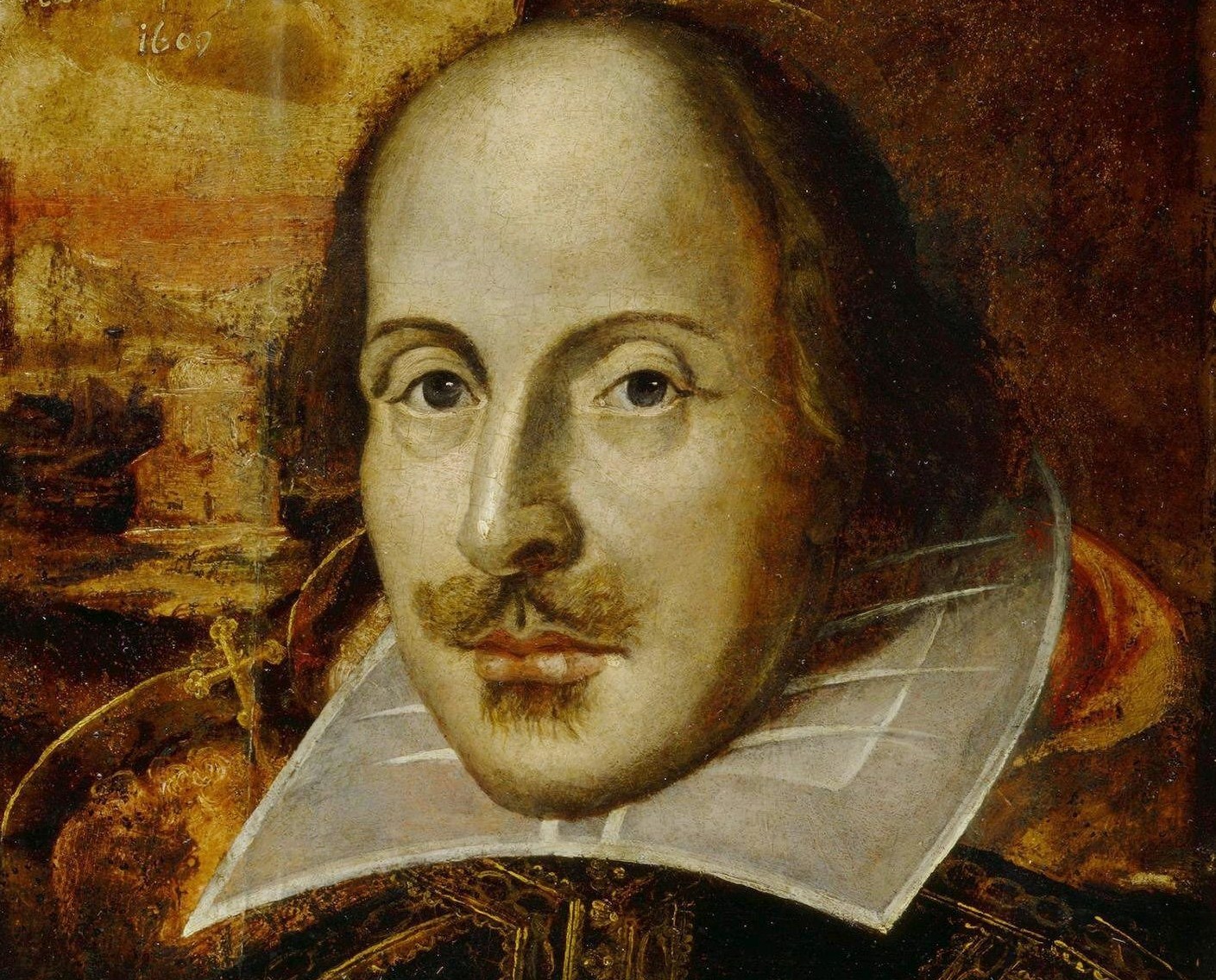
Happy Birthday, William Shakespeare!
Today we celebrate the birthday of the world’s most famous playwright and poet, William Shakespeare. While he’s best known for works like Romeo and Juliet, Midsummer Night’s Dream, and Macbeth, Shakespeare produced an incredibly diverse body of work that includes many overlooked pieces. Scholars have approached Shakespeare from countless angles. Both Shakespeare’s works and Shakespearean scholarship have fascinated rare book collectors for centuries, and the items below offer an interesting glimpse into Shakespeare’s genius.
Cymbeline
Cymbeline: A Tragedy is based on part of the Historia Regum Britanniae of Geoffrey of Monmouth, which details the life of British monarch Cunobelinus. Shakespeare, of course, weaves in multiple sub-plots and adapts the story to make it more dramatic and engaging. The date of Cymbeline’s authorship isn’t certain, though it was certainly performed as early as 1611. It used to be one of Shakespeare’s most highly regarded plays but has fallen out of favor in the past few centuries. Multiple scholars have asserted that Shakespeare worked with a collaborator to write Cymbeline; several passages sound patently “un-Shakespearean.” Our 1734 edition of Cymbeline, printed for J. Tonson, includes a frontis by Guernier and a title page printer’s ornament of a bust of Shakespeare.
The History of Sir John Oldcastle
Originally published anonymously in 1600, The History of Sir John Oldcastle, the Good Lord Cobham is an extremely rare Shakespearean work. The second edition (1619) attributed the work to Shakespeare. Sir John Oldcastle was a real person who was hanged and burned for heresy and treason in 1417. Oldcastle is incorporated as a minor character in Famous Victories of Henry V, which was undoubtedly a source for Shakespeare’s Henry IV and Henry V. Earlier versions of Henry IV use “Oldcastle,” rather than “Falstaff,” and it’s thought that Shakespeare changed the name to avoid offending the Cobham family. According to Jaggard, who cites Henslowe’s diary, authorship of this history was a joint effort of Drayton, Munday, Wilson, and Hathway. Other scholars even assert that these four actually wrote The History of Sir John Oldham as a response to Shakespeare’s Henry IV. Regardless of its authorship, the piece is exceptionally scarce on the commercial market.
Shakespeare Head Press Booklets
In 1904, Elizabethan scholar AH Bullen established the Shakespeare Head Press in Stratford-upon-Avon. His goal: to produce an exceptional version of Shakespeare’s works. Bullen administered the private press until his death in 1927; it was then acquired by a partnership that included Oxford bookseller Basil Blackwell. The press has become quite famous in its own right. This collection of Shakespeare Head Press booklets represents early works from the press and includes “Ancient Carols” (2nd ed); “Festive Songs for Christmas” (2nd ed); “Shakespeare’s Songs”; “The Nutbrown Maid”; “A Lover’s Complaint”; and “The Phoenix and Turtle.”
The Great Cryptogram
The full title of this work is The Great Cryptogram: Francis Bacon’s Cipherin the So-Called Shakespeare Plays (1888). Its author, Ignatius Donnelly, began his career as a Minnesota farmer and went on to be a Congressman for the state. He was active in the formation of the Populist Party. Later, Donnelly turned his efforts to authorship, and here he argues that philosopher Francis Bacon is the real author of Shakespeare’s works. Donnelly’s argument was a popular one in the late 19th and early 20th centuries. Donnelly traveled to England to arrange an English publication of the work. He spoke at Oxford Union, and his thesis “Resolved, that the works of William Shakespeare were composed by Francis Bacon,” was defeated by vote. Donnelly found himself publicly discredited, and the book was a failure.
Assorted Scholarship
The breadth, depth, and impact of Shakespeare’s works have resulted in an immense body of Shakespearean scholarship. You’ll find works that explore Shakespeare’s connection to Charles Dickens or Shakespeare and Milton, along with more obscure items like Christopher Morley’s lectures on Shakespeare and Hawaii. These items are often relatively affordable, making them both interesting and accessible for rare book collectors. They also add context and texture to a Shakespeare collection.
Congratulations to Travis Low, Winner of the Tavistock Books RBS Scholarship!
We’re extremely pleased to announce that Travis Low of Ken Sanders Rare Books has won this year’s Tavistock Books Scholarship to Rare Book School (RBS). Travis will take Joel Silver’s course, Reference Sources for Researching Rare Books, at RBS in Charlottesville, Virginia.
Rare Books through the Back Door
As many of us in this field do, Travis wears many hats at Ken Sanders Rare Books. He came in, almost literally, through the back door, starting out as a shipping clerk. Travis, who is also a documentary filmmaker, was shooting a documentary about writer and performance poet Alex Caldiero. Ken Sanders, a friend of Caldiero’s, appeared in the documentary, so Travis got to meet him. He’d been a customer of Ken Sanders Rare Books and asked if there were any employment opportunities.
He found the bookstore an incredibly collegial environment and has gotten involved in other aspects of the trade as opportunities arose. “Ken has been extremely supportive, and I’m gradually getting more involved in acquisition and description, so this RBS course seems like an excellent place to further my understanding,” says Travis.
As he delves further into the rare book world, research becomes increasingly important. “My favorite aspect of the book trade is when new books come into the store and we get to start digging through them. I find that pretty engaging and have a real affinity for the research required to learn something new about the publishers, the authors, and the books’ subject areas as well.”
The Start of an Ongoing Education
Last summer Travis attended the Colorado Antiquarian Books Seminar (CABS). The program gave him an excellent introduction to the world of rare books, and RBS will allow him to take a more specific, focused course in an area where he needs to grow. Travis noted that he’s been encouraged to further his education through RBS by many respected professionals: Ken Sanders, Melissa Sanders, and Terry Belanger had all stressed the value of the experience.
Travis says that he hopes this will be the first of many courses he takes at RBS. “I’ve spoken several times with Tavistock Books’ proprietor, Vic Zoschak, and he always talks about RBS as his way of continuing his education, and about how he feels an obligation to do that as a professional. That really resonated with me, and I feel compelled to constantly better myself.” After taking Reference Sources for Researching Rare Books, Travis would like to take the Introduction to the Principles of Bibliographical Description.
Travis Low grew up near Logan, UT. He studied Philosophy, Humanities, and Film at Utah Valley University. In January 2010, Travis began working at Ken Sanders Rare Books where he has found an encouraging and instructive working environment. In addition to being a full-time bookseller, he is also an active documentary filmmaker and a hibernating musician. He currently lives in Salt Lake City, UT.
Don’t Miss the Sacramento Antiquarian Book Fair

This Saturday we’ll be taking Tavistock Books on the road for the Sacramento Antiquarian Book Fair. One of the best regional book fairs, the show features booths from 60 vendors. This Sacramento book fair has gained an excellent reputation in the community, and visitors will find an incredibly variety of items, including many that cannot be found anywhere online.
Sacramento Antiquarian Book Fair
March 23rd, 2013: 9:45 AM to 5 PM
September 14, 2013: 9:45 AM to 5 PM
Scottish Rite Temple, 651 H Street, Sacramento 95819
This fair is unique because it draws such a strong crowd year after year. Fair manager Jim Kay has worked hard to make the event accessible–and memorable–for visitors. For about 20 years now, the fair has been at the Scottish Rites Temple, an ideal location because it’s spacious and offers plenty of free parking. Meanwhile, visitors find a wide variety of unique items. “Our dealers bring items that are unique, and most of them bring items that you simply can’t find on the internet,” says Kay.
Visitors will also be able to get free appraisals on their own antiquarian books, which is always a popular service. Kay, who’s been a book dealer himself for many years, conducts the appraisals. If you’ve always wondered what your books are worth, now’s the time to find out!
The Sacramento Antiquarian Book Fair draws crowds from all backgrounds, from beginners to serious rare book collectors. “Fair offerings run the general gamut, from $5 to $20,000 books. You’ll find collectibles and relatively modern authors, but someone looking for a very rare John Steinbeck would also likely find it if it’s available. There are postcards, original art pieces, diaries of people from the Gold Rush, and more,” says Kay. He also noted that collectors would find plenty of graphic items and ephemera, such as movie posters from the 1920’s and even original paintings.
You’ll find us at the fair with a spectacular collection of items from our inventory. If you’d like to see a particular item, please let us know and we’ll do our best to bring it for you.
Hit the Books with Us at RBS
When’s the last time you were in school? If you’re into antiquarian books, bibliography, or any other aspect of the printed word, it’s time to re-enroll. Rare Book School (RBS) offers an incredible array of courses taught by leading scholars in the field. This year, Tavistock Books is pleased to offer a scholarship to an RBS course for an excellent class taught by expert Dr. Joel Silver.
About Rare Book School
Founded in 1983, Rare Book School had its first home at Columbia University. The program moved to its current home, the University of Virginia, Charlottesville, in 1992. Each year RBS offers about 30 five-day courses related to old and rare books, special collections, and manuscripts. These courses, mostly offered in Charlottesville, are quite intensive; students attend all-day classes and often opt to participate in lectures and other bookish events in the evenings.
As RBS has grown, it has become much more than a collection of bookish classes; it’s now a mainstay of bibliographic education in the English-speaking world. Schools following the RBS model have been established globally. Meanwhile, in 2005 RBS expanded to offer courses at the Morgan Library & Museum and the Grolier Club, both in New York City. Some courses are now also offered in Washington, DC and Philadelphia.
Our RBS Scholarship
Tavistock Books is pleased to offer a full-tuition scholarship for Joel Silver’s course, “Reference Sources for Researching Rare Books” (L-25). The scholarship is available to all antiquarian booksellers interested in the course, and preference will be given to individuals who are early in their careers or who may not be able to attend RBS without the assistance of a scholarship.
The scholarship is offered every year that the course is taught at RBS, and the deadline for 2013 is rapidly approaching! To apply, you’ll need to submit your 2013 RBS summer application along with a cover letter that outlines your reasons for applying for the scholarship, your work in the antiquarian book trade, and any other relevant information.
About Joel Silver and His RBS Course
First offered in 2012, “Reference Resources for Researching Rare Books” (L-25) offers students a comprehensive overview of the myriad resources available for researching rare books. Emphasis is on early printed works; American and British literature; maps and atlases; science and medicine; historical Americana; voyages and travels; and the book arts. Students will systematically learn about approximately 350 printed and electronic reference sources, along with how each was compiled and the strengths and weaknesses of each resource.
Dr. Joel Silver is Associate Director and Curator of Books at Indiana University’s Lilly Library in Bloomington, where he’s been on the faculty since 1983. His articles have appeared in Fine Books & Collections Magazine and AB Bookman’s Weekly. Dr. Silver has taught many rare books-related courses at the Indiana University school of Library and Information Science, where he is the Director of Education for Special Collections.
If you have questions about RBS or the Tavistock Books Scholarship, please don’t hesitate to contact us!
Courtship, Romance, and Love…Antiquarian Style
On the eve of Valentine’s Day, many of us are looking forward to spending time (and perhaps a romantic moment or two) with our significant others. But our decidedly tender views of courtship and marriage are a rather modern invention; for centuries, these institutions had little–if anything–to do with love. A look back at books on the subject offers an entertaining and educational perspective on relationships, religion, and even anatomy.
All for Love or, the World Well Lost (John Dryden, 1677)

Perhaps Dryden’s best known play, All for Love is a tragedy written in blank verse. Dryden sought to rekindle interest in serious dramas, and he acknowledged that Shakespeare’s Antony and Cleopatra heavily influenced the work. Indeed, he reincarnates the Bard’s work with a few changes: Dryden sets the entire play in Alexandria and focuses more heavily on the end of Antony and Cleopatra’s life. Dryden’s work truly captures the complexity of the couple’s epic romance.
Love Letters between a Nobleman and His Sister (Aphra Behn, 1729)
Aphra Behn, generally accepted as the first woman to make a living as a writer, gained fame for her Spanish comedies. But Love Letters takes a darker turn: a woman is forced into an incestuous relationship with her own brother–then into a marriage to salvage her family name. The epistolary novel is supposedly based on the real relationship between Forde Grey (Lord Tankerville) and his sister-in-law, Lady Henrietta Berkley. Behn was among the first women to openly attack the practice of forced marriage, a commonplace practice at the time.
The Turtle Dove; Or Cupid’s Artillery Leveled Against Human Hearts, Being a New and Original Valentine Writer (Sarah Wilkinson, c 1811)
Though this chapbook is extremely rare, its theme certainly isn’t. Wilkinson wrote at least 50 chapbooks and bluebooks, and this one features two comical illustrations by Isaac Cruikshank. In the first, the groom gazes at his new bride with deep affection. Cupid’s arrow flies in his direction. The second illustration depicts Cupid–and the unhappy husband–fleeing the scene, leaving behind an angry wife encumbered with the usual accoutrements of broom and child.
Valentine Verses: or, Lines of Truth, Love, and Virtue (Rev Richard Cobbold, 1827)
Following the death of his beloved mother, Cobbold composed Valentine Verses. Proceeds from the book went to his mother’s favorite charities, but the poems weren’t received particularly well. The Reverend’s interpretation of love obviously errs on the side of religion, but this was not merely because of his occupation. The concept of love–even romantic love–almost always still carried undertones of piety and a rather religious devotion.
Physiological Mysteries and Revelations in Love, Courtship, and Marriage (Eugene Becklard, 1842)
The subtitle to this book gives the reader great expectations indeed: “An Infallible Guide-book for Married and Single Persons, in Matters of Utmost Importance to the Human Race.” Dr. Becklard, a French physiologist, fashioned his book as a sort of self-help guide for Victorians facing a wide range of sexual frustrations. He dispenses (exceedingly poor) advice on pregnancy, childbirth, and contraception, illustrating how little we really knew about the human body even during this relatively enlightened period. Dr. Becklard’s advice, though rather silly by today’s standards, certainly assuaged his contemporary readers’ anxieties.
The Battle of Life: A Love Story (Charles Dickens, 1846)
This novella, one of Dickens’ Christmas stories, recounts the story of sisters Grace and Marion Jeddler. The two live happily in the countryside with their father, who views life as a farce. Marion is betrothed to Alfred Heathfield, who leaves to finish his studies. After his departure, the Jeddlers’ servant spies the profligate Michael Warden with Marion and believes that the two are planning to elope. His suspicions seem to be confirmed when Marion disappears on the day of Albert’s return. Dickens, known for his progressive views, here explores the still relatively unconditional idea of marriage for love.
“Before and After Marriage: In Five Acts” (Cassius M Coolidge, 1882)
Perhaps best known for his poker playing dogs, famous caricaturist Coolidge turns his satirical eye to the institution of marriage. Comprised of six panels, “Before and After Marriage” shows the groom’s perspective shift over time from the satisfied love of a new groom to the apathy of a henpecked husband. This hilarious comic has proven an incredibly rare item.