Every single person reading this blog would (I hope) know the name “Gutenberg.” Right? Now here’s another major name in the printing world, perhaps not known by everyone… William Caxton. Maybe you know him, maybe you don’t. We aren’t here to judge your knowledge of the printing business. We’re just here to educate you! So sit back, relax, and learn something new.
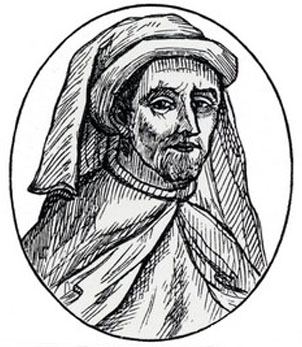 William Caxton was born sometime during the years 1415-1424, which scholars have appropriated since his apprenticeship fees were paid in 1438. He grew up and was educated in the district of Kent, before leaving for London to be apprentice to Robert Large, a wealthy London dealer or luxury goods. Caxton made trips to Bruge after the death of Large in 1441, and eventually settled there in 1453. He was successful in his business as a merchant, and after becoming governor of the Company of Merchant Adventurers of London he became a member of the household of Margaret, Duchess of Burgundy and sister to two Kings of England! This was a fortuitous time in Caxton’s life, as due to his international travels for the Duchess’ household he observed the brand new printing press business in Germany (as the Gutenberg press had began in 1440) and immediately set up his own printing press in Bruge and within a few years produced the first book known to be printed in English, published in 1473 Recuyell of the Historyes of Troye (“A Collection of the Histories of Troy” ) – a book of French courtly love translated by Caxton himself. (Fun antiquarian book world fact: only 18 copies of this printing still exist [kind of shocking there are even 18], and one sold by the Duke of Northumberland in 2014 and fetched over 1 million GBP.)
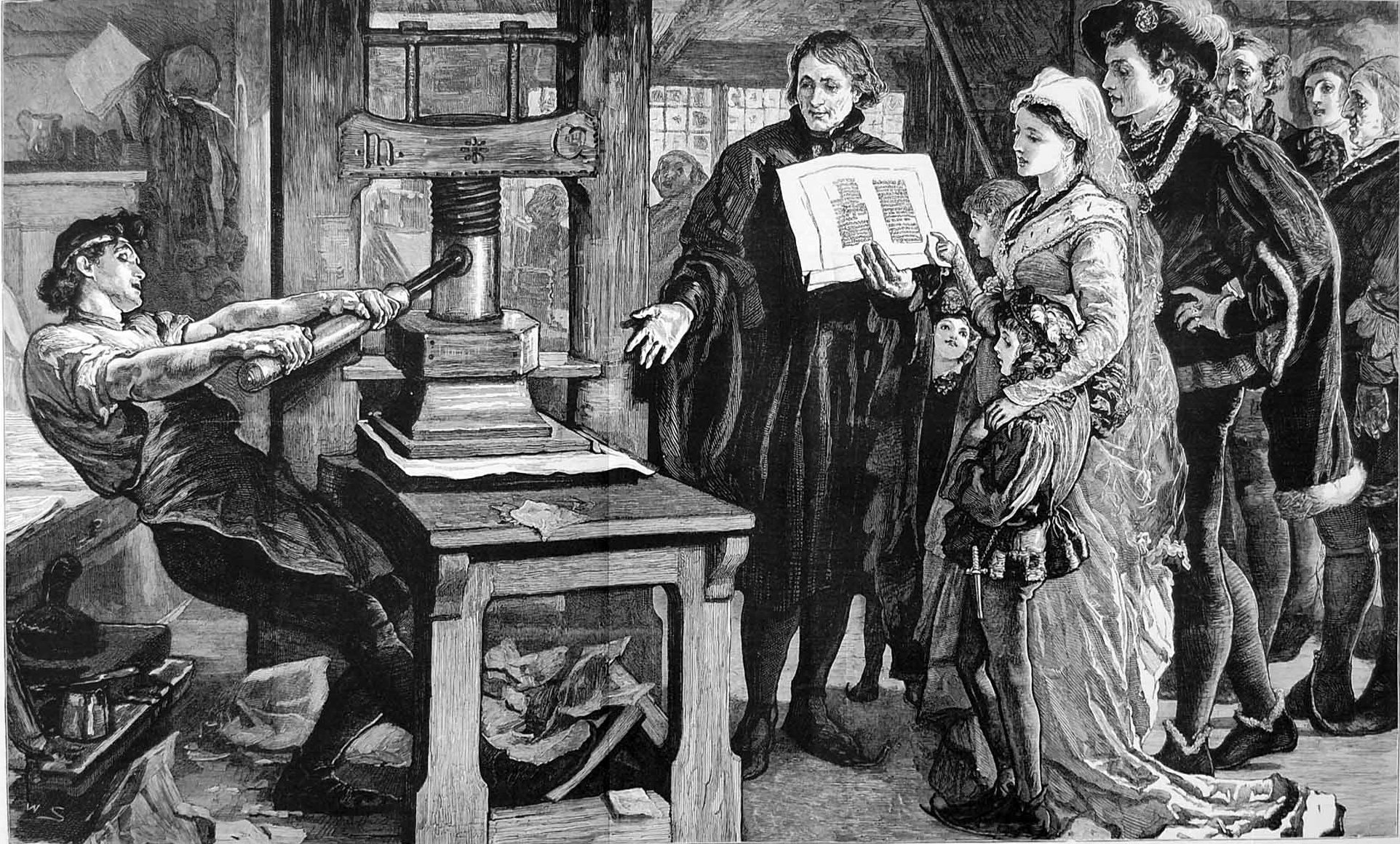 After his success with the printing in Bruge, Caxton brought his art back to England in 1476 and set up the country’s first ever press in a section of the Westminster Abbey Church. The first book printed in England itself was an edition of Chaucer’s The Canterbury Tales. Other early titles printed by Caxton included Dictes or Sayengis of the Philosophres translated by the king’s brother in law Earl Rivers, and Caxton’s own translations of the Golden Legend in 1483 and The Book of the Knight in the Tower. Caxton also printed the first ever English translation of Ovid’s Metamorphoses, as well as Le Morte d’Arthur.
[As you can probably already tell, if you didn’t know the name Caxton that is:
a) shocking
b) embarrassing
c) all of the above
but in all reality, he is not as spoken of as Johannes Gutenberg and his press. So yes, Gutenberg is given big props for developing the early European movable type system, but why isn’t Caxton’s name also taught in schools?!]
 Caxton’s death is recognized as taking place in 1491 or 1492, as that is when his work stopped being produced. He was succeeded by his Dutch employee Wynkyn de Worde, who is recognized for moving the printing of books in English away from an excitement enjoyed by the aristocrazy and nobility and toward the idea of printing for the masses. De Worde is often known as “England’s first typographer” and printed over 400 books in over 800 editions. Caxton, god bless him, printed 108 books of 87 different titles. However, Caxton did much of his translating himself, working on an honest desire to provide the best translation possible to his customers. Despite the fact that de Worde is known for standardizing the English language (as there were, at that time, so many different dialects and different spellings that it was often difficult to keep track), Caxton is absolutely also honored for beginning this process and though printing books of no remarkable or significant beauty, then at least for beginning the process of printing books in English at all!






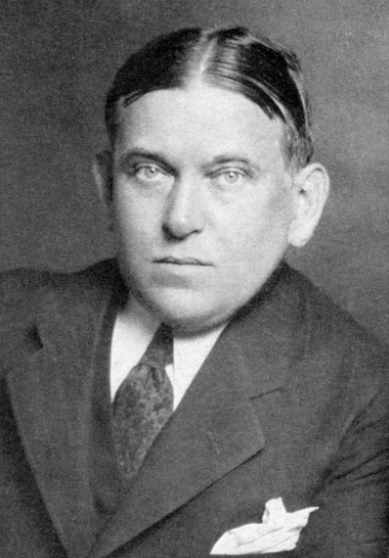
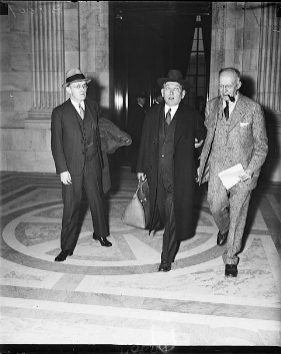 The story of Mencken’s arrest goes something like this – he boarded a train for Boston and once having arrived in the city organized a meeting in a public square with John Chase, the director of the Watch and Ward Society. Once Chase arrived, police in tow, Mencken offered Chase the banned issue of The American Mercury for a half-dollar coin. Chase handed the coin over, dramatically (or so we presume), and Mencken, after having bit the coin (you know, just for good measure), was placed in handcuffs and escorted from the Boston Common! After his acquittal the following day, when the judge ruled that private citizens should not be in charge of what literature ought to be banned or not, Mencken went to lunch at Harvard University, where a crowd of over a thousand happy fans greeted him with applause and gaiety.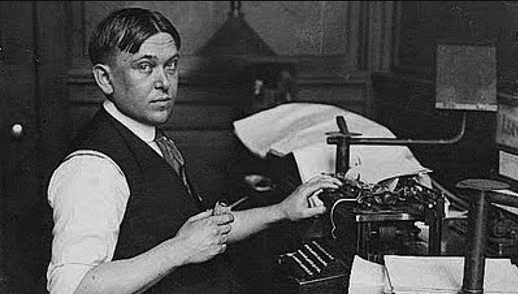

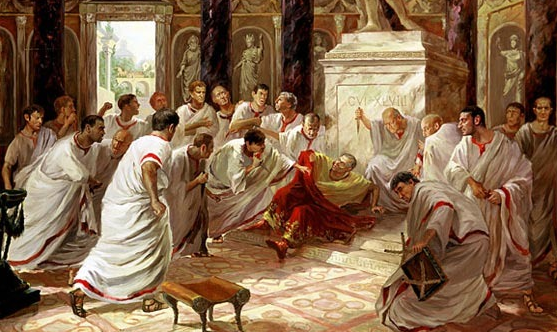 Caesar was, according to legend, warned by a seer to “Beware the Ides of March”. This was followed by Caesar throwing it gently back in the seers face while on the way to the Theatre of Pompey in 44 B.C. on March 15th, when he joked that the Ides of March had come and nothing bad had happened, and the seer replied with “Aye, Caesar; but not gone.” – meaning that the worst was yet to come. Caesar was then assassinated by almost 60 conspirators led by Brutus and Cassius at the meeting of the senate – an event which sparked civil war and led to the creation of the Roman Empire and dissolution of the Roman Republic. Shakespeare, a master of creating phrases that live on in the minds of his audience, must have known that by dramatizing such a famous occasion he would be inducing a world of fear surrounding the 15th of March! But is there any truth to the fear? Well, take a look yourself! Here are what the Smithsonian deems the top 10 events in history that took place on March 15th that coincide with the fear of the day.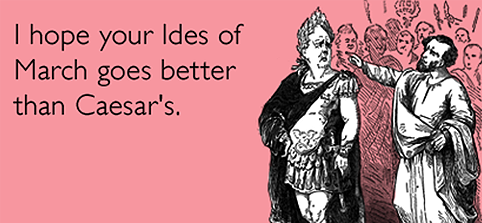

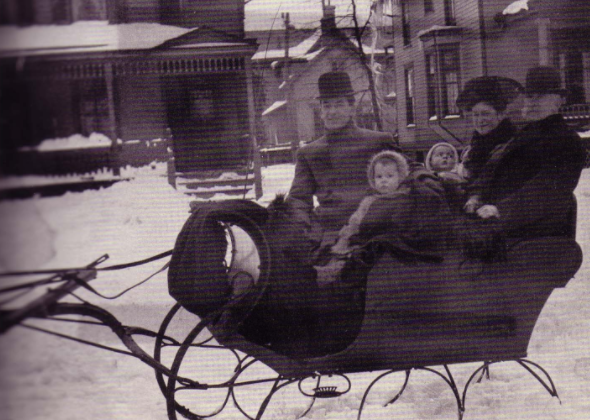
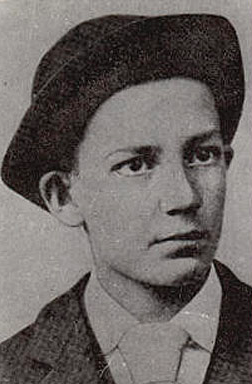 By the time Anderson was 18, his father had been drinking and disappearing for weeks at a time, leaving all the children home with their mother to fend for themselves. Having been working desperately for years as a washer, Anderson’s mother Emma died of tuberculosis in 1895 when Anderson was only 19. Having no reason to continue living in the small town of Clyde, Ohio, where the Anderson’s had eventually settled, Sherwood followed his older brother to Chicago, where the two lived in a boarding house as the brother attended the Chicago Art Institute. He continued on in Chicago, eventually renting enough space for his sister and two younger brothers to move into a couple years later. However, having signed up for the Ohio National Guard, his living in Chicago was short-lived, as he was sent to Cuba in 1898, after the fighting in the Spanish-American War had stopped, for 8 months. After his return, Anderson worked in Clyde once more for a few months as he saved money, and eventually joined two of his siblings in Springfield, Ohio, where finally, at the age of 23, Anderson enrolled in classes and was able to complete his high school education.
  One important aspect often noted in Anderson’s life is the nervous breakdown he suffered as a result of professional stress in 1912. By this time, he had begun a new business called the Anderson Paint Company. The intensity of running his own (large) business took its toll and Anderson disappeared for four days, before walking into a drug store and asking an employee to help him figure out his own identity. To this day, it is uncertain as to whether Anderson’s breakdown was involuntary or voluntary, as his story changed over the months and years following the episode. Either way, however, it helped Anderson leave his business, his relationship, and start fresh. Anderson had begun publishing some stories in 1902, and soon writing would become his main source of income.

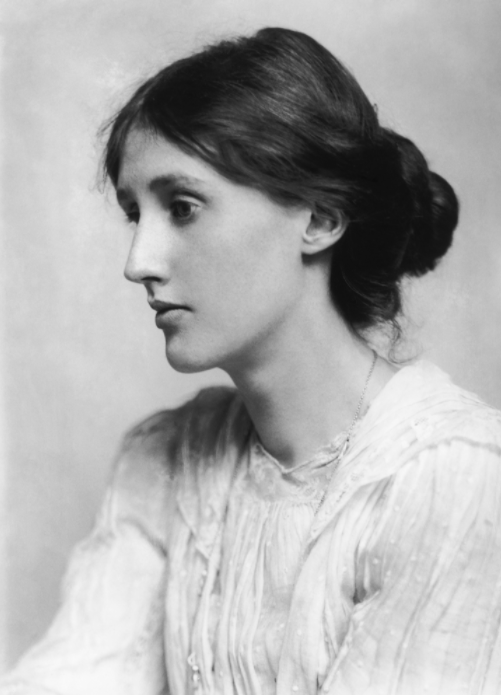 Virginia was born Adeline Virginia Stephen on January 25th, 1882 in Kensington, London. She was born into a mixed family – both of her parents having been married previously with sets of children on both sides. The family was extremely literate – both parents being well connected in the artistic and literary worlds. In 1895 when Virginia was only 13 years old her mother died, followed closely by her half-sister, Stella and brother Thoby. At this point Virginia began to suffer from the nervousness and had the first breakdown of many she would suffer from throughout her life.
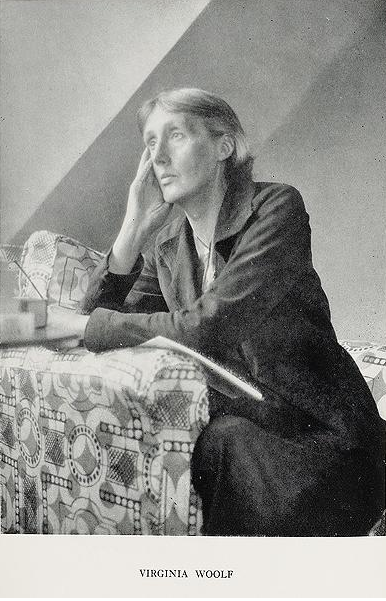 As far as writing goes, Woolf’s stories are often experiments in point of view and narrative. She focuses her plots on realism – typical days in the lives of her characters, sometimes no plot twists whatsoever. She, alongside other modern authors Joseph Conrad and James Joyce, has been credited with the invention of the stream-of-consciousness form of writing – where the narration takes on a inner dialogue type voice that never ceases and flows lyrically from one subject to the next, just as our regular minds do. This lyrical style is also seen in her descriptions of ordinary, commonplace events in her novels. They are so stylistically written that Woolf elevates the ordinary and creates a world rich in detail.
 Amelia Mary Earhart was born on July 24th, 1897 to a family in Atchison, Kansas. She lead a somewhat average childhood. As the eldest surviving child in the family, she played the role of the ringleader well and was often in charge of her younger sister, Grace. “Meely”‘s only slightly unconventional aspect of her childhood was that her mother, Amy Earhart, did not believe in forcing manners or or tradition on her daughters! She didn’t not believe that parents should be shaping their children into “nice” little girls, and gave her two daughters a freer reign than their childhood friends would have known. This gave Amelia the chance to express her true tomboy nature and her family (or at least her mother) embraced it. In 1904 at the age of 7 Earhart completed her first (not quite successful) solo flight with the aid of an uncle. She put together a home-made ramp fashioned after a roller coaster she had seen, and placed the ramp on the roof of the toolshed at her family home. She rode in a wooden box off the ramp, and climbed out of the broken box completely exhilarated!
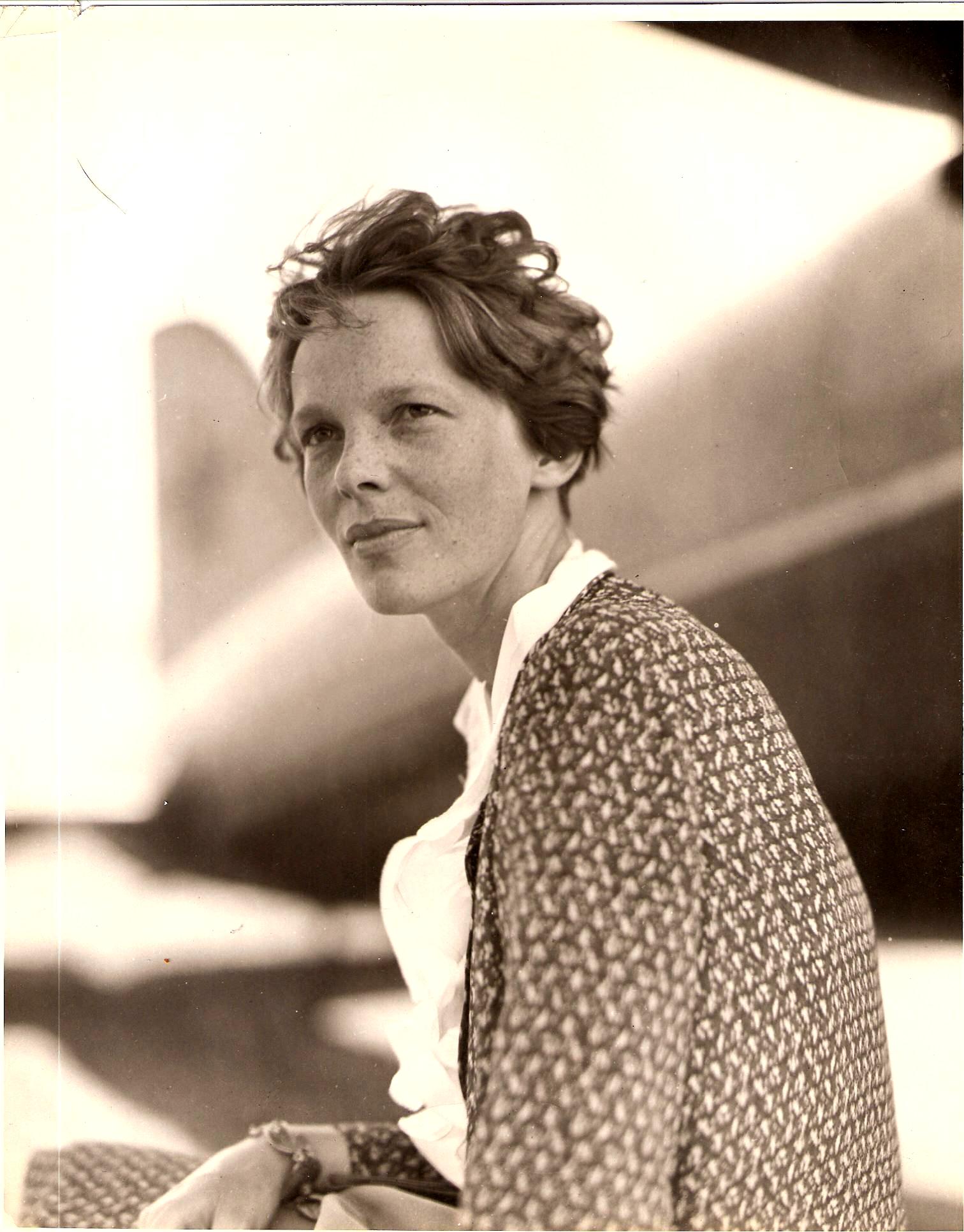 Earhart’s fame came spectacularly randomly in 1928, when American citizen Amy Guest decided to be the first woman to fly across the Atlantic ocean (following Charles Lindbergh’s solo flight in 1927). Guest decided that the journey was too dangerous and undertaking for herself, she decided to find a suitable young woman to take her place. One afternoon, Earhart received a call from a Captain Hilton H. Railey, asking her if she would like to fly across the Atlantic ocean. Earhart completed the journey with pilots Wilmer Stultz and Louis Gordon, and was welcomed to both England and back in the United States to rounds of applause, interviews, and even a lecture tour. With the help of George P. Putnam (publisher and publicist who was involved in the original crossing), Earhart remained at the front of the worldwide news, and was marketed as the modern woman. Simple, elegant, intelligent and effective.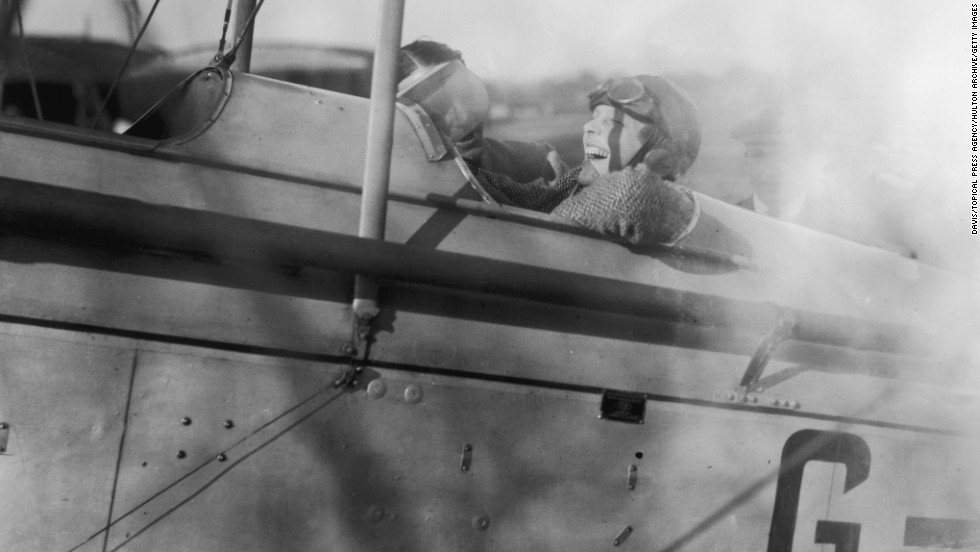



 The negative response her story received did not stop her, however. Jackson continued to write stories and would come to be known as a Mistress of Terror. Her subtle plots infused with strange characters and sinister themes and plots held her audience captivated. She wrote over 100 short stories throughout the years, some children’s stories and several novels. Her novels The Bird’s Nest (1954) and The Haunting of Hill House (1959) are commonly regarded as fantastical and ghostly stories, and have inspired authors Stephen King and Neil Gaiman in their own works. In 1962 she published her novel We Have Always Lived in the Castle, a story following two sisters after the mysterious and unsolved mass death of their entire family in their childhood home.