Category Archives: Antiquarian Books

“He was America”: Happy Birthday Carl Sandburg!

By Margueritte Peterson

Admitting this is probably one of those phenomenally bad ideas I continuously have despite how much older I get, but I am one of those wicked people who pretended to know, well…something about this American literary star for many years. People would mention his name and I would be all, “Oh yes, Carl Sandburg, wow… it went for how much? Woah!” While casually hoping the conversation would change because as far as I knew I could not remember reading anything by this author and continually neglected to read up on him when I got to a quiet corner away from prying eyes. Yes, ladies and gentlemen, I know it is a shocker but I am not omniscient (though I’m sure it seems that way most of the time. Eh-hem). So now, just in case any of you out there are like me and think you can continue fooling people into thinking you know about this magnificent man… think again!

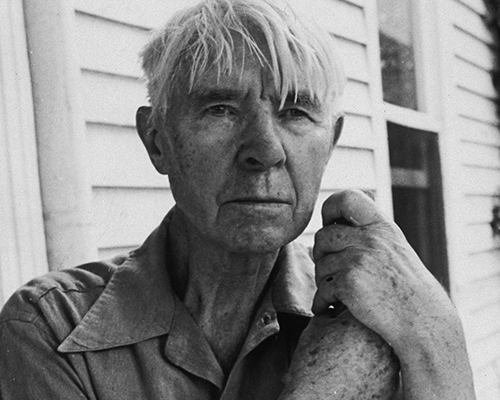
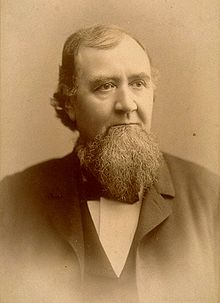
sandburgCarl August Sandburg was born on January 6th, 1878 in Galesburg, Illinois. Though he left school at the age of 13 out of monetary necessity for his family and spent years as a laborer in some form or fashion (a milk wagon driver, a porter, a bricklayer, a farmhand, a hotel servant, a member of the American Army – 6th Illinois Infantry Regiment 1898, a coal-heaver… you name it, he did it). After leaving the army, Sandburg was encouraged by a fellow student to spend a few years at Lombard College where he attracted the attention of one of his Professors, Philip Green Wright, who so believed in Sandburg’s work that he paid for his first publication – a book of poetry entitled Reckless Ecstasy in 1904. Sandburg left Lombard in 1903 sans a degree (though he would later received honorary degrees for much of his schooling).

Around 1905 Sandburg moved to Milwaukee and joined Wisconsin’s Social Democratic Party, or in other words, the Socialist Party of America. A couple years later he met another young Socialist Party worker Lillian Steichen (sister of photographer Edward Steichen) and they were married. From 1910 to 1912 Sandburg would work as secretary to the Socialist Milwaukee mayor Emil Seidel. In the coming years Sandburg and Lillian (whom he called Paula) would celebrate the birth of three daughters. After moving around a bit (mainly in Illinois – where at one point Sandburg became a journalist for the Chicago Daily News), the couple and their family settled in Elmhurst, IL in 1919.

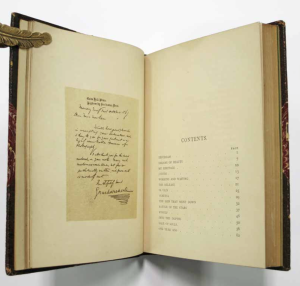
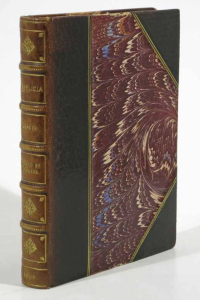
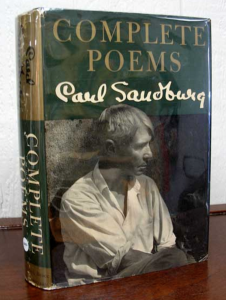
View our holding of Sandburg's Complete Poems (an Inscribed Presentation Copy, by the way) here!

View our holding of Sandburg’s Complete Poems (an Inscribed Presentation Copy, by the way) here!

Once settling down in Elmhurst, Sandburg became interested in writing for himself and his budding family. And write he did! The author began by writing Children’s books, followed by some fiction, a two volume biography on President Lincoln, anthologies of folk music, and poetry books! Some of his works for Children included Rootabaga Stories (1922), Rootabaga Pigeons (1923) and Potato Face (1930). Sandburg was quite interested in the idea of American children’s stories for American children – thinking that European stories of kings and palaces and knights were out of place in American education. In 1926 he published his two-volume series on Abraham Lincoln. Sandburg’s first big win came even earlier, right at the beginning of his real writing career, as he won the Pulitzer Prize in 1919 for his collection of poems titled Corn Huskers. Over a decade after its publication he won his second Pulitzer for Volume II of his Abraham Lincoln biography, and his third Pulitzer was awarded in 1951 for his collection of poetry titled Complete Poems. He is, perhaps, best remembered as a poet, but clearly his variety of work shows a talent in much of the literary arts, one could argue a talent almost unparalleled to this day.

On July 22nd, 1967, Sandburg died in his home of natural causes. After hearing of Sandburg’s death, President Lyndon B. Johnson is said to have stated “[he] was more than the voice of America, more than the poet of its strength and genius. He was America.” And now that I know a bit about him, I couldn’t agree more! Ladies and gentlemen, on this 6th of January we’d like to wish a very happy birthday to Carl Sandburg – an American writer and legend that was the voice of America in many different fashions!

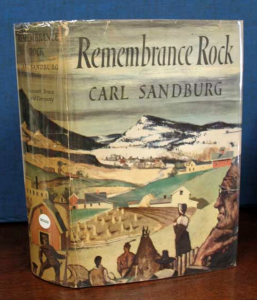
Our inscribed presentation copy of "Remembrance Rock" can be found here!

Our inscribed presentation copy of “Remembrance Rock” can be found here!

Share

The Antiquarian Book World in 2016

Woohoo! It is almost 2016 and have you got a whirlwind year ahead of you! Interested in Book Fairs? Book events? Bibliophiles in general? The Antiquarian Book World has got you covered. Check out the most pressing book events (mainly CA or ABAA related) in early 2016 below!

seattlefair1

January:

Now until January 10th: If you haven’t caught it already, you have a few days left! The California Historical Society has hosted their current exhibition “City Rising: San Francisco and the 1915 World’s Fair” since January of 2015, and the closing day is January 10th of 2016! Get a viewing in while you still can… take it from someone who has seen the exhibition – it’s worth it!   http://www.californiahistoricalsociety.org/exhibitions/current_exhibitions/

January 9th & 10th: Greater Los Angeles Postcard & Paper Show – Glendale California. http://www.postcardshows.com/Glendale.php

January 25th (to April 25th): New exhibition at the Book Club of California in San Francisco! If you have never attended an exhibition at this prestigious club or thought of joining the ranks, you are missing out! The BCC hosts lovely and interesting functions and surely their new exhibition “Calligraphy and Poetry” is sure to impress!  http://www.bccbooks.org/

February:

February 5th & 6th: San Francisco Book, Print & Paper Fair at the San Mateo County Event Center – San Mateo, California! This fair is close to our lovely shop… Just a ferry ride (or a long swim… just kidding you can also drive here) away! Please feel free to make an appointment and come see us when you’re around for the fair!   http://www.sfbookandpaperfair.com/

February 12th, 13th & 14th: The California International Antiquarian Book Fair (ABAA) – Pasadena, California. For those who don’t know, each year the ABAA oscillates between hosting the California ABAA Fair in Pasadena or the Bay Area. This year is Pasadena’s turn! Come down and show your support for the packed show of local, North American & International Booksellers! We’ll be there – even more a reason to come! http://cabookfair.com/index.php

March:

March 11th, 12th & 13th: Florida Antiquarian Book Fair – St. Petersburg, FL. I have to plug this one because not only has Vic exhibited at the Florida Antiquarian Book Fair before, but it is my home state! Don’t worry, alligators are more scared of you than you are of them…  http://floridabooksellers.com/

The Sacramento Antiquarian Book Fair

The Sacramento Antiquarian Book Fair

March 19th: Sacramento Antiquarian Book Fair. This one is a must! For those of you who have never been to a book fair, this is a great starting fair to attend. Lots of local booksellers, fun-loving bibliophiles and sunshine… what more could you ask for? Read our past blogs on this fair to hear what it’s all about, then come and visit us!  http://www.sacbookfair.com/


April (We like to call it… Bookselling in a New York Minute):

April 7th, 8th, 9th & 10th: The ABAA New York Antiquarian Book Fair – Park Avenue, NY. Always a beautiful venue to behold, this fair boasts booksellers and book-lovers from all over the world, and never fails to deliver a spectacular event! Don’t believe us? We wouldn’t lie to you! http://www.nyantiquarianbookfair.com/

April 9th: The Manhattan Vintage Book & Ephemera Fair / The Fine Press Book Fair – Lexington Ave, NY. One of the greatest things about the NY book fair are the numerous “shadow” fairs that go along with the ABAA’s shindig… check them out! You won’t be disappointed.  http://www.flamingoeventz.com/    http://www.fpba.com/fairs/newyork.html

April 9th: The New York City Book & Ephemera Fair. Again… how many fairs do you need to have happening before you agree to go to New York and have your fill of antiquarian books?! I believe “Shop till you Drop” is the phrase needed here!  http://www.antiqueandbookshows.com/


To find out more throughout the year, visit:

www.bookfairs.com or the ABAA list of events at www.abaa.org/events/  to find more to explore!


Share

Collecting Antiquarian Bibles (What Better Time to Discuss than at Christmas?)

By Margueritte Peterson

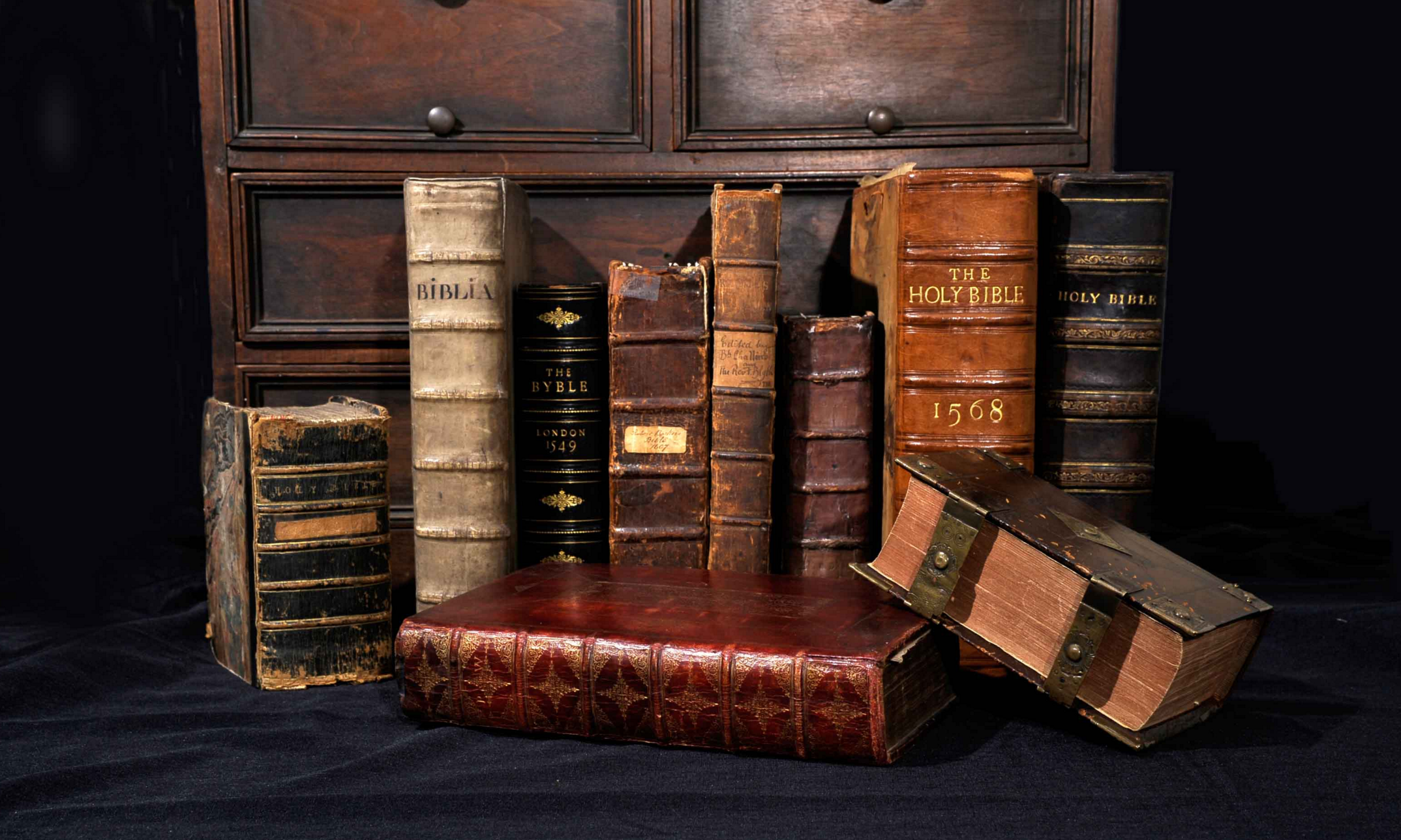
The Bible is the most common English-language book in the world, so it would hardly seem like an ideal focus for rare book collectors. But the history and variety of Bibles make collecting them a diverting and challenging occupation—especially because one can often start a lovely collection without spending too much money.

Image source: tntoday.com

                   Image source: tntoday.com

Finding Your Focus

The sheer number of editions of the Bible can make it difficult to choose a scope for your collection. Many amateur collectors start out with their own family Bibles and simply collect other Bibles that catch their fancy. As you get more serious about building your Bible collection, it’s important to decide on a specific direction because the array of Bibles and editions is dizzyingly diverse; in their oft-cited bibliography, Frederick Moule and Thomas Herbert identified over 239 different editions of the English Bible…and those were all printed before the King James Version was first published in 1611.

A few common ways to focus a Bible collection:

  • Version: The King James Version is undoubtedly the most famous, with multiple revisions over the centuries. Before it appeared, there were nine other major versions. And after the King James Version appeared, numerous other versions have been published. Many collectors choose to focus on one specific version.
  • Language: The Bible has been published in over 400 languages, and almost always in translation. After all, the original texts of the Bible were in Greek, Hebrew, and Aramaic, and historically very few people have been proficient in all three. A collector might look for different versions of the Bible in a single language, such as German, or try to collect Bibles in as many languages as possible.
  • Publication location: The Bible is a difficult book to print, due to both its length and its many textual features like numbered verses. It wasn’t uncommon for sections of the Bible to be printed in a given location, followed by the New Testament, and finally the entire Bible. The famous Bay Psalms book (1640), which included a novel translation of the Psalms, was the first volume published in the United States. The first complete American Bible didn’t appear until over fifty years later, in 1663, and it was John Eliot’s Algonquin translation.
  • Errors: It should come as no surprise that some Bible editions include scandalous or entertaining errors. The so-called Wicked Bible of 1631 says “Thou shalt commit adultery,” while King David exclaims in a 1702 edition, “Printers have persecuted me without a cause.” One could easily build an entire collection of these error copies!
  • Annotation: Bibles often served as repositories for family records, such as family trees and dates of birth, christening, marriage, and death. These annotations can be fascinating for those interested in genealogy or those who simply love that personal connection to the Bible’s original owners. Still other versions of the Bible include published maps and annotations, which can be fascinating in their own right.


With Bibles, “Old” Has a Whole New Meaning

Screen Shot 2015-12-22 at 9.12.49 AM

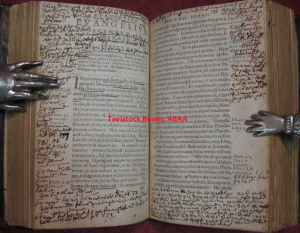
Our holding of a 1576 1st edition thus, New Testament. Someone had some thoughts on the writing!

In 1526, William Tyndale published the first complete translation of the New Testament. The book was deemed heretical, and almost all known copies were destroyed. The first English edition of the Old and New Testaments was published nine years later. Given that Bibles have been published for so many centuries, the word “old” takes on a whole new meaning. In the world of rare and antiquarian books, we usually think of a book that’s more than sixty years old as an antique. But a Bible isn’t really “old” until it’s been around for two full centuries.

Serious collectors generally consider Bibles published in Europe before 1700 the most collectible. And because Bibles were often used regularly, they’re not often in pristine (or even very good) condition. When you collect antiquarian Bibles, be prepared to embrace dog-eared copies filled with marginalia.That said, value isn’t always directly tied to age. Some 100-year-old Bibles are more valuable than others that are twice that age.


Bible Collecting Resources

Collecting rare books of any sort requires discernment and research. The same holds true for Bibles. The volumes below are exceptional resources for the collector of Bibles:

  • Frederick Moule and Thomas Herbert’s Historical Catalogue of the Printed Editions of Holy Scripture is the most commonly used and cited bibliography among Bible collectors. It has gone through muliple reprints and includes bibliographic details on Bibles in 600 languages.
  • Margaret Thorndike Hill’s The English Bible in America encompasses American Bibles published between 1777 and 1957. It’s the preferred bibliography for collectors of American Bibles.
  • P. Marion Simms’ The Bible in America delves into notable versions of the Bible in the histor of the United States.
  • See Christopher de Hamel’s The Book: A History of the Bible for an illustrated survey of Bibles, starting with the earliest manuscripts.
"Newly Translated out of Ye Original Tongues..." Are we sure about that? Check out our holding here!

“Newly Translated out of Ye Original Tongues…” Are we sure about that? Check out our holding here!

Some reference works may actually even find their way into your collection. For example, Thomas Wilson’s Christian Dictionary is useful to the scholarly collector…and a new somewhat scarce title.


Related Rare Books & Ephemera

Children in the Woods

Theodore Beza’s New Testament

Holy Bible Printed by His Majesty’s Special Command

Book of Isaiah, Translated into Navajo Dialect

Illustrated Scripture History for the Improvement of Youth

Share

A Warm Welcome (High-Five Included) to the Newly Nominated Vice President of the ABAA!

Our very own Vic Zoschak Jr. has been recently announced to be the new Vice President of the prestigious Antiquarian Booksellers Association of America (the ABAA). We pick his brains about the new role (and how he is to be bribed when in said position…) below!

Screen Shot 2015-12-12 at 12.42.25 PM

             Photo courtesy of the Florida Book Fair.

So we are looking at the new Vice President of the Antiquarian Bookseller’s Association of America! How does it feel? Are you nervous?

Well, not quite so fast Ms P… I’m nominated.  Which means that the membership has yet to vote me in as VEEP.  However, should they do me the honor of doing so, I confess, I’m a bit humbled by their expressed trust in me to act on their behalf, as well as pleased at the opportunity to continue to serve.  And yes, I also confess, I’m a bit nervous, for the VP job is a bit more direct responsibility for the health & welfare of the Association from that I’ve assumed in the past as a chapter representative to the national Board of Governors, or as a chapter officer.

Level with us, V… have you ever dreamed about the day you’d be Vice President and then President of the ABAA?

Ha! Only recently.  I threw my hat in the ring for the VP position, and it was “picked up”.  I can only say again, I’m honored by the selection.


What is the most important charge you would be tasked with in the new role?

Well, that somewhat depends on the incoming President, Mary Gilliam.  I am at her service for the 2 years of her term, and whatever she designates as “most important” will be it.

You are no stranger to a leadership role within the bookselling community… you are currently Vice Chair of the Northern California Chapter of the ABAA. What drew you to be Vice of the NCC and was that your first official role in the bookselling community?

As I recall, yes, my first ‘official’ ABAA position was Vice Chair of the Northern California Chapter of the ABAA.  The ABAA is a smallish organization, and much of its administration is accomplished by member volunteers.  Without those volunteers, it’s my opinion the Association would grind to a halt.  Anyway, having found my ‘peeps’, I wanted to give back what I could.  That belief hasn’t changed, and I volunteered for this coming VP position with the same thought… to give back to the ABAA, in a small fashion, for all it’s given me these last 20 some-odd years.

Screen Shot 2015-12-12 at 12.43.25 PM

Courtesy of ILAB.


That’s right, V, you’ve been a professional bookseller for… how long now? What’s your favorite part about it?

Actually, I’m coming up on 3 decades… started in 1989, so 2016 celebrates 27 years in the trade.  But that quibble aside, two aspects of the trade I find compelling & keeping me involved… one is the challenge.  It’s difficult to make a living in this business, but it can be done.  I enjoy that challenge… usually.  There have been anxious moments, I will admit!  lol…  and second, I came to the antiquarian book trade from a 27 year career in the US military, but here in the book world “I found my peeps”.  In other words, people that understood my fascination with books.  I’ve found that the trade acts like an extended family.  And who doesn’t want to be part of a family?


What are you currently planning on focusing your energies on during your “reign” (taking it a bit far? oh well!)?

The ABAA has had a slightly declining membership for the last few years, so I will recommend we, the Association, focus on reaching out to qualified booksellers, and convince them that membership in the ABAA would be mutually beneficially.  In my opinion, the ABAA’s continued viability rests on a vibrant membership, which means a constant, if not increasing, number to the member roles.


Let’s not forget the most important question of all… can you be bribed with a good bottle of Bourbon? 🙂

Ha!  …Pappy?

Share

Braving Rush Hour to Feed my Holiday Bibliophilia

20151209_194557

By Margueritte Peterson

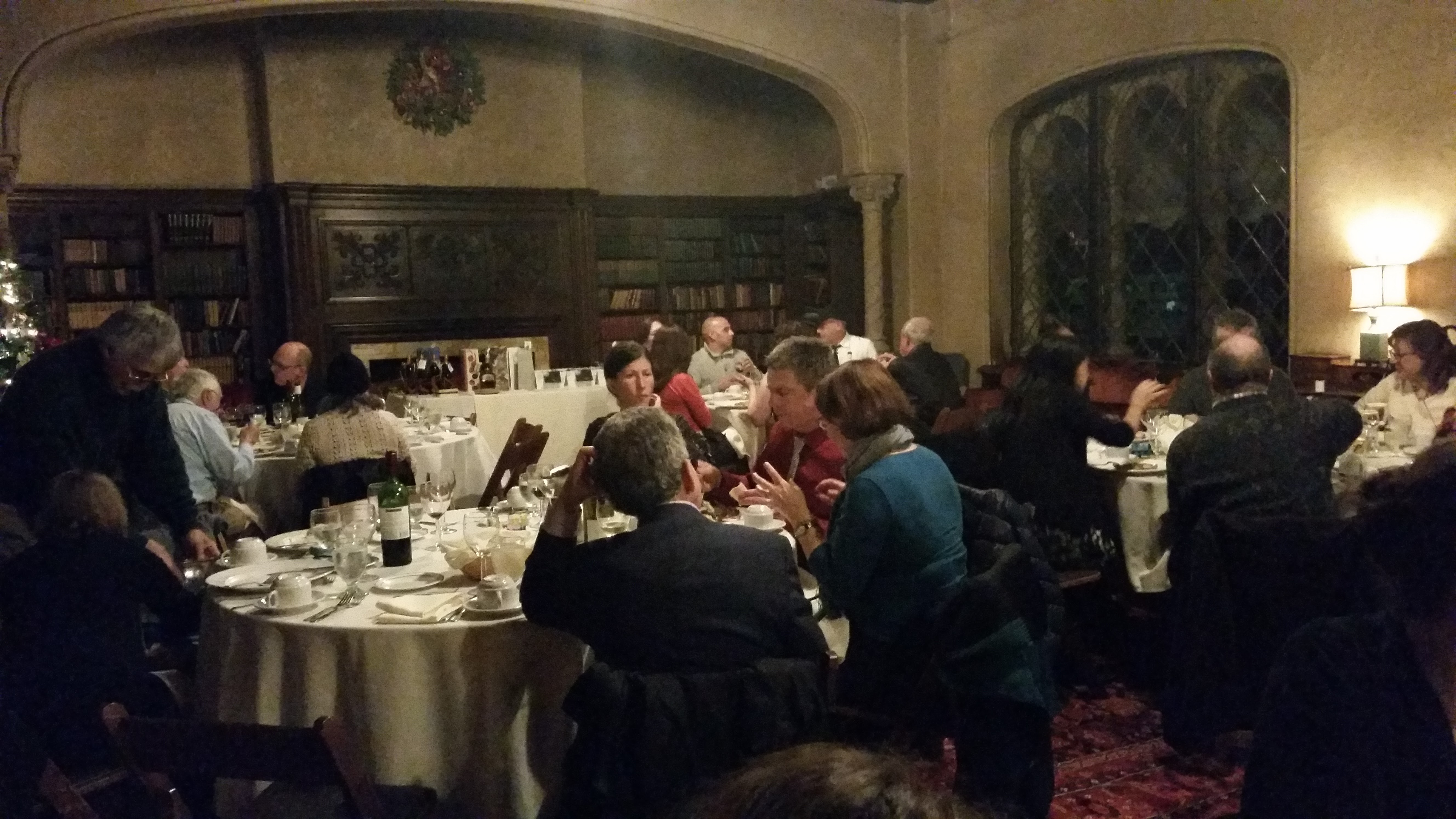
Click, clack, click, clack… are these the sounds of the keys on my keyboard puncturing this blank document with letters as I write this? Maybe. Was it also the sound my heels made as they climbed the steps of the Berkeley City Club last night for the annual holiday dinner & raffle of the Northern California Chapter of the ABAA? Most definitely. That’s right, ladies and gents! Another year has passed us by and last night saw the usual cast of characters (minus a few) sharing cocktails, laughs and bottles of Single Malt Scotch Whiskey (for the raffle, of course… we aren’t alcoholics!) at a beautiful local venue.

Michael Hackenberg and his Raffle Surprise!

Michael Hackenberg and his Raffle Surprise!

The night started out promising enough, as Kate Mitas, Vic’s Aide-de-Camp, and I braved rush-hour East Bay traffic for over half an hour to get to Durant Avenue. We then parked in a lot I know well only to be accosted for $8 by what I originally assumed was a homeless person trying to make a buck (not a bad idea, when you think about it). A glass of red wine later and we were sitting at the back table, watching booksellers all around us enjoy an evening with friends, spouses and colleagues. Michael Hackenberg, Chair of the NCC, hustled all (rather well, I might add, as only Michael can do) for the purchase of raffle tickets, and then introduced the new board of the NCC. Himself returning as Chair and Steve Blackmer continuing on as Treasurer, we have the honor of welcoming two new members to the board! Scott Brown of Eureka Books joins as Vice Chair and Alexander Akin of Bolerium Books as Secretary.

After hearing from the current Chair and Steve as Treasurer, current Vice Chair Vic Zoschak gave some words on some recent goings-on in the ABAA. One of which was this – at the recent Boston ABAA fair, the ABAA partnered with RBS to offer an educational seminar. It was attended by 44 people in all, 9 of which were booksellers (3 from Northern California alone!). The session was opened by intrepid president of the ABAA Tom Goldwasser and President of RBS, Michael Suarez. The seminar was very successful and there are hopes that it will be repeated in the future!

Enjoying salmon and missing out on eggplant!

Missing out on eggplant!

After hearing from all parties, the meal continued! While a couple of us from Tavistock Books enjoyed a delicious roasted eggplant & polenta dinner (and another at Tavistock Books deemed it an alien life form and ate his usual salmon dinner), we exchanged pleasant dinner conversation with Rachel Eley, an associate at John Windle Antiquarian Bookseller (and an Associate Member of the ABAA herself) and her colleague Annika Green. As desert appeared on the tables I was suddenly thrust into the position of raffle item presenter (thanks a heap, Vic), and decided then and there that I should probably never apply for a position on a game show, no matter how low on cash I am! (I don’t think that game show hosts like it when the raffle presenter holds a bottle and when asked what it is retorts with “…it’s alcohol…”). In any event, the raffle each year is held to benefit the Elisabeth Woodburn Educational Fund which provides educational scholarships to booksellers (a great opportunity, of which a handful of booksellers in Northern California have been able to take advantage of to further their knowledge of the bookselling world!).

All in all, it was a pretty tame evening (compared to some other bookseller events I have been to over the last few years) but any night with books, wine and bibliophilia is a great night in our eyes! The holiday season has now officially begun!

Yours truly, Vic Zoschak & Kate Mitas of Tavistock Books!

Yours truly, Vic Zoschak & Kate Mitas of Tavistock Books!


Share

This Thanksgiving, Be Thankful You Aren’t… David Colbreth Broderick, Victim of America’s Last Notable Duel

On September 13, 1859, the “last notable American duel” took place in a ravine just outside San Francisco. Duels were illegal in California, but that didn’t stop David Colbreth Broderick and David Terry from squaring off to resolve their personal and political differences.

The Honorable David Culbreth [Colbreth] Broderick.

The Honorable David Colbreth Broderick.

In 1849, David Colbreth Broderick came to California from New York with the Gold Rush. By 1857, he’d established himself as a political don of San Francisco; in 1851, the “free-soil” Democrat was named Lieutenant Governor of California after his predecessor, John McDougal, was promoted to Governor when Peter Burnett resigned. Friends considered Broderick an honest man and pointed to his humble upbringing as the son of a stonecutter. But Broderick’s rivals saw him as a conniving saloonkeeper who picked up politics in Tammany Hall. David Terry, on the other hand, hailed from Kentucky and was a proud Southern Democrat. He came to California after the Mexican-American War. In 1855, he was appointed Justice of the California Supreme Court. By 1857, Terry was Chief Justice. Though Broderick and Terry disagreed over slavery, the two were friends.

That all changed in 1859, when Terry ran for reelection as chief justice and lost, presumably due to his pro-slavery stance. He blamed the opposing faction of the Democratic party—which was led by Broderick. Terry insisted on delivering a speech denouncing his abolitionist opponents, alleging that they were all “personal chattels of a single individual” and belonged “heart, soul, body, and breeches to David C Broderick.” When Broderick heard about Terry’s comments, he called Terry a “damned miserable wretch” and retorted, “I have said that I considered him the only honest man on the Supreme Court bench, but I now take it all back.” Terry immediately demanded a retraction, which Broderick refused to provide. Terry then immediately wrote a letter to “demand the satisfaction usual among gentlemen.”

The two men scheduled the duel for September 12, 1859. But news of the duel had spread, and the local sheriff showed up to intercede. He concluded that no law had been broken (yet) and went on his way. Broderick and Terry rescheduled the duel for the following morning. At the appointed time, a crowd gathered. Broderick and Terry took .58 caliber Belgian pistols and assumed their positions. Broderick fired first, but his shot landed in the grass short of Terry. Terry returned fire and struck Broderick. He initially thought he’d hit “too far out” to mortally wound Broderick.

The injured Broderick was taken to the home of Leonidas Haskell. Doctors confirmed that the bullet had penetrated Broderick’s lung. He died in the Haskell home three days later, on September 16, 1859, and to this day, the house is reportedly haunted by Broderick’s ghost. Over 30,000 people attended the senator’s funeral. Broderick’s death ultimately aided the Union cause by garnering popular support for the abolitionists. Historians consider the Broderick-Terry duel a critical factor in California’s remaining free of slavery.

Broderick had amassed quite the estate, mostly because he sold state positions of authority during his tenure as president of the state senate. His extensive real estate holdings—a total of 362 properties–were finally auctioned off on November 30, 1861. They included properties in prime locations like Larkin, Howard, and Mission Streets. If they were sold on today’s market, they’d undoubtedly fetch a nine- or ten-figure sum.

David Terry!

                 David Terry!

Terry was arrested and tried for participating in a duel, but was found innocent and released. He left California after the duel and later joined the Confederate Army during the Civil War, serving as a colonel in the Texas Calvary. Following the war, Terry returned to Stockton, California to practice law.

Terry is perhaps best remembered for representing Sarah Althea Hill Sharon in a lawsuit brought by her husband, Senator William Sharon. The senator sought to have the marriage canceled, and the California Supreme Court ruled in his favor after his death. Terry (who later married Sarah) blamed US Supreme Court Justice Stephen Fields for his loss. Then on August 14, 1889, Terry encountered Fields in the breakfast room of a railroad hotel. He slapped the justice across the face. Fields’ bodyguard, David Neagle, immediately shot and killed Terry. Neagle’s actions led to a jurisdiction dispute; state authorities claimed that the field marshal had committed murder, while federal authorities argued that he had killed Terry in the line of duty.


Related Rare Books and Ephemera

Documents in Relation to Charges Preferred by Stephen J FieldPublic Auction of the Beidman EstateRelacion de los debates de la Convencion de CaliforniaSan Francisco Semi-Annual Trades Guide & Pacific Coast DirectorySteamship Yankee BladeThoughts of Idle Hours

Share

Giving Thanks to Your Local Bookseller: A Quick Guide using Collectible Books to Answer the Most Important Question of all… “Why?”

By Margueritte Peterson

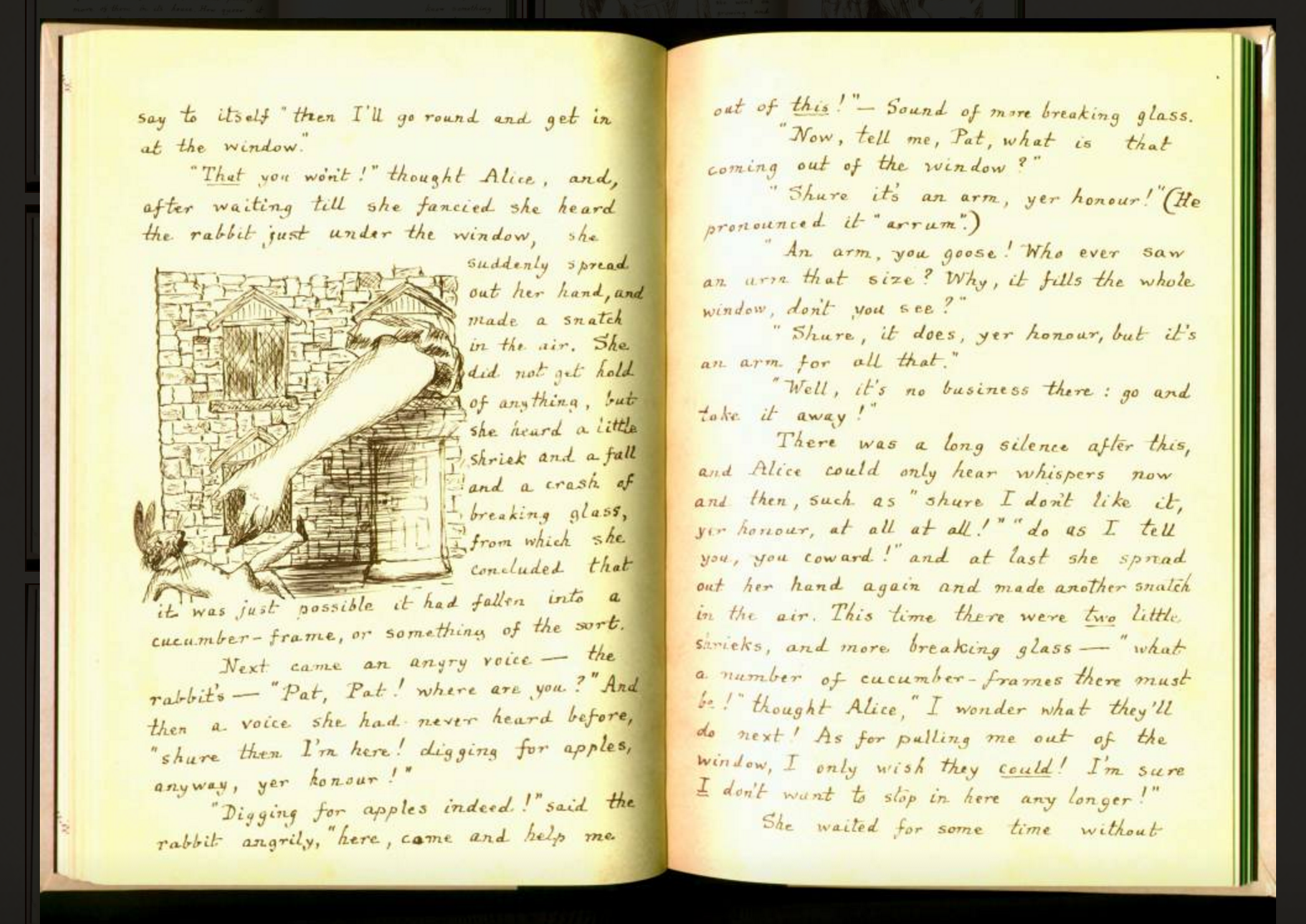
When I first became interested in rare books I took myself to as many antiquarian book fairs as I could. My first fair was in London, where I sheepishly wandered around as silently and as invisibly as possible and tried to pretend that I belonged in the same room as a million dollar manuscript of Alice in Wonderland by Charles Dodgson. I left the fair and called everyone I knew (so, basically, the five people on my speed-dial list) to tell them what I’d seen. They were all flabbergasted and amazed that I had seen an original, marked-up copy of the famous children’s story. But even I had to ask myself the question that everyone asked me (apparently they knew no one else in the business)… why a million dollars? Why? This is a question I’d like to briefly handle, in my own words, by discussing the main components of what gives books value (a question that is answered in-depth by our very own Vic Zoschak during his seminars at select California ABAA fairs… which you should all attend).

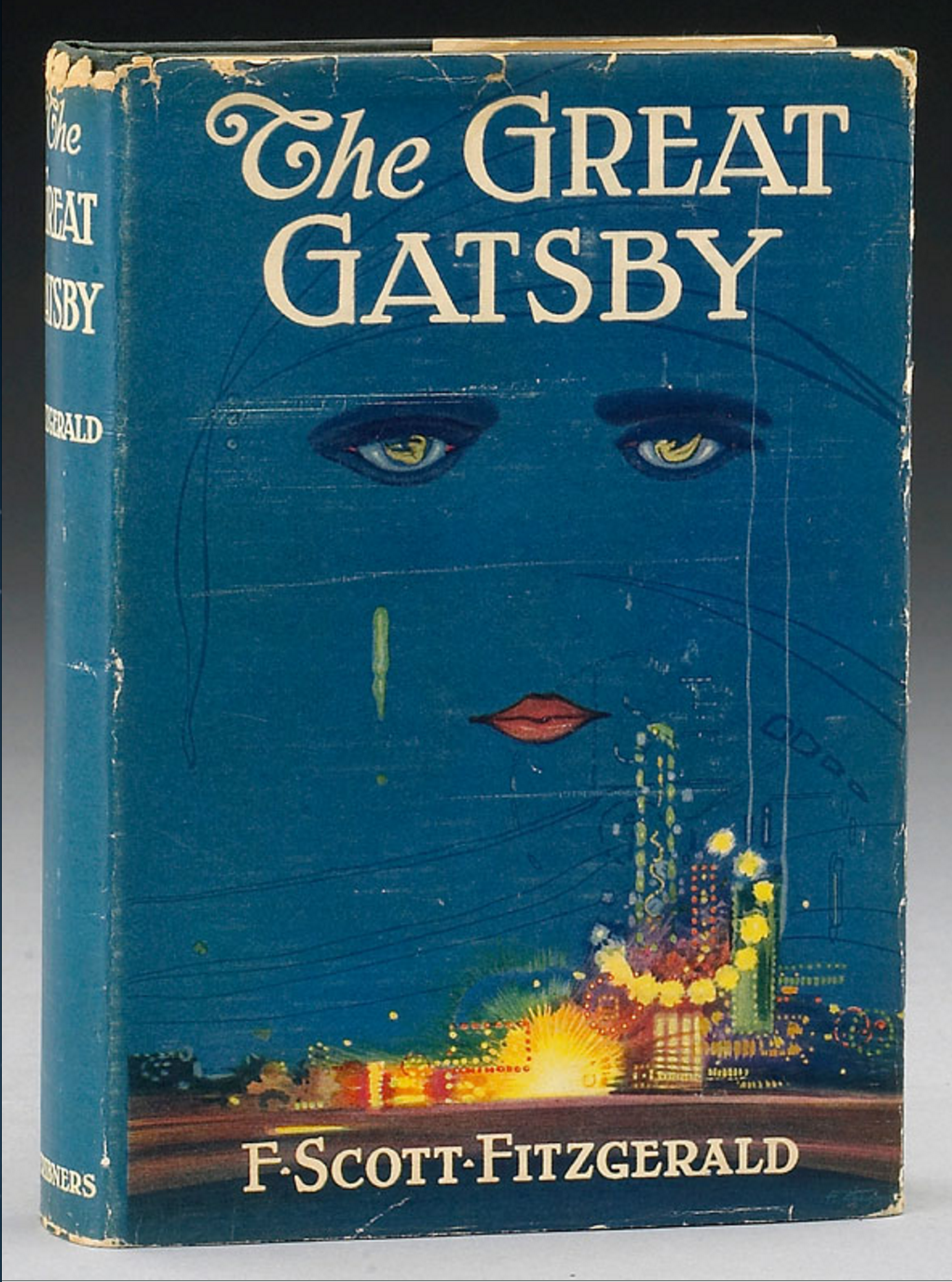
Screen Shot 2015-11-03 at 11.20.42 AMEdition. We all know that a 1991 paperback copy of F. Scott Fitzgerald’s The Great Gatsby sells for about $1.50 on Ebay to ten thousand US high schoolers every year. Why then are there copies of the same book selling for over $100,000 online? Those are first editions. We at Tavistock Books consider first editions as first printings of the first edition. The true first time the book was ever printed. Now, these copies are not only selling for so much because they are first editions. After all, sometimes you can find a much sought after first edition, first printing at a local used bookstore for the bargain price of $10! This point leads us to the next deciding factor, which is…

Condition. Condition of titles are essential to the demand for a certain book. The $10 bookstore copy of Gatsby is tattered, smelling of cigarette smoke, foxed throughout (foxing being the term for those brown spots that come up on book pages – a curious phenomenon between the ink, paper and chemical reactions), and with crayola markings where a desperate mother pushed her book into her sons hands for a moment of peace on the telephone. Condition, akin to location in real-estate, is of great importance in giving value to rare books – as it is very hard to sell a book that is in desperate need of a make-over unless it has a wonderful quality I like to call…  

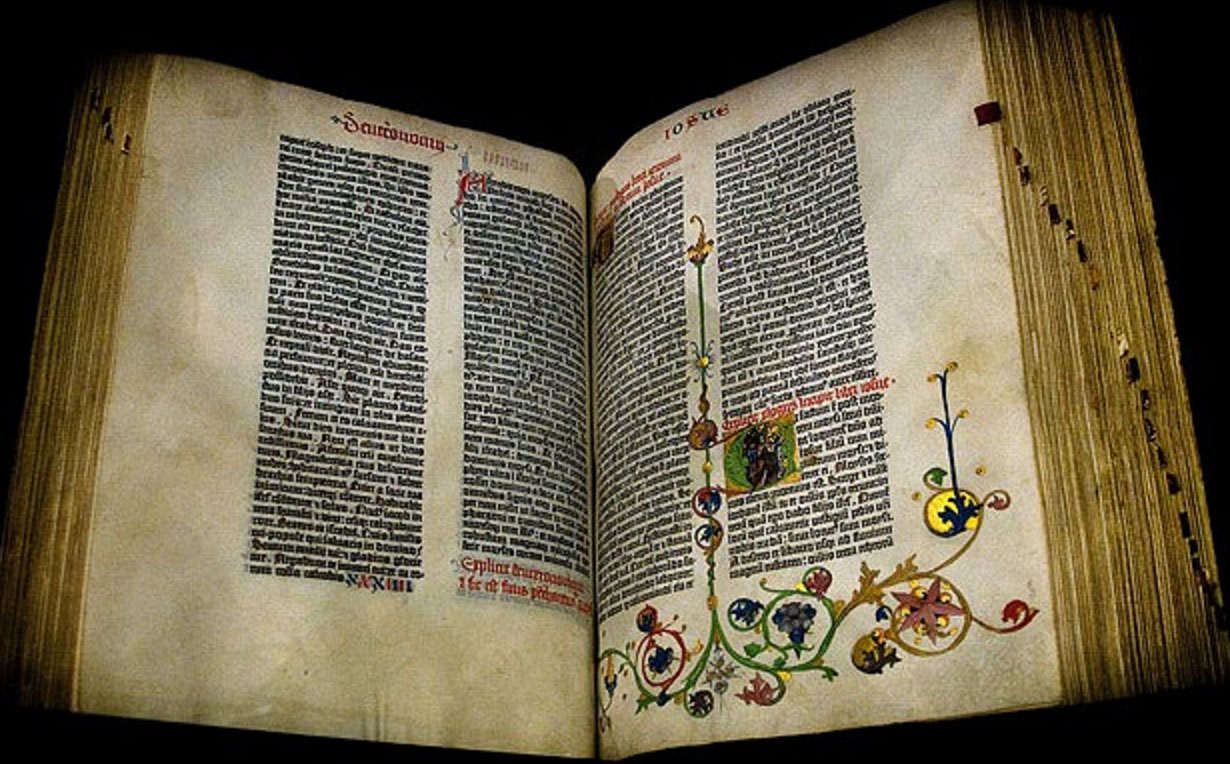
gutenbergRarity. Every bookseller has heard this phrase a thousand times from clients wishing to sell us books… “but it’s really old…” Yes, you may have a book from 1913 with a lovely gilt illustrated binding. But a quick search online shows hundreds of copies exactly the same, none fetching more than $30! Now, you think you may have an intact (or even not intact… for this example that doesn’t really matter) Gutenberg Bible sitting on the shelf in your grandma’s garage? The phrase should be “Now that’s a horse of a different color!” Only 48 known copies of the earliest moveable-type printed book are known to man, only 31 of which are perfect (complete). That type of rarity is far different than so many online and probably double that amount still sitting in your grandma’s garage. (I’m sure she’s a lovely lady but what she got doesn’t interest me and that leads us to my last point which is…)

Desire. Another instance of disappointment to clients wishing to sell booksellers their items is when they realize that even we couldn’t sell the book – meaning that booksellers try not to buy books when there are no customers for the title. You may have an interesting archive (from your grandfather’s family, which your grandmother gave you after he passed away) of family pictures from 1875. But a bookseller can only justify using his company’s funds to buy said archive if there is a desire for such a collection! Does he have a customer that would be interested? Does he know where he can find someone who fits the bill? If the answer to these questions are both “no”, then we won’t take the archive off your hands… no matter how cute your great grandmother was in her wedding dress.

I tried to keep this blog short and sweet – a basic overview to our customers and other bibliophiles out there – as to what it is that antiquarian booksellers do and how they are able to figure out the pricing that they do. An essential part of the job is having an amazing research ability, not to mention the knowledge of the trade that comes from years of experience. Is there a National Antiquarian Bookseller month? Perhaps November would be a good time to give thanks for your local booksellers! 

P.S. If learning more tricks of the trade is interesting to you, look into taking one of the courses Vic Zoschak leads – an annual reference book workshop giving you the basics of how booksellers begin their research, or the Book Collecting 101 workshop mentioned earlier and offered at Bay Area ABAA book fairs! You won’t be sorry…

Share

Fair Acquisitions at Tavistock Books! (Seattle items found here…)

It’s that time of year again… the time after our exhibiting fairs of Sacramento and Seattle… the time when we place our new items up on our website and tempt you to look at them with blog posts, that is! Check out this post for an in-depth view of some of our newest (and hottest) items!

Screen Shot 2015-10-22 at 9.23.04 AMDickens’s Works, Diamond Edition (1880). An original Dickens in original publisher’s binding in an original publisher’s box! Yes, that’s right ladies and gents… we nabbed a 1st edition thus of Chapman and Hall’s Diamond Edition of Dickens’s [sic] Works! This 16 volume set shows only modest wear, garnering it our VG+ rating! As we tell you, this economical edition in pocket format quite rare as it is offered here – a complete set with the original publisher’s box. You know what? I’m not doing it justice. See it here>


Screen Shot 2015-10-22 at 9.31.39 AMOur next item [regrets, this item now SOLD]: The Old Manor House (1822) in Two Volumes… Did you know that the founder of the famous Chiswick Press is often credited as one of the first printers to come up with the idea of printing cheaper, handy editions of standard authors for the common man? Even stated on the rear panel of a volume here is “[The publisher] means that his edition shall combine correctness, neatness, portability and cheapness…” This set a rare double-survivor, as the cheapness of the printing meant being issued in drab boards and on cheaper paper. Read more here>

Screen Shot 2015-10-22 at 9.38.12 AMNow, are you one of those collectors who like the more personal items? Are photograph albums and inscriptions your thing? Check out our Personal Guest Book of Ralph and Violette Lee. This guest book belonged to a California jeweler and art patron, and the founder of the Gensler-Lee Jewelry Company, one of the largest jewelry chains in the state of California around the beginning of the 20th century. This guest book is filled with personal signatures and inscriptions praising the patrons and their beautiful California home! See more on it here>

Screen Shot 2015-10-22 at 10.01.10 AMA 1st edition of David Copperfield from 1850? Sounds great! This 1st volume edition a VG+ copy in a later full blue calf binding (binding by Bayntun), spine only slightly sunned. Did you know that David Copperfield is a primarily autobiographical novel? In the preface to the 1867 edition, Dickens went so far as to state “like many fond parents, I have in my heart of hearts a favourite child. And his name is David Copperfield.” This eighth novel of Charles Dickens is beloved by many. Is it beloved by you? Look at it here>

Screen Shot 2015-10-22 at 9.49.16 AMAre you expecting? We don’t mean to be intrusive, but take a look at our Mother’s Book! This 1831 1st edition by Mrs. Lydia Maria Francis Child is a primer for the new mother! Our attention is held by Chapter VII: “Advice Concerning Books” followed by “List of Good Books for various ages” where Child gives 10 pages full of recommended titles for ages 4 to 16. This title has everything a lady would need to know in the early 19th century about the “joys” of motherhood! Read more here>

Share

Sleepless in Seattle: Kate’s Second Book Fair

By Kate Mitas

Our smiling blog author and Aide-de-Camp, Kate Mitas!

Oh, Seattle. Coffee wellspring of the Pacific Northwest, home to too many musicians and artists for a mere blog post to recount, and, it almost goes without saying, annual host to a much-loved regional book fair. Which, of course, is why I found myself in the Emerald City last Thursday for my first visit to Seattle (not counting layovers or bleary-eyed glimpses from I-5) and the Seattle Antiquarian Book Fair.

Between the abundance of flannel and the Space Needle dominating the horizon, Seattle is just waiting to be cast as the setting for a hipster version of the Jetsons: its city center glass, its art postmodern, and its denizens often bearded, bookish, and/or bespectacled, thereby rendering the game of “spot the bookseller in the bar” next to impossible to play. Did they see us coming, I wondered, these intellectual-looking, future-minded Seattleites, and would they care that a book fair was in their midst?

Trunks of books arrived and piled up in the FedEx store, belonging not just to Tavistock Books but also to our booth-mates, Books Tell You Why (and I think I can safely say that Joachim’s mammoth double-wide trunks plagued the erstwhile FedEx folks even more than ours did). Assorted vehicles packed high with boxes commandeered the hotel parking lots, including the white behemoth driven by the incredibly generous and possibly a bit cracked Brad Johnson (The Book Shop, LLC) and Jesse Rossa (Triolet Rare Books), who hauled the combined stock of eleven booksellers up the coast in one mad fell swoop (and then, astonishingly, brought it down again). Overloaded dollies trundled down the ramps of Seattle’s Exhibition Hall and returned empty. Slowly but surely, booksellers descended on the city from every part of the country and even from overseas, like a horde of collegial, misinformed locusts, who, rather than decimating the surrounding crops, amiably offer themselves up to be devoured instead.

But would it work, that was the question. Would a plain white banner tied to the Exhibition Hall’s railing alert people to our presence? Would the rain forecast for the weekend keep potential customers away? Most importantly, for this newbie to the fair circuit, who woke up at four in the morning most days of the fair with these questions in mind, would Seattle be a repeat of Sacramento for the good ship Tavistock?

The trip didn’t start off very promising, frankly. Two days before we left, Vic’s van got totaled in a car accident as he was on his way to the shop (everyone unhurt, humans and pets alike, thank goodness). I somehow forgot until the last minute that I would need something nicer than usual to wear, and spent a frantic few hours the night before our flight at my trusty local thrift stores, manically amusing myself with thoughts of showing up in various ridiculous prom dresses for the first day of the fair (a.k.a., “fancy day,” when Vic planned to wear a suit and informed me that I should have on something complementary), before scrounging up a couple of things that I hoped would suffice. The airline misrouted Vic’s suitcase and then informed us that they wouldn’t be able deliver it to the hotel until midnight; the rental car service didn’t have the car we’d ordered. By the time we got a different car, picked up our trunks of books, and grabbed a bite to eat, we were grumpy and beleaguered. The fair, it seemed, was already taking a turn for the doomed. 

IMG_2570 (1)

The Tavistock Book In all its glory!

Nevertheless, we rallied and for a time not all was sad in Mudville. Vic’s suitcase arrived at the hotel sooner than expected, and this time around at setup, on Friday, when Vic left me to ready the booth while he scoured the wares of fellow dealers, I managed to get things situated with a little less agonizing than last time. The wonderful crew from Books Tell You Why — Joachim Koch, Andrea Koczela, and Brian Hoey — were, well, wonderful, and I was grateful to have them around for suggestions and shared laughs (not to mention book recommendations). We even sold a few things that day, and bought a few things, which I’m learning is the way book fairs should go. So, hurrah for us . . . right?

Well, let me back up a minute to say that for anyone who has been to the Sacramento but not the Seattle Antiquarian Book Fair, or vice versa, there is a world of difference between the two. Sacramento is smaller, hotter, more tightly packed, and far, far more relaxed. Seattle, admirably well-organized by Louis Collins, while still not the creme de la creme of book fairs (or so I’m told), is certainly more imposing. Glass cases predominate and even have their own special crews, roving bands of handymen who do everything from adjust shelves to clean the doors with a bottle of zealously-guarded Windex. More importantly, dealers come from farther away, with better books and higher expectations. It costs more, so you have to sell more. Plain and simple. 

And that, dear readers, is where the crux of the problem lies. 

IMG_2573

Like a pro – not showing any uncomfortable-ness! The Tavistock Team on Saturday morning, excited for a day of bookselling!

Saturday dawned cool and rainy, but I should have known that a little rain wouldn’t keep Seattleites away. It poured, and they still came flocking to the book fair. (I loved them for this, and still do, from afar.) Yet, all that morning and into the early afternoon, the Tavistock booth remained eerily untouched. Gradually, it dawned on me: we’d brought the wrong books. All of the right books were back at the store! As for those that weren’t wrong, well, they were priced too high. No amount of rearranging, no amount of petty thievery of the precious bottle of display-case Windex from its rightful place behind the back curtains, would change things. Then there was the matter of my dress — also uncomfortably wrong (what had I been thinking?) — and my shoes, which gave me blisters after the first fifteen minutes. I’d also bashed my elbow on one of the trunks during setup, and was burning through band-aids like no tomorrow. It was Sacramento all over again, except this time I was actually bleeding.

As you’re probably guessing, though, we did, in fact, finally sell something, a little Seattle-related booklet that made one nice man very happy. And soon enough, we were passing the invoice book back and forth and politely trying to outmaneuver each other for the calculator while sales piled up at last, much to our relief. Did it matter then that the band-aid on my heel somehow slid over to the top of my foot and clung there, unnoticed by me, for most of the day, completely putting the kibosh on my “fancy day” outfit? I assure you, it did not (once I finally noticed it). I was having too much fun.

However, much as I would love to be able to report that our Sunday sales flew along at the same clip as Saturday’s, alas, they did not. In fact, we didn’t sell a thing, and our rampant success Saturday turned out to be the only reason the weekend wasn’t a total ruin. Well, that and the finds Vic came across, which we’ll be adding to our inventory soon (stay tuned). Expenses piled up, and the fair that I’d been sure had at least outshone Sacramento turned out to be, when we sat down and crunched the numbers this afternoon, roughly equivalent. 

IMG_2574

Dinner at Crow, Sunday after pack-out. Having been on their feet all day two days in a row and spending hours packing their books to go back home… well, you’d never know it! Just look at those smiles.

So what’s a young bookseller with two not-so-good fairs under her belt to do? Well, after long and careful consideration, I have to admit that I’m in something of a bind: no matter how much I stare at our tally sheet and its glaring red total, and no matter how many choice expletives I thoughtfully lob in its direction, the 2015 Seattle Antiquarian Book Fair still feels . . . good. We sold some nice books, and if we could’ve made a little more profit on them we would’ve done very well, indeed. The venue was lovely, if hot, and we met some great customers who may yet turn out to be future customers; even some past customers stopped by to say hi and introduce themselves. The booksellers I met were invariably kind and welcoming, and I finally had the chance to see some of my brilliant fellow assistants. Even a few of my fellow 2015 CABS grads (Jon Munster (The Book Bin, Corvalis), Rebekah Medford, and Ken Mallory (Kenneth Mallory, Bookseller)), were there. And finally, of the many, many things I learned this weekend, one may even be life-saving: never, ever have a rubber band fight with Ken Karmiole. He’s deadly with those things. In fact, I highly suspect this bookseller business is just a front for target practice (no wonder he like fairs so much — we’re like fish in a barrel).

Sure, I wish we’d blown our Sacramento showing out of the water. I also wish that my shoes had fit better, and that my band-aids hadn’t been so errant. Mostly, I wish I’d been less daunted (and less sleep-deprived). But damn if it wasn’t fun, in the end.

And as for the good ship Tavistock? What else? We’re patching the leaks, of course, and bringing new ideas to the table. It’s time to get a little creative.

See you in Pasadena, everyone.


Share

Happy Birthday, F. Scott Fitzgerald!

By Margueritte Peterson

September 24th is the anniversary of the birth of one of the most well-known Western writers of the 20th century. Notice I did not say one of the most prolific writers in history, as this novelist only published 4 titles throughout his (unfortunately brief) lifetime. However, it must be said that though these titles garnered only modest success throughout his short life, F. Scott Fitzgerald has since become internationally famous and is known as one of the most important voices of the Jazz Age… not to mention a front-runner of Modern American Literature.

A young Fitzgerald at his desk.

A young Fitzgerald at his desk.

Born in St. Paul, Minnesota in 1896, Fitzgerald was loosely related (second cousin three times removed kind of loose… the kind that you can marry in any state, really) to Francis Scott Key – the composer of the national anthem – and was named in his honor. A few months before he was born, his two older sisters died before their 5th birthdays. Fitzgerald cited their death, while he was still in the womb, to be the moment when he became a writer. After spending a few years of his childhood living in Buffalo, New York with his doting parents, the family moved back to Minnesota. At the age of 13 Fitzgerald saw his first work published – a detective mystery in his school newspaper. He continued to write throughout his few years at Princeton University, where, as young men are wont, he eventually came to be on academic probation and consequently dropped out of school to join the army. Around this time, Charles Scribner’s Sons rejected two of his early works, one of which is The Romantic Egotist.

Scott and Zelda after their marriage.

Scott and Zelda after their marriage.

As a young lieutenant stationed in Alabama, Fitzgerald met and fell in love with the daughter of the Alabama Supreme Court Justice. Though Zelda initially accepted a marriage proposal from Fitzgerald, she eventually changed her mind under the impression that he would not make enough money to support the lifestyle she was used to. Once Fitzgerald was discharged from the army, he moved to New York, desperate to make enough money to impress Zelda and win her back. (I feel like nowadays that kind of spoiled behavior wouldn’t fly… unfortunately). Fitzgerald worked full-time for an advertising agency and even repaired automobiles on the side to save as much as he could. However, he was unable to convince the beautiful Alabama socialite, and returned home disheartened. In St. Paul, Fitzgerald took the time to revise his earlier novel The Romantic Egotist into what he renamed This Side of Paradise. This time around, Scribner’s accepted the novel and when it was published in March of 1920 the title sold over 41,000 copies in the first year alone. Fitzgerald became famous overnight – and with the steady income from the book and the demands for more literature, he suddenly was in a position Zelda could accept – the two were married only a week after and by October of 1921 their daughter “Scottie” was born.

In the 1920s the Fitzgeralds spent a significant amount of time in Paris – enjoying themselves with the other American expatriates living there (most notably Ernest Hemingway). Though Hemingway did not approve of Fitzgerald’s marriage to Zelda (supposedly calling her “insane” and believing that she stifled Fitzgerald’s talent out of jealousy), the friendship between Hemingway and Fitzgerald was one of the most important in FItzgerald’s short life. Though they eventually drifted apart, Fitzgerald held Hemingway’s work in the highest regard and strove to achieve the same success his friend experienced.

The young family, in the hold of financial difficulties.

The young family, in the hold of financial difficulties.

Despite the author’s fame and talent, the Fitzgeralds were in a constant state of financial worry. Throughout his life, F. Scott borrowed money from friends and took out loans – as only his first novel made enough money to support their lifestyle. Though his passion lay in writing novels, Fitzgerald made most of his money by publishing short stories in journals and periodicals – a few notable stories being “The Diamond as Big as the Ritz”, “The Curious Case of Benjamin Button”, “The Last of the Belles” and “The Camel’s Back.” They were well-known as great partiers and drinkers, and as the “belles” of the Jazz Age, they lived up to their reputations. Around 1930 Zelda began to suffer from schizophrenia, an illness that took a great toll on their relationship as well as Scott’s writing. For the rest of her life, Zelda would be treated in Psychiatric Hospitals and wards in both America and Europe (the pair moved back to Maryland in the 30s to give themselves a more stable lifestyle – one that would hopefully allow Fitzgerald a better chance at writing more steadily. These years were far from easy for the pair, and in 1937 Scott moved to Los Angeles to work on (what he considered degrading) film scripts and commercial short stories. He and Zelda’s fiery relationship became too hard to bear and for the rest of his short life he and his wife would be estranged, with her living in and out of mental hospitals on the east coast.

In his years in Hollywood Fitzgerald suffered two heart attacks, the second being the cause of his death at the young age of 44. He was, at that time, working on his fifth novel, The Love of the Last Tycoon, which remained unfinished at his death. A literary critic and personal friend of Fitzgerald, Edmund Wilson, published the work in 1941 after Scott’s death as The Last Tycoon, but an unedited version surfaced in 1994 and was published under the original title. Fitzgerald, though now recognized as one of the most influential authors of the Jazz Age, was not necessarily recognized in his lifetime as such. As stated, only his first novel was as commercially successful as one would expect, given his fame in recent day. (EvenThe Great Gatsby was not the front-runner Jazz Age title we know it as today.) Now, on his 119th birthday, he is one of the most famous American authors ever known. Why is that, you may ask? Well, you’ll have to check back next September 24th on his 120th birthday, when we examine why humanity likes to change its mind!

Screen Shot 2015-09-24 at 6.18.09 AM

Just kidding. I have no idea what will be being written next September 24th. Doesn’t mean you shouldn’t check back though!

Share