Category Archives: Antiquarian Books

Oops, Jim Kay Did it Again! A Briefing on the Sacramento Book Fair

by Vic Zoschak Jr.

IMG_4104

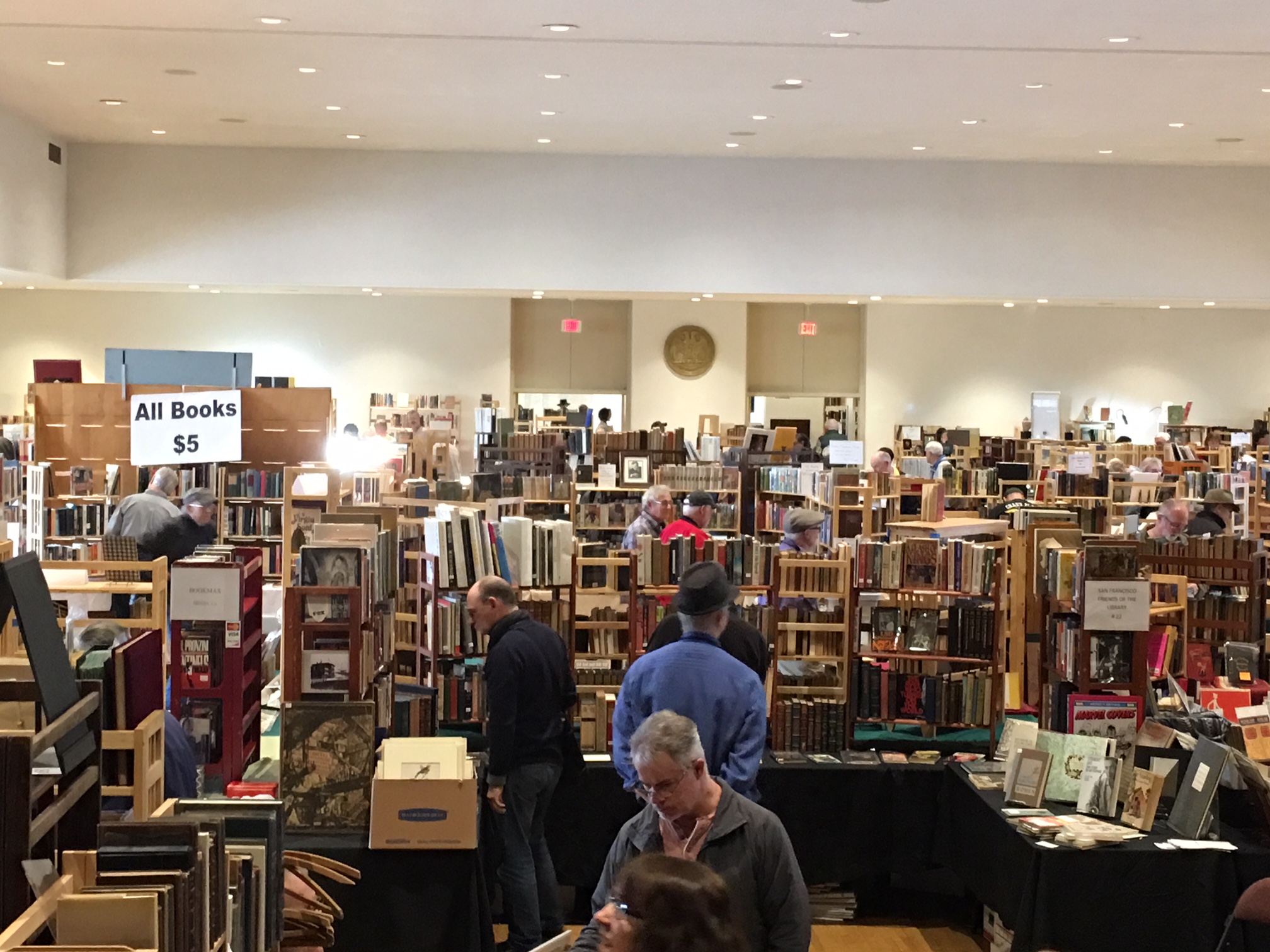
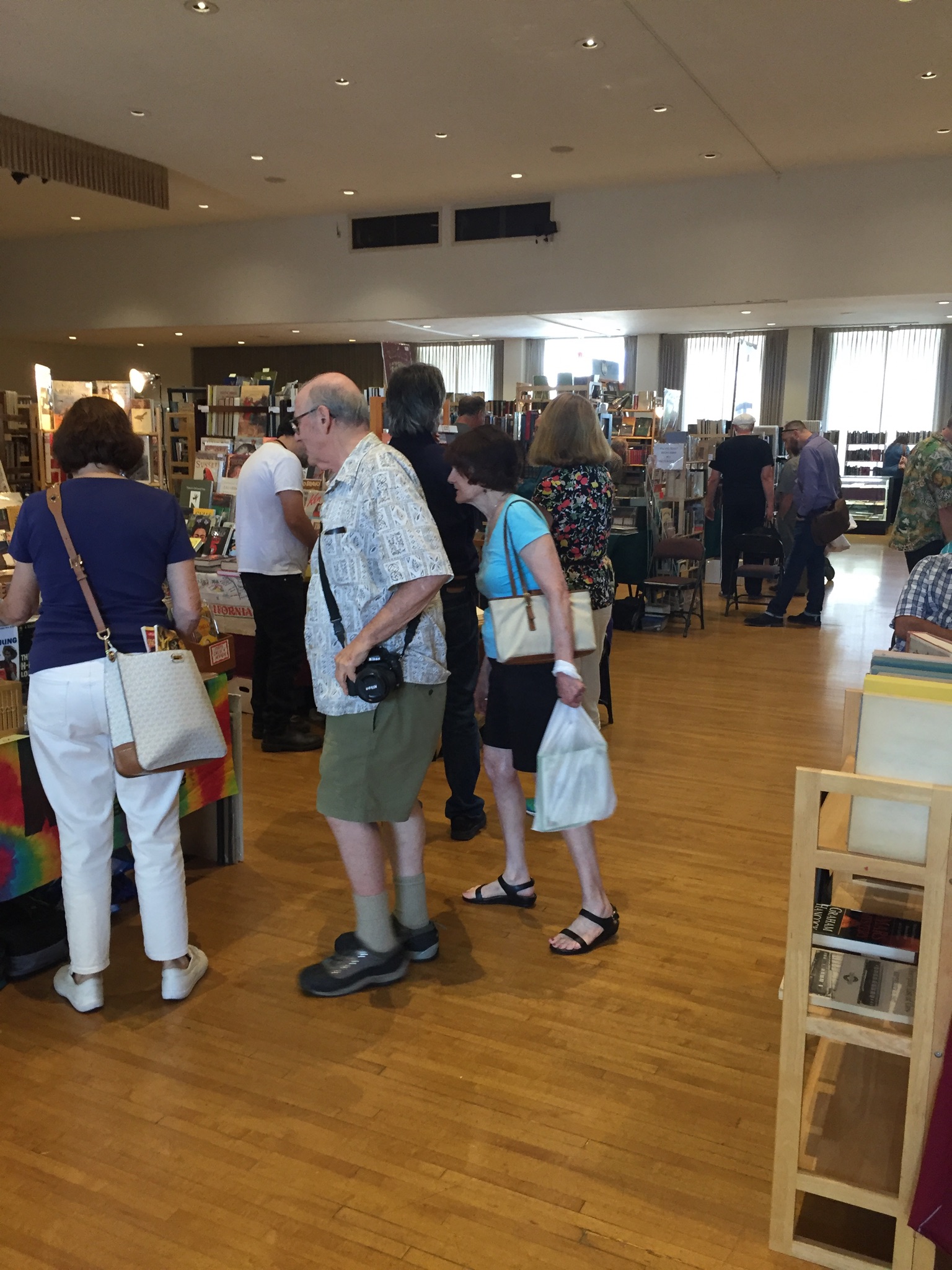
Jim Kay did it again!  “What?”, you ask?  Nothing less than host the umpteenth million [or so it seems] successful Sacramento  book fair!  Seriously, in one iteration or another, I’ve been attending this book fair since the mid-1980s.  For northern California bibliophiles especially, it’s a local gem.  Jim [pun intended] resurrected the fair a decade or so ago when it, like many other regional book fairs, was falling prey to the spread of internet book-buying.  Under Jim’s guidance, it’s now a vibrant local fair that consistently draws a good crowd, not to mention, exhibitors, who hail from as far away as Seattle, LA, and Salt Lake City.

IMG_4103This particular fair was also memorable for another reason…  it was the first ever for my new assistant, Samm Fricke.  Samm came on board last Wednesday.  Yes, you read that right, she’d only been in my employ for 2 days before I whisked her off to help me man the Tavistock Books’ booth.  She did great!  And the good ship Tavistock…?  The buying was great*; sales, not so much.  But that said, unless someone buys out your booth, there’s always room for improvement, isn’t there?
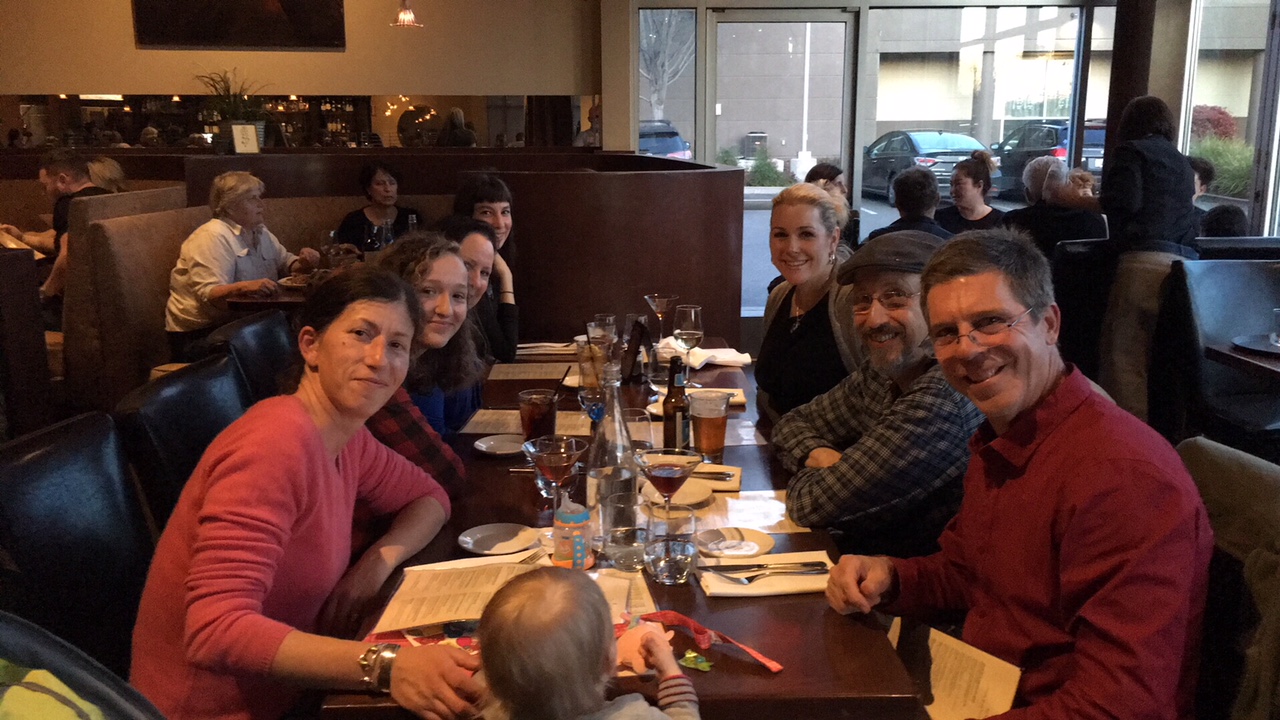
Finally, one attractive aspect of this fair that it shares with others-  interaction with colleagues.  The Friday night dinner has become tradition, and this year was no different.  That night, eight of us gathered at a local restaurant, Roxie, to dine, converse & just generally relax after a long day of set-up.  For me, this is one of the allures that keeps me coming back… the camaraderie shared at that Friday night dinner.   As they used to say in that one commercial, “priceless”.

CBB3A882-9EA4-417B-BA8A-8C6C27D6BB17

See you in September.

IMG_4105* watch for our New Acquisitions list…  lots of interesting material will be coming your way!
Share

Booksellers, Raffles and Wine, Oh My!

IMG_20171205_192040

                        The Berkeley City Club – a beautiful venue, as usual!

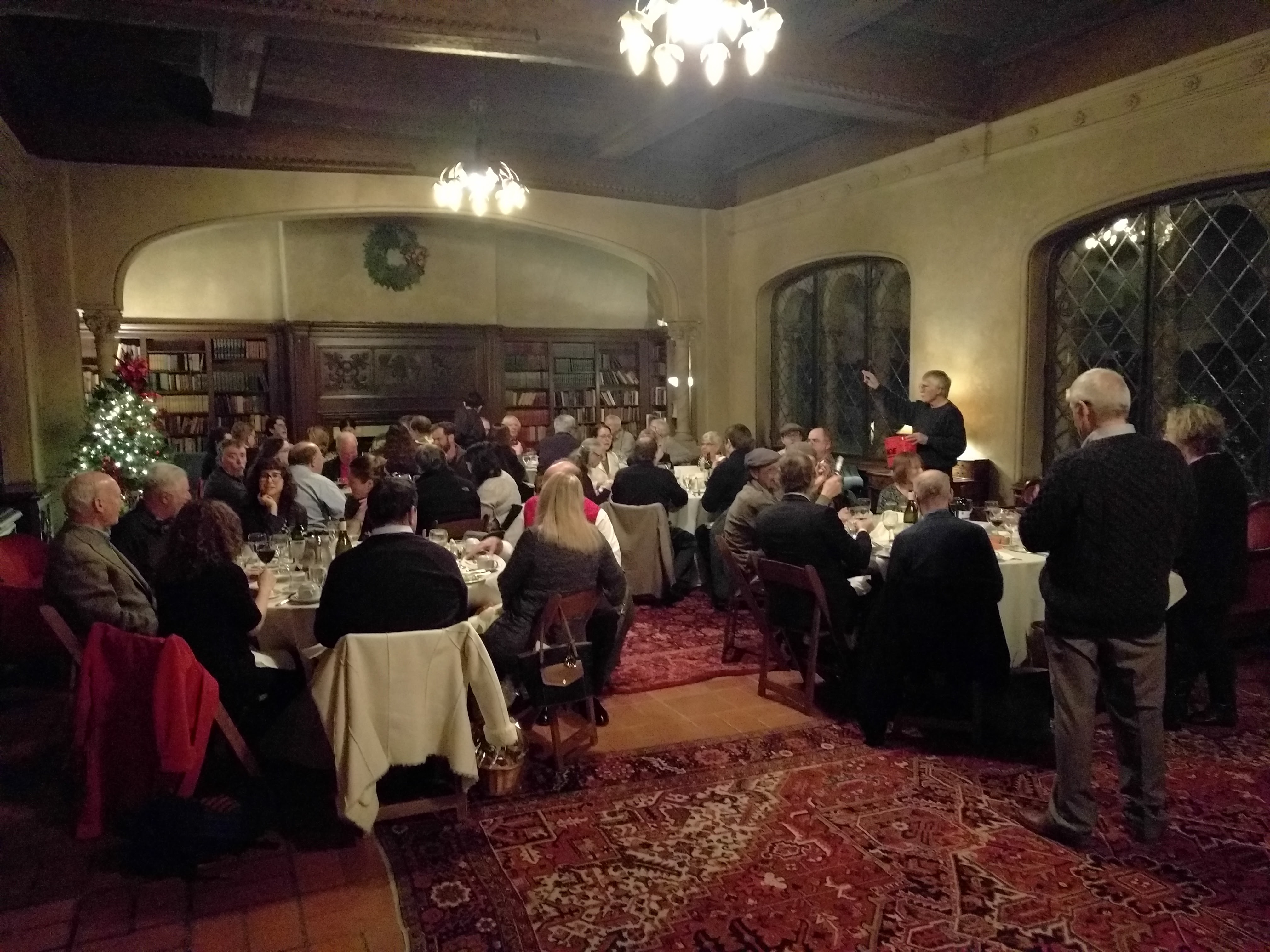
What could be better than a group of bibliophiles gathered together in a single room to celebrate the holiday season? A group of booksellers gathered together in a single room celebrating the holiday season with good food and a raffle of lots of alcohol, that’s what! Just kidding! In all honesty though we all (as adults) enjoy our bottles of wine and bourbon, what we truly enjoy is spending time with like-minded individuals. The NCC Chapter of the ABAA Holiday Dinner was no exception!

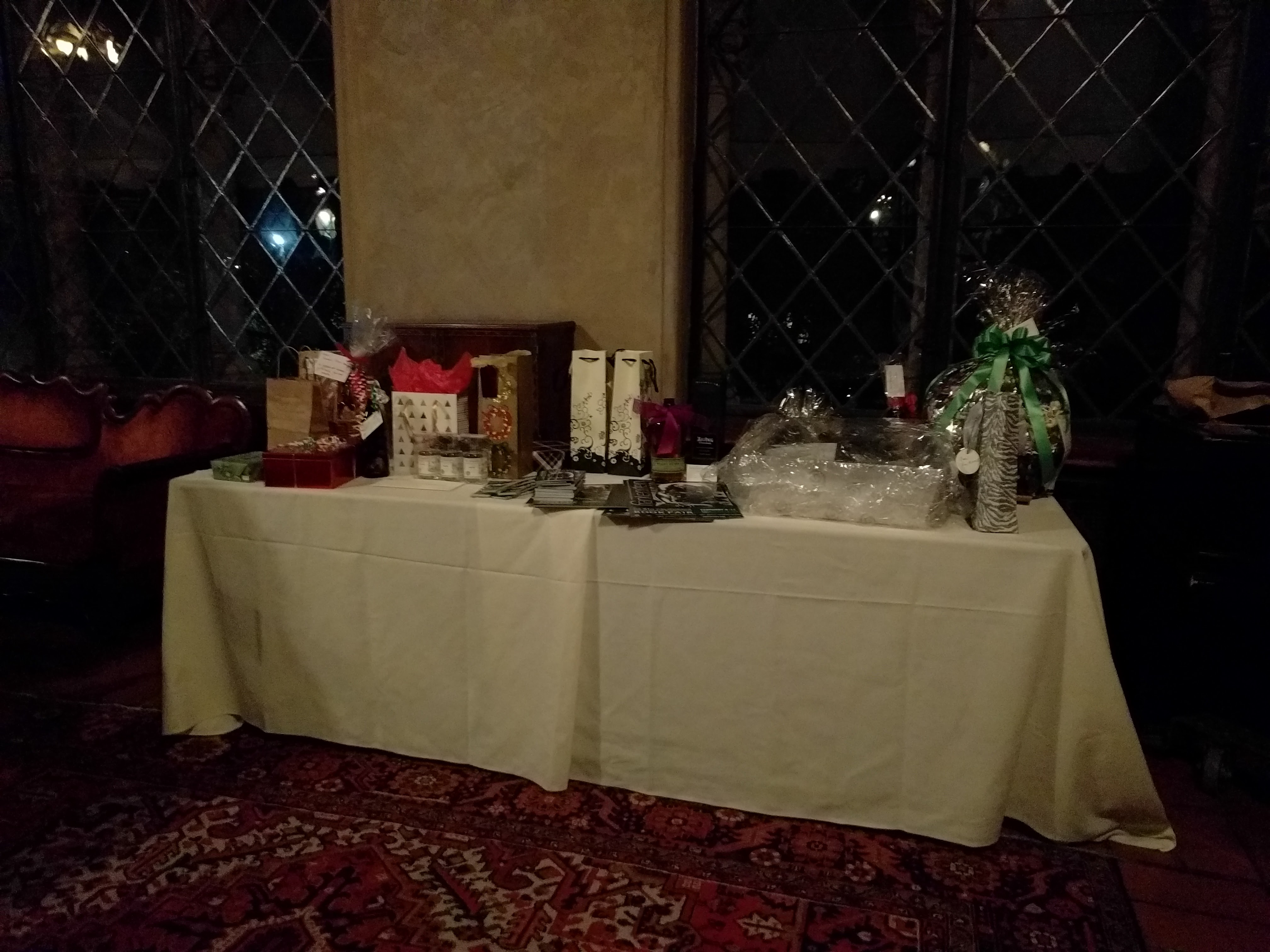
IMG_20171205_192028This year the bar, being held in the same large room as the dinner, seemed to be a bit more of an intimate affair (which I rather enjoyed). The large table of donations for the Elizabeth Woodburn / ABAA Benevolent Fund raffle was overflowing – as usual with impressive selections of beverages, but with also some fun gift baskets and chocolates, 2018 SF Giants baseball tickets, etc., etc!  Many raffle tickets were sold (most to our table mates John Windle and co., in my opinion – winners galore!!!) But I get ahead of myself. 

First things first Michael Hackenberg, the Chapter Chair, introduced the evening with his wit and charm. Minutes of the last meeting were approved, and one great new piece of information that was praised was the recent repeal of the most egregious parts of the California law on signed material. Unfortunately getting the bill repealed has cost quite a bit of funds for the ABAA, most of which were spent on lobbyists! But in any case, everyone is quite happy that we are on our way to normality back in the signed and autographed world of rare books. Another topic of interest covered is that the ILAB Congress in LA next year is close to being sold out! There are possibly one or two more seats to be had, and those who have been agree that it is a wonderful destination work-trip for any book related people. Over 100 people have signed up thus far. 

IMG_20171205_190223

An image of a very happy (possible) ABAA President?!

New members of the ABAA board will soon be voted on! Members of the NCC that are up for nomination in different positions include our very own Vic Zoschak [as President], Michael Hackenberg [as our Chapter Rep],  Brad Johnson & Scott deWolfe are both competing for the ABAA VP slot, and Peter Blackman is on the ballot as Association Treasurere. The NCC Board includes Andrew Langer as the new treasurer, Alexander Akin continuing on as Secretary, Laurelle Swan as the new Vice Chair, and Ben Kinmont as the new Chair! Congratulations to these four! Another interesting topic included the different showcases touted by several booksellers for this upcoming year include the Bibliography week showcase in January and the RBMS showcase in New Orleans! Last but not least, the upcoming fair in Pasadena in February has one of the highest registrations for several years, with over 200 booksellers registered to exhibit at this time. Woohoo!

In all, the dinner, the chat, the raffle interspersed between rounds of discussion (a great new idea, in my not so humble opinion), and the camaraderie always found in this group of people made for a wonderful holiday evening. 

And to all a good night! (Or afternoon… you catch my drift.)

Share

A How-To Guide for Buying Antiquarian Books as Christmas Presents

holidays5

Here we present to you a (bit of a tongue-in-cheek) guide for buying Christmas gifts this holiday season… in an antiquarian fashion, of course!

1. Know your Subject.

Not your book subject, that is. We mean your audience, your gift taker, the subject of your love, attention and wallet. They may not be readers! (We hope they are, but in all fairness not everyone is as book obsessed as we are – you catch my drift?) If they are readers, you likely know the genre they prefer. If they aren’t self-professed bibliophiles, perhaps you can deduce what they might enjoy from their other interests. Are they political? Perhaps they might enjoy a set of pamphlets on Communism from the 1970s! Are they classicists? Well then perhaps a Dickens would suit them (given that you also provide a box of some wonderful Twinings tea along with it.) Get to know your subject, I mean friend, in an unconventional way!

holidays6

2. Know your Books!

So you aren’t an expert antiquarian book hunter and gatherer… so what? That is what we booksellers are here for! Not only do we find exceptional items for our customers and even put together collections for them, but we are experts in our chosen fields. So what does that mean? Well, if you’re stuck pick up the phone and give us a call! It doesn’t hurt to ask the opinions of those surrounded by unique items every day.

3. Know your Budget.

We know, better than most, how easy it is to be lured to certain items in the antiquarian book world. A beautiful piece of incunabula catches your eye and BAM! Suddenly you have taken a second mortgage out on your house! (Just kidding. We hope.) But when it comes to gifts for others, it is always a good idea to think about how much that friendship is worth to you before beginning your search for that perfect item.

holidays3

4. Know your Bookseller.

We booksellers are often elusive beings. For some, we exist on their computer when they order a book and it arrives (very well packaged, if it has been purchased from Tavistock Books) on their doorstep. But don’t just assume that when you order a book online it will come the way you want it. Feel free to do a bit of research on your bookseller! Go to their website, see where they are located… give them a call and ask about their shipping process or their opinion on your gift. We guarantee that not only will you have a better story to tell your gift recipient than “Oh, I found this online.” but you will also meet some spectacular bibliophiles in the process!

5. Enjoy the Process of Giving!

Don’t miss one of our favorite quotes by one of our favorite authors… “A day wasted on others is not wasted on one’s self.”

You thought we were going to go with a Christmas-y Dickens quote, didn’t you? We love to surprise!

Oh fine, and here’s this one just to warm the cockles of your bookish hearts…

“I will honor Christmas in my heart, and try to keep it all the year.”

holidays 2

Share

We Have NOT Come to Suck Your Blood

stoker2

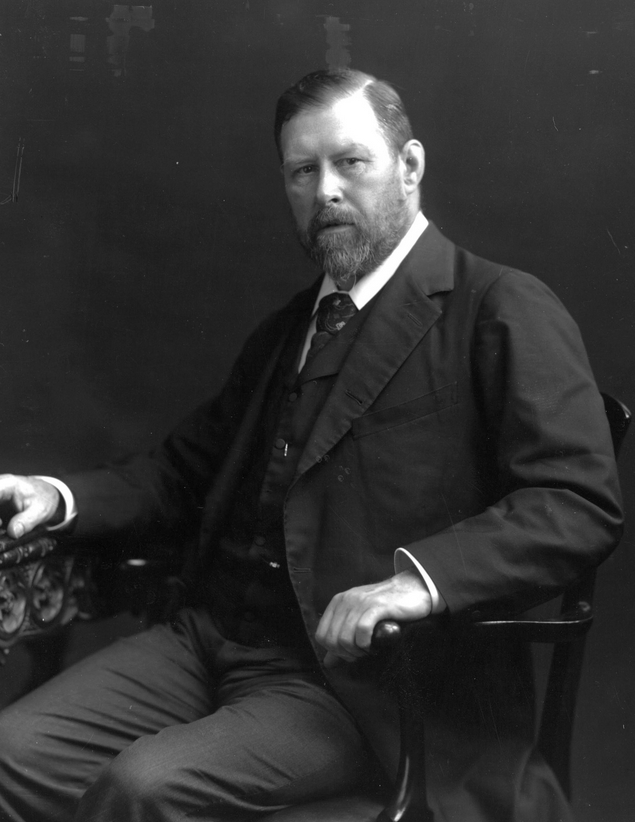
What are the greatest parts about fall? The crisp smell of apples, the chill in the air, the colors of the leaves… and the somewhat spooky feeling all around us! Just kidding, that’s just near Halloween. But you must admit, there is something about this season that may inspire you to revisit some of Poe, of the gothic masters, or of our blog subject for today – Bram Stoker.

Stoker is, of course, best known for his novel Dracula – a tale of a blood-thirsty beast in love (classic), but who was he otherwise? Here are some facts that you probably didn’t know about this Irish author!

1. He was Irish. I realize I gave that away in the previous sentence, but still. Stoker was born in Dublin in 1847, and lived in the county of Dublin all his life, even attending Trinity College for his higher education. Though graduating with a degree in mathematics, he showed prominence in the humanities as the auditor of the College’s Historical Society and president of the University Philosophical Society.

stoker1

2. Interested in theater from a young age, Stoker became a theater critic for the Dublin Evening Mail early on. After writing a favorable review of Henry Irving’s Hamlet, he was invited to London to become his new friend Irving’s theater business manager at the Lyceum Theater.

3. Bram Stoker’s wife Florence Balcombe was a previous suitor of Oscar Wilde. It may be strange for me to be so impressed by this, but nevertheless…

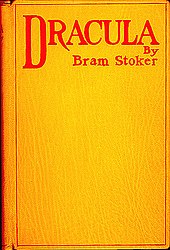
Dracula1st.jpeg

4. Stoker worked on several novels while managing the Lyceum, Dracula being one of his first. After its publication, the novel received quite a bit of literary and critical acclaim, but did not shoot him to fame, despite the fact that it is now a story known worldwide. There are over 200 films and over 1000 novels written about Dracula alone!

5. Most people assume that Vlad the Impaler was the inspiration for the character of Dracula. However, recent scholarship suggests that, though Stoker may have borrowed the somewhat gothic and creepy name from the historical Romanian, he most likely based more of the facts on his own ancestor, Manus O’Donnell – or Manus the Magnificent – an Irish clan leader.

6. Complications and vagueness around Stokers death has sparked all kinds of discussion in his fans – some say he died from another stroke (after living several years after his first), others say syphilis. Even others say he is not dead at all… but still walks along the living! (Only at night, of course.)

Bonus fact: Through his friend and employer Henry Irving, Stoker met two US Presidents – William McKinley and Theodore Roosevelt. Crazy!

This fall we invite you to grab a cup of tea, cozy up next to the fire, and pick up a scary classic… we promise you will thank us for it!

stoker3

Share

(SPOILER ALERT) Antiquarian Nursing Material Isn’t Just for Nurses

We recently wrote a short and sweet blog post on “Why You Should Be Collecting Antiquarian Cookery.” Now, we do enjoy getting Cookery items in and we do have quite a bit of knowledge around them, but technically speaking, cookery is not one of our ‘specialties’. However… Nursing is. We often have customers exclaim surprise at our little-known specialty, followed by a slightly confused look as to why we might carry such things. You yourself might be wondering how many nurses are also antiquarian book collectors. We must confess that we do not know those numbers. (However, if you know those numbers, please feel free to share.) So for this week’s blog post we thought we would share why you don’t have to be a nurse to collect antiquarian nursing material!

Before you remind us, yes, Vic began collecting nursing material because his wife, Ellen, was a head nurse! So yes, occasionally there are nurses involved. Just thought we would get that over with before we get any “Wait up, we know that Ellen was involved in that field…” emails. However, Vic knowingly went into the field, as he realized that there weren’t many out there specializing particularly in nursing material over a more generalized medical genre.

Screen Shot 2017-10-11 at 2.01.39 PM

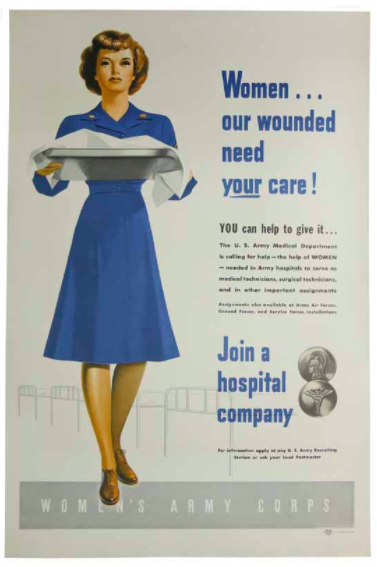
Although the U.S. Army Medical Department was one of the slowest to integrate women, when over 5,000 of its combat-ready men — including many trained technicians and orderlies — were forced to transfer to the Infantry in early 1944, the department began a major push to recruit women to fill the positions. The Female Medical Technician campaign, as pictured here, was hugely successful. See this Fine condition WWII poster here.

Nursing material tells us about just as much of history as other items in the medical field. Nurses were often called upon to step in and help in times of war and devastation, and, in some instances, were in even higher demand than doctors. Antiquarian nursing material often teaches the reader (albeit briefly) the best ways to care for wounds, different illness, and even mental “defects”. They are particularly interesting as, despite what western medicine looks like today, many antiquarian nursing items were published before the heavy use of medication. Nursing materials can teach how to care to the sick without Advil – which many would argue is more important than knowing how to hand over a pill!

Screen Shot 2017-10-11 at 2.01.52 PM

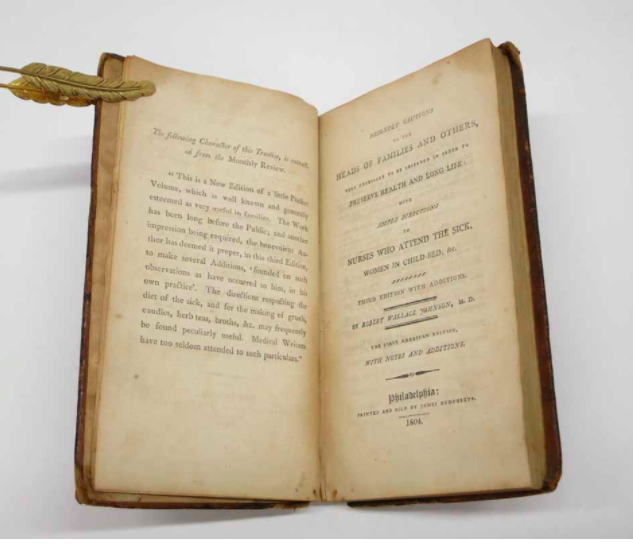
Check out this 1804 1st US edition of FRIENDLY CAUTIONS To The HEADS Of FAMILIES And OTHERS, Very Necessary to be Observed in Order to PERSERVE HEALTH And LONG LIFE: with Ample Directions to NURSES WHO ATTEND The SICK” – a manual for nurses from over two centuries ago! See it here.

Antiquarian nursing items are therefore of interest to any of those looking to see cultural and scientific differences in levels and quality of medical care over the past two hundred years. It is also interesting to use the materials to see how nurses were trained, what they were trained in, and what they were called on to do. Now if you don’t find that interesting, then we don’t know what else to tell you!

Screen Shot 2017-10-11 at 2.02.00 PM

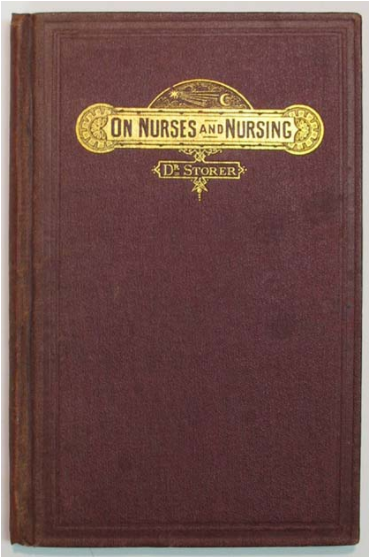
Check out this 1868 1st edition of “On Nurses and Nursing by Dr. Horatio Storer – a leading physician in the 19th century who, in 1857, started the “physicians’ crusade against abortion” both in Massachusetts and nationally, and persuaded the American Medical Association to form a Committee on Criminal Abortion. The Committee Report was presented at the AMA meeting in Louisville, Kentucky in 1859 and accepted by the Association. Woah! Check it out here.

Share

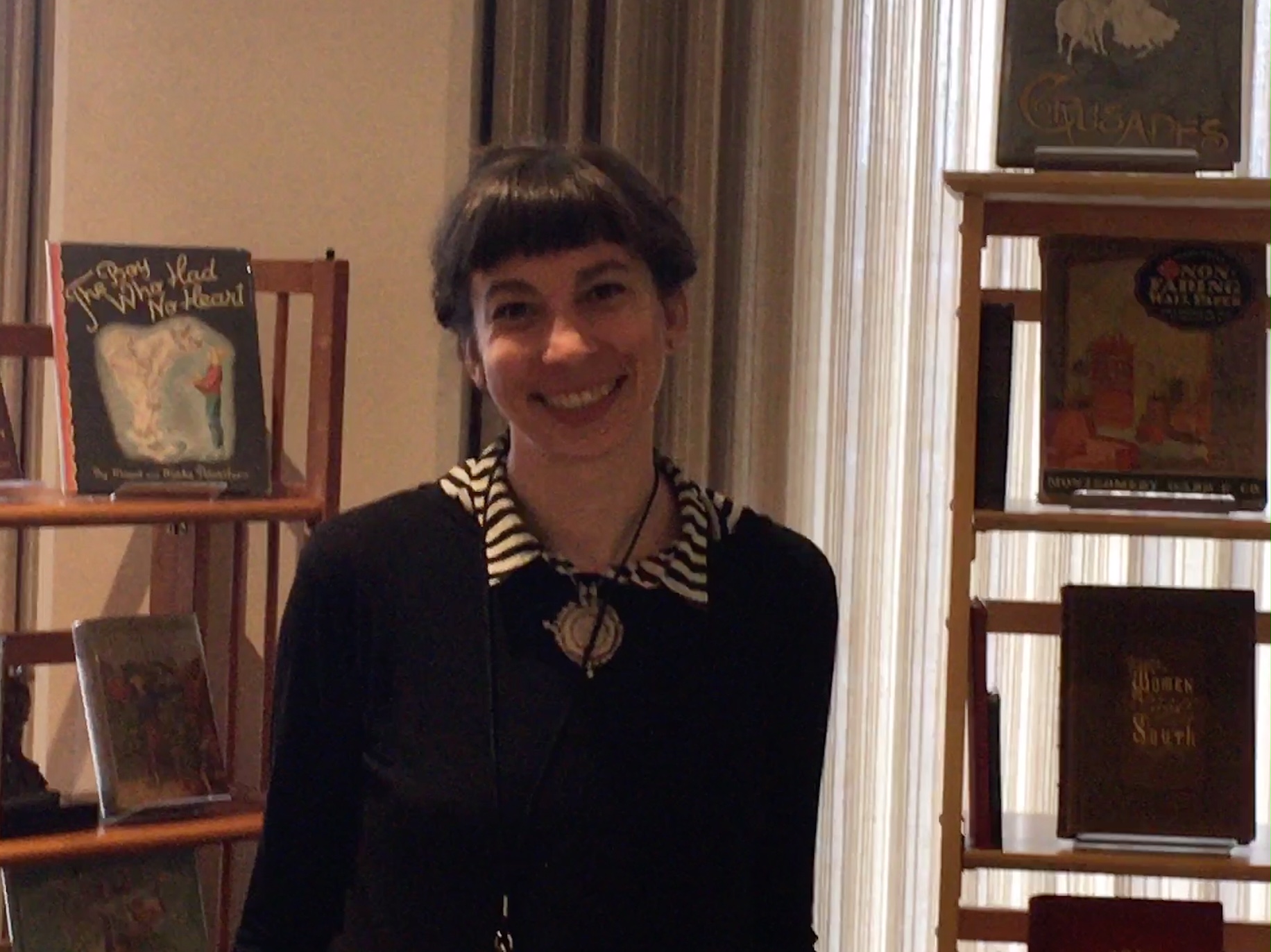
Welcome to Tavistock Books, Cassie Leone!

Tavistock Books is proud to announce a new member of the team – Cassie Leone! Cassie will be working part-time at Tavistock Books and we are glad to welcome her to the fold.

Cassandra_Leone_23

Welcome to Tavistock Books, Cassie! How long have you been involved in the antiquarian book world for now?

Thank you! I began working for antiquarian booksellers last September, a few months after completing my undergraduate degree in English at Smith College. I’ve worked for Brick Row Books, and John Windle Antiquarian Bookseller. I’m currently also working part-time with Swan’s Books. 

What is your favorite aspect of working in the book trade? Does this coincide with what you will be doing at Tavistock?

I really enjoy cataloging books. I find it to be similar to academia in that you are researching and writing about literature, except that what you are writing is more geared toward sales. I especially love illustrated books, and books with provenance. When a book has an inscription I think its fun to do some detective work on its past owners.

What made you first become interested in the book trade?

When I was at Smith I concentrated in book studies. I loved learning about the history of books and the technology of reading and writing. One of my professors told us stories about his experiences working for antiquarian book sellers in Chicago, and I thought that sounded like intriguing work. 

Could you give us a slight background on you, yourself? Where did you grow up, what activities or hobbies do you enjoy, etc. 

I grew up in the Bay Area, and I’m originally from Walnut Creek. I moved to Oakland in 2003, which is where I currently reside. I’m a writer, and I’m currently applying to graduate schools for an MFA in Creative Writing, specifically poetry. I’m an amateur book collector; I also collect comics, records, Victorian greeting cards, antique oil lamps, and antique coffee pots. I enjoy baking and I ferment my own kombucha. Over the summer I got married in Berkeley, and I have a dog named Winston.

Last, but certainly not least… how do you feel about Charles Dickens and the San Francisco Giants? 🙂

While I was working for John Windle I catalogued a collection of Charles Dickens, and I became pretty familiar with his work and Dickensiana in general, but I have to admit I’ve never read any of his books! I plan to change that status in the near future. I did enjoy A Muppet Christmas Carol though. As a Bay Area native I of course love the Giants, I even have a few Barry Bonds baseball cards from when I was a kid.

Share

Vic Visits the Wine & Viticulture Collection of the UC Davis Shields Library


IMG_3694 (1)

Who has the greatest collection of wine & viticulture literature in the world?  The Shields Library at UC Davis, that’s who!  To quote the August 22nd BCC announcement of this 15 September field trip, “The wine library at UC Davis houses more than 30,000 books in more than 50 languages, manuscripts, historic records, research data, and materials in every medium, from wine labels to videos.”

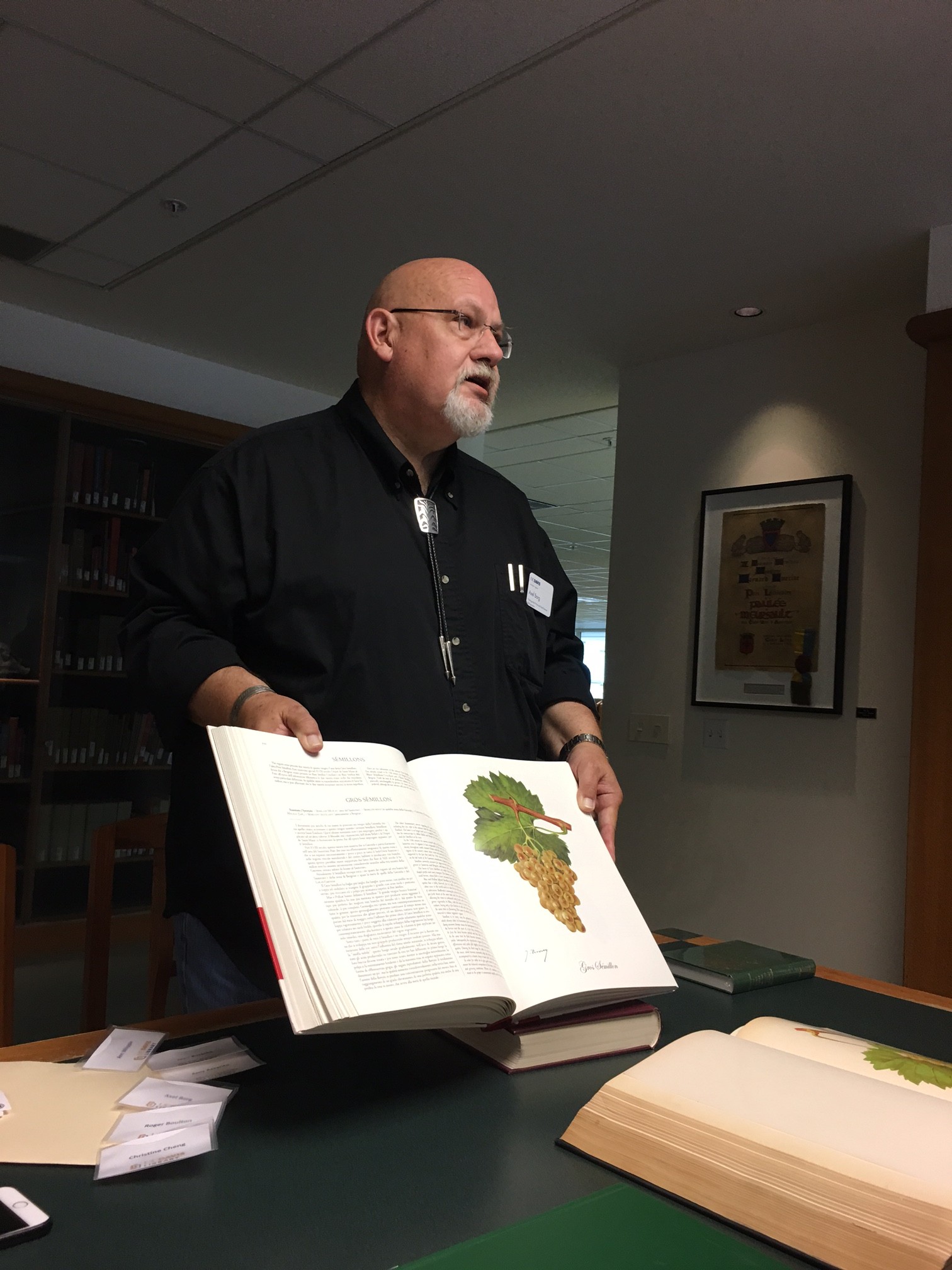
IMG_3691Yours truly, along with 14 other BCC members, on our 9:30 arrival at the library, were greeted by Axel Borg, the library’s wine & food science bibliographer, and spent the next 4 and a half hours being regaled with all the treasures that this library has amassed over the years.  We started in the Maynard Amerine room, named after the man who exerted a profound influence on the collection.  Amerine [1911 – 1998] was a “pioneering researcher in the cultivation, fermentation, and sensory evaluation of wine.”  No doubt many of the booksellers & collectors reading this blog will hold one of publications, the 1996 BIBLIOGRAPHY On GRAPES, WINES, OTHER ALCOHOLIC BEVERAGES, And TEMPERANCE [co-authored by Axel by the way].
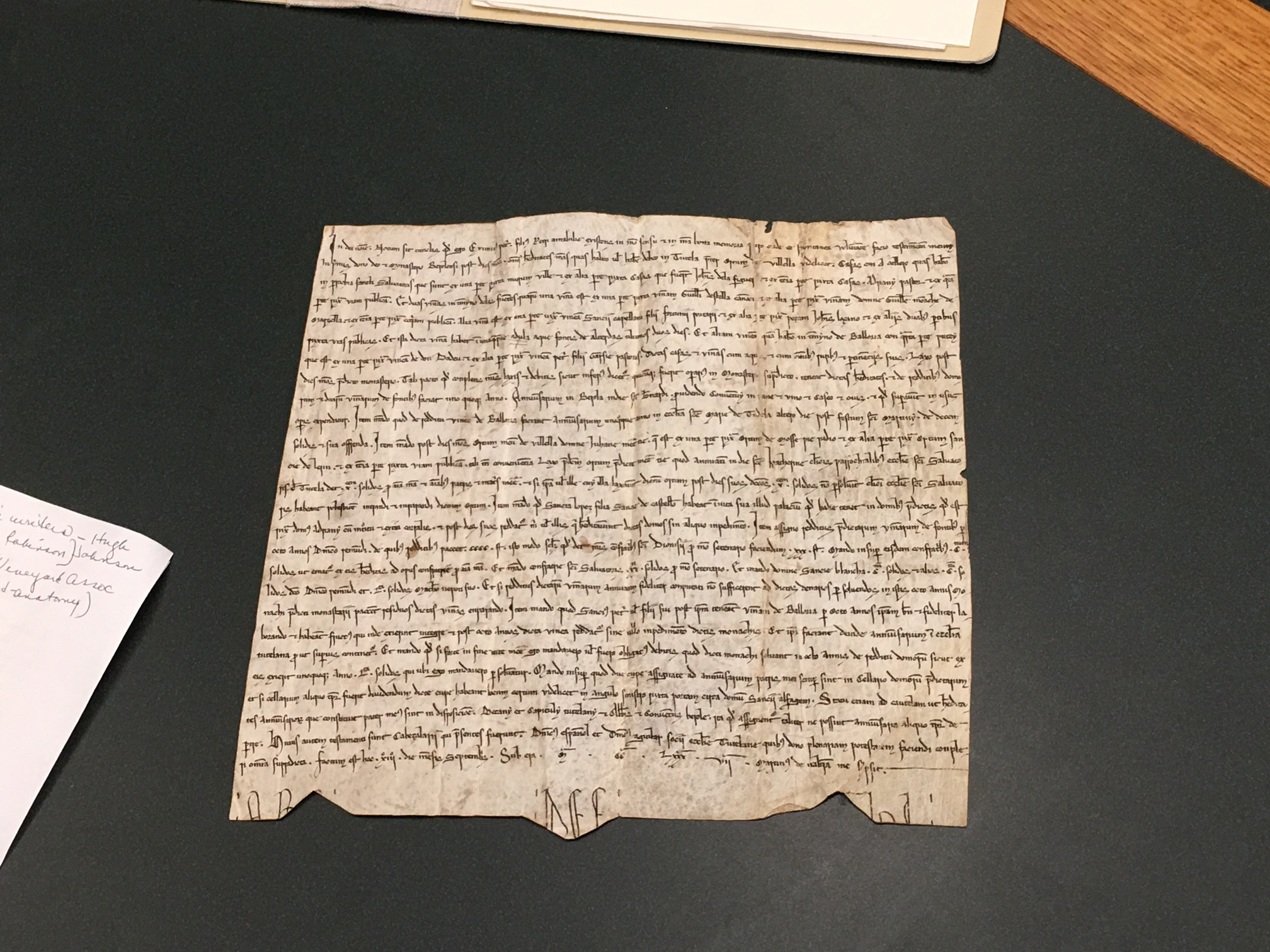
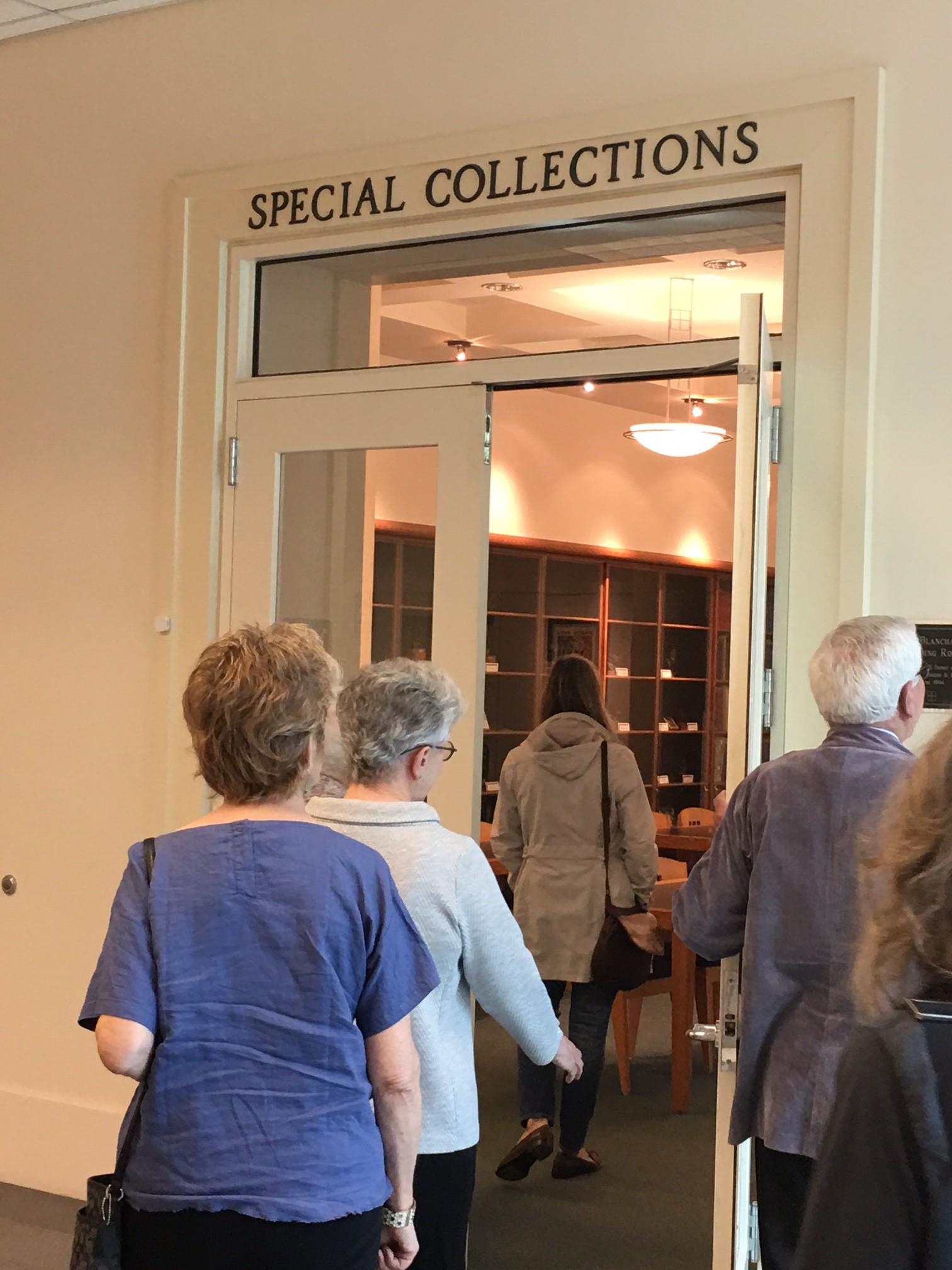
IMG_3698After giving us an overview of the collection, and its history, we eventually found our way to Special Collections, where Axel tantalized us with one interesting & fascinating item after another…  here I wish I’d taken notes, for memory fails me as to most specifics, other than the 1287 deed for a vineyard land transfer & a cute little accordion miniature that on first blush appears to be a wine cork.  That said, my fellow attendee, Anne Smith, did, however, take notes, so see her soon-to-be-published BCC piece for more specifics on the books Axel had at show-n-tell.
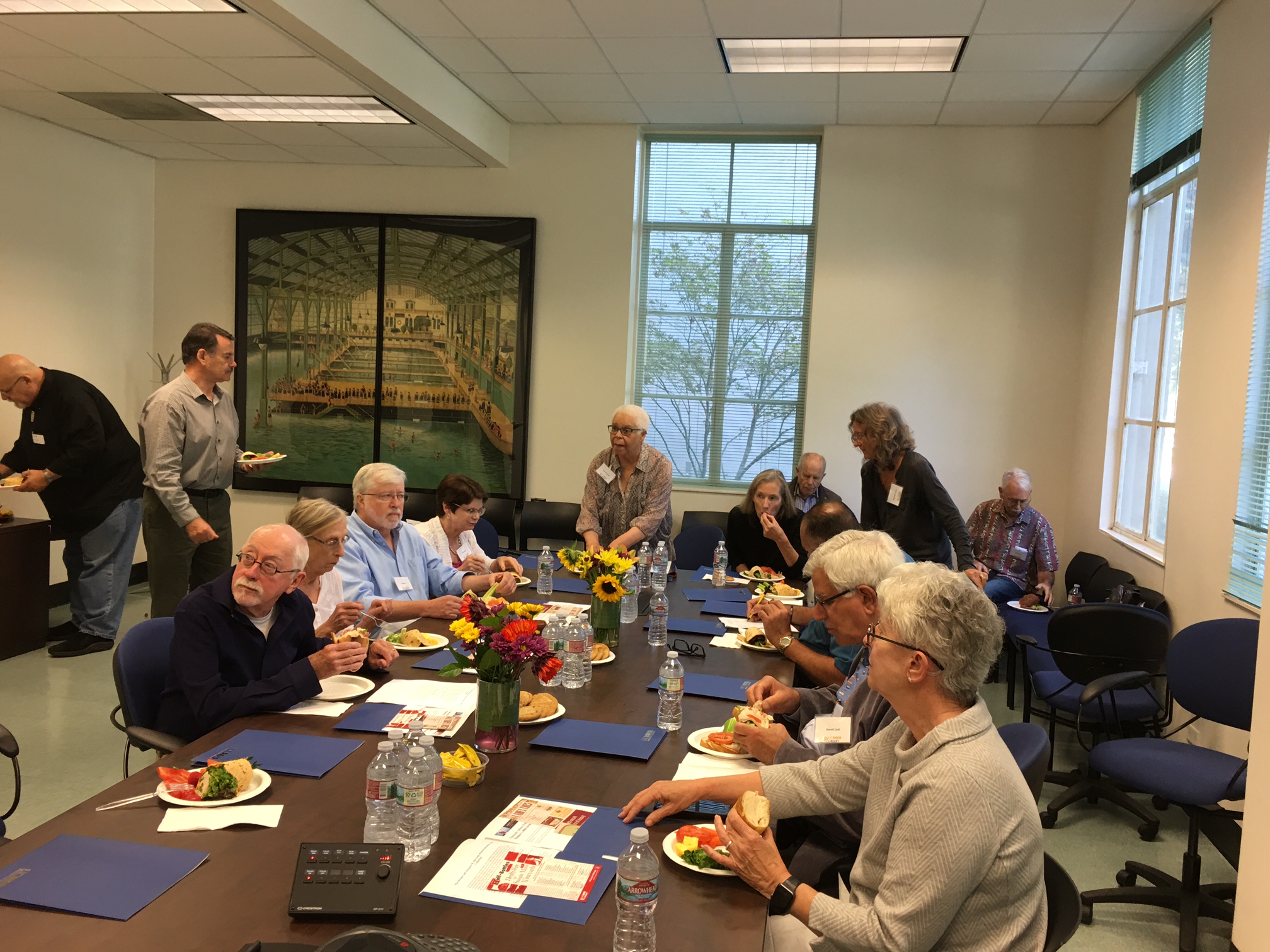
IMG_3731Next on the agenda was a buffet lunch, which, given we were a willing captive audience, included a presentation on projects UC Davis has in the works… one is a interactive social map showing wine-related connections.  Intriguing, to say the least.  Another is the digitization & searchable compilation of wine price lists, et al.  For food & drink historians, invaluable.
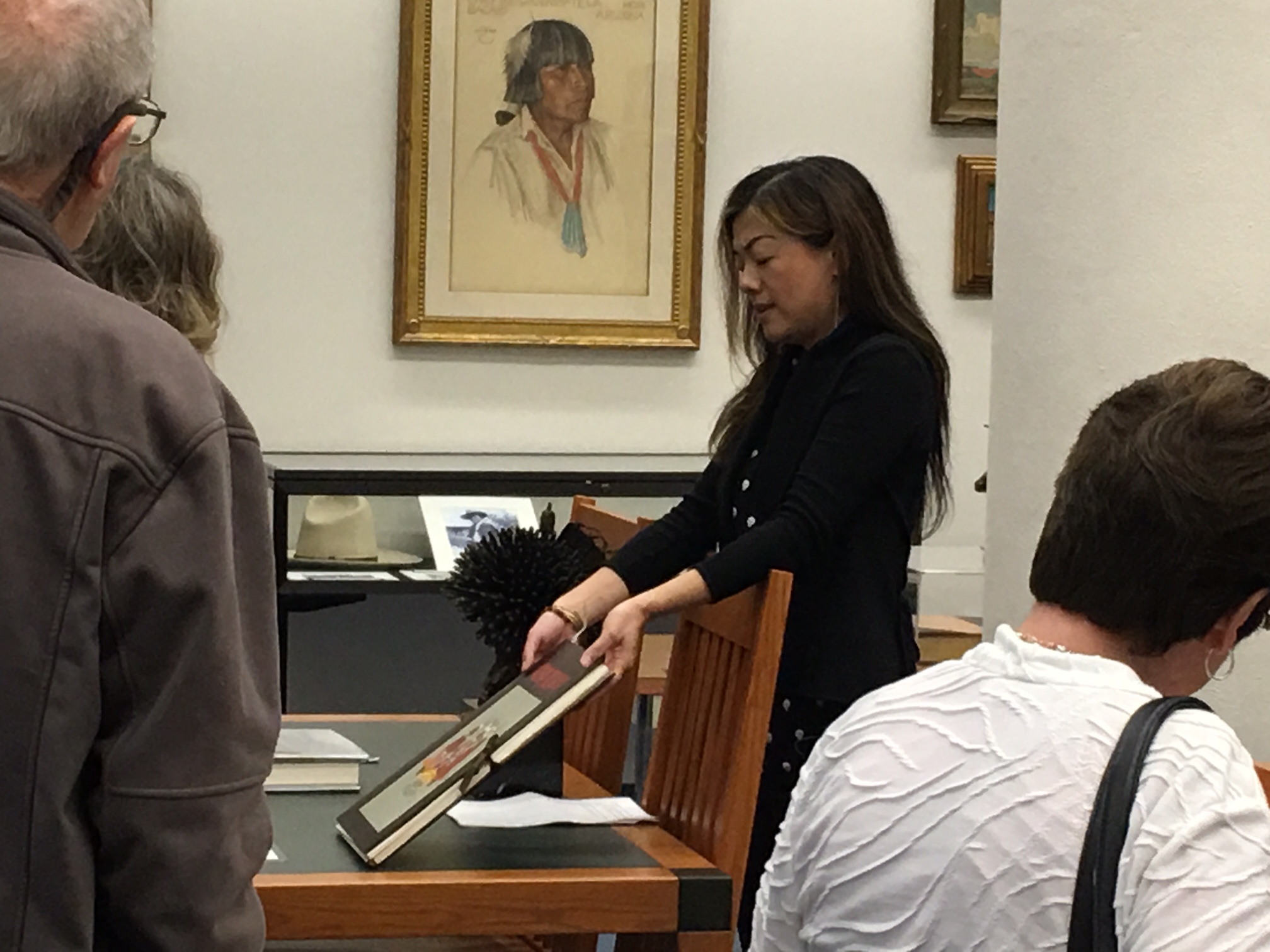
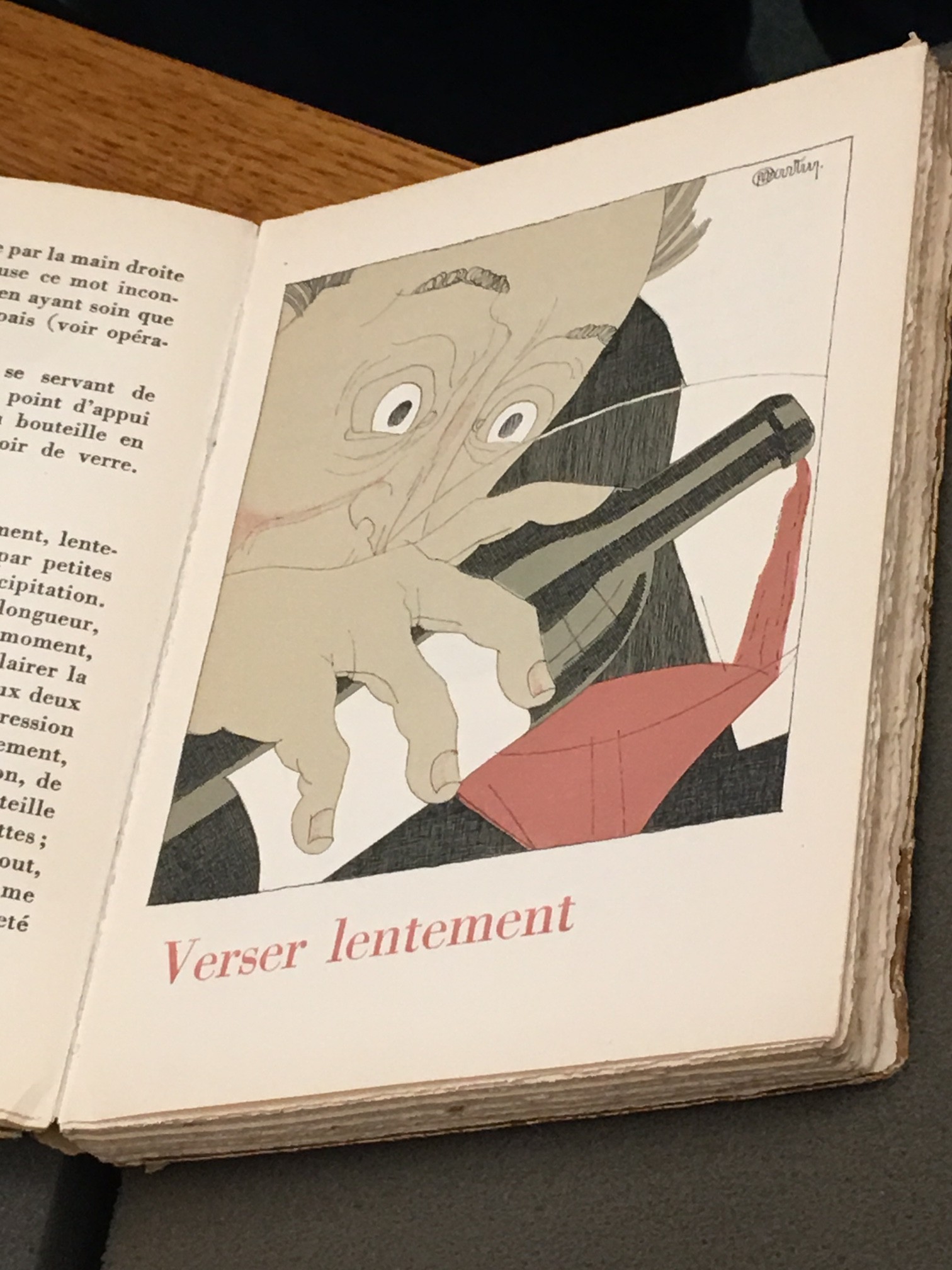
We ended the day in the Harrison Western Research Center, which holds more than 21,000 volumes related to the history of the Trans-Mississippi West, collected by Michael & Margaret Harrison.  Noteworthy in that collection were Catlin’s North American Indians, and Ansel Adams & Mary Austin’s Taos Pueblo.  I confess, the bookseller in me was covetous, but I also assure you, I left empty-handed.

IMG_3733

And so ended this engrossing trip.  My thanks to all the staff at the BCC & UC Davis who made this day possible.  It was wonderful.

IMG_3717


Share

The Sacramento Antiquarian Book Fair from an Outside Perspective

This September, Tavistock Books took a step back from exhibiting at the Sacramento Antiquarian Book Fair, and our Master & Commander Vic Zoschak attended from a buyers standpoint alone. We pick his brain and see how it went! Photo by ZH Books.

Sacto

So, Vic – attending the Sacramento Antiquarian Book Fair as an Outside Observer. For the first time in how many years?

Gosh, the last time I remember just shopping the Sacramento Book Fair was the late 80s, before I took the plunge into the bookselling world.  I have no doubt that Sacramento was one of the first book fairs at which I ever exhibited [perhaps eclipsed by the now long-time defunct Berkeley Book Fair, a one-day event that started set-up at 6:30 in the am, with an opening of 10 am!].

These days, the Sacramento event is ably run by Jim Kay, who has done so a number of years now, and he has even turned it into a semi-annual fair, every March & September.  Jim tells me there’s been some recent turnover in the bookseller ranks, i.e., other long-time exhibitors besides myself have stepped aside [e.g., Carpe Diem & no Ken Sanders this time], but all the booths looked taken, so there were, no doubt, others waiting in the wings for us to move aside & to take our places.

I noted that the Book Lair & ZH Books had moved over into my old spot, which I had shared with Book Hunter’s Holiday.  They both seemed to like that corner.  🙂


What were your overall impressions of the fair, from a strictly buyers standpoint? Well put-together, as usual? Crowded?

Jim’s hallmark is indeed a well-run event.  The crowd seemed the same, which is to say, by noon there was a buzz in the hall, and lots of folks in the aisles.  Saw plenty of tickets being written.  And the snack bar back in the corner continued to put out quality fare…  I had the chili this time around-  quite tasty.


Was there anything you haven’t noticed before that was called to your attention as a non-exhibitor? 

No, I can’t say that anything comes to mind in this context.


How was the buying? In recent years you have had great luck at Sacramento. Was it the same, after not being able to take first pick at everyone’s goodies during setup?! (One of the best parts of exhibiting, in our not so humble opinion… seeing what is available before anyone else!)

While I did buy some things that I thought interesting, in terms of potential profit, I see the end results as being modest, at best.  In other words, nothing great that would command an exclamatory “Whoohoo, look what I found!”

It’s hard to say whether or not not being on the floor during set-up occasioned a missed opportunity.  I personally didn’t hear of any great finds, but that’s not to say it didn’t happen.  Certainly such has happened in the past at this fair [even once or twice for yours truly], so who can say?


What do you think for the future? Will you continue to attend Sacramento as a buyer only or are you considering exhibiting at any upcoming Sacramento fairs? 

I think the Sacramento fair’s immediate future is assured.  As I said, Jim does a great job, and the fair is apparently well supported by both the local exhibitors and the local book buyers.  As to myself, I confess, a half-day devoted to the fair, vs 4 days…  well, let’s just say I loved being home by 2 pm Saturday, and being able to catch the last few innings of the Giants game.  🙂

Well… we can all hope that Vic might exhibit at Sacramento again (perhaps when there is no Giants game to be watched)! It’s just not the same without him!

Share

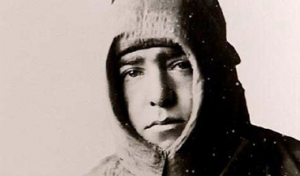
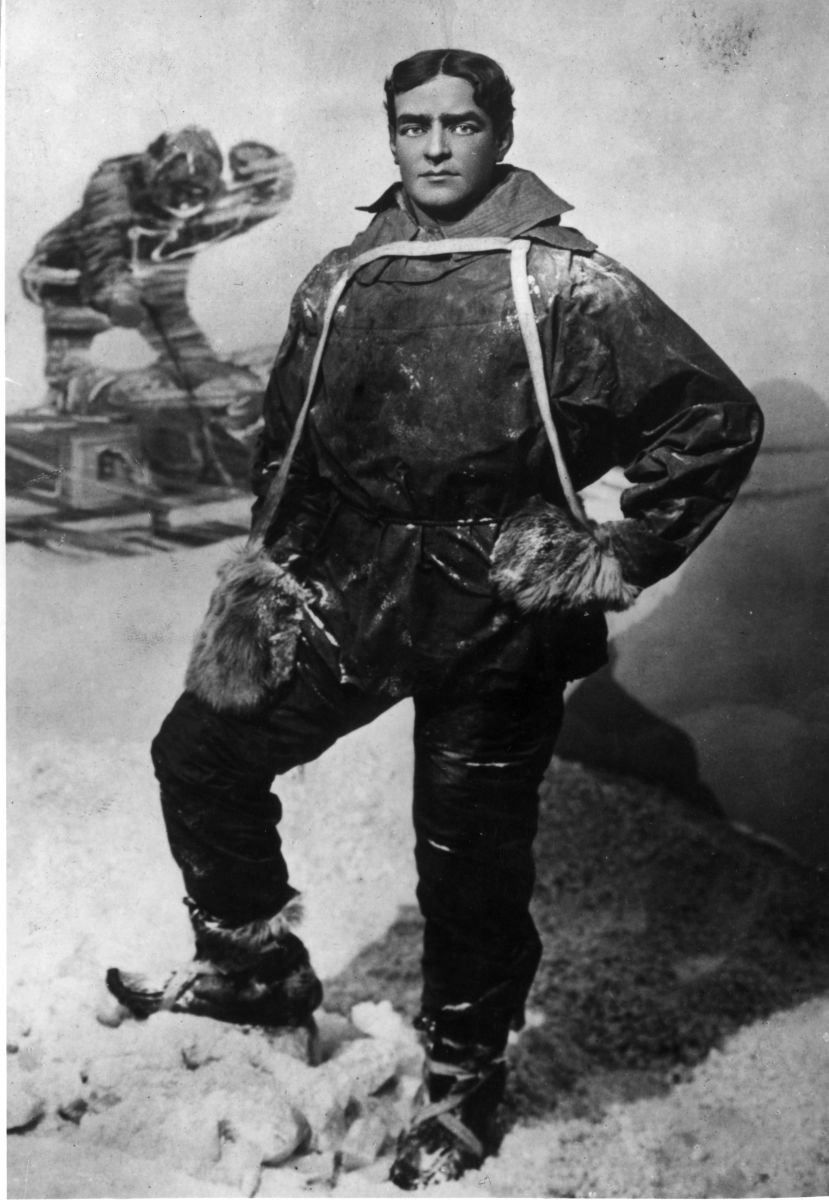
OTD in 1916 – Ernest H. Shackleton Rescues his Crew of the Endurance from a Year and a Half Ordeal on the Frozen Elephant Island

shackleton2

What would be the roughest conditions you could see yourself surviving in? Deserted tropical island in a ‘Cast Away’ situation? Or what about lost in a forest with only a tent and a few cans of beans? I’ve got it! What about trapped in packed ice 720 nautical miles from civilization only to have your boat sink and then have to camp the rest of the time on the ice itself? Could you survive it? Personally, being from Florida, and though I like the occasional cold weather… I can imagine few ways of how I would die faster than being trapped on ice for a year and a half.

That being said, an entire group of men once did it. An explorer and his crew lived on packed ice for months and months… and then some traveled hundreds of miles for help and rescue. Ernest Shackleton is a name known by adventure enthusiasts, explorer aficionados and travel collectors across the world. 

shackleton1Ernest was born in February 1874 in County Kildare, Ireland – the first of two boys out of ten children in an Anglo-Irish family… and the son of a dreamer. When Ernest was six his father gave up his career as a landowner and decided to pursue his dream of becoming a doctor. He moved the family to Dublin in order to begin his studies at Trinity College. Once acquiring his degree, Henry Shackleton then moved his family to London when Ernest was 10. Shackleton was an avid reader, but a maddening student. He did not take to lessons so well, despite being able to finish at the top of his class several years, and was finally allowed to leave school at 16 to pursue the adventures he had dreamed of for years while reading travel books and thrilling adventure accounts. His father got him an apprenticeship on a sailing vessel, and the young Shackleton spent the next 8 years studying for different mariner tests, Second Mate, then First Mate, and ultimately Master Mariner (captain). 
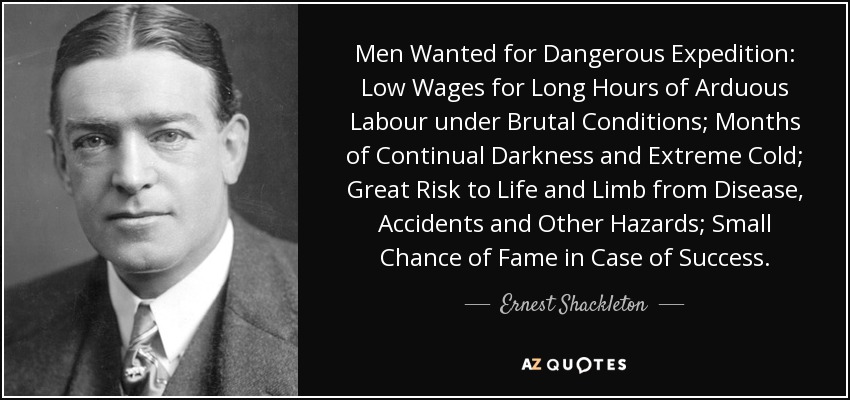
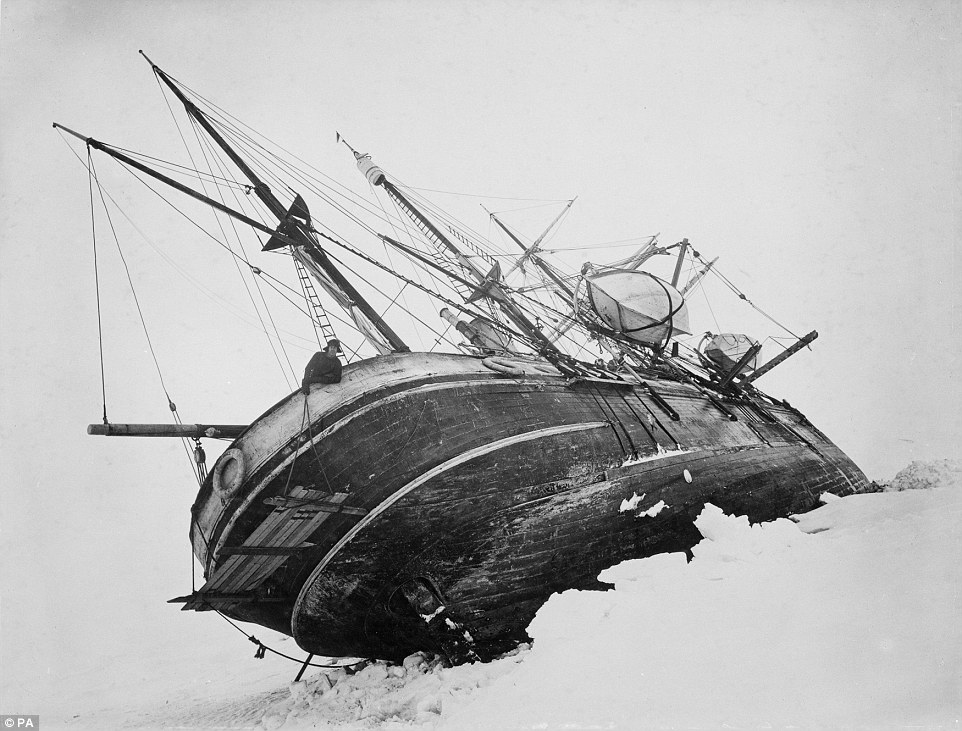
In 1901, Shackleton took a job on the National Antarctic Expedition, also known as the Discovery Expedition (after the ship it was on… the Discovery) led by Robert Falcon Scott on a mission of scientific study and geographical mapping. The ship was strictly run, with Scott following Royal Naval protocol. Through this Shackleton discovered he preferred a slightly more casual and easy-going approach to management. The journey taught Shackleton much about leadership, and also about problems encountered on both water and land voyages, Shackleton himself at one point falling ill with scurvy. However, Shackleton was also one of the most popular members on board the ship, and though his weakened system at the end of his voyage with the Discovery was definitely cause for alarm and the reasoning behind him being sent home on a relief ship, there are those who contest that his undeniable popularity among the crew made Captain Scott jealous and he was sent home for resentful reasons. In any case, it was an invaluable learning experience for Shackleton. 

In 1908 Shackleton led his own Antarctic expedition, finally captain of his own ship, the Nimrod. He and a small crew climbed Mount Erebus (the first time ascent on record) and set a record for the closest anyone had ever been to the South Pole. He and his small expedition team almost met with starvation making their way back to the ship, with the ever-popular Shackleton giving up his own measly rations to another failing crew member, Frank Wild, who would later write about that moment in his diary, “All the money that was ever minted would not have bought that biscuit and the remembrance of that sacrifice will never leave me.” The grateful Wild would later become the second in command on Shackleton’s larger expedition in 1914. Upon his return to the UK after his experiences on the Nimrod, Shackleton was knighted and awarded a Gold Medal by the Royal Geographical Society. Fun fact: Shackleton and his crew left several cases of whiskey and brandy behind in the Antarctic in 1909, and the cases were found in 2010 and analyzed! “A revival of the vintage (and since lost) formula for the particular brands found [was] offered for sale with a portion of the proceeds [going] to benefit the New Zealand Antarctic Heritage Trust.” Awesome!

shackleton4

After several years of public appearances and lectures, Shackleton was once more ready for a voyage in 1914. He titled his journey the Imperial Trans-Antarctic Expedition”, and it would take 2 ships to either side of Antarctica so that he might cross part of the continent (1,800 miles of it) with a team of six other men. Shackleton received 5,000+ applications to join his crew, and in being selective on personality and disposition he selected 56 men to populate the two ships. Shackleton would be captaining the Endurance and the Aurora would meet him at the end of his journey across the ice. 

shackleton5The Endurance began it’s slow and hard journey through the Weddell Sea in early December, by mid-January becoming frozen in first year ice. Shackleton realized at the end of February that the boat would be stuck until the following spring (that October or thereabouts, as the seasons are backwards), as there was no hope for the ice to thaw in such conditions. Shackleton ordered the men to abandon the ship and begin setup of a camp on the packed ice, thankfully, as despite Shackleton’s hope that the boat would break free of the ice come spring and be able to continue sailing, the pressure put on the boat the following September from the breaking of the ice ended up sinking (albeit slowly) the then abandoned ship. For about two months Shackleton and his crew camped on flat ice floes, changing from floe to floe hoping one might drift them down to the inhabited Paulet Island. Unfortunately they were unable to reach it and using their lifeboats they were eventually able to make it to Elephant Island – that being the first time they had stood on dry land in over a year. Shackleton kept a watchful eye on all of his men, as usual, and in giving his mittens to his photographer Frank Hurley suffered from frostbite himself. 
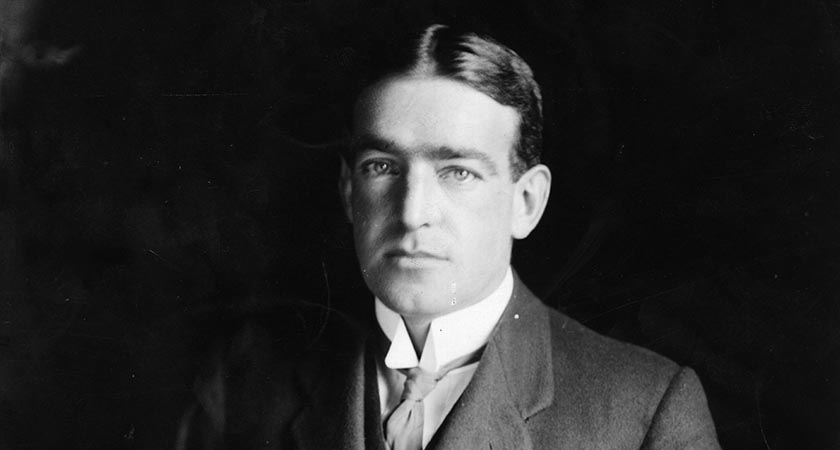
shackleton3Shackleton then took five men and used a lifeboat to travel over 800 miles to a whaling station in South Georgia to get help. He would only pack four weeks of supplies into the lifeboat, knowing that if they could not reach their destination within a months time that they might as well consider themselves lost – he did not want to take supplies away from the men remaining on Elephant Island. Within 15 days they saw South Georgia, but inhospitable weather did not allow them to land immediately. When they were able to reach shore they had to pull up on the south side of the island, unfortunately knowing the whaling station was on the north side. Rather than get back in the lifeboat, three of the crew decided to attempt the journey across the mountainous land on foot – a distance of 32 miles (these guys couldn’t seem to catch a break, am I right?). They fastened screws into their boots to act as climbing shoes and had 50 feet of rope between the three of them. Not an easy journey… but they finally made it to the whaling station and got the help they needed. With the help of a Chilean vessel, Shackleton reached the rest of his 22 men on Elephant Island on the 30th of August, 1916 – 101 years ago today. After over a year and a half ordeal living on ice, every single man aboard the Endurance and under Shackleton’s command made it back alive. If Shackleton hadn’t already been considered a hero – he certainly was then!
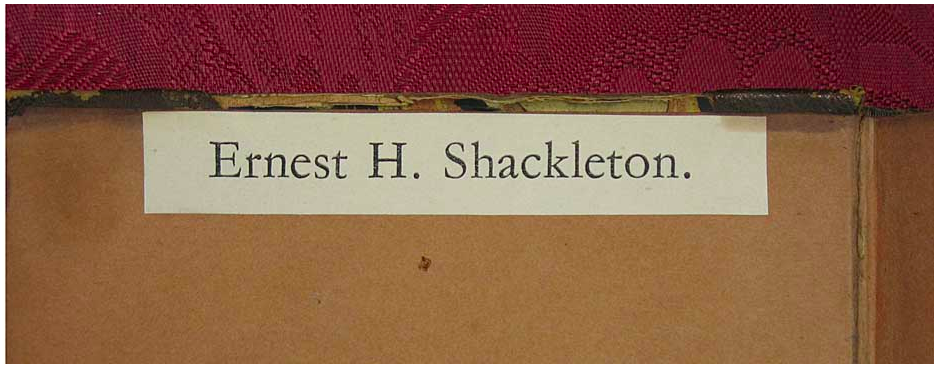
Screen Shot 2017-08-30 at 9.33.04 AMToday we honor the bravery shown by Shackleton and his crew, and feel the gratefulness these men must have felt upon their rescue! And now, for a bit of antiquarian book world pleasure… check out this 1843 Dickens edition of Master Timothy’s Book-Case… previously owned by one Ernest H. Shackleton! Enjoy.

Share

That Other Printer You Ought To Know

William Caxton

Every single person reading this blog would (I hope) know the name “Gutenberg.” Right? Now here’s another major name in the printing world, perhaps not known by everyone… William Caxton. Maybe you know him, maybe you don’t. We aren’t here to judge your knowledge of the printing business. We’re just here to educate you! So sit back, relax, and learn something new.

caxton3William Caxton was born sometime during the years 1415-1424, which scholars have appropriated since his apprenticeship fees were paid in 1438. He grew up and was educated in the district of Kent, before leaving for London to be apprentice to Robert Large, a wealthy London dealer or luxury goods. Caxton made trips to Bruge after the death of Large in 1441, and eventually settled there in 1453. He was successful in his business as a merchant, and after becoming governor of the Company of Merchant Adventurers of London he became a member of the household of Margaret, Duchess of Burgundy and sister to two Kings of England! This was a fortuitous time in Caxton’s life, as due to his international travels for the Duchess’ household he observed the brand new printing press business in Germany (as the Gutenberg press had began in 1440) and immediately set up his own printing press in Bruge and within a few years produced the first book known to be printed in English, published in 1473 Recuyell of the Historyes of Troye (“A Collection of the Histories of Troy” ) – a book of French courtly love translated by Caxton himself. (Fun antiquarian book world fact: only 18 copies of this printing still exist [kind of shocking there are even 18], and one sold by the Duke of Northumberland in 2014 and fetched over 1 million GBP.)

caxton4After his success with the printing in Bruge, Caxton brought his art back to England in 1476 and set up the country’s first ever press in a section of the Westminster Abbey Church. The first book printed in England itself was an edition of Chaucer’s The Canterbury Tales. Other early titles printed by Caxton included Dictes or Sayengis of the Philosophres translated by the king’s brother in law Earl Rivers, and Caxton’s own translations of the Golden Legend in 1483 and The Book of the Knight in the Tower. Caxton also printed the first ever English translation of Ovid’s Metamorphoses, as well as Le Morte d’Arthur.

[As you can probably already tell, if you didn’t know the name Caxton that is:

a) shocking

b) embarrassing

c) all of the above

but in all reality, he is not as spoken of as Johannes Gutenberg and his press. So yes, Gutenberg is given big props for developing the early European movable type system, but why isn’t Caxton’s name also taught in schools?!]

caxton1Caxton’s death is recognized as taking place in 1491 or 1492, as that is when his work stopped being produced. He was succeeded by his Dutch employee Wynkyn de Worde, who is recognized for moving the printing of books in English away from an excitement enjoyed by the aristocrazy and nobility and toward the idea of printing for the masses. De Worde is often known as “England’s first typographer” and printed over 400 books in over 800 editions. Caxton, god bless him, printed 108 books of 87 different titles. However, Caxton did much of his translating himself, working on an honest desire to provide the best translation possible to his customers. Despite the fact that de Worde is known for standardizing the English language (as there were, at that time, so many different dialects and different spellings that it was often difficult to keep track), Caxton is absolutely also honored for beginning this process and though printing books of no remarkable or significant beauty, then at least for beginning the process of printing books in English at all!

Share