Category Archives: Antiquarian Books

Welcome to the Biennial Reference Book Workshop with Tavistock Books (For All You Lazies Who Didn’t Sign Up)

By Vic Zoschak and Margueritte Peterson

1. Hooray! Another Reference Book Workshop! Who attended and how was the vibe of the event in your eyes?

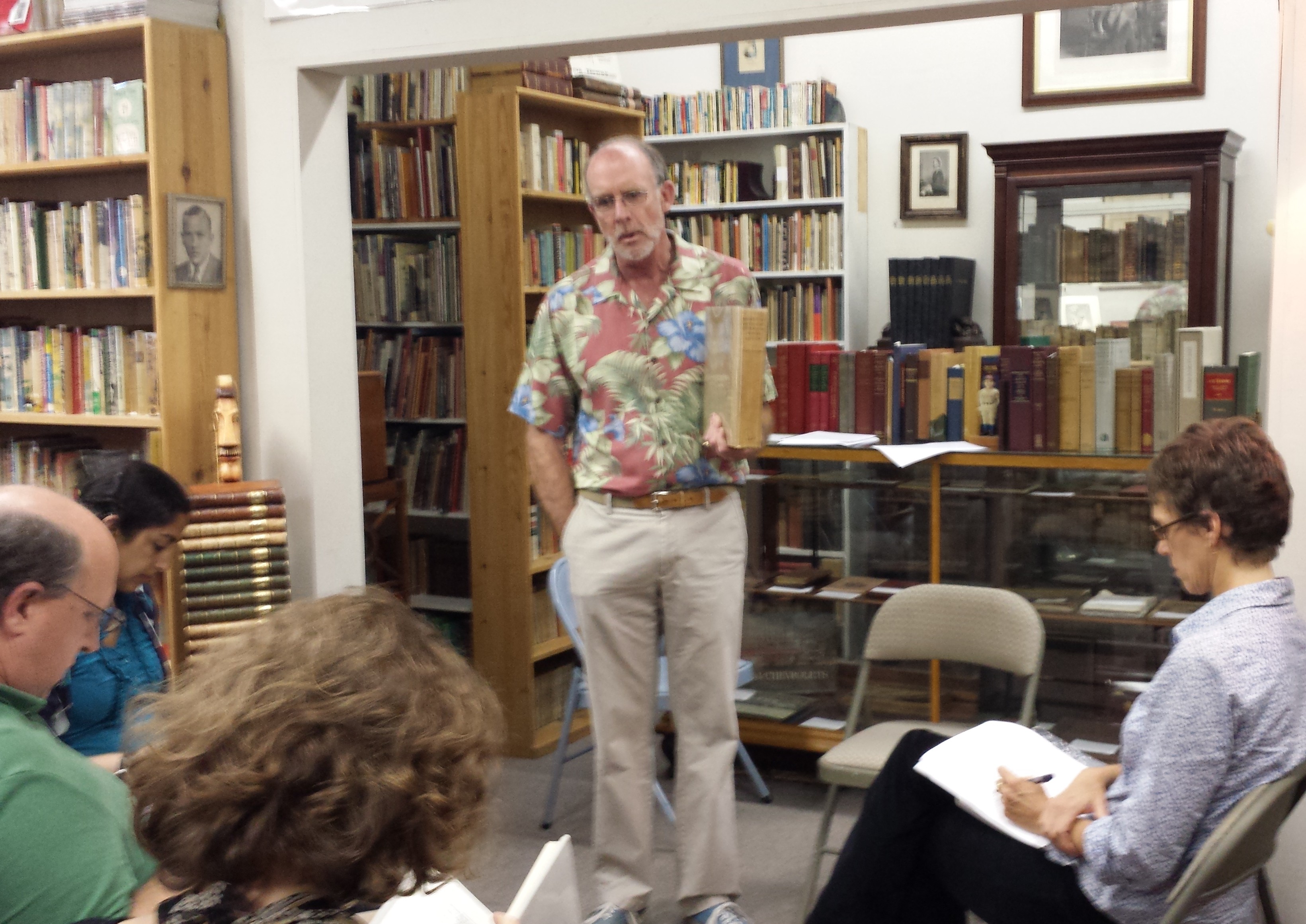
This was like the 11th or 12th I’ve hosted this workshop since the first in 2001.  Due to space constraints, I limit registration to 7, which was attained this year shortly after the announcement but relatively late cancellations dropped us to 4 folk that actually attended.  Diane Black, Holly Chaffee, Zayda Delgado & David Guest.  Zayda a librarian at the beginning of her career at UC Riverside; the other 3 individuals are booksellers with varying degrees of experience in the trade.  This a typical mix of workshop attendees as the workshop is designed to help new[ish] booksellers who may not be familiar with the standard rare book bibliographies & references, but can also be useful to rare book librarians who need to know those works, as well as collectors just embarking on their collecting journey [though usually collectors have an interest in just one of the 4 subject areas].

I think the day went ok…  as I explain to all at the beginning of the workshop, it’s designed to just be a survey, and exposure thereto, of those basic references in four primary subject areas [English & American Literature, Americana, Childrens & Early Printed Books] which one will need in the daily course of business as a generalist antiquarian shop.  Which is to say, I know the divers volumes will begin to all ‘run together’ by the end of the first segment.  The challenge for me, as host, is to somehow be able to ascribe some aspect of uniqueness to each & every one such that the volumes retain their individuality.

I’ll leave it to the participants to say how successful I was at that effort!

2. How did this past Saturday differ from previous workshops?

Not much different really…  people ask questions, different paths are taken during the course of the day, other areas are explored.  Two of the individuals were from Nevada, so during the Americana section, I added a few Nevada refs that I thought they should know.  One thing I did note… during breaks all 4 individuals were scouring the shelves of the shop, to a degree more detailed than I had noted in the past few workshops.  True book people!

IMG_3180

The lunch group at Alameda’s Katsu Sushi House!

3. What is your favorite part of the day?

Lunch!

As you can imagine, I’m the primary talker during the day, and it can be a bit draining…  so at lunch, which I host, it’s a chance for the participants to chat with each other, with me, with Kate, and perhaps discuss other topics of interest, with those topics not necessarily being entirely relevant to the day’s subjects.  While we do introductions at the beginning of the day, lunch a time where we have an opportunity to say more than “Hi, my name is …. and I’m here to learn ….”.  So I get to find out more about the folks that have joined me for the day, while listening, not necessarily talking.  I find it relaxing & collegial.

4. What is the most useful part of the workshop for newbies? Or, would you recommend this workshop for newbies, over, say, RBS or CalRBS?

I’m not sure I can point to a specific aspect as ‘most useful’, as that is determined by each attendee, and as such, can be different for each individual.  I can say that when I hold up a certain reference book, and introduce it with “This reference book made me $5000” the booksellers usually perk up & pay attention.

Which segues into one aspect of the workshop I try to continually emphasis…  the web has lots of useful information available, but it has yet, in my experience, to supersede the reference book library.  In my opinion, it still takes both to successfully run a generalist antiquarian business.

While I wouldn’t recommend this workshop ‘over’ RBS or CALRBS, it does have the advantage of being 1 day, vice 5, and the cost is minimal, e.g., there is no entry fee, as I give the class gratis.  That said, I do tell people this the beginner version of Joel Silver’s week long ‘Reference Sources for Researching Rare Books’, and I encourage them to attend his class [RBS L-25] if they found mine interesting and/or useful.  Tavistock Books even offers a scholarship* to his class.

* here’s a link to the RBS Class description: <http://rarebookschool.org/courses/library/l25/>

**  a link to info regarding the Tavistock Books Educational Scholarship to L-25 (scroll to the bottom): <http://rarebookschool.org/admissions-awards/scholarships/>

FullSizeRender (2)

5. Kate’s opinion – this was your first Reference Book Workshop, right? Was there anything that you learned that you didn’t already know, even having been working for Vic for the last year? 

This was indeed my first reference book workshop, of any kind, and I’m glad I got to sit in on it. Despite the fact that I’ve had access to both Vic and his stellar reference library for over a year now, and am even in the process of inventorying that library, I learned plenty on Saturday. I haven’t yet handled all of the kinds of material that would require using each of the references Vic discussed with the class, for one thing — as with any bookshop, certain kinds of books are more likely to come through the door than others — so some reference titles were entirely new to me. Also, the workshop offered a chance for me to think critically about some of the references I only had a glancing familiarity with, and about bibliographic research in general. For instance, does McKerrow’s Dictionary of Printers & Booksellers, 1557 – 1650 cover instances of surreptitious publications? What exactly is the difference between Worldcat and OCLC? How can a bookseller research works by authors that might be un- or underrepresented in traditional “dead white men” bibliographies? And what makes a bibliography authoritative, anyway?

Not all of my questions were answered, naturally, but many were, and I’m happy to have food for thought. Plus, the attendees were great: interested and interesting people, and all, like me, simply trying to educate themselves about professional research materials and standards in the trade. So I can say, with absolute conviction, that it was the best reference book workshop I’ve ever attended/ eavesdropped on. And luckily for me, I get to pester the instructor any day I want from here on out . . . 

Closing remarks by V…

Finally, this may have been my last workshop….  they take a lot of energy, and I’m not the spring chicken I used to be.  Though on saying as much to Kate as we were cleaning up, she inquired, “How many times have you said that now?”  After a moment’s reflection, I replied “After each of the last 3.”  She just smiled.

Share

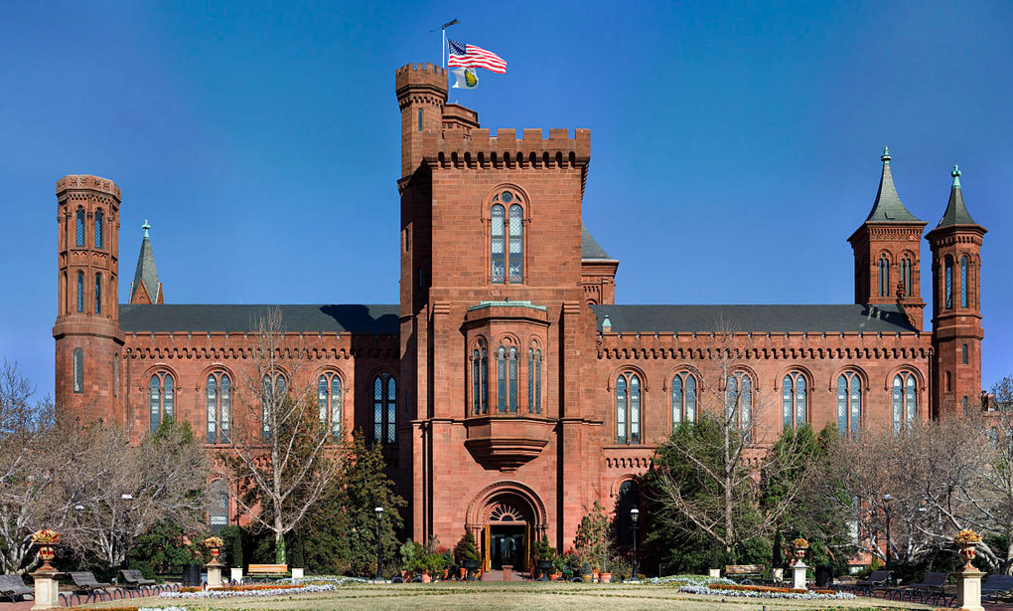
Happy 170th Anniversary to the Smithsonian Institution!

Screen Shot 2016-07-20 at 12.45.08 PM

By Margueritte Peterson

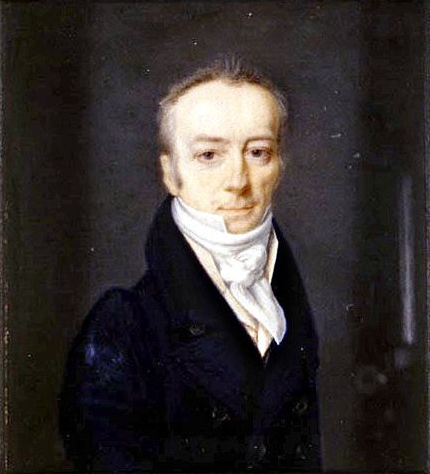
In 1829 an English chemist and mineralogist name James Smithson died. This, in and of itself, should not have influenced the United States in any grand way… but it did! This English chemist, born in Paris and the illegitimate song of the 1st Duke of Northumberland donated all of his lifetime of earnings and his own inheritance to Washington, D.C. and the United States… despite never having been there. What came of this scientists idea of “an establishment for the increase and diffusion of knowledge among men”? Less than 20 years later the Smithsonian Institution was founded in Washington D.C. as an establishment that promoted further knowledge and learning for all men. In his will, Smithson dictated that his funds be left to his nephew and the nephew’s family… or in the event that the nephew had no surviving heirs, to the United States of America for a very specific purpose. 

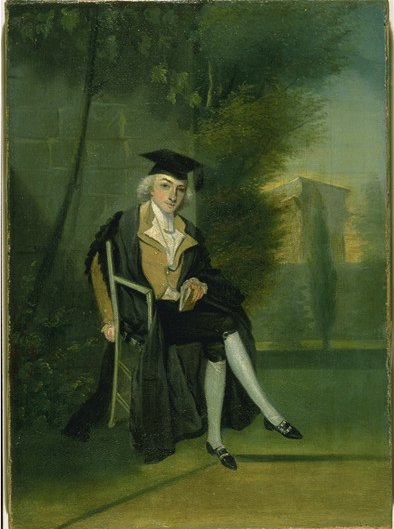
A young Smithson from his days at Oxford.

A young Smithson from his days at Oxford.

James Smithson was born Jacques Louis-Macie in Paris, secretly, on an unknown date. He eventually became a naturalized UK citizen, and even studied chemistry at Oxford’s Pembroke College. After graduating from Oxford, Smithson considered himself somewhat of a nomad – he traveled extensively throughout the UK and Europe and published many papers on his findings. His “findings” covering all manner of topics – from the art and science of coffee making to the use of the scientific substance calamine in making brass. He studied other scientific topics over his lifetime, more to do with his chosen field of chemistry (like the make-up of human tears and snake venom!) Smithson was independently wealthy from an inheritance from his mother, and though he stayed quite busy throughout his lifetime in his studies, never had a career or a paying job. However, his travels did not diminish his wealth and at his death he was still very well-off. Smithson died in Italy in 1829. Six years later, his one and only nephew, Henry Hungerford, died, leaving no heirs. In his will, Smithson dictated that in the event that his nephew died without heirs, [Smithson] then bequeath the whole of [his] property… to the United States of America, to found at Washington, under the name of the Smithsonian Institution, an Establishment for the increase and diffusion of knowledge among men.”

Screen Shot 2016-07-20 at 1.12.09 PMThe United States was unaware of Smithson’s plans until his nephew passed away in 1835. The news was sent to President Andrew Jackson, who informed Congress of their lucky gift. A committee was set up almost immediately to begin planning the Smithsonian Institution. The funds from Smithson’s estate over the next few decades eventually totaled up over $562,000 (the money arriving as gold sovereigns in almost a dozen boxes, alongside Smithson’s personal belongings and scientific findings) – a total almost equivalent to $15,400,000 today!

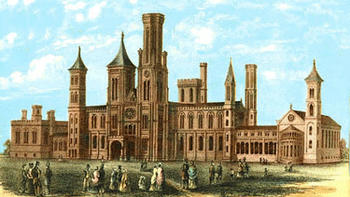
In February of 1847, the Board of Regents (those put in charge of overseeing the new “Smithsonian Institution”) approved the seal for the institution. The institution opened that year and has remained an unbelievably popular establishment for research and knowledge ever since. These days, taking young children on field trips to the Institution (which has since expanded into a combination of 19 museums and galleries – all but 3 of which are still located in Washington, D.C.) is a common practice, as the collections include over 138 million artworks, artifacts and specimens. The Smithsonian Institution Libraries hold 2 million library volumes – and their Archives hold 156,830 cubic feet of archival material! Talk about an impressive library… the Smithsonian is an American institution with a wonderful history. Happy 170th Anniversary to the Institution!

Screen Shot 2016-07-20 at 1.15.17 PM

Share

Some Books-on-Books Titles That Might Be Missing from Your Reference Library

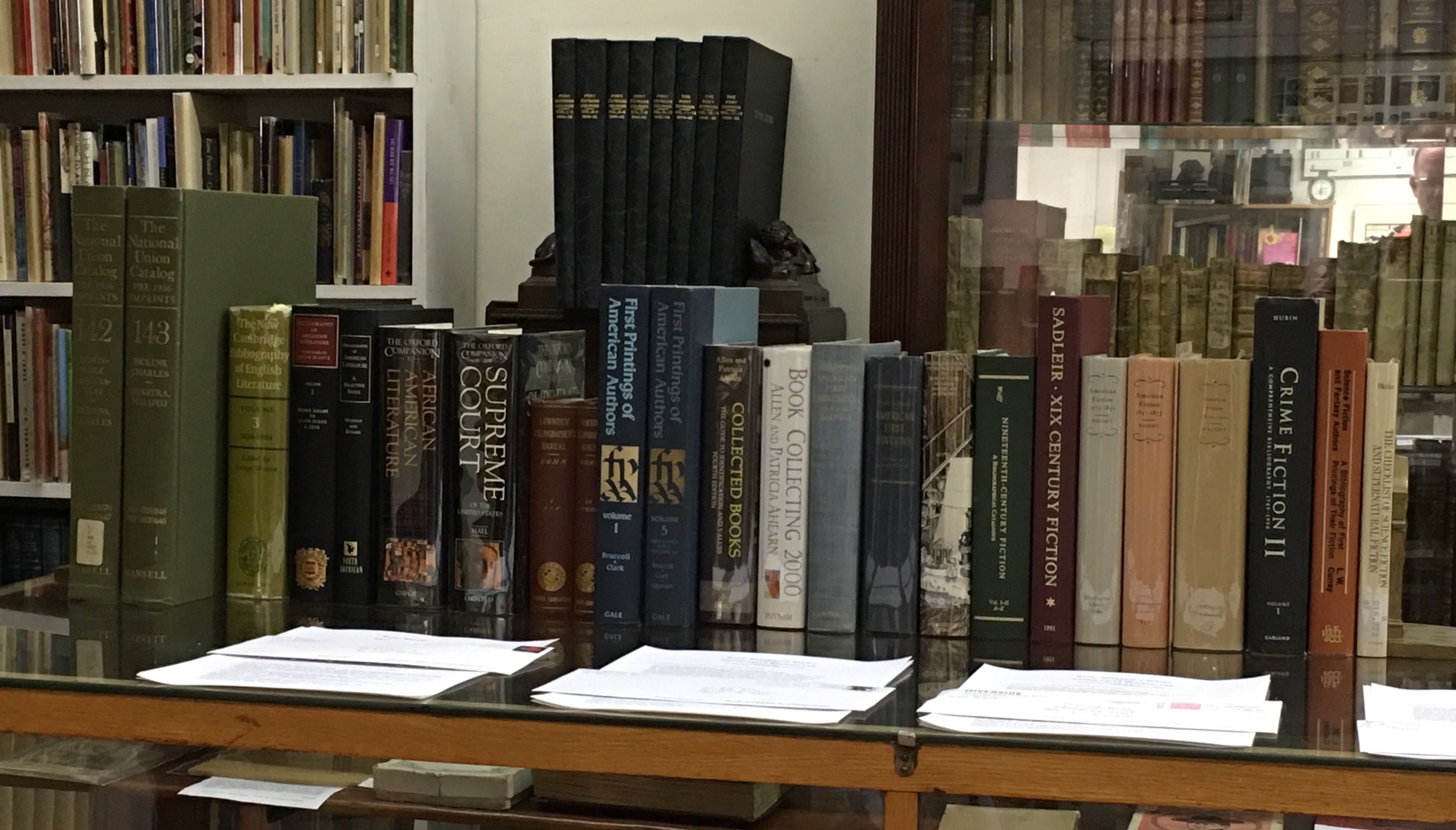
Do you ever wonder what the most useful reference books are for your collection? Whether you are a bookseller, a librarian or even just a customer, it is important to know what you are buying, what you are selling, and what you’ve got! Reference books are one of the keys to being a responsible cataloguer, no matter your position. We at Tavistock Books boast a collection of over 3,000 reference titles from all walks of the antiquarian book world. Noting proof of what we’re selling is a top priority for us (as it should also be for you)! Not only do we offer a semi-annual Reference Book Workshop at Tavistock Books in August, but we also offer our library to trusted friends and colleagues anytime they have use of it. Interested in attending our Reference Book Workshop? Email vjz@tavbooks.com for more information on it! In the meantime, allow our master Vic Zoschak, Jr. to give you a run-down on some of our all-time favorites and the ones that come in most handy around Tavistock Books on a regular basis! Don’t forget – though we have certain specialties, we operate mainly as a generalist store with a variety of interests, and therefore have favorites in many categories!

A shot from our workshop in August, 2014.

A shot from our workshop in August, 2014.

1.  New Cambridge Bibliography of English Literature, 660 – 1950.  Cambridge, 1970s.  5 vols, with the 5th vol an Index volume.  More a checklist than a detailed bibliography, it’s nevertheless voluminous in its coverage of UK authors, and probably is the only bibliographic source for many.  I’ll probably have to get Vol 3 (19th C) rebound, I’ve used it so much over the years.  It sits within arm-reach of my desk.

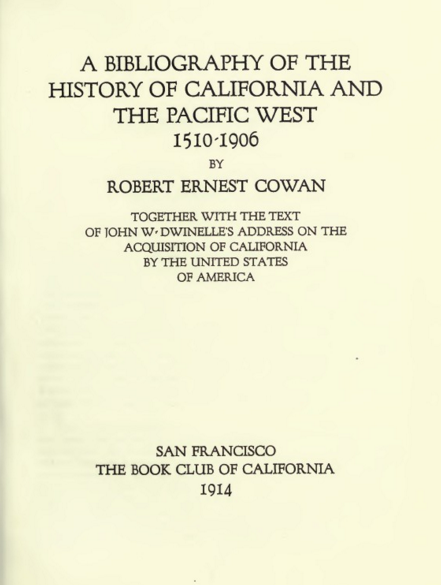
Screen Shot 2016-07-06 at 10.29.19 AM2.  Cowan.  A Bibliography of the History of California, 1510 – 1930.  First published in 1914, with a revised edition issued in 1933.  I use the 1964 reprint, which includes the supplemental Vol IV, issued that year.  If you’re a California bookseller, you’ll get asked for California books & so you’ll need it. And if you collect, or sell, books regarding the far West, it’s indispensable.


3.  Bibliography of American Literature.  Otherwise known as the BAL.  First volume [Adams to Byrne] issued by the Yale University Press in 1955, compiled & edited by the incomparable bibliographer, Jacob Blanck.  Final, and 9th volume [Westcott to Wylie], was edited & compiled by Michael Winship, and issued by the Press in 1991, so the 9 volumes almost 40 years in the making.  It includes all 1sts [plus other stuff, see “Inclusions”, volume I], chronologically listed, of the authors included in the set, which were those that died 1930 or earlier.  All the major names [and many minor names] are included, e.g., Alcott, Clemens, James, et al.  If you’re going to do pre-1930 American lit, this set a must.

Our 1st edition copy of Eckel's Bibliography from 1913 is for sale here>

Our 1st edition copy of Eckel’s Bibliography from 1913 is for sale here>

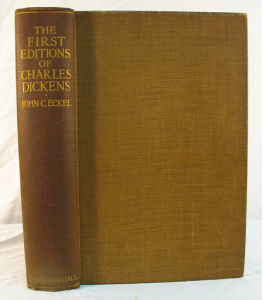
4.  Eckel.  The First Editions of the Writings of Charles Dickens Their Points and Values.  London: 1932.  2nd Revised Edition.  As a Dickens specialist, this a ‘must have’ for me, as it covers all his primary writings, his secondary ones, and loads of other stuff.  In other words, much bang for the buck.  And even though published over 80 years ago, with some data superceded by more recent scholarship, it’s still a relevant bibliography for a general antiquarian bookseller, or Dickens collector.  For the budget minded, there are many less-costly reprints out there.


5.  Baumgarten.  Price Guide and Bibliographic Checklist for Children’s & Illustrated Books 1880 – 1970 [2004 Edition, which is the latest I believe].  Again, a good ‘bang for the buck’ reference for the general antiquarian shop and/or collector of children’s literature.  Over 18,000 entries, it gives you the data necessary to identify first editions, and while the pricing info is dated, it does give you a starting point with which one can extrapolate.

Now keep in mind that these are just the beginning of the pickings! We, as booksellers, use many, many reference books on a daily basis. And again, if you’ve ever been curious to know what you’ve got or how to figure out what you’ve got… they are indispensable! That is just one more reason to attend one of our Reference Book Workshops – where you’ll get a much broader idea of the important and most well-known reference books, what they cover and how to cite them correctly! Not to mention the ability to ask any reference question you need of the Reference-King Vic Zoschak! Contact us for more information! 

Share

“It is better to learn wisdom late, than to never learn it at all” The Life of the Great Creator of Sherlock Holmes

By Margueritte Peterson

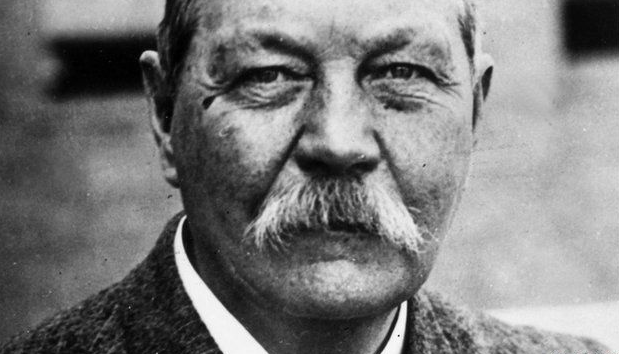
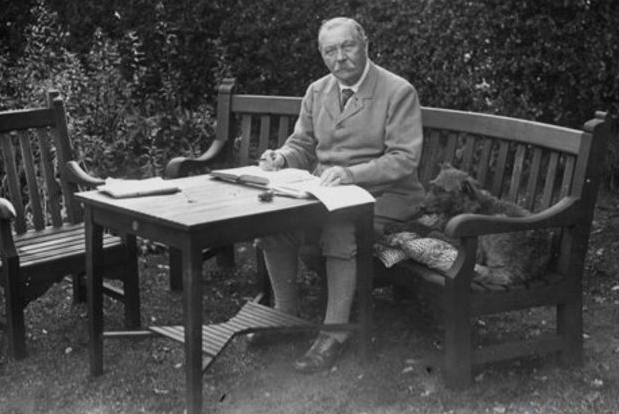
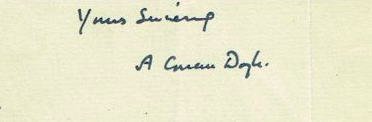
On the 7th of July, 1930, Arthur Conan Doyle died at age 71 from a heart attack. On this the 86th anniversary of his death, we’d like to look at this famous author, spiritualist & physician and his lifetime contribution to so many different fields!

Screen Shot 2016-06-21 at 12.49.00 PMConan Doyle (as he is often called, though Conan Doyle is a combination of his middle and last names, as Conan is not a surname, as people often think!) was not born under auspicious circumstances. His father, Charles Altamont Doyle, was an alcoholic and when Arthur was only 5 years old he and his siblings were dispersed to live with family and friends across Edinburgh. A few years later the family moved back together and for numerous years lived in near-poverty. Luckily, Doyle had wealthy family to support him and to send him to Jesuit boarding school in England for seven years beginning when he was nine years old. Despite a difficult home life and upbringing, Doyle apparently struggled leaving home for school – as he was incredibly close with his mother (and would remain so throughout his life) and cherished the stories she would tell him during his childhood. It is even said that his favorite part of school was writing letters home to his mother, and telling stories to his schoolmates that she had once told him!

After leaving school as a young man, Doyle’s first act as an adult was to co-sign the committal papers for his father, who by that time was a long-sufferer of mental illness related to his drinking problem. After such, Doyle devoted his further studies, surprisingly, to a medical career (I say surprisingly as his family was one of artists) after being influenced by a boarder his mother took in for some extra cash. While at medical school, Doyle met two fellow students who would prove to become life-long friends, as well as literary stars – James Barrie (author of Peter Pan) and Robert Louis Stevenson. Another influential persona on the young Doyle was one of his Professors – a Dr. Joseph Bell. Dr. Bell, with his particular observations, attention and significant powers of logic and deduction would end up being Doyle’s inspiration for the character of Sherlock Holmes!

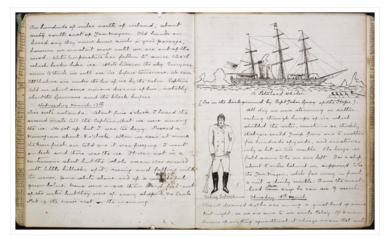
Screen Shot 2016-06-21 at 12.35.00 PMIt was during his medical studies that Doyle first began to write short stories – the first few of which were published in both a smaller journal in Edinburgh and the London Society. It is said that with his publication in the larger UK magazine Doyle first realized that he could, possibly, make a living with his pen. He took off of his studies during his third year of medical school to act as a doctor on board an Arctic whaling boat – an experience that he loved (and kept detailed journals of) and sparked his wish for adventure. After returning to his studies and graduating, Doyle’s first job was to take another surgeon position on board a ship bound for Africa. He was less impressed by this position, however, and upon returning to England eventually opened up his own small practice in Portsmouth. During his time practicing, Doyle wrote short stories on the side and married a sister of one of his patients. He lived a relatively calm and normal life until March of 1886 when he began working on the novel that would propel him into fame and success as an author.

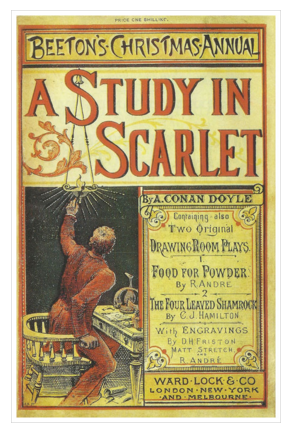
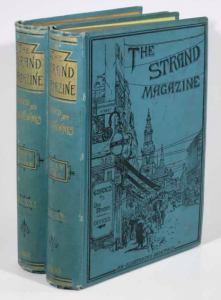
Screen Shot 2016-06-21 at 12.34.14 PMA Study in Scarlet was published in 1888 and immediately became a great success (though, surprisingly, Doyle was received more widely in America at first, than in the UK). Though this first work is well-remembered (as it introduced the world to the immortal characters of Dr. Watson & Sherlock Holmes), and Doyle continued writing other stories and novels. Sherlock became a household name and his stories began to be published in The Strand Magazine on a regular basis. In fact, after only five years of Sherlock titles, Doyle planned the death of this fictional hero and after The Final Problem was published in 1893 (where Sherlock and Moriarty plunged to their deaths at The Reichenbach Falls), over twenty thousand readers cancelled their subscriptions to the magazine!

Doyle’s next few years were troubled times for the author, as he struggled to maintain a readership with other stories and characters, took care of his wife recently diagnosed with tuberculosis, and dealt with the death of his (at this point) severely demented father. In the early 1900s, Doyle decided (more for the happiness of his bank account than his own literary merits) to bring back the character of Sherlock – first in The Hound of the Baskervilles (written as just a previously untold adventure of the famous Detective), and then with The Return of Sherlock Holmes in 1903 – once again serialized in The Strand Magazine. Sherlock Holmes was back, and as popular as ever.

Sherlock Holmes was kept alive despite many obstacles in Doyle’s life. He took care of his wife throughout her illness, raised their two children, wrote, tried (twice, in fact) to throw himself into politics, and began seeing a young woman he felt a deep connection with on the side (though it is thought he remained true to Louisa until her death in 1906). Doyle was also a very active person, participating in many sports and body building throughout his life. Doyle did not only write Sherlock Holmes periodicals, but also in this time wrote several plays and novels – though some popular (some not quite so popular) in contemporary circles are not what he is well-remembered for today.

Screen Shot 2016-06-21 at 12.49.23 PMEver an active participant in politics and wartime (he served as a surgeon in the Boer War some years earlier), Conan Doyle never ceased to look for ways to be of service to his country and his people. Fun Fact: After an attack on the British Navy at the outbreak of WWI where the military lost over a thousand lives in one day, Doyle wrote to the war office and recommended that they invent inflatable belts and inflatable “life boats” in order to save more lives of those at sea. Though many in the offices thought Doyle a nuisance (always interfering), at one point Winston Churchill himself wrote him to thank him for his ideas! As far as I’m concerned, being the one to come up with the idea for inflatable life jackets and life rafts absolutely earns you respect.

One part of Doyle’s history that many like to focus on is his interest in the paranormal and the occult sciences. Having always been interested in certain types of phenomena (even his second published work was a strange occult work of fiction about the afterlife of three Buddhist monks), he became even more so after witnessing the death of his son in the war. His interest in spiritualism (which his wife eventually also shared), led him to believe in anything paranormal – such as the Cottingley fairies (the two girls who posed with fairy cutouts and accidentally started a nationwide interest in the belief of fairies). Though when the need for money rose once again Doyle was able to pen out more Sherlock Holmes tales, most of his writing in his later life focused on spiritualism and psychic pursuits.

Our first appearance of this classic science fiction novel by Doyle "The First Men in the Moon" illustrated by Claude Shepperson, many plates of which are only available in this periodical issue. See more here>

A Collection of Strand Magazine from 1900 to 1901 with Arhur Conan Doyle articles “A Glimpse of the Army” and “Strange Studies from Life” as well as an interview with Doyle – “A British Commando.” See more here>

Doyle passed away from angina and heart-related difficulties in July of 1930. His last words were whispered to his second wife, “You are wonderful.” This great man created one of the most well-known literary characters to this day and lived a full-life, constantly chasing his passions, whether they be literary, political, or spiritual.

Screen Shot 2016-06-21 at 1.54.44 PM
Share

Rare Books and Manuscripts Galore! We Get a Low-Down of Last Week’s RBMS Conference from Our Very Own Attendee!

Vic, how many years have you attended RBMS for now?

My first RBMS Conference, then called the Preconference for the conference precedes the big ALA event, was in San Francisco, 2002.  I was the local ABAA rep to the RBMS Local Affairs committee, and helped with things like stuffing the book bag, helping arrange the ABAA hosted reception, etc.  The conference hotel was the Fairmont, which is a lovely hotel at the top of Nob Hill.  I confess I don’t remember too many specifics of the conference itself, just have an overall impression of enjoying the week.

IMG_3096What are some of your most favorite past locales where it has been held?

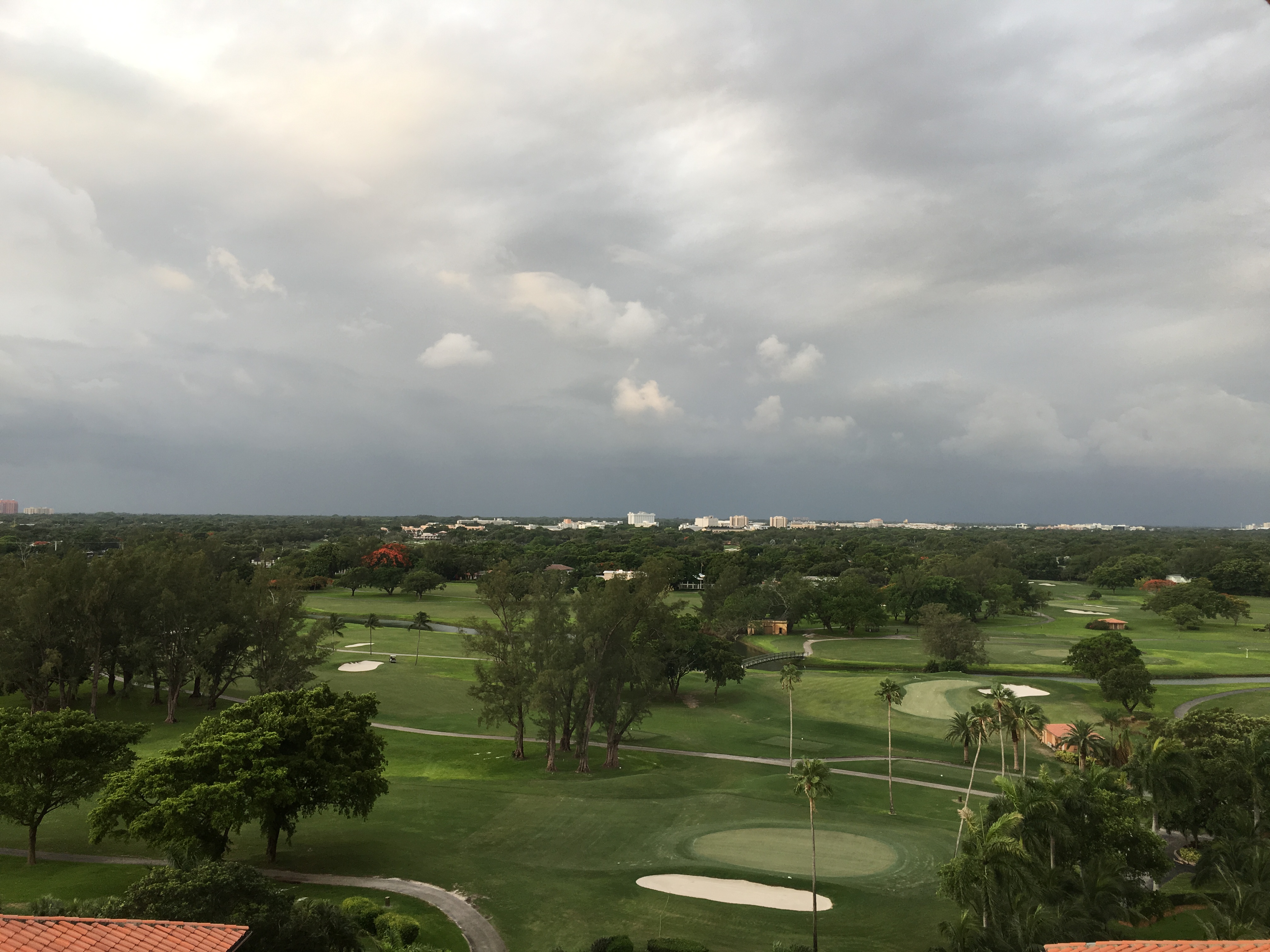
Having just returned from Miami, I can definitely say that locale was one of my favorites, though one prior that does stick out was a number of years ago [2009] when the conference was held in Charlottesville, VA to celebrate the 50th Anniversary of the event.  Always like travelling to Charlottesville.  Another that comes to mind was that of 2013, which was held in Minneapolis.  The reason this one is memorable is because, even though I was registrered, I had to cancel at the last minute, as I contracted a bout of pleurisy [as you may also remember!].  Ouch!


Could you give us a walk-through of this weekend, or a typical RBMS weekend? Conferences, showcases – give us the low-down!

The week is filled with sessions & panels, etc., etc.  As you might imagine, as one of the trade, not all issues germane to the librarian community has relevance to my work, however, by better understanding those issues important to my institutional clientele, I can better serve them, which is my job.  The bookseller showcase is an adjunct to the conference, which provides the curators attending the conference an opportunity to sample the wares of my colleagues & discuss with those exhibiting booksellers their needs/wants.


What have you learned at this past RBMS? What conferences did you attend and who struck you as a phenomenally great speaker?


The Chairman of Florida's Welcome Committee!

The Chairman of Florida’s Welcome Committee!

The individual that immediately comes to mind, Pellom McDaniels, was a speaker this year at the Thursday afternoon panel [“A Broad and Deep Look at Outreach”] held at the University of Miami.  The intent of the session was “to demonstrate the myriad ways special collections and archives can engage and interact with multiple constituencies.”  This fellow from Emory was high energy, engaged & enthusiastic.  And you could tell from his presentation, that he had achieved the goal of “engaging & interacting”.  It was good to see that, at least in his case, special collections was reaching out beyond the reading room, and showing the community the wonders that lie behind the mahogany doors.


Why do you do the RBMS showcase? Is it to sell? Or is it rather to meet new people? 

The intent of the showcase is to provide an opportunity for both the bookseller & the librarian communities to interact.  It is most definitely NOT a bookfair.  Remember, the booksellers are there as an adjunct to the conference, in other words, the showcase is not the main event.


Some of the usual suspects...

Some of the usual suspects…

Would you recommend attending RBMS to other booksellers? What about newbie booksellers? Librarians?

If institutional clientele are part of your business model, or you wish to add them to your customer list, then yes, the showcase provides an *opportunity* to do this.  Granted, it’s not the only way, just one way, especially if you are a new ABAA member, it’s one way to do so.  As for the librarian community, if your responsibilites include collection develeopment, then yes, meeting and talking with the exhibiting booksellers can help you with this facet of your job.  Afterall, if you’re fishing [for books], why not cast a wide net?

In summary, this past week was a great one-  both from a program perspective, as well as a venue.  The Biltmore Hotel is a grand old lady, whose elegance if fading somewhat, but she still outshines many younger models.  Next year’s conference will be in Iowa City.  While certainly it’ll be different than Miami, I have no doubt it too will be a success.

IMG_3070

Share

Charles Dickens & the Beginning of “The Pickwick Papers”

By Margueritte Peterson

Get yourselves ready for one of the most morbid (therefore, we celebrate it in high style) days of the year… the anniversary of Dickens’ death! Every year we do a Dickens blog around this day, though I prefer to think of it more as a celebration of life blog, rather than as a homage to his death. Last year we wrote about Dickens’ last (and unfinished) work, The Mystery of Edwin Drood. This year, with your permission, I would like to focus on one of his very first works – The Pickwick Papers. 

To be completely honest, the Pickwick story never grabbed my interest as other works by our main man. No Great Expectations love story, no Christmas Carol morality lesson, no Tale of Two Cities history… what about it could be so enthralling? Now, in all fairness and honesty, I did not scramble to read The Pickwick Papers in order to write this blog. All the information in this blog is found via research. I’ll let you in on a little secret, however… after writing this blog, I just may have to pick it up and begin reading!

As we’ve stated in blogs past, Dickens didn’t begin his career desperate to become a writer. His first passion was to be an actor – and he (most likely, as it seems everything Dickens did he did well) very nearly got his wish – until he became ill before his first audition and was unable to perform. For reasons we may never know, Dickens did not try to book another audition and never attempted to become an actor again. Instead, he settled down as a political journalist in London. His first published collection of writings was called Sketches by Boz and consisted of various character sketches originally found in his periodicals. Sketches was immediately popular and Dickens rapidly gained success and fame. 

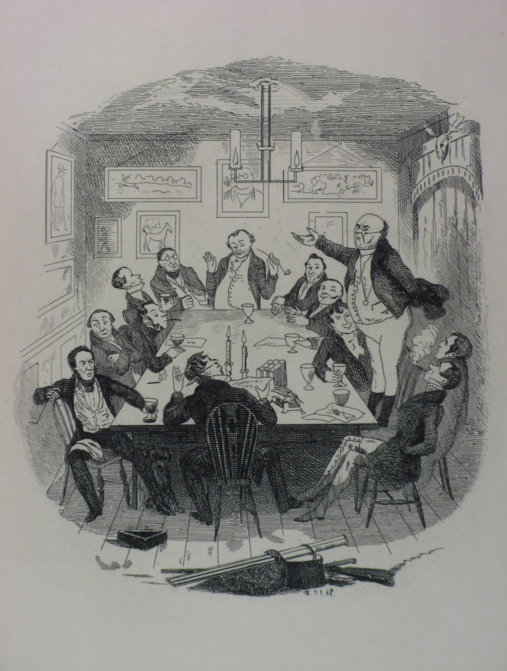
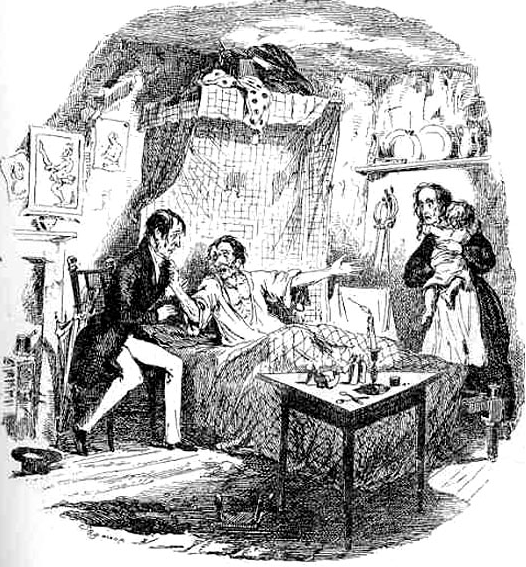
One of the original illustrations by Seymour.

One of the original illustrations by Seymour.

Here’s where the Pickwick story gets interesting. Amusingly enough, Pickwick was not an original idea by Dickens. Pickwick actually began when publishers Chapman & Hall asked Dickens to provide text to match illustrations by (somewhat) popular cartoonist Robert Seymour. Even Dickens later admitted that the idea was not his – that it was Seymour’s. However, the presumption that The Pickwick Papers would have amassed the popularity that it did without Dickens – is completely false. 

[Now, I do hope that this blog does not come across as hating on our main man – not at all! I am not trying to say that Pickwick was not at all his idea, though it was what bought him much in the way of fame and success. (Though, that is, you know, technically true about how it all began.)] What I do aim to do with this blog is to bring to light a slightly tragic tale that isn’t well-known about the origins of the Pickwick Papers. 

One of the more difficult scenes Seymour had to illustrate for Pickwick.

One of the more difficult scenes Seymour had to illustrate for Pickwick.

What is fact and known about the beginnings of the book is that after Chapman & Hall picked up on his idea, Robert Seymour was contracted to make 4 engravings for each written installment of the book (as usual for the time, they were published in installments) and he and the publishers chose Dickens to write the book alongside the illustrations. However, before the second episode could be completed, Seymour committed suicide in his home in Islington, following severe stress and a mental breakdown. The mental breakdown could, possibly, have had something to do with the very little monetary advance Seymour was paid for the Pickwick installments, and also with his struggle to illustrate according to Dickens’ text (according to sources at the time, Seymour envisioned a much more light-hearted tale than he ended up illustrating, at the beginning). In any case, Seymour did struggle with depression, and the somewhat ugly truth of the matter is that, after his death, when Dickens teamed up with “Phiz” to illustrate the rest of the text and introduced the Cockney character of Sam Weller, the series became immediately more popular and sold in much higher volume. 

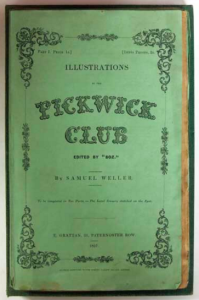
Check out our holding of Pickwick illustrations, circa 1837!

Check out our holding of Pickwick illustrations, circa 1837! See it here>

So what does this all mean? Truthfully, in my (not-so) humble opinion… it means… not much. It is a sad tale, that makes it sound a bit like Seymour got the short end of the stick, yes. However, I think that the fact that the series did not become interesting to readers until Dickens had full control of the text and the full cooperation of the illustrator – is important. We know Dickens was a performer, a writer, a  journalist, and a well-known socialite (eventually)… perhaps we should agree that he possibly also knew what the people wanted! And though Pickwick might not have began with Dickens’ imagination, he was, ultimately, the one who truly brought the text to life. So on this anniversary of Dickens’ death, remember the man as he was – someone who immortalized stories, not just wrote them!

Share

Look no further… than the Latest Items at Tavistock Books!

Screen Shot 2016-05-25 at 8.15.08 AM


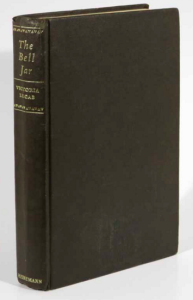
Does the name Victoria Lucas ring a bell to you? She’s a super famous poet! We recently wrote a blog about her, even. Not ringing with understanding yet? Hmm… she also struggled with depression her whole life and wrote some of her most famous poems at the peaks of her despair. Here’s a hint if you’re STILL confused… Victoria Lucas is her pseudonym. That’s right, ladies and gents – it’s Mrs. Sylvia Plath. And here we offer a 1st edition of her novel “The Bell Jar”! See more here>


Screen Shot 2016-05-25 at 8.15.34 AM

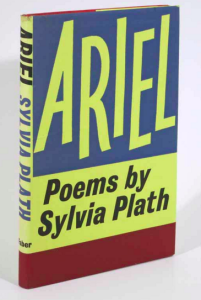
We can’t get enough of Plath around here… have you ever read her Journals? Get on that as soon as possible! But first, perhaps you’d like to spend some time with a 1st edition of her, arguably, most famous book of poetry – published, unfortunately, in 1965, two years after her death. Interested? See it here>

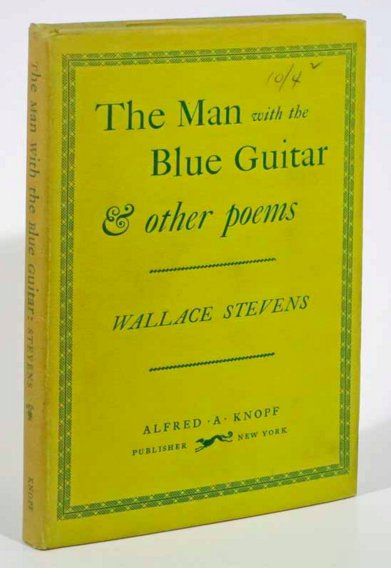
Screen Shot 2016-05-25 at 8.16.35 AMFun fact about poet Wallace Stevens – winner of the Pulitzer Prize for one of his books of poetry! He loved to visit Key West (which is evident in much of his poetry) and while there, he encountered writers and poets Robert Frost and Ernest Hemingway… both of which he argued with each time! Did I say argued? Ernest Hemingway beat him to the curb outside, is what I meant. Nevertheless, Wallace was an important figure on the poetry scene, even if only for a while! His poem “The Man with the Blue Guitar” we offer here>

Screen Shot 2016-05-25 at 8.16.48 AM

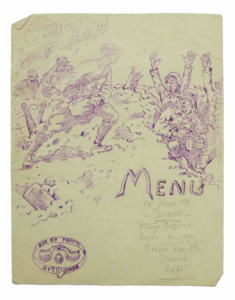
A collector of cookery items and menus knows that it is difficult enough to find a menu in good shape from the beginning of the 20th century. How about a menu in VG condition… from the trenches of WWI? We wouldn’t lie to you! This menu even has a graphic illustration of soldiers confronting each other in the war. Check it out here>

Screen Shot 2016-05-25 at 8.17.04 AM

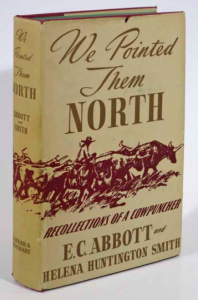
“We Pointed Them North: Recollections of a Cowpuncher” is one of the best books depicting cowboy life that we have in our inventory today! Though born in England, “Teddy Blue” Abbott was a cowboy from a young age – once his parents moved him to Lincoln, Nebraska and his father let him try his hand a herding cattle! But oh, we shouldn’t tell you the entire story, should we? Read his memoirs here>

Screen Shot 2016-05-25 at 8.17.27 AM

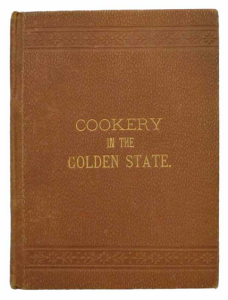
We love our cookbooks here at Tavistock Books… Ever wish you could make Pea Fritters or Rice Coquettes? This book is the cookbook for you! Our “Cookery in the Golden State” is a 1st edition published in Sacramento in 1890… by our good old Unitarian Ladies! Somewhat scarce in the trade, this book will meet all your cookery collection needs! Try the recipes here>

Screen Shot 2016-05-25 at 8.17.40 AM

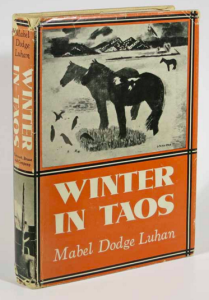
It is always a wonderful thing when you meet someone who truly and desperately loves where they are and what they are doing. Too often we are too apt to complain about where we’ve decided to settle! Not for Mabel Dodge Luhan and her beloved Taos, New Mexico. Her “Winter in Taos” describes her simple life from season to season, in an almost stream-of-conciousness style. She connects with the earth and finds great “pleasure in being very still and sensing things”. Find out about Luhan’s deep connection with the “deep living earth” here>

Screen Shot 2016-05-25 at 8.18.04 AM

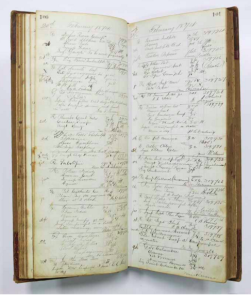
This is not your average manuscript book… this is a book of a pharmacy’s ledger of prescriptions… from 1874! Essentially an apothecary recipe book containing innumerable medicinal formulas with ingredients and dosage instructions from an unnamed apothecary in the Boston Area at the end of the 19th century. Truthfully, we would note this as an invaluable primary source for medicinal recipes used by the US medical community in the 1870s. Forget WebMD… check it out here>

Share

“It is better to be feared than loved, if you cannot be both”… As we lose one “Prince”, We Study Another

By Margueritte Peterson

Niccolò Machiavelli is a name known to many. We all know (with a name like Niccolò… it’s pretty obvious) he was Italian, we know he wrote “The Prince” and we know that he is quoted by posh academics. Often. And at length. 

But what else is known about our man Machiavelli? For instance, did you know that he was once imprisoned by the Medici family for three weeks and tortured under his supposed involvement in a conspiracy against them? Or that he was in Rome during the time of the Borgia rule and witnessed the cruel and (dare we say it…) anti-Christian dealings of the family to their subjects? No, you weren’t aware? Well, well… sit back, relax, and allow us to (briefly) enlighten you! (Niccolò would be so proud.)

Screen Shot 2016-05-03 at 10.11.03 AMNiccolò di Bernardo dei Machiavelli was born on the 3rd of May, 1469, to a well-respected Florentine family that is believed to have been descended from the old Marquesses of Tuscany. During the years of Niccolò’s youth, battle for power in Italy raged on and on… Italy consisted of many separate city-states, all ruled separately (imagine that) and the struggle for power of the different states was consistent. In 1494 Florence banished the Medici family (though they had been ruling over Florence for over sixty years) and restored a Republic government to the city-state. In this new Republic, Machiavelli was appointed to a medieval writing office that placed him in charge of the production of official Florentine government documents. Also during this time, Machiavelli was made the Secretary of a council called the Dieci di Libertà e Pace, a group which was entitled to a separate control over some departments of the interior. 

With these two highly coveted positions, Machiavelli went on several diplomatic missions, most notably to Rome (where he witnessed the somewhat savage practices of the Borgia pope) and to both the French and Spanish royal courts. These missions had a great influence on Machiavelli’s political opinions and played a key role in his later literary works. Unfortunately, at what one might consider the peak of his political career in 1512 (at one point just a few years earlier he had been responsible for the entire Florentine militia), the Republic of Florence was overthrown and the Medici family returned to power. Accused of acts of conspiracy against the Medici family, Machiavelli was imprisoned and tortured (thought to have had both shoulders dislocated… ouch) but was released a few weeks later and exiled to his father’s country property south of Florence. 

Our beautifully bound LEC holding of The Prince,  circa 1954.

Our beautifully bound LEC holding of The Prince, circa 1954. See it here>

It is during the years he spent at his father’s estate that he wrote his most notable (or most remembered) works. The Prince (1513), a work of political theory which focuses on the concept of the people needing a “new prince” rather than a hereditary prince – a man of strength and valor, immorality and fearlessness (and apparently like… no emotion). Machiavelli dedicated it to the new ruler of Florence, Lorenzo di Piero de’ Medici (the Lorenzo de Medici’s grandson), in hopes of being brought back into the Medici’s good graces. His plan worked and he was allowed to return to Florence, but unfortunately was never allowed to resume his grand political lifestyle. 

Machiavelli, stripped of his titles at this point and considered an average citizen, went on to write several popular plays of the time, and insinuated himself into many Florentine intellectual groups. He carried out hope to return to the political sphere until his death at the age of 58 in 1527. 

Share

“And then I spent two years wandering the Sahara Desert before being rescued by a wandering trio of exiled German princes who brought me along as their entertainment… a court jester, if you will…”

Screen Shot 2016-04-20 at 10.06.51 AM

By Margueritte Peterson

Personal confession: normally I am a proponent of all types of blogging. Though I believe the (not-so-old) adage “Don’t believe everything you read on the internet” – I also find the internet to be a most useful place for information. Some of it genuine… some of it not quite so genuine… some of it kind, some of it negative. In any case, the internet is a fount of information. And I do use it – boy, do I use it! 

However, that being said, there is one thing that I cannot make up my mind on how I feel about it. The internet is partially responsible (in my own humble opinion) for making one particular genre of published book not quite as popular anymore.

Travel Writing.

Nowadays, just about anyone can and does post just about anything they want online. They went on a hike with their girlfriend and found a killer “secret” camping spot? Let’s tell the entire online world! (Not so “secret” anymore – so much for skinny dipping!) Did you travel to Versailles with your parents and take pictures of every single item of gold you saw? Post them to Facebook! Gone are the old days where someone went on adventures that others might never experience and went home to write colorful and descriptive tales about their travels. Travel writing had to be good enough, exciting enough and gripping enough to spend money to publish it – it had to appeal to the masses. Now don’t get me wrong – I love to travel and always want to write about my “adventures” – but I would rather write them down for a book than blog about them online! Perhaps it is old fashioned of me, but I think that this is a genre that we ought to bring back.

Try this 1879 1st edition on for size! See it here>

Try this 1879 1st edition on for size! See it here>

Travel Writing began as early as the 2nd century, when Pausanias wrote his Description of Greece and when Gerald of Wales wrote Journey Through Wales and Description of Wales (does it count as travel writing if you are reporting on your own hometown? Apparently so if it was written in 1191 and 1194). Travel writing was also a fairly common genre in medieval Arabic literature, with the travel journals of Ibn Jubayr (d. 1214) and Ibn Batutta (d. 1377) being the most well-known examples of this genre. In medieval China (the end of the Song Dynasty, in particular, 970 – 1279) travel literature was also widespread, and belonged to a genre the Chinese named “youji wenxue” or “travel record literature.”  Authors in medieval China wrote narratives, essays and prose that extensively focused on geographical and topographical information – authors like Fan Chengda and Xu Xiake are two of the most celebrated writers of this period’s genre – and their descriptions are valuable and amaze academics to this day! Even other nationalities were interested in describing Ancient and Medieval China… Venetian traveler Marco Polo, for example, wrote extensively about his travels and adventures when he reached China in 1271. His writings sparked other adventurers for centuries after his death in 1324 (be they authors or not, such as explorer Christopher Columbus).

Going further down the chronological ladder of history, in 1589 an English writer known for promoting the settlement of North America by the British, Richard Hakluyt (d. 1616) published his text The Principall Navigations, Voiages and Discoveries of the English Nation – a book (which ended up as 3 volumes) that detailed lands around the world and was based on as many eyewitness accounts as Hakluyt could find. His texts are widely accepted as the foundations of the “modern” travel literature genre.To this day, the London-based Hakluyt Society publishes scholarly editions of travels, adventures and voyages.

The 1700s is where things become, if I may interject my own personal feelings about it (which I never fail to do)… fun. In 18th century Britain, most of the most famous authors worked in the travel literature genre and once published would travel widely (imagine that) and give lectures about their books and their anecdotes. Captain James Cook’s diaries published in 1784, for example, were unbelievably well-known and were some of the most exciting publications to ever be made available to a literate public. Entering into the 1800s, Charles Darwin detailed the HMS Beagle’s journey and findings – a combination of travel writing, scientific study and natural history/geography. Not all authors of the period combined science with their studies – some interspersed humor with their anecdotes… authors like Mark Twain and (even our main man) Charles Dickens are good examples of other travel writers in the 1800s.

Our Richard Halliburton Archive, complete with letters about his daring voyage (which would be his last) aboard a Chinese Junk Ship attempting to cross the Pacific ocean.

Our Richard Halliburton Archive, complete with letters about his daring voyage (which would be his last) aboard a Chinese Junk Ship attempting to cross the Pacific ocean. See it here>

Travel writing remained popular through the 20th century, with a higher emphasis on adventure tales, as travel was becoming more and more possible with the advent of different types of transportation – the car and the plane, in particular. Adventurers and authors like Richard Halliburton made their name by performing acts of bravery (and/or stupidity) and experiencing highly unlikely scenarios.

Humans have not lost the yen to travel and experience… so why has this type of narrative fallen a bit away from its original intent? Because times change! Though this is not a bad thing and who knows… perhaps one day I will end up writing my own travel blog… I still yearn for the days where one could read the “Royal Road to Romance” and see the adventure and the distant lands in our minds alone – without seeing a 3D movie about the same things! Who’s with me?

Share

There and Back Again: a New York Book Fair Tale by Vic Zoschak

IMG_2921

New York, New York… a hell of a town!

So you have now attended your… what, 27th New York ABAA fair? How does it feel?

Well, perhaps not quite that many, but have gone, either as an exhibitor, or as an attendee, pretty much every year since becoming an ABAA member in 1995.  I haven’t exhibited at the fair since sometime in the early 2000s [2005?], so the last decade has been as a shopper, and like years past, some wonderful things were on exhibit, and I even brought home one or two!


What was different about the New York fair this year as opposed to years past?

In my experience, the New York fair has been a strong fair for a good while now, considered by most members to be the Association’s flagship event, and, in my view, this year continued that trend.  The Armory, at 66th & Park, is a lovely location, and perfect size, for our book fair.  We have an international, cosmopolitan exhibitor base, and as a result, the same is true of the fair visitors/shoppers.

Screen Shot 2016-04-13 at 10.13.03 AM

       Photo credit: John Schulman of Caliban Books

Does it make any difference when you walk about knowing that by this time in a two years you will probably, if tradition holds, be President of the ABAA?

Well, to some degree, for in my opinion, that position shoulders a bit more responsibility for the continued viability of the Association.   And the association faces a change of venue for the fair, either beginning next year, or perhaps in 2018, and so there is the uncertainty associated with a move to a new locale.  Will it be as successful?  We will assuredly do our best to ensure it is, but sometimes the capricious hand of fate doesn’t necessarily embrace your vision of what you hope will be.


What was the most interesting item you laid eyes on?

Oh my, that’s so difficult to pick just one, however, since I have it in front of me as I write this answer, I will say I bought one of the most interesting things I saw-  the first miniature book published in Ohio [1815].  According to Rare Book Hub, one hasn’t been on the market since 1964.

What was the neatest item you purchased, if different from the above?

In addition to the miniature described above, I bought a collection of 50+ British broadside ballads, mainly 19th C.  While individually they’re not particularly uncommon, to come across a cache of this number is decidedly so, and I just couldn’t resist.  It will be fun to research the individual titles, hopefully with a few or more ending up with “Not previously recorded” in the catalogue entry.

IMG_2919

        And here come the crowds!

What’s your usual book fair routine when you aren’t exhibiting, such as in NY or in Boston? Do you run around, eyes glued to glass cases at first…. do you saunter with a glass of wine or a manhattan and allow the items to come to you (by knowledgeable booksellers who probably brought it with you in mind, of course)?

Usually, on the fair opening, I walk the aisles to see who is exhibiting, while letting serendipity catch my eye.  During this meandering, I tend to make it a point to stop with colleagues who I know will most likely have the unusual, non-dust jacket material that I find so interesting.  This year was no different.

How were the shadow fairs?

Due to the ABAA’s annual meeting being held Saturday mid-morning, I, unfortunately, wasn’t able to get to the Getman show uptown, but did have the opportunity to visit the 2nd shadow show, across from the Armory on Lexington.  I did find a few things there, though not as much as in times past.

Did you have fun?!?!

Always!  🙂

Share