Category Archives: Americana

Edgar Allan Poe: Creator of Enduring Terror and Literary Masterpieces

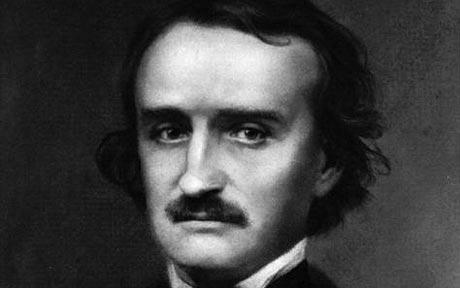
Edgar-Allan-Poe

Edgar Allan Poe was the first American writer to earn a living completely by his pen–though that living wasn’t always enough to live on. The legendary author redefined the genre of horror and is rightly called the father of the modern detective novel. But these legacies are the result of a more visceral one: Poe’s ability to evoke an all-encompassing terror that springs not from without, but from within.

Poe’s Incredible Influence

It’s well known that Sir Arthur Conan Doyle used Poe’s C. Auguste Dupin as a model for his own detective, Sherlock Holmes, and that Doyle’s short stories (“Hound of the Baskervilles” in particular) owe a tremendous debt to Poe. Indeed, Doyle once rhetorically asked, “Where was the detective story until Poe breathed life into it?” But Poe’s influence reached beyond the worlds of horror and mystery. He has long been a beloved figure in literature, one whose power has not waned with the passage of many generations.

Poe and Washington Irving exchanged admiration for one another via correspondence. Irving noted that “the graphic effect [of “Fall of the House of Usher”] is powerful.” Poe responded by sending Irving a copy of “William Wilson,” which he considered his best work. Poe admitted that the story had been inspired by Irving himself, particularly Irving’s “An Unwritten Drama of Lord Byron.”

Robert Louis Stevenson said of Poe, “He who could write ‘King Pest’ has ceased to be a human being.” Stevenson found Poe’s stories absolutely gripping, and was undoubtedly flattered when critic Andrew Lang said that Stevenson was “like Poe with the addition of moral sense.”

Meanwhile Oscar Wilde ranked Poe’s poetry as more important than that of Walt Whitman, Ralph Waldo Emerson, and Henry Wadsworth Longfellow. Wilde emulated elements of Poe’s style in The Picture of Dorian Gray–which wasn’t lost on Walter Pater, who ardently praised Wilde’s efforts to evoke Poe’s style in the novel. Wilde’s colleague and defender George Bernard Shaw, often an unforgiving critic, was downright effusive about Poe, saying that the American author “constantly and inevitably produced magic where his greatest contemporaries produced only beauty. [His tales are] a world record for the English language: perhaps for all languages.”

Allen Ginsberg argued that “everything leads to Poe….Burroughs, Baudelaire, Genet, Dylan,” and Jorge Luis Borges contended that “contemporary literature would not be what it is” without Whitman and Poe. TS Eliot, however, was not initially convinced of Poe’s genius. He excluded Poe from both American and European literary traditions, calling Poe a “displaced European.” Eliot later acknowledged that he’d underestimated Poe’s talent.

Vladimir Nabokov included multiple allusions to “Annabel Lee” in his masterpiece, Lolita. It appears that Nabokov was indeed deeply interested in Poe; he meticulously mapped the area around Poe’s home and sketched the manifestations of soul in The Strange Case of Dr. Jekyll and Mr. Hyde (which he taught within the context of Poe). Both documents are currently on view at the Morgan Library’s excellent exhibit, Edgar Allan Poe: Terror of the Soul.

Later on, novelist and screenwriter Terry Southern, author of Dr. Strangelove, was deeply influenced by Poe, especially The Narrative of A Gordon Pym. Southern wrote an appreciation of Poe, called “King Weirdo,” which was published posthumously. And Stephen King has frequently borrowed archetypal themes from Poe’s works for his own horror novels. The Shining reminds us of both “Masque of the Red Death” and “Fall of the House of Usher.”

Collecting Edgar Allan Poe

Edgar Allan Poe makes a fascinating focus for a single-author collection and also fits wonderfully into nineteenth-century American literature and horror literature libraries. Poe’s works weren’t actually that popular during his lifetime, so they were issued in relatively small print runs. The first edition of Tamerlane and Other Poems (1827) is famously scarce; only twelve copies are known to exist. (Three are currently on display together at the Morgan Library!)

Even if Tamerlane is out of reach, there are countless other desirable editions and volumes. For example the Poetical Works of Edgar Allan Poe, published by George Robertson in 1868, was the first edition of Poe’s works to appear in Australia. It differs significantly from the British and American editions.

No illustrated editions of Poe’s works were published during his lifetime. The first, Tales of Mystery, Imagination and Humor; and Poems (1852) was illustrated by artists unknown, as they were not given credit for their work. Famous illustrators Edouard Manet, Aubrey Beardsley, Harry Clarke, Edmund Dulac, and Arthur Rackham; first editions of Poe’s works illustrated by these artists are highly desirable.

Poe’s works often showed up in serially issued collections. One of these is The Gift, A Christmas and New Year’s Present for 1842. This compilation includes Poe’s “Eleonora,” along with items from Howard Huntley, Catherine Beecher, and Park Benjamin. The volume also includes an uncollected piece by Lydia Sigourney, “The Village Church.”

Irving-Offering-Lizzie-Leigh-Gaskell

The Irving Offering for 1851

When Elizabeth Gaskell first published “Lizzie Leigh,” the story was initially ascribed to Charles Dickens–whose byline meant big bucks for publishers. “Lizzie Leigh” appears under Dickens’ name in The Irving Offering: A Token of Affection for 1851, which also include’s Poe’s “A Descent into the Maelstrom.” The edition is fairly scarce: OCLC records none west of the Mississippi.

Though Edgar Allan Poe enjoys special attention around Halloween, collectors of rare books appreciate his works year round. If you’re looking for a specific item for your Poe collection, please don’t hesitate to contact us! We’re happy to help.


Share

Rare Books about Baseball Are a Home Run!

The first book devoted exclusively to the sport of baseball was The Base Ball Player’s Pocket Companion, published in Boston in 1859. Since then America’s love of baseball has continued to grow, establishing the sport as America’s pastime. Now baseball is also the most popular subject among collectors of rare books in sports. Because of the breadth of baseball literature, most collectors of rare baseball books narrow their focus to a specific aspect of the literature or sport.

Early History

The game of baseball has evolved considerably since its beginnings. Consider, for instance, that there were originally two sets of rules for baseball: one from Boston, and the other from New York. Thus books from baseball’s early history are often quite fascinating, detailing a sport that varies widely from the one we know today.

Beadle's Dime Base-Ball Player

Beadle’s Dime Base-Ball Player


Spalding's Base Ball Guide

Spalding’s Base Ball Guide

Hidden Histories

The All-American Girls Professional Baseball League began during World War II and operated from 1943 to 1954. The history of this league and its players don’t receive much attention today, but the league was quite popular at the time. Meanwhile, both the Negro Leagues and African-American players were frequently overlooked; few books exist about either before the 1970’s. One notable exception is Sol White’s Official Base Ball Guide (1907), sometimes called the “holy grail” of baseball book collecting because it’s so scarce. It’s both challenging and engaging to build a collection around these hidden histories in baseball.

“Get that Nigger off the Field!”

Voices from the Great Black Baseball Leagues

Voices from the Great Black Baseball Leagues

Regional Leagues

As baseball’s popularity spread, smaller leagues began popping up all around the country. Although these leagues may not have boasted star players, they offered one means of local entertainment. Teams were sometimes formed around occupation or work location, as illustrated by the photograph of the New Almaden Quicksilver Mine Baseball Team.

New Almaden Quicksilver Mine Baseball Team

New Almaden Quicksilver Mine Baseball Team

Official Baseball Program-Pacific Coast League, 1934 Season

Official Baseball Program-Pacific Coast League, 1934 Season

Middle Atlantic League 25th Anniversary Souvenir Book

Middle Atlantic League 25th Anniversary Souvenir Boo

Biographies and Autobiographies

In the early days, baseball players were frequently illiterate. Their autobiographies were therefore frequently ghostwritten. Both autobiographies and biographies were also “cleaned up”; they tended to be much more inaccurate than modern biographies, sanitizing the players’ lives to make them more acceptable to middle-class readers.

Mickey Mantle of the Yankees

Mickey Mantle of the Yankees

Baseball Fiction

Likely the first novel primarily devoted to baseball was Noel Brooks’ Our Base Ball Club (1884). The genre has grown considerably. It includes dime novels, comic books, and modern first editions. Some collectors focus on a particular series, while others explore the limits of baseball fiction and collect a wider variety of examples.

The Big League

The Big League


Double Curve Dan the Pitcher Detective

Double Curve Dan the Pitcher Detective

The Pick-Up Nine

The Pick-Up Nine

How-To Guides

With the establishment of official rules and leagues, the art of playing baseball became much more standardized. That certainly didn’t mean that opinions never differed on the right form and approach for skills like pitching, batting, and fielding.

Spalding's Baseball for Beginners

Spalding’s Baseball for Beginners


The Science of Baseball

The Science of Baseball

Individual Teams

If you love to “root for the home team,” it makes sense to build your baseball collection around them. You’ll likely find a wealth of programs, statistics, and score cards. Some items, such as the New York Giants’ Press Radio TV from 1956, include a list of players, schedules, and statistics. A collection built around a single baseball team also encompasses biographies and memoirs from team players.

Press Radio 1956-Giants

Press Radio 1956-Giants

New York Giants 1954 Training Season

New York Giants 1954 Training Season

Bibliographies

Regardless of your area of expertise, it’s important to learn all you can about the rare books of baseball, and about your specialization. And that means one thing: getting the right bibliography! A terrific place to start is David Block’s Baseball Before We Knew It: A Search for the Roots of the Game (1995). In addition to offering a great print history of the game, it also has a bibliography of pre-1850 books that treat baseball in some way. For baseball fiction, you’ll want Andy McCue’s Baseball by the Books (1991). And a more general bibliography is Myron Smith’s Baseball: A Comprehensive Bibliography (1986). Smith has since published supplements to include later material.


Share

Elias Samuel Cooper: Renowned and Controversial Surgeon

Elias-Samuel-CooperThe nineteenth century was a time of exploration and discovery in the field of medicine. One man who made significant contributions to the field in America was Elias Samuel Cooper, a surgeon whose aspirations stretched beyond building a successful private practice. Dr. Cooper founded the first medical college in San Francisco, where his techniques drew both controversy and respect from the medical community.

Self-Education and Training

Cooper was raised on a Quaker farm in Ohio, where his abolitionist family settled after relocating from slavery-friendly South Carolina in 1807. His sister lived on a neighboring farm, so Cooper grew up with his nephew, Levi Cooper Lane. Cooper left no personal account of his life, so what we know is gleaned from his brother’s journal and a few other historical sources. From that document, we learn that Cooper’s birthday was November 25, 1820. It’s presumed that Cooper attended a country school in Butler County. His brother Jacob’s journal also refers to Cooper’s apprenticeship to a Dr. Waugh in 1838. Cooper’s older brother Elaias also entered the medical profession, and it appears that Cooper either apprenticed or partnered with him in Greenville, Indiana from 1840 to 1843.

In 1851, Cooper was awarded a medical degree from St. Louis University. At that time, a candidate who got credit for “four years of reputable practice” could obtain a degree after only one lecture cycle, which lasted four-and-a-half months. That seems like little training for such an important profession, but most medical practitioners at the time had no formal training, or little more than an apprenticeship. Cooper had actually “self-awarded” himself an MD at least two years earlier; he published “Remarks on Congestive Fever” in the Jan/Feb 1849 edition of St. Louis Medical and Surgical Journal. He signed it “ES Cooper, MD.” Such a practice was relatively common, and it was not until later that more rigorous standards were implemented to prevent self-credentialing and practicing without proper instruction.

By all accounts, Cooper was an incredibly industrious physician, spending many hours in self-study. He was particularly interested in surgery. In 1843, Cooper set up his private practice in Danville, Indiana. Soon he was making almost $800 a month, a tidy sum at the time. At only 23 years old, Cooper performed an impressive surgery, successfully removing a large portion of the patient’s jaw. The procedure required sophisticated knowledge of anatomy, including deep knowledge of the vascular system. Cooper’s success sealed his local reputation in the medical community.

Greater Aspirations

Cooper moved to Peoria, Illinois in 1844, and within a year he’d opened up a dissecting room and begun offering lectures on anatomy and surgery. Less interested in growing his private practice, Cooper focused more heavily on surgery. His first operation was on a case of strabismus (when the eyes are not aligned properly). Soon Cooper had established himself as the preeminent surgeon for the eyes and face, and for orthopedics. Patients would travel from neighboring states to see the young physician.

Cooper’s reputation raised the ire of his colleagues, who decided to attack Cooper for his dissections. At the time, it was legal for surgeons to dissect the bodies of convicts, provided that the relatives had no objections. Thus when convicted murderers Thomas Brown and George Williams were executed, Cooper received their bodies. He removed them under cover of darkness, because the executions had been quite a public spectacle (and had almost taken place at the hands of an angry mob instead of at the hands of sanctioned officials). Cooper had anticipated receiving the bodies, and he’d advertised an anatomy lecture to take place shortly after the execution. Thus, everyone knew where these bodies came from.

But there were no criminals available for Cooper’s next lecture, which raised suspicion of grave robbery. Cooper’s detractors published a handbill called “Rally to the Rescue of the Graves of Your Friends,” drawing attention to the fact that Cooper must be digging up bodies to supply himself with dissection subjects for his numerous anatomy lectures. The handbill called for a public indignation meeting. Cooper attended the meeting himself, along with some of his friends, who were labeled “Cooperites.” One of his companions, who happened to be drunk, offered to preside over the proceedings. When it was suggested that he was unfit for the task, he retorted, “A drunken man may get sober, but a nature-born fool will never have any sense, by God!” The crowd roared with laughter and soon dispersed. This was Cooper’s first brush with controversy, but it wouldn’t be his last.

Cooper’s practice continued to grow, and he had to purchase a second building to house his Infirmary for the Eye and Ear. He also specialized in the removal and correction of deformities from the lower extremities, especially club foot. But his goal was to establish a medical school, so in 1854 Cooper went to Europe to observe the medical institutions there and to meet with leading medical practitioners. When he returned to the United States, he settled in San Francisco.

The First Medical School in San Francisco

Elias-Samuel-CooperAfter relocating to San Francisco, Cooper established the Cooper Eye, Ear, and Orthopedic Infirmary in a prominent location. He immediately began advertising for free lectures and demonstrations of his surgical techniques, a strategy that didn’t earn him any friends in the local medical community. Cooper also published reports of his various surgical endeavors. One of these was “Report of an Operation to Remove a Foreign Body from Beneath the Heart.” Published by the San Francisco County Midico Chirugical Association in 1857, the report details how Cooper removed an iron slug lodged in the patient, BT Beal, for 74 days before Cooper endeavored to remove it. The patient’s health improved so dramatically after the procedure that he was “not to be recognized by the medical men present at the operation.”

Clearly Cooper had developed an incredible talent for the art of surgery, but he also made notable advancements to the field. He helped to introduce the use of chloroform during surgery, an indispensable tool in the days before general anesthesia. Cooper also used alcoholic dressings to prevent infection to incisions and wounds, significantly reducing mortality rates. He was a pioneer in the use of animals to test surgical techniques. In 1858, Cooper used his connections and knowledge to establish the Medical department of the University of the Pacific. The school has existed under several names almost without interruption ever since.

Though Cooper still drew some criticism for his dissections, he worked to clarify regulations and ensure proper practices in California. But that didn’t mean that he received universal approbation. In 1857, Cooper performed San Francisco’s first caesarean section. The mother, Mary Hoges, survived but her child did not. Thanks to the encouragement of Dr. David Wooster, who had been the assisting physician, Hoges sued Cooper for malpractice. She argued that the procedure had been unnecessary. The trial resulted in a hung jury, but Wooster continued to publicly attack Cooper, whom he considered a rival. Cooper finally responded in The San Francisco Medical Press, which he founded himself.

Cooper’s career was cut short in 1862, when he succumbed to nephritis after a prolonged illness. But his contributions to medical literature offer fascinating insights into the evolution of the field.

Share

Rare Books in History: The Revolutionary War

Independence Day commemorates the American colonies’ declaring their intention to gain independence from British rule. These items from our inventory illuminate critical moments in history, both before and after the Revolution.

An Account of the European Settlements in America

Account-European-Settlements-America-BurkePublished in six parts and two volumes, An Account of the European Settlements in America was written by Edmund Burke and William Burke. The work is most often attributed to Edmund, who was considered a friend of the Americans during the Revolutionary War. That interpretation is an oversimplification, however; though Burke sympathized with the Americans’ dissatisfaction with British rule, he also hoped they’d strive to avoid war. In 1769, Burke published a pamphlet criticizing the British for stirring up conflict with their policies. Five years later, he spoke out against American taxation. Edmund and William were questionably related but referred to one another as “cousins.” The two published their Account in 1757, and Howes lauds it as the “best contemporary account” of the colonies. Details>>

The Pennsylvania Evening Post, Vol I No 1 (Tuesday, January 24, 1775)

Pennsylvania-Evening-PostPublished by Benjamin Towne, The Pennsylvania Evening Post initially came out tri-weekly through 1784 with hiatuses during the Revolutionary War. In 1783, Towne modified the paper’s name to The Pennsylvania Evening Post, and Daily Advertiser”–the first daily paper in the United States. On July 6, 1776, the paper was also the first to publish the print the Declaration of Independence. Bingham notes 11 institutional holdings of this first appearance, making it uncommon in the trade. Details>>

The Naval Atalantis, Parts I & II

Joseph Harris used the pseudonym Nauticus Junior when he published The Naval Atalantis, which makes sense given the critical commentary he offers therein. Harris offers character sketches of Naval-Atalantis91 British officers, many of whom played a role in the American Revolution. Howes notes than many of the officers “are unmercifully criticised or lampooned by Harris, notably Viscount Wililam Howe, Lord of the Admiralty.” This is a fair assessment; Harris says of Howe “his Lordship’s conduct on the coast of North America, rather served to throw a shade over the laurels he had acquired in his youth.” Harris was reportedly the secretary to Admiral Milbanke, whom Harris features in Part I. Harris’ tone is often quite caustic toward his fellow soldiers. No copies of this edition have been at auction for over thirty years, making it relatively rare in the trade. Details>>

 Independence Day Orations of Josiah Quincy III

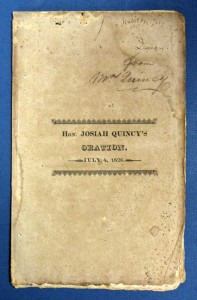
Josiah_Quincy_OrationJosiah Quincy was a soldier in the Revolutionary War, and his namesake would earn the nickname “the Patriot” as principal spokesman for the Sons of Liberty. Thus Josiah Quincy III inherited a legacy of patriotism. He served as a member of the US House of Representatives and as Mayor of Boston before becoming president of Harvard University. Quincy III delivered multiple Independence Day orations to the city of Boston, including one on July 4, 1789 and another on the fiftieth anniversary of the Declaration of Independence, July 4, 1826.  Details>>

Monody on Major Andre

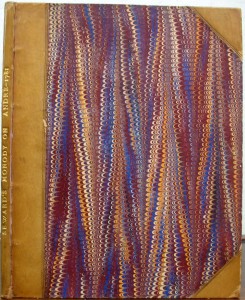
Seward_Monody_Major_AndreAnna Seward was a prominent woman of letters in her day, having, for example, the admiration of Wordsworth and Scott, and whose disapproval of Dr. Johnson is as well chronicled as her support of young writers of the era is, perhaps, under appreciated. This title, her second published, by the ‘Swan of Lichfield’ [as this poet is known] is a tribute to the suitor of her friend, Honoria Sneyd (stepmother to Maria Edgeworth); the suitor had been executed, as a courier of information from Benedict Arnold to General Clinton, during the Revolutionary War by the Americans. The work’s publication reportedly “brought her an apology from General Washington.”  Details>>

Campagnes Militaires de Lieutenant General Sir William Howe en Amerique

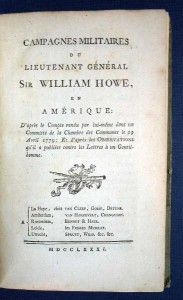
Howe_Campagnes_MilitairesWilliam Howe was the British Commanding General during the Revolutionary War, and here he offers his account. It’s an interesting and scarce edition, with no copies at auction in the last 25 years; OCLC lists only three institutions with this edition. It has a preface not present in the English edition: “‘Twenty times,” exclaims the translator (in this preface dated Amst. 25 Nov. 1780), “have the English encouraged the idea and flattered themselves with it of putting a speedy termination to the war, yet after six years they are no farther advanced in the conquest or reconciliation than they were on the first day.’ [Sabin]. Details>>

The Adventures of Christopher Hawkins

Christopher_Hawkins_AdventuresDuring the American Revolution, prisoners of war were treated and managed very differently than they are today; in the eighteenth century, each army was expected to provide supplies and provisions for their own POW’s. Meanwhile, King George III had declared all American soldiers to be traitors, which negated their status as POW’s. Initially, captured American soldiers were simply hanged for treason. However, once the Continental Army caught a large number of British soldiers at the Battle of Saratoga, this practice seemed risky; the British feared reciprocal treatment for their own soldiers. The British resorted to holding their prisoners in dilapidated war ships and prisons. Conditions were deplorable, and many POW’s died as a result. One soldier, Christopher Hawkins was captured and imprisoned on the HMS Jersey off the shore of New York. Hawkins managed to escape, and the details of his captivity were published much later, in a privately printed account. Details>>


Share

Planes, Trains, and Automobiles!


Summer is officially underway, and the season is synonymous with family vacation, road trips, and carefree adventures. Though the ways we travel have evolved over time, the thrill of the journey endures.

Planes

Since the beginning of time, humans have been obsessed with flight. At first, their attempts were based on the way birds flew. Next the hot air and hydrogen balloons gave us a means of navigating the skies. But it was two bicycle manufacturers from Dayton, Ohio who would introduce the airplane. The Wright brothers revolutionized travel, war, and commerce with their invention.

The Call of the Clouds

CAll-Clouds-GallaudetEdson Gallaudet formed the first aircraft engineering office in 1908. Two years later, Gallaudet Engineering Office had begun building planes under contract. The company was reorganized as the Gallaudet Aircraft Corporation in 1917 and offered its first product, the Curtis floatplane, the following year. This rare trade catalogue, The Call of the Clouds, presents the Gallaudet Chummy Flyabout Sport Model–which sold for the low price of $3,500. We’ve found no evidence that this plane was ever actually produced, making the catalogue a fascinating record of a machine that could have been.

Pilot’s Flight Operating Instructions

Pilots-Flight-ManualsOur collection includes three pilot’s’ flight operating instructions for Army planes, published in 1945. These flight manuals address both American and British planes used during the World War II era, such as the P-51 and B-29. They incorporate numerous charts and graphs for pilots, along with a few annotations from the original owner. For those interested in aviation or military history, this collection of documents are quite fascinating.

Aeroplanes

AeroplanesA rare early aviation trade catalogue, Aeroplanes presents models manufactured by Aug. C. Gomes & Cie, with specifications, illustrations, and performance records for Henry Farman, Sommer, Bleriot, Tellier, Voisin, Antoinette, Maurice Farman, REP, and Hanriot models. A powerplant section follows, and the catalogue concludes with a variety of other aircraft accessories and components. The company even offers hangar facilities for some airplane models. We’ve found no listing for this particular catalogue in either OCLC or KVK.

Trains

As early as 1550, roads with wooden rails were built in Germany to make it easier for horse-drawn carriages to move. These wagonways, as they were called, were the precursor to the modern railroad. Two centuries later, iron had replaced wood. But the railroad truly became an efficient means of transportation with the introduction of the steam locomotive. Today, trains evoke the romance and nostalgia of leisurely travel.

Baldwin Locomotive Works Photographs

This photo album apparently belonged to SM Vauclain, locomotive designer and eventual president of Baldwin Locomotive. It’s possibly unique, with 18 pasted-in albumen prints of various Baldwin locomotives. Identified models include “Nacional Mexicano,” “Northern Pacific,” “Companhia Paulista,” “EFOM,” “Ramal Dumont,” “WNY & PRR,” and “Estrada de Ferro Central do Brazil.” The photo quality is very good to fine.

Baldwin-Locomotive-Works

War of the Gauges

IWar-Gauges-Railroad-Erie-Pennsylvanian December, 1853, the city of Erie and its neighboring township Harborcreek waged an interesting battle against rail travel. They tore up tracks of the Erie and North-East Railroad, wherever the tracks intersected the public highway or city streets. While their actions were ostensibly promulgated by a debated over track width, it indicated an underlying struggle for economic advantage. For two months, rail travel between New York and the West was interrupted, but the inconveniences lasted a full two years. The War of the Gaugesis the first book publication documenting this exciting time in Erie history, complete with court testimony and individual statements.

The Union Pacific Railroad

Union-Pacific-Railroad-BrochureThis Union Pacific Railroad brochure served as both a progress report and a promotional brochure. Because the railroad fell under the auspices of the federal government, it issued regular updates for Congress. Issued in 1868, this one includes information through December, 1867. It outlines the progress of the railroad west of Omaha, Nebraska, which resulted in an unbroken line from the Atlantic to the Pacific. The report’s frontis features a “Map of the Union Pacific Rail Road and its connections.”

Automobiles

Though Henry Ford is widely credited with inventing the automobile, the machine’s history is actually much more complex. Back in the 15th century, Leonardo da Vinci created designs and models for vehicles that foreshadow the modern-day automotive. Many suggest that Karl Benz actually invented the first true automobile, and it was his wife, Bertha, who undertook the first road trip to demonstrate the road-worthiness of her husband’s invention.

Locomobile

LocomobileFounded in 1899, the Locomobile Company manufactured small, affordable steam cars for only four years before offering only internal combustion-powered luxury cars. This brochure, one of the first the company issued, notes the demand for “a self-propelling vehicle that will combine the qualities of lightness, speed, economy, and ease of operation.” It describes the advantages and attributes of the vehicle and includes images of several models. The last, Model 6, is billed as “the Fastest Racing Machine in the World.” OCLC records only three institutional holdings of this item, making it uncommon in the trade.

A Joy Ride of 1911

Joy-Ride-Chalmers_1911Generously illustrated with both photographs and postcards, “A Joy Ride of 1911” is a charming amateur account of one family’s Chalmers automobile trip through New Jersey up through New England. Their objective is to reach the White Mountains. Recorded by the anonymous wife/mother of the family, the vacation is engagingly chronicled.

1936 Report of Bonneville Salt Flats Speed Runs

JB Jenkins Robinson made a typewritten report to HC Bougey, Chief Chemist of General Motors, detailing the results of sponsored speed runs in 1936. Their aim: “To establish Worlds’ speed records with a view of utilizing results for advertising and sales promotion.” Over four testing periods, 19 speed records were set. Seven carbon copies of Robinson’s report exist; this one is bound in a manilla folder along with a facsimile log-sheet for Jenkins’ 24-hour run (Sept 21-23) and 16 captioned black-and-white snapshots.

Bonneville-Salt-Flats-Speed

 As we look back in time at the history of transportation, we wonder what the future holds. What mode of transportation will be next to captivate the world with its promise of adventure?

Share

The Millerites and the Great Disappointment

William-Miller

William Miller

The Seventh-day Adventist Church rose from what most would consider an epic failure. William Miller predicted the return of Christ–inaccurately, and his followers broke into multiple sects, of which the Seventh-day Adventist Church was one. The literature and ephemera of the Millerite community offers a fascinating look at religion and spirituality in the mid-1800’s.

A Brief History of Millerism

The early 1800’s saw a resurgence in millenarianism, the belief that a major event or movement would cause a drastic transformation in society. Specifically, millenarianists believed in the prophecy of Revelation, which predicts that God’s kingdom on Earth will last 1,000 years after Jesus’ return. Thus, the ground was fertile for the theology of William Miller, for whom Millerism is named.

Miller started out as a farmer in upstate New York. He was also a lay preacher in the Baptist church. He embarked on an exhaustive study of the prophecies of Daniel. A subscriber to the year-day method of prophetic interpretation, Miller believed that a “day” in the Scripture represented a year of real time–meaning that we could predict the exact date of Jesus’ return. By September of 1822, Miller had published his conclusions in a twenty-point document, though he shared the document with very few people.

Miller began sharing his ideas more openly among his inner circle. Initially, he met with disinterest. He said, “To my astonishment, I found very few who listened with any interest. Occasionally one would see the force of the evidence, but the great majority passed it it by as an idle tale. But when Miller began lecturing publicly in 1831, he began to gain a following. The following year, he submitted 16 articles to the Baptist paper Vermont Telegraph. Soon he was unable to personally address all the correspondence and speaking requests he received as a result of the articles.

To remedy that problem, Miller published a 64-page tract that summarized his predictions. At this point, he still had not specified a date for Jesus’ return; instead, he suggested that the Advent would occur in 1843 or 1844. As the years passed, Miller gained more and more attention–in large part due to Millerite publications. Miller’s campaign got a significant bump when Joshua Vaughan Himes, a preacher and publisher, began printing the fortnightly paper Signs of the Times. The first issue was published on February 28, 1840, and the periodical is still published by the Seventh-day Adventist Church.

Battle-Great-Day-Thomas-Williams

“The Battle of the Great Day”

As Miller’s ideas gained ground, numerous items in the Millerite tradition were published. One such item was a broadside called “The Battle of the Great Day.” Based on Revelation 16: 12-21, the broadside was published by prolific preacher Thomas Williams around 1838. Though several works by Williams are recorded in UMI’s “Millerites and Early Adventists,” this item is not. The OCLC lists only one other institutional holding, at Brown University.

By 1843, there were at least 48 Millerite publications. Meanwhile, Miller had narrowed down his dates at the urging of his followers. Now he offered a year-long window: March 21, 1843 to March 21, 1844. When March 21, 1844 came and went without incident, most Millerites maintained their faith. They briefly adopted a new end date of April 18, 1844, based on the Karaite calendar rather than the Rabbinic one. When that date also passed, they believed they’d entered “tarrying time,” a period of waiting mentioned in both the books of Daniel and Habakkuk. This idea sustained them through July of 1844.

In August of that year, Samuel S. Snow presented a new theory at a meeting in Exeter, New Hampshire. Known as the “seventh-month message,” Snow’s prediction was still based on the 2300 prophecy of Daniel, which stated that Jesus’ return would occur on the tenth day of the seventh month. Again using the Karaite calendar, Snow calculated that October 22, 1844 as the date of the Advent. When Snow, too, proved incorrect and nothing happened on October 22, the Millerites experienced what has since been called the Great Disappointment. The movement soon fell apart as the Millerites struggled to reconcile their beliefs with reality. Multiple sects emerged, one of which was the Seventh-day Adventist Church.

The Cartography of Faith

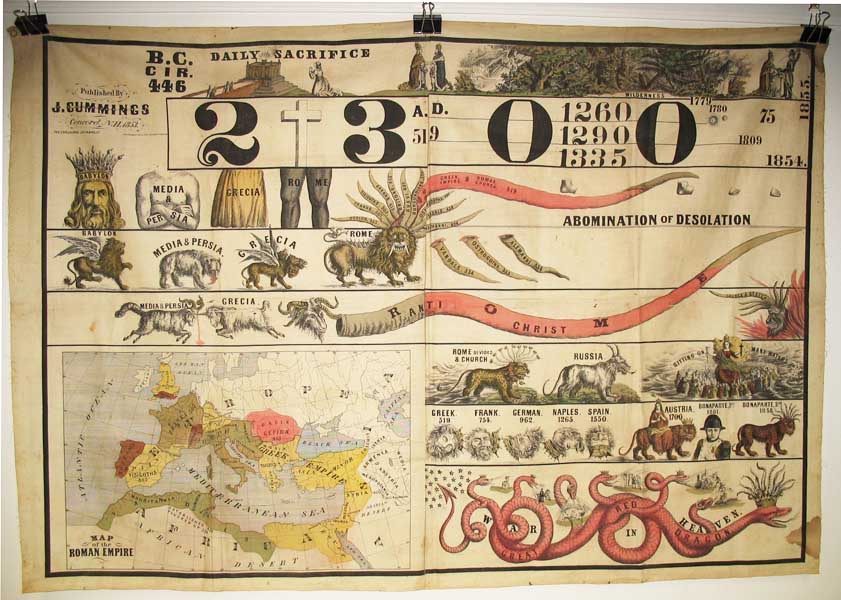
Many Millerites turned to Scripture, hoping to find an error in Miller and Snow’s calculations. One of these was Jonathan Cummings, a farmer who’d become a preacher in 1830. Cummings wrote a lengthy letter to Himes, which was published in the Advent Herald on November 2, 1852. He offered new insight on the chronology. Cummings also produced a fascinating banner-size chart (pictured below and recently sold) that identifies 1854 as the year for the Second Coming. He also printed An Explanation of the Prophetic Chart and Application of the Truth to accompany the banner.

Joseph-Cummings-Advent

While Cummings was not the only Millerite to recalculate the date of the Second Coming, his unusual chart is featured and discussed in both Cartographies of Time and the Encyclopedia of American Folk Art. The OCLC records only five institutional holdings of the banner, making it an exceptionally rare publication to be found on today’s market.

The Millerite movement certainly fueled the publication of many fascinating rare books and ephemera. Tavistock Books is always interested in acquiring items like Cummings’ chart and Williams’ broadside. Please contact us if you would like more information about what we’re looking for, or if you have an item of interest.

Share

The Rare Books of Baseball

This weekend kicks of the beginning of the 2013 Major League Baseball season. While the precise origins of the game remain dubious, the sport has gained a sure place as the most popular sport of focus among rare book collectors.

A Legendary Rivalry

Henry Chadwick (1824-1908) was a British-born journalist. A true baseball enthusiast, Chadwick launched one of the first newspaper columns devoted to baseball. He was also among the first to record baseball statistics as a means to evaluate individual players’ performance. In 1903, Chadwick wrote an article suggesting that baseball was a form of an English game called rounders. The game had similar rules and equipment, so the guess seemed plausible enough.

Enter Albert Spalding (1850-1915). A great pitcher from the 1870’s, Spalding was one of baseball’s greatest advocates. He owned the Chicago White Stockings and the National League of Professional Ball Clubs. In 1911, Spalding launched a massive campaign to make baseball the national pastime. He believed that baseball was a quintessentially American game–and was invented by Americans. Thus he vociferously disagreed with Chadwick’s assertion that baseball had British origins.

To settle the disagreement, Spalding appointed a committee whose mission was to uncover the origins of baseball. He selected Abraham Mills as the chairman. Mills was the National League’s president from 1882 to 1884. The task force, nicknamed the “Mills Commission,” ruled on December 30, 1907 that Abner Doubleday had invented baseball. Immediately a myth was born.

The Doubleday Myth

The Mills Commission based their ruling almost entirely on the testimony of one man: 71-year-old Abner Graves, a mining engineer who lived in Denver, Colorado. Graves responded to a “call for people who had knowledge of the game,” placed in Akron, Ohio’s Beacon Journal by Spalding. Graves claimed that he’d seen Doubleday draw a diagram of a baseball field back in 1839, during a schoolboy’s game. Graves sent his account to the Beacon Journal, which printed it with the headline “Abner Doubleday Invented Baseball.”

Abner-Doubleday-Baseball

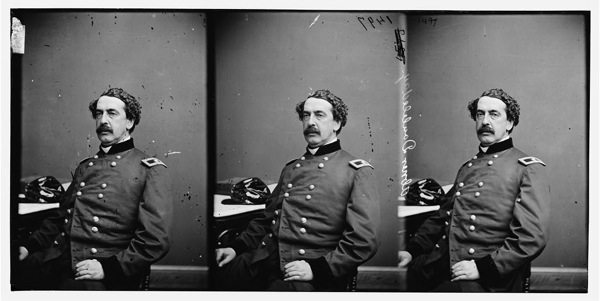
US Army general and Civil War hero Abner Doubleday was spuriously credited with creating baseball thanks to the Mills Commission.

Meanwhile Doubleday himself never claimed that he invented the sport. A US Army general and Civil War hero, Doubleday never once mentioned baseball in his extensive diaries. By the time the Mills Commission declared Doubleday the inventor of baseball, he’d already passed away. But that didn’t stop the myth from taking on a life of its own. Soon, Doubleday was even credited with introducing baseball to Mexico during the Mexican-American War.

Flaws in the Doubleday Myth

Unfortunately the Mills committee overlooked some critical information. First, Graves wasn’t the most reliable witness. He’d been only five years old in 1839 when he supposedly saw Doubleday diagram the baseball field. But the greatest flaw in Graves’ account was that Doubleday was not even in Cooperstown, New York in 1839.

Clearly Doubleday hadn’t invented baseball, but who had? America longed for an answer. In 1953, Congress named Andrew Cartwright the inventor of baseball, definitively debunking the Doubleday myth. Cartwright, a volunteer firefighter, had been a founding member of the New York Knickerbockers (est September 23, 1845). He’d been instrumental in making baseball more of a gentlemen’s sport. But modern scholars of baseball have also dismissed Cartwright as baseball’s inventor.

New-York-Knickerbockers-Baseball

The New York Knickerbockers were the first organized baseball team. In 1953, Congress declared founding member Andrew Cartwright the inventor of baseball.

Historian and antiquarian David Block is the leading scholar on the history of baseball. His 2005 book, Baseball before We Knew It: A Search for the Roots of the Game, outlines the earliest mentions and illustrations of baseball in literature. The first known appearance of “base-ball” in print occurred in the 1744 edition of A Little Pretty Pocket-Book. And the first-known rules of baseball were printed in Spiele zur Erholung (1796). The German book that summarizes the rules of a game called “Ball mit Freystaten (oder das englische Base-ball),” which translates as “ball with free station (or English base-ball). Block illustrates the similarities between baseball and trapper ball He also notes that the first written account of rounders in England was in The Boy’s Own Book (1828).

Thus, neither Chadwick nor Spalding (nor the 1953 American Congress) was correct about baseball’s origins. The game had already existed for nearly a century before Doubleday, Cartwright, or any of their relative contemporaries could have “invented” it.

Collecting Rare Baseball Books

Baseball is by far the most popular game among collectors who specialize in a sport. This is due, in large part, to the mysterious origins of the sport. But there are also plenty of niches for collectors to focus on, from baseball’s early history, to regional leagues or specific teams, to baseball fiction.

Spalding-Official-Baseball-Guide

Henry Chadwick, the sports writer who had questioned baseball’s origins, played a significant role in nationalizing the rules of baseball. He wrote Beadle’s Dime Base-Ball Player most years, from 1860 to 1881. The guide included not only rules for the game itself, but also guidelines for establishing baseball clubs and game statistics from the previous year. These guides were ubiquitous at the time, helping to spread interest in the game and normalize rules. But Chadwick’s guides have become exceptionally scarce, and they’re prized among collectors who specialize in baseball.

Juvenile-Pastimes-BaseballOne of the earlier references to “base-ball” as a children’s game comes from Juvenile Pastimes; Or Girls’ and Boys’ Book of Sports (1849). References to the sport at this time are particularly uncommon. One of the 17 woodcuts in this book depicts two boys playing “base-ball,” making it a relatively early pictorial depiction of the game.

Baseball fiction has long been favored among collectors. Earlier baseball fiction was often published in serial form, though novels soon gained steam. One especially collectible title is Freddy and the Baseball Team from Mars (1955) by Walter R Brooks. The Freddy series itself is beloved among many collectors of modern first editions, as well.

Freddy-Baseball-Team-Mars

Ephemera also remains attractive, especially to collectors who focus on individual teams. One particularly interesting piece of ephemera comes in the form of a poem by Barry Gifford. An avid Cubs fan, Gifford published “The Giants Are Going to Win the Pennant” on a Madrugada broadside. He compares the poet Jack Spicer to Ted Williams, one of the greatest baseball players of all time, whose “hits are in/the record books/waiting to be broken.”

Giants-Win-Pennant-Baseball-Ephemera

As Americans’ love of baseball remains strong and the game continues to evolve, collectors of rare baseball books will undoubtedly have plenty of opportunities to expand their collections.

Share