I know we’ve beaten into you all how Hans Christian Andersen once went to Charles Dickens’ home for a visit and became the house guest that would never leave (though we can understand his obsession with Dickens, our inner Ms. Manners obviously cannot condone that sort of behavior), but there is much more to this author than a once-off lack of ideal behavior! More than meets the eye, that’s for sure. In honor of the 146th anniversary of his passing, here we offer a few fun facts about this fairy-telling Dane.
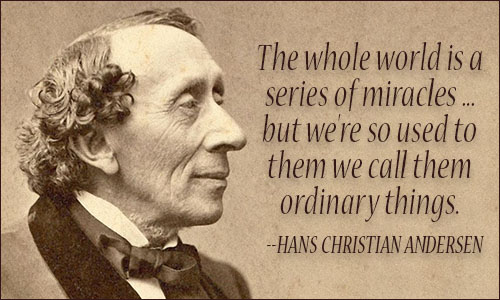
via Notable Quotes!
1. At Andersen’s baptism in Odense, Denmark, he had not one, not two, but six Godparents present at the event.
*
2. Though his family were quite poor, and his mother was an illiterate washerwoman, Hans’ father passed on a love of literature to the young Hans by reading to him from Arabian Nights. No wonder tales of wonder and amazement resonated with the author!
*
3. Hans’ first job was as an apprentice to a weaver, then a tailor. At fourteen, he left for the bustling capital of Copenhagen, to find work as an actor. He was accepted into the Royal Danish Theatre, but soon his voice changed due to puberty. His soprano voice no longer being what it once was he began to focus on writing, instead.
*
4. At only 24 years old (in 1829), Andersen published a short story “A Journey on Foot from Holmen’s Canal to the East Point of Amager” and enjoyed considerable success with it – so much so that it allowed him to finally consider himself a writer!
*
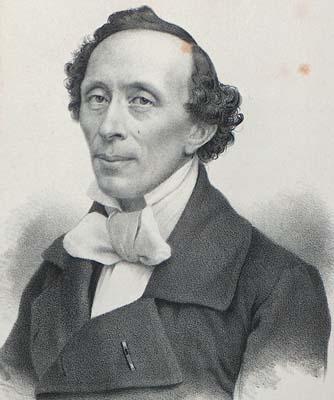
5. At age 30, Andersen published what would be the first of three installments of fairy tales. While some throughout the series are retelling of classic tales Andersen had heard as a child, for the most part they are brand new stories, all of his own creation. That makes Andersen unique when compared to other fairy-tale authors throughout the ages.
*
*
6. At first, critics were quite severe about Andersen’s fairy tales. They disliked his style, and being rooted in a didactic time such as the mid 1800s they did not believe that literature for children ought to amuse, when it could instead instruct. While Andersen did not share in this belief, as he felt that the critics were biased based on preconceived notions about the purpose and necessity of fairy tales, their detestation for his work did give him pause and caused a slight delay in the publication of the third volume.
*
7. The stories Andersen is most famous for writing are The Little Mermaid, The Ugly Duckling, The Snow Queen, and The Emperor’s New Clothes!
*
8. As Andersen was one of the first authors to write original fairy tales and not only transcribe them from the oral tradition, one could argue that he (along with a few others, like George MacDonald) set the standard for modern day fairy tales and the entire fantasy genre.
*
9. Andersen was also (like Dickens) a writer of travelogues and travel diaries! After finally achieving recognition for his fairy tales in 1845, in 1851 Andersen published his travelogues from his adventures in Scandinavia, calling it In Sweden. He followed it up with travelogues from Spain, Portugal and Swiss Saxony, among other notable places. As with his fairy tales, however, Andersen’s style was verifiably his own, and unlike other travel journals of the day. With his descriptions of the locales, he interspersed general philosophical questions and arguments, along with comments on life as an author and the fiction found in literary travel journals.
*
10. Andersen passed away on August 4th, 1875 from complications of a fall and signs of liver cancer. At the time of his death he was so revered by the Danish government for his tales that they were paying him an annual stipend, as he was considered a “national treasure.”
*

 ***
***

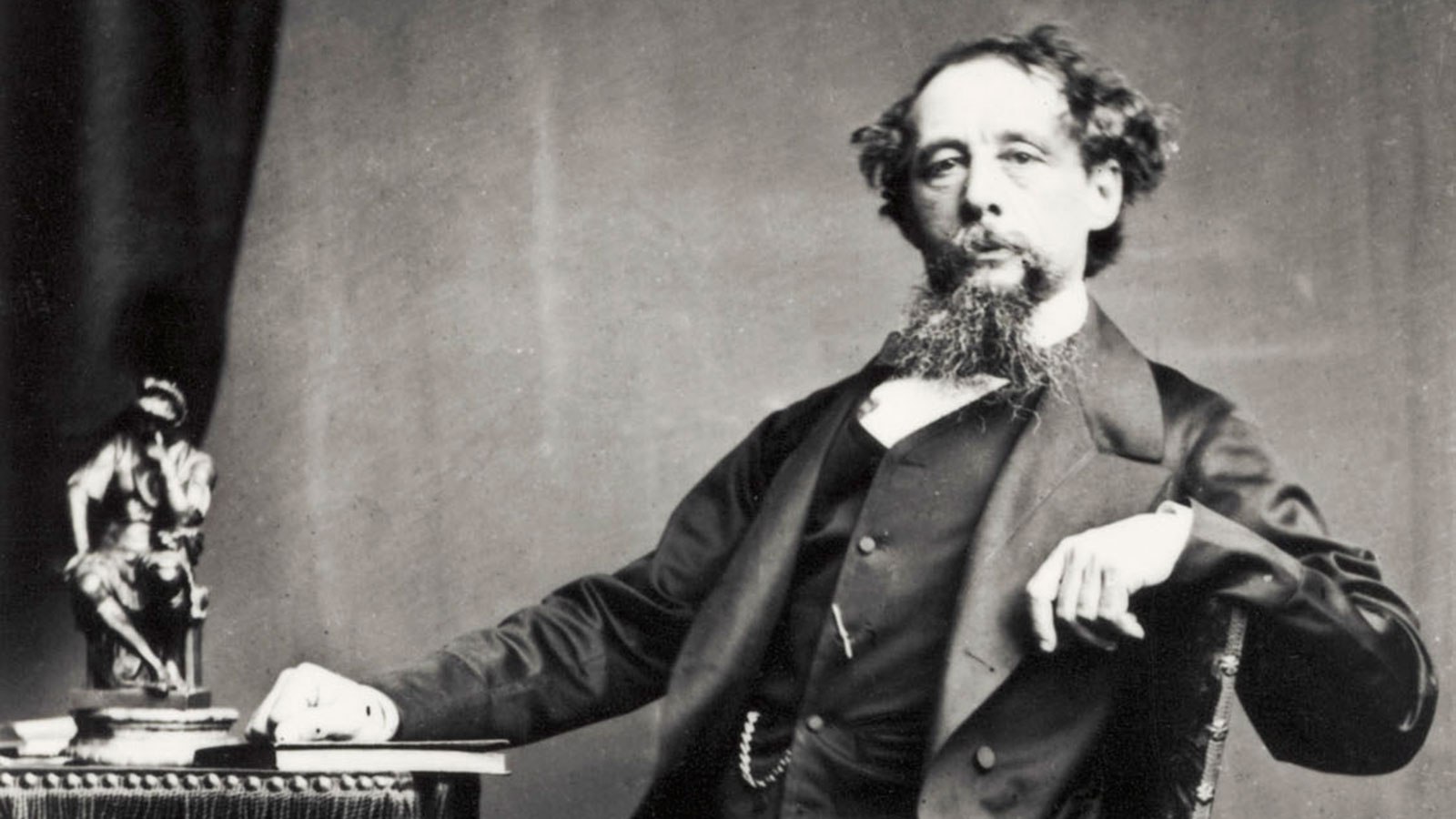
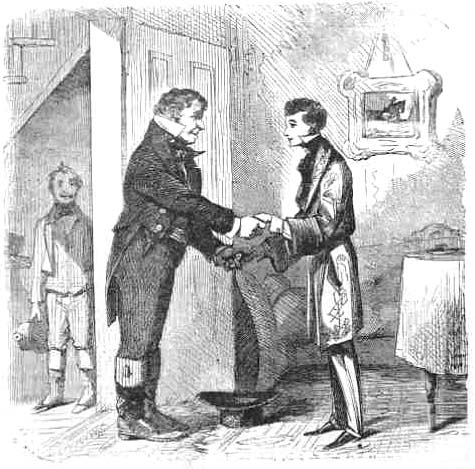 Starting with a short overview of the story (for the .000001% of you that have been living under a rock these past 160 years), we can come to look at the “expectations” housed within and see what we can decipher from the moral tale it holds. When young orphan Pip encounters an escaped criminal hiding in a churchyard one Christmas Eve, it gives him the fright of his life. The young boy is scared into thieving for the convict, and though the criminal is recaptured and clears Pip of suspicion, the incident colors Pip’s outlook on life. The young boy is sent to the house of the spinster and slightly mad Miss Havisham, to be used as entertainment for the lady and her adopted, aloof and haughty daughter Estella. Pip falls in love with Estella and visits them regularly until he is old enough to be taught a trade as an apprentice blacksmith. Four years into Pip’s apprenticeship, however, a lawyer arrives with news that Pip has anonymously been provided with enough money to become a gentleman. An astonished Pip heads to London to begin his new life, assuming Miss Havisham is to thank for his unexpected new windfall. Once in London the young Pip is introduced into some society, and makes new friends. His heart still belonging to Estella, he is ashamed of his previous life and expects his social advancement, new wealth and sudden social standing to sway her emotions towards him more favorably. It does not, Estella remains cold as ever, and Pip’s illusions are finally shattered when he realizes that his benefactor is not Miss Havisham at all, but the escaped convict Magwitch whom he helped in the churchyard all those years before. Through many mishaps and misfortunes, Pip and his friends attempt to help Magwitch escape England (which is ultimately unsuccessful), where he had returned to simply to make himself known to Pip. Pip learns valuable lessons throughout the story – interestingly not necessarily from those with money and social standing, but more often than not from those in his own class. The story has a kind ending, with Pip and an altered, warmer Estella walking hand in hand over a decade after her initial rejection of him (though Dickens originally planned a more likely, yet more disheartening end to the story and was convinced by Edward Bulwer-Lytton to change it).



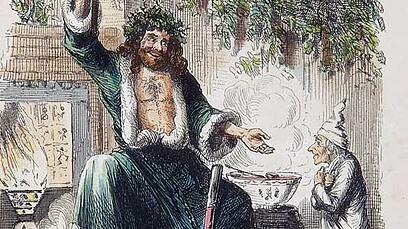
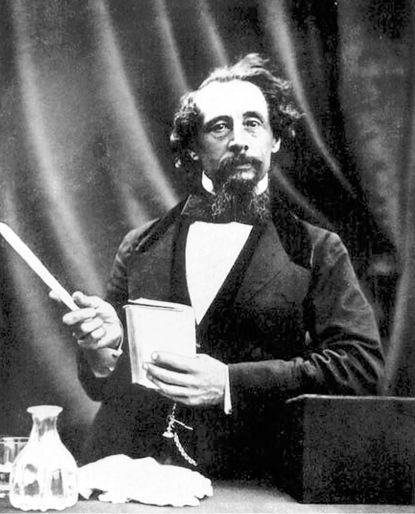 Before Dickens published A Christmas Carol (written in only a six short weeks, and published the week before Christmas at considerable expense to Mr. Dickens), he and his wife Catherine were experiencing your average hardships. They were expecting their fifth child, and supplications of money from his aging father and family, with dwindling sales from his previous works had put him into a tough financial place. In the fall of 1843, a 31-year-old Dickens was asked to deliver a speech in Manchester, supporting adult education for manufacturing workers there. His extreme interest in the subject (one that hit a bit too close to home, I believe) and his resolve to aid the lowly pushed an idea to the forefront of his mind – a speech can only do so much… to get to the crux of the matter he would need to get into the hearts, minds and homes of his readership and country. As the idea for A Christmas Carol took shape and his writings began, Dickens himself became utterly obsessed with his own story. As his friend John Forster remarked, Dickens