Category Archives: Uncategorized

The ABAA’s Northern California Chapter Annual Holiday Dinner… a Night in Pictures

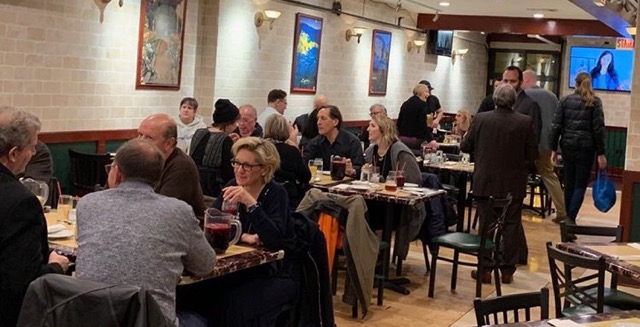
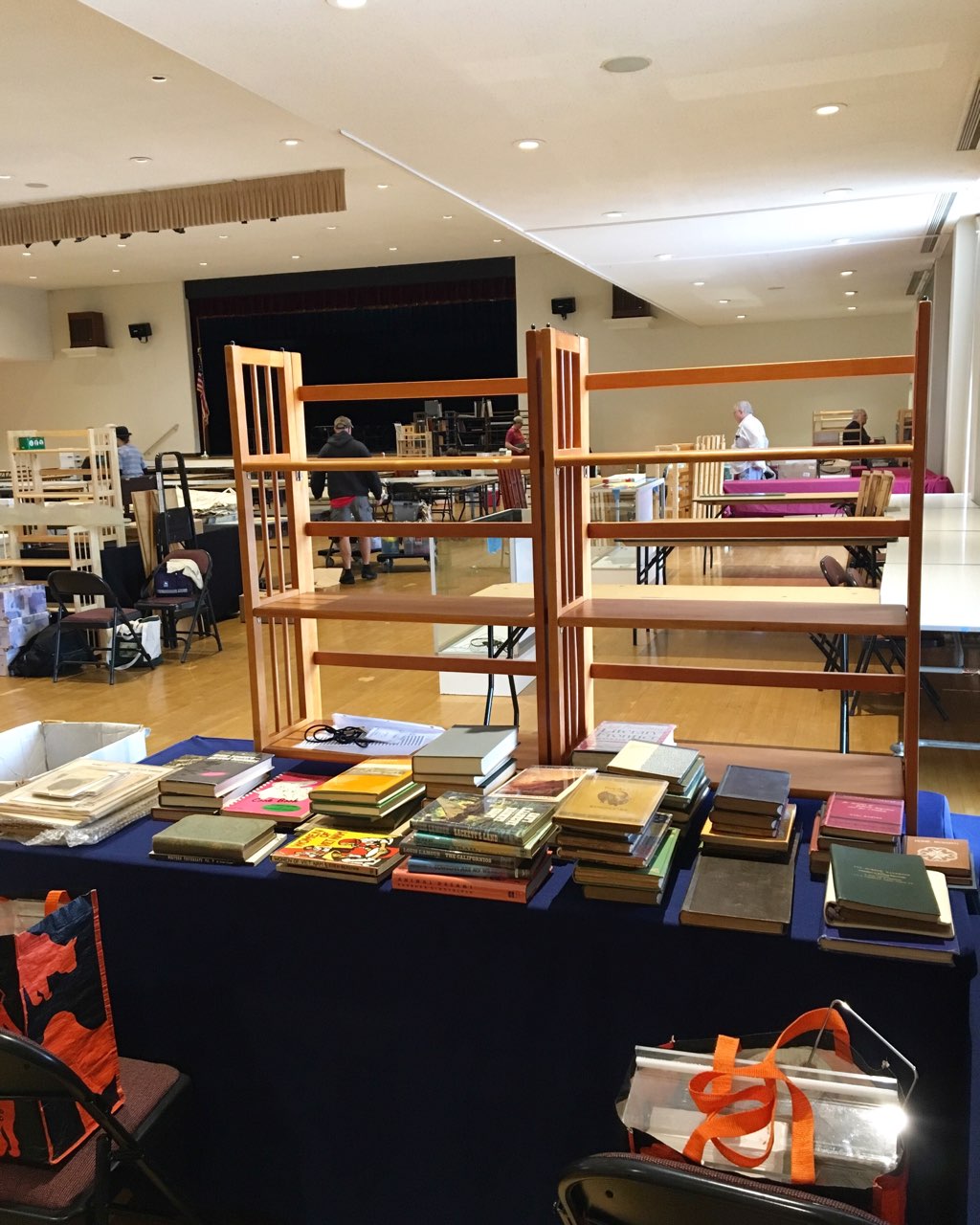
As many of you loyal Tavistock Books blog followers (mom, I’m talking to you) know, every year we here at Tavistock Books attend the annual Northern California Chapter Holiday Dinner – a night of fun and food, goings over of the years events as they relate to our chapter of booksellers, and the sharing of bibliophile joys and yearnings.

Instead of raking through an entire blog of minutes from this years shindig, we would like to provide some of the highlights and then tell the tale in images – as some people say that one image is worth a thousand words.

Strictly speaking, we here at Tavistock BOOKS simply don’t believe such tosh… but nevertheless!

The evening began typically with happy hour, and once seated for dinner and guests introduced, chapter Chair Ben Kinmont reported on several book fairs, including the York Book Fair, the fair in Chelsea (both in the UK) and the Boston Book Fair. Apparently the York fair is the hidden gem of the season! Also of note is the extended application acceptance for the California Young Book Collector’s Prize, which we reported on a couple weeks back. Some frightfully good submissions have already been sent in, but there is still time for the young book collector amongst you! Now the California ABAA chapters will be accepting submissions until December 15th, with the prize due to be announced in early January after careful consideration by our four judges! There were words from Michael Hackenberg and Laurelle Swan, comments were made on Andy Langer’s wonderful fastidiousness, and Secretary Alexander Akin passed out the minutes from the last Northern California Chapter meeting, which were approved readily (and firstly by our own Vic Zoschak), whereupon the raffle was finished and many went home with beautiful gifts of Giants tickets, bottles of lovely wines and spirits and gift baskets of snacks and goodies!

It was a wonderful evening surrounded by our fellow bibliophiles – enjoy the pictures and happy holidays to you and yours!

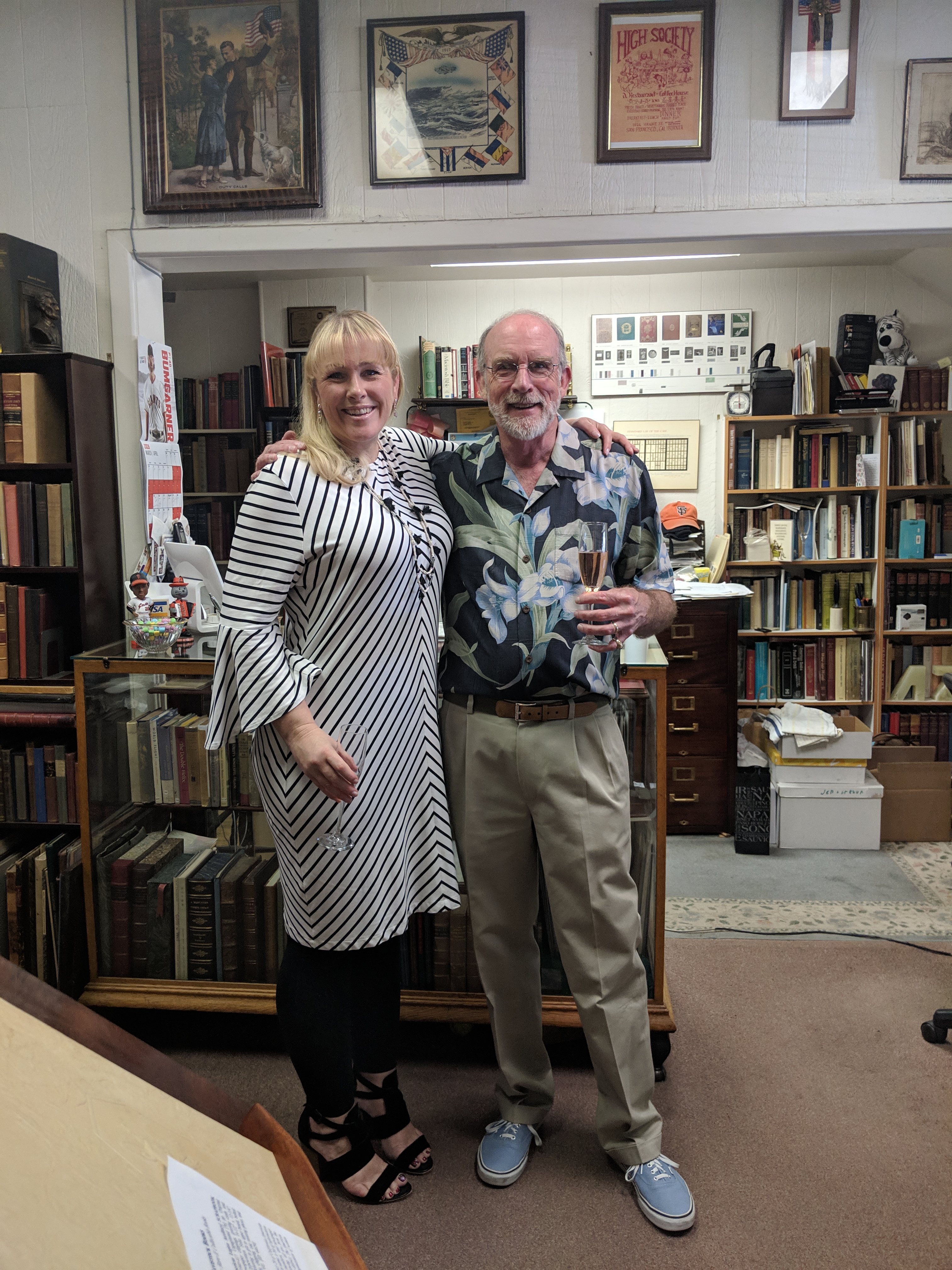
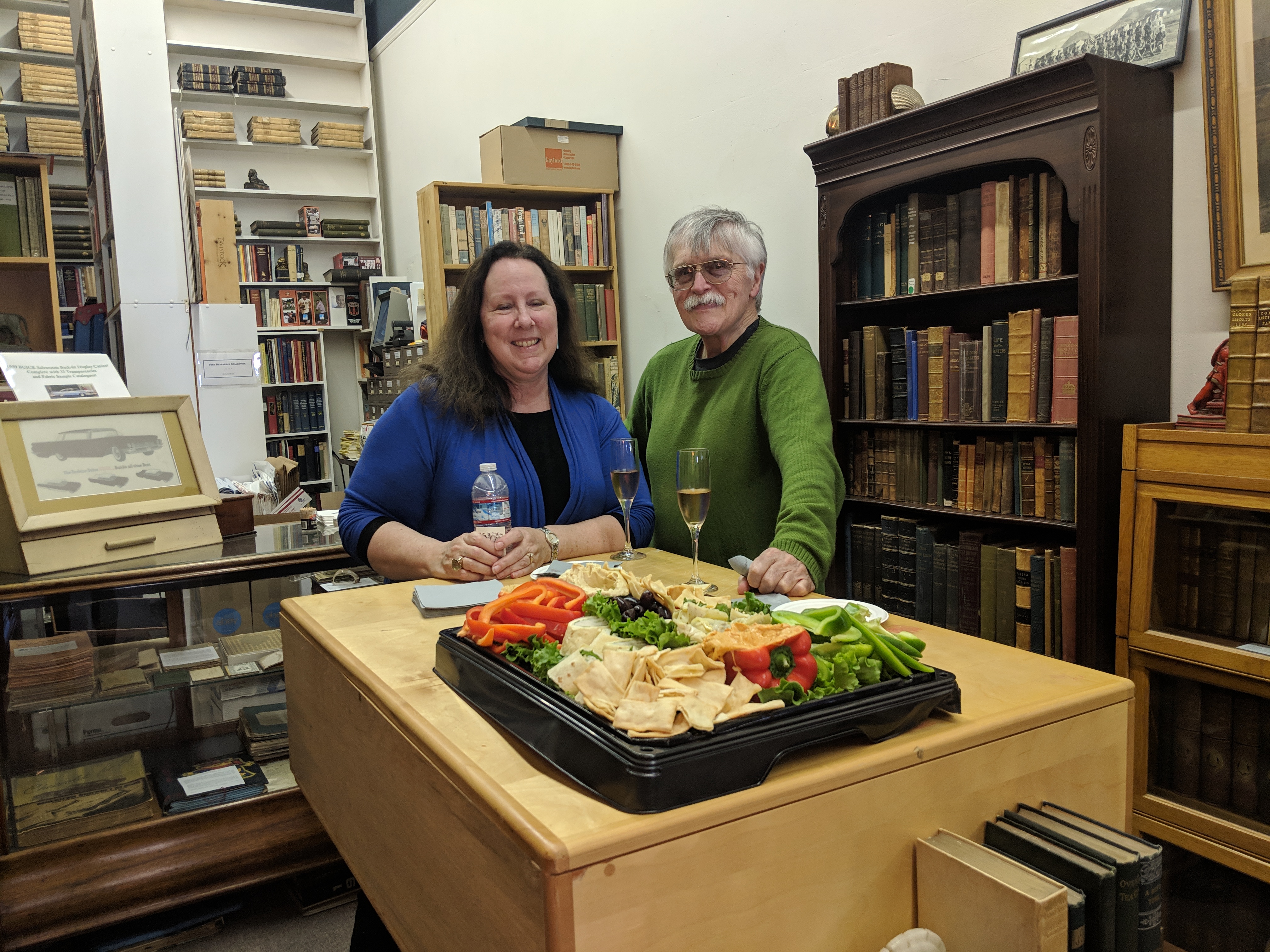
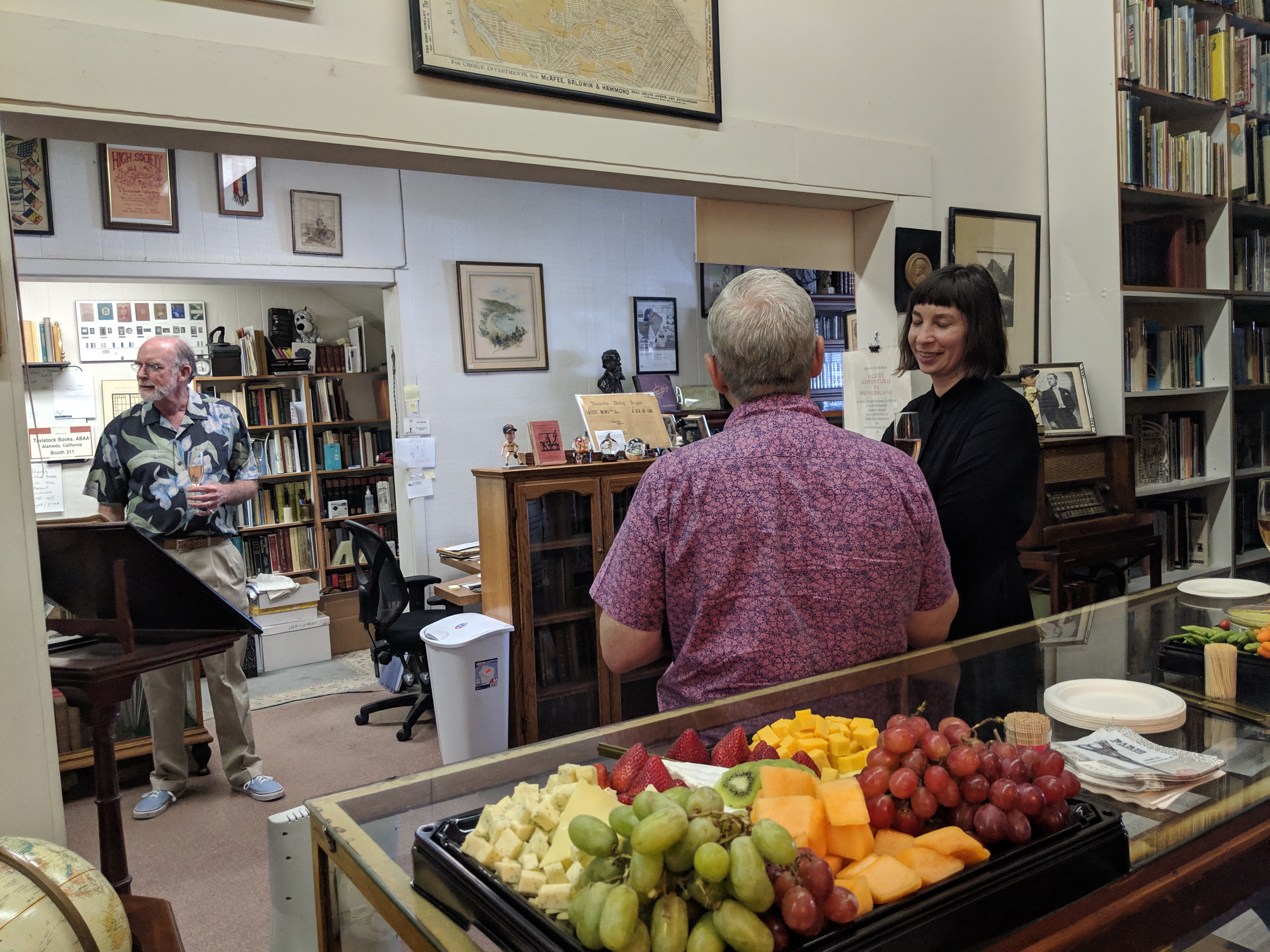
MVIMG_20181204_193046 MVIMG_20181204_193158 MVIMG_20181204_193240 MVIMG_20181204_193308_1 MVIMG_20181204_193314 MVIMG_20181204_194450 MVIMG_20181204_201551 MVIMG_20181204_201652 MVIMG_20181204_204835

Share

We Give Thanks

thankful

As those of you who don’t live under rocks are aware, around this time of year immense attention is placed on discovering what we are grateful for and giving thanks. We here at Tavistock Books are grateful for many things indeed – a finely mixed Manhattan, a wonderful dinner with like-minded bibliophiles… the San Francisco Giants. But most of all we are grateful for our customers. They keep our business, and passion, alive and kicking. Our customers vary widely – like most booksellers we connect with libraries, museums, bibliophiles and collectors on a daily basis. And it is one of these categories (though all are beloved) that we would like to bring attention to this holiday season – to young collectors in our state of California. 

Last month we reported on the National Collegiate Book Collecting Contest, which grants awards to collectors at University level that have put together rather outstanding collections at such young ages. Here in California, the Northern and Southern Chapters of the Antiquarian Bookseller’s Association of America have put together the California Young Book Collector’s Prize – a sought after prize to a young collector (age 35 and under, if you please) that shows the remarkable promise of being a great book collector – one that we will owe our livelihood and our profession to as years go by! 

As the ABAA chapters state, “All collections of books, manuscripts, and ephemera are welcome, no matter their monetary value or subject. The collections will be judged on their thoroughness, the approach to their subject, and the seriousness which with the collector has catalogued his or her material.” The prize includes a $500 credit to spend at the upcoming 2019 California International Antiquarian Book Fair, an exhibition space at the fair for their collection (as well as a stipend for exhibiting expenses), a years memberships to both the Book Club of California and the Bibliographical Society of North America, and a year long subscription to The Book Collector. This prize aims to celebrate the pleasure of antiquarian book collecting, and to bring understanding and awareness to others that this is an enjoyment that can be achieved by any – so long as you have the heart and the soul to do so! Congratulations to all applicants – you are one of the things we are most grateful for year-round. 

Screen Shot 2018-11-21 at 9.29.42 PM

Applications must be sent as a .PDF file to ABAA Northern CA Chapter Chair Ben Kinmont at bkinmont@gmail.com by December 1st, 2018 to be considered. Find out more information by emailing us or commenting! 

Happy Thanksgiving to All! 

(But you know, especially to our faithful book collectors.)

Share

OTD in 1960… Lawrence-1, Censorship-0!

NOTE: Please understand that this blog contains heavy subject matter and foul language. You’ve been warned. 

chatterley2

Censorship. A hated word in the bibliophile community. The very definition of the word seems off. Too… all encompassing. 

Censorship is defined as: “the suppression or prohibition of any parts of books, films, news, etc. that are considered obscene, politically unacceptable, or a threat to security.” Well now, from my own experience I can tell you that anything you write, anything you film, and anything you publish – it can and most likely will be offensive to someone. Someone, somewhere, will read your sentences with disdain. It is inevitable. It is why we have free speech. It is why you shouldn’t believe everything you read on the internet (including blogs). Censorship has won so many times over the centuries. How lucky we are to live in a country and be a generation that incorporates free speech and acceptance into our daily lives. If censorship was still at large, we would not be able to search anything we please on Youtube. We would be reading only what a small group of people we don’t know would be allowing us to read. Our President would not be allowed to post his every thought on Twitter.

Okay wait, perhaps censorship does have a silver lining.

My point is – by and large – a world without censorship (as it has been known) is far superior to a world lived in the dark. On this day in 1960, censorship truly lost an epic battle in London. D. H. Lawrence, Penguin Books, Lady Chatterley and literature won, despite the fact that Lawrence was no longer around to enjoy his success. In one day, Penguin sold 200,000 copies of the title that had been banned since 1928. Over the next few months, over 3 million copies went home with their newly adoring owners. So what did the trial in 1960 truly do? As Geoffrey Robertson for the Guardian states, “No other jury verdict in British history has had such a deep social impact.” Let’s find out why.

chatterley 3

Lady Chatterley’s Lover was privately printed for the first time in Florence in 1928. Due to illegal copying of the book, Lawrence arranged for a more legitimate publication of the book the following year in Paris. The British government immediately recognized its “disturbing” subject matter and the offensive language contained in the book – the opening prosecuting speech during the 1960 trial stated that “The word ‘fuck’ or ‘fucking’ appears no less than 30 times… ‘Cunt’ 14 times; ‘balls’ 13 times; ‘shit’ and ‘arse’ six times apiece; ‘cock’ four times; ‘piss’ three times, and so on.” Now, if you ask me… that’s just a list of dirty words. Perhaps the prosecution should have been censored, no? At least Lady Chatterley’s Lover had plot descriptions surrounding these words. In any case, Britain had spent the previous 30 years putting energy into keeping the book out of the country. So how did Penguin books win this battle in 1960?

chatterleyThe defense was aided in part due to the previous year’s 1959 Obscene Publications Act, which Parliament passed saying that in order for censorship to take place, the work in question would need to be considered as a whole – without singular focus on the dirtier bits. The prosecution did not fare well anyway, as, despite a conservative following not wishing to see the book in print and in the hands of anyone, lawyer Mervyn Griffith-Jones called no witnesses to support his argument (as no one agreed to stand for the prosecution) and merely suggested that the book had no literary merit. The defense, led by Gerald Gardiner (who would a mere four years later become Labour Lord Chancellor), had rather a different angle. He stated that the book did have merit, that Lawrence wasn’t simply writing smut, but attacking the “impersonality of the industrial age and loss of personal relationships… he was extolling the life-giving importance of romantic and sexual intimacy” (The Telegraph). Gardiner called 35 witnesses to his side – big wigs in academia and literary worlds. He even had a Bishop – the Bishop of Woolwich, who wrote that, though Lawrence was not a Christian himself, he was “portraying the act of sex as something valuable and sacred – as an act of communion” – he went so far as to say that Christians could easily read this title. 

Let’s face it… Griffith-Jones did not stand a chance. 

The trial began on October 20th, 1960 in the Old Bailey’s Court No. 1. The jury held nine men and three women, and though the judge offered the defense to remove the women from the jury and the court, Gardiner refused and wished the women to stay. The entire trial lasted only 13 days (ending on November 2nd), and deliberation lasted only 3 hours. Penguin Books and Lady Chatterley’s Lover came out on top. Fifteen minutes after Penguin Books was found not guilty, Foyle’s bookshop in London had taken in orders for over 3,000 copies. On November 10th, 200,000 copies sold. As the Telegraph muses, “The result of the trial was an instant liberalization of attitudes toward publishable material. But its impact went much further. It started the process of breaking down taboos around sex – a movement that would culminate in the sexual liberation of the 1970s – and it changed the stuffy and outdated prism through which the class system was viewed” (The Telegraph). 

We couldn’t have said it better ourselves, and we are so glad that we have the ability to report on this case, and celebrate the fact that due to this novel, due to this trial, we all live in a more liberated and free world. 

chatterley 4

Share

The 2018 National Collegiate Book Collecting Contest

Some of you may not know this, but our fearless leader Vic Zoschak Jr., owner of Tavistock Books, is the current President of the Antiquarian Bookseller’s Association of America. In our eyes there could be no more fitting president, as Vic has always spent a great deal of time, his finances, and effort to ensure that the upcoming generations of booksellers have all the knowledge and understanding of what it takes to become a truly great collector and bookseller. He supports fundraisers and donates, he awards scholarships so that those without the financial stability to attend courses and lectures are able to do so, and he is a large proponent of being “the job.” The man positively eats, sleeps and breathes bookselling. (And manhattans. And the San Francisco Giants. But mainly bookselling.)

It is no surprise then that he would like us to bring a little attention to the recent (just this past Friday) 2018 National Collegiate Book Collecting Contest – a contest established in 2005 by Fine Books & Collections Magazine to highlight, bring attention and awareness to young book collectors across the country, as they are the upcoming generation of people who will support the antiquarian book world – whether as collectors or perhaps even booksellers themselves! Too often we hear (mainly from people outside of our world) that books are going “out of fashion” – did you know another Barnes and Noble bit the dust?? Yes, yes – we know. However, we would like to argue that (despite other, somewhat unrelated difficulties of the act of reading being pushed aside in favor of our fast paced world of technology) rare books should only become… rarer. Collectors are collectors for life – booksellers are booksellers for life. So long as these young people continue doing what they are doing, our world will continue to survive. So without further ado, let’s bring a little light to this contest and the 2018 winners!

A previous year's ceremony. Photo not taken by Tavistock Books.

A previous year’s ceremony. Photo not taken by Tavistock Books.

As we said, the contest was begun by Fine Books & Collections Magazine, but is now jointly sponsored by the ABAA, the the Fellowship of American Bibliophilic Societies (FABS), the Grolier Club, and the Center for the Book and the Rare Books and Special Collections Division (the Library of Congress), with prizes underwritten by the Kislak Foundation. This institutional collective work hard to ensure that college and university students are recognized in their own right as collectors. First, competitions are held at almost 40 schools nationally, and the prizewinners are all encouraged to enter the National Competition, which picks four winners from the lot. Entries are accepted until early summer (usually in June) and the winners for 2018 were picked just last week. The event (held last week at the Library of Congress) includes an awards ceremony, a program, and a reception – and is free and open to the public. 

Though we in California were unable to attend, this year’s ceremony featured featured a talk given by Glen S. Miranker, “an avid bibliophile, a preeminent collector of Sherlock Holmes material, and former Chief Technology Officer at Apple” and was, no doubt, a success! Without further ado, we would like to praise the following winners of the 2018 National Collegiate Book Collecting Contest! 

First Prize: Samuel Vincent Lemley, of the University of Virginia for his collection of Biblioteca Genealogica: Sicilian Printing, 1704-1893

Second Prize: Paul T. Schwennesen of the University of Kansas for his collection, Borderlands: A Manifesto on Overlap

Third Prize: Hanaa J. Masalmeh of Harvard University for her collection – Far From the Eyes, Far From the Heart: My Life as a Syrian-American Muslim

Featured Essay: Ena Selimovic of Washington University in St. Louis – Ja, Ben, I, Je: A Book Collection in Translation

Once again, the ABAA is absolutely thrilled to be a part of this collective offering the chance for young collectors to be recognized – they truly are one of the many important reasons why we do what we do. Well done!

Share

OTD in 1891…

melville1

Moby-Dick is, undeniably, a classic American novel. But did you know that at the time of its publication it was considered a total flop? In fact, Melville’s prior novels (which some of you may never have even heard of) did much, much better in American critical literary society than Moby-Dick. Readers could not see past the complexity of the novel – they were expecting an adventure tale and what they got was “obscure literary symbolism.” I always find it humorous (though I am sure it wasn’t humorous to Melville) when a work that is today considered of the highest class was at the time frowned upon. The old Picasso problem, right? At least due to these instances we understand what genius looks like at the beginning, no?

melville4Herman Melvill (yes, that spelling is correct) was born in August of 1819 in New York City. He was the third of eight children born to a merchant and his wife. Though his parents have been described as loving and devoted, his father Allan’s money woes left much to be desired. Allan borrowed and spent well beyond his means, and after contracting what researchers imagine as pneumonia on a trip back to Albany from New York City, he abruptly passed away when Herman was merely 13 years old. Herman’s schooling ended as abruptly as his father’s life, and he was given a job as a clerk in the fur trade (his father’s business) by his uncle. Sometime around this time, Herman’s mother changed the spelling of their last name by adding an “e” to the end. History is still unsure as to why she would have done this – to sound more sophisticated, to hide from debt collectors… we may never know! But that simple “e” will live on forever, that is for sure.

melville3In May of 1831 Melville signed up as a “boy” (a newbie, for all intents and purposes) on a merchant ship called the St. Lawrence, and went from New York to Liverpool and back. That experience successful (and what with a longstanding obsession with the true story of the search for the white sperm whale called Mocha Dick), he decided to join the Acushnet for a whaling voyage in 1841. After a few months on board, Melville decided to jump ship with another deckhand in the Marquesas Islands after several reported disagreements with the captain of the ship. Expecting to come across cannibalistic natives, Melville was (unsurprisingly) pleased to find out that the natives were accommodating and friendly – a fact which he would later address in his 1845 novel Typee – semi-autobiographical in nature as it was based on his stay in the islands. Melville then experienced island and country hopping to an extreme degree, after boarding a boat from the Marquesas to Australia then continuing on whaling and merchant vessels visiting Tahiti, Oahu, Rio de Janeiro and Lima, Peru – among others. Eventually, Melville ended up back in Boston, Massachusetts.

Between the years 1845 and 1850, Melville experienced substantial success as a writer. His first novel Typee performed well in both public and critical arenas, and its sequel Omoo (also based on his time in the islands) performed almost equally as well. During these years Melville won the hand of Elizabeth Shaw in marriage, which throughout the years would give him four children – two sons and two daughters (though only the daughters would live to adulthood). Melville followed Omoo with novels Redburn and White-Jacket – both successful enough in their own right to afford Melville the opportunity to buy his beloved home Arrowhead in Pittsfield, Massachusetts, which was an inspirational setting for his writing. It was here that he wrote Moby-Dick, or The Whale – which started as a simpler story on a fictional whaling event and eventually (with the aid of Melville’s friend Nathaniel Hawthorne, who had recently enjoyed success with his novel The Scarlet Letter) turned into the allegorical novel it came to be. As a matter of fact, Melville dedicated what is now considered his most enduring work but became the flop that threatened to break his bank account to this friend and colleague.

melville5

After the unfortunate reception of Moby-Dick – it seemed a bit too far-fetched in style and meaning for its audience – Melville was forced to sell his home in Pittsfield to his brother and move his family back to New York City, where he took up work as a district inspector for the U.S. Customs Service. Though his writing took much of a backseat at this time (roughly 1857 to the late 1870s), Melville continued to write poetry throughout his lifetime, up until his death from cardiac arrest on September 28th, 1891, when he was 72 years old. His last work Billy Budd he had stopped working on in 1888, but was found accidentally and published posthumously in 1891 – and today holds great esteem as yet another wonderful work by a misunderstood great American novelist. Today, 127 years to the day of Melville’s death, we are glad to have a chance to study and appreciate his work today. And if you haven’t yet read Typee – we greatly recommend it!

melville2

Share

Report on the Sacramento Antiquarian Book Fair, Pt. II

Answers by Samm Fricke

IMG_4351

So Samm! This is (a bit confusingly) your second Sacramento Antiquarian Book Fair. Could you tell us a bit about your experience, prep and overall impression of the previous Sacramento fair you attended in March of this year? For those of you that don’t know, Samm was brought onboard the Tavistock Books train (what seemed like) mere minutes before this past spring’s Sacramento Book Fair.

Last Sac Book Fair was quite overwhelming for the first hour of set up.  As I was loading in, taking in the surroundings and meeting everyone Vic brought to me saying “This is my new assistant Samm!  Samm this is ….”.  All at the same time! Lots of info and names. But after about an hour of watching other vendors set up booths I was beginning to get a feel for it and settle down a bit. As for the opening of book fair to the public, that was the more easier part as I have done so much book retail in the past, but these were people with more niche interests rather than what I have known of “I’m just looking for a good beach read”.  

How was this last weekend’s fair different from the fair in March for you? Do you feel more at ease with Tavistock’s wares and in the antiquarian book world in general? We know you come from a book background, but we also know that the antiquarian book world is a horse of an entirely different color!

I thought this past weekend was much easier!  I knew where the booth was, I knew our booth mate (Hey Chris!).  The faces of collectors and vendors were more familiar.  I knew where the bathroom was and when was the best time to order food was! Ha! Because I knew vendors a bit more, and they have now seen me, emailed with or talked on the phone with me I was more comfortable making small talk at their booths.  Surprisingly to some, but I am pretty shy! 

As for the wares of Tavistock, yes much more at ease!   And more comfortable discussing product and assisting collectors find items that may interest them.  Knowing the stock is always good, which was not the case last fair!

How did you find turnout and other sellers’ wares? Did any items of note catch your eye?

I only have the last Sacramento Book to compare, but I did think the turn out grander. At the end of the fair Jim Kay got on the mic and said it was the best fair turnout yet – a new record had been set! So shoutout to Jim for doing an awesome job. Perhaps by March 2019 I will have my name tag! *wink wink*

Vic bought a lot of cool items there, more than last year even! (Didn’t think it was possible, but that just shows how much I know.)  You can see them when you sign up for our New Acquisitions Newsletter! (Yes, that is a plug… and yes, you can sign up for it on our website!) As for me, there were a few items that were of interest, though I am not in the position to spend the big bucks on them yet. However, I made many mental notes!
What will be the next fair you are excited about and what do you hope to learn or accomplish before then?

Oakland! I am very, very excited about the Oakland Book Fair in February. Just seeing all the amazing items at Sacramento, I cannot wait to see what an international fair brings! Also, being local means packing and load in won’t be too bad.  

I am trying to have a better grasp on our stock so I select the most interesting items to bring that will also show Tavistock’s interest best! 

We certainly won’t! Thanks, Samm!

Share

Report on the Sacramento Antiquarian Book Fair, Pt. I

by Vic Zoschak, Jr.

IMG_1981

                              Dinner at Roxy’s could tempt us all!

Reading colleagues’ comments with regard to the recent Brooklyn event, allow me to put in a plug for the Sacramento Antiquarian Fair, held this past weekend.  A semi-annual event, hosted by Jim Kay, I suspect it doesn’t have the panache of Brooklyn, but that said, it has come to be beloved by those of us on the west coast, drawing exhibitors from both ends of the coast, not to mention a fellow bookseller who routinely makes the trek from out Utah way…  that said, despite the close proximity of Sacramento, I suspect David flew east for the weekend, for the local event definitely has a Californiana bias in exhibitor offerings, and that not David’s metier ime, but it is one of mine. Given that, from an ABAA colleague I bought a [what I consider to be] fantastic item: an 1853 Sacramento Directory, and as I recall, the second Sacramento city directory ever published, this one an inscribed presentation copy from the publisher to the man considered to be Sacramento’s first mayor.  Plus *bunches* of other neat stuff, filling over two boxes, and occasioning Samm’s questioning look: “How the heck are we going to get all this stuff in the car?!?”

I have no doubt the food & beverage choices in Brooklyn are myriad, however, I’d stack up the fair’s local concession’s Chicken Pesto sandwich against any comer offered elsewhere [Taylor, feel free to offer your thoughts here  😉 ].  And the pre-fair, post-setup Friday night dinner at Roxy has become traditional, this time around, shared with 9 colleagues… Chuck, Roxy’s Manhattan might even tempt you.  

So, it seems we have two credible regional events on this same weekend in September, and for that I’m thankful.  Here on the West Coast, we’ve lost so many regional fairs over the last decade or two that it’s gratifying this one is thriving [I understand a new fair attendance record was set yesterday].  Further, Jim tells us it’s here to stay as long as he is.  I should add, it’s relatively inexpensive to exhibit… my half-booth, with display case, was a modest $385.

Finally, I personally like the fact that the Sacramento show is a one day event.  I got home last night by 7 pm, slept in my own bed, and today, get to watch Jimmy G & cast take on the Vikings… in other words, no standing around in the booth on a quiet Sunday, hands in pockets, watching the clock sloooowly make its way towards 5 pm.

Very civilized, promoters please take note.

V.

Share

MRT: A Reminisce

thompson

Michael Thompson, photo courtesy of ILAB.

This past Saturday, the ABAA’s Southern California Chapter held a memorial for our recently departed colleague, Michael Thompson.  Through the good offices of Brad Johnson, my following remarks were read, as I was unable to deliver them in person.  I offer them here too, in an effort to pay wider homage to our dearly beloved friend.

I suspect that I’m like most of you here today, in that I knew Michael for over 2 decades, our acquaintance first being made, as I recall, in the mid-90s, at one of the then bountiful California book fairs.  We recognized in each other a kindred spirit, that is, we both loved the ‘hunt’ for books, and it’s in that vein I’ll relate a story from the late 90s that, I believe, epitomizes Michael’s joy in bookselling…   

One summer, we decided to share a booth at Rob Rulon-Miller’s Twin Cities Book Fair.  Like most regional fairs, Sunday morning that weekend was, shall we say, slow.  Standing idly in our booth, hands in our pockets, Michael looked over at me and inquired,

“Mind holding down the fort?  I’m gonna wander around for a bit.”

“No problem,” say I, “take your time.”

20 minutes later, I see Michael purposely striding back to the booth, clutching a little … something, in his left hand.

Entering the booth, smiling triumphantly, he exclaimed, “I just made my weekend!”

“Do tell!”

“Do you know what this is?” he queried, waving the little pamphlet, leaflet.. I couldn’t quite discern which.  “It’s the press announcement for Saul Marks’ Plantin Press!  I’ve never seen it before, and what do you know, I find this LA item in Minneapolis!  For twenty bucks no less!”  He grinned, and continued, “Young man, just remember, anything can be anywhere!”

Well Michael, I’ve never forgotten that advice given decades ago, just as I’ll never forget you.  Godspeed my friend, may you enjoy this new journey on which you’ve embarked with as much joy as that you experienced in the one just finished.

Share

The World’s Most Beloved (and Criticized) Family of Bears

bears6

If you are a 90s child like myself (or a 70s child, or an 80s child, or a 2000s child…or even a 2010s child), I can guarantee that you know a family of bears… that live in (pretty much) the coolest treehouse ever… and whose sister and brother magically (almost) always get along. I grew up envying this small family and their adventures in pumpkin patches and at school. (So get to the point, you say?) Well today we thought we’d do a short feature on our favorite (fictional) family of bears… the Berenstain Bears, in honor of Jan’s birthday anniversary!

The Berenstain Bear family and franchise was created by Jan and Stan Berenstain in 1962, and has since become a series of over 300 titles. Since 2002, Jan and Stan’s son Mike continues the tradition by authoring the titles. A full family project, in a sense! Let’s see how it all came about…

bears5In 1941, Janice Grant and Stanley Berenstain met on their first day at the Philadelphia Museum School of Industrial Art and became close very quickly. At the onset of World War II, they took up different war effort posts (as a medical illustrator and riveter), but were eventually reunited and married in 1946. They found work as art teachers, then eventually became co-illustrators, publishing works like the Berenstain’s Baby Book in 1951 followed by many more (including, but not limited to Marital Blitz, How To Teach Your Children About Sex Without Making A Complete Fool of Yourself and Have A Baby, My Wife Just Had A Cigar). In the early 1960s the Berentain’s first “Berenstain Bears” book made it to a very important colleague and publisher – Theodore Geisel – or, as some of you may remember from our somewhat recent blog, Dr. Seuss! 

bears2Geisel traded ideas with the Berenstains for over a year – until he finally felt like they had a marketable product for the American public. In 1962, The Big Honey Hunt hit shelves across the USA. The Berenstains were working on their next book – featuring penguins – when Geisel got in touch to say another bear book was needed by demand, as The Big Honey Hunt was selling so undeniably well. Two years later The Bike Lesson came out… which began a waterfall of publications… at least one a year since then, but typically more than a few. A record 25 Berenstain Bears books were published in 1993 alone! Six titles have already been published in 2018. The immediate success of the Berenstain Bears lead to a situation not unlike the popular Hardy Boys series or Nancy Drew’s popularity – only for a younger age range and with a somewhat different tone. Not to mention all written and illustrated by the same authors, at least until Mike Berenstain took over the franchise in 2002. Jan and Stan were quite a busy pair for a number of years!

bears1

bears3

Jan and her son Mike, the now author of the series.

Now why were the bears as successful as they were? Though some criticism has fallen on the books over the decades for its “formulaic” and “syrupy” tone, the books have also seen 35 titles in the Publishers Weekly top 250 titles of all time, and 15 titles in the top 100 Children’s Paperbacks. As an educational series (each title dealing with a somewhat moral or educational lesson for youngsters) it has received many accolades. However, as stated the series has also received criticism for being outdated and perpetuating stereotypes from its beginning. That being said, I do not believe that anyone, even those critical of the texts, can deny the obvious influence they have had on children and families… for decades! The bears provided a learning ground for warm and cuddly (if only mildly didactic) lessons for young children in the United States.

And the rest of the world. Because it has been translated into 23 languages. 

Happy Birthday to Jan Berenstain and the family of Berenstain (NOT “Berenstein”) Bears – Mama, Papa, Brother, Sister and Honey!

(…How come Honey gets an actual name?)

bears4

Jan & Stan working in their studio with sons Leo and Mike. One big happy family!

Share

Highlight on the 2018 Tavistock Books Educational Scholarship Winner Ellen Saito and her business, Excelsa Scripta Rare Books!

9

The 2018 Tavistock Books Educational Scholarship Award Winner Ellen Saito and Bibliography instructor Joel Silver this month at RBS.

***

Welcome, Ellen! As the latest recipient of the Tavistock Books Educational Scholarship to Joel Silver’s course at RBS, what were you most excited about, in terms of RBS? The class? Meeting more like-minded people?

Thrilled to secure the Tavistock scholarship, I was elated to attend this course as my first choice by far. For months, I was in a tizzy of anticipation of this course, ESSENTIAL to everyone in the rare book world. It was most exhilarating to meet Joel Silver, prominent librarian, kind and generous teacher and master storyteller, who shared his discerning knowledge of 350+ top rare book research sources, including their free websites and affordable reprints. Develop your inner librarian; you, too, can be privy to any topic related to rare books. Your lost invitation to a secret society for smart, down-to-earth and humorous adults has been found. You are most welcome to join this warm, embracing community. Applicants are sought. Scholarships and affordable housings abound. It is a bargain. Invest in yourself!

5

***

What is your general impression of RBS? Did things run smoothly, were people enjoying their classes and themselves? Etc.

6RBS provides you with the ultimate learning environment. The faculty is a who’s who of rare book experts, who unselfishly divulge their secrets, meant to be shared further with others. Students are free to select their favorite course(s) only, but once you experience this wonderful place, you will want to return soon and often. There is no competition, no cramming, no grades. This is learning at its best. Hint: get to know your peers; they will be delightful and VERY helpful to you. The RBS staff made hard work look easy; everything ran without a hitch. People enjoyed their chosen course, each a shortcut to expertise garnered over a lifetime. Casual, well-attended get-togethers formed naturally during breaks; people were very happy to be there. It felt like a week-long vacation from reality.

***

10

***

How did you like the course? As you, but possibly not everyone, knows – Vic offers a scholarship to this amazing Bibliography class every year! We love to see booksellers taking the time and effort to cite their sources properly – one mark of great bookseller, in our opinion! How did you find it?

Joel Silver.

Joel Silver.

I learned of the RBS at the Colorado Antiquarian Book Seminar (CABS) and enjoyed the course immensely! You might expect Joel Silver, professor of librarianship, to have a vast and deep database of detailed and accurate knowledge of all things book-related in his laptop. Wrong. It is all committed to MEMORY. Well worth the time, effort and tuition, this course is an excellent introduction to the RBS: just take notes as you like, while Joel Silver instructs you and keeps you laughing with astonishing real-life stories. Explore the clear RBS website. The RBS staff is truly helpful, so call in or email any questions. The online application requires a personal statement and CV, then you write an essay for Joel Silver – that’s it. You are considered for all RBS scholarships. Outside scholarships are available.

***


The beautiful gardens at Monticello - Thomas Jeffersons home, just a short drive from RBS.

The beautiful gardens at Monticello – Thomas Jefferson’s home, just a short drive from RBS.

***

Did you hear about any courses that were of interest to you you’d like to pursue in the coming years?

I am most interested in twelve courses: Introduction to Bookbinding, Introduction to Descriptive Bibliography, Illustration to 1900, Printing to 1800, Introduction to Typography, Provenance, Forgery (detection), Collection Development, Indigenous Sovereignty, Book History 200-2000, Introduction to Illuminated Manuscripts and English Handwriting 1500-1750. I am currently doing the reading for Printed Books to 1800.

***

Screen Shot 2018-06-21 at 11.04.17 AM

***

Tell us a bit about your business!

Excelsa Scripta Rare Books, where “excelsa scripta” is Latin for “sublime writing,” is an online boutique bookstore specializing in social justice as a source of inspiration, while reaching back over the centuries. Emphasis is placed on historically significant books about striving for social and economic equality in a safer, more civilized world with better protection of freedoms and rights. Subjects that are prioritized include, but are not limited to: Women’s History, Black History and topics addressing civil disobedience, disability, poverty, L.G.B.T.Q., Native Americans, racism and ethnic cleansing. First editions in original bindings prevail. Expect truth in advertising and attention to customer care. Eco-friendly packaging products make use of recycled, renewable and biodegradable materials to support sustainability.

Thank you, Ellen!

More information on the scholarship can be found here.

Share