Category Archives: Collecting

Come to Pasadena, for There You’ll See…

Screen Shot 2016-01-19 at 10.00.04 AM

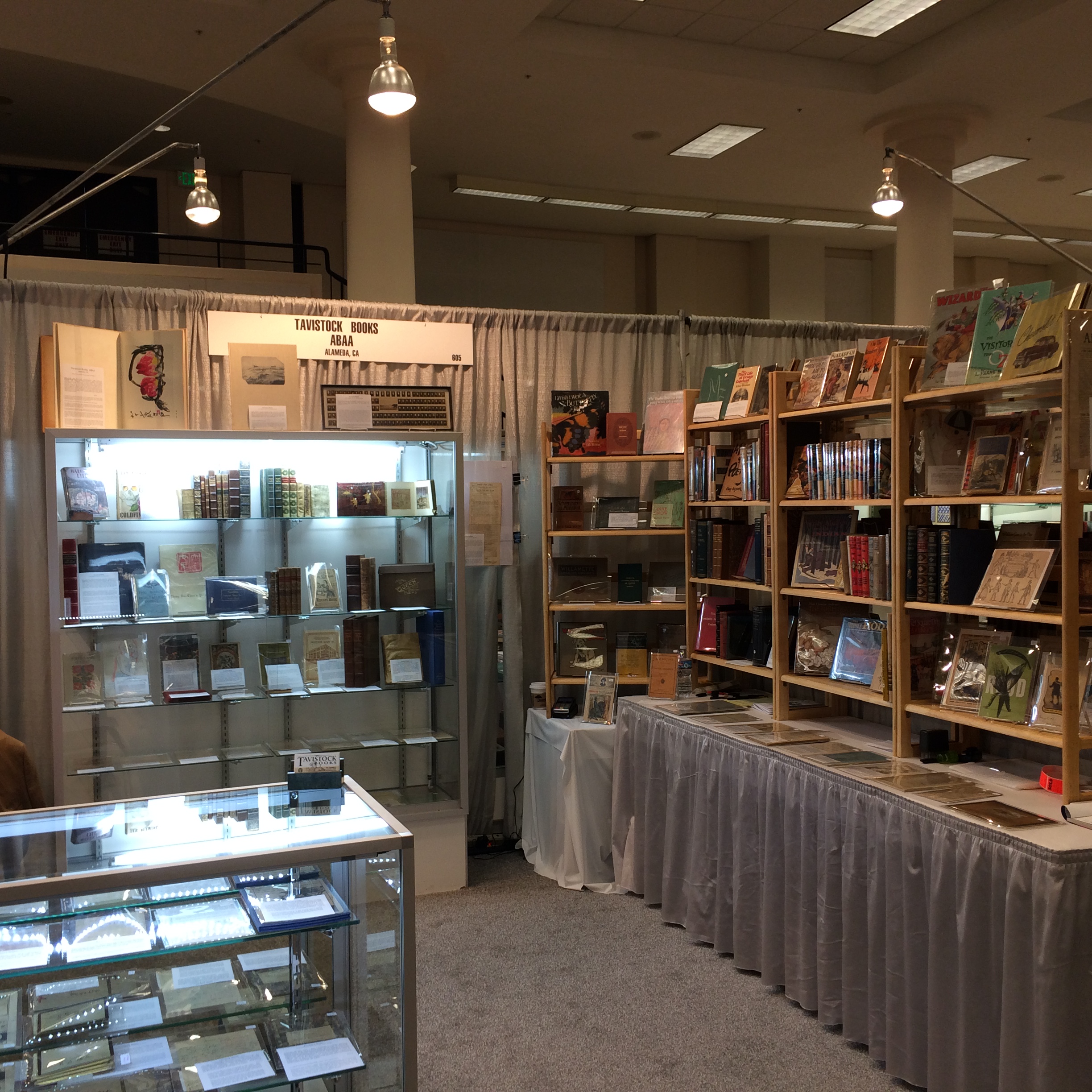
We are exhibiting at the Pasadena ABAA Fair! If you have a chance to come check out Booth 418 while you’re there (February 12th-14th at the Pasadena Convention Center), here are some of the goodies you can hope to find. See anything else on our site you’d be interested in perusing? Shoot us an email! We’d be happy to bring it down just for you.

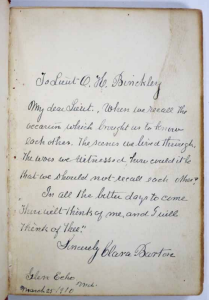
Check out this 1st edition, inscribed copy of Clara Barton’s “Story of My Childhood” – published in 1907. Now housed in a custom red quarter-leather slipcase with marbled paper boards… As Barton is perhaps the most well-known nurse in American nursing history (organizing the American Red Cross and all), this is a must-have for any nursing collection! See it here>


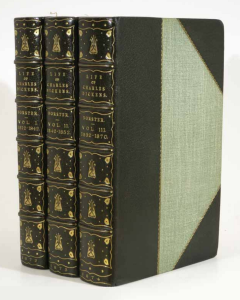
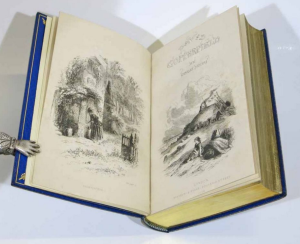
Screen Shot 2016-01-19 at 10.00.15 AMAn attractive, Near Fine set of Forster’s “The Life of Charles Dickens” – all first editions! Published between 1872 and 1874 by Chapman & Hall, these volumes are beautifully set in early 20th century three-quarter green morocco bindings and green cloth boards. Love Dickens? Look no further than here>


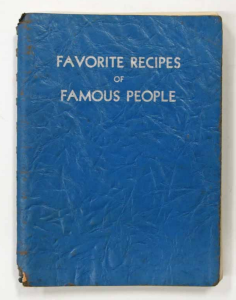
Screen Shot 2016-01-19 at 10.00.50 AMFor the celebrity groupie in the Southern California crowd… we have a scarce cookery book published in 1936. “Favorite Recipes of Famous People” contains favorite recipes of, according to its compiler Felix Mendelsohn, “famous chefs and maitres, by stage folk and screen stars, by newspaper men, columnists, opera stars, musicians and leading household economists, in fact by glamorous personalities in every walk of life.” This cookery book only shows 4 holdings on OCLC! Get it while it’s hot>


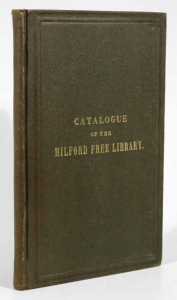
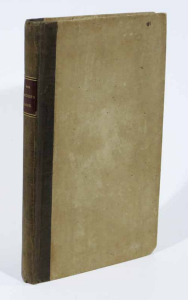
Screen Shot 2016-01-19 at 6.46.50 PMA book fair wouldn’t be complete without a little bit of library history! Have you seen our Catalogue of the Milford Library yet? This is a rare 19th C. catalogue from this small-town free library, formed in 1868. OCLC records no holdings of this edition (can you say “Score”?), noting only a sole holding of the library’s 1870 catalogue. The 3 page introduction provides a succinct history of earlier attempts at establishing local lending-library societies, etc. Interested? It is available to see here>


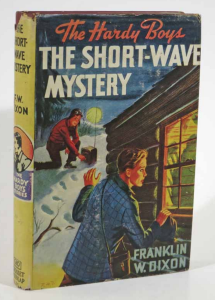
Screen Shot 2016-01-19 at 10.04.45 AMThis Hardy Boys title, “The Short-Wave Mystery”, number 24 in the series, is in, according to Carpentieri’s reference, it’s “most collectible” format. This 3rd printing of the title has a frontis by Russell H. Tandy and is bound in maroon cloth with black topstain and pictorial endpapers. Colorful pictorial Dust Jacket is included! Are you a collector of children’s series books? Contact us – we can bring many! See “The Short-Wave Mystery” here>


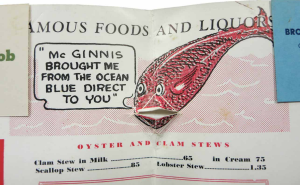
Screen Shot 2016-01-19 at 6.39.30 PMWho doesn’t love a good restaurant menu? Especially one where a big-mouth bass tells you to eat him! Check out this menu from New York’s McGinnis of Sheepshead Bay – “The Roast Beef King” (but also “Famous for Sea Food”). In 1943, a Roast Beef, Spinach and Mashed Potato dinner cost $1.45. Oh, the good old days… Drool & giggle here>


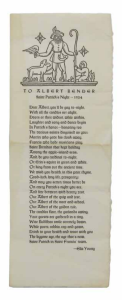
Screen Shot 2016-01-19 at 10.05.13 AMAnd last but not least – our Fine Printing item! This broadside is a 1934 printing from San Francisco’s Grabhorn Press – one of only 100 copies. “To Albert Bender – Saint Patrick’s Night 1934” was written by Ella Young to Albert Maurice Bender, and has a woodcut headpiece by Valenti Angelo at the top. See it here! 

Share

“He was America”: Happy Birthday Carl Sandburg!

By Margueritte Peterson

Admitting this is probably one of those phenomenally bad ideas I continuously have despite how much older I get, but I am one of those wicked people who pretended to know, well…something about this American literary star for many years. People would mention his name and I would be all, “Oh yes, Carl Sandburg, wow… it went for how much? Woah!” While casually hoping the conversation would change because as far as I knew I could not remember reading anything by this author and continually neglected to read up on him when I got to a quiet corner away from prying eyes. Yes, ladies and gentlemen, I know it is a shocker but I am not omniscient (though I’m sure it seems that way most of the time. Eh-hem). So now, just in case any of you out there are like me and think you can continue fooling people into thinking you know about this magnificent man… think again!

sandburgCarl August Sandburg was born on January 6th, 1878 in Galesburg, Illinois. Though he left school at the age of 13 out of monetary necessity for his family and spent years as a laborer in some form or fashion (a milk wagon driver, a porter, a bricklayer, a farmhand, a hotel servant, a member of the American Army – 6th Illinois Infantry Regiment 1898, a coal-heaver… you name it, he did it). After leaving the army, Sandburg was encouraged by a fellow student to spend a few years at Lombard College where he attracted the attention of one of his Professors, Philip Green Wright, who so believed in Sandburg’s work that he paid for his first publication – a book of poetry entitled Reckless Ecstasy in 1904. Sandburg left Lombard in 1903 sans a degree (though he would later received honorary degrees for much of his schooling).

Around 1905 Sandburg moved to Milwaukee and joined Wisconsin’s Social Democratic Party, or in other words, the Socialist Party of America. A couple years later he met another young Socialist Party worker Lillian Steichen (sister of photographer Edward Steichen) and they were married. From 1910 to 1912 Sandburg would work as secretary to the Socialist Milwaukee mayor Emil Seidel. In the coming years Sandburg and Lillian (whom he called Paula) would celebrate the birth of three daughters. After moving around a bit (mainly in Illinois – where at one point Sandburg became a journalist for the Chicago Daily News), the couple and their family settled in Elmhurst, IL in 1919.

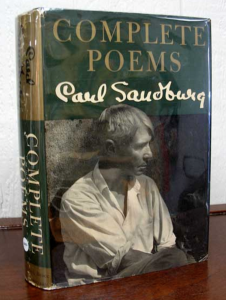
View our holding of Sandburg's Complete Poems (an Inscribed Presentation Copy, by the way) here!

View our holding of Sandburg’s Complete Poems (an Inscribed Presentation Copy, by the way) here!

Once settling down in Elmhurst, Sandburg became interested in writing for himself and his budding family. And write he did! The author began by writing Children’s books, followed by some fiction, a two volume biography on President Lincoln, anthologies of folk music, and poetry books! Some of his works for Children included Rootabaga Stories (1922), Rootabaga Pigeons (1923) and Potato Face (1930). Sandburg was quite interested in the idea of American children’s stories for American children – thinking that European stories of kings and palaces and knights were out of place in American education. In 1926 he published his two-volume series on Abraham Lincoln. Sandburg’s first big win came even earlier, right at the beginning of his real writing career, as he won the Pulitzer Prize in 1919 for his collection of poems titled Corn Huskers. Over a decade after its publication he won his second Pulitzer for Volume II of his Abraham Lincoln biography, and his third Pulitzer was awarded in 1951 for his collection of poetry titled Complete Poems. He is, perhaps, best remembered as a poet, but clearly his variety of work shows a talent in much of the literary arts, one could argue a talent almost unparalleled to this day.

On July 22nd, 1967, Sandburg died in his home of natural causes. After hearing of Sandburg’s death, President Lyndon B. Johnson is said to have stated “[he] was more than the voice of America, more than the poet of its strength and genius. He was America.” And now that I know a bit about him, I couldn’t agree more! Ladies and gentlemen, on this 6th of January we’d like to wish a very happy birthday to Carl Sandburg – an American writer and legend that was the voice of America in many different fashions!

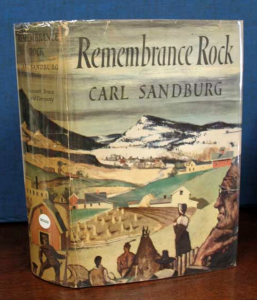
Our inscribed presentation copy of "Remembrance Rock" can be found here!

Our inscribed presentation copy of “Remembrance Rock” can be found here!

Share

The Antiquarian Book World in 2016

Woohoo! It is almost 2016 and have you got a whirlwind year ahead of you! Interested in Book Fairs? Book events? Bibliophiles in general? The Antiquarian Book World has got you covered. Check out the most pressing book events (mainly CA or ABAA related) in early 2016 below!

seattlefair1

January:

Now until January 10th: If you haven’t caught it already, you have a few days left! The California Historical Society has hosted their current exhibition “City Rising: San Francisco and the 1915 World’s Fair” since January of 2015, and the closing day is January 10th of 2016! Get a viewing in while you still can… take it from someone who has seen the exhibition – it’s worth it!   http://www.californiahistoricalsociety.org/exhibitions/current_exhibitions/

January 9th & 10th: Greater Los Angeles Postcard & Paper Show – Glendale California. http://www.postcardshows.com/Glendale.php

January 25th (to April 25th): New exhibition at the Book Club of California in San Francisco! If you have never attended an exhibition at this prestigious club or thought of joining the ranks, you are missing out! The BCC hosts lovely and interesting functions and surely their new exhibition “Calligraphy and Poetry” is sure to impress!  http://www.bccbooks.org/

February:

February 5th & 6th: San Francisco Book, Print & Paper Fair at the San Mateo County Event Center – San Mateo, California! This fair is close to our lovely shop… Just a ferry ride (or a long swim… just kidding you can also drive here) away! Please feel free to make an appointment and come see us when you’re around for the fair!   http://www.sfbookandpaperfair.com/

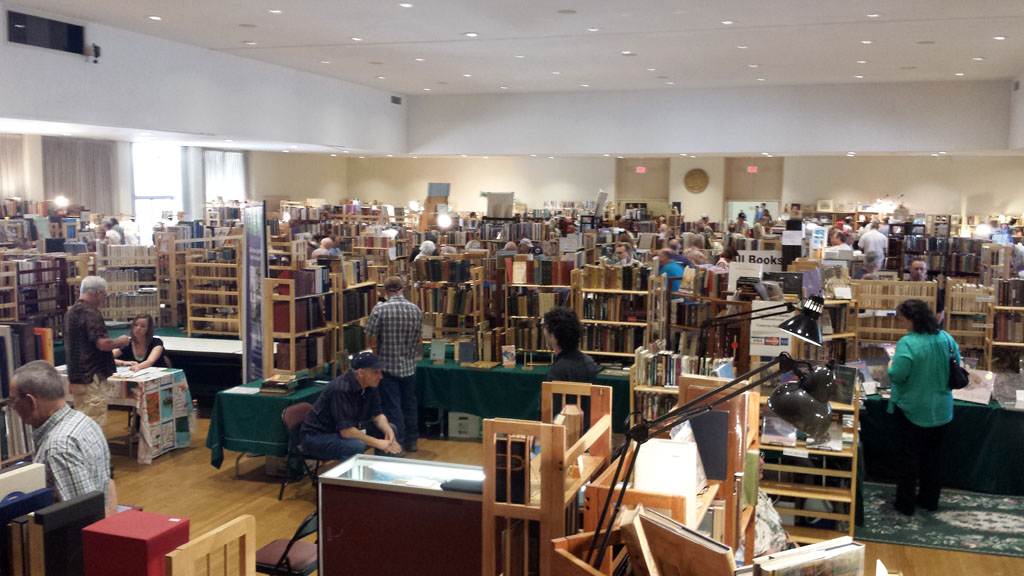
February 12th, 13th & 14th: The California International Antiquarian Book Fair (ABAA) – Pasadena, California. For those who don’t know, each year the ABAA oscillates between hosting the California ABAA Fair in Pasadena or the Bay Area. This year is Pasadena’s turn! Come down and show your support for the packed show of local, North American & International Booksellers! We’ll be there – even more a reason to come! http://cabookfair.com/index.php

March:

March 11th, 12th & 13th: Florida Antiquarian Book Fair – St. Petersburg, FL. I have to plug this one because not only has Vic exhibited at the Florida Antiquarian Book Fair before, but it is my home state! Don’t worry, alligators are more scared of you than you are of them…  http://floridabooksellers.com/

The Sacramento Antiquarian Book Fair

The Sacramento Antiquarian Book Fair

March 19th: Sacramento Antiquarian Book Fair. This one is a must! For those of you who have never been to a book fair, this is a great starting fair to attend. Lots of local booksellers, fun-loving bibliophiles and sunshine… what more could you ask for? Read our past blogs on this fair to hear what it’s all about, then come and visit us!  http://www.sacbookfair.com/


April (We like to call it… Bookselling in a New York Minute):

April 7th, 8th, 9th & 10th: The ABAA New York Antiquarian Book Fair – Park Avenue, NY. Always a beautiful venue to behold, this fair boasts booksellers and book-lovers from all over the world, and never fails to deliver a spectacular event! Don’t believe us? We wouldn’t lie to you! http://www.nyantiquarianbookfair.com/

April 9th: The Manhattan Vintage Book & Ephemera Fair / The Fine Press Book Fair – Lexington Ave, NY. One of the greatest things about the NY book fair are the numerous “shadow” fairs that go along with the ABAA’s shindig… check them out! You won’t be disappointed.  http://www.flamingoeventz.com/    http://www.fpba.com/fairs/newyork.html

April 9th: The New York City Book & Ephemera Fair. Again… how many fairs do you need to have happening before you agree to go to New York and have your fill of antiquarian books?! I believe “Shop till you Drop” is the phrase needed here!  http://www.antiqueandbookshows.com/


To find out more throughout the year, visit:

www.bookfairs.com or the ABAA list of events at www.abaa.org/events/  to find more to explore!


Share

Collecting Antiquarian Bibles (What Better Time to Discuss than at Christmas?)

By Margueritte Peterson

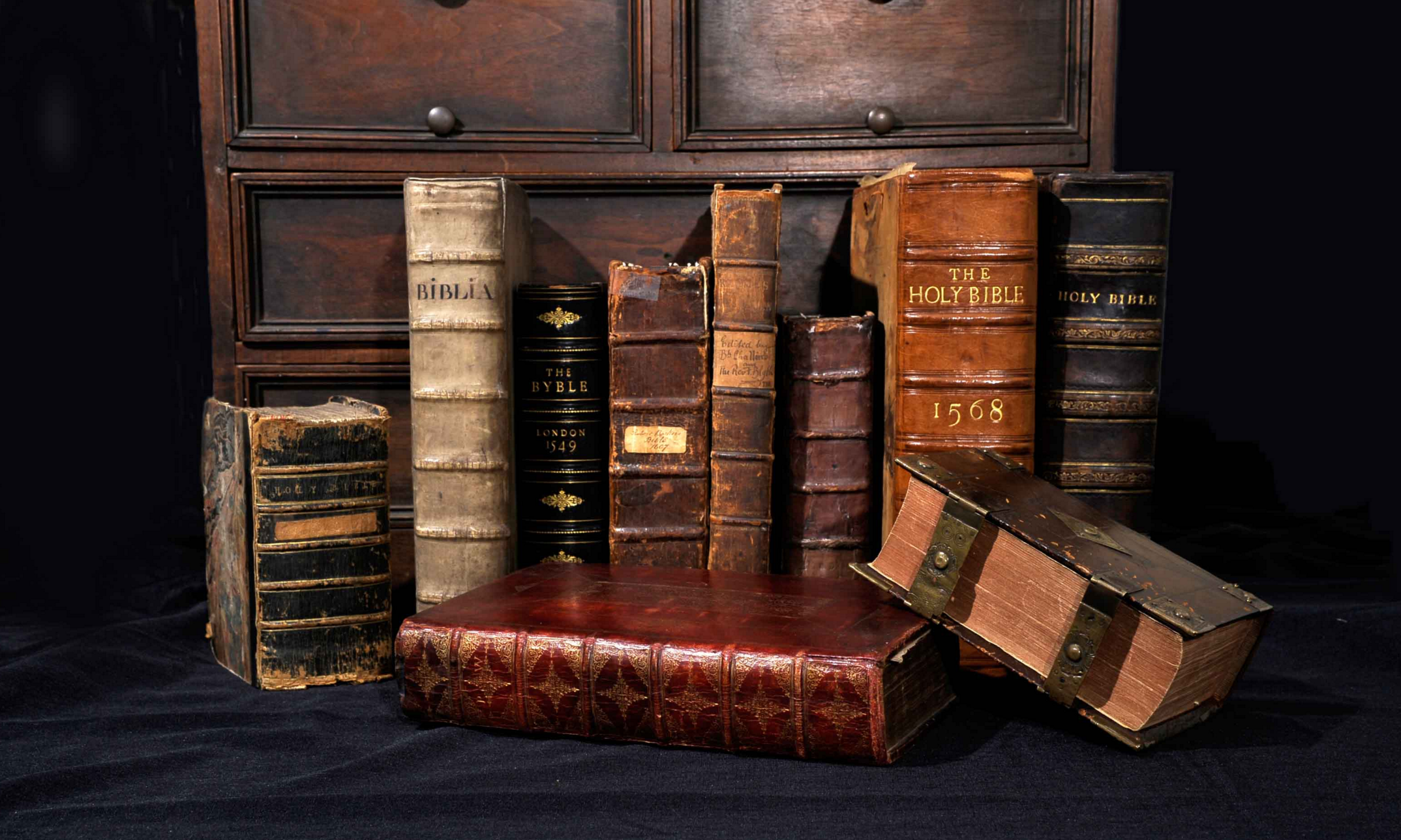
The Bible is the most common English-language book in the world, so it would hardly seem like an ideal focus for rare book collectors. But the history and variety of Bibles make collecting them a diverting and challenging occupation—especially because one can often start a lovely collection without spending too much money.

Image source: tntoday.com

                   Image source: tntoday.com

Finding Your Focus

The sheer number of editions of the Bible can make it difficult to choose a scope for your collection. Many amateur collectors start out with their own family Bibles and simply collect other Bibles that catch their fancy. As you get more serious about building your Bible collection, it’s important to decide on a specific direction because the array of Bibles and editions is dizzyingly diverse; in their oft-cited bibliography, Frederick Moule and Thomas Herbert identified over 239 different editions of the English Bible…and those were all printed before the King James Version was first published in 1611.

A few common ways to focus a Bible collection:

  • Version: The King James Version is undoubtedly the most famous, with multiple revisions over the centuries. Before it appeared, there were nine other major versions. And after the King James Version appeared, numerous other versions have been published. Many collectors choose to focus on one specific version.
  • Language: The Bible has been published in over 400 languages, and almost always in translation. After all, the original texts of the Bible were in Greek, Hebrew, and Aramaic, and historically very few people have been proficient in all three. A collector might look for different versions of the Bible in a single language, such as German, or try to collect Bibles in as many languages as possible.
  • Publication location: The Bible is a difficult book to print, due to both its length and its many textual features like numbered verses. It wasn’t uncommon for sections of the Bible to be printed in a given location, followed by the New Testament, and finally the entire Bible. The famous Bay Psalms book (1640), which included a novel translation of the Psalms, was the first volume published in the United States. The first complete American Bible didn’t appear until over fifty years later, in 1663, and it was John Eliot’s Algonquin translation.
  • Errors: It should come as no surprise that some Bible editions include scandalous or entertaining errors. The so-called Wicked Bible of 1631 says “Thou shalt commit adultery,” while King David exclaims in a 1702 edition, “Printers have persecuted me without a cause.” One could easily build an entire collection of these error copies!
  • Annotation: Bibles often served as repositories for family records, such as family trees and dates of birth, christening, marriage, and death. These annotations can be fascinating for those interested in genealogy or those who simply love that personal connection to the Bible’s original owners. Still other versions of the Bible include published maps and annotations, which can be fascinating in their own right.


With Bibles, “Old” Has a Whole New Meaning

Screen Shot 2015-12-22 at 9.12.49 AM

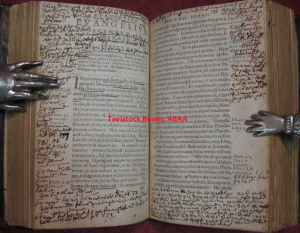
Our holding of a 1576 1st edition thus, New Testament. Someone had some thoughts on the writing!

In 1526, William Tyndale published the first complete translation of the New Testament. The book was deemed heretical, and almost all known copies were destroyed. The first English edition of the Old and New Testaments was published nine years later. Given that Bibles have been published for so many centuries, the word “old” takes on a whole new meaning. In the world of rare and antiquarian books, we usually think of a book that’s more than sixty years old as an antique. But a Bible isn’t really “old” until it’s been around for two full centuries.

Serious collectors generally consider Bibles published in Europe before 1700 the most collectible. And because Bibles were often used regularly, they’re not often in pristine (or even very good) condition. When you collect antiquarian Bibles, be prepared to embrace dog-eared copies filled with marginalia.That said, value isn’t always directly tied to age. Some 100-year-old Bibles are more valuable than others that are twice that age.


Bible Collecting Resources

Collecting rare books of any sort requires discernment and research. The same holds true for Bibles. The volumes below are exceptional resources for the collector of Bibles:

  • Frederick Moule and Thomas Herbert’s Historical Catalogue of the Printed Editions of Holy Scripture is the most commonly used and cited bibliography among Bible collectors. It has gone through muliple reprints and includes bibliographic details on Bibles in 600 languages.
  • Margaret Thorndike Hill’s The English Bible in America encompasses American Bibles published between 1777 and 1957. It’s the preferred bibliography for collectors of American Bibles.
  • P. Marion Simms’ The Bible in America delves into notable versions of the Bible in the histor of the United States.
  • See Christopher de Hamel’s The Book: A History of the Bible for an illustrated survey of Bibles, starting with the earliest manuscripts.
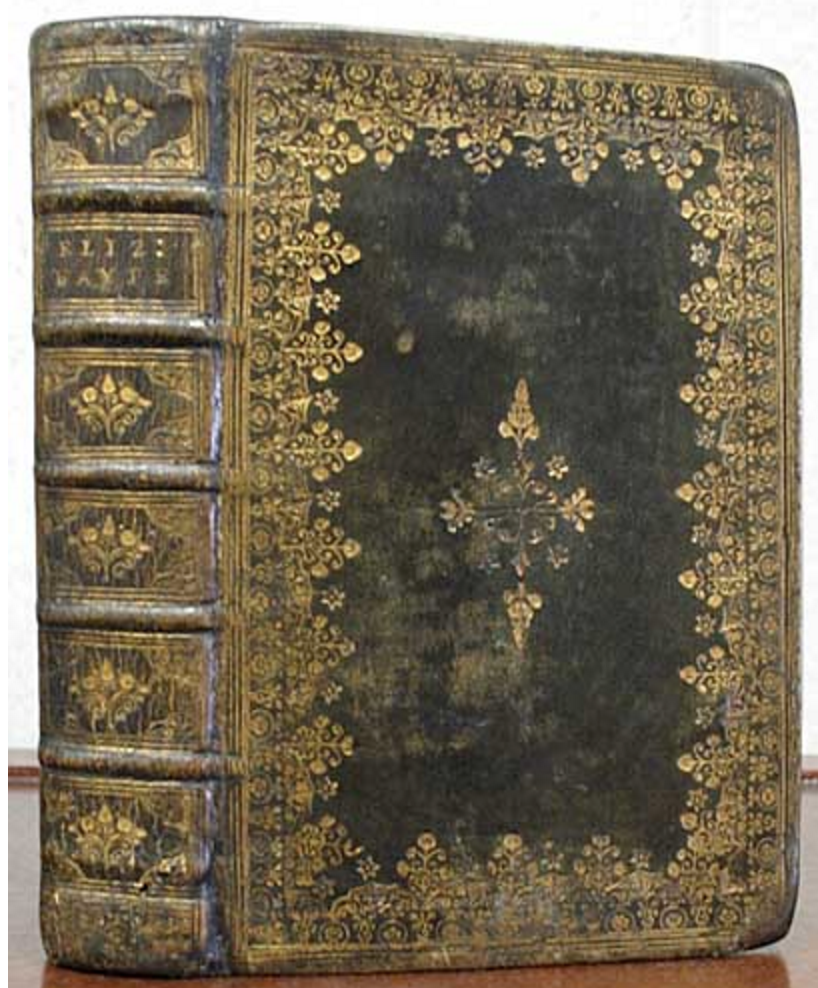
"Newly Translated out of Ye Original Tongues..." Are we sure about that? Check out our holding here!

“Newly Translated out of Ye Original Tongues…” Are we sure about that? Check out our holding here!

Some reference works may actually even find their way into your collection. For example, Thomas Wilson’s Christian Dictionary is useful to the scholarly collector…and a new somewhat scarce title.


Related Rare Books & Ephemera

Children in the Woods

Theodore Beza’s New Testament

Holy Bible Printed by His Majesty’s Special Command

Book of Isaiah, Translated into Navajo Dialect

Illustrated Scripture History for the Improvement of Youth

Share

Giving Thanks to Your Local Bookseller: A Quick Guide using Collectible Books to Answer the Most Important Question of all… “Why?”

By Margueritte Peterson

When I first became interested in rare books I took myself to as many antiquarian book fairs as I could. My first fair was in London, where I sheepishly wandered around as silently and as invisibly as possible and tried to pretend that I belonged in the same room as a million dollar manuscript of Alice in Wonderland by Charles Dodgson. I left the fair and called everyone I knew (so, basically, the five people on my speed-dial list) to tell them what I’d seen. They were all flabbergasted and amazed that I had seen an original, marked-up copy of the famous children’s story. But even I had to ask myself the question that everyone asked me (apparently they knew no one else in the business)… why a million dollars? Why? This is a question I’d like to briefly handle, in my own words, by discussing the main components of what gives books value (a question that is answered in-depth by our very own Vic Zoschak during his seminars at select California ABAA fairs… which you should all attend).

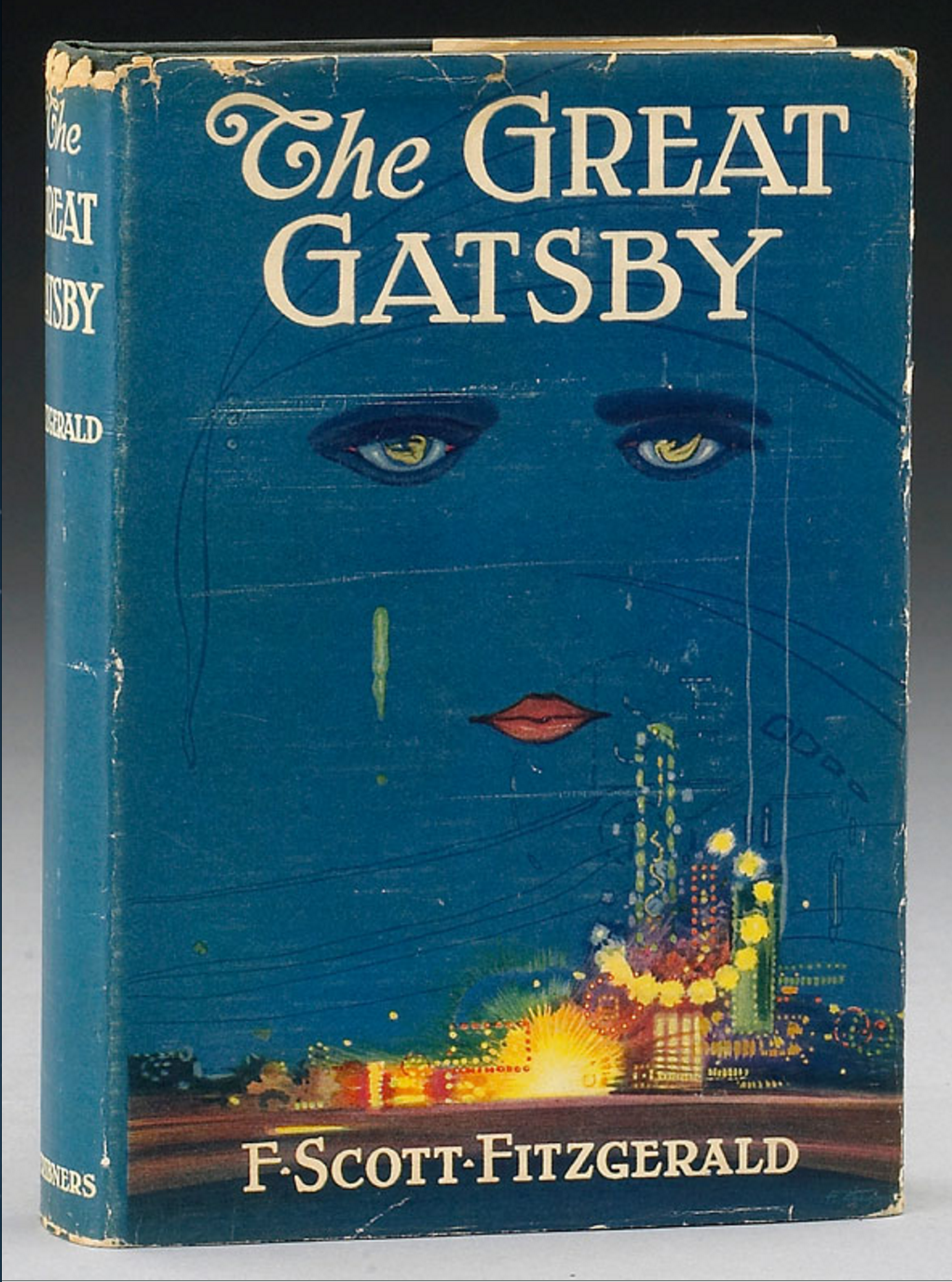
Screen Shot 2015-11-03 at 11.20.42 AMEdition. We all know that a 1991 paperback copy of F. Scott Fitzgerald’s The Great Gatsby sells for about $1.50 on Ebay to ten thousand US high schoolers every year. Why then are there copies of the same book selling for over $100,000 online? Those are first editions. We at Tavistock Books consider first editions as first printings of the first edition. The true first time the book was ever printed. Now, these copies are not only selling for so much because they are first editions. After all, sometimes you can find a much sought after first edition, first printing at a local used bookstore for the bargain price of $10! This point leads us to the next deciding factor, which is…

Condition. Condition of titles are essential to the demand for a certain book. The $10 bookstore copy of Gatsby is tattered, smelling of cigarette smoke, foxed throughout (foxing being the term for those brown spots that come up on book pages – a curious phenomenon between the ink, paper and chemical reactions), and with crayola markings where a desperate mother pushed her book into her sons hands for a moment of peace on the telephone. Condition, akin to location in real-estate, is of great importance in giving value to rare books – as it is very hard to sell a book that is in desperate need of a make-over unless it has a wonderful quality I like to call…  

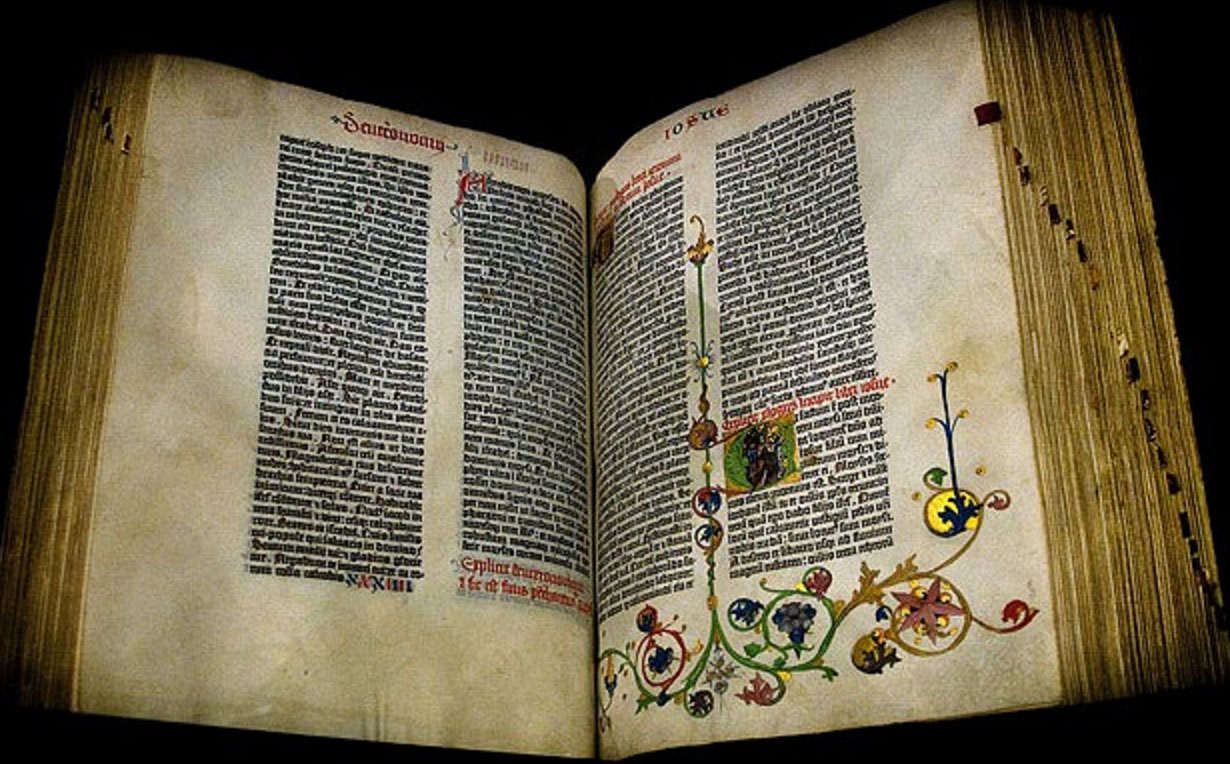
gutenbergRarity. Every bookseller has heard this phrase a thousand times from clients wishing to sell us books… “but it’s really old…” Yes, you may have a book from 1913 with a lovely gilt illustrated binding. But a quick search online shows hundreds of copies exactly the same, none fetching more than $30! Now, you think you may have an intact (or even not intact… for this example that doesn’t really matter) Gutenberg Bible sitting on the shelf in your grandma’s garage? The phrase should be “Now that’s a horse of a different color!” Only 48 known copies of the earliest moveable-type printed book are known to man, only 31 of which are perfect (complete). That type of rarity is far different than so many online and probably double that amount still sitting in your grandma’s garage. (I’m sure she’s a lovely lady but what she got doesn’t interest me and that leads us to my last point which is…)

Desire. Another instance of disappointment to clients wishing to sell booksellers their items is when they realize that even we couldn’t sell the book – meaning that booksellers try not to buy books when there are no customers for the title. You may have an interesting archive (from your grandfather’s family, which your grandmother gave you after he passed away) of family pictures from 1875. But a bookseller can only justify using his company’s funds to buy said archive if there is a desire for such a collection! Does he have a customer that would be interested? Does he know where he can find someone who fits the bill? If the answer to these questions are both “no”, then we won’t take the archive off your hands… no matter how cute your great grandmother was in her wedding dress.

I tried to keep this blog short and sweet – a basic overview to our customers and other bibliophiles out there – as to what it is that antiquarian booksellers do and how they are able to figure out the pricing that they do. An essential part of the job is having an amazing research ability, not to mention the knowledge of the trade that comes from years of experience. Is there a National Antiquarian Bookseller month? Perhaps November would be a good time to give thanks for your local booksellers! 

P.S. If learning more tricks of the trade is interesting to you, look into taking one of the courses Vic Zoschak leads – an annual reference book workshop giving you the basics of how booksellers begin their research, or the Book Collecting 101 workshop mentioned earlier and offered at Bay Area ABAA book fairs! You won’t be sorry…

Share

Happy Birthday, Lady Lazarus

By Margueritte Peterson

“I am terrified by this dark thing/ That sleeps in me; / All day I feel its soft, feathery turnings, its malignity.” The author of this quote, and many similar to it, was a haunted being. She struggled with depression throughout her life and eventually succumbed to the constant pain she felt and ended her life. Many think of her and immediately think “that lady put her head in an oven” (don’t lie… you did, didn’t you?). Banish it from your mind for a moment! Today, we’d rather focus on her fascinating life and haunting poetry instead. Her being, of course, Sylvia Plath.  Though you may not think that writing a blog on Sylvia Plath at Halloween-time is very… original, we are going to do it – as today would have been her 83rd birthday. Plath was an extremely influential person – not just in words, but in her struggle to have her poems heard – despite seeming to have the world against her!

0115549_H

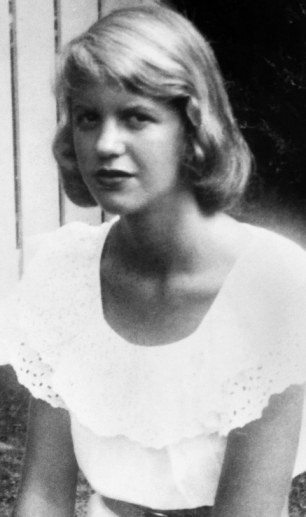
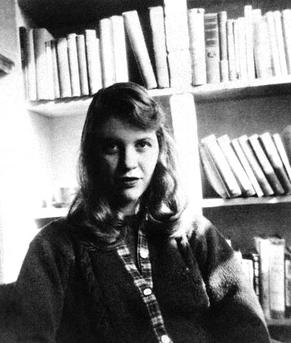
A young Sylvia Plath.

Sylvia Plath was born in October of 1932 and was raised in Massachusetts. Despite her father’s sudden death shortly following her 8th birthday, Plath did not begin to show signs of her mental illness until college. As an 8 year old child Plath survived and thrived through a tumultuous year – first with her father’s death, then her family’s relocation to Wellesley, MA, and also with her first published poem in the Boston Herald’s Children’s Section. Sylvia blossomed in academic environments and in 1950 when she began to attend Smith College in Northampton, Massachusetts, she discovered a whole new world, finding she loved being a part of an academic community. She became editor of The Smith Review and interned, as a guest editor, at Mademoiselle magazine during the summer after her junior year – a highly sought after position. Her mental illness finally seemed to surface during this time, when Plath was distraught after not meeting poet (and one of her idols) Dylan Thomas during one of his trips to New York. She quickly spiraled into depression, and at the end of the summer she made her first documented suicide attempt by taking sleeping pills and laying down in the crawl space beneath her mother’s house – where she was found 3 days later.

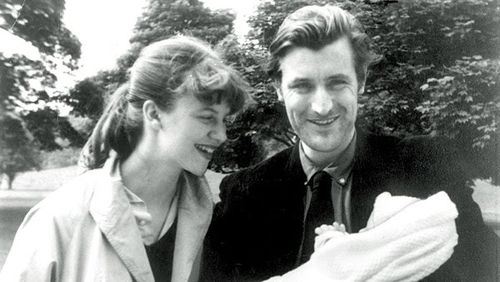
A happy Plath and Hughes after the birth of their daughter, Freida, in 1960.

A happy Plath and Hughes after the birth of their daughter, Freida, in 1960.

Now, I know I said that we would be focusing on her fascinating life and poetry rather than her suicide, but bear with me! The events in this particular summer were of great inspiration a decade later when Plath began and published her first and only novel, The Bell Jar. (There is a method to my madness, you can see.) But let us not get ahead of ourselves. Despite her intense summer and a stay at McLean Hospital receiving insulin and electric shock therapy in the fall, Plath recovered and graduated the following June with high honors. She received a Fulbright Scholarship to study at Newnham College, Cambridge, where she continued to study poetry and was constantly published in the university paper, Varsity. The following February, Plath’s life would be turned upside down by her passionate romance with a fellow poet, Ted Hughes. The pair were married after a short four-month courtship. Hughes was described by Plath as a singer, story-teller, lion and world-wanderer with “a voice like the thunder of God” (Oxford Dictionary of National Biography). Plath and Hughes moved to Massachusetts shortly after their wedding so that Plath could teach creative writing at her alma mater, Smith College. Hughes, during this time, taught at the University of Massachusetts in Amherst. After spending a couple years in America, the couple moved back to London, where their first child, Freida Hughes, was born in 1960.

plath3It was at this time that Sylvia’s first large book of poetry was published by William Heinemann, named The Colossus and Other Poems. It received mixed reviews (overall better in the UK than it was received in the US), but did not gain enough enthusiasm to raise Sylvia Plath to the point of literary fame. She finished her novel The Bell Jar in 1962 (though it would not be published for another year) and the couple moved to Devon, England, to a small house in the English countryside. Later on in 1962, Plath and Hughes separated after she became aware of his affair with Assia Wevill, the beautiful woman renting their old flat in London with her husband. After moving back to the city with the children, Plath rented a small flat in a house that was once lived in by William Butler Yeats. Plath, renting the flat on a five year lease, thought this a good omen. The poet experienced a final burst of creative energy in the winter of 1962, writing many of the poems that would eventually be contained in Ariel, her posthumously published book of poetry. The Bell Jar finally hit the shelves in January of 1963, published under a pseudonym, but, like The Colossus, was not the great success Plath’s ego needed. In February of 1963, Plath ended her life.

Her work continues to be immensely popular, but many fans of the author’s brutal poetry know very little of her previous works. By the time Plath entered Smith College, she had written over 50 short stories and had them published in local papers and school publications. Also part of her poetry works were her “landscape poetry” – much of which was centered around Northern England (Yorkshire) and is not given as much credit as her later works. Much of her writing is also contained in her private diaries, which were first published in 1982, though her mother published a book of her correspondence home, letters Plath wrote between 1950 and 1963. In 2000 a new book of Plath’s journals was published, when Hughes gave the rights to publish the journals still in his possession (as executor of Plath’s estate), of which over half was new material to the public eye. Though the last of Plath’s journals were destroyed by Hughes, an act condemned often by Plath’s fans – as he said he did not ever want his children with Plath to see her desperate and depressed last months of thought.

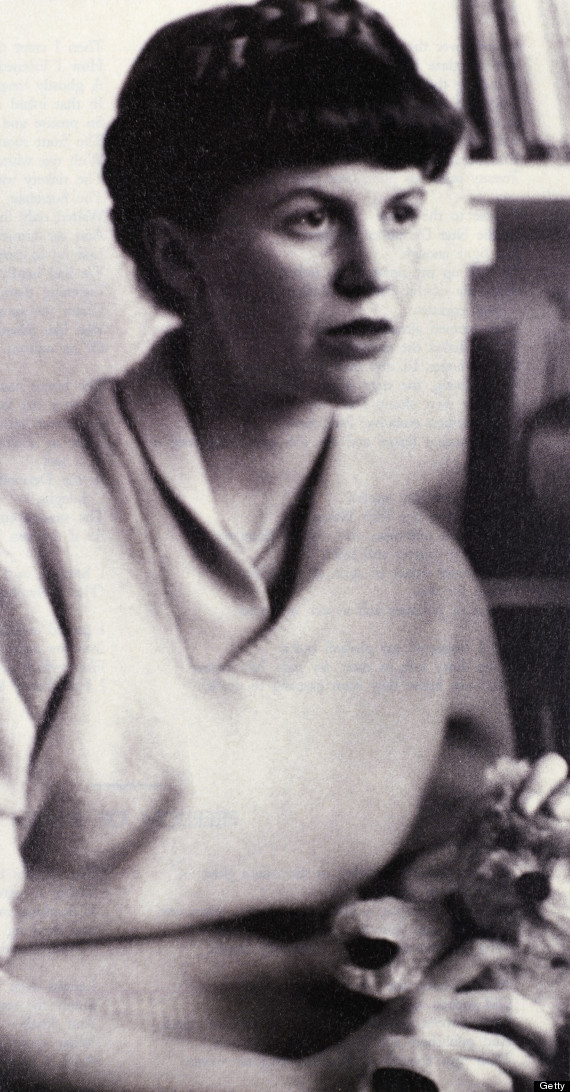
plath5Plath’s style has been difficult for scholars to describe, as her writings ran the gamut of emotion and subject. Death and resurrection was a consistent theme throughout her writings in The Colossus, where as in Ariel her more vengeful poems focus more on the rage and despair she felt as she coped with her mental illness. Her poems are almost autobiographical in nature, as she used herself as the subject for almost all of her work. Perhaps this is why she is so popular with readers – though Plath struggled using her personal self as fodder for her poems, she continued to do so. She unabashedly offered herself as a model for her poems – a difficult undertaking for any author. On this her 83rd birthday, we honor Plath and her contribution to the world of poetry – for giving other writers (as many have since given her credit in helping shape their own work) the strength to delve into their own psyche and use it in their compositions.

Share

Fair Acquisitions at Tavistock Books! (Seattle items found here…)

It’s that time of year again… the time after our exhibiting fairs of Sacramento and Seattle… the time when we place our new items up on our website and tempt you to look at them with blog posts, that is! Check out this post for an in-depth view of some of our newest (and hottest) items!

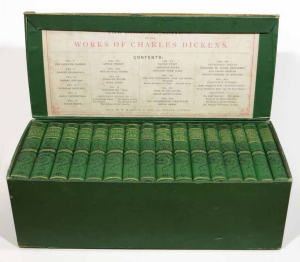
Screen Shot 2015-10-22 at 9.23.04 AMDickens’s Works, Diamond Edition (1880). An original Dickens in original publisher’s binding in an original publisher’s box! Yes, that’s right ladies and gents… we nabbed a 1st edition thus of Chapman and Hall’s Diamond Edition of Dickens’s [sic] Works! This 16 volume set shows only modest wear, garnering it our VG+ rating! As we tell you, this economical edition in pocket format quite rare as it is offered here – a complete set with the original publisher’s box. You know what? I’m not doing it justice. See it here>


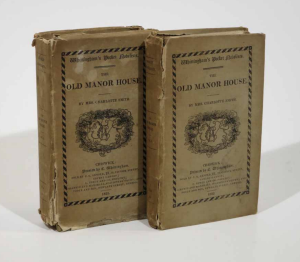
Screen Shot 2015-10-22 at 9.31.39 AMOur next item [regrets, this item now SOLD]: The Old Manor House (1822) in Two Volumes… Did you know that the founder of the famous Chiswick Press is often credited as one of the first printers to come up with the idea of printing cheaper, handy editions of standard authors for the common man? Even stated on the rear panel of a volume here is “[The publisher] means that his edition shall combine correctness, neatness, portability and cheapness…” This set a rare double-survivor, as the cheapness of the printing meant being issued in drab boards and on cheaper paper. Read more here>

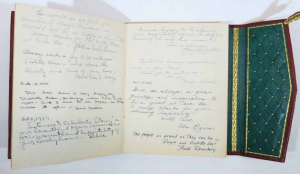
Screen Shot 2015-10-22 at 9.38.12 AMNow, are you one of those collectors who like the more personal items? Are photograph albums and inscriptions your thing? Check out our Personal Guest Book of Ralph and Violette Lee. This guest book belonged to a California jeweler and art patron, and the founder of the Gensler-Lee Jewelry Company, one of the largest jewelry chains in the state of California around the beginning of the 20th century. This guest book is filled with personal signatures and inscriptions praising the patrons and their beautiful California home! See more on it here>

Screen Shot 2015-10-22 at 10.01.10 AMA 1st edition of David Copperfield from 1850? Sounds great! This 1st volume edition a VG+ copy in a later full blue calf binding (binding by Bayntun), spine only slightly sunned. Did you know that David Copperfield is a primarily autobiographical novel? In the preface to the 1867 edition, Dickens went so far as to state “like many fond parents, I have in my heart of hearts a favourite child. And his name is David Copperfield.” This eighth novel of Charles Dickens is beloved by many. Is it beloved by you? Look at it here>

Screen Shot 2015-10-22 at 9.49.16 AMAre you expecting? We don’t mean to be intrusive, but take a look at our Mother’s Book! This 1831 1st edition by Mrs. Lydia Maria Francis Child is a primer for the new mother! Our attention is held by Chapter VII: “Advice Concerning Books” followed by “List of Good Books for various ages” where Child gives 10 pages full of recommended titles for ages 4 to 16. This title has everything a lady would need to know in the early 19th century about the “joys” of motherhood! Read more here>

Share

Sleepless in Seattle: Kate’s Second Book Fair

By Kate Mitas

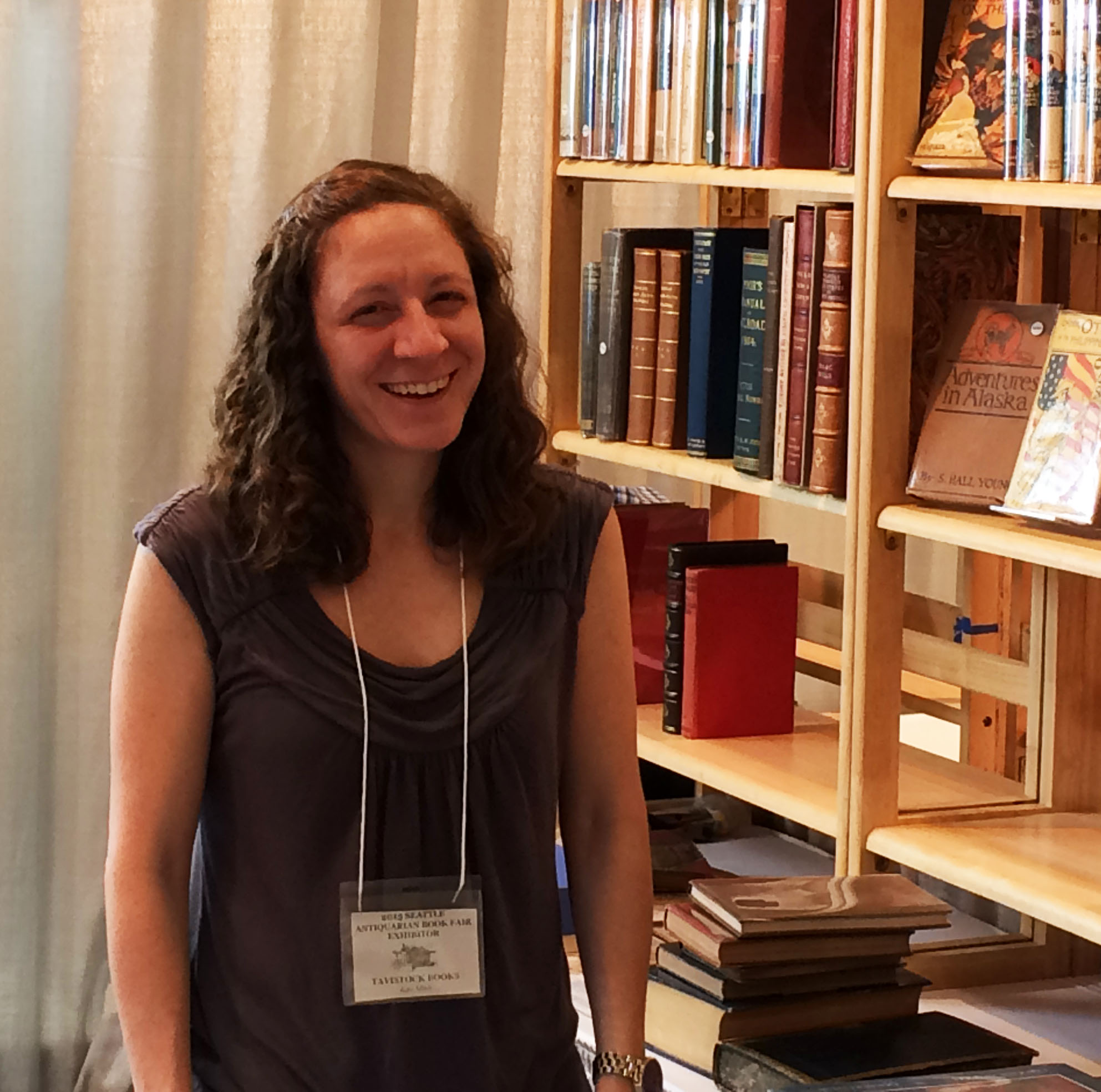
Our smiling blog author and Aide-de-Camp, Kate Mitas!

Oh, Seattle. Coffee wellspring of the Pacific Northwest, home to too many musicians and artists for a mere blog post to recount, and, it almost goes without saying, annual host to a much-loved regional book fair. Which, of course, is why I found myself in the Emerald City last Thursday for my first visit to Seattle (not counting layovers or bleary-eyed glimpses from I-5) and the Seattle Antiquarian Book Fair.

Between the abundance of flannel and the Space Needle dominating the horizon, Seattle is just waiting to be cast as the setting for a hipster version of the Jetsons: its city center glass, its art postmodern, and its denizens often bearded, bookish, and/or bespectacled, thereby rendering the game of “spot the bookseller in the bar” next to impossible to play. Did they see us coming, I wondered, these intellectual-looking, future-minded Seattleites, and would they care that a book fair was in their midst?

Trunks of books arrived and piled up in the FedEx store, belonging not just to Tavistock Books but also to our booth-mates, Books Tell You Why (and I think I can safely say that Joachim’s mammoth double-wide trunks plagued the erstwhile FedEx folks even more than ours did). Assorted vehicles packed high with boxes commandeered the hotel parking lots, including the white behemoth driven by the incredibly generous and possibly a bit cracked Brad Johnson (The Book Shop, LLC) and Jesse Rossa (Triolet Rare Books), who hauled the combined stock of eleven booksellers up the coast in one mad fell swoop (and then, astonishingly, brought it down again). Overloaded dollies trundled down the ramps of Seattle’s Exhibition Hall and returned empty. Slowly but surely, booksellers descended on the city from every part of the country and even from overseas, like a horde of collegial, misinformed locusts, who, rather than decimating the surrounding crops, amiably offer themselves up to be devoured instead.

But would it work, that was the question. Would a plain white banner tied to the Exhibition Hall’s railing alert people to our presence? Would the rain forecast for the weekend keep potential customers away? Most importantly, for this newbie to the fair circuit, who woke up at four in the morning most days of the fair with these questions in mind, would Seattle be a repeat of Sacramento for the good ship Tavistock?

The trip didn’t start off very promising, frankly. Two days before we left, Vic’s van got totaled in a car accident as he was on his way to the shop (everyone unhurt, humans and pets alike, thank goodness). I somehow forgot until the last minute that I would need something nicer than usual to wear, and spent a frantic few hours the night before our flight at my trusty local thrift stores, manically amusing myself with thoughts of showing up in various ridiculous prom dresses for the first day of the fair (a.k.a., “fancy day,” when Vic planned to wear a suit and informed me that I should have on something complementary), before scrounging up a couple of things that I hoped would suffice. The airline misrouted Vic’s suitcase and then informed us that they wouldn’t be able deliver it to the hotel until midnight; the rental car service didn’t have the car we’d ordered. By the time we got a different car, picked up our trunks of books, and grabbed a bite to eat, we were grumpy and beleaguered. The fair, it seemed, was already taking a turn for the doomed. 

IMG_2570 (1)

The Tavistock Book In all its glory!

Nevertheless, we rallied and for a time not all was sad in Mudville. Vic’s suitcase arrived at the hotel sooner than expected, and this time around at setup, on Friday, when Vic left me to ready the booth while he scoured the wares of fellow dealers, I managed to get things situated with a little less agonizing than last time. The wonderful crew from Books Tell You Why — Joachim Koch, Andrea Koczela, and Brian Hoey — were, well, wonderful, and I was grateful to have them around for suggestions and shared laughs (not to mention book recommendations). We even sold a few things that day, and bought a few things, which I’m learning is the way book fairs should go. So, hurrah for us . . . right?

Well, let me back up a minute to say that for anyone who has been to the Sacramento but not the Seattle Antiquarian Book Fair, or vice versa, there is a world of difference between the two. Sacramento is smaller, hotter, more tightly packed, and far, far more relaxed. Seattle, admirably well-organized by Louis Collins, while still not the creme de la creme of book fairs (or so I’m told), is certainly more imposing. Glass cases predominate and even have their own special crews, roving bands of handymen who do everything from adjust shelves to clean the doors with a bottle of zealously-guarded Windex. More importantly, dealers come from farther away, with better books and higher expectations. It costs more, so you have to sell more. Plain and simple. 

And that, dear readers, is where the crux of the problem lies. 

IMG_2573

Like a pro – not showing any uncomfortable-ness! The Tavistock Team on Saturday morning, excited for a day of bookselling!

Saturday dawned cool and rainy, but I should have known that a little rain wouldn’t keep Seattleites away. It poured, and they still came flocking to the book fair. (I loved them for this, and still do, from afar.) Yet, all that morning and into the early afternoon, the Tavistock booth remained eerily untouched. Gradually, it dawned on me: we’d brought the wrong books. All of the right books were back at the store! As for those that weren’t wrong, well, they were priced too high. No amount of rearranging, no amount of petty thievery of the precious bottle of display-case Windex from its rightful place behind the back curtains, would change things. Then there was the matter of my dress — also uncomfortably wrong (what had I been thinking?) — and my shoes, which gave me blisters after the first fifteen minutes. I’d also bashed my elbow on one of the trunks during setup, and was burning through band-aids like no tomorrow. It was Sacramento all over again, except this time I was actually bleeding.

As you’re probably guessing, though, we did, in fact, finally sell something, a little Seattle-related booklet that made one nice man very happy. And soon enough, we were passing the invoice book back and forth and politely trying to outmaneuver each other for the calculator while sales piled up at last, much to our relief. Did it matter then that the band-aid on my heel somehow slid over to the top of my foot and clung there, unnoticed by me, for most of the day, completely putting the kibosh on my “fancy day” outfit? I assure you, it did not (once I finally noticed it). I was having too much fun.

However, much as I would love to be able to report that our Sunday sales flew along at the same clip as Saturday’s, alas, they did not. In fact, we didn’t sell a thing, and our rampant success Saturday turned out to be the only reason the weekend wasn’t a total ruin. Well, that and the finds Vic came across, which we’ll be adding to our inventory soon (stay tuned). Expenses piled up, and the fair that I’d been sure had at least outshone Sacramento turned out to be, when we sat down and crunched the numbers this afternoon, roughly equivalent. 

IMG_2574

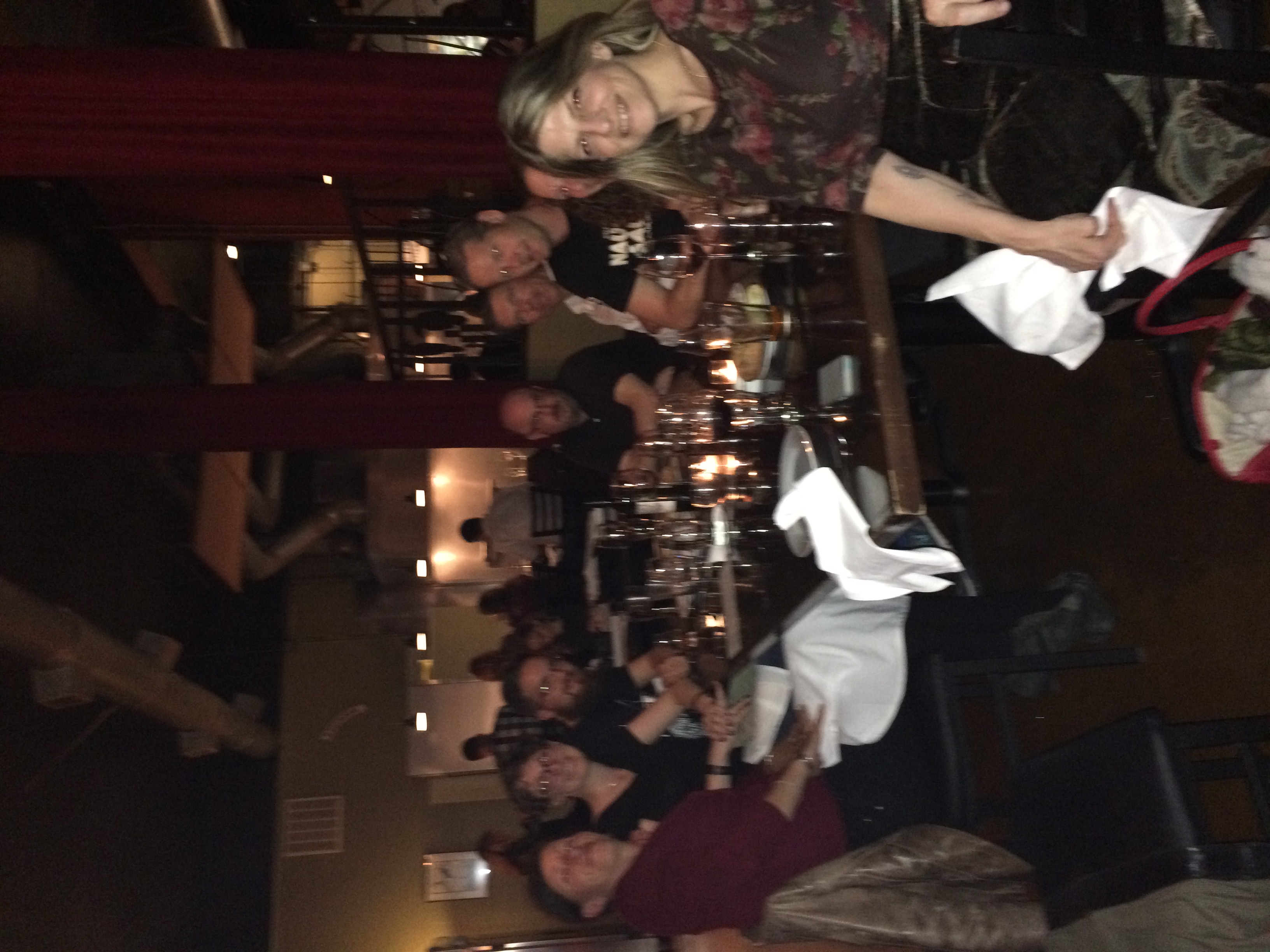
Dinner at Crow, Sunday after pack-out. Having been on their feet all day two days in a row and spending hours packing their books to go back home… well, you’d never know it! Just look at those smiles.

So what’s a young bookseller with two not-so-good fairs under her belt to do? Well, after long and careful consideration, I have to admit that I’m in something of a bind: no matter how much I stare at our tally sheet and its glaring red total, and no matter how many choice expletives I thoughtfully lob in its direction, the 2015 Seattle Antiquarian Book Fair still feels . . . good. We sold some nice books, and if we could’ve made a little more profit on them we would’ve done very well, indeed. The venue was lovely, if hot, and we met some great customers who may yet turn out to be future customers; even some past customers stopped by to say hi and introduce themselves. The booksellers I met were invariably kind and welcoming, and I finally had the chance to see some of my brilliant fellow assistants. Even a few of my fellow 2015 CABS grads (Jon Munster (The Book Bin, Corvalis), Rebekah Medford, and Ken Mallory (Kenneth Mallory, Bookseller)), were there. And finally, of the many, many things I learned this weekend, one may even be life-saving: never, ever have a rubber band fight with Ken Karmiole. He’s deadly with those things. In fact, I highly suspect this bookseller business is just a front for target practice (no wonder he like fairs so much — we’re like fish in a barrel).

Sure, I wish we’d blown our Sacramento showing out of the water. I also wish that my shoes had fit better, and that my band-aids hadn’t been so errant. Mostly, I wish I’d been less daunted (and less sleep-deprived). But damn if it wasn’t fun, in the end.

And as for the good ship Tavistock? What else? We’re patching the leaks, of course, and bringing new ideas to the table. It’s time to get a little creative.

See you in Pasadena, everyone.


Share

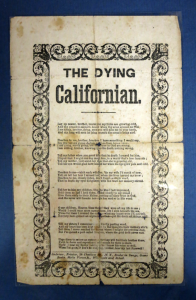
The Dying Californian, or, Kate’s 1st Book Fair!

 Kate Mitas, Tavistock Books’ New Right-Hand (Wo)Man, has returned from the Sacramento Antiquarian Book Fair… her first fair (as a worker-bee, that is), and reports back. Beware, readers, as what follows may be a sweetly written, if perhaps slightly disheartening tale!

A lovely setup by Ms. Mitas! 1st Tavistock Books booth done - many more to follow!

A lovely setup by Ms. Mitas! 1st Tavistock Books booth done – many more to follow!

By Kate Mitas

The Sacramento Antiquarian Book Fair was a great place for a beginner to become acquainted with the book fair circuit, because it’s one of the smaller, low-key venues, as book fairs go (or so I’m told). A blog post by a certain predecessor of mine had actually alerted me to the casual atmosphere ahead of time, but I was still wired going into it: I hardly slept the night before, and so was more than a bit punchy by the time we started setting up our booth on Friday. And by “we” I mean “I,” since Vic mostly left me to my own devices on that score while he browsed other dealers’ booths – much to the amused commiseration of Bill Bastick from Asian Steppes, situated across the aisle from us, who jokingly referred to me as “slave” for the remainder of the weekend. Nevertheless, I eventually managed to get things set up well enough for a first-timer, I think, and did so just in time for free pizza, courtesy of the show’s tireless coordinator, Jim Kay.

As for the fair itself on Saturday? Well . . . it was a little slow for us. Okay, more than a little: if you must know, it was woefully slow. In short, Tavistock Books had a bad fair.

The day started off promising enough: right out of the gate, a nice woman and her granddaughter purchased a hefty five-volume set of California history. Not only did these two ladies seem intent on reading their books from cover to cover together, but, equally delightful, the set’s departure created a spacious gap on the shelves, which I promptly scurried to fill. Then: nothing, sales-wise. Despite heading the next blank invoice “Sacto Fair” in accordance with Vic’s belief that it would lure the fickle gods of consumerism, despite endlessly cleaning the glass display cases and straightening description labels, Booth #37 remained lamentably quiet. Customers squinted at our shelves and even picked up a book from time to time, but almost always put it back, in some cases repeating this procedure with the same book multiple times throughout the course of the day. Passerby lingered over the rarities in the display cases just long enough to raise our hopes, then moseyed on with nary a backward glance while nonchalantly swinging their regulation white shopping bags, each of which was ostentatiously marked “Sold.” The boxes of Americana we’d hauled out for California ephemera enthusiasts were apparently too daunting, or perhaps too tall, for most. Some of the coolest items, the ones I’d imagined would draw hordes of admirers – like our archive of Gold Rush letters and photographs, or a Steamship Yankee Blade ticket – weren’t  graced with so much as an appreciative sigh, much less a truly interested customer.

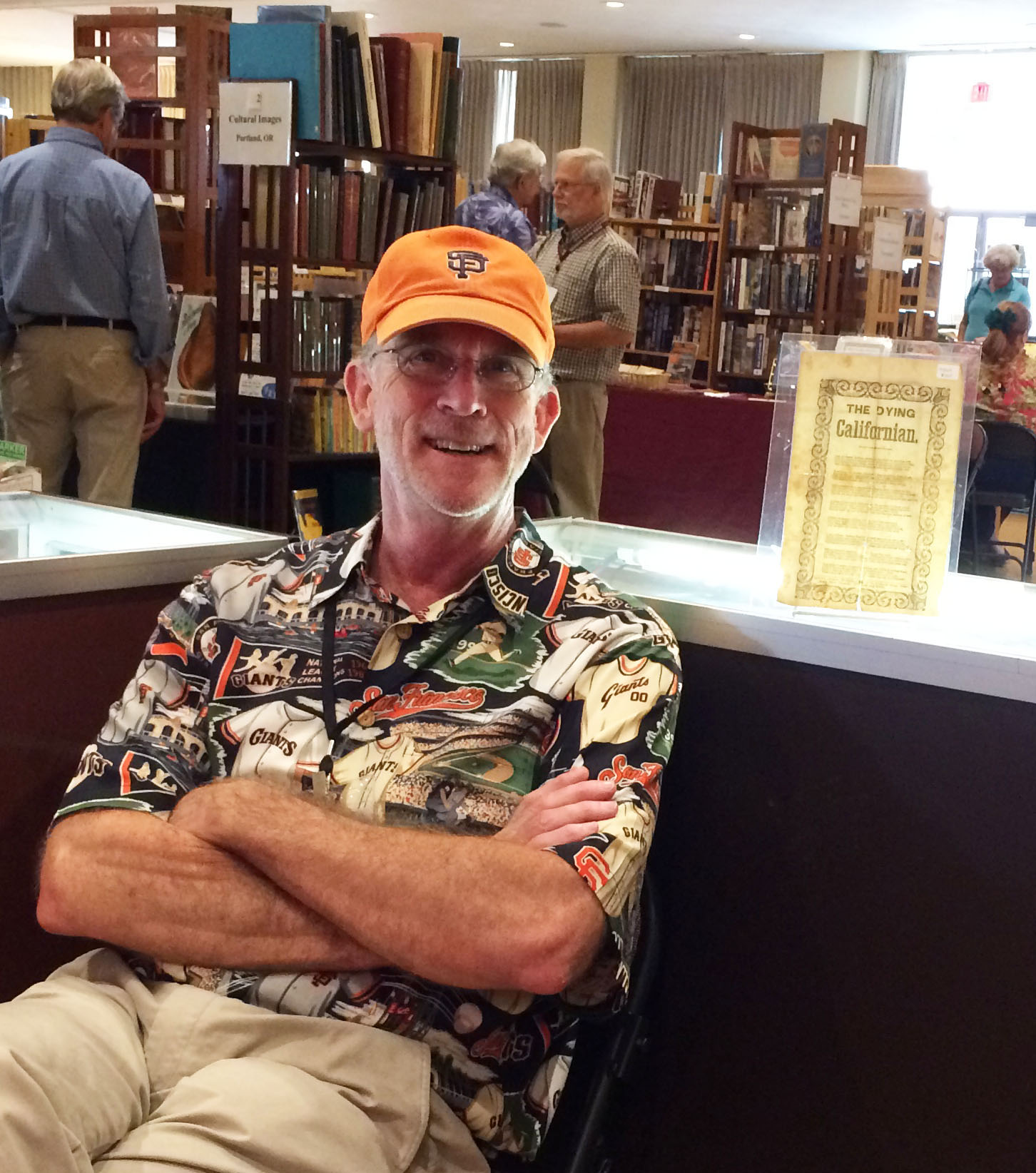
Let’s not forget the King of Tavistock Books… in a surprising choice of an orange Giants baseball cap! (Oh wait… did I say surprising?)

It was hard, I’ll admit, not to feel like the lone museum guard on duty in an empty exhibition hall, especially as many fellow dealers in the surrounding area seemed to be doing just fine. One dealer, in fact, who is a dear and deserving colleague and shall remain nameless, was even doing “just fine” with stock bought, not long ago, from us! We were, and are, sincerely glad for this colleague’s success, of course, but . . . oh, the agony, and the irony. Every now and then, a sale lifted us out of the doldrums and turned us into booksellers again, grateful for the chance to put good material into the hands of people who’d take pleasure in it; one regular at our shop stopped by, and was kind enough to give me props within earshot of Vic (thanks, Jim – don’t spend it all in one place!). But then, inexorably, we’d drift back to our becalmed waters, cursing our luck.

Hard at work!

Hard at work!

The one perk of all the deathly quietude was that Vic let me roam the fair, too. For a so-called small fair, there were enough vendors for the main area of the venue to feel almost too packed, and a decent-sized crowd milling about, as well. The best part, for me, was the sheer range of books on display: from Ken Karmiole’s (Kenneth Karmiole, Bookseller, Inc.) impeccable “old books” – his term, by the way, for the lovely array of pre-1800 material at his booth – to pulp fiction and modern firsts at Magus Books and several others, to Andrew Langer’s (Andrew Langer, Bookseller) collection of quirky ephemera and Elizabeth Svendsen’s (Walkabout Books) assortment of uncommon travel-related books, and so much more. Two of my fellow CABS grads this year, Morgan Brynnan (Uncommon Works) and Bill Wickoff (Ephemeriana), had booths, and I was glad to see them again; C-SPAN even showed up and interviewed (at least) Ken Sanders (Ken Sanders Rare Books) and Nick Aretakis (Nick Aretakis, Bookseller).

The unrecorded Armstrong found at the fair. Click for more info!

The unrecorded Armstrong found at the fair. Click for more info!

I wish I could say I scored something amazing, as some of the other dealers reportedly did, and as Vic discovered once back in the shop on Monday, in that he bought an apparently unrecorded Margaret Armstrong binding. But, I didn’t, at least not in that sense. Instead, I rediscovered something I’d already known: the incredible generosity of booksellers. Zhenya Dzhavgova (ZH Books) and Kim Herrick (The Book Lair), sharing the booth beside ours (and doing an enviously far brisker business), popped over from time to time to make sure my first fair was going okay and to provide extremely helpful tips (i.e., “Vic hates it when you stand in front of the display cases too long”). Stephanie Howlett-West (S. Howlett-West Books) explained the miraculous business card system of purchasing; David Smith (D.J. Smith Books) told me about other Sacramento fairs I might want to check out, and gave me a cookie, to boot. Andrew Langer even passed along buying tips – as I was in the process of buying from him. And there were more friendly gestures and kindnesses, too many, from too many people, to list them all. Simply listening to the abundance of trade talk – from Ken Karmiole and Vic discussing the possibility of partnering on a particular item, to Laurelle Swan (Swan’s Fine Books) musing about whether she should have brought more things – was an education in itself.

Some booksellers, smarter and savvier than I, can perhaps make it in this business on their own. For this bookseller, however, who needs all the help she can get, it’ll take a village. Or, maybe, a book fair (or a hundred book fairs).

And as for the persnickety little problem of having had a bad book fair? Vic is teaching me well: we’re acknowledging the hit, reassessing, and getting ready to come out swinging next time.

Seattle, here we come.

-Kate Mitas

The day's mascot itself!

         The day’s mascot itself!

Share

An Interview with… A Record Breaking Rare Book School Attendee! (Who also Happens to be the Head of Tavistock Books)

The Lord and Master of Tavistock Books recently finished his 21st course at Rare Book School in Charlottesville, Virginia, having started this love-affair back in 1998! To know more, read on!

So, Vic, you’ve just finished another summer at RBS! How was it?

Let’s start with the word, “Inauspicious.”  Not a word one would normally associate with Rare Book School, at the University of Virginia, Charlottesville [or, to those with some familiarity, C’Ville].  But the word applies this year.  Why?  Because after flying 5 hours Saturday from SFO to IAD, then waiting another 7-1/2 hours for the regional flight down to C’Ville [scheduled 10 pm departure, delayed 3 times], IT WAS CANCELLED BY UNITED AT 12:30 am that night!  Can you say Super Shuttle?  The end result- I didn’t get to sleep till 3 am that Sunday morning.  Yikes, was I a tired puppy that day!
However, as in most such situations, there was a silver lining.  Guess who was also waiting for the flight to C’Ville?  Terry Belanger, Founding Director of Rare Book School.  So, at least, during that ‘delay’ time Terry & I were able to converse on many divers topics.
And you ask, “How was it?”   Simply…  great.  I’ve taken a goodly number of courses [21, since 1998], and all have had aspects of greatness.  This one, THE HANDWRITING & CULTURE OF EARLY MODERN ENGLISH MANUSCRIPTS, taught by the paleography expert, and very personable, Heather Wolfe, Curator of Manuscripts of the Folger Shakespeare Library, I would rate in my Top Ten.
How many times have you been to RBS? You hold the record for attendance, no?

Yes, with 21, I’ve been told I now hold the record for “Most courses attended”.

The beautiful Alderman Library, where, deep down inside you can find dozens of RBS students!

The beautiful Alderman Library, where, deep down inside you can find dozens of RBS students!

Why go every year?

A couple reasons…  first, RBS is the premier place where one can find week-long subject-specialty courses on the many divers aspects of the ‘Rare Book World’.  And I believe knowledge is a ‘critical success factor’ for those in the antiquarian book trade, so these courses add to my  knowledge base.

Second, there are few other places where you’ll find, all at one time, ~ 60 other like-minded folks all not only willing, but eager, to discuss rare books.  Such not the case in Alameda CA, where on a given day, I’ll see Steve the Postman & that’s about it!  So in C’Ville, one can’t help but make bookish friends…  I’m still in touch with folk I met at RBS in 1998, and subsequently.
Third, it’s just plain fun!  C’Ville is a fantastic college town, with some wonderful restaurants, and a goodly number of bookstores.  What’s not to like?
What, in your opinion, was the best thing about the course you took this summer?

The course focused on the English Secretarial hand, a script, for the most part, totally impermeable to me prior to July 20th.  This not to say I’m now fully conversant, not by a long shot, but now I have the tools to decipher much of what I’ll find in front of me.  The challenge going forward will be to maintain that little progress I made during the week.

As to the day-to-day schedule, I haven’t detailed that here, for Cynthia Gibson did it recently for an ABAA blog post.  My day-to-day was similar, albeit with a different subject.
Not that it’s a contest, but could you tell us your favorite course ever taken?

Probably ILLUSTRATIVE PROCESSES, my first course, taught by Terry Belanger, taken back in 1998.

Would you tell every book enthusiast to go to RBS every year?

Well, certainly I advocate it.  I so much believe in what RBS can provide to an antiquarian bookseller that I established the Tavistock Books Educational scholarship back in 2011 [2012?].  For a young bookseller, I’ll pay the tuition to the RBS course REFERENCE SOURCES FOR RESEARCHING RARE BOOKS, taught by Joel Silver, Directory of the Lilly Library [for those interested, details can be found on the RBS website].  So yes, you could say I would tell all to go every year, as I certainly follow my own advice!

When book-minded people get together, dinners and drinks are common occurrences! What is your favorite social aspect of the weeks?

Vic (far rear on the right) and clan at Hamilton's on the last night of RBS!

Vic (far rear on the right) and clan at Hamilton’s on the last night of RBS!

Sunday night, after the opening reception/talk, folks sign up for a meal at a nearby restaurant.  It’s a great ice-breaker for ~ 10 people to get to know each other, as well as sample the fare of the local eateries.  Our 10 ended up at Michael’s Bistro & Taproom, a C’Ville institution.  And then Thursday night is bookseller night, where the local bookstores stay open a bit later to accommodate the RBS student’s schedule.  After, I always get a half-dozen or so folk to join  me at Hamilton’s on the Mall.  Been going there since ’98, and haven’t ever had a bad meal, not even a so-so one.

If you stay on the Lawn, then one social aspect is the gathering of folk outside one room or another, and drinking, talking, playing music.  Very social…  and one can always tell the next morning those that joined in!
All-in-all, a lovely week, and I met some terrific folks I know will be friends for a long time.  And while I’m a bit wistful that it’s all over so quickly, I look forward to next October, when the RBS staff announces the 2016 schedule.  I’ll be there, you?
Click here to learn more about Rare Book School!
Share