Category Archives: Uncategorized

Archival Cataloguing for Booksellers, Part III: Intellectual Content and Research Methods

By Kate Mitas

Before diving into the subject at hand, a brief, belated caveat:

Throughout this blog series, I have so far used “archive” to mean something at least vaguely equivalent to the Society of American Archivist’s definition: “[m]aterials created or received by a person, family, or organization, public or private, in the conduct of their affairs and preserved because of the enduring value contained in the information they contain or as evidence of the functions and responsibilities of their creator, especially those materials maintained using the principles of provenance, original order, and collective control; permanent records.” A recent discussion with Arthur Fournier (Fournier Fine & Rare), who was a panelist at the recent RBMS Conference session, “Defining the Archive” has prompted me to reexamine my use (or possibly, misuse) of the term. Arthur was kind enough to share his thoughts on the matter, which will be appearing in a future installment in the series, but, suffice it to say, my usage of “archive” in this blog is, at the very least, up for debate. For the sake of expediency, I’m going to keep using it as a broad term for the types of materials I’m referring to — most often, in my admittedly limited experience, collections of assorted original, printed and visual matter, often of a vernacular nature — and for now will just ask you to think critically about the term, how I’m using it, how you might define it otherwise, etc.

NB. Links to additional resources and full definitions of terms are embedded throughout this blog — please make use of them!

Right, now for the fun part: finally digging into your archive, interpreting your findings, and backing up your claims with reliable data. What could be easier?

Well, depending on your archive, quantum physics, for one, or perhaps learning to play “Mary Had a Little Lamb” on the piano with your toes. (Okay, I’m only speaking from experience in the latter example, but still.) Archives can be hard, and more than a little overwhelming on first approach, like having to assemble a complicated jigsaw puzzle that may or may not be complete and without knowing what the resultant picture should look like, in the full knowledge that your livelihood depends to some degree on your ability to not only piece the puzzle together but then also, and just as importantly, convince someone to buy it.

So, where to begin? Adrienne Horowitz Kitts (Austin Abbey Rare Books), a fellow CABS 2015 grad who recently made national headlines for her work on an archive of suffragist correspondence sent to Isabella Beecher Hooker, including letters from Susan B. Anthony and Elizabeth Cady Stanton, advises beginners not to be intimidated. “Take a day, or two or three to get to know the contents; look at each piece and dust it off, get an idea of what is in there. A combination of items in the archive — letters, manuscripts, pamphlets, leaflets, photographs — together tell the story.”

Screen Shot 2017-06-28 at 8.54.41 PM

A portion of the suffragist archive. Photo courtesy of J. Adam Fenster/University of Rochester.

Archivists have a term for this: artifactual literacy, “the ability to understand, contextualize and interpret primary sources.” So, in a way, do booksellers: selling point. Finding the story and telling it is not only the hardest and most rewarding aspect of cataloguing an archive, it’s also the best way I know of to convince someone to buy it.

Understanding How Institutions View Archives

It’s worth pointing out here that booksellers and institutions value archives differently. Commercial value isn’t synonymous with research value: institutions add to their collections for a variety of reasons (and with sometimes vastly different budgets at their disposal), and “research value” is far from being a monolithic criterion. Knowing some of the basic lenses institutions apply can not only help you understand what makes your archive important, it can also help you decide which institutions to approach, and even why an institution may decide against purchase.

Very broadly speaking, an archive might be considered useful to an institution on the basis of its intrinsic value, its evidential value, or its informational value. In extremely simplified terms, what this means is that an archive might be valued on the basis of what it is, what it reveals about the work and activities of its creator(s), or what it tells us about the time and place of its creation.

Adrienne’s suffragist correspondence seems to me a pretty clear example of an archive with a high degree of intrinsic value: the content is hugely significant, of course, but I doubt similar letters exchanged between minor figures in the movement would have garnered the same kind of national attention. Not surprisingly, the University of Rochester, who purchased the material, holds both the John and Isabella Beecher Hooker papers and the papers of Susan B. Anthony. Conversely, if a similar suffragist archive didn’t include any correspondence from major figures, but nevertheless revealed organizational details like meeting minutes, procedural issues, locations of talks/protests, etc., it might be considered useful on the basis of its evidential value; the archive of a previously unknown but active suffragist might be said to have informational value.

The point of all of this isn’t that you have to learn archival theory to catalogue archives, it’s that, whether you’re aware of it or not, these broad angles of emphasis — what an archive is in and of itself, what it reveals about its creator’s activities, and what information it provides— are in fact already influencing how you interpret and describe the intellectual content of an archive. Telling any story requires deciding which details are important and which to leave out, and the story of your archive is no different.

Determining Intellectual Content

Unless you know everything there is to know about the material you’re working with — and I suspect it’s a rare occasion indeed when that happens, if it happens at all — understanding and researching your archive inevitably go hand in hand. So how do you go about figuring out just what exactly you have, especially if you have no idea what to look for in the first place, and might not recognize an important detail if you were staring directly at it?

It’s likely that every bookseller has a unique approach to this conundrum: some slightly mystical application of personal experience, knowledge, curiosity, technological skill, etc., that somehow lands them at the tail end of cataloguing an archive feeling like they’ve found its most compelling and honest narrative. I’ve found that I can usually augment my lack of experience and knowledge with an ability to parse data for relevant information quickly and deduce potential avenues of inquiry from it — so my research often involves rapid-fire Google searches, followed by digging around on primary source sites like ancestry.com and newspapers.com. That’s not necessarily the best way to go about it, however. Garrett Scott (Garrett Scott, Bookseller), offers these useful, and moderately analog, observations, instead:

I tend . . . to have a blank sheet of paper and two sharp pencils (they have to be sharp!) as the tangible browser cache on my desk. Ideally I try to pick at whatever loose bits of fact need figuring out and follow my curiosity and by the time a diary or archive or collection is cataloged I have usually used only a portion of the info I’ve scribbled on the blank sheet and have wasted time going down a few unrelated alleys. (From dental surgery I once ended up combing theater ads for child prodigy performers in Philadelphia in the 1850s — there was some connection but not much — and I regret it not one bit.)

I figure it’s like the recent claim that humans didn’t see the color blue until they had the language for it — I don’t see interesting things about archives (or future buys) until I’ve created my own language and interest in it that comes about from noodling around with references and following where the material and curiosity (related and unrelated) leads.

The key thing to remember, no matter how you approach it, is to let the material dictate the narrative, which means keeping an open mind about where you might wind up, focusing on the contents of the material itself (i.e., if the creator of your archive turns out to be the first cousin twice removed of a famous 19th century explorer, but the contents of your archive document a widow’s life in Philadelphia during the Civil War, you won’t be doing yourself any favors hyping the tangential connection to exploration — and in fact, might be eliding the very thing your archive was meant to preserve), and supporting your findings. It’s incredibly easy to make assumptions about your material, and even to get excited about it based on those assumptions. Nevertheless, to my mind, we have a responsibility both to our customers and to our profession to represent what we sell as honestly as we can.

The ethical ramifications of imposing a narrative might seem a bit muffled on the supplier’s side of the archival equation, but the consequences can be far-reaching for booksellers as well as researchers, and not only because booksellers can lose customers from the practice. Imposing a narrative can help perpetuate stereotypes and biases, which in turn restricts avenues of cultural inquiry and the commerce that depends on it.

As Elizabeth Birmingham recounts in her essay on architect Marion Mahony Griffin, “‘I See Dead People’: Archive, Crypt, and an Argument for the Researcher’s Sixth Sense,” imposed narratives and accepted narratives are sometimes (often? usually?) interchangeable. In Birmingham’s case, this meant that over the course of more than a decade of research, and in spite of having access to Mahony Griffin’s own manuscript account of her work and marriage to architect Walter Burley Griffin and nearly 700 accompanying illustrations, Birmingham went along with the prevailing narrative that Mahony Griffin was merely her husband’s helper, and a grudging one at that. Eventually, however, Marion Mahony (as she is now more commonly known) became recognized as one of the great architects of the 20th century, and gained prominence for her artistic ability as well — most of the drawings of Frank Lloyd Wright’s designs in his major 1910 Wasmuth portfolio were done by Mahony, and a book of her botanical paintings was published in 2005. Birmingham is now one of her strongest champions, and a copy of Mahony’s manuscript archive has been digitized and is available in full to any who wish to view it. “The researcher’s sixth sense isn’t the ability to see the dead but our potential to help the dead, who do not know they are dead, finish their stories,” Birmingham ruefully concludes in her essay, “and we do this in the moment we realize their stories are ours” (Landmark Essays on Archival Research, p. 169).

Research Methods

Good archival research, particularly for our relatively limited ends, often comes down to a combination of information literacy — the ability to recognize when you need to use sources, identify credible sources, and use them efficiently and appropriately — and the same sense of professionalism and self-discipline (dare I say “honor”?) that any good bookseller applies to bibliographic research. Just as you wouldn’t skip collating a book or checking a reference number even if you’ve gotten the book from one of the best dealers in the business, you shouldn’t skip doing some basic, but necessary, research on your archive to ensure that it is, in fact, what you say it is.

Recognizing when to use sources:

For me, recognizing when to use sources is pretty simple: I don’t know something, and I think it might be important to the story whose trail I’m sniffing out. I ask myself questions the entire time I’m working my way through an archive, testing each new bit of information against what I think I know about the material. Who is this person? What event are they referring to? Why does this matter to them? Could it matter for another reason? What do they mean when they say x, and is it the same thing I mean when I say it? How does this compare to other archives like this that I’ve seen? Etc., etc., etc. Questioning myself is a way of honing my interpretation as I go, and forcing myself to support that interpretation (or discredit it) with research from outside sources when necessary.

Evaluating the credibility of sources:

Since I mentioned journalism in an earlier blog, it seems appropriate to turn to that profession for advice in identifying and evaluating credible sources.* Drawing on both the Harvard Kennedy School’s Journalist’s Resource and Columbia College’s online guidelines, here are some good questions to ask about your source:

  • Where was it published?
  • How long ago was it published?
  • Who wrote it, and what are their credentials? Might they have a conflict of interest/implicit or explicit bias (e.g., be a relative of your subject, an enthusiast rather than a scholar, etc.)?
  • Who is the intended audience?
  • Are the conclusions drawn supported by evidence?
  • Is it a primary or secondary source? If primary, are you able to view an image (at least) of the original document, or just a transcript?

Sometimes less-than-credible sources, like Wikipedia, whose information can and will be frequently altered, are nevertheless handy for pointing the way to credible sources — I’ve found a number of good resources by following the links in an entry’s “References” and “External Links” sections, and have used these as a way to confirm the veracity of a Wikipedia entry, too. Conversely, seemingly credible sources, like those found on Ancestry, are not always as reliable as you might think: family trees are usually compiled by family members and are rarely correct, and the Optical Character Recognition (OCR) software used to translate primary source documents into the searchable terms on the site can be exceptionally bad. It is always, always better to look at the original document yourself, if possible.

*And, just for good measure, here’s a link to the Society for Professional Journalism’s (SPJ) Code of Ethics, too: http://www.spj.org/ethicscode.asp.

Using Sources:

Much as booksellers often bemoan the inroads digitization has made on the trade, the research benefits of internet archives are hard to dispute. The ease with which I can view high-resolution scans of California’s earliest newspapers on the California Digital Newspaper Collection (CDNC) or pull up the passenger record of a 19th-century immigrant to Philadelphia on Ancestry.com  would’ve been unfathomable to booksellers a generation ago. These sites have their limitations, of course, both in the lack of availability of certain material and the prevalence of errors impeding search results. Nevertheless, the package deal of Ancestry and Newspapers.com has been the single best archival research tool to which we’ve subscribed, and is well worth the annual fee.

Archivist and CABS 2015 grad Caitlin Moriarity also suggests ArchiveGrid — which allows users to search archive collections across institutions through Worldcat — and encourages booksellers to reach out to archivists for research help, too. “Half of my day is spent answering reference questions that have been emailed to the library, and we are happy to look into finding more information than what is in the catalog record or finding aid. It is one of the best parts of my job!”

Google

Probably the single most frequently used research tool we all turn to is, of course, Google: the information age’s very own omniscient narrator, Delphic Oracle and global Magic 8 Ball rolled into one. Google can be extraordinarily informative, extraordinarily misleading and extraordinarily useless. Like any tool, you have to know how to use it.

Google’s search algorithm is a notoriously well-kept secret, changing 500 – 600 times a year and relying on over 200 unique signifiers to calculate the results of your latest search for, say, cute cat videos. I’m not going to pretend to know what these signifiers are: suffice it to say, mind-boggling calculations occur every time you perform a Google search.

Luckily, there are ways to limit your search results. Here is a partial list of Google search operators that I’ve found to be useful:

“ “    Exact phrase search
+      Adds a word to the search
      Subtracts a word from the search
OR   Searches for one search term or another
allintitle:   Searches for an entire group of words in the site’s title
allintext:   Searches for an entire group of words in the body of a site’s text
*   Missing word search

There are many, many more search operators and methods of searching. For more information, as well as examples and explanations, check out MIT’s Google Search Tips or Moz’s blog, “Mastering Google Search Operators in 67 Easy Steps.”

Alternatively, Google Advanced Search offers a guided search tool, with fields designated for the most common search operators.

Keep in mind that word order matters. Front-loading your searches with the terms you’re looking for yields different results than, say, asking a full question (e.g., “Steamship San Francisco wreck causes” versus “How did the steamship San Francisco wreck?”). Another tip, suggested by Jason Rovito (Jason Rovito, Bookseller), is to have a specific browser devoted exclusively to research, and not clear the browser cache. Google relies on your search history to help determine the relevancy of your search results. As Jason relates, “One of the more fascinating discoveries when I was helping to reconstruct a library of a then-obscure/completely forgotten book collector is that as I searched Google for various items in his library (or went off on tangential searches—e.g. searching up the names on bookplates), the relevancy of my future searches dramatically increased. It was a weird sort of conjuring act / following in someone’s (partial) footsteps. So that, eventually, when I re-Googled the name of the collector (albeit in fairly detailed, drilled-down searches), his name finally started appearing.”

Potentially, of course, overly refined search results may exclude information you don’t know you’re looking for, which might be problematic. One especially important thing to watch that you don’t fall prey to, as well, are “featured snippets”: those boxes of answers that appear at the top of your search results. They aren’t topping your list because they’re the best answer, but because they’re top-ranked. Anticipatory features like this on Google have come under attack lately for helping to promote fake news and hate organizations. Just remember that these results are based on site popularity, not relevancy (and certainly not accuracy).

Knowing When to Stop

In reality,most archives don’t require the kind of months of research that you may now be imagining they need. If you’re not careful, you can very easily over-research an archive, and it’s important to know when the value of your time outweighs the value added by further research. In my experience, archives may not require much more than for me to establish basic details, like where and when a person lived, or to glean a rough overview on an unfamiliar topic. Those that do require a considerable amount of research may be more profitable if they’re flipped to a more knowledgeable bookseller — at the very least, the time you’ll need to catalogue a research-heavy archive has to be factored into its cost. In fact, you can even use an estimate of the time it would take to catalogue an archive to work with your customer’s budget constraints. As John Kuenzig (Kuenzig Books) points out, “Many customers have more money in their acquisitions budget than their cataloging budget. So it can be useful to talk with potential buyers about what level of cataloging would be necessary to ensure success — I’ve even quoted two prices with different levels of cataloging.”

Ideally, archives should require just enough research for us to sell them. Knowing where that line falls is a skill that develops with experience, but is an essential skill for anyone dealing in archives. (Whether we stick to that line or choose to indulge our curiosity is another matter.)

Next in the series: Telling the Story

Share

“I won’t be any Properer than I have a mind to be.” The Life and Times of Female Champion Harriet Beecher Stowe

By Margueritte Peterson

“It’s a matter of taking the side of the weak against the strong, something the best people have always done.”

Screen Shot 2017-06-14 at 7.35.42 PM

Some people seem born destined for greatness, rather than mediocrity. The Beecher family was absolutely full of those with steadfast beliefs and causes – people born to preach from pulpits and lead movements. Harriet Elizabeth Beecher was one of these exceptional children – and this author and advocate would grow up to be a principal of the abolitionist movement and inspire those around her and save lives of the less fortunate. 

stowe3

Harriet seated far right with her father, sisters and a few of her brothers.

Harriet Beecher was born on June 14th, 1811 in Litchfield Connecticut. As one of 13 children born to the religious Lyman Beecher, Harriet grew up in a household in which morality and goodness toward fellow man was championed above many norms. All seven of Harriet’s brothers would grow up to be ministers. After a somewhat basic schooling as a child (for a female in that time), Harriet enrolled in the Hartford Female Seminary, run by her older sister Catherine. The education she received at that institution was not of the ordinary, however, as her sister’s new school taught a curriculum usually reserved for boys – multiple languages and arithmetic. At the age of 21 Beecher moved to Cincinnati, Ohio, to live once more with her father – now head of the renowned Lane Theological Seminary. 

harriet3Living once more with her father but now at an older age, Harriet was better able to both understand her father’s views and choose when to agree and disagree with him. From the time of the 1836 pro-slavery riots in Cincinnati, Lyman Beecher took a strong stance against the act of slavery. Clearly his thoughts echoed in Harriet (as well as all of his other children), and as a young woman Harriet found friends in abolitionist circles and literary clubs in Cincinnati. It was in one of these literary clubs, the Semi-Colon Club, that Beecher met seminary teacher Calvin Ellis Stowe. The two were married and shortly thereafter moved to a small house in Brunswick, Maine. Stowe shared Harriet’s strong beliefs in many aspects of life, and no topic more so than the concept of slavery. The two would help house several slaves escaping north to Canada on the Underground Railroad throughout the 1840s and 50s. 

stowe1Over a decade after their marriage in 1850, Congress passed the Fugitive Slave Act, stating that all slaves that had escaped were legally able to be hunted down and returned to their masters. Stowe was so disgusted with the way slavery was being handled that she decided to begin a work of literature representing her views on the unfair and disgraceful act of slavery. Basing her lead character after the famously escaped and inspiring ex-slave Josiah Henson, Stowe completed the first draft of Uncle Tom’s Cabin in less than a year. Almost immediately after publication, Stowe’s “emotional portrayal of the impact of slavery, particularly on families and children” became a best-seller. 

Some years later after the onset of the Civil War, Stowe met President Abraham Lincoln in Washington D.C. As legend has it, Lincoln’s greeting upon meeting Stowe was “So you are the little woman who wrote the book that started this great war.” Though it is unknown whether that is true (though it would be pretty neat if it were…) what we do know is that Stowe’s work certainly played a role in the ten years after its publication to further infuriate the Union enough to lead toward Civil War with the South.  

stowe2Throughout her life, Stowe published articles supporting political causes, abolition, then African American rights and women’s rights all leading the pack. Shortly after the end of the Civil War the Stowe family (Harriet and her husband Calvin and their 7 children) purchased land in Northern Florida and would winter there far from the chilly and difficult New England weathers for the next 15 years, until Calvin’s health prevented them from long-distance traveling. They chose Florida because one of Stowe’s many brothers became a minister and teacher for the emancipated slaves in the south and helped them become educated and find paid work. Abolition, emancipation and the plight of the African Americans in the United States was never far from Stowe’s heart, and she championed for their rights until her death in 1896 at the age of 85. Her grave in Andover, Massachusetts reads “Her Children Rise up and Call Her Blessed.”

Happy Birthday to Harriet Beecher Stowe! 

Share

Archival Cataloguing for Booksellers, Part II

By Kate Mitas

Getting to Know Your Archive

Now that you know your archive is about, say, Alaskan beauty pageant contestants or Italian motor scooters (to use two of Lorne Bair’s examples from the last blog in this series), it’s time to write up a snazzy description and send the archive out into the world, right?

Well, no.

As with anything else, first impressions can carry a lot of weight, but they exist to be refined, deepened, and, in some cases, overturned completely by later information. This is especially important to keep in mind when you’re dealing with archives: unlike books, whose (expected) contents are often already known by your customer and documented in bibliographical references, archives, in a sense, don’t really exist until they’re catalogued. Cataloguing an archive defines, as well as describes, its contents for a potential customer. That’s part of what makes archives so exciting to work with, but it also increases the risk of misleading your client (and/or yourself) by imposing a narrative, rather than letting the narrative be dictated by the material.

Physical Content

First things first, to borrow from Brian Cassidy’s oft-repeated maxim at CABS: Look. At. The. Archive.

An archive in progress -- stay tuned!

An archive in progress — stay tuned!

It can be easy to skip over an archive’s physical content and dive right into those letters, or diaries, or photographs — after all, that’s the fun part, when you get to read on the job(!), hunt for clues, do research, and, in general, be utterly and exquisitely nerdy.  In contrast, cataloguing the physical content of an archive is tedious, sometimes mind-numbingly so: you count the different things in the archive, and you figure out what they’re made of and how big they are, and, if you’re like me, you also probably recount something at least once, because the phone rang in the middle and you want to make absolutely sure you’ve gotten it right.  So what’s the big deal about physical content?

Put simply: everything in an archive is a function of its physical content. It’s impossible to draw accurate conclusions about an archive’s intellectual content without knowing its actual composition, and, consequently, to determine a commercial value based on those factors. (Note the qualifiers, here. Sometimes it’s far more practical to slap a price on a minimally-catalogued archive and send it on to another bookseller who knows more about the subject. More on this later.)

Take those photographs of Alaskan beauty pageant contestants, for example. They might be the most interesting subsection of Alaskan life you’ve ever seen, but what if they’re real photo postcards instead of photographs, issued as souvenirs at an annual fair in downtown Anchorage? Or worse, half-tone reproductions? Conversely, what if your Alaskan pageant contestants are only in ten photographs in an album of 300, all featuring contestants at beauty pageants held around the country during a 20 year period (which would be a pretty kick-ass archive, by the way)? And what if those ten Alaskans are scattered throughout the album, rather than grouped together?

You get my point: establishing an archive’s physical content is a way of applying quantifiers to aspects of valuation like rarity and significance, as well as forcing you to reconcile the parts of an archive you found interesting (Alaskan beauty pageant contestants) with the likely intent of the person who formed the archive (beauty pageant contestants). It’s a way of grounding your enthusiasm and, ultimately, making you focus on what an archive actually is, rather than what you might want it to be.

Not everyone includes the same amount and kinds of information when describing an archive’s physical contents. Nevertheless, here is a list of general factors that we include at Tavistock, and which I’ve found to be helpful:

For textual material:

  • number of pages and size of leaves
  • if unique, whether the material is manuscript and/or typescript
  • if manuscript, overall legibility
  • if printed, whether professionally or not
  • estimated word count (of manuscript/typescript material)

For photographic/visual material:

  • number and type of photographs/images, with a breakdown by category
  • photographic process*
  • color, black and white, etc.?
  • professional vs amateur

This list is far from complete, of course — you’ll note there’s nothing here about film, for example, since we almost never handle it — but these attributes are a good place to start when determining the physical content of most textual and photographic archives from the mid-20th century and earlier.

* For a good reference on how to distinguish the type of photographic process used, with a handy fold-out chart for identification, we recommend James Reilly’s Care and Identification of 19th Century Photographic Prints.

Next up in the series: Intellectual Content and Research Methods

Share

Archival Cataloguing for Booksellers: Notes Toward a Guide

By Kate Mitas

archive n. ~1. Materials created or received by a person, family, or organization, public or private, in the conduct of their affairs and preserved because of the enduring value contained in the information they contain or as evidence of the functions and responsibilities of their creator, especially those materials maintained using the principles of provenance, original order, and collective control; permanent records. (Society of American Archivists)

Cataloguing archives can seem like a vastly different endeavor than cataloguing the regular bibliophilic material that, until fairly recently, was every bookseller’s stock in trade. By their very nature, archives are unique, intimately shaped by the person or organization who formed them. Often they include unique manuscript or photographic material that requires research and time to catalogue, sometimes lots of time — although booksellers aren’t researchers, or archivists, and time spent working on an archive means time not spent cataloguing other material. More important, at least for my purposes here, is that the research needed for archives rarely employs the standard (and standardized) bibliographical references, relying instead on primary documents available on genealogical websites like Ancestry, online newspapers, Google, and yes, even Wikipedia. Like a good journalist, booksellers researching archival material need to be able to separate reliable sources from unreliable ones, draw accurate conclusions from them, represent material honestly, and construct an authentic and compelling narrative out of what seems at times to be nothing more than a chaotic mass of papers.

So, if they’re so much hassle, why do we buy and sell archives? In reply, a brief anecdote:

The first archive I ever catalogued consisted of 24 nearly consecutive diaries kept by a man named Lyman Wilmot over the course of about 30 years, from the 1860s to the 1890s, plus related ephemera. Wilmot grew up on a farm in Illinois and later moved with his parents and other adult siblings to Colorado during the silver boom. At the beginning, when he was still in Illinois, I thought he was a bit of a bore and a prude, a lifelong bachelor making endless visits to cousins, selling bibles as a supplement to his farm income and interjecting occasional knee-jerk pieties into his reports on what seemed a rather prosaic Midwestern life. In Colorado, as far as I could tell, he’d only sold pictures, speculated a bit, and worked at a store in Leadville, which meant the purported mining content we’d bought the archive for was of minimal value, at best. This was in September of 2015, about a month after I started working at Tavistock, and I was privately flabbergasted at the amount Vic had spent on the archive, and the price he wanted it to sell at. What kind of nutjob was I working for?

At some point, though, it occurred to me to check Wilmot’s entries from early October, 1871, and sure enough, there were several pages on the Great Chicago Fire (his cousins lived there and lost their house in the disaster). Major incidents in the Civil War and his thoughts on them? Check. Lincoln’s death? Yup. Soon I discovered that one of Wilmot’s young neighbors died after getting struck by a baseball; in another entry, a distressed Wilmot reports just awaking from an erotic dream in which he has kissed a nun. I started staying late every night after work just so I could read the diaries, finding more and more things to appreciate about odd-duck Lyman Wilmot: his involvement with the women’s suffrage movement (eventually leading to his escorting of his mother to the polls for the first time), his visit to a surprisingly prescient phrenologist, this lovely entry from New Years Eve, 1874, shortly before he headed west:

[N]ow as I write the shades of the last evening . . . are gathering fast, the sky is cloudy & as I look out of the east windows of the dining room & see the smoke from the engine of a long freight train rising as a cloud as the train rushes on up the grain, we are now in a living moving world & things look as if they were to last much longer than they will . . . .

And then, astonishingly, I came across a year’s worth of entries documenting Wilmot’s own moderately successful attempt at digging and operating a mine, with two partners, during which he fended off rival claimants and feuded with backers and worked himself into exhaustion every night and marveled at his new strength and griped about always having to bake bread all the time, and, ultimately, grew into himself.

In the end, Lyman Wilmot went bust and moved back to Illinois, but I felt inexplicably proud of him anyway. Plus, I knew that even if he hadn’t struck gold, I had. We put the Wilmot archive in our e-catalogue that month, priced at what I thought then was an astronomical figure, and it sold four times in rapid succession. I wasn’t in Kansas anymore.

Who would’ve thought that an archive of diaries kept by a 19th-century white guy from Midwestern America who no one’s ever heard of could open my eyes to the possibilities and magic of working in the antiquarian book trade?

As institutions and collectors continue to seek highly visual and primary source material, not to mention vernacular material by and about groups traditionally underrepresented in bibliophilic history, booksellers have increasingly dealt in archives and archival material to meet the demand. No one reading this is likely to be surprised by that statement. Nevertheless, despite the undisputed and abiding popularity of archives in the trade, and the plenitude of guides available for archivists cataloguing archives and booksellers cataloguing books, there don’t seem to be any guidelines for how booksellers should go about cataloguing archives.

This blog series is an attempt to fill in that gap in some small way. It’s compiled from my own experiences with archives I’ve catalogued over the past not-quite-two years, as well as from the comments of many of the booksellers and librarians who responded to my request for “pro tips” via the CABS listserv on April 24 – 26; I’ve quoted as many of these as possible, and offer my apologies for those I was not able to include. My hope is that this is only the beginning of the dialogue.

To return to my earlier contention: cataloguing archives can seem vastly different than cataloguing bibliographic material, but it’s not. Many of the same basic skills apply, as do the same ethical and professional standards. The goal, in cataloguing, is simply to ensure that the material we sell is what we say it is.

Step 1: Meeting Your Archive for the First Time

In my experience, archives are singularly unimpressive and reticent in their natural state: a bunch of papers, ephemera and/or photographs crammed inside a box (or many boxes). Depending on where you’ve gotten the archive and what you know about its subject, you may be able to determine at the outset how much time to invest in it. More often than not, though, you have to dig through an archive first to see what you have (especially if you are a mere assistant and your boss plunks said archive on your desk with a cheerful, “More job security for you!”).

More Job Security

More job security…

Respect des Fonds

That said, don’t just start pulling out anything that looks interesting! Arrangement matters, or it might. One of the key concepts in archival theory is the principle of provenance, or “respect des fonds” (literally translated as “respect for the group”). The idea was introduced during the French Revolution, when formal archival practice was established as a way to ensure the integrity of public records. It is “fundamental to contemporary archives work and exists to protect the integrity and authenticity of archival records as evidence by retaining the nature of the relationship that exists among records by the same creator” (Sammie L. Morris and Shirley K. Rose, “Invisible Hands,” Landmark Essays on Archival Research, p. 203).

Maria Lin (Rulon-Miller Books) cautions that not all archives have an original order, however. “If it’s clear that you’re dealing with material that has been arranged in some way archivists would want it to stay that way, but if you’re dealing with material that has been spilled out onto the floor a couple dozen times before you got a hold of it then rearrangement is fine. ‘Respect des fonds’ . . . often applies less with personal archives that have no fonds to begin with.”

First Glance

Before I even get out my pencil and notepad, I like to take a few minutes to glance through the archive first, getting a general feel for what it contains. For me, this is sometimes no more than a way of introducing myself to its different kinds of materials and determining the archive’s overall condition: Does it appear to be complete? Are there any significant defects? If the text is in manuscript, is it legible? If the archive contains photographs, what type of images are they (photo, RPPC, half-tone, color/b&w), and are they clear and well-developed, captioned, etc.?

Not surprisingly, Lorne Bair (Lorne Bair Rare Books) takes a slightly different approach, viewing archives as both a buyer and a cataloguer:

[M]y first step when I approach any archive is gestalt: does the archive “talk” to me on its surface? If it only whispers, I’m immediately filled with doubt — because as drawn as I am to subtlety, I’ve found that it’s unrealistic to expect the same sensibility from my customers. I’m a big one for leafing through lightly and somewhat skeptically: is there a letter, a photograph, a document that seems the least bit unusual? Did the person(s) represented here do anything of sufficient importance to make it into a Wikipedia entry, either they themselves or the thing they were involved in? (I’ve found that this notion, anathema a decade ago, is, it turns out, a decent marker these days for gauging a likely level of compensation for my time. Wikipedia has become our Feuerbachian species-consciousness).  Is it in a language I understand? Will I be able to read the handwriting without a great deal of effort? Is there enough of one thing in the archive — photographs of Alaskan beauty pageant contestants, for example, or of Italian motor scooters — to make it an unusual group of things? If the answer to any of these questions is unsatisfactory, is there something else to hang a hook on – maybe it’s a stack of letters in Russian, for example (huge pain in the ass, for this cataloguer at least) — but they’re postmarked St. Petersburg and dated 1917-1919? (time to brush up on my cyrillic!). Or is it something I can at least flip, with minimal effort, to some other dealer who knows more than me about this (a) language (b) thing (c) person (d) etc.?  I’m willing to look deeper at this point, but if I find myself getting bored or overwhelmed I feel no compunction just walking away. To paraphrase Stanley Tucci, sometimes the pile of paper just wants to be alone.

Ultimately, a first glance is a quick and dirty way of formulating and applying a rough value matrix based on content, condition, and that ever-demanding factor, time. Not all archives are created equal: as alluring as it is to think that each one provides a clear and unique perspective on its particular historical moment, some just aren’t coherent and/or interesting enough to merit a lot of investment. We are, after all, in business.

Next in the series: Getting to Know Your Archive

Share

Where the Sidewalk Ended – Shel Silverstein: Poet, Comic, Musician and All Around Totally Awesome Guy

By Margueritte Peterson

“Although I cannot see your face
As you flip these poems awhile,
Somewhere from some far-off place
I hear you laughing—and I smile.”

Yesterday in 1999, the United States lost a fantastic poet, cartoonist, writer and amazing person – one who influenced hundreds of thousands of lives with his humorous poems and eccentric cartoons. However, we aren’t here to talk about his death – but rather to celebrate his life!

Screen Shot 2017-05-06 at 6.51.26 AMShel (short for Sheldon) Silverstein was born on September 25th, 1930 in Chicago, Illinois. He spent all of his formative years in Illinois, attending Roosevelt High School and then the University of Illinois. Though unfortunately expelled from the University, he was then able to enroll in the Chicago Academy of Fine Arts. Now, bear with me readers, as there are some contradictory articles to be found online and truthfully I can’t tell whether he was then enlisted in the army or drafted, but either way he fought in Japan and Korea sometime around 1948-1951. When he returned from the army, Silverstein spent a bit of time in college at Roosevelt University, though would later be quoted as saying his years in college were a bit of a waste. He is quoted as saying, “Imagine – four years you could have spent traveling around Europe meeting people, or going to the Far East of Africa or India, meeting people, exchanging ideas, reading all you wanted to anyway, and instead I wasted it at Roosevelt.” That being said, however, it was also when he was first published (in the Roosevelt Torch, a student newspaper)! His time at the Chicago College of Performing Arts (part of Roosevelt University) was spent studying music and composition, a talent he would pursue throughout his life.

Silverstein began submitting cartoons in many different arenas. His work could be found in the magazines LookSports Illustrated and This Week. In 1957, Silverstein became the leading cartoonist in Playboy, a job that opened his eyes to the world. He was sent to many countries to create an “illustrated travel journal” with descriptions of far off places. Two decades of his life were spent creating these cartoons for Playboy, and he became an adult household name through his drawing. (Though occasionally his household name was “Uncle Shelby” as that is how he referred to himself in many of his comics throughout the the 1960s and 70s – eventually publishing Uncle Shelby’s ABZ Book – to the delight of many!)

Screen Shot 2017-05-07 at 2.09.44 PMBeginning in the 1960s while being published in Playboy, Silverstein began working on poems and cartoons for children. His book The Giving Tree was first published (after four years of trying to find someone willing to publish it) in 1964, and some would argue is his most classic work – having sold over 5 million copies and still amazingly popular. For the next three decades Silverstein would release many best sellers and award winning titles to the delight of children and adults alike. His children’s poems are known for their simplicity and brevity, but also for their tremendous sense of humor! All are accompanied by an intricate black and white cartoon, drawn, of course, by Silverstein himself. However, comics were not his only claim to fame – throughout his life Silverstein kept up a solid musical career as well. While working at Playboy in 1959, Silverstein recorded his first album called Hairy Jazz. It wouldn’t stop there, however, as Silverstein would go on to create over a dozen music albums over the course of his lifetime. Though one could argue that his music was not quite as popular as his comics and poetry, it is obvious that his level of creativity knew no bounds!

silverstein1

Though Silverstein passed away of a heart attack on May 10th, 1999, still almost two decades later his work is wildly popular with children and adults – the mark, in my opinion, of a success.

Share

OTD in 1830 – the First Passenger Steam Train Begins a Rigorous Schedule!

By Margueritte Peterson
Screen Shot 2017-05-02 at 8.06.15 AM

On this day, May 3rd, in 1830, the first steam train regular passenger service began! Though trains had been in use in the early 1800s, they had not been used for the transportation of people – only the transportation of goods! The incredible discovery that these trains could be used as a way to deliver people from one place to another was going to be the hottest thing since sliced bread – and the gateway to mass transportation – the first of its kind!

Trains gave human beings the ability to develop civilizations quickly. Even the civilizations of Ancient Greece and Ancient Egypt used tracks that horses would draw buggies on, minimizing the amount of force needed to be done by the horse. It was only a matter of time before the ingeniousness of this mode of transport would be understood. Trains, as they were in the early 19th century, made movement easy and quick – distant lands became easily, and instantly, accessible. A trip from New York to California, which previously would have taken a group with a wagon and horses months, now took only a few days. In regards to transporting both goods and people, it became apparent that there was a need of implementing standardized time zones across the world – in order to more efficiently set up schedules – arrivals and departures of both passengers and industry.

Today, despite the many optional modes of transportation (cars, airplanes, boats… teleportation – just kidding), trains are used in a variety of ways. Subway systems and electric trains are used for short travel distances, and longer trains, though used less and less often due to the abundance of air travel available (in the United States, at least – we are happy to report that trains are still used frequently in other parts of the world), are still available and equipped with all the luxuries you might expect. Freight trains continue to move much industry on all continents (and are the bulk amount of the trains in the US at this time). Bullet trains, high speed modes of transportation, can now reach speeds around 200 mph and are becoming more widespread. It is plain to see how the automotive industry shaped the ability to travel and transport goods, and how it has continued for over 150 years to grow and evolve to suit the needs of passengers!

Now, speaking of trains – we’d like to highlight a few of our most interesting automotive items!

Screen Shot 2017-05-02 at 7.53.57 AMThis first item is, to me, one of the most interesting as pertaining to this article. Despite us not knowing precisely when it was printed, this schematic of an early Baltimore & Ohio Rail Road Company steam train car is a blueprint to some of the early days of passenger transport! The Baltimore & Ohio Railroad Company, one of the oldest railroads in the United States, was the country’s first “common carrier” and the first to offer scheduled freight and passenger service to the public between the years of 1828 and 1927. See it here>

Screen Shot 2017-05-02 at 7.54.09 AM

This spec sheet from Baldwin Locomotive Works is a bit more scientific in nature. Printed in 1926 it is not a spec sheet for early passenger travel, but for one intrigued by the automotive industry it is certainly a good source of information on the development of trains over time! Check it out here>

Screen Shot 2017-05-02 at 8.05.17 AM

Last but not least, a more local item! This collection of Bay Area transport items is a wonderful fount of information of the rapid Bay Area transit from 1923 to 1957 – contained within the collection are some blueprints, photographs, advertisements, tickets, charts/timetables, booklets and certificates. The Key System Transit Company (as it was then known) went through several transformations until it has developed into the very system we now use today! See it here>

Share

Announce: UNCOMMON SURVIVORS, A Catalogue

We are pleased to announce that our latest (and greatest) catalogue has hit online shelves everywhere! Don’t miss out on a chance to view and purchase these uncommon and surprising items, beautifully laid out by our very own Kate Mitas! Check it out here>

April 2017 cat cover

Share

What We Found in a California Gold Mine! I Mean, Book Fair. California Book Fair.

So, it’s been a couple weeks since the Sacramento Antiquarian Book Fair and over a month since California’s Pasadena Book, Print and Paper Fair and the California ABAA Fair! What that means in layman’s terms is that it has given us just enough time to catalogue some of the highlights found at these fairs and acquired for the Tavistock Books collection! Enjoy some of our latest and greatest, offered here below and linked for your viewing pleasure. Email us at vjz@tavbooks.com with any questions!

************************************************

If science and technology is your thing, have we got some goodies for you! Check out this 1873 title detailing a lecture delivered at the South London Microscopical and Natural History Club on April 9th, 1872. The subject? “On Spectrum Analysis as Applied to Microscopical Observation.” Complete with a beautiful original chromolithographic frontispiece as well as its original publisher’s bindings, this is an item not to be missed! Check it out here>

Screen Shot 2017-04-07 at 10.10.03 PM

***

Now, if you’re more of a reading and writing kind of person, we’ve got something for you too! This English Spelling Dictionary was published in 1752 in Dublin, a third edition thought to be pirated Newbery, it includes all the most important words of the English language to be taught to “Young Gentlemen, Ladies, and Foreigners!” Check it out here>

Screen Shot 2017-04-07 at 10.10.37 PM


***

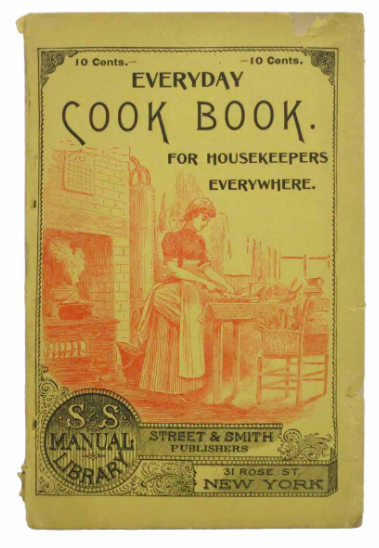
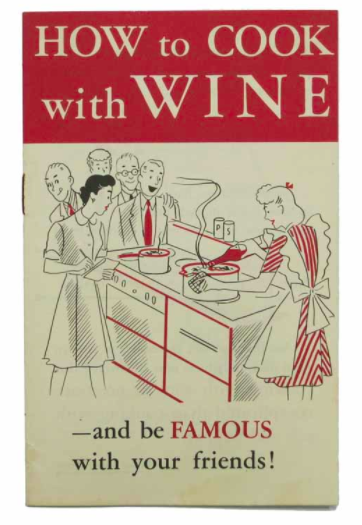
One of our more recently explored, but immediately favorited genres is our collection of cook books and menus! It is so fun to see the changes in recipes and menus through the ages, so we do keep a good look out for those. At the recent California fairs we were lucky enough to find this one – a rare cook book from the Castile Sanitarium! Published in 1911, a 2nd edition, but excitingly not found in Axford, Wheaton or Kelly – with OCLC recording only 2 copies and, at this moment, no others available for purchase in the trade! Check it out here>

Screen Shot 2017-04-07 at 10.10.25 PM

***

The Medical Profession has changed often throughout the centuries – clearly antibiotics were a killer creation, and the leeches thing seems to have run its course (hopefully). Check out this 1856 1st edition of “The Medical Profession in Ancient Times” – a book on a lecture by John Watson to the New York Academy of Medicine the year prior. This copy not only a 1st edition, but also an inscribed presentation copy from the author to George Adlend, Esq. Check it out here>

Screen Shot 2017-04-07 at 10.09.52 PM


***

Now have we got a gift for the newlyweds in your life! Let’s be totally stereotypical for a moment and enjoy this “Complete Cookery Book with Sections on Household Work, Servants’ Duties, Labour Saving, Laundry Work, Etiquette, Marketing, Carvings & Trussing, the Art of ‘Using-Up’, Table Decoration, the Home Doctor, the Nursery, the Home Lawyer…” and more by Mrs. Beeton! There are 4000+ Cookery Recipes in this one volume… if it isn’t a happy homemaker’s dream come true! Check out this 1923 volume here>Screen Shot 2017-04-07 at 10.10.15 PM


***

Our holding of “Where I Was Born and Raised” by David Cohn is in uncommonly nice condition – complete with its original dust jacket in Very Good condition! This author wrote about segregation in America and his stories, such as “God Shakes Creation” should not be missed. Check it out here>

Screen Shot 2017-04-12 at 6.48.49 AM


***

And, saving one of the best for last! Our “Life, Trial, and Execution of Maria Manning and Frederic G. Manning for the Barbarous Murder of Patrick O’Connor” is a series of letters written by our main man Charles Dickens after witnessing the public hangings of Maria and Frederic for the murder of her lover, Patrick O’Connor. Dickens was against public executions like this, which occasioned his writing two letters to the Times protesting the practice of public hangings, emphasizing his belief that such events “had only a hardening and debasing influence on their spectators, and that from the moment a murderer was convicted he should be kept from curious visitors and reporters serving up his sayings and doings in the Sunday papers, and executed privately within the prison walls.” Did we mention that no holdings of this item are found on OCLC? Check it out here>

Screen Shot 2017-04-12 at 6.48.38 AM

Share

OTD in 1926 : H.L. Mencken Gets Arrested in Boston for Selling a Banned Copy of The American Mercury!

Screen Shot 2017-04-04 at 12.22.47 AM

By Margueritte Peterson

On this day in 1926, the Jazz Age was in full swing in the United States. Censorship was not an uncommon or unlawful idea at the time, and many Americans were being held to strict moral codes (like that of the prohibition) that they didn’t necessarily believe in. This was the case all over the United States (as well as elsewhere, but that’s another story for another day), but particularly so in the large East Coast City of Boston, Massachusetts, where the phrase “Banned in Boston” was applied to music, literature, motion pictures, plays among other works of art that had been deemed inappropriate or objectionable by a conservative ruling party. Also on this day in 1926, famed American journalist, critic and satirist H. L. Mencken (Henry Louis Mencken) was arrested in Boston after knowingly and purposefully selling a recently banned issue of his own magazine The American Mercury. This moment in time will forever be remembered as a startling win for those against censorship, as not only was Mencken’s case dismissed but he was later able to win a lawsuit filed against Boston’s Watch and Ward Society for illegal restraint of trade. Though at the time it seemed that his win did little to change the harsh censorship laws in Boston, it did a lot to gather attention.

Now, H. L. Mencken was no stranger to being in the public eye. In fact, he traveled to Boston with none other than the express intention of getting himself arrested for selling one of his own works. He knew that the Watch and Ward Society would make sure he would be punished for selling his issue (banned especially because of a story about a prostitute named Fanny) – and wanted both the attention and the absurdity that was censorship in Boston to be highlighted for the world to see. Not everyone in Boston agreed with the Watch and Ward Society’s harshness, as he was acquitted the very next day by a lenient judge. In fact, around this time Boston began to bite itself in the behind, so to speak, as their banned books began to unintentionally garner favor in other areas of the United States with the taboo of being salacious!

Mencken was a free spirit if there ever was one, and both the prohibition and censorship angered him greatly. He is quoted as saying in 1922, “I am, in brief, a libertarian of the most extreme variety, and know of no human right that is one-tenth as valuable as the simple right to utter what seems (at the moment) to be the truth.” He used his skills and connections in the journalism community to procure a reputation as, well, a bit of a badass! 

Screen Shot 2017-04-03 at 7.44.27 PMThe story of Mencken’s arrest goes something like this – he boarded a train for Boston and once having arrived in the city organized a meeting in a public square with John Chase, the director of the Watch and Ward Society. Once Chase arrived, police in tow, Mencken offered Chase the banned issue of The American Mercury for a half-dollar coin. Chase handed the coin over, dramatically (or so we presume), and Mencken, after having bit the coin (you know, just for good measure), was placed in handcuffs and escorted from the Boston Common! After his acquittal the following day, when the judge ruled that private citizens should not be in charge of what literature ought to be banned or not, Mencken went to lunch at Harvard University, where a crowd of over a thousand happy fans greeted him with applause and gaiety. 

Suffice to say, on this day in 1926 a fairly important moment in the history of censorship was going down! Though the Watch and Ward Society was not shut down and some could argue that no immediate response was garnered from the showdown between Mencken and Chase, here we are, almost 100 years later, still talking about this single incident! Perhaps it wasn’t all for nothing… let’s give H. L. Mencken some credit!

Screen Shot 2017-04-04 at 9.57.56 PM

Share

The Northern California Chapter Quarterly Meeting

This past Tuesday the 21st of March saw the members of the Northern California Chapter of the ABAA at their Quarterly meeting, this time held in Walnut Creek at the elegant Massimo Ristorante restaurant. Tavistock Books had three in attendance, Commander Vic Zoschak, trusty Aide-de-Camp Kate Mitas, and myself! There were 20+ members and guests in attendance, and not only was there a dinner, but as the meeting was held in downtown Walnut Creek, new ABAA member Laurelle Swan held a reception prior to the meeting at her store, Swan’s Fine Books, just a couple of blocks away. On the docket to be discussed at this meeting in particular were some important items – the recent California ABAA and Shadow fairs, our new rep (John Crichton) from the Northern California Chapter in New York, and some very important news on the AB228 law that has severely hurt and hindered many California booksellers. Of course, the evening would not have been complete without some hilarious comments (and some “statements”, too) by many of our local California booksellers. So happy to have been in attendance with a great meal, wonderful conversation and hilarious one-liners – some shared here for your enjoyment along with a few images below!

  • “When the women dressed in drag, married women and fooled them with devices”
  • “She has entered the pit of hell
  • “Uh, no… find another sucker”
  • Insurance fire
  • “Yes, I would probably be banned from China if they ever found out”
  • “I’d like to make some comments if I may… and then make some statements too…”
  • “Everybody was talking about it in MY neighborhood…”

IMG_20170321_190739 IMG_20170321_190757 IMG_20170321_190917 IMG_20170321_201650 IMG_20170321_201801

Share