Category Archives: History

Happy International Literacy Day! All Hail the Printing Press

screen-shot-2016-09-08-at-11-16-17-am

By Margueritte Peterson

As everyone (at least, everyone who is reading this blog) probably knows, the advent of the Printing Press in 1454 (the year the Gutenberg Bible was printed) instigated a major boom in reading and literacy worldwide. Suddenly even the common man could afford a booklet or even a book… there was no longer an aristocratic or religious hold on reading! Huzzah! But how much did it really and truly do? The results are endless. In honor of International Literacy Day, we’d like to take a look at the beginnings of printing for the masses and how it helped shaped the modern world.

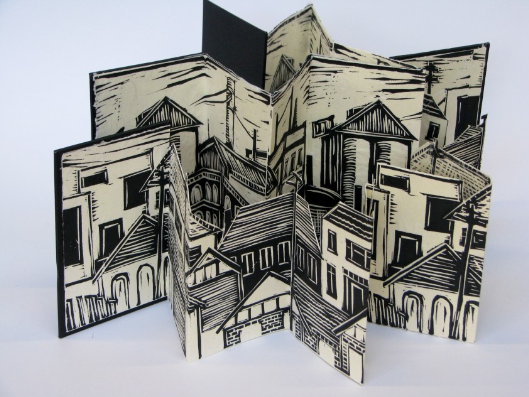
A long, long time ago (not in a galaxy far away), in the 13th & 14th centuries, printing used a technique now known as “block-printing”. Characters and images were literally carved into a block of wood, ink was poured into the crevices, and then the block was pressed onto paper. You can imagine how time consuming and expensive this method was, as each block of words or pictures had to be carved by hand. As “trendy” as woodcuts are now in fine press items, back then they were almost a nuisance – the wooden blocks tended to break after too much use and once a single thing changed within the image an entirely new block would need to be created. As governments and businesses grew to realize the importance of written records in their lives, demand for an easier printing technique became apparent.

screen-shot-2016-09-08-at-11-12-07-am

Johannes Gutenberg

Though several print specialists were looking into faster & easier ways to print for the masses with moveable metal type, the first to make his mark was the well-known Johannes Gutenberg, an aristocrat from Mainz, Germany. Born in 1398, he was in his 50s when his fame spread far for his invention developed with an alloy of lead and tin that would be more durable and far easier to re-use when placed in a printing press. In his format, the reusable separate pieces of type would be placed in the press, and then the mirror images of each letter were carved in relief to create words. And since the letters could be rearranged into any format – the possibilities were endless! Any type of writing could be printed – finally printing was not only a technique used for the wealthy or the church.

screen-shot-2016-09-08-at-11-12-32-am

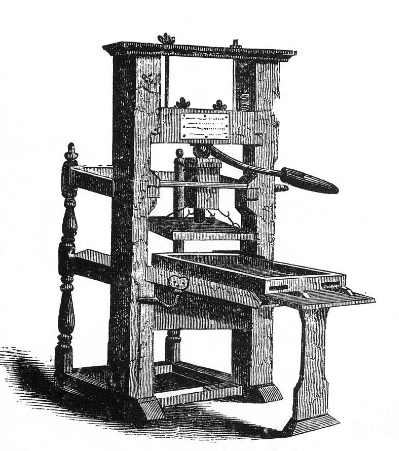
A printing press similar to the one that Johannes Gutenberg set up in the 1450s.

In 1452 at the age of 54, Johannes Gutenberg was finally able to get the necessary funds together to begin what would become his legacy – the Gutenberg Bible. He printed two hundred copies of his Bible in 1454 and sold many of them (for very large sums of money) in 1455 at the Frankfurt Book Fair (glad to know Book Fairs were enjoyed even so long ago!) According to one online source, the Bibles cost the equivalent of three years’ pay “for the average clerk.” (So available for the masses, but sort of not.)

In less than 50 years, over twenty-five hundred European cities boasted printing presses, and the technique grew and spread like wildfire. Of course its immediate effect was that it multiplied by hundreds the production of the written word, and also (quickly) cut the cost of books to an affordable treat. A large population of the world was hungry for information, and the printing press was able to give them what they needed. Though at first the texts still mainly dealt with religious subjects, they soon dealt with a variety of topics and were purchased and read by all kinds of people – scientists, students, businessmen and nobility all benefitted from the advance in printing technology. The advances in many fields (particularly in science and technology) were obvious – the propagation of knowledge in a form available to all manner of people made the sharing of ideas and observations all the more easy.

In a way, the advent of the printing press in the mid 15th century could easily be compared with the spreading of ideas via the internet currently. A quick and easy (not to mention cheap) way of spreading religious, scientific, political and moral thoughts and conceptions went “viral” and literacy rates worldwide boomed in the 1500s. On today, International Literacy Day, we should give thanks to the invention that (in a way) started it all! All hail the moveable type printing press!

A modern day printing press!

A modern day printing press!

Share

Happy Birthday to Mary Shelley… and the Birth of Frankenstein

Screen Shot 2016-07-23 at 1.58.49 PM

By Margueritte Peterson

Once upon a time, there was a large house that sat alone on a cliff in the countryside. It contained more dark corners and cobwebs to count. On one dark and stormy night, inside that house a birth took place. One young lady (and a terribly naive young and handsome doctor) created a terrible creature that would come to haunt the world for years to come. His name… was Frankenstein.

(I was joking about the cliff thing. I have no idea if there were any cliffs or cobwebs about that weekend. In any case…)

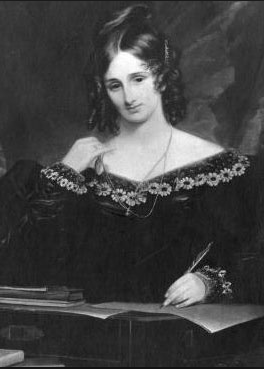
Mary Shelley was born Mary Wollstonecraft Godwin in August of 1797. She was the daughter of the famous feminist Mary Wollstonecraft and the political activist William Godwin. The young Mary was raised by her father after her mother passed away only a month after her birth. Godwin raised his daughter in a relaxed well-off atmosphere, being sure to educate her thoroughly (in literature and the humanities, as well as his own political ideologies). In 1814 at the age of 17 she began a romantic relationship with a fan of her father’s – one Percy Bysshe Shelley. Unfortunately Shelley was already married and their relationship would cause both parties much heartache and also and pain for their loved ones. Mary and her stepsister Claire Clairmont traveled through Europe for a few months, where she became pregnant with Shelley’s child. The daughter was, unfortunately, prematurely born and passed away.

Screen Shot 2016-07-23 at 1.58.24 PMFrom here the story only gets stranger and stranger – with reports that the three traveled around Europe for six weeks on foot reciting poetry and the great classics to each other, returning (when Wollstonecraft was reportedly with child) penniless and bedraggled. After returning, Mary and Shelley (with neither families on speaking terms with the young couple) lived together in a cottage in Bishopsgate. In mid 1816, numerous disheartening events took place – both couples endured suicides from each side of their relationships. Mary’s eldest half-sister Fanny committed suicide (long to have been thought to be because of her exclusion from the circle that Mary and Claire were a part of) by taking an overdose of laudanum in an inn in Wales. A couple months later, Shelley’s wife Harriet was found drowned in the Serpentine lake in Hyde Park, the result from her own suicide. Though both events undoubtedly shook the young couple, it did not detract from their hasty marriage a short three weeks after Harriet took her own life.

Mary’s stepsister Claire Clairmont had fallen in love with Lord Byron (despite his lack of affections towards her) and convinced the Shelleys to rent adjoining houses with the director on the shores of Lake Geneva. She resumed a sexual relationship with Byron, that eventually amounted to a daughter (and little else, as it was said that Byron could not stand her personality and constant desperation for him). In any case, this proved to be a most fruitful summer for Mary (or shall I say, Mrs. Shelley?) as it was here at Byron’s Villa Diodati that the group would meet and work on their writings.

Percy Shelley, the love of Mary's life!

Percy Shelley, the love of Mary’s life!

One night at Villa Diodati, Byron, Shelley, Mary, Claire and Byron’s young doctor John William Polidori made a pact to each write a ghost story. Though this caused Mary severe amounts of anxiety at her lack of ideas, she eventually became haunted by the image of a young man reanimating a corpse… and so Frankenstein was born! Though she began it as a short story, with Percy’s encouragement she fleshed the idea out into her first full-length novel. She would later remark on this summer of writing and editing as the time “when [she] first stepped out from childhood into life.”

This time of writing and intellectual stimulation did not last long, however. The Shelley’s were tormented by the deaths of all but one of their children – and just a few short years later Shelley would drown in a sailing accident off the coast of Italy. Though Mary Shelley continued to write throughout her lifetime – stories for ladies magazines, five volumes of “Lives” to the Lardner’s Cabinet Cyclopaedia, novels such as The Fortunes of Perkin Warbeck in 1830, Lodore in 1835 and Falkner in 1837 – her primary concern was the welfare and well-being of her one surviving child, Percy Florence. She made sure he was brought up in a manner that would have suited his father, and the mother and son were close and very fond of each other. She became quite ill towards the end of the 1830s, and passed away over a decade later of what is suspected to have been an undiagnosed brain tumor. She was only 53 years old. A year later, her son and his wife finally opened her box desk, and are said to have found locks of her two dead children’s hair, a notebook with entries from both herself and Percy Shelley, a copy of on of his poems along with a silk satchel of his ashes and the remains of his heart.

Now that’s true love, eh?

Share

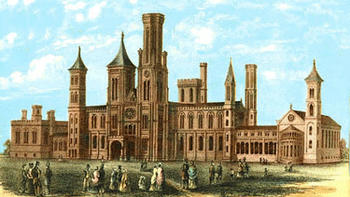
Happy 170th Anniversary to the Smithsonian Institution!

Screen Shot 2016-07-20 at 12.45.08 PM

By Margueritte Peterson

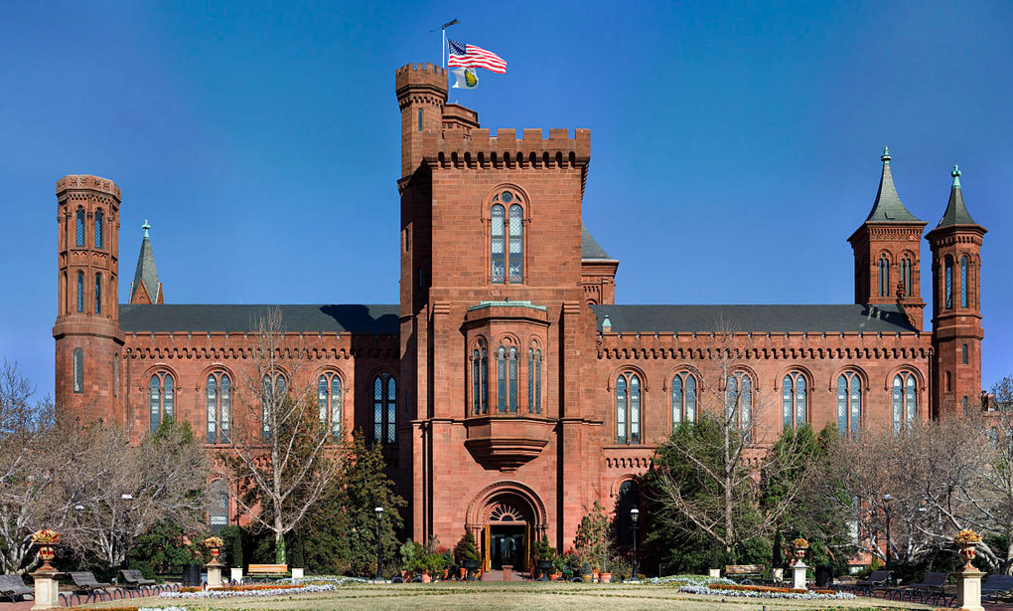
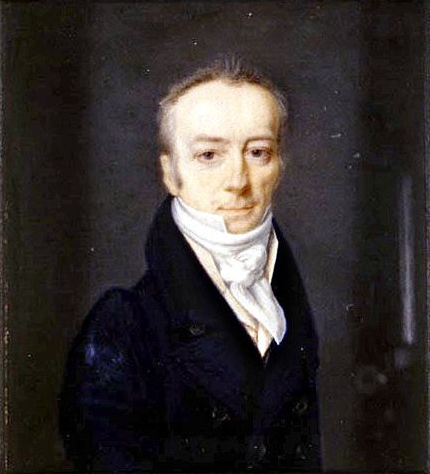
In 1829 an English chemist and mineralogist name James Smithson died. This, in and of itself, should not have influenced the United States in any grand way… but it did! This English chemist, born in Paris and the illegitimate song of the 1st Duke of Northumberland donated all of his lifetime of earnings and his own inheritance to Washington, D.C. and the United States… despite never having been there. What came of this scientists idea of “an establishment for the increase and diffusion of knowledge among men”? Less than 20 years later the Smithsonian Institution was founded in Washington D.C. as an establishment that promoted further knowledge and learning for all men. In his will, Smithson dictated that his funds be left to his nephew and the nephew’s family… or in the event that the nephew had no surviving heirs, to the United States of America for a very specific purpose. 

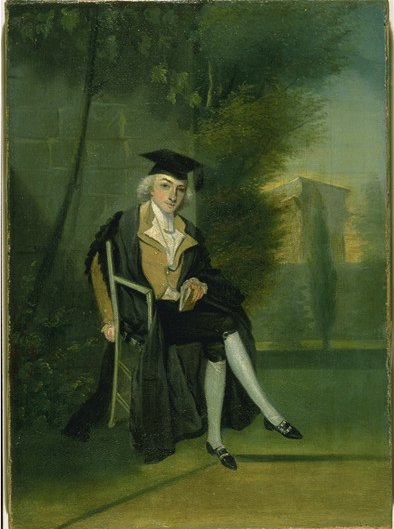
A young Smithson from his days at Oxford.

A young Smithson from his days at Oxford.

James Smithson was born Jacques Louis-Macie in Paris, secretly, on an unknown date. He eventually became a naturalized UK citizen, and even studied chemistry at Oxford’s Pembroke College. After graduating from Oxford, Smithson considered himself somewhat of a nomad – he traveled extensively throughout the UK and Europe and published many papers on his findings. His “findings” covering all manner of topics – from the art and science of coffee making to the use of the scientific substance calamine in making brass. He studied other scientific topics over his lifetime, more to do with his chosen field of chemistry (like the make-up of human tears and snake venom!) Smithson was independently wealthy from an inheritance from his mother, and though he stayed quite busy throughout his lifetime in his studies, never had a career or a paying job. However, his travels did not diminish his wealth and at his death he was still very well-off. Smithson died in Italy in 1829. Six years later, his one and only nephew, Henry Hungerford, died, leaving no heirs. In his will, Smithson dictated that in the event that his nephew died without heirs, [Smithson] then bequeath the whole of [his] property… to the United States of America, to found at Washington, under the name of the Smithsonian Institution, an Establishment for the increase and diffusion of knowledge among men.”

Screen Shot 2016-07-20 at 1.12.09 PMThe United States was unaware of Smithson’s plans until his nephew passed away in 1835. The news was sent to President Andrew Jackson, who informed Congress of their lucky gift. A committee was set up almost immediately to begin planning the Smithsonian Institution. The funds from Smithson’s estate over the next few decades eventually totaled up over $562,000 (the money arriving as gold sovereigns in almost a dozen boxes, alongside Smithson’s personal belongings and scientific findings) – a total almost equivalent to $15,400,000 today!

In February of 1847, the Board of Regents (those put in charge of overseeing the new “Smithsonian Institution”) approved the seal for the institution. The institution opened that year and has remained an unbelievably popular establishment for research and knowledge ever since. These days, taking young children on field trips to the Institution (which has since expanded into a combination of 19 museums and galleries – all but 3 of which are still located in Washington, D.C.) is a common practice, as the collections include over 138 million artworks, artifacts and specimens. The Smithsonian Institution Libraries hold 2 million library volumes – and their Archives hold 156,830 cubic feet of archival material! Talk about an impressive library… the Smithsonian is an American institution with a wonderful history. Happy 170th Anniversary to the Institution!

Screen Shot 2016-07-20 at 1.15.17 PM

Share

The Lost Generation: Expatriates Living in Paris in the Roaring 20s

By Margueritte Peterson

Once upon a time, there was the Roaring 20s. There was plenty of jazz, shorter skirts and illegal booze all over the place.

The End.

Screen Shot 2016-07-02 at 10.52.01 AM

Just kidding! 

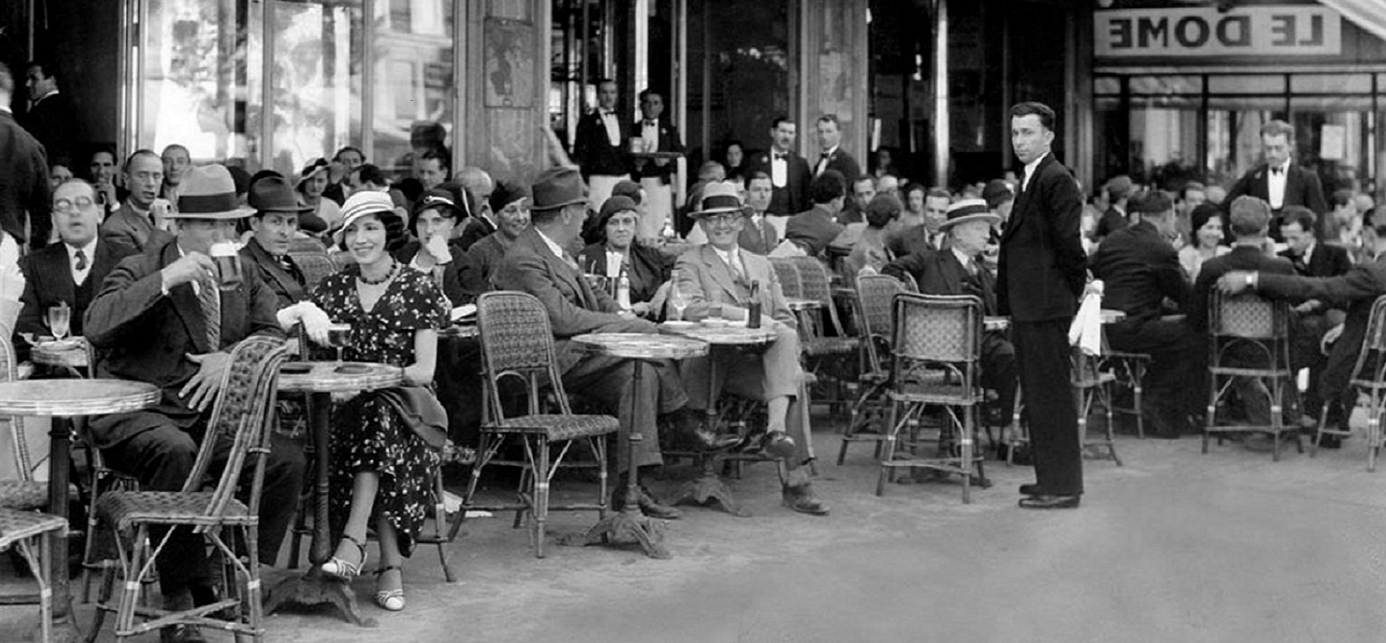
I could never stop a 20s blog with that – not when it is one of my favorite periods! (In an “I would live then only if I could live as Dorothy Parker” kind of way.) The 1920s saw an explosion of color and creativity all over the world, but no place more so than one of Vic’s favorite places in the world… Paris, France. Paris was the heart of the avant-garde movement – the center of the bohemian creative culture – and therefore it drew artists, authors and forward thinkers from all over the world… especially the United States. 

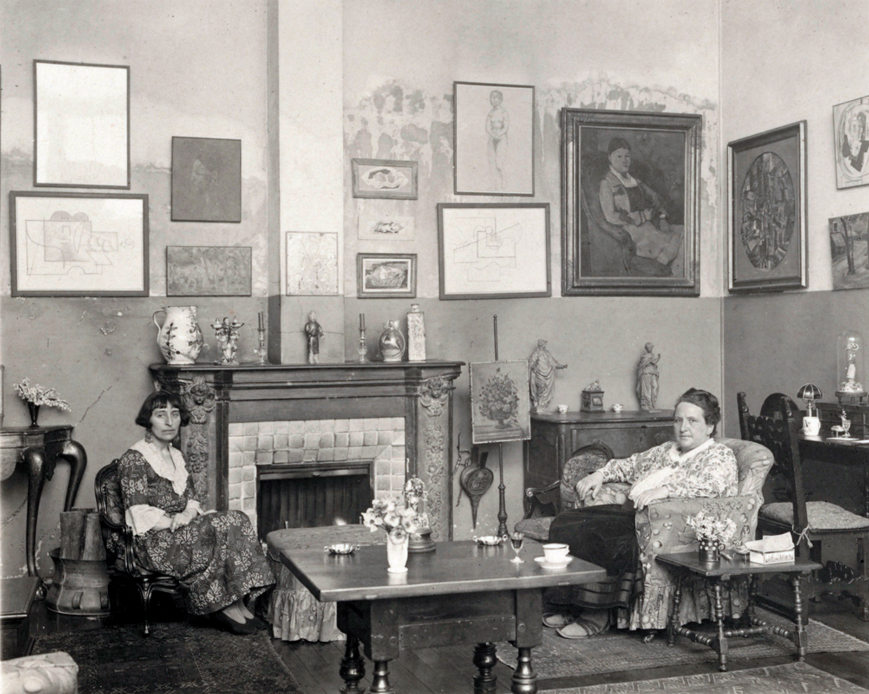
Stein and Alice B. Toklas in her Paris sitting room - second home to many of the Lost Generation.

Stein and Alice B. Toklas in her Paris sitting room – second home to many of the Lost Generation.

It was Gertrude Stein (today is, by the way, the 70th anniversary of her death), prominent literary “hostess” and celebrated figurehead of the 20s literary & artistic movement in Paris, who first thought up an expression for these expatriates living in Paris – “The Lost Generation.” It came to be a well-known phrase and widely used throughout those considering themselves part of this movement. Some of those people included members of any number of artistic circles at the time – Modernists, Dadaists, Expressionists, Surrealists, Cubists… all could be found in Stein’s sitting room at one time or another, asking her impression of their paintings, their films or their chapters. Today we’d like to look at some of the members of this “Lost Generation!”

The British Library hit the nail on the head in its online publication on the American writers living in Paris in the 20s when they said that “On the face of it, the sobriquet of ‘Lost Generation’ seems an odd collective description for a group of writers and artists who were among the brightest flowering of American literary talent yet to emerge on the international stage.” A very true statement – as “Lost Generation” implies a group of people either not recognized for what they are, or without a true home. Both of these statements were not true – they were very much welcome in Paris (as far as “homes” go) and they were recognized as the (often scandalous) trendsetters that they were. 

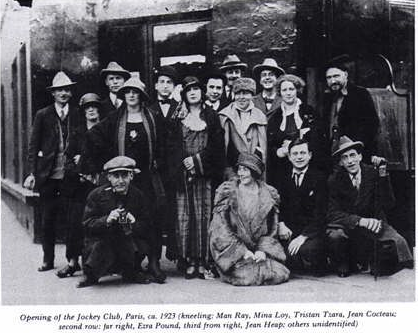
Some members of the Paris culture captured together... James Joyce, Ezra Pound, Andre Breton & Tristan Tzara some of those pictured!

Some members of the Paris culture captured together… James Joyce, Ezra Pound, Andre Breton & Tristan Tzara some of those pictured!

Stein was one of the first to emerge on the Paris scene, moving there in 1904 with her brother Leo (who hoped to pursue art) after abandoning her medical studies at Johns Hopkins University. Stein was there at the perfect moment – just in time to see every expatriate from all over the world move to Paris to pursue alternative lifestyles! Edith Wharton (one you perhaps did not know was part of the expatriate scene) arrived in 1906 and later on wrote The Age of Innocence in Paris. In the 1910s more and more artists and authors relocated, including Tristan Tzara (the Romanian-born father of Dadaism) and Andre Breton (French-born father of the shocking Surrealist movement and friend/student of Tristan Tzara). In the 1920s an influx of American born authors arrived, including many of the most well-known authors to date! F. Scott Fitzgerald & Ernest Hemingway were staples during the Parisian Roaring 20s (Hemingway used to have Stein proofread and edit his work – did you know that?) both setting several novels in this wild and artistic era. Other authors included James Joyce (Sylvia Beach of the Shakespeare & Co. Bookshop first published his novel Ulysses when no one else would), Sherwood Anderson, John Steinbeck, William Faulkner, poet Ezra Pound, visionary author Franz Kafka, poet and author T. S. Eliot were all prominent figures in the 1920s. The 1930s would also prove to be an illustrative time for authors in Paris as writers like Henry Miller and Anais Nin joined the circle and offered their own unique and remarkable literary talents to the world. 


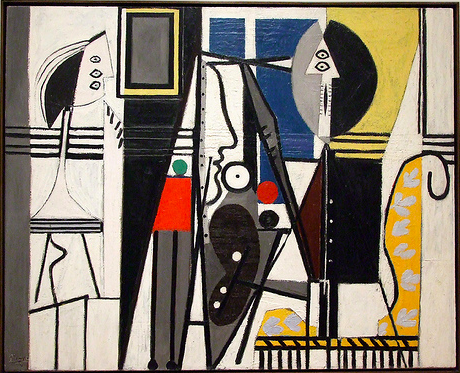
One of Picasso's 1920s works done in Paris.

One of Picasso’s 1920s works done in Paris.

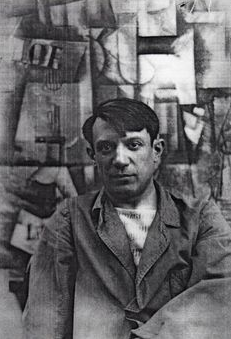
And this is just the authors! Artists included many of the real “greats” such as Picasso, Modigliani, Braque, Cocteau and Duchamp, music geniuses like Igor Stravinsky and Erik Satie were worshipped in parallel next to Cole Porter! This was truly a time of greatness – so much in every field contained in one city. The most striking certainty of this “Lost Generation”, however, is that despite their wild and tumultuous lifestyles, constant partying and detestation of the restrictions and constraints demanded of Victorian and early 20th century life, their work (in all aspects – writing, art and music) shows an astonishing range of depth, profoundness, clarity and sincerity not often found in one sitting.

Share

“It is better to learn wisdom late, than to never learn it at all” The Life of the Great Creator of Sherlock Holmes

By Margueritte Peterson

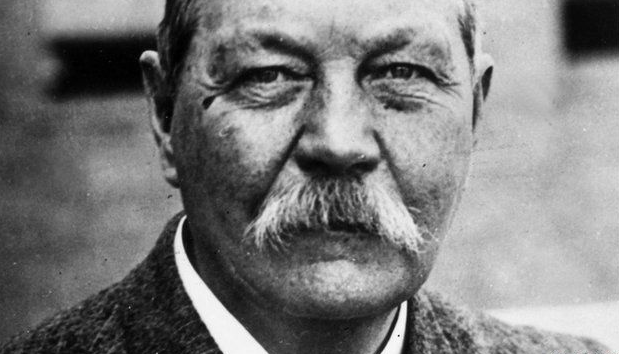
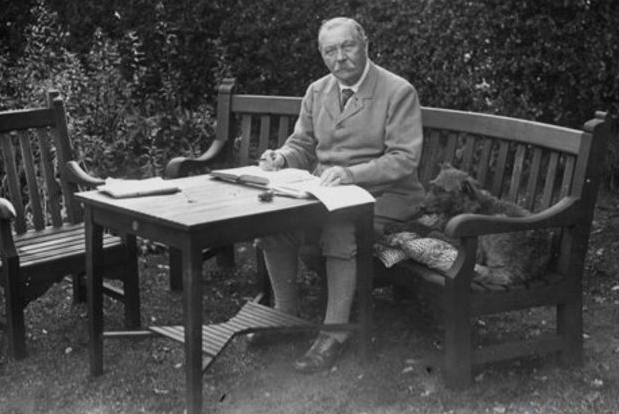
On the 7th of July, 1930, Arthur Conan Doyle died at age 71 from a heart attack. On this the 86th anniversary of his death, we’d like to look at this famous author, spiritualist & physician and his lifetime contribution to so many different fields!

Screen Shot 2016-06-21 at 12.49.00 PMConan Doyle (as he is often called, though Conan Doyle is a combination of his middle and last names, as Conan is not a surname, as people often think!) was not born under auspicious circumstances. His father, Charles Altamont Doyle, was an alcoholic and when Arthur was only 5 years old he and his siblings were dispersed to live with family and friends across Edinburgh. A few years later the family moved back together and for numerous years lived in near-poverty. Luckily, Doyle had wealthy family to support him and to send him to Jesuit boarding school in England for seven years beginning when he was nine years old. Despite a difficult home life and upbringing, Doyle apparently struggled leaving home for school – as he was incredibly close with his mother (and would remain so throughout his life) and cherished the stories she would tell him during his childhood. It is even said that his favorite part of school was writing letters home to his mother, and telling stories to his schoolmates that she had once told him!

After leaving school as a young man, Doyle’s first act as an adult was to co-sign the committal papers for his father, who by that time was a long-sufferer of mental illness related to his drinking problem. After such, Doyle devoted his further studies, surprisingly, to a medical career (I say surprisingly as his family was one of artists) after being influenced by a boarder his mother took in for some extra cash. While at medical school, Doyle met two fellow students who would prove to become life-long friends, as well as literary stars – James Barrie (author of Peter Pan) and Robert Louis Stevenson. Another influential persona on the young Doyle was one of his Professors – a Dr. Joseph Bell. Dr. Bell, with his particular observations, attention and significant powers of logic and deduction would end up being Doyle’s inspiration for the character of Sherlock Holmes!

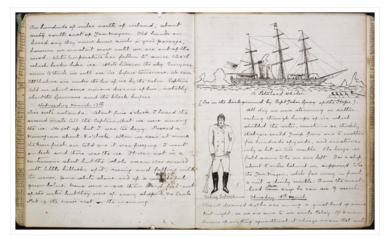
Screen Shot 2016-06-21 at 12.35.00 PMIt was during his medical studies that Doyle first began to write short stories – the first few of which were published in both a smaller journal in Edinburgh and the London Society. It is said that with his publication in the larger UK magazine Doyle first realized that he could, possibly, make a living with his pen. He took off of his studies during his third year of medical school to act as a doctor on board an Arctic whaling boat – an experience that he loved (and kept detailed journals of) and sparked his wish for adventure. After returning to his studies and graduating, Doyle’s first job was to take another surgeon position on board a ship bound for Africa. He was less impressed by this position, however, and upon returning to England eventually opened up his own small practice in Portsmouth. During his time practicing, Doyle wrote short stories on the side and married a sister of one of his patients. He lived a relatively calm and normal life until March of 1886 when he began working on the novel that would propel him into fame and success as an author.

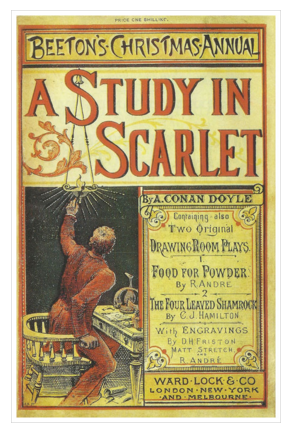
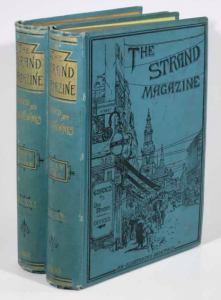
Screen Shot 2016-06-21 at 12.34.14 PMA Study in Scarlet was published in 1888 and immediately became a great success (though, surprisingly, Doyle was received more widely in America at first, than in the UK). Though this first work is well-remembered (as it introduced the world to the immortal characters of Dr. Watson & Sherlock Holmes), and Doyle continued writing other stories and novels. Sherlock became a household name and his stories began to be published in The Strand Magazine on a regular basis. In fact, after only five years of Sherlock titles, Doyle planned the death of this fictional hero and after The Final Problem was published in 1893 (where Sherlock and Moriarty plunged to their deaths at The Reichenbach Falls), over twenty thousand readers cancelled their subscriptions to the magazine!

Doyle’s next few years were troubled times for the author, as he struggled to maintain a readership with other stories and characters, took care of his wife recently diagnosed with tuberculosis, and dealt with the death of his (at this point) severely demented father. In the early 1900s, Doyle decided (more for the happiness of his bank account than his own literary merits) to bring back the character of Sherlock – first in The Hound of the Baskervilles (written as just a previously untold adventure of the famous Detective), and then with The Return of Sherlock Holmes in 1903 – once again serialized in The Strand Magazine. Sherlock Holmes was back, and as popular as ever.

Sherlock Holmes was kept alive despite many obstacles in Doyle’s life. He took care of his wife throughout her illness, raised their two children, wrote, tried (twice, in fact) to throw himself into politics, and began seeing a young woman he felt a deep connection with on the side (though it is thought he remained true to Louisa until her death in 1906). Doyle was also a very active person, participating in many sports and body building throughout his life. Doyle did not only write Sherlock Holmes periodicals, but also in this time wrote several plays and novels – though some popular (some not quite so popular) in contemporary circles are not what he is well-remembered for today.

Screen Shot 2016-06-21 at 12.49.23 PMEver an active participant in politics and wartime (he served as a surgeon in the Boer War some years earlier), Conan Doyle never ceased to look for ways to be of service to his country and his people. Fun Fact: After an attack on the British Navy at the outbreak of WWI where the military lost over a thousand lives in one day, Doyle wrote to the war office and recommended that they invent inflatable belts and inflatable “life boats” in order to save more lives of those at sea. Though many in the offices thought Doyle a nuisance (always interfering), at one point Winston Churchill himself wrote him to thank him for his ideas! As far as I’m concerned, being the one to come up with the idea for inflatable life jackets and life rafts absolutely earns you respect.

One part of Doyle’s history that many like to focus on is his interest in the paranormal and the occult sciences. Having always been interested in certain types of phenomena (even his second published work was a strange occult work of fiction about the afterlife of three Buddhist monks), he became even more so after witnessing the death of his son in the war. His interest in spiritualism (which his wife eventually also shared), led him to believe in anything paranormal – such as the Cottingley fairies (the two girls who posed with fairy cutouts and accidentally started a nationwide interest in the belief of fairies). Though when the need for money rose once again Doyle was able to pen out more Sherlock Holmes tales, most of his writing in his later life focused on spiritualism and psychic pursuits.

Our first appearance of this classic science fiction novel by Doyle "The First Men in the Moon" illustrated by Claude Shepperson, many plates of which are only available in this periodical issue. See more here>

A Collection of Strand Magazine from 1900 to 1901 with Arhur Conan Doyle articles “A Glimpse of the Army” and “Strange Studies from Life” as well as an interview with Doyle – “A British Commando.” See more here>

Doyle passed away from angina and heart-related difficulties in July of 1930. His last words were whispered to his second wife, “You are wonderful.” This great man created one of the most well-known literary characters to this day and lived a full-life, constantly chasing his passions, whether they be literary, political, or spiritual.

Screen Shot 2016-06-21 at 1.54.44 PM
Share

Charles Dickens & the Beginning of “The Pickwick Papers”

By Margueritte Peterson

Get yourselves ready for one of the most morbid (therefore, we celebrate it in high style) days of the year… the anniversary of Dickens’ death! Every year we do a Dickens blog around this day, though I prefer to think of it more as a celebration of life blog, rather than as a homage to his death. Last year we wrote about Dickens’ last (and unfinished) work, The Mystery of Edwin Drood. This year, with your permission, I would like to focus on one of his very first works – The Pickwick Papers. 

To be completely honest, the Pickwick story never grabbed my interest as other works by our main man. No Great Expectations love story, no Christmas Carol morality lesson, no Tale of Two Cities history… what about it could be so enthralling? Now, in all fairness and honesty, I did not scramble to read The Pickwick Papers in order to write this blog. All the information in this blog is found via research. I’ll let you in on a little secret, however… after writing this blog, I just may have to pick it up and begin reading!

As we’ve stated in blogs past, Dickens didn’t begin his career desperate to become a writer. His first passion was to be an actor – and he (most likely, as it seems everything Dickens did he did well) very nearly got his wish – until he became ill before his first audition and was unable to perform. For reasons we may never know, Dickens did not try to book another audition and never attempted to become an actor again. Instead, he settled down as a political journalist in London. His first published collection of writings was called Sketches by Boz and consisted of various character sketches originally found in his periodicals. Sketches was immediately popular and Dickens rapidly gained success and fame. 

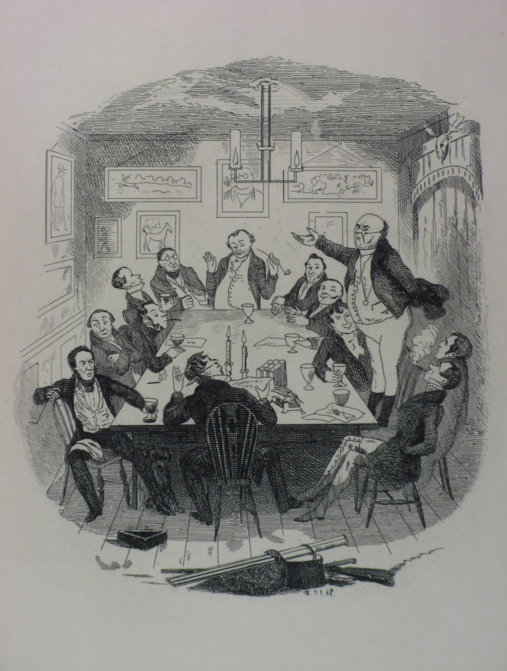
One of the original illustrations by Seymour.

One of the original illustrations by Seymour.

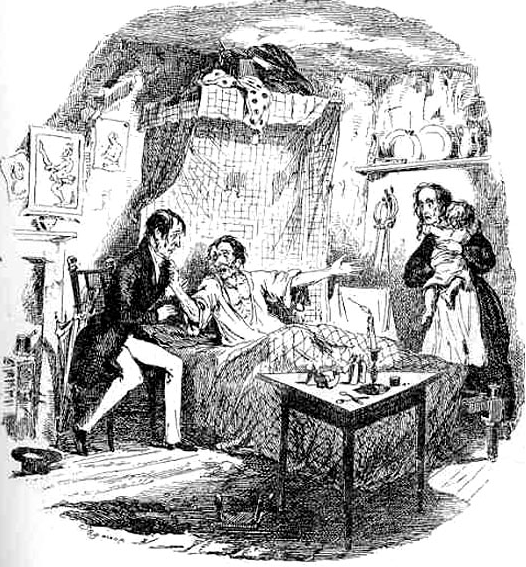
Here’s where the Pickwick story gets interesting. Amusingly enough, Pickwick was not an original idea by Dickens. Pickwick actually began when publishers Chapman & Hall asked Dickens to provide text to match illustrations by (somewhat) popular cartoonist Robert Seymour. Even Dickens later admitted that the idea was not his – that it was Seymour’s. However, the presumption that The Pickwick Papers would have amassed the popularity that it did without Dickens – is completely false. 

[Now, I do hope that this blog does not come across as hating on our main man – not at all! I am not trying to say that Pickwick was not at all his idea, though it was what bought him much in the way of fame and success. (Though, that is, you know, technically true about how it all began.)] What I do aim to do with this blog is to bring to light a slightly tragic tale that isn’t well-known about the origins of the Pickwick Papers. 

One of the more difficult scenes Seymour had to illustrate for Pickwick.

One of the more difficult scenes Seymour had to illustrate for Pickwick.

What is fact and known about the beginnings of the book is that after Chapman & Hall picked up on his idea, Robert Seymour was contracted to make 4 engravings for each written installment of the book (as usual for the time, they were published in installments) and he and the publishers chose Dickens to write the book alongside the illustrations. However, before the second episode could be completed, Seymour committed suicide in his home in Islington, following severe stress and a mental breakdown. The mental breakdown could, possibly, have had something to do with the very little monetary advance Seymour was paid for the Pickwick installments, and also with his struggle to illustrate according to Dickens’ text (according to sources at the time, Seymour envisioned a much more light-hearted tale than he ended up illustrating, at the beginning). In any case, Seymour did struggle with depression, and the somewhat ugly truth of the matter is that, after his death, when Dickens teamed up with “Phiz” to illustrate the rest of the text and introduced the Cockney character of Sam Weller, the series became immediately more popular and sold in much higher volume. 

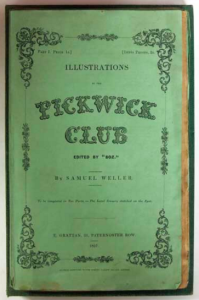
Check out our holding of Pickwick illustrations, circa 1837!

Check out our holding of Pickwick illustrations, circa 1837! See it here>

So what does this all mean? Truthfully, in my (not-so) humble opinion… it means… not much. It is a sad tale, that makes it sound a bit like Seymour got the short end of the stick, yes. However, I think that the fact that the series did not become interesting to readers until Dickens had full control of the text and the full cooperation of the illustrator – is important. We know Dickens was a performer, a writer, a  journalist, and a well-known socialite (eventually)… perhaps we should agree that he possibly also knew what the people wanted! And though Pickwick might not have began with Dickens’ imagination, he was, ultimately, the one who truly brought the text to life. So on this anniversary of Dickens’ death, remember the man as he was – someone who immortalized stories, not just wrote them!

Share

Look no further… than the Latest Items at Tavistock Books!

Screen Shot 2016-05-25 at 8.15.08 AM


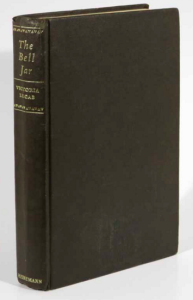
Does the name Victoria Lucas ring a bell to you? She’s a super famous poet! We recently wrote a blog about her, even. Not ringing with understanding yet? Hmm… she also struggled with depression her whole life and wrote some of her most famous poems at the peaks of her despair. Here’s a hint if you’re STILL confused… Victoria Lucas is her pseudonym. That’s right, ladies and gents – it’s Mrs. Sylvia Plath. And here we offer a 1st edition of her novel “The Bell Jar”! See more here>


Screen Shot 2016-05-25 at 8.15.34 AM

We can’t get enough of Plath around here… have you ever read her Journals? Get on that as soon as possible! But first, perhaps you’d like to spend some time with a 1st edition of her, arguably, most famous book of poetry – published, unfortunately, in 1965, two years after her death. Interested? See it here>
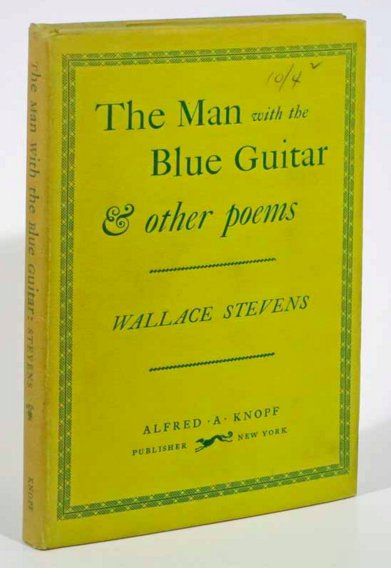
Screen Shot 2016-05-25 at 8.16.35 AMFun fact about poet Wallace Stevens – winner of the Pulitzer Prize for one of his books of poetry! He loved to visit Key West (which is evident in much of his poetry) and while there, he encountered writers and poets Robert Frost and Ernest Hemingway… both of which he argued with each time! Did I say argued? Ernest Hemingway beat him to the curb outside, is what I meant. Nevertheless, Wallace was an important figure on the poetry scene, even if only for a while! His poem “The Man with the Blue Guitar” we offer here>

Screen Shot 2016-05-25 at 8.16.48 AM

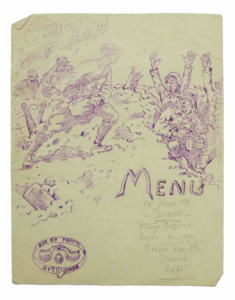
A collector of cookery items and menus knows that it is difficult enough to find a menu in good shape from the beginning of the 20th century. How about a menu in VG condition… from the trenches of WWI? We wouldn’t lie to you! This menu even has a graphic illustration of soldiers confronting each other in the war. Check it out here>

Screen Shot 2016-05-25 at 8.17.04 AM

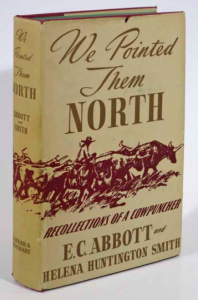
“We Pointed Them North: Recollections of a Cowpuncher” is one of the best books depicting cowboy life that we have in our inventory today! Though born in England, “Teddy Blue” Abbott was a cowboy from a young age – once his parents moved him to Lincoln, Nebraska and his father let him try his hand a herding cattle! But oh, we shouldn’t tell you the entire story, should we? Read his memoirs here>

Screen Shot 2016-05-25 at 8.17.27 AM

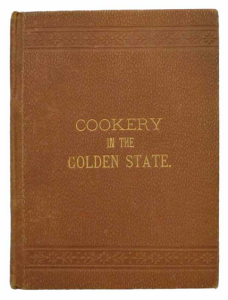
We love our cookbooks here at Tavistock Books… Ever wish you could make Pea Fritters or Rice Coquettes? This book is the cookbook for you! Our “Cookery in the Golden State” is a 1st edition published in Sacramento in 1890… by our good old Unitarian Ladies! Somewhat scarce in the trade, this book will meet all your cookery collection needs! Try the recipes here>

Screen Shot 2016-05-25 at 8.17.40 AM

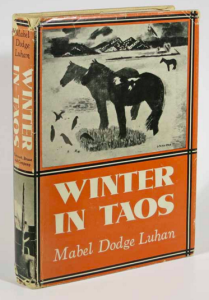
It is always a wonderful thing when you meet someone who truly and desperately loves where they are and what they are doing. Too often we are too apt to complain about where we’ve decided to settle! Not for Mabel Dodge Luhan and her beloved Taos, New Mexico. Her “Winter in Taos” describes her simple life from season to season, in an almost stream-of-conciousness style. She connects with the earth and finds great “pleasure in being very still and sensing things”. Find out about Luhan’s deep connection with the “deep living earth” here>

Screen Shot 2016-05-25 at 8.18.04 AM

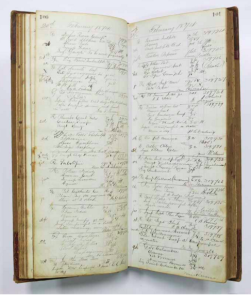
This is not your average manuscript book… this is a book of a pharmacy’s ledger of prescriptions… from 1874! Essentially an apothecary recipe book containing innumerable medicinal formulas with ingredients and dosage instructions from an unnamed apothecary in the Boston Area at the end of the 19th century. Truthfully, we would note this as an invaluable primary source for medicinal recipes used by the US medical community in the 1870s. Forget WebMD… check it out here>

Share

“In the beginning the Universe was created. This has made a lot of people very angry and been widely regarded as a bad move.” OTD in 2001, the Universe Lost … “a dreamer, a thinker, a speculative philosopher… or, as his wife would have it, an idiot.”

Screen Shot 2016-05-11 at 11.30.35 AM

By Margueritte Peterson

As a child, I was required to listen to many different things. Classical music, for one. Teachers getting annoyed with me for asking too many questions, for another. And… The Hitchhiker’s Guide to the Galaxy quotes, for a third. For that last particular factor I have my father to thank. (Though actually, now that I think about it, he seems to have had a major hand in all three of those particular life events… but I digress.)

Douglas Adams may be best remembered for his humorous saga The Hitchhiker’s Guide to the Galaxy, a “trilogy” of five books which sold over 15 million copies during the author’s lifetime, but he was much more than a simple humorist (or was he?). He was a script writer, a lover of Doctor Who (he wrote and edited for the show on more than one occasion), and a self-proclaimed radical atheist (as in… if you asked him if he meant agnostic he may have attacked you with a wet towel). By adulthood Adams stood at 6’5″- but his stature was far from the only thing that set him apart from the crowd!

Screen Shot 2016-05-11 at 11.28.16 AMAdams was born in March of 1952 in Cambridge, England. Though his family only lived there a few short months after his birth, where he then moved a couple times throughout his childhood – first to East London and then, once his parents divorced, to Brentwood – a small city in Essex. By the time the young Adams reached age 12 he already stood at (nearly) his full height – his early growth spurt only rivaled by his short stories, poems & essays as for what was most interesting about him. He was a published author by the time he was 10 years old, with his earliest writing found in school publications and local boys’ comics. Adams continued to write sketches and humor throughout his time at school, though, in all other aspects, his University education was otherwise… predictable.
After University (St. John’s College, Cambridge), Adams moved to London with dreams of becoming a writer for television and radio. Amusingly enough (pun intended), his breakthrough came with his contributions to Monty Python – he not only helped write sketches for the show, but even made special appearances a couple of times… and was only one of two people who ever received writing credit for the show outside of the original cast members. Though he made this early success with the Monty Python gang, Adams then hit a wall in regards to his writing. For a time he was unable to publish any of his work (due to a lack of interest by fools) and performed odd jobs (even as a bodyguard and a chicken shed cleaner… apparently) before moving home to live with his mother in 1976. (All great adult men live with their mothers at some point… right?)
Screen Shot 2016-05-11 at 11.29.47 AMThis gloomy state of affairs did not last long for Adams, however, as when he and radio producer Simon Brett pitched the idea of The Hitchhiker’s Guide to the Galaxy (an idea that came to Adams while he was lying drunk in an Austrian field…. I couldn’t make this up if I tried) to BBC Radio in 1977 it was immediately taken up by the station. The series began being broadcast on the UK’s BBC Radio 4 in March and April of 1978. The success of the initial series led to a special Christmas episode the same year and a second series broadcast in early 1980. Despite a difficulty in writing to appease deadlines (he is famously quoted with “I love deadlines. I love the whooshing noise they make as they go by”), Adams published five novels in the Hitchhiker’s series, from 1979 to 1992. The Hitchhiker’s Guide to the Galaxy was the beginning of a cult phenomenon – comic books, computer games, spin-offs and movies have just been the start of the HHGG following!

Towards the end of his (painfully short) life, Adams authored another short series (just two books) on Dirk Gently and his life – a story Adams himself described as “a kind of ghost-horror-detective-time-travel-romantic-comedy-epic, mainly concerned with mud, music and quantum mechanics” that Adams loosely based on characters he used previously in his contributions to Doctor Who. Also later in life, Adams became an environmental activist, campaigning for the sake of various endangered species. He took his environmentalist acts extremely seriously, like in 1994 when he raised over £100,000 by traveling to and climbing Mount Kilimanjaro in a rhino suit for a British charity called Save the Rhino International.

Adams died suddenly on May 11th, 2001 from a heart attack after working out at a private gym near his home in Southern California (and people ask why I don’t exercise…). However, don’t fret (at least, not on your left-handed guitar, of which Adams had a collection of 24 when he passed away) – May 25 celebrates international “Towel Day” – a day where fans of The Hitchhiker’s Guide to the Galaxy openly carry towels around with them… as “any man who can hitch the length and breadth of the galaxy, rough it, slum it, struggle against terrible odds, win through, and still knows where his towel is, is clearly a man to be reckoned with.”

… Please excuse me while I go look for mine!

Screen Shot 2016-05-11 at 11.26.45 AM

Don’t panic… I found it.

Share

“It is better to be feared than loved, if you cannot be both”… As we lose one “Prince”, We Study Another

By Margueritte Peterson

Niccolò Machiavelli is a name known to many. We all know (with a name like Niccolò… it’s pretty obvious) he was Italian, we know he wrote “The Prince” and we know that he is quoted by posh academics. Often. And at length. 

But what else is known about our man Machiavelli? For instance, did you know that he was once imprisoned by the Medici family for three weeks and tortured under his supposed involvement in a conspiracy against them? Or that he was in Rome during the time of the Borgia rule and witnessed the cruel and (dare we say it…) anti-Christian dealings of the family to their subjects? No, you weren’t aware? Well, well… sit back, relax, and allow us to (briefly) enlighten you! (Niccolò would be so proud.)

Screen Shot 2016-05-03 at 10.11.03 AMNiccolò di Bernardo dei Machiavelli was born on the 3rd of May, 1469, to a well-respected Florentine family that is believed to have been descended from the old Marquesses of Tuscany. During the years of Niccolò’s youth, battle for power in Italy raged on and on… Italy consisted of many separate city-states, all ruled separately (imagine that) and the struggle for power of the different states was consistent. In 1494 Florence banished the Medici family (though they had been ruling over Florence for over sixty years) and restored a Republic government to the city-state. In this new Republic, Machiavelli was appointed to a medieval writing office that placed him in charge of the production of official Florentine government documents. Also during this time, Machiavelli was made the Secretary of a council called the Dieci di Libertà e Pace, a group which was entitled to a separate control over some departments of the interior. 

With these two highly coveted positions, Machiavelli went on several diplomatic missions, most notably to Rome (where he witnessed the somewhat savage practices of the Borgia pope) and to both the French and Spanish royal courts. These missions had a great influence on Machiavelli’s political opinions and played a key role in his later literary works. Unfortunately, at what one might consider the peak of his political career in 1512 (at one point just a few years earlier he had been responsible for the entire Florentine militia), the Republic of Florence was overthrown and the Medici family returned to power. Accused of acts of conspiracy against the Medici family, Machiavelli was imprisoned and tortured (thought to have had both shoulders dislocated… ouch) but was released a few weeks later and exiled to his father’s country property south of Florence. 

Our beautifully bound LEC holding of The Prince,  circa 1954.

Our beautifully bound LEC holding of The Prince, circa 1954. See it here>

It is during the years he spent at his father’s estate that he wrote his most notable (or most remembered) works. The Prince (1513), a work of political theory which focuses on the concept of the people needing a “new prince” rather than a hereditary prince – a man of strength and valor, immorality and fearlessness (and apparently like… no emotion). Machiavelli dedicated it to the new ruler of Florence, Lorenzo di Piero de’ Medici (the Lorenzo de Medici’s grandson), in hopes of being brought back into the Medici’s good graces. His plan worked and he was allowed to return to Florence, but unfortunately was never allowed to resume his grand political lifestyle. 

Machiavelli, stripped of his titles at this point and considered an average citizen, went on to write several popular plays of the time, and insinuated himself into many Florentine intellectual groups. He carried out hope to return to the political sphere until his death at the age of 58 in 1527. 

Share

“And then I spent two years wandering the Sahara Desert before being rescued by a wandering trio of exiled German princes who brought me along as their entertainment… a court jester, if you will…”

Screen Shot 2016-04-20 at 10.06.51 AM

By Margueritte Peterson

Personal confession: normally I am a proponent of all types of blogging. Though I believe the (not-so-old) adage “Don’t believe everything you read on the internet” – I also find the internet to be a most useful place for information. Some of it genuine… some of it not quite so genuine… some of it kind, some of it negative. In any case, the internet is a fount of information. And I do use it – boy, do I use it! 

However, that being said, there is one thing that I cannot make up my mind on how I feel about it. The internet is partially responsible (in my own humble opinion) for making one particular genre of published book not quite as popular anymore.

Travel Writing.

Nowadays, just about anyone can and does post just about anything they want online. They went on a hike with their girlfriend and found a killer “secret” camping spot? Let’s tell the entire online world! (Not so “secret” anymore – so much for skinny dipping!) Did you travel to Versailles with your parents and take pictures of every single item of gold you saw? Post them to Facebook! Gone are the old days where someone went on adventures that others might never experience and went home to write colorful and descriptive tales about their travels. Travel writing had to be good enough, exciting enough and gripping enough to spend money to publish it – it had to appeal to the masses. Now don’t get me wrong – I love to travel and always want to write about my “adventures” – but I would rather write them down for a book than blog about them online! Perhaps it is old fashioned of me, but I think that this is a genre that we ought to bring back.

Try this 1879 1st edition on for size! See it here>

Try this 1879 1st edition on for size! See it here>

Travel Writing began as early as the 2nd century, when Pausanias wrote his Description of Greece and when Gerald of Wales wrote Journey Through Wales and Description of Wales (does it count as travel writing if you are reporting on your own hometown? Apparently so if it was written in 1191 and 1194). Travel writing was also a fairly common genre in medieval Arabic literature, with the travel journals of Ibn Jubayr (d. 1214) and Ibn Batutta (d. 1377) being the most well-known examples of this genre. In medieval China (the end of the Song Dynasty, in particular, 970 – 1279) travel literature was also widespread, and belonged to a genre the Chinese named “youji wenxue” or “travel record literature.”  Authors in medieval China wrote narratives, essays and prose that extensively focused on geographical and topographical information – authors like Fan Chengda and Xu Xiake are two of the most celebrated writers of this period’s genre – and their descriptions are valuable and amaze academics to this day! Even other nationalities were interested in describing Ancient and Medieval China… Venetian traveler Marco Polo, for example, wrote extensively about his travels and adventures when he reached China in 1271. His writings sparked other adventurers for centuries after his death in 1324 (be they authors or not, such as explorer Christopher Columbus).

Going further down the chronological ladder of history, in 1589 an English writer known for promoting the settlement of North America by the British, Richard Hakluyt (d. 1616) published his text The Principall Navigations, Voiages and Discoveries of the English Nation – a book (which ended up as 3 volumes) that detailed lands around the world and was based on as many eyewitness accounts as Hakluyt could find. His texts are widely accepted as the foundations of the “modern” travel literature genre.To this day, the London-based Hakluyt Society publishes scholarly editions of travels, adventures and voyages.

The 1700s is where things become, if I may interject my own personal feelings about it (which I never fail to do)… fun. In 18th century Britain, most of the most famous authors worked in the travel literature genre and once published would travel widely (imagine that) and give lectures about their books and their anecdotes. Captain James Cook’s diaries published in 1784, for example, were unbelievably well-known and were some of the most exciting publications to ever be made available to a literate public. Entering into the 1800s, Charles Darwin detailed the HMS Beagle’s journey and findings – a combination of travel writing, scientific study and natural history/geography. Not all authors of the period combined science with their studies – some interspersed humor with their anecdotes… authors like Mark Twain and (even our main man) Charles Dickens are good examples of other travel writers in the 1800s.

Our Richard Halliburton Archive, complete with letters about his daring voyage (which would be his last) aboard a Chinese Junk Ship attempting to cross the Pacific ocean.

Our Richard Halliburton Archive, complete with letters about his daring voyage (which would be his last) aboard a Chinese Junk Ship attempting to cross the Pacific ocean. See it here>

Travel writing remained popular through the 20th century, with a higher emphasis on adventure tales, as travel was becoming more and more possible with the advent of different types of transportation – the car and the plane, in particular. Adventurers and authors like Richard Halliburton made their name by performing acts of bravery (and/or stupidity) and experiencing highly unlikely scenarios.

Humans have not lost the yen to travel and experience… so why has this type of narrative fallen a bit away from its original intent? Because times change! Though this is not a bad thing and who knows… perhaps one day I will end up writing my own travel blog… I still yearn for the days where one could read the “Royal Road to Romance” and see the adventure and the distant lands in our minds alone – without seeing a 3D movie about the same things! Who’s with me?

Share