Meet Art Conservator Extraordinaire, Karen Zukor!

Karen-Zukor

Karen Zukor, Senior Conservator at Zukor Art Conservation. Photo courtesy of SF Gate.

This week we welcome special guest Karen Zukor to our blog! Zukor is the senior conservator at Zukor Art Conservation. She’s been a professional paper conservator for more than thirty years and is a Fellow of the American Institute for Conservation. She’s been responsible for many collections, both public and private, trains both pre- and post-program interns, and offers lectures and workshops to the public. This week she was kind enough to sit down with us to discuss her career path, how conservation has evolved, and how rare book collectors can preserve and protect their collections.

Tav Books: You’ve been in conservation for over thirty years. How did you decide on this career?
Zukor:Initially I was teaching Art History on the East coast, but when I moved out to California in 1974 with my husband, I couldn’t find a teaching position. My interest in art & history also included a curiosity about materials and techniques, so conservation seemed like a good fit. However, I didn’t know really what it entailed or whether I’d have aptitude for it. So I apprenticed with two different conservators and took many courses in related fields. When those apprenticeships were over, I continued to work in the studio with the conservator who initially trained me; that was great because I always had a more senior person there to help me over rough spots. I opened my business four years after those apprenticeships began and worked out of his studio. Eventually, about two or three years later, I moved out on my own.

Tav Books: How have conservation techniques changed since you began your career?
Zukor: I would say that chemical research, particularly in paper conservation, has advanced quite a bit. We’ve gotten a lot more information about the processes that were in place for many decades and also potential treatments in the future. In some ways it’s been a subtractive rather than a cumulative process; long-term research has shown that many conservation techniques are simply not as successful as we’d like them to be–and in some ways can be detrimental. We know more, but we do less. The attitude has changed quite a bit.

Conservators these days are more conservative and practice more restraint. In this field, you’re always implementing some kind of intervention, no matter how subtle. But in the last 25 years, I’ve seen more conservators choose the most minimal treatment and opt for housing an object properly, to slow down the deterioration, rather than to reverse its damage. I think this is my approach, but we also do more full treatments. We have a great deal of experience, though! Right now about seventy percent of our projects are art on paper. The rest is archival material, manuscripts, maps, documents, and books.

Tav Books: Explain the differences among preservation, conservation, and restoration.
Zukor: Restoration usually involves removing as much of the damage as possible, returning the object to a condition that most closely resembles the way it looked when it was originally manufactured. When you conserve an item, you try to remove damage–ravages of time, stains and soil…but you acknowledge that the piece can really not be returned to its original appearance. The focus is instead on trying to stabilize the object both physically and chemically, while acknowledging that the object will continue to deteriorate. There’s less emphasis on cosmetic appearance.

Preservation is about finding the best long-term care and storage for an object, so that deterioration is minimal or at least slowed down as much as possible. When we preserve something, we often ask, “What kind of enclosure or package will give the most protection?” For a book, that would be a box–it keeps out light, dust, and should made out of good quality archival material.

The only times we do restoration is when we fill losses with paper that’s as close as possible to the original. If it’s not a terribly valuable object, we’ll draw in the missing image or tone the paper. For preservation we sometimes do enclosures, especially boxes, for clients so that we know the piece will be properly housed for long-term storage.

One of Zukor’s more unusual commissions: to open a time capsule from 1896! Check out what she finds inside. 

Tav Books: What are the most common issues you address?
Zukor: We work on a lot of prints, drawings, and watercolors, and the most common problem is that they come in having been mounted to a board of poor quality. So they were either at some point glued down to a rigid support (because people always seem to think the piece looks better flat). Unless those supports are really good quality, they’ll transfer their properties to whatever’s attached–if you mount something onto an acidic board, that acidity will migrate to the piece. And you also change the nature of the piece; that print attached to a board is no longer a print; it’s a board with an image on it.

A second mistake we address on a regular basis is the use of pressure sensitive tapes. These are usually either used to make repairs or to attach a work of art to a mat. Paper conservation is relatively new. It’s only about sixty years old. And people only started studying paper chemistry and the factors that caused paper to deteriorate in the 1930’s and 1940’s. Research about pressure sensitive tapes is even more recent than that. And formulas for manufacture change periodically–masking tape from 50 years ago is a completely different product, so it will age differently than masking tape manufactured today.

Tav Books: What’s the most challenging or interesting project you’ve tackled?
Zukor: Oh, there are too many to single out! But probably the most challenging was a project in India with a very large, extremely damaged book, all hand written and illustrated in water-sensitive colors. The volume was close to 1,000 pages. It took three people six months, spread out over five years, to do the text. It was very difficult because we were working in an extremely remote location, so we had to bring everything we needed with us, which also led to some instances of interesting improvisation!

Tav Books: Any favorite materials to work with?
Zukor: The first thing that comes to mind is really Japanese papers. We do all of our repair, mending, and backing with very good quality Japanese papers because they’re thin, strong, and flexible. They are wonderful to work with! They’re much better quality than what we could get in the West. It’s pretty much all paper conservators work with. Most of them are handmade, and not dyed. They’re made of different kinds of fibers than they have here in the West. Japan makes the best paper without a doubt, and it’s certainly an arduous process. The conservation community has been partly responsible for keeping Japanese paper manufacture a viable craft.

Tav Books: Tell us a little bit about the kinds of works on paper that are most durable. What about the ones that are most delicate or fragile?
Zukor: Older papers are made from better quality fiber, such as cotton or linen. They also don’t contain a lot of additives or bleaches that would contribute to their deterioration. Later papers had sizings, bleaches, brighteners…all kinds of components that made paper less durable than the earlier ones. The absolute worst quality is newsprint, which is ground wood pulp.

Tav Books: To what extent does the material impact the way it should be stored and preserved? Zukor: The poorer quality the paper, the more likely it is to become brittle and darkened with exposure in just ordinary conditions. Pages made from low-quality paper need more protection from light, heat, humidity, and one another. They often need interleaving material. This can present a problem with antiquarian books, because you can’t interleave the entire book. That would put too much stress on the binding. But owners can definitely put acid-free tissue over the illustrations.

Tav Books: What’s the biggest mistake that private collectors make in caring for/storing their collections?
Zukor: Neglect. Not paying enough attention, not investing in the right materials, and ignoring the need to provide protection with the right kind of materials. Not only to slow aging in the individual item, but to protect different items from influencing and damaging one another. Collectors also tend to handle their items with less than very clean hands. I’m a hand washer because I think that white gloves, no matter how well fitted, give you a less secure grip on the item. There are some instances where gloves are imperative, but most of the time we recommend that people just wash really thoroughly.

The other thing I would emphasize is that collectors should not try to do their own repairs. If they don’t want to take something to a conservator, the best course of action is to leave the piece alone. Don’t attempt to do any repairs or add any material that you think will work! We spend a lot of time undoing work done by people with good intentions.

Karen Zukor and her team specialize in the repair and preservation of art and artifacts on paper, from prints and drawings, to documents, maps, manuscripts, and rare books. Their field of expertise covers a broad spectrum, from small repairs to the treatment of severely damaged and deteriorated objects. Zukor Art Conservation is equipped to handle large-scale works on paper, and can host on-site workshops for up to twenty people. Their lab is designed to provide conservation treatment for both single artifacts and larger collections. Whether of artistic, historic, or personal significance, every item is viewed in context, with consideration for how it will be used.  

Share

Planes, Trains, and Automobiles!


Summer is officially underway, and the season is synonymous with family vacation, road trips, and carefree adventures. Though the ways we travel have evolved over time, the thrill of the journey endures.

Planes

Since the beginning of time, humans have been obsessed with flight. At first, their attempts were based on the way birds flew. Next the hot air and hydrogen balloons gave us a means of navigating the skies. But it was two bicycle manufacturers from Dayton, Ohio who would introduce the airplane. The Wright brothers revolutionized travel, war, and commerce with their invention.

The Call of the Clouds

CAll-Clouds-GallaudetEdson Gallaudet formed the first aircraft engineering office in 1908. Two years later, Gallaudet Engineering Office had begun building planes under contract. The company was reorganized as the Gallaudet Aircraft Corporation in 1917 and offered its first product, the Curtis floatplane, the following year. This rare trade catalogue, The Call of the Clouds, presents the Gallaudet Chummy Flyabout Sport Model–which sold for the low price of $3,500. We’ve found no evidence that this plane was ever actually produced, making the catalogue a fascinating record of a machine that could have been.

Pilot’s Flight Operating Instructions

Pilots-Flight-ManualsOur collection includes three pilot’s’ flight operating instructions for Army planes, published in 1945. These flight manuals address both American and British planes used during the World War II era, such as the P-51 and B-29. They incorporate numerous charts and graphs for pilots, along with a few annotations from the original owner. For those interested in aviation or military history, this collection of documents are quite fascinating.

Aeroplanes

AeroplanesA rare early aviation trade catalogue, Aeroplanes presents models manufactured by Aug. C. Gomes & Cie, with specifications, illustrations, and performance records for Henry Farman, Sommer, Bleriot, Tellier, Voisin, Antoinette, Maurice Farman, REP, and Hanriot models. A powerplant section follows, and the catalogue concludes with a variety of other aircraft accessories and components. The company even offers hangar facilities for some airplane models. We’ve found no listing for this particular catalogue in either OCLC or KVK.

Trains

As early as 1550, roads with wooden rails were built in Germany to make it easier for horse-drawn carriages to move. These wagonways, as they were called, were the precursor to the modern railroad. Two centuries later, iron had replaced wood. But the railroad truly became an efficient means of transportation with the introduction of the steam locomotive. Today, trains evoke the romance and nostalgia of leisurely travel.

Baldwin Locomotive Works Photographs

This photo album apparently belonged to SM Vauclain, locomotive designer and eventual president of Baldwin Locomotive. It’s possibly unique, with 18 pasted-in albumen prints of various Baldwin locomotives. Identified models include “Nacional Mexicano,” “Northern Pacific,” “Companhia Paulista,” “EFOM,” “Ramal Dumont,” “WNY & PRR,” and “Estrada de Ferro Central do Brazil.” The photo quality is very good to fine.

Baldwin-Locomotive-Works

War of the Gauges

IWar-Gauges-Railroad-Erie-Pennsylvanian December, 1853, the city of Erie and its neighboring township Harborcreek waged an interesting battle against rail travel. They tore up tracks of the Erie and North-East Railroad, wherever the tracks intersected the public highway or city streets. While their actions were ostensibly promulgated by a debated over track width, it indicated an underlying struggle for economic advantage. For two months, rail travel between New York and the West was interrupted, but the inconveniences lasted a full two years. The War of the Gaugesis the first book publication documenting this exciting time in Erie history, complete with court testimony and individual statements.

The Union Pacific Railroad

Union-Pacific-Railroad-BrochureThis Union Pacific Railroad brochure served as both a progress report and a promotional brochure. Because the railroad fell under the auspices of the federal government, it issued regular updates for Congress. Issued in 1868, this one includes information through December, 1867. It outlines the progress of the railroad west of Omaha, Nebraska, which resulted in an unbroken line from the Atlantic to the Pacific. The report’s frontis features a “Map of the Union Pacific Rail Road and its connections.”

Automobiles

Though Henry Ford is widely credited with inventing the automobile, the machine’s history is actually much more complex. Back in the 15th century, Leonardo da Vinci created designs and models for vehicles that foreshadow the modern-day automotive. Many suggest that Karl Benz actually invented the first true automobile, and it was his wife, Bertha, who undertook the first road trip to demonstrate the road-worthiness of her husband’s invention.

Locomobile

LocomobileFounded in 1899, the Locomobile Company manufactured small, affordable steam cars for only four years before offering only internal combustion-powered luxury cars. This brochure, one of the first the company issued, notes the demand for “a self-propelling vehicle that will combine the qualities of lightness, speed, economy, and ease of operation.” It describes the advantages and attributes of the vehicle and includes images of several models. The last, Model 6, is billed as “the Fastest Racing Machine in the World.” OCLC records only three institutional holdings of this item, making it uncommon in the trade.

A Joy Ride of 1911

Joy-Ride-Chalmers_1911Generously illustrated with both photographs and postcards, “A Joy Ride of 1911” is a charming amateur account of one family’s Chalmers automobile trip through New Jersey up through New England. Their objective is to reach the White Mountains. Recorded by the anonymous wife/mother of the family, the vacation is engagingly chronicled.

1936 Report of Bonneville Salt Flats Speed Runs

JB Jenkins Robinson made a typewritten report to HC Bougey, Chief Chemist of General Motors, detailing the results of sponsored speed runs in 1936. Their aim: “To establish Worlds’ speed records with a view of utilizing results for advertising and sales promotion.” Over four testing periods, 19 speed records were set. Seven carbon copies of Robinson’s report exist; this one is bound in a manilla folder along with a facsimile log-sheet for Jenkins’ 24-hour run (Sept 21-23) and 16 captioned black-and-white snapshots.

Bonneville-Salt-Flats-Speed

 As we look back in time at the history of transportation, we wonder what the future holds. What mode of transportation will be next to captivate the world with its promise of adventure?

Share

Caring for Your Rare and Antiquarian Maps

Rare book collectors often encounter maps, which present special challenges because they’ve usually been folded (and unfolded and refolded again) as part of their original use. They also make wonderful display pieces, so collectors may have to consider preservation and conservation for maps as hanging art.

Handling Antique Maps

When the oils and salts on your hands contact the paper, they can contribute to deterioration over time. Using white gloves is one option to avoid this, but wearing gloves also reduces your ability to feel what you’re handling–which can lead to tears and other issues. Most experts agree that freshly washed, thoroughly dried hands are preferable.

Guide-Pennsylvania-Railroad-Rare-Map

Guide for the Pennsylvania Railroad (1855)

Always move old maps with caution; even the mount of a map can get brittle or split. Place a supportive, acid-free surface on your viewing space. That way you can lay the map on the surface and use the surface to move or tilt the map for viewing or other purposes. When you do pick up the map itself, use both hands to reduce the risk for bending, creasing, or tears.

Storing Your Rare Maps

Ideally all your maps will be stored flat, in either shallow drawers or acid-free boxes. Avoid stacking them on top of each other, as acid, mold, and other particulate can easily be transferred from one leaf to another. Each item should be stored in its own folder or mylar envelope. If a map is too large to be stored flat, it can be stored in a large-diameter tube made of acid-free paper or lined in mylar. Be sure to roll your maps parallel to the enter fold, rather than perpendicular. Place items inside a metal or wooden cabinet to protect the map’s edges from bumping.

Be sure to remove paper clips, binder clips, and post-its from your rare maps before storage. Metal corrodes over time, staining the paper underneath, while any acid-containing paper (such as a post-it) can cause ghosting on the paper underneath. If your item came with paperclips or other attachments, carefully document their location and other specifics before storing them separately.

Repairing Antique Maps

Because maps were (and are) frequently packaged with plenty of folds, maps are particularly susceptible to deterioration and tears along creases. While you may be able to complete very simple repairs at home, most should be handled by professionals. Misguided restoration efforts can drastically impact the value of your map. If your map has pencil marks or surface soil in the margins or on the verso, you can gently remove these with a soft eraser or with a dry cleaning pad and soft brush.

Like books, some antique maps have non-paper components. For instance, The Traveller’s and Tourist’s Guide through the United States and Canada has a wallet-style leather binding with gilt lettering. Talk to an experienced conservator about the best ways to care for leather and other materials without damaging the paper of your map.


Williams-Travellers-Guide-Rare-Maps

Williams’ Traveller’s and Tourist’s Guide through the United States (1851)

Displaying Antiquarian Maps

Ultraviolet light triggers a chemical breakdown in paper. Avoid hanging antiquarian maps in direct sunlight; though glass provides some UV protection, it’s not sufficient to ensure that the document will not begin to break down. If an item is particularly precious, consider glazing the glass, which affords more UV protection. You can also rotate the locations of your hanging maps to prevent damage due to uneven light or temperature. Whenever you rotate your maps, take a few moments to examine each frame. Ensure that the bumpers and hanging mechanisms are still secure, and inspect the dust jacket.

As for mounting and framing itself, these processes are best left to professionals. They’ll be well versed in using archival materials, protecting both sides of your maps, and the perils of trimming a map’s margins. A knowledgeable dealer will happily offer you referrals to excellent framing professionals.

  • Yukon-Gold-Fields-Map
  • Travellers & Tourists Guide United States Canada
  • San-Francisco-Almanac-1859
  • Sierra-Nevada-Mountains-Map
  • Railroad-Communication-Pacific-Rare-Map
  • Map-West-Indies-Cuba-Haiti-Puerto-Rico


Share

The Two Endings of Charles Dickens’ ‘Great Expectations’

Charles-Dickens

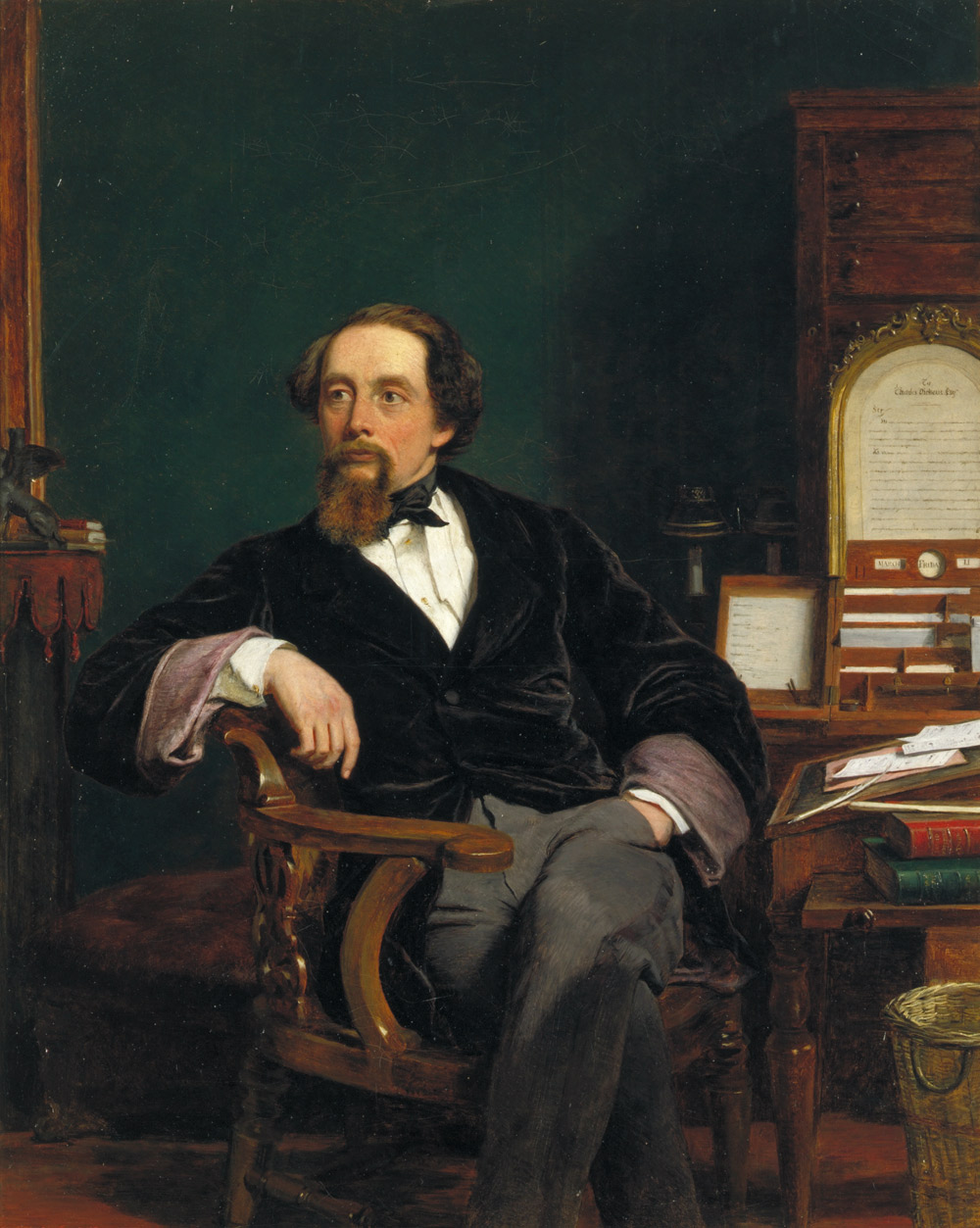
Charles Dickens, oil painting, William Powell Frith, 1859. (Victoria & Albert Museum)

Surely Charles Dickens took many secrets to his grave, but one of those secrets didn’t last long. Dickens made a significant change to the ending of Great Expectations–and in the nick of time! He’d already sent his manuscript off to the publisher when he decided on the change. Dickens’ indecision means that collectors have a few different editions of this great novel to add to their personal libraries.

A Considerable Emendation

It was relatively common for authors to change their work, sometimes even between printings. Henry James, for instance, was notorious for updating his drafts multiple times. So Dickens’ last-minute emendation to Great Expectations isn’t entirely unheard of–he, like James, actually made such changes with relative frequency.

However, Dickens had also originally promised that Great Expectations would be lighter fare than its predecessor, Tale of Two Cities. In an October 1860 letter to John Forster, Dickens wrote “You will not have to complain of the want of humor as in Tale of Two Cities. I have made the opening, I hope, in its general effect exceedingly droll.”* The novel took a different turn, and Dickens’ original ending was melancholy indeed.

“I was in England again–in London, and walking along Piccadilly with Little Pip–when a servant came running after me to ask would I step back to a lady in a carriage who wished to speak to me. It was a little pony carriage, which the lady was driving; and the lady and I looked sadly enough on one another.

‘I am greatly changed, I know, but I thought you would like to shake hands with Estella too, Pip. Lift up that pretty child and let me kiss it!’ (She supposed the child, I think, to be my child.)

I was very glad afterwards to have had the interview; for, in her face and in her voice, and in her touch, she gave me the assurance, that suffering had been stronger than Miss Havisham’s teaching, and had given her a heart to understand what my heart used to be.”

Edward-Bulwer-Lytton

Edward Bulwer-Lytton

Dickens submitted Great Expectations with this ending in 1861 and went to visit his friend and fellow author Edward Bulwer-Lytton. Lytton was a popular figure in his own right as a writer of crime historical and crime novels. He was also a man of privilege, and it’s likely that Dickens respected Lytton as both an author and as a gentleman. Probably on these grounds, Dickens shared the Great Expectations manuscript with Lytton.

He may have been surprised with Lytton’s reaction. Rather than wholeheartedly praising Dickens’ latest novel, Lytton urged Dickens to rewrite the ending completely. Dickens intimated that “Bulwer was so very anxious that I should alter the end…and stated his reasons so well, that I have resumed the wheel, and taken another turn at it.” What Dickens came up with has been the standard ending since 1862:

“‘I little thought,’ said Estella, ‘that I should take leave of you in taking leave of this spot. I am very glad to do so.’

‘Glad to part again, Estella? To me, parting is a painful thing. To me, the remembrance of our last meeting has been ever mournful and painful.’

‘But you said to me,’ returned Estella, very earnestly, ‘”God bless you, God forgive you!'”And if you could say that to me then, you will not hesitate to say that to me now–now, when suffering has been stronger than all other teaching, and has taught me to understand what your heart used to be. I have been bent and broken, but–I hope–into a better shape. Be as considerate and good to me as you were, and tell me we are friends.’

‘We are friends,’ said I, rising and bending over her, as she rose from the bench.

‘And will continue friends apart,’ said Estella.

I took her hand in mine, and we went out of the ruined place; and, as the morning mists had risen long ago when I first left the forge, so the evening mists were rising now, and in all the broad expanse of tranquil light they showed to me, I saw no shadow of another parting from her.

In his manuscript, the final line reads “I saw the shadow of no parting from her, but one.” And the first edition offers yet another variation of that closing line: “I saw the shadow of no parting from her.” Dickens was clearly ambivalent about the novel’s ending. But his eye for the market probably led him to write an ending that can be interpreted as Estella and Pip “walking off into the sunset” together. If he’d wanted that, wouldn’t he have made the ending more obviously happy, as he did in Bleak House, Little Dorrit, and David Copperfield?

Complications for Dickens Critics and Collectors

Critics have been rehashing the endings of Great Expectations since the book was published. The dual endings also create a bit of a complication for collectors; ordinarily the first edition of a work is enough for a collector to “check something off the list.” In the case of Great Expectations, however, true Dickens collectors will want a few more items.

Because Dickens slightly changed the wording of the ending after the first edition, most collectors look for both the first edition and the 1862 edition, which was the first to include the now-ubiquitous ending. Forster’s biography, where the alternate ending made its first appearance in print, is also a highly desirable volume. And finally, Dickens’ original ending did not appear alongside the text of Great Expectations until 1937, when George Bernard Shaw included it in his preface for the Limited Editions publication of the novel.

This is one example of an instance where collectors would seek both a first edition and subsequent editions for a complete collection of an author’s oeuvre. It also shows us the value of basic bibliographic resources that can identify and elucidate these kinds of circumstances, along with working with an expert professional bookseller who can guide your collecting efforts.


*This letter is apparently not currently extant, though we know of it through Forster’s Life of Dickens (vol 3, p 329). 

Share

A Brief History of Broadsides

“Broadsides are the most legitimate representatives of the most ephemeral literature, the least likely to escape destruction, and yet they are the most vivid exhibitors of the manners, arts, and daily life, of communities and nations. They imply a vast deal more than they literally express, and disclose visions of interior conditions of society, such as cannot be found in formal narratives.”

-Samuel F Haven

Samuel F Haven, former librarian for the American Antiquarian Society, presided over one of the largest collections of broadsides in the world. Historians and rare book collectors alike cherish broadsides because they offer snapshots of moments in time, helping us to understand the zeitgeist of that era. Broadsides make ideal complements to a rare book collection, granting the collection greater depth and context.

  • Drosera-Heart-Palpitations-Broadside
  • Thrilling-Aviation-Stunts-Broadside
  • Perpetual-Almanack
  • NYME-Minstrels-Broadside
  • Prince-Charles-Broadside
  • Better-Days-Broadside

What a Broadside Is (and Isn’t)

Broadsides are single-sheet documents that are printed on only one side. They’re sometimes also called broadsheets. They’re different from handbills, which are smaller and printed on both sides. Broadsides should also not be confused with leaflets or booklets, which are folded from a single sheet of paper. The size of broadsides varies greatly, but they are generally smaller than posters and billboards.

Early broadsides didn’t include illustrations. They were simple documents printed in black ink. As printing processes got more sophisticated over time, the broadside also evolved. They began to include stock illustrations done from copper or wood engravings and eventually bore more intricate and relevant illustrations.

The Emergence and Decline of Broadsides

In Europe, broadsides came into use almost as soon as the printing press was invented. They first appeared in the United States during the seventeenth century, which the technology of moveable type and the printing press finally made its way to the colonies. For centuries, the broadside was the preferred format for delivering public announcements. They were also a cost effective way to distribute poetry, songs, and satire.

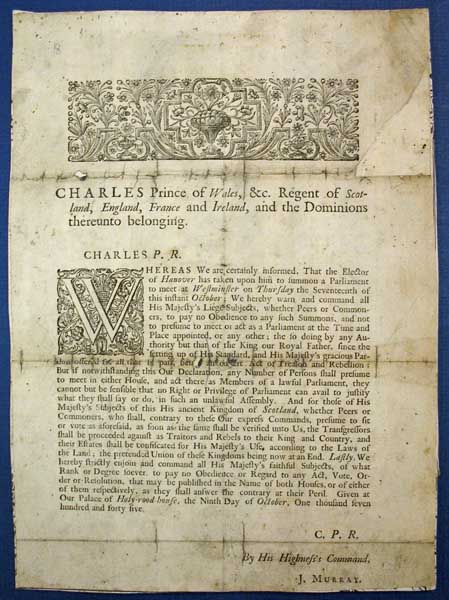
Prince-Charles-Broadside

Bonnie Prince Charlie declares the illegitimacy of Parliament and calls all its attendees traitors. A fantastic artifact from the Jacobite rebellion.

Perhaps the most famous broadside in the United States is the broadside version of the Declaration of Independence published by John Durham on July 4 and 5, 1776. Thanks to this document, news of the declaration swept through the colonies. The John Durham broadside is a perfect example of how these artifacts can encapsulate a pivotal moment in history. Only a few decades earlier, Prince Charles of Wales had used a broadside to make a truly shocking announcement. He declared Parliament illegitimate and branded its participants as traitors. The broadside captures the heat of the Jacobite rebellion.

Before the end of the nineteenth century, broadsides had begun to fall into disuse. They’d been replaced by newspapers and radio for delivering news. Posters and billboards had replaced broadsides as advertisements. Today the occasional fine press artist produces a broadside, but the form has been rendered obsolete by technology.

Preserving and Collecting Broadsides

Broadsides fall into the category of ephemera because they weren’t made to last long. They were intended for quick consumption and therefore were often printed on cheap paper. Few people thought to keep broadsides, and the ones that did get saved are often in less than ideal condition. They may have folds and rips, or they may have been poorly repaired using the wrong materials. To protect broadsides from further damage, it’s important to protect them with a mylar sheath. Your broadsides can then be stored flat in a climate controlled environment.

George-Macdonald-Song-Christmas

The broadside edition of Macdonald’s “A Song for Chistmas” is incredibly rare. This is an inscribed presentation copy.

Meanwhile the ephemeral nature of broadsides is what makes them so valuable to rare book collectors. Some people actually specialize in broadsides. But the avid collector may supplement works by a favorite author with related broadsides. For example, a collector of George Macdonald would be interested in the broadside edition of Macdonald’s poem “A Song for Christmas.” Published around 1887, the broadside is the first appearance of the poem. It’s not published again until the 1890’s, when it appears in a collected volume. Macdonald’s “A Song for Christmas” broadside is now extremely rare; OCLC and KVK document only one other copy, at the Library of Scotland.

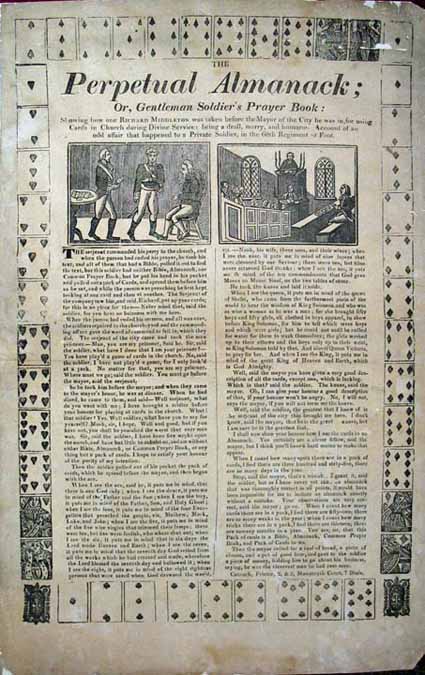
Perpetual-Almanack

Chatto referred to this very broadside in his “Facts and Speculations on the Origin and History of Playing Cards”

Sometimes broadsides even served as sources for authors. William Andrew Chatto wrote about leisurely pursuits such as fly-fishing, smoking, and playing cards. In his 1848 Facts and Speculations on the Origin and History of Playing Cards, Chatto cites a Catnatch broadside called “The Perpetual Almanack; or, Gentleman Soldier’s Prayer Book.” The broadside tells the tale of Richard Middleton, who was taken before the mayor for using cards during a church service. Chatto notes that his own cards have been a “moral monitor and help to devotion.”

As your rare book collection progresses, incorporating broadsides is an excellent step to broaden the scope of the collection. What was the first broadside in your collection? And why did it appeal to you?

Share

Alexander Pope’s Legacy of Satire and Scholarship

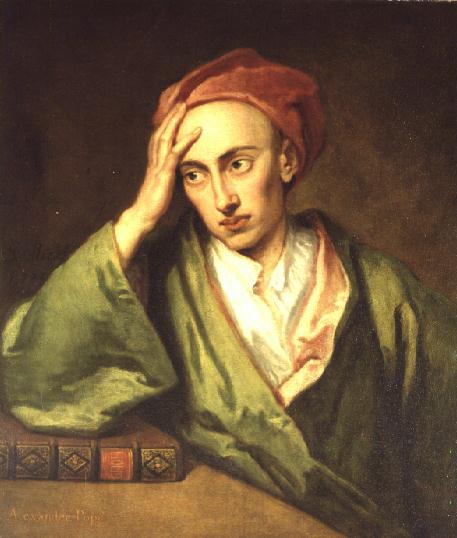
Alexander-Pope

On May 21, 1688 Alexander Pope was born to Alexander and Edith Pope. Despite all odds, Pope would blossom into a preeminent British poet of the eighteenth century. Pope left behind an ingenious translation of Homer’s Iliad, along with a robust body of poetry and criticism. Though history has not always been kind to Pope, he’s recognized as a truly masterful poet whose influence can still be felt.

Challenges of Anti-Catholicism and Illness

Pope’s parents were recent converts to Catholicism, and they chose an inopportune time to leave the Church of England; anti-Catholic sentiments ran high, and the Test Acts seriously limited the rights and opportunities of Catholics. The family was forced to move out of London to Binfield. Catholics were also forbidden to attend public schools, so Pope was mostly educated at home by his aunt. For a few years he attended a Catholic school in London, but he taught himself French, Italian, Latin, and Greek. Pope had discovered Homer by the time he was six years old.

When Pope was 12 years old, he published his earliest extant work, Ode to Solitude. That same year, he developed the first symptoms of a disease that would cripple him for the rest of his life. Now largely accepted to be Pott’s disease, a form of tuberculosis, the illness stunted Pope’s growth and caused severe deformation of his spine. He never grew over four-and-a-half feet, and he remained frail and asthmatic throughout his life. Pope’s size and appearance would later make easy fodder for his detractors, who called him the “hump-backed toad.”

A Rapid Rise to Fame

In 1710, Pope’s Pastorals appeared in Jacob Tonson’s Poetical Miscellanies. Pope claims, however, that he wrote the poem earlier, when he was only 16 years old. The following year saw Essays on Criticism published anonymously–but everyone knew it was Pope. The work highlighted Pope’s mastery of (and preference for) the heroic couplet. It also attracted the attention of more established poets Jonathan Swift and John Gay. Together, the three poets would go on to found the Scriblerus Club. Its purpose: to satirize ignorance and poor taste. Scriblerus, a precursor to Pope’s Dunciad, features the inept character Martinus Scriblerus, who embodies incompetent criticism and scholarship.

When Pope published The Rape of the Lock in 1712, he cemented his position as an outstanding poet of the time. The poem pokes fun at a real-life squabble between two prominent Catholic families over the theft of a young woman’s lock of hair. Pope was now part of a circle of elite writers that included not only Swift and Gay, but also Joseph Addison, Thomas Parnell, and John Arbuthnot. These writers were all overtly Tory, but Pope’s true political standing was never clear.

An Authorial Living Thanks to Homer

Swift consistently encouraged Pope to undertake a translation of Homer’s Iliad. The project was a huge risk; Pope was only 25 at the time and still had anti-Catholic laws working against him. He didn’t have a private patronage as many other writers had. Thus Swift undertook the work of building a subscription list for Pope’s translation. Swift’s efforts paid off. He built an impressive list in both length and prestige. Thanks to the subscriptions, Pope did what few other authors of the time could: he actually made a comfortable living as a writer.

Iliad-Homer-Alexander-Pope

Pope published The Iliad in six volumes, writing 30 to 50 verses per day. He wrote his drafts on the backs of letters to him and to his mother. His first volume came out in 1715, at the same time that Thomas Tickell published a rival edition. Pope’s was accepted as quite superior, even though it bears little resemblance to the original Greek text. Samuel Johnson even declared it the best translation of all time, in any language. Pope used the same subscription model when he tackled The Odyssey.

When Pope’s father passed away in 1719, Pope moved back to the family estate at Twickenham. He used the profits from The Iliad to construct an incredible grotto on the property. It had a camera obscura and other enticing features. The grotto still stands today, though it’s not often open to the public.

Alexander-Pope-Grotto

Pope Sparks Controversy

Pope decided to undertake his own adaptation of Shakespeare. It didn’t meet the same acceptance as his adaptations of Homer because Pope “corrected” the Bard’s verse. He also changed the text in many places, but left earlier corruptions untouched. Scholar and critic Lewis Theobald excoriated Pope for the work. Pope fought back, making Theobald the protagonist of the Dunciad.

Pope’s Dunciad sparked an incredibly hostile response–so hostile that Pope would leave his house only with two loaded pistols in his pockets. William Broome, who had collaborated with Pope on The Odyssey, also found himself a target in the Dunciad. He was surprised that Pope didn’t receive more vituperation: “I wonder he’s not been thrashed, but his littleness is his protection; no man shoots a wren.”

In 1735, a year after Pope published Essay on Man, Pope placed himself at the center of another controversy. An unauthorized version of Pope’s correspondence appeared, the work of notoriously unscrupulous publisher Edmund Curll. Collected correspondence was relatively rare at the time, so the publication caused quite a furor. In reality, Pope had edited his own letters and delivered them to Curll in secret.

Pope’s health began to suffer in 1738. He turned his attention to revising the Dunciad, this time with British poet laureate Colly Cibber as the protagonist. Cibber was widely thought to lack talent and to have used political connections to get the position of laureate.

Reception of Pope

Pope’s work remained influential until the nineteenth century. The Romantics saw Homer as a bard, a poet close to nature. Pope’s imposition of rigid structure on the blind poet’s work was considered quite the opposite–unnatural, contrived. Furthermore, the Romantics saw little merit in Pope’s acerbic wit and biting criticism. Later, however, writers and scholars recognized that Homer’s Greece was a place of strict adherence to customs about sacrifice, prayer, war, and hospitality. The strict prosody of Pope’s adaptation reflected the codified social customs of Greece. Pope is now esteemed as one of the great writers of his century. 

Share

The Man Behind the Beloved Freddy Series

Freddy-Pig-Walter-Brooks

George Orwell’s Animal Farm (1945) is synonymous with talking animals, but Orwell wasn’t the first to populate a novel with anti-establishmentarian, anthropomorphic animals. Walter R Brooks created the beloved Freddy the Pig and his friends on Bean Farm almost two decades earlier. Though Brooks’ Freddy books aren’t as overtly political as Orwell’s work, they do depict animals overcoming corrupt authority. Brooks had a rich, varied literary career that included not only the Freddy novels, but also numerous short stories, editorials, and literary reviews.

Brooks was born in Rome, New York on January 9, 1886. When he was four years old, his father passed away. His mother died eleven years later, and Walter was sent to Mohegan Lake Military Academy in Peekskill, New York. He stayed there from 1902 until 1904, where he moved in with his sister Elsie in Rochester. Elsie’s husband, Dr. William Perrin was a renowned homeopathic physician and a professor at the University of Rochester. Brooks took classes there for a few years, and in 1906 he went to New York City to study at the Homeopathic Medical College and Flower College. Brooks left New York City in 1908, returning to Rochester to marry Anne Shepherd.

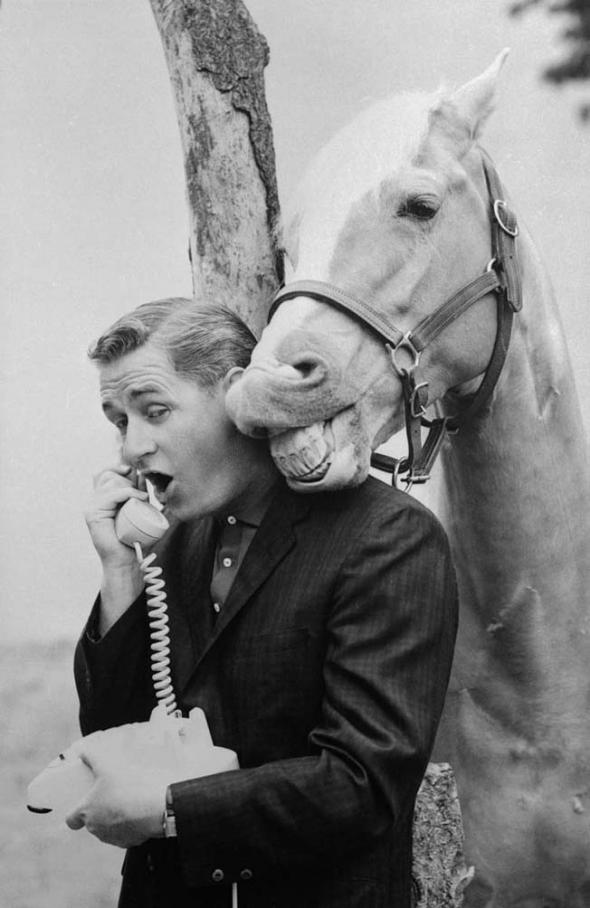
Mr-EdThe year 1910 found Brooks in an entirely new field; he worked for Frank Du Noyer advertising agency in Utica. His tenure there proved short, however. In 1911, Brooks “retired.” It’s speculated that when his maiden aunts passed away, Brooks inherited a significant sum. He turned his attention to writing. Brooks was published for the first time in 1915, when his sonnet “Haunted” was printed in Century magazine. That same year, his short story “Harden’s Chance” appeared in Forum magazine. Two years later, Brooks joined the American Red Cross as a publicist. He continued writing short stories, however, and in 1934 began selling stories to Esquire. In total, Brooks published more than 100 short stories, 25 of which featured Ed the talking horse–the inspiration for the TV series “Mr. Ed.”

In 1927, Walter published the first Freddy book under the title To and Again (later, Freddy Goes to Florida). He would go on to write a total of 26 books featuring Freddy the Pig. Meanwhile, in 1928 Brooks embarked on a series of positions with various magazines. Until 1932, he was a columnist and book review editor for The Outlook and Independent. Through these positions, Brooks was among the first to discover Dashielle Hammett. Brooks went on to write for New Yorker, Fiction Parade, and Scribner’s Commentator.

Walter-R-Brooks-Freddy-SeriesThe Freddy books were by far Brooks’ most popular, and they sold quite well. Set on the Bean Farm in upstate New York, they included both human and animal characters–and the humans never seemed too surprised that the animals could talk. Freddy isn’t a likely hero; he’s quite lazy and manages to accomplish anything only because it’s easier to keep going once he’s gotten started. The novels’ villains frequently represent some form of the Establishment, and the novels’ conflicts generally appeal to children’s sense of fairness and equality.

Critics have likened the Freddy books to AA Milne’s Winnie the Pooh books and Kenneth Grahame’s Wind in the Willows. Despite their mass appeal, however, the Freddy books began going out of print in the 1960’s. Thanks to the urging of Friends of Freddy, Alfred A Knopf issued new paperback editions of eight titles in 1986 and 1987. They included an introduction by Brooks’ biographer, Michael Cart, and gleaned substantial praise from reviewers. Now the books are available from the Overlook Press.

Although Brooks’ works are no longer in the spotlight, they’re still much loved among a devoted circle of fans. Many collectors also love the Freddy series, not only because the books evoke their childhood, but also because the books have wonderfully attractive dust jackets and illustrations.

Share

Rare Books a Mother Could Love

This Sunday the United States celebrates Mothers Day, and many of us are still searching for the perfect gift ideas. If your mother has a predilection for rare books, choose the perfect volume for her personal library.

Evoke Childhood Memories

Classic children’s books give Mom an opportunity to reminisce about her youth–and to share a piece of her childhood with future generations. Choose a title from a beloved series.

Poppy_Ott_First_EditionsThe Poppy Ott series by Leo Edwards (pseudonym for Edward Edson Lee) was published in the 1920’s and 1930’s. Though these books were primarily marketed for boys, plenty of girls fell in love with Poppy Ott and his penchant for stumbling into adventure.

Brownies_First_Edition_Palmer_CoxPalmer Cox’s Brownies series recounts the adventures of mischievous, fairy-like sprites in humorous verse. These books were already beloved classics by the turn of the 20th century and maintained their popularity long after.

Nancy-Drew-First-EditionMildred A Wirt wrote the perennially popular Nancy Drew series under the pen name Carolyn Keene. Nancy Drew and her friends always managed to find a mystery, and the series remains in print today.

Japanese-Fairy-TalesThe Japanese Fairy Tales series, published in Tokyo in the 1890’s, offer a beautiful glimpse into the mores and stories of Japan. Bound in the “yamoto toji” style, the books are in french-fold format and printed on crepe paper.

Bring Art to the Shelves

The right rare art book is both visually stunning and intellectually engaging. If your mother loves art–or beautiful objects–one of these rare items may be the ideal gift.

Collection-Beautiful-Miniatures-Lewis-Lott

Collection_Beautiful-Miniatures_First-Edition


Lewis Lott produced his Collection of Beautiful Miniatures in the 1860’s. It includes faithful reproductions of 70 original miniature paintings, mostly from the 14th and 15th centuries.

Chang Dai-ChienChang Dai-chien was one of the most renowned and prolific Chinese artists of the 20th century. This collection, published by the East Society, includes 130 reproductions of his paintings since 1944.

Avalon-Bay-California-Frank-HebertFrances Hebert’s original watercolor of Santa Catalina Island’s Avalon Bay in California depicts an elevated view of the bay, from the hills to the South-Southeast. It’s matted and mounted in a gilded wooden frame.

Share a New Perspective on a Favorite Author

Some legendary authors, like Walt Whitman, are famous for leaving behind copiously annotated manuscripts. These documents provide a more dynamic view of the author’s work, but they’re not the only way to offer a fresh perspective on a beloved writer.

Hospital-Sketches-Louisa-May-AlcottLouisa May Alcott is famous for Little Women, but fewer people know that she served in a hospital. Hospital Sketches and Camp and Fireside Stories includes six sketches about Alcott’s time working in the hospital.

DH-Lawrence

Anais-Nin


Anais Nin’s first book was DH Lawrence: An Unprofessional Study. The work gives us insight on both Lawrence and Nin, an unusual combination and an interesting item for collectors of either author.

Amergin-Sven-BerlinPoet, artist, and dancer Sven Berlin was a member of the St. Ives art colony–until a falling out with other writers over his novel The Dark Monarch. This original draft of Berlin’s Amergin the White Stag contains magnificent pen and ink drawings to be used as illustrations, along with Berlin’s notes to the typist, chapter notes, etc. It’s truly an intriguing manuscript.

Even if none of the above suits your mother, all of us here at Tavistock Books wish all mothers the very best of days!  We thank you for visiting our blog, and hope you enjoy your day!


Share

The Millerites and the Great Disappointment

William-Miller

William Miller

The Seventh-day Adventist Church rose from what most would consider an epic failure. William Miller predicted the return of Christ–inaccurately, and his followers broke into multiple sects, of which the Seventh-day Adventist Church was one. The literature and ephemera of the Millerite community offers a fascinating look at religion and spirituality in the mid-1800’s.

A Brief History of Millerism

The early 1800’s saw a resurgence in millenarianism, the belief that a major event or movement would cause a drastic transformation in society. Specifically, millenarianists believed in the prophecy of Revelation, which predicts that God’s kingdom on Earth will last 1,000 years after Jesus’ return. Thus, the ground was fertile for the theology of William Miller, for whom Millerism is named.

Miller started out as a farmer in upstate New York. He was also a lay preacher in the Baptist church. He embarked on an exhaustive study of the prophecies of Daniel. A subscriber to the year-day method of prophetic interpretation, Miller believed that a “day” in the Scripture represented a year of real time–meaning that we could predict the exact date of Jesus’ return. By September of 1822, Miller had published his conclusions in a twenty-point document, though he shared the document with very few people.

Miller began sharing his ideas more openly among his inner circle. Initially, he met with disinterest. He said, “To my astonishment, I found very few who listened with any interest. Occasionally one would see the force of the evidence, but the great majority passed it it by as an idle tale. But when Miller began lecturing publicly in 1831, he began to gain a following. The following year, he submitted 16 articles to the Baptist paper Vermont Telegraph. Soon he was unable to personally address all the correspondence and speaking requests he received as a result of the articles.

To remedy that problem, Miller published a 64-page tract that summarized his predictions. At this point, he still had not specified a date for Jesus’ return; instead, he suggested that the Advent would occur in 1843 or 1844. As the years passed, Miller gained more and more attention–in large part due to Millerite publications. Miller’s campaign got a significant bump when Joshua Vaughan Himes, a preacher and publisher, began printing the fortnightly paper Signs of the Times. The first issue was published on February 28, 1840, and the periodical is still published by the Seventh-day Adventist Church.

Battle-Great-Day-Thomas-Williams

“The Battle of the Great Day”

As Miller’s ideas gained ground, numerous items in the Millerite tradition were published. One such item was a broadside called “The Battle of the Great Day.” Based on Revelation 16: 12-21, the broadside was published by prolific preacher Thomas Williams around 1838. Though several works by Williams are recorded in UMI’s “Millerites and Early Adventists,” this item is not. The OCLC lists only one other institutional holding, at Brown University.

By 1843, there were at least 48 Millerite publications. Meanwhile, Miller had narrowed down his dates at the urging of his followers. Now he offered a year-long window: March 21, 1843 to March 21, 1844. When March 21, 1844 came and went without incident, most Millerites maintained their faith. They briefly adopted a new end date of April 18, 1844, based on the Karaite calendar rather than the Rabbinic one. When that date also passed, they believed they’d entered “tarrying time,” a period of waiting mentioned in both the books of Daniel and Habakkuk. This idea sustained them through July of 1844.

In August of that year, Samuel S. Snow presented a new theory at a meeting in Exeter, New Hampshire. Known as the “seventh-month message,” Snow’s prediction was still based on the 2300 prophecy of Daniel, which stated that Jesus’ return would occur on the tenth day of the seventh month. Again using the Karaite calendar, Snow calculated that October 22, 1844 as the date of the Advent. When Snow, too, proved incorrect and nothing happened on October 22, the Millerites experienced what has since been called the Great Disappointment. The movement soon fell apart as the Millerites struggled to reconcile their beliefs with reality. Multiple sects emerged, one of which was the Seventh-day Adventist Church.

The Cartography of Faith

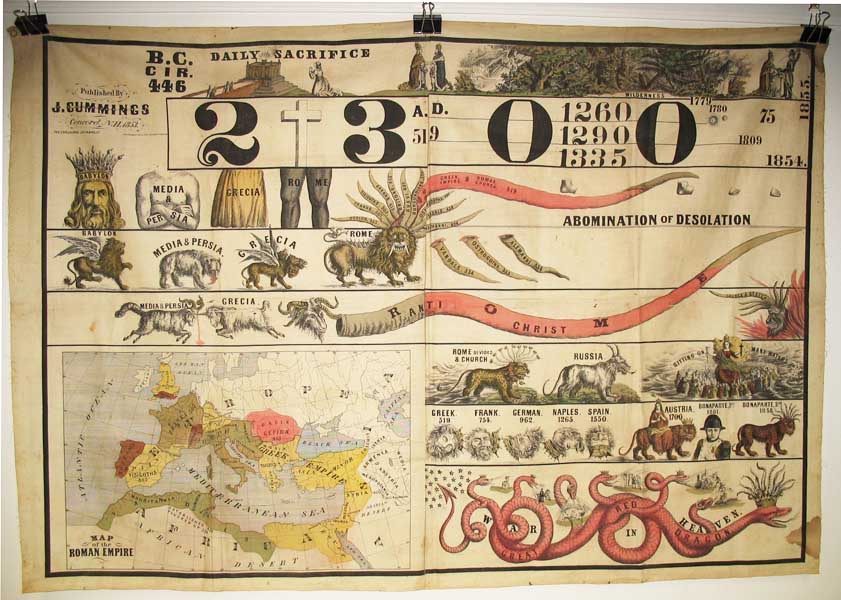
Many Millerites turned to Scripture, hoping to find an error in Miller and Snow’s calculations. One of these was Jonathan Cummings, a farmer who’d become a preacher in 1830. Cummings wrote a lengthy letter to Himes, which was published in the Advent Herald on November 2, 1852. He offered new insight on the chronology. Cummings also produced a fascinating banner-size chart (pictured below and recently sold) that identifies 1854 as the year for the Second Coming. He also printed An Explanation of the Prophetic Chart and Application of the Truth to accompany the banner.

Joseph-Cummings-Advent

While Cummings was not the only Millerite to recalculate the date of the Second Coming, his unusual chart is featured and discussed in both Cartographies of Time and the Encyclopedia of American Folk Art. The OCLC records only five institutional holdings of the banner, making it an exceptionally rare publication to be found on today’s market.

The Millerite movement certainly fueled the publication of many fascinating rare books and ephemera. Tavistock Books is always interested in acquiring items like Cummings’ chart and Williams’ broadside. Please contact us if you would like more information about what we’re looking for, or if you have an item of interest.

Share