Alexander Pope’s Legacy of Satire and Scholarship

Alexander-Pope

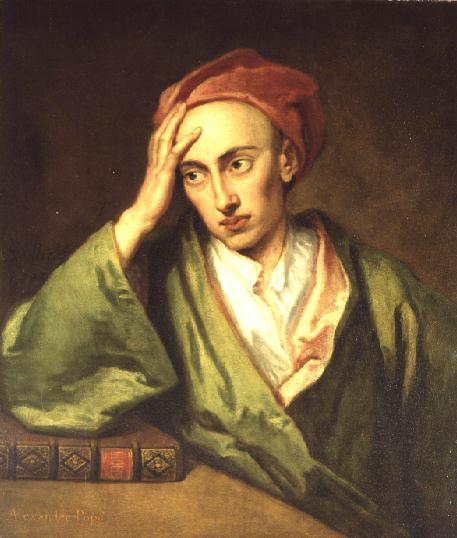
On May 21, 1688 Alexander Pope was born to Alexander and Edith Pope. Despite all odds, Pope would blossom into a preeminent British poet of the eighteenth century. Pope left behind an ingenious translation of Homer’s Iliad, along with a robust body of poetry and criticism. Though history has not always been kind to Pope, he’s recognized as a truly masterful poet whose influence can still be felt.

Challenges of Anti-Catholicism and Illness

Pope’s parents were recent converts to Catholicism, and they chose an inopportune time to leave the Church of England; anti-Catholic sentiments ran high, and the Test Acts seriously limited the rights and opportunities of Catholics. The family was forced to move out of London to Binfield. Catholics were also forbidden to attend public schools, so Pope was mostly educated at home by his aunt. For a few years he attended a Catholic school in London, but he taught himself French, Italian, Latin, and Greek. Pope had discovered Homer by the time he was six years old.

When Pope was 12 years old, he published his earliest extant work, Ode to Solitude. That same year, he developed the first symptoms of a disease that would cripple him for the rest of his life. Now largely accepted to be Pott’s disease, a form of tuberculosis, the illness stunted Pope’s growth and caused severe deformation of his spine. He never grew over four-and-a-half feet, and he remained frail and asthmatic throughout his life. Pope’s size and appearance would later make easy fodder for his detractors, who called him the “hump-backed toad.”

A Rapid Rise to Fame

In 1710, Pope’s Pastorals appeared in Jacob Tonson’s Poetical Miscellanies. Pope claims, however, that he wrote the poem earlier, when he was only 16 years old. The following year saw Essays on Criticism published anonymously–but everyone knew it was Pope. The work highlighted Pope’s mastery of (and preference for) the heroic couplet. It also attracted the attention of more established poets Jonathan Swift and John Gay. Together, the three poets would go on to found the Scriblerus Club. Its purpose: to satirize ignorance and poor taste. Scriblerus, a precursor to Pope’s Dunciad, features the inept character Martinus Scriblerus, who embodies incompetent criticism and scholarship.

When Pope published The Rape of the Lock in 1712, he cemented his position as an outstanding poet of the time. The poem pokes fun at a real-life squabble between two prominent Catholic families over the theft of a young woman’s lock of hair. Pope was now part of a circle of elite writers that included not only Swift and Gay, but also Joseph Addison, Thomas Parnell, and John Arbuthnot. These writers were all overtly Tory, but Pope’s true political standing was never clear.

An Authorial Living Thanks to Homer

Swift consistently encouraged Pope to undertake a translation of Homer’s Iliad. The project was a huge risk; Pope was only 25 at the time and still had anti-Catholic laws working against him. He didn’t have a private patronage as many other writers had. Thus Swift undertook the work of building a subscription list for Pope’s translation. Swift’s efforts paid off. He built an impressive list in both length and prestige. Thanks to the subscriptions, Pope did what few other authors of the time could: he actually made a comfortable living as a writer.

Iliad-Homer-Alexander-Pope

Pope published The Iliad in six volumes, writing 30 to 50 verses per day. He wrote his drafts on the backs of letters to him and to his mother. His first volume came out in 1715, at the same time that Thomas Tickell published a rival edition. Pope’s was accepted as quite superior, even though it bears little resemblance to the original Greek text. Samuel Johnson even declared it the best translation of all time, in any language. Pope used the same subscription model when he tackled The Odyssey.

When Pope’s father passed away in 1719, Pope moved back to the family estate at Twickenham. He used the profits from The Iliad to construct an incredible grotto on the property. It had a camera obscura and other enticing features. The grotto still stands today, though it’s not often open to the public.

Alexander-Pope-Grotto

Pope Sparks Controversy

Pope decided to undertake his own adaptation of Shakespeare. It didn’t meet the same acceptance as his adaptations of Homer because Pope “corrected” the Bard’s verse. He also changed the text in many places, but left earlier corruptions untouched. Scholar and critic Lewis Theobald excoriated Pope for the work. Pope fought back, making Theobald the protagonist of the Dunciad.

Pope’s Dunciad sparked an incredibly hostile response–so hostile that Pope would leave his house only with two loaded pistols in his pockets. William Broome, who had collaborated with Pope on The Odyssey, also found himself a target in the Dunciad. He was surprised that Pope didn’t receive more vituperation: “I wonder he’s not been thrashed, but his littleness is his protection; no man shoots a wren.”

In 1735, a year after Pope published Essay on Man, Pope placed himself at the center of another controversy. An unauthorized version of Pope’s correspondence appeared, the work of notoriously unscrupulous publisher Edmund Curll. Collected correspondence was relatively rare at the time, so the publication caused quite a furor. In reality, Pope had edited his own letters and delivered them to Curll in secret.

Pope’s health began to suffer in 1738. He turned his attention to revising the Dunciad, this time with British poet laureate Colly Cibber as the protagonist. Cibber was widely thought to lack talent and to have used political connections to get the position of laureate.

Reception of Pope

Pope’s work remained influential until the nineteenth century. The Romantics saw Homer as a bard, a poet close to nature. Pope’s imposition of rigid structure on the blind poet’s work was considered quite the opposite–unnatural, contrived. Furthermore, the Romantics saw little merit in Pope’s acerbic wit and biting criticism. Later, however, writers and scholars recognized that Homer’s Greece was a place of strict adherence to customs about sacrifice, prayer, war, and hospitality. The strict prosody of Pope’s adaptation reflected the codified social customs of Greece. Pope is now esteemed as one of the great writers of his century. 

Share

The Man Behind the Beloved Freddy Series

Freddy-Pig-Walter-Brooks

George Orwell’s Animal Farm (1945) is synonymous with talking animals, but Orwell wasn’t the first to populate a novel with anti-establishmentarian, anthropomorphic animals. Walter R Brooks created the beloved Freddy the Pig and his friends on Bean Farm almost two decades earlier. Though Brooks’ Freddy books aren’t as overtly political as Orwell’s work, they do depict animals overcoming corrupt authority. Brooks had a rich, varied literary career that included not only the Freddy novels, but also numerous short stories, editorials, and literary reviews.

Brooks was born in Rome, New York on January 9, 1886. When he was four years old, his father passed away. His mother died eleven years later, and Walter was sent to Mohegan Lake Military Academy in Peekskill, New York. He stayed there from 1902 until 1904, where he moved in with his sister Elsie in Rochester. Elsie’s husband, Dr. William Perrin was a renowned homeopathic physician and a professor at the University of Rochester. Brooks took classes there for a few years, and in 1906 he went to New York City to study at the Homeopathic Medical College and Flower College. Brooks left New York City in 1908, returning to Rochester to marry Anne Shepherd.

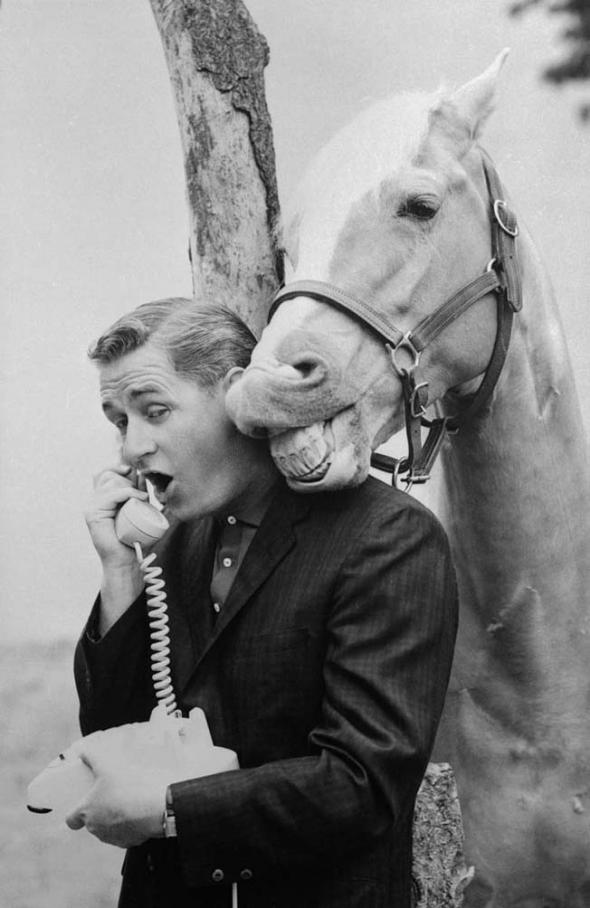
Mr-EdThe year 1910 found Brooks in an entirely new field; he worked for Frank Du Noyer advertising agency in Utica. His tenure there proved short, however. In 1911, Brooks “retired.” It’s speculated that when his maiden aunts passed away, Brooks inherited a significant sum. He turned his attention to writing. Brooks was published for the first time in 1915, when his sonnet “Haunted” was printed in Century magazine. That same year, his short story “Harden’s Chance” appeared in Forum magazine. Two years later, Brooks joined the American Red Cross as a publicist. He continued writing short stories, however, and in 1934 began selling stories to Esquire. In total, Brooks published more than 100 short stories, 25 of which featured Ed the talking horse–the inspiration for the TV series “Mr. Ed.”

In 1927, Walter published the first Freddy book under the title To and Again (later, Freddy Goes to Florida). He would go on to write a total of 26 books featuring Freddy the Pig. Meanwhile, in 1928 Brooks embarked on a series of positions with various magazines. Until 1932, he was a columnist and book review editor for The Outlook and Independent. Through these positions, Brooks was among the first to discover Dashielle Hammett. Brooks went on to write for New Yorker, Fiction Parade, and Scribner’s Commentator.

Walter-R-Brooks-Freddy-SeriesThe Freddy books were by far Brooks’ most popular, and they sold quite well. Set on the Bean Farm in upstate New York, they included both human and animal characters–and the humans never seemed too surprised that the animals could talk. Freddy isn’t a likely hero; he’s quite lazy and manages to accomplish anything only because it’s easier to keep going once he’s gotten started. The novels’ villains frequently represent some form of the Establishment, and the novels’ conflicts generally appeal to children’s sense of fairness and equality.

Critics have likened the Freddy books to AA Milne’s Winnie the Pooh books and Kenneth Grahame’s Wind in the Willows. Despite their mass appeal, however, the Freddy books began going out of print in the 1960’s. Thanks to the urging of Friends of Freddy, Alfred A Knopf issued new paperback editions of eight titles in 1986 and 1987. They included an introduction by Brooks’ biographer, Michael Cart, and gleaned substantial praise from reviewers. Now the books are available from the Overlook Press.

Although Brooks’ works are no longer in the spotlight, they’re still much loved among a devoted circle of fans. Many collectors also love the Freddy series, not only because the books evoke their childhood, but also because the books have wonderfully attractive dust jackets and illustrations.

Share

Rare Books a Mother Could Love

This Sunday the United States celebrates Mothers Day, and many of us are still searching for the perfect gift ideas. If your mother has a predilection for rare books, choose the perfect volume for her personal library.

Evoke Childhood Memories

Classic children’s books give Mom an opportunity to reminisce about her youth–and to share a piece of her childhood with future generations. Choose a title from a beloved series.

Poppy_Ott_First_EditionsThe Poppy Ott series by Leo Edwards (pseudonym for Edward Edson Lee) was published in the 1920’s and 1930’s. Though these books were primarily marketed for boys, plenty of girls fell in love with Poppy Ott and his penchant for stumbling into adventure.

Brownies_First_Edition_Palmer_CoxPalmer Cox’s Brownies series recounts the adventures of mischievous, fairy-like sprites in humorous verse. These books were already beloved classics by the turn of the 20th century and maintained their popularity long after.

Nancy-Drew-First-EditionMildred A Wirt wrote the perennially popular Nancy Drew series under the pen name Carolyn Keene. Nancy Drew and her friends always managed to find a mystery, and the series remains in print today.

Japanese-Fairy-TalesThe Japanese Fairy Tales series, published in Tokyo in the 1890’s, offer a beautiful glimpse into the mores and stories of Japan. Bound in the “yamoto toji” style, the books are in french-fold format and printed on crepe paper.

Bring Art to the Shelves

The right rare art book is both visually stunning and intellectually engaging. If your mother loves art–or beautiful objects–one of these rare items may be the ideal gift.

Collection-Beautiful-Miniatures-Lewis-Lott

Collection_Beautiful-Miniatures_First-Edition


Lewis Lott produced his Collection of Beautiful Miniatures in the 1860’s. It includes faithful reproductions of 70 original miniature paintings, mostly from the 14th and 15th centuries.

Chang Dai-ChienChang Dai-chien was one of the most renowned and prolific Chinese artists of the 20th century. This collection, published by the East Society, includes 130 reproductions of his paintings since 1944.

Avalon-Bay-California-Frank-HebertFrances Hebert’s original watercolor of Santa Catalina Island’s Avalon Bay in California depicts an elevated view of the bay, from the hills to the South-Southeast. It’s matted and mounted in a gilded wooden frame.

Share a New Perspective on a Favorite Author

Some legendary authors, like Walt Whitman, are famous for leaving behind copiously annotated manuscripts. These documents provide a more dynamic view of the author’s work, but they’re not the only way to offer a fresh perspective on a beloved writer.

Hospital-Sketches-Louisa-May-AlcottLouisa May Alcott is famous for Little Women, but fewer people know that she served in a hospital. Hospital Sketches and Camp and Fireside Stories includes six sketches about Alcott’s time working in the hospital.

DH-Lawrence

Anais-Nin


Anais Nin’s first book was DH Lawrence: An Unprofessional Study. The work gives us insight on both Lawrence and Nin, an unusual combination and an interesting item for collectors of either author.

Amergin-Sven-BerlinPoet, artist, and dancer Sven Berlin was a member of the St. Ives art colony–until a falling out with other writers over his novel The Dark Monarch. This original draft of Berlin’s Amergin the White Stag contains magnificent pen and ink drawings to be used as illustrations, along with Berlin’s notes to the typist, chapter notes, etc. It’s truly an intriguing manuscript.

Even if none of the above suits your mother, all of us here at Tavistock Books wish all mothers the very best of days!  We thank you for visiting our blog, and hope you enjoy your day!


Share

The Millerites and the Great Disappointment

William-Miller

William Miller

The Seventh-day Adventist Church rose from what most would consider an epic failure. William Miller predicted the return of Christ–inaccurately, and his followers broke into multiple sects, of which the Seventh-day Adventist Church was one. The literature and ephemera of the Millerite community offers a fascinating look at religion and spirituality in the mid-1800’s.

A Brief History of Millerism

The early 1800’s saw a resurgence in millenarianism, the belief that a major event or movement would cause a drastic transformation in society. Specifically, millenarianists believed in the prophecy of Revelation, which predicts that God’s kingdom on Earth will last 1,000 years after Jesus’ return. Thus, the ground was fertile for the theology of William Miller, for whom Millerism is named.

Miller started out as a farmer in upstate New York. He was also a lay preacher in the Baptist church. He embarked on an exhaustive study of the prophecies of Daniel. A subscriber to the year-day method of prophetic interpretation, Miller believed that a “day” in the Scripture represented a year of real time–meaning that we could predict the exact date of Jesus’ return. By September of 1822, Miller had published his conclusions in a twenty-point document, though he shared the document with very few people.

Miller began sharing his ideas more openly among his inner circle. Initially, he met with disinterest. He said, “To my astonishment, I found very few who listened with any interest. Occasionally one would see the force of the evidence, but the great majority passed it it by as an idle tale. But when Miller began lecturing publicly in 1831, he began to gain a following. The following year, he submitted 16 articles to the Baptist paper Vermont Telegraph. Soon he was unable to personally address all the correspondence and speaking requests he received as a result of the articles.

To remedy that problem, Miller published a 64-page tract that summarized his predictions. At this point, he still had not specified a date for Jesus’ return; instead, he suggested that the Advent would occur in 1843 or 1844. As the years passed, Miller gained more and more attention–in large part due to Millerite publications. Miller’s campaign got a significant bump when Joshua Vaughan Himes, a preacher and publisher, began printing the fortnightly paper Signs of the Times. The first issue was published on February 28, 1840, and the periodical is still published by the Seventh-day Adventist Church.

Battle-Great-Day-Thomas-Williams

“The Battle of the Great Day”

As Miller’s ideas gained ground, numerous items in the Millerite tradition were published. One such item was a broadside called “The Battle of the Great Day.” Based on Revelation 16: 12-21, the broadside was published by prolific preacher Thomas Williams around 1838. Though several works by Williams are recorded in UMI’s “Millerites and Early Adventists,” this item is not. The OCLC lists only one other institutional holding, at Brown University.

By 1843, there were at least 48 Millerite publications. Meanwhile, Miller had narrowed down his dates at the urging of his followers. Now he offered a year-long window: March 21, 1843 to March 21, 1844. When March 21, 1844 came and went without incident, most Millerites maintained their faith. They briefly adopted a new end date of April 18, 1844, based on the Karaite calendar rather than the Rabbinic one. When that date also passed, they believed they’d entered “tarrying time,” a period of waiting mentioned in both the books of Daniel and Habakkuk. This idea sustained them through July of 1844.

In August of that year, Samuel S. Snow presented a new theory at a meeting in Exeter, New Hampshire. Known as the “seventh-month message,” Snow’s prediction was still based on the 2300 prophecy of Daniel, which stated that Jesus’ return would occur on the tenth day of the seventh month. Again using the Karaite calendar, Snow calculated that October 22, 1844 as the date of the Advent. When Snow, too, proved incorrect and nothing happened on October 22, the Millerites experienced what has since been called the Great Disappointment. The movement soon fell apart as the Millerites struggled to reconcile their beliefs with reality. Multiple sects emerged, one of which was the Seventh-day Adventist Church.

The Cartography of Faith

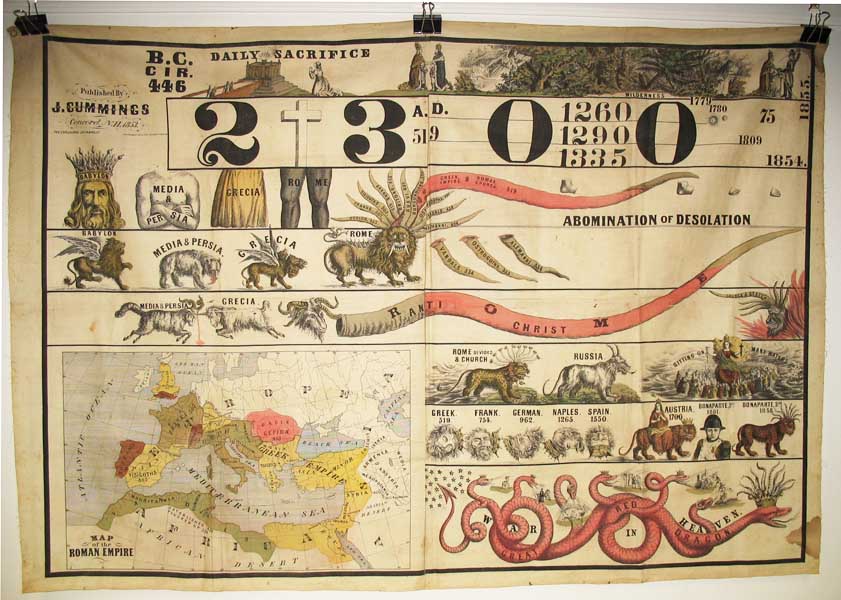
Many Millerites turned to Scripture, hoping to find an error in Miller and Snow’s calculations. One of these was Jonathan Cummings, a farmer who’d become a preacher in 1830. Cummings wrote a lengthy letter to Himes, which was published in the Advent Herald on November 2, 1852. He offered new insight on the chronology. Cummings also produced a fascinating banner-size chart (pictured below and recently sold) that identifies 1854 as the year for the Second Coming. He also printed An Explanation of the Prophetic Chart and Application of the Truth to accompany the banner.

Joseph-Cummings-Advent

While Cummings was not the only Millerite to recalculate the date of the Second Coming, his unusual chart is featured and discussed in both Cartographies of Time and the Encyclopedia of American Folk Art. The OCLC records only five institutional holdings of the banner, making it an exceptionally rare publication to be found on today’s market.

The Millerite movement certainly fueled the publication of many fascinating rare books and ephemera. Tavistock Books is always interested in acquiring items like Cummings’ chart and Williams’ broadside. Please contact us if you would like more information about what we’re looking for, or if you have an item of interest.

Share

Happy Birthday, William Shakespeare!

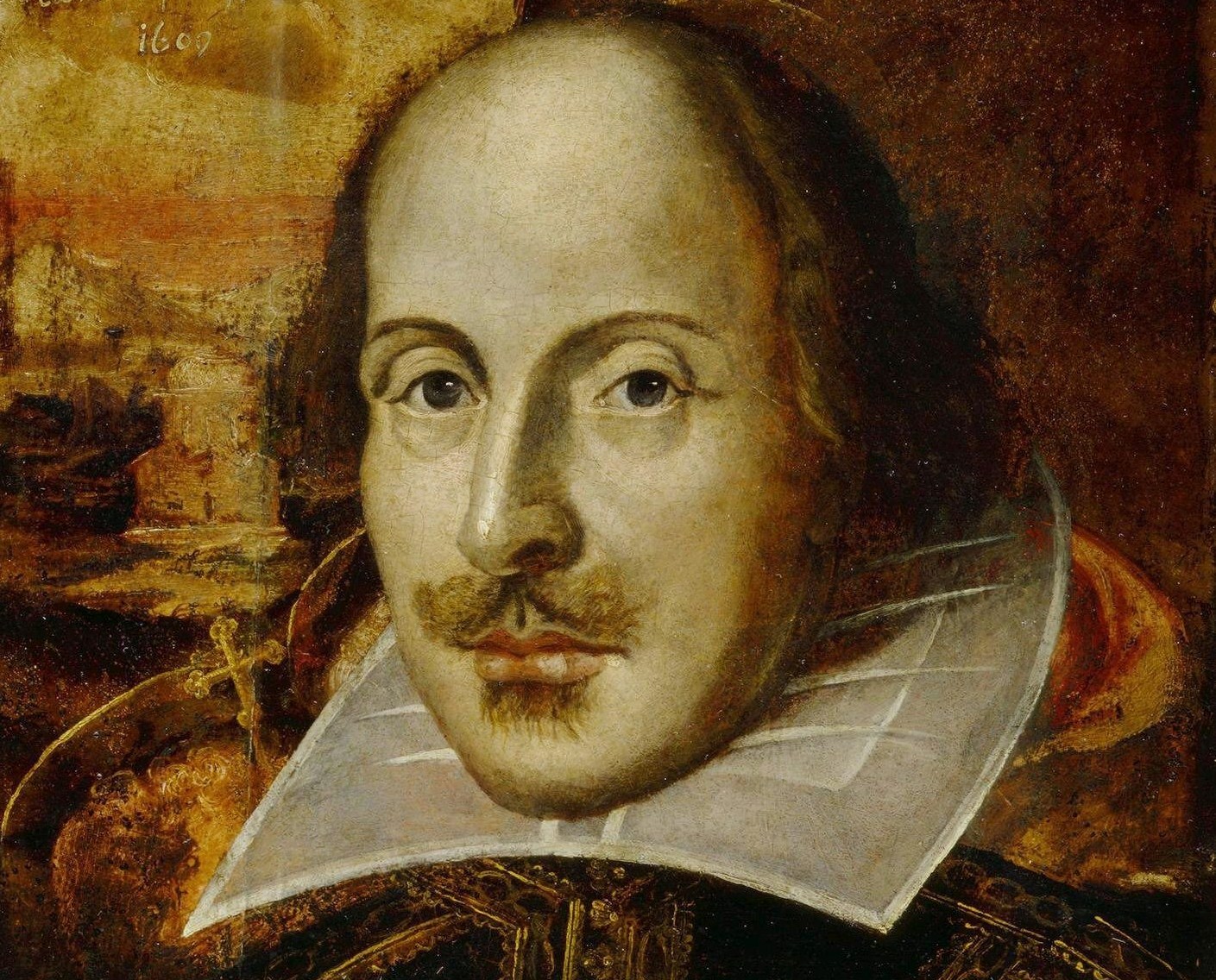
William-Shakespeare

Today we celebrate the birthday of the world’s most famous playwright and poet, William Shakespeare. While he’s best known for works like Romeo and Juliet, Midsummer Night’s Dream, and Macbeth, Shakespeare produced an incredibly diverse body of work that includes many overlooked pieces. Scholars have approached Shakespeare from countless angles. Both Shakespeare’s works and Shakespearean scholarship have fascinated rare book collectors for centuries, and the items below offer an interesting glimpse into Shakespeare’s genius.

Cymbeline

Cymbeline: A Tragedy is based on part of the Historia Regum Britanniae of Geoffrey of Monmouth, which details the life of British monarch Cunobelinus. Shakespeare, of course, weaves in multiple sub-plots and adapts the story to make it more dramatic and engaging. The date of Cymbeline’s authorship isn’t certain, though it was certainly performed as early as 1611. It used to be one of Shakespeare’s most highly regarded plays but has fallen out of favor in the past few centuries. Multiple scholars have asserted that Shakespeare worked with a collaborator to write Cymbeline; several passages sound patently “un-Shakespearean.” Our 1734 edition of Cymbeline, printed for J. Tonson, includes a frontis by Guernier and a title page printer’s ornament of a bust of Shakespeare.

The History of Sir John Oldcastle

Originally published anonymously in 1600, The History of Sir John Oldcastle, the Good Lord Cobham is an extremely rare Shakespearean work. The second edition (1619) attributed the work to Shakespeare. Sir John Oldcastle was a real person who was hanged and burned for heresy and treason in 1417. Oldcastle is incorporated as a minor character in Famous Victories of Henry V, which was undoubtedly a source for Shakespeare’s Henry IV and Henry V. Earlier versions of Henry IV use “Oldcastle,” rather than “Falstaff,” and it’s thought that Shakespeare changed the name to avoid offending the Cobham family. According to Jaggard, who cites Henslowe’s diary, authorship of this history was a joint effort of Drayton, Munday, Wilson, and Hathway. Other scholars even assert that these four actually wrote The History of Sir John Oldham as a response to Shakespeare’s Henry IV. Regardless of its authorship, the piece is exceptionally scarce on the commercial market.

Shakespeare Head Press Booklets

In 1904, Elizabethan scholar AH Bullen established the Shakespeare Head Press in Stratford-upon-Avon. His goal: to produce an exceptional version of Shakespeare’s works. Bullen administered the private press until his death in 1927; it was then acquired by a partnership that included Oxford bookseller Basil Blackwell. The press has become quite famous in its own right. This collection of Shakespeare Head Press booklets represents early works from the press and includes “Ancient Carols” (2nd ed); “Festive Songs for Christmas” (2nd ed); “Shakespeare’s Songs”; “The Nutbrown Maid”; “A Lover’s Complaint”; and “The Phoenix and Turtle.”

The Great Cryptogram

The full title of this work is The Great Cryptogram: Francis Bacon’s Cipherin the So-Called Shakespeare Plays (1888). Its author, Ignatius Donnelly, began his career as a Minnesota farmer and went on to be a Congressman for the state. He was active in the formation of the Populist Party. Later, Donnelly turned his efforts to authorship, and here he argues that philosopher Francis Bacon is the real author of Shakespeare’s works. Donnelly’s argument was a popular one in the late 19th and early 20th centuries. Donnelly traveled to England to arrange an English publication of the work. He spoke at Oxford Union, and his thesis “Resolved, that the works of William Shakespeare were composed by Francis Bacon,” was defeated by vote. Donnelly found himself publicly discredited, and the book was a failure.

Assorted Scholarship

The breadth, depth, and impact of Shakespeare’s works have resulted in an immense body of Shakespearean scholarship. You’ll find works that explore Shakespeare’s connection to Charles Dickens or Shakespeare and Milton, along with more obscure items like Christopher Morley’s lectures on Shakespeare and Hawaii. These items are often relatively affordable, making them both interesting and accessible for rare book collectors. They also add context and texture to a Shakespeare collection.

Share

Charles Dickens’ Debt to Henry Fielding

Henry-Fielding

Henry Fielding

Charles-Dickens

Charles Dickens

When Charles Dickens’ sixth son was born on January 16, 1849, the boy was named for one of Dickens’ favorite authors. Supposedly Dickens had first thought to name the boy after Oliver Goldsmith, but he feared the child would be ridiculed as “Oliver always asking for more.” Instead he named his son Henry Fielding Dickens, after legendary 18th-century author Henry Fielding. Though Dickens was born too late to meet Fielding, his predecessor had a profound impact on Dickens’ work.

 A Father of the Novel

Henry Fielding (April 22, 1707-Oct 8, 1754) began his literary career due to financial distress. At the time writing plays could be quite lucrative, so Fielding turned his attention to drama. His first play, Love in Several Masques (1728), was an immediate success, and over the next several years Fielding would write at least 25 more plays. Most of these had little literary merit. In 1736, Fielding wrote Pasquin, a Dramatic Satire of the Times, which was performed 60 times in only three months. The play attacked the administration of Sir Robert Walpole, portraying the government as rife with corruption.

Fielding followed with The Historical Register for the Year 1736 (1737), which was even more critical of Sir Walpole’s administration. The play was so overtly critical that it caused worry among government officials. Sir Walpole seized the opportunity to pass the License Act of 1737, turning over control of the theatre to Lord Chamberlain. After that, it was virtually impossible to produce a satirical play, and Fielding found his career as a dramatist at an abrupt end. Though Fielding turned back to the law to make his money, he soon found himself facing financial trouble. He began editing the anti-Walpole The Champion, or British Mercury (1739-1741), writing under the pseudonym Captain Hercules Vinegar.

Then Samuel Richardson published the first two volumes of Pamela, or Virtue Rewarded in 1740. Fielding found Richardson’s tone so self-serving and moralistic, he was moved to pen a scathing satire of Richardson’s novel. An Apology for the LIfe of Mrs. Shamela Andrews (1741) was published anonymously, but is accepted as Fielding’s work. He followed up with the comic romance of Pamela’s brother in The History and Adventures of Joseph Andrews (1742). Both novels were quite successful.

Fielding, as many know, also had a very successful career as magistrate, being, for example, co-founder of London’s first police force, the Bow Street Runners. But he never stopped writing. He was a prolific writer of political pamphlets. Vehemently anti-Stuart, Fielding wrote for the burlesque Jacobite Journal (1747-1748) as a response to the Jacobite uprising of 1745. That event would later serve as the backdrop for The History of Tom Jones, a Foundling (1749). It was with this novel that Fielding made his greatest contribution to literature: this picaresque tale blends elements of the mock epic and comic romance, but it also introduces the omniscient narrator.

Meanwhile the novel’s protagonist, Tom Jones, is an ordinary person, a sort of modern-day everyman. With the figure of Tom Jones, Fielding made the novel accessible and interesting to a whole new middle-class reading public. It’s no surprise, then, that a copy of Tom Jones found its way to the bookshelf of the poor Dickens household when Charles was a boy.

Fielding’s Impact on the Victorian Novel

While Richardson is credited with originating the psychological realism so prevalent today, Fielding was the inventor of a new narrative voice that vastly influenced Victorian writers from William Makepeace Thackeray to Charles Dickens. Indeed, Dickens owes quite a debt to Fielding. Dickens’ first several novels were picaresques (novels of short episodes), a style he’d picked up from the books of his childhood–namely Arabian Nights, Don Quixote, and Tom Jones. Dickens would also incorporate elements of the mock epic and the comic romance in his stories.

Dickens also followed in Fielding’s footsteps by using fiction to openly address political and social issues. Fielding made literature more egalitarian; while the novel had previously focused on members of the upper classes and their lives, Fielding opened up the genre. Dickens furthered that work with tales like Oliver Twist and A Christmas Carol.

Fielding’s novels surely left a lasting impression, influencing Dickens for a lifetime. It’s no wonder that Dickens chose to name a child after Fielding. Where else do you see Fielding’s influence on Dickens’ writing? And which writer would you choose for a child’s namesake?

Share

Congratulations to Travis Low, Winner of the Tavistock Books RBS Scholarship!

Travis-Low-Ken-Sanders-Rare-Books

Photo: Ashley Thalman, Fine Books & Collections

We’re extremely pleased to announce that Travis Low of Ken Sanders Rare Books has won this year’s Tavistock Books Scholarship to Rare Book School (RBS). Travis will take Joel Silver’s course, Reference Sources for Researching Rare Books, at RBS in Charlottesville, Virginia.

Rare Books through the Back Door

As many of us in this field do, Travis wears many hats at Ken Sanders Rare Books. He came in, almost literally, through the back door, starting out as a shipping clerk. Travis, who is also a documentary filmmaker, was shooting a documentary about writer and performance poet Alex Caldiero. Ken Sanders, a friend of Caldiero’s, appeared in the documentary, so Travis got to meet him. He’d been a customer of Ken Sanders Rare Books and asked if there were any employment opportunities.

He found the bookstore an incredibly collegial environment and has gotten involved in other aspects of the trade as opportunities arose. “Ken has been extremely supportive, and I’m gradually getting more involved in acquisition and description, so this RBS course seems like an excellent place to further my understanding,” says Travis.

As he delves further into the rare book world, research becomes increasingly important. “My favorite aspect of the book trade is when new books come into the store and we get to start digging through them. I find that pretty engaging and have a real affinity for the research required to learn something new about the publishers, the authors, and the books’ subject areas as well.”

The Start of an Ongoing Education

Last summer Travis attended the Colorado Antiquarian Books Seminar (CABS). The program gave him an excellent introduction to the world of rare books, and RBS will allow him to take a more specific, focused course in an area where he needs to grow. Travis noted that he’s been encouraged to further his education through RBS by many respected professionals: Ken Sanders, Melissa Sanders, and Terry Belanger had all stressed the value of the experience.

Travis says that he hopes this will be the first of many courses he takes at RBS. “I’ve spoken several times with Tavistock Books’ proprietor, Vic Zoschak, and he always talks about RBS as his way of continuing his education, and about how he feels an obligation to do that as a professional. That really resonated with me, and I feel compelled to constantly better myself.” After taking Reference Sources for Researching Rare Books, Travis would like to take the Introduction to the Principles of Bibliographical Description.

Travis Low grew up near Logan, UT. He studied Philosophy, Humanities, and Film at Utah Valley University. In January 2010, Travis began working at Ken Sanders Rare Books where he has found an encouraging and instructive working environment. In addition to being a full-time bookseller, he is also an active documentary filmmaker and a hibernating musician. He currently lives in Salt Lake City, UT.

Share

Kate Greenaway: Legendary Illustrator of Children’s Books

Kate-Greenaway

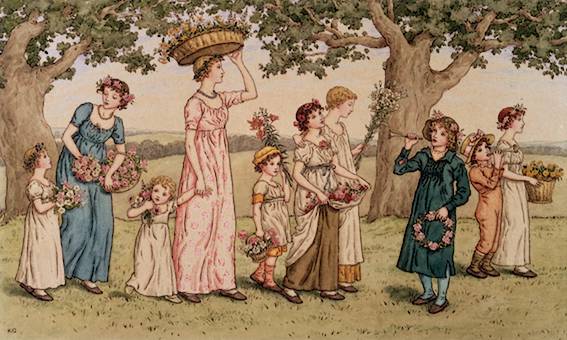
“May Day”

One of the few artists to gain true celebrity from illustrating children’s books, Kate Greenaway was one of the most influential illustrators of her age. Greenaway, along with Randolph Caldecott and Walter Crane, revolutionized illustration. Popular in both Europe and the United States, Greenaway has remained highly sought after, even among contemporary children’s book collectors.

Greenaway’s Early Rise to Fame

Born on March 17, 1846, Greenaway was an only child. Her father was a draughtsman, while her mother was a seamstress who owned a tailoring shop. Both parents encouraged their daughter’s artwork, and in 1867 Greenaway completed her first accompanying illustrations for Infant Amusements, or How to Make a Nursery Happy by William Kingston. The following year, Greenaway began exhibiting watercolors in London’s Dudley Gallery.

Kate-Greenaway-Christmas-Card

Christmas card by Greenaway

Over the next twelve years, Greenaway would illustrate over 30 children’s picture books. She also created Christmas cards and bookplates, which were both incredibly popular. Greenaway’s singular style differed considerably from other illustrators of the day; her pictures were simple and elegant, and they captured a quiet innocence. Greenaway always depicted happy, well loved children in natural scenes, which resonated with people of all ages.

A New Venture

Kate-Greenaway-Under-Window

“Beneath the Lilies” from ‘Under the Window’

Though Greenaway gained considerable notoriety doing illustrations for other authors’ works, she also longed to write her own book. In 1879, Greenaway made her debut as an author with Under the Window. Like her illustrations, Greenaway’s verses were simple, elegant, and charming. The book was an instant success, selling approximately 150,000 copies. Both French and German editions of the book were published. Subsequent titles were equally successful, and Greenaway received a tidy sum for her works. She also published yearly almanacs from 1888 to 1897 (excepting 1896).

Greenaway’s publisher, George Routledge & Co, had earned prominence for publishing yellowbacks, that is, colorful, eye-catching and less costly, glazed-paper volumes, which, to a very large degree, helped make literature more accessible to people of more modest income levels. Famous engraver Edmund Evans, known for his significant artistic contribution to the genesis of the yellowback phenomena, used chromoxylography to reproduce the images for Greenaway’s books.

Trendsetting in Illustration–and Fashion

Likely because her mother was a seamstress, Greenaway paid particular attention to the clothing of her characters. Rather than stick to the fashion of the time, she chose instead to depict characters in clothing from the early 19th century. Though unconventional, the choice proved instrumental in influencing Victorian fashion.

As Greenaway’s books gained international renown, they also attracted the attention not only of book lovers, but also the fashionable set in London. Parents began to dress their children in outfits that could have come straight out of Greenaway’s illustrations. Liberty of London, a well known department store in Britain, even adapted her “looks” for a line of children’s clothing.

A Sterling Reputation among Artists and Collectors

Kate-Greenaway-Painting

“The Rainstorm”

While Greenaway stayed quite busy illustrating and publishing children’s books, she still found time to contribute to the art world. In 1890, she was elected to the Royal Institute of Painters in Water-colour. Greenaway’s work captured the attention of legendary figures like John Ruskin and Arsne Alexandre, and she was compared with Stothard, Reynolds, and even Botticelli.

The variety and beauty of Kate Greenaway’s work have made her a perennial favorite among collectors of children’s books. Her books, greeting cards, book plates, and other art offer limitless potential for building an interesting and dynamic collection.


Share

George Steevens: Bibliophile, Scholar, and Prankster

George-Steevens

George Steevens (1800)

Perhaps best remembered for his exceptional contributions to the study of Shakespeare, George Steevens was also an incredible collector of books. His enthusiasm for Elizabethan literature led him to build an amazing collection, which also included a number of William Hogarth prints. After Steevens’ death in 1800, his library was sold. A significant portion went to the British Museum. But among his contemporaries, George was equally well known for his literary pranks–which did little to endear him to his colleagues.

Shakespeare Scholarship

Steevens’ first published works on Shakespeare were 49 notes to Samuel Johnson’s 1765 edition of Shakespeare’s works. He strongly believed in preserving the quarto editions of Shakespeare, and soon published Twenty of the plays of Shakespeare, being the whole number printed in quarto during his life-time, or before the restoration, collated where there were different copies, and published from the originals. Johnson was so impressed with Steevens’ work, he suggested that Steevens undertake the entirety of Shakespeare’s works.

Samuel-Johnson

Samuel Johnson

That edition, The plays of Will Shakespeare (1773), was ten volumes long and took six years to publish. Though Johnson had contributed to the book only minimally, Steevens lionized his involvement to bolster sales. The edition was received quite well, though later it was discovered that Steevens had borrowed generously from Edward Capelli’s 1768 edition. Steevens and Isaac Reed published an updated edition in 1778. Reed undertook a third edition in 1785, but Steevens, who considered himself a “dowager” editor by this time, had little to do with the project. He resumed involvement only because of his resentment for rival editor Edmond Malone.

Steevens’ Hoaxes and Exploits

For all Steevens’ scholarship, he earned the nickname “Puck of Commentators” for his mischievous pranks. This was certainly a gentle assessment; Steevens executed some exceptional pranks. For his first (mis)deed, Steevens forged a letter from George Peele, recounting his meeting with Shakespeare and other dramatists at the Globe Theatre. Everyone accepted the letter as genuine, and it even appeared in Dr. John Berkenhout’s Biographia litteraria (1777).

Later Steevens decided to exact revenge on Richard Gough, a well known antiquarian against whom Steevens held a grudge. Gough refused to trade his Hogarth plates for some of Steevens’ rare books. Steevens had a large marble block engraved with an Anglo-Saxon inscription and the name “Hardecanute.” The tombstone was displayed in a Southwark shop, and Steevens circulated the story that the headstone had been discovered in Kennington. The faux artifact gleaned a write-up in Gentlemen’s Magazine (1790), and it was Steevens himself who revealed the forgery.

Even accomplished biologist and botanist Erasmus Darwin was taken in by Steevens’ ploys. In the December 1783 issue of London Magazine, Steevens published a description of the invented upas tree of Java, which could kill all other life within 15 to 18 miles. He based his account on the reports of an invented Dutch traveler. Darwin accepted the account and included it in his 1789 Loves of the Plants.

The Other Side of the Coin

Though Steevens obviously loved a good prank, he also helped to expose some of the most notorious forgers of his era. When Samuel Ireland announced that his son William Ireland had discovered a treasure trove of Shakespeare manuscripts. Steevens was quick to criticize the “discovery” and declare the Ireland editions to be forgeries. He also played an important part in exposing the Chatterton-Rowley forgeries.

Meanwhile Steevens was also known for his generosity–sometimes helping the family members of his own rivals. He assisted the family of author Oliver Goldsmith and many others. Ultimately these acts mitigated Steevens’ peers’ evaluation of him. Now he’s remembered not for these hoaxes, but for his scholarship and bibliography.

Share

Happy Birthday, Washington Irving!

April 3 marks the birthday of Washington Irving, American author, historian, and diplomat. Though best known for his short stories “Legend of Sleepy Hollow” and “Rip Van Winkle,” Irving was a prolific writer who also penned several historical fiction books and biographies.

Washington-IrvingChildhood and Education

Irving was born the same week that Britain’s ceasefire ended the American Revolution, and his joyful parents decided to name their new son after George Washington. Young Irving got to meet his namesake when Washington was inaugurated president in 1789, an event that Irving would later commemorate with a watercolor painting. Irving was an unenthusiastic student; by age fourteen, he was already skipping evening classes to attend the theater. Luckily for him, his older brothers were successful merchants who would later support his budding career as a writer.

Irving began submitting pieces to the New York Morning Chronicle in 1802, when he was nineteen years old. Published under the pseudonym Jonathan Oldstyle, the articles focused on New York’s theater and social scenes. They were quite an impressive debut: Aaron Burr, then the magazine’s co-publisher, snipped several of the articles to send to his daughter Theodosia. And Charles Brockden Brown journeyed from Philadelphia to New York to convince Oldstyle to write for Brown’s literary magazine.

Shortly thereafter his brothers sent him to Europe–only to be disappointed that Irving skipped all the “high spots.” He concentrated instead on accumulating an impressive social circle. The charismatic young man soon earned a reputation for congeniality and was a much sought after dinner guest. Irving also forged a close friendship with Washington Allston, who almost convinced him to give up writing for a career as a painter.

Authorial Success

Irving returned to New York, where he founded “The Lads of Kilkenny,” a group of young literati from the city. In 1807, he founded the literary magazine Salmagundi with his brother William and fellow Lad James Kirke Paulding. Even though Irving again wrote under pseudonyms, the magazine helped spread his name outside of New York. And it was in the November 11, 1807 issue of Salmagundi that Irving referred to New York as “Gotham.” Anglo-Saxon for “Goat’s Town,” the nickname wasn’t intended to be flattering. But for some reason it stuck, and Gotham has been used to refer to New York ever since.

Two years later, Irving perpetrated what was one of the greatest literary hoaxes of his time. He placed a series of missing person advertisements in the local papers, asking for information about the whereabouts of historian Diedrich Knickerbocker. Irving also fabricated a notice from a hotel proprietor, threatening to publish the manuscript that Knickerbocker left behind in the hotel room, if the historian failed to surface and pay his bill. The ploy was so effective that New York officials actually considered offering a reward for Knickerbocker’s safe return.

Irving published A History of New-York from the Beginning of the World to the End of the Dutch Dynasty by Diedrich Knickerbocker on December 6, 1809. The book was an instant success. “It took with the public and gave me celebrity, as an original work was something remarkable uncommon in America,” Irving commented. Over time the name “Knickerbocker” became a name for New Yorkers in general; it has since been shortened to “Knicks,” for which the city’s basketball franchise is named.

Financial Struggles and International Copyright Battles

Despite Irving’s fame, he still struggled financially. For a time Irving was editor of Analectic Magazine, where he wrote biographies of naval war heroes. He was among the first to reprint Francis Scott Key’s “Defense of Fort McHenry,” now famous as “The Star-Spangled Banner.” Then the War of 1812 destroyed his family’s finances, and he went to England to keep the family trade business afloat. Irving would remain in Europe for the next seventeen years.

Irving declared bankruptcy and had trouble finding a job. In the meantime, he kept writing at a furious pace. In summer of 1817, he penned “Rip Van Winkle” during an overnight stay with his sister and her husband in Birmingham. By spring of 1819, Irving had sent a set of short stories to his brother Ebenezer. These would become the first installment of The Sketchbook of Geoffrey Crayon, Gent. It met with instant success, and Irving published seven more installments in New York. The stories were reprinted in two volumes in London.

Irving’s bi-continental reputation introduced a significant challenge: literary bootleggers, who would republish his works without permission, particularly in England. Like Charles Dickens, Irving spoke out about the need for international copyright law, but made little progress. Dickens and Irving corresponded on the topic, and Dickens would stay with Irving during his 1842 American tour. But they still grappled with international copyright issues on both sides of the pond. Irving’s stopgap solution: he hired London publisher John Murray to distribute his books in England and made sure to release all his works concurrently in both the US and Britain.

Travel to Spain

Thanks to an invitation from Alexander Hill Everett, the American Minister to Spain, Irving found himself in Spain in 1826. Many manuscripts regarding the Spanish conquests in America had recently gone public, and soon Irving was working on multiple books simultaneously. He wrote The Life and Voyages of Christopher Columbus (1828; his first work not published using a pseudonym); Chronicles of the Conquest of Granada (1829); and Voyages and Discoveries of the Companions of Columbus (1831). These books were historical fiction, rather than biography or history. Irving made one mistake; he helped to perpetuate the myth that scholars of the Middle Ages thought the world was flat. But he wasn’t alone; other authors who promoted this misconception were John William Draper and Andrew Dickson White.

Irving soon moved into the Alhambra, where he expected to finish several writing projects. Instead he was appointed to the American Legation in London. He returned to England to serve as an aide-de-campe to American Minister Louis McLane. Irving helped to negotiate a trade agreement between the US and the British West Indies. He resigned from the post in 1832, returning to the States to publish Tales of the Alhambra.

Western Exploration

That same year, Irving accompanied US Commissioners for Indian Affairs Henry Leavitt Ellsworth and Charles la Trobe, along with his friend Count Albert-Alexandre de Pourtales to survey Indian Territory. The expedition inspired A Tour of the Prairies. Irving also met fur magnate John Jacob Astor during the trip, and Astor convinced Irving to write his biography. Astoria was published in February 1836. Meanwhile Irving encountered Benjamin Bonneville and, fascinated with his tales, convinced Bonneville to sell his maps and notes for $1,000. Irving used these as the basis for The Adventures of Captain Bonneville (1837).

Irving undertook these works, often called his Western series, for a few reasons. First, he was broke. Second, he’d been criticized for becoming a more European writer. Both James Fenimore Cooper and Philip Freneau thought he’d turned his back on America. Fortunately for Irving, the books were received well in the States, though predictably less so in Britain.

After a stint as the American Minister to Spain, Irving returned to his Tarrytown, NY property, called Sunnyside, in 1846. He worked on the “Author’s Revised Edition” of his works for publisher George Palmer Putnam. Irving also turned his attention to biographies, writing about Oliver Goldsmith, the Islamic prophet Muhammed, and George Washington. His biography of Washington was released in five volumes, and Irving died within months of its completion.

Share