Author Archives: tavistock_books

Pride and Prejudice and Bookselling: Confessions from the 49th California International Antiquarian Book Fair

This past weekend Team Tavistock (Vic Zoschak & Kate Mitas) braved the 49th Annual California International Antiquarian Book Fair. How was it, you ask? Well, we’ve asked Ms. Mitas and she kindly volunteered her thoughts on the fair. Find out below!

Team Tavistock! The lovely duo in all their book-loving glory. (Disclaimer: I told Vic to make this face right before taking this picture. He is a genial person. We promise.)

Team Tavistock! The lovely duo in all their book-loving glory. (Disclaimer: I told Vic to make this face right before taking this picture. He is a genial person. We promise.)

By Kate Mitas

It is a truth universally acknowledged that a bookseller in possession of a good book must be in want of a buyer. Book buyers being rather fickle creatures, however, and booksellers being notoriously short of cash, the art of uniting a book with its owner-to-be can be a delicate affair, engineered by the bookseller with the same gnawing anxiety and outsized hopefulness as that of a zookeeper trying to persuade members of an endangered species to mate. Spacious, but comfortable, environs are helpful in such instances, as are a plenitude of books, booksellers, and potential book buyers from around the globe, to increase the likelihood of a successful match. And, of course, lovely weather never hurts.

Enter the annual California International Antiquarian Book Fair.

New ABAA member (and our friend) Marc Kuritz of Churchill Book Collector smiles at the opening of the fair!

New ABAA member (and our friend) Marc Kuritz of Churchill Book Collector smiles at the opening of the fair!

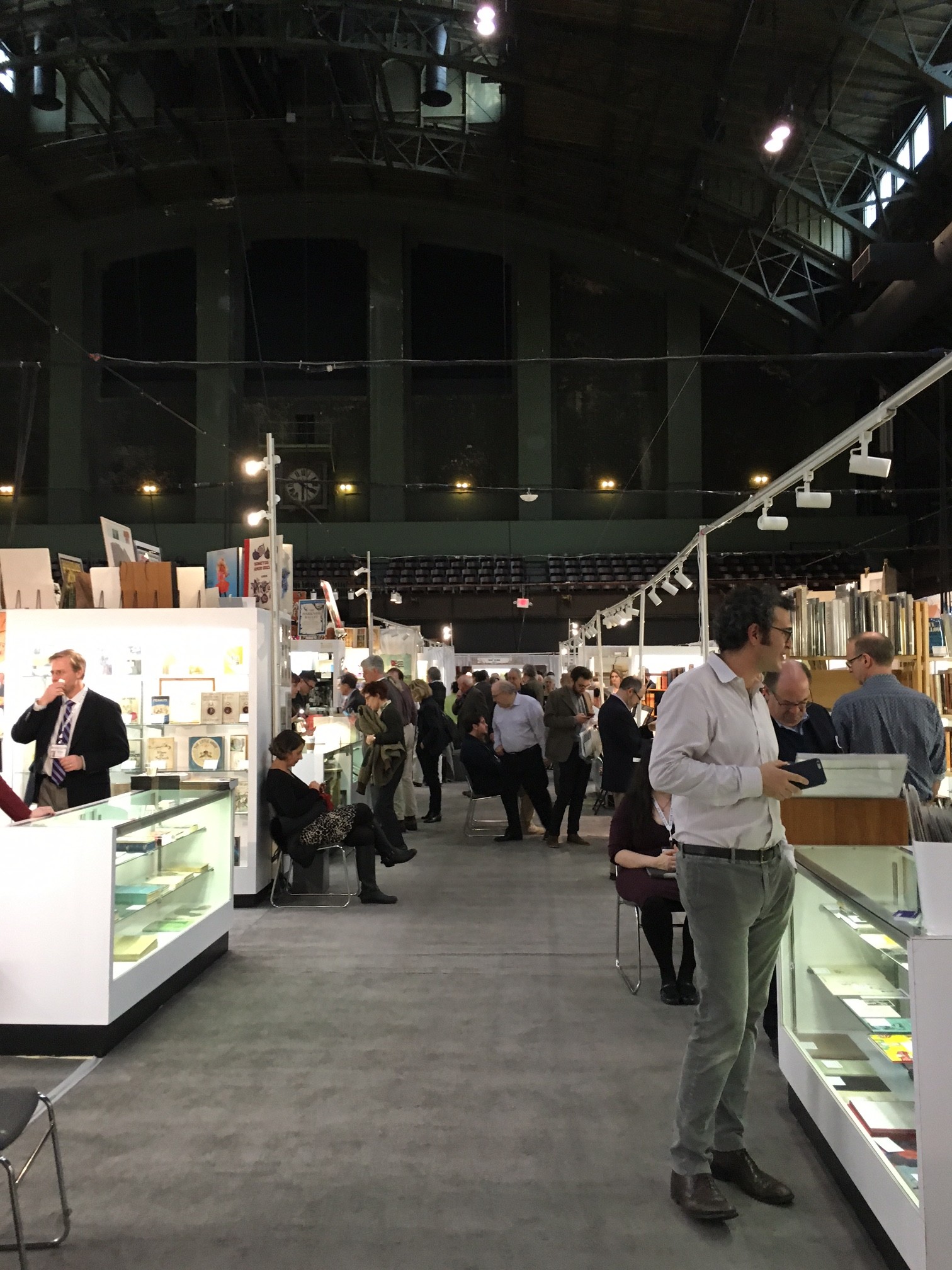
Held in the Pasadena Convention Center this year, the largest antiquarian book fair in the country had all of these things going for it, and more. Well-lit and suitably grand, with plush grey carpeting covering the floor and dark, tasteful drapery dividing the booths down eight long aisles, the convention center housed over 200 dealers and some of their most magnificent stock, and did so with nary a hitch. The combined might of White Rain Productions and the dauntless ABAA volunteer committee, headed by Michael Thompson, ensured that everything from the easy load-in, to the well-stocked exhibitor snack room, to the requisite permits for the ABAA charity poker tournament were all taken care of before anyone could raise much of a fuss (okay, some disgruntled muttering was heard from time to time regarding the snack room, but that’s inevitable). Security was tight, snappily dressed, and both professional and friendly with the bookish crowd; the temperature inside, once the fair officially started, was neither too cool nor too hot. Attendance was predictably good, if not the clamoring hordes of collectors everyone would have preferred. In terms of operational efficiency, the general consensus seemed to be that the fair ran with exquisite smoothness.

Even I, still a relative newbie to the fair circuit, and a first-timer on this side of the counter at an ABAA fair, knew enough to be impressed by the well-oiled machinery underlying the event. The same sense of smoothness seemed to carry over into the Tavistock booth, as load-in – really nothing more strenuous than a quick drive down the ramp at the convention center parking garage, and then a stroll around the neighborhood while our books were brought up by the loading crews – turned into a luxuriously long setup, followed by a quick change of clothes before the crowd started spilling in on Friday afternoon. After that, it just came down to selling books — arguably, the most important part, but I’ll get to that in a minute.

None of this is to say that we didn’t have our usual share of book fair mishaps. For starters, our booth was missing a glass case, and we had to track it down before we could do much in the way of unpacking. Then the corner of the table supporting our two folding bookcases cracked and began to buckle overnight, which meant we had to get a new table in on Friday morning and redo everything on the cases (as you may have already guessed, by “we” here I mean “I”). My “fancy day” outfit demanded to be rectified at the last minute, and rightly so, and though I remembered to scrape the blue price stickers off the soles of my black heels before too many fair-goers had wandered in, the shoes I’d thought were a solid thrift store find turned out to be duds: part of the right heel broke off not long into that opening day, giving my already less than graceful heel-wearing gait an added surreptitious limp, and leading to the sad discovery that I’d left our Sharpie marker back at the shop.

Yet, this time around, it all felt, well, par for the course. Simply working the fair, my biggest one so far, my first ABAA fair even, seemed . . . normal. Which, quite frankly, was weird.

And which is why I now have a confession to make: I have been an antiquarian bookselling spy.

Not a spy for anyone, mind you — don’t sic ABAA security on me just yet. No, instead I have been a spy, of sorts, from the used and rare book world from whence I came, and where I spent the preceding eight years of my life in the book trade before moving to Tavistock. 

The used and rare market isn’t, of course, actually separate from the antiquarian trade. In fact, for some dealers, the two are very nearly one and the same: within the many permutations of the book business, there are plenty of antiquarian booksellers with open shops and a large quantity of general stock, just as there are plenty of used and rare booksellers with significant antiquarian stock. The distinction is in large measure a matter of how a bookseller defines herself, I suspect, and in which community she chooses to invest the majority of her energies, funds, and knowledge. (I also suspect that many of you have other, or better, definitions for these terms. Bear with me.)

In my case, the two bookstores I worked for had a far greater preponderance of used than rare material, a significant investment in and reliance on their local communities, and the kind of more limited dealings with collectors and institutions that makes me feel comfortable distinguishing them from the purely antiquarian trade. The demands and joys of running an open shop took precedence; material valued at more than a few thousand dollars was unlikely to pass through the doors. Yet, while I may not have learned the ins and outs of collating or the rigors of bibliographic description, I did learn what I still take to be the one of the most basic tenets of the trade: that the job of a bookseller is, simply, to put the right book in the right hands. 

That’s a tenet that’s easier to follow, however, when one is dealing primarily with the public, and can point to sales of $1.50 and $1500 on the same day as proof that a book’s value exists irrespective of the price tag on it. It strains credulity to make the same claim when the books you sell exclude all but the wealthiest pairs of hands.

Or so it has seemed sometimes, as, over the course of the past seven months, I have on the one hand been utterly delighted with some of the material that has crossed my desk and grown frankly callous about the prices attached to it, and yet, on the other hand, have found myself stalled at book fair booths or dinners with colleagues, making knee-jerk comparisons of the prices of things to my average annual income or the cost of the house it took my parents 30 years to pay off, and wondering what the hell I was doing there. Such comparisons do a rank disservice to everyone and everything involved, of course, and it seems likely that the authors of at least a few of the books in question, who surely knew some bookseller’s assistants in their time, would have been mortally offended at having their life’s lasting work held up to my meager income. But knowing that didn’t keep me from wondering. Was the antiquarian trade just about selling expensive books to rich people? Had I sold my bookselling soul for a living wage and the chance to actually research the material I cataloged?

If this sounds a bit like a form of snobbery, well, it is. Because the truth is, I was wrong. But being, as usual, a stubborn idiot, it took the largest antiquarian book fair in the country to convince me of that.

Some of the deceptive looking booksellers we know and love!

Some of the deceptive looking booksellers we know and love!

Antiquarian booksellers are a deceptive-looking lot, what with their general friendliness, bookish ways, frequently somewhat rumpled appearance, and ability to drink like fish at a moment’s notice. You might not appreciate at first glance the depths of trade knowledge and specialization honeycombing their businesses, which are, more often than not, simply themselves. And the same holds true of their booths at these book fairs: loving displays of beautiful and, yes, expensive books that reveal nothing of the boxes of dreck, smelly basements, second mortgages, years of self-education, and successful gambles that enabled those books to appear in all their bright glory on a glass shelf at a book fair somewhere. Until, one day, at, say, the 49th California International Antiquarian Book Fair, you do.

Whether it was the fact that I recognized more of the items on display at this book fair for the truly amazing things they are, or the internationality of the affair, or the number of eager collectors, librarians, and other dealers poring over the stock, or the humbling amount of dealers who stopped by to offer their thoughts about their success or lack thereof at this fair and were, without fail, kind as ever to this newbie, it slowly dawned on me that the “right book, right hands” theory of bookselling could still apply in the antiquarian world. Each booth was a kind of sounding, showing the depths of a dealer’s knowledge, beckoning like-minded folk. It’s unlikely that I’ll ever have a collection myself, I gradually realized, but . . . if the opportunity arose to sell something as cool as some of the things I saw, expensive or not? Well, I’d be okay with that.

But what, you’re surely wondering, does any of this have to do how the good ship Tavistock fared? 

Much as I wish I could report my first successful book fair, I cannot. The official word here, in fact, is “soft,” and I’ll leave you to interpret that as you will. Groups of customers drifted up to the display cases like schools of minnows into the shade of a rock, and the gentlest greeting, even to someone else entirely, would send them skittering away. No big fish came by, and those medium fish that did bought lightly. Lots of things sold from the Discovery shelves of under $100 items; whether that translates to increased collecting or is simply an indication of economic stratification, remains to be seen. The aisles, which had been like pneumatic tubes propelling assistants from booth to booth with packages at the start of the fair, slowly turned to clogged thoroughfares of laden dealers grimly trying to ignore their aching feet as they lugged final piles of invoiced items to their colleagues up the way, and a few of those piles came to us, so the buying wasn’t too bad. But, again, the expenses of attending the fair weighed heavily, too heavily, against our anemic sales.

The plush carpeting was getting ripped up during load-out, exposing swathes of pale concrete beneath the luxurious facade. The draperies have surely been taken down and folded, the metal poles stacked in a supply closet somewhere; the security guards have taken off their suits and sunglasses, had beers, and moved on to other gigs. The transitory bibliomecca has moved on to other oases. And as we drove away from Pasadena early Monday morning in a disappointed funk, dreading the final tally, it occurred to me that at any given time, some bookseller, somewhere, was digging through a box, lugging a sign out to the sidewalk, putting a book in someone’s hand, and trying, always, to outsmart, out buy, and — invariably, incredibly — help out their colleague competitors. It’s an absurd profession in its way, and a noble one. And, in the end, we’re all just hustling, hustling, hustling to stay in the game.

Godspeed, friends.

And then... there's this and it makes us giggle.

       And then… there’s this and it makes us giggle.

Share

Lurking in Person at the San Francisco (Mateo) Book, Print & Paper Fair

I have done many “my first book fair” blogs for Tavistock Books. I wrote about my first ever book fair working behind the booth, I wrote about my first ever book fair that I had to fly to exhibit at. I wrote about my first ABAA fair. Unfortunately for you, this blog will be of a similar vein – my first book fair where I wasn’t working but I wasn’t not working either. I may no longer assist the Tavistock Books booth in person, but I am constantly lurking here – gathering information for blogs or for Twitter shout outs. And at the recent San Francisco Book, Print & Paper Fair (held in San Mateo, actually)… I lurked in person.

While this is not as creepy as I just made it sound for effect – to the outsider it looked like a young woman walking around a book fair, knowing quite a few people there but with no bags in her hands. The creepiness was felt solely on my part (I hope). I was once again in a strange situation of “firsts” for my book fair tally – the first time I walked around an antiquarian book fair not looking to buy, not looking to sell, not looking to do anything much but see some friends, evaluate the fair for my blog, and hand out to said friends some newly printed business cards (pretty useless when handing them to people who know your name and your phone number already – but I have to give them to someone otherwise it was a waste of $40). 

Screen Shot 2016-02-10 at 2.14.10 PMShould we get to the point? What I thought of the San Mateo Fair, for instance? Before I begin this brief discussion, however, let me point out a disclaimer – I only attended the San Mateo Fair for its last few hours on Saturday afternoon. For once, I cannot comment on set-up or on break-down, on sales or even on customers. What then am I going to comment on, you might ask? Well… Brad Johnson, Travis Low & Ken Sanders were all very impressed by the meat carving station.

Just kidding! (I mean, that is a fact but it is not the point). I will say that from an outsiders perspective – I was confused as to where the fair actually was, what dates it actually was (because of the Super Bowl the days of the fair were Friday/Saturday, rather than the typical Saturday/Sunday – and I would very well have shown up to a dead event center on Sunday afternoon if Kim Herrick of The Book Lair had not warned me, purely by chance). When I arrived after an hour long drive I was told I had to pay $10 cash to park – and (of course) had no cash with me. Then drove (accidentally getting on the freeway for the San Mateo Bridge, back the way I came) for 45 minutes just to get some cash out of an ATM and go back to my original destination. Now – does this have anything much to do with how well the fair went? No. But it does have some merit from the outsider’s perspective. I won’t lie, quite a bit surrounding the fair itself was a hint confusing and stressful. 

On this note, another disconcerting aspect… a lack of booth numbers on the signs for each booth (and by signs I mean pieces of white paper). I looked in the booklet once I had walked around what I thought was the entire fair, and saw that Antipodean Books was exhibiting! I adore David and Cathy Lilburne and thought I would rush over to say hi. After not finding them whatsoever I had to ask a kindly bookseller, who told me that, in fact, Antipodean Books was not exhibiting – nor were quite a few other booksellers listed in the booklet with booth numbers. 

See? Slightly confusing.

Now, on the other hand, while some of my book friends stated how slow it had been (“slow” in bookseller terms meaning a lack of customers or patrons), a couple others told me that they had sold quite a bit of material and had gone through more than one invoice pad. For those of you that don’t know bookselling, that is quite a good fair hint right there! Vic and Kate themselves walked out of the fair with smiles and arms heavily loaded with material purchased. So, as is usual for every one of these book fairs I have reported on, for some the fair was a success and for others it was not quite all they had hoped. In any case, good fair or bad the booksellers were there – and they are the main event. Also per usual, I got smiles and laughs from all, despite how they felt the fair was going. 

So what is the conclusion here? Perhaps just that, as an outsider looking in there were confusing aspects that I might never have seen or understood were it not for being the creeper that I now am! And perhaps I have learned a lesson – always carry cash when going to a new book fair!

Check in next week for our write-up on the Pasadena ABAA Fair!


Share

Adah Isaacs Menken’s Relationship with Charles Dickens: A Blog in Honor of his Upcoming 204th Birthday

By Margueritte Peterson

 “[Menken] is a sensitive poet who, unfortunately, cannot write.” -Charles Dickens

Screen Shot 2016-02-02 at 10.16.57 AMAdah Isaacs Menken died in Paris on August 10, 1868, only eight days before her collection of poems, Infelicia would be published. Dedicated to Charles Dickens, Infelicia highlights Menken’s complicated relationship with her literary contemporaries—and, perhaps, her unfailing talent for generating publicity. Details about Menken’s early life are difficult to corroborate because Menken herself told so many different versions of her story. Most experts agree that she was born on June 15, 1835 in Memphis, and that her given name was Adah Bertha Theodore. She moved to Lousiana as a young child, grew up there, and launched her acting career there. From Louisiana, Menken traveled throughout the South and West. Meanwhile, she launched her writing career with “Fugitive Pencillings,” which appeared in Texas’ Liberty Gazette and the Cincinatti Israelite.

The year 1856 brought the first of Menken’s multiple marriages, to Alexander Isaacs Menken. The two were (supposedly) divorced already when Menken entered her next marriage with prizefighter John Heenan in 1859. But Heenan and Menken separated shortly thereafter; Heenan was scandalized to find that his new wife was still legally married to her first husband. By this time, Menken had already begun traveling in bohemian and literary circles. A regular at Pfaff’s, Menken met Walt Whitman, who greatly influenced her work.

Menken in Mazeppa - where she caused quite a stir.

Menken in Mazeppa – where she caused quite a stir.

Soon Menken was “not known for her talent, but rather for her frenetic energy, her charismatic presence, and her willingness to expose herself.” Indeed, Menken’s primary claim to fame was her performance in Mazeppa. Menken played the role of a man, and in one scene she was lashed to the back of a running horse…wearing nothing but a flesh-colored body stocking.

The play debuted in Albany in June, 1861. Menken’s manager, Edwin James was a sports reporter for the New York Clipper (and a former lawyer who’d inspired the character of Striver in Tale of Two Cities.) James managed to get reporters from all six of New York’s daily papers to attend, along with reporters from three weeklies and two monthlies. Although the Civil War had already broken out, Menken’s performance grabbed headlines. Mark Twain saw Mazeppa at Tom Maguire’s Opera House in San Francisco. Though he had formerly dismissed Menken as a “shape actress,” her performance changed his mind. On September 13, 1863, he wrote a column called “The Menken—Written Especially for Gentlemen.” His assessment of Menken was less than sterling:

“Here every tongue sings the praises of her matchless grace, her supple gestures, her charming attitudes. Well, possibly, these tongues are right. In the first act, she rushes on the stage, and goes cavorting around after ‘Olinska’; she bends herself back like a bow; she pitches headforemost at the atmosphere like a battering ram; she works her arms, and her legs, and her whole body like a dancing-jack: her every movement is as quick as thought; in a word, without any apparent reason for it, she carries on like a lunatic from the beginning of the act to the end of it. At other times she ‘whallops’ herself down on the stage, and rolls over as does the sportive pack-mule after his burden is removed. If this be grace then the Menken is eminently graceful.”

At any rate, Menken continued to bring crowds to theatre after theatre. Always the shrewd self-promotor, she would arrive in a new city and immediately ensure that her photograph was hanging in every shop window. By now Menken had also gotten into the habit of inventing stories about herself. She also frequently exaggerated the extent of her relationship with famous figures, particularly those in the literary world.

Mazeppa opened in London on October 3, 1864. Charles Dickens attempted to attend an early performance, only to find that the show was already sold out. The ticket manager recognized Dickens and offered him a private box, but Dickens declined. It’s long been rumored that Menken used the incident as an excuse to meet Dickens, but it’s likely that Menken started that rumor herself. The two traveled in the same social circles, and Dickens may even have attended some of Menken’s “literary salons” at her rooms in the Westminster Hotel. But there’s little evidence to suggest a deeper relationship, and even the rumor of an association with Dickens would have bolstered Menken’s reputation.

Meanwhile, Menken’s connection to Dickens’ contemporary Algernon Charles Swinburne was anything but a rumor. Fearing that Swinburne had lost his interest in the opposite sex, his associates set him up with the sexy Menken. After Menken’s death, Swinburne would say of her, “She was most loveable as a friend, as was as as a mistress.”

A shot of the inserted facsimile letter in our holding of Felicia.

A shot of the inserted facsimile letter in our holding of Felicia.

By 1868, Menken had published more than enough poems to publish a collection, which she titled Infelicia. Menken made another probably-calculated move: she dedicated the book to Charles Dickens, who by now enjoyed the Victorian equivalent of rockstar status in both England and America. The first edition included an engraved portrait of Menken on the frontispiece, along with a poem that Swinburne had written for her. It also included a facsimile of a letter that Dickens had supposedly written to Menken, thanking her for the dedication.

While Dickens did indeed thank Menken for the dedication, the facsimile was actually comprised of two different letters Dickens had sent to Menken. Thus this first edition was quickly suppressed, and subsequent editions don’t include the facsimile. This only added to the sensation that already surrounded the book. The dedication to Dickens left many speculating about the true nature of their relationship, and Menken’s untimely death had catapulted her back into the headlines.

Meanwhile, her relationship with Swinburne and the fact that the frontispiece bore a Swinburne poem led some to suggest that Swinburne or his assistant, John Thomson, had actually authored Infelicia. Critics soon pointed out, however, that the poems were riddled with flaws and simply weren’t that good. They eventually accepted the work as Menken’s, arguing that Swinburne was too talented to write it.

Infelicia went through a number of editions in England and America, mostly pirated. The book made its last appearance in 1902. It’s now quite rare to find a copy of Infelicia that bears that facsimile letter from Charles Dickens.

Screen Shot 2016-02-02 at 7.02.44 PM

Share

A Wonderland of Books, Indeed! Happy 184th Birthday, Mr. Dodgson!

By Margueritte Peterson

One of my most favorite Children’s writers of all time was born on the 27th of January, 1832. Scratch that – one of my most favorite writers, period, was born on the 27th of January, 1832. Many critics of great literature have commented on the fact that one of the most lasting kinds of literature is the kind that speaks to both children AND adults – writers whose works you can read when you are both 5 and 75 and learn something equally important at both of these starkly different ages. It is my super humble (though really awesome) opinion that the writer we honor today, on what would be his 184th birthday, is one of those writers. It is perhaps also appropriate that we honor his memory this week, as in less than a month there will be an ABAA Fair in Pasadena named after some of his most well-known work. The name of the fair? A Wonderland of Books. Can you guess who it is yet? 

lewisCharles Lutwidge Dodgson (pen name Lewis Carroll – for those readers that are having one of those really slow days) was the fourth child of what would be a family of 12 (just children, that is). He and quite a few of his siblings would suffer from an unfortunate stammer for their lives, a condition often thought to be brought on when a naturally left-handed child is forced to become right-handed early in childhood (though there is no specific evidence that shows this to blame for Dodgson in particular). This stammer would cause the author no end of misery as he felt inferior throughout life and led to his later relationships with children (sparking great work and no end of controversy to this very day). A (somewhat vague) problematic time in Dodgson’s upbringing would arrive when the 13-year-old Dodgson was sent to Rugby School – an independent boarding school in Warwickshire. Years after leaving the school, Dodgson would write, “I cannot say … that any earthly considerations would induce me to go through my three years again … I can honestly say that if I could have been … secure from annoyance at night, the hardships of the daily life would have been comparative trifles to bear.” Though never expanded on, one can assume that Dodgson was either teased mercilessly or suffered even worse hardships at the hands of his fellow students. 

In 1850 Dodgson entered Christ Church College in Oxford, where he excelled academically, despite not always being the most faithful of students. He received first-class honors in Mathematics at the College, and continued teaching and studying the subject until 1855, when he won the Christ Church Mathematical Lectureship, a post he then held for the next 26 years. It was during this period that he began to be published nationally (having been writing poetry and satires, often humorous in nature, since young adulthood), in magazines like The Comic Times and The Train. It was during this period (1856, to be exact) that Dodgson first published a poem under the pseudonym “Lewis Carroll” – a work entitled “Solitude” published in the magazine mentioned above – The Train.

lewis2

The Liddell sisters – Alice, Lorina & Edith.

In the same year as the publication of “Solitude”, a new Dean arrived at Christ Church – Dean Henry Liddell. The Liddell family would feature heavily in Dodgson’s life for years to come, as he became an important influence and friend to the Liddell daughters – Lorina, Edith, and Alice. He would often take the Liddell children on short day-trips around Oxford – rowing or going for walks – and it was on one of these trips that he first began the story that would eventually turn into one of the most beloved children’s books of all time – Alice in Wonderland. His story of a precocious and questioning young girl was a story told to Alice Liddell, who in turn begged Dodgson to put it to paper for her. His personally illustrated manuscript entitled “Alice’s Adventures Under Ground” was completed in 1863. After Dodgson’s longtime friend (and fellow author) George MacDonald got ahold of the story, it was his persistence that led to its publication in 1865, with new illustrations by Sir John Tenniel. The book was an instant commercial success – with “Lewis Carroll” receiving attention from around the world. 

One of the most well-known Tenniel illustrations to the first Alice publication!

One of the most well-known Tenniel illustrations to the first Alice publication!

In 1871 Dodgson published a sequel to Alice, titled “Through the Looking-Glass and What Alice Found There”. Though it was popular as well, it’s somewhat darker mood and gloomier settings did not garner the same amount of success as the first novel. In 1876, “Carroll” published his next great work – a humorous and fantastical poem – “The Hunting of the Snark.” Another work came even later, in a two-volume set of a fairy story titled “Sylvie and Bruno” – though not as well known it has remained in print ever since.

A great love of Dodgson’s throughout his life was photography. The first photographs that are attributed to the author date back to 1856 – around the time that he began his association with the Liddell family. Often, even today, Dodgson comes under scrutiny when fans find out that over half of his photographic subjects include little girls – sometimes scantily clad in what one might consider strange positions or situations. Though no evidence has ever come into question of an inappropriate relationship between Dodgson and any of the girls he came into contact with (as most of his “friends” were children – Dodgson was notoriously shy around adults), many continue to wonder whether he ever considered a more intense relationship with the girls in the photographs. Nevertheless, they are interesting pieces of early photographic work – all done with full knowledge of the subject’s parents and often commissioned by the families themselves! 

Dodgson is well-remembered for Alice and for the children’s stories he came up with, but it should be noted that this Mathematician also produced works that are still remembered if not used today in Mathematical sciences. He published almost a dozen books under his real name (not the pseudonym) on the science, and himself developed new ideas in the subject of linear algebra. He taught Mathematics in his post at Christ Church until 1881, and then remained in residence there for the rest of his life. On January 14th, 1898, two weeks away from his 66th birthday, Dodgson passed away from pneumonia following a bout of influenza, and is buried in Guildford. One thing is for sure and certain, whether you wish to remember him as Charles Dodgson or Lewis Carroll – this author remains, to this day, one of the most well-known names in Children’s Literature (if not the most well-known), and deserves to be celebrated on this his 184th birthday!

One of Dodgson's original illustrations in the manuscript "Alice's Adventures Under Ground".

One of Dodgson’s original illustrations in the manuscript “Alice’s Adventures Under Ground”.

Share

Come to Pasadena, for There You’ll See…

Screen Shot 2016-01-19 at 10.00.04 AM

We are exhibiting at the Pasadena ABAA Fair! If you have a chance to come check out Booth 418 while you’re there (February 12th-14th at the Pasadena Convention Center), here are some of the goodies you can hope to find. See anything else on our site you’d be interested in perusing? Shoot us an email! We’d be happy to bring it down just for you.

Check out this 1st edition, inscribed copy of Clara Barton’s “Story of My Childhood” – published in 1907. Now housed in a custom red quarter-leather slipcase with marbled paper boards… As Barton is perhaps the most well-known nurse in American nursing history (organizing the American Red Cross and all), this is a must-have for any nursing collection! See it here>


Screen Shot 2016-01-19 at 10.00.15 AMAn attractive, Near Fine set of Forster’s “The Life of Charles Dickens” – all first editions! Published between 1872 and 1874 by Chapman & Hall, these volumes are beautifully set in early 20th century three-quarter green morocco bindings and green cloth boards. Love Dickens? Look no further than here>


Screen Shot 2016-01-19 at 10.00.50 AMFor the celebrity groupie in the Southern California crowd… we have a scarce cookery book published in 1936. “Favorite Recipes of Famous People” contains favorite recipes of, according to its compiler Felix Mendelsohn, “famous chefs and maitres, by stage folk and screen stars, by newspaper men, columnists, opera stars, musicians and leading household economists, in fact by glamorous personalities in every walk of life.” This cookery book only shows 4 holdings on OCLC! Get it while it’s hot>


Screen Shot 2016-01-19 at 6.46.50 PMA book fair wouldn’t be complete without a little bit of library history! Have you seen our Catalogue of the Milford Library yet? This is a rare 19th C. catalogue from this small-town free library, formed in 1868. OCLC records no holdings of this edition (can you say “Score”?), noting only a sole holding of the library’s 1870 catalogue. The 3 page introduction provides a succinct history of earlier attempts at establishing local lending-library societies, etc. Interested? It is available to see here>


Screen Shot 2016-01-19 at 10.04.45 AMThis Hardy Boys title, “The Short-Wave Mystery”, number 24 in the series, is in, according to Carpentieri’s reference, it’s “most collectible” format. This 3rd printing of the title has a frontis by Russell H. Tandy and is bound in maroon cloth with black topstain and pictorial endpapers. Colorful pictorial Dust Jacket is included! Are you a collector of children’s series books? Contact us – we can bring many! See “The Short-Wave Mystery” here>


Screen Shot 2016-01-19 at 6.39.30 PMWho doesn’t love a good restaurant menu? Especially one where a big-mouth bass tells you to eat him! Check out this menu from New York’s McGinnis of Sheepshead Bay – “The Roast Beef King” (but also “Famous for Sea Food”). In 1943, a Roast Beef, Spinach and Mashed Potato dinner cost $1.45. Oh, the good old days… Drool & giggle here>


Screen Shot 2016-01-19 at 10.05.13 AMAnd last but not least – our Fine Printing item! This broadside is a 1934 printing from San Francisco’s Grabhorn Press – one of only 100 copies. “To Albert Bender – Saint Patrick’s Night 1934” was written by Ella Young to Albert Maurice Bender, and has a woodcut headpiece by Valenti Angelo at the top. See it here! 

Share

“He was America”: Happy Birthday Carl Sandburg!

By Margueritte Peterson

Admitting this is probably one of those phenomenally bad ideas I continuously have despite how much older I get, but I am one of those wicked people who pretended to know, well…something about this American literary star for many years. People would mention his name and I would be all, “Oh yes, Carl Sandburg, wow… it went for how much? Woah!” While casually hoping the conversation would change because as far as I knew I could not remember reading anything by this author and continually neglected to read up on him when I got to a quiet corner away from prying eyes. Yes, ladies and gentlemen, I know it is a shocker but I am not omniscient (though I’m sure it seems that way most of the time. Eh-hem). So now, just in case any of you out there are like me and think you can continue fooling people into thinking you know about this magnificent man… think again!

sandburgCarl August Sandburg was born on January 6th, 1878 in Galesburg, Illinois. Though he left school at the age of 13 out of monetary necessity for his family and spent years as a laborer in some form or fashion (a milk wagon driver, a porter, a bricklayer, a farmhand, a hotel servant, a member of the American Army – 6th Illinois Infantry Regiment 1898, a coal-heaver… you name it, he did it). After leaving the army, Sandburg was encouraged by a fellow student to spend a few years at Lombard College where he attracted the attention of one of his Professors, Philip Green Wright, who so believed in Sandburg’s work that he paid for his first publication – a book of poetry entitled Reckless Ecstasy in 1904. Sandburg left Lombard in 1903 sans a degree (though he would later received honorary degrees for much of his schooling).

Around 1905 Sandburg moved to Milwaukee and joined Wisconsin’s Social Democratic Party, or in other words, the Socialist Party of America. A couple years later he met another young Socialist Party worker Lillian Steichen (sister of photographer Edward Steichen) and they were married. From 1910 to 1912 Sandburg would work as secretary to the Socialist Milwaukee mayor Emil Seidel. In the coming years Sandburg and Lillian (whom he called Paula) would celebrate the birth of three daughters. After moving around a bit (mainly in Illinois – where at one point Sandburg became a journalist for the Chicago Daily News), the couple and their family settled in Elmhurst, IL in 1919.

View our holding of Sandburg's Complete Poems (an Inscribed Presentation Copy, by the way) here!

View our holding of Sandburg’s Complete Poems (an Inscribed Presentation Copy, by the way) here!

Once settling down in Elmhurst, Sandburg became interested in writing for himself and his budding family. And write he did! The author began by writing Children’s books, followed by some fiction, a two volume biography on President Lincoln, anthologies of folk music, and poetry books! Some of his works for Children included Rootabaga Stories (1922), Rootabaga Pigeons (1923) and Potato Face (1930). Sandburg was quite interested in the idea of American children’s stories for American children – thinking that European stories of kings and palaces and knights were out of place in American education. In 1926 he published his two-volume series on Abraham Lincoln. Sandburg’s first big win came even earlier, right at the beginning of his real writing career, as he won the Pulitzer Prize in 1919 for his collection of poems titled Corn Huskers. Over a decade after its publication he won his second Pulitzer for Volume II of his Abraham Lincoln biography, and his third Pulitzer was awarded in 1951 for his collection of poetry titled Complete Poems. He is, perhaps, best remembered as a poet, but clearly his variety of work shows a talent in much of the literary arts, one could argue a talent almost unparalleled to this day.

On July 22nd, 1967, Sandburg died in his home of natural causes. After hearing of Sandburg’s death, President Lyndon B. Johnson is said to have stated “[he] was more than the voice of America, more than the poet of its strength and genius. He was America.” And now that I know a bit about him, I couldn’t agree more! Ladies and gentlemen, on this 6th of January we’d like to wish a very happy birthday to Carl Sandburg – an American writer and legend that was the voice of America in many different fashions!

Our inscribed presentation copy of "Remembrance Rock" can be found here!

Our inscribed presentation copy of “Remembrance Rock” can be found here!

Share

The Antiquarian Book World in 2016

Woohoo! It is almost 2016 and have you got a whirlwind year ahead of you! Interested in Book Fairs? Book events? Bibliophiles in general? The Antiquarian Book World has got you covered. Check out the most pressing book events (mainly CA or ABAA related) in early 2016 below!

seattlefair1

January:

Now until January 10th: If you haven’t caught it already, you have a few days left! The California Historical Society has hosted their current exhibition “City Rising: San Francisco and the 1915 World’s Fair” since January of 2015, and the closing day is January 10th of 2016! Get a viewing in while you still can… take it from someone who has seen the exhibition – it’s worth it!   http://www.californiahistoricalsociety.org/exhibitions/current_exhibitions/

January 9th & 10th: Greater Los Angeles Postcard & Paper Show – Glendale California. http://www.postcardshows.com/Glendale.php

January 25th (to April 25th): New exhibition at the Book Club of California in San Francisco! If you have never attended an exhibition at this prestigious club or thought of joining the ranks, you are missing out! The BCC hosts lovely and interesting functions and surely their new exhibition “Calligraphy and Poetry” is sure to impress!  http://www.bccbooks.org/

February:

February 5th & 6th: San Francisco Book, Print & Paper Fair at the San Mateo County Event Center – San Mateo, California! This fair is close to our lovely shop… Just a ferry ride (or a long swim… just kidding you can also drive here) away! Please feel free to make an appointment and come see us when you’re around for the fair!   http://www.sfbookandpaperfair.com/

February 12th, 13th & 14th: The California International Antiquarian Book Fair (ABAA) – Pasadena, California. For those who don’t know, each year the ABAA oscillates between hosting the California ABAA Fair in Pasadena or the Bay Area. This year is Pasadena’s turn! Come down and show your support for the packed show of local, North American & International Booksellers! We’ll be there – even more a reason to come! http://cabookfair.com/index.php

March:

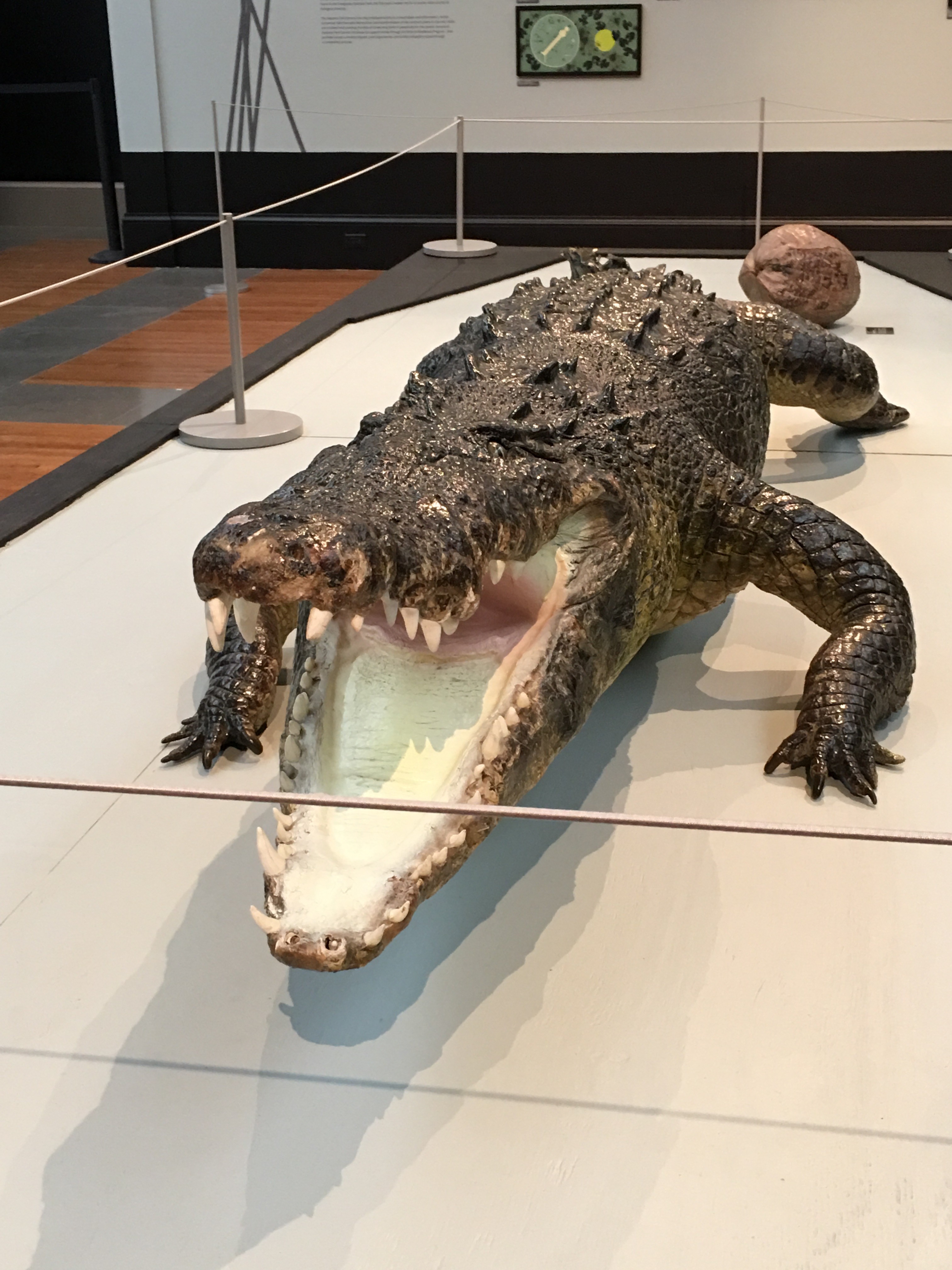
March 11th, 12th & 13th: Florida Antiquarian Book Fair – St. Petersburg, FL. I have to plug this one because not only has Vic exhibited at the Florida Antiquarian Book Fair before, but it is my home state! Don’t worry, alligators are more scared of you than you are of them…  http://floridabooksellers.com/

The Sacramento Antiquarian Book Fair

The Sacramento Antiquarian Book Fair

March 19th: Sacramento Antiquarian Book Fair. This one is a must! For those of you who have never been to a book fair, this is a great starting fair to attend. Lots of local booksellers, fun-loving bibliophiles and sunshine… what more could you ask for? Read our past blogs on this fair to hear what it’s all about, then come and visit us!  http://www.sacbookfair.com/


April (We like to call it… Bookselling in a New York Minute):

April 7th, 8th, 9th & 10th: The ABAA New York Antiquarian Book Fair – Park Avenue, NY. Always a beautiful venue to behold, this fair boasts booksellers and book-lovers from all over the world, and never fails to deliver a spectacular event! Don’t believe us? We wouldn’t lie to you! http://www.nyantiquarianbookfair.com/

April 9th: The Manhattan Vintage Book & Ephemera Fair / The Fine Press Book Fair – Lexington Ave, NY. One of the greatest things about the NY book fair are the numerous “shadow” fairs that go along with the ABAA’s shindig… check them out! You won’t be disappointed.  http://www.flamingoeventz.com/    http://www.fpba.com/fairs/newyork.html

April 9th: The New York City Book & Ephemera Fair. Again… how many fairs do you need to have happening before you agree to go to New York and have your fill of antiquarian books?! I believe “Shop till you Drop” is the phrase needed here!  http://www.antiqueandbookshows.com/


To find out more throughout the year, visit:

www.bookfairs.com or the ABAA list of events at www.abaa.org/events/  to find more to explore!


Share

Collecting Antiquarian Bibles (What Better Time to Discuss than at Christmas?)

By Margueritte Peterson

The Bible is the most common English-language book in the world, so it would hardly seem like an ideal focus for rare book collectors. But the history and variety of Bibles make collecting them a diverting and challenging occupation—especially because one can often start a lovely collection without spending too much money.

Image source: tntoday.com

                   Image source: tntoday.com

Finding Your Focus

The sheer number of editions of the Bible can make it difficult to choose a scope for your collection. Many amateur collectors start out with their own family Bibles and simply collect other Bibles that catch their fancy. As you get more serious about building your Bible collection, it’s important to decide on a specific direction because the array of Bibles and editions is dizzyingly diverse; in their oft-cited bibliography, Frederick Moule and Thomas Herbert identified over 239 different editions of the English Bible…and those were all printed before the King James Version was first published in 1611.

A few common ways to focus a Bible collection:

  • Version: The King James Version is undoubtedly the most famous, with multiple revisions over the centuries. Before it appeared, there were nine other major versions. And after the King James Version appeared, numerous other versions have been published. Many collectors choose to focus on one specific version.
  • Language: The Bible has been published in over 400 languages, and almost always in translation. After all, the original texts of the Bible were in Greek, Hebrew, and Aramaic, and historically very few people have been proficient in all three. A collector might look for different versions of the Bible in a single language, such as German, or try to collect Bibles in as many languages as possible.
  • Publication location: The Bible is a difficult book to print, due to both its length and its many textual features like numbered verses. It wasn’t uncommon for sections of the Bible to be printed in a given location, followed by the New Testament, and finally the entire Bible. The famous Bay Psalms book (1640), which included a novel translation of the Psalms, was the first volume published in the United States. The first complete American Bible didn’t appear until over fifty years later, in 1663, and it was John Eliot’s Algonquin translation.
  • Errors: It should come as no surprise that some Bible editions include scandalous or entertaining errors. The so-called Wicked Bible of 1631 says “Thou shalt commit adultery,” while King David exclaims in a 1702 edition, “Printers have persecuted me without a cause.” One could easily build an entire collection of these error copies!
  • Annotation: Bibles often served as repositories for family records, such as family trees and dates of birth, christening, marriage, and death. These annotations can be fascinating for those interested in genealogy or those who simply love that personal connection to the Bible’s original owners. Still other versions of the Bible include published maps and annotations, which can be fascinating in their own right.


With Bibles, “Old” Has a Whole New Meaning

Screen Shot 2015-12-22 at 9.12.49 AM

Our holding of a 1576 1st edition thus, New Testament. Someone had some thoughts on the writing!

In 1526, William Tyndale published the first complete translation of the New Testament. The book was deemed heretical, and almost all known copies were destroyed. The first English edition of the Old and New Testaments was published nine years later. Given that Bibles have been published for so many centuries, the word “old” takes on a whole new meaning. In the world of rare and antiquarian books, we usually think of a book that’s more than sixty years old as an antique. But a Bible isn’t really “old” until it’s been around for two full centuries.

Serious collectors generally consider Bibles published in Europe before 1700 the most collectible. And because Bibles were often used regularly, they’re not often in pristine (or even very good) condition. When you collect antiquarian Bibles, be prepared to embrace dog-eared copies filled with marginalia.That said, value isn’t always directly tied to age. Some 100-year-old Bibles are more valuable than others that are twice that age.


Bible Collecting Resources

Collecting rare books of any sort requires discernment and research. The same holds true for Bibles. The volumes below are exceptional resources for the collector of Bibles:

  • Frederick Moule and Thomas Herbert’s Historical Catalogue of the Printed Editions of Holy Scripture is the most commonly used and cited bibliography among Bible collectors. It has gone through muliple reprints and includes bibliographic details on Bibles in 600 languages.
  • Margaret Thorndike Hill’s The English Bible in America encompasses American Bibles published between 1777 and 1957. It’s the preferred bibliography for collectors of American Bibles.
  • P. Marion Simms’ The Bible in America delves into notable versions of the Bible in the histor of the United States.
  • See Christopher de Hamel’s The Book: A History of the Bible for an illustrated survey of Bibles, starting with the earliest manuscripts.
"Newly Translated out of Ye Original Tongues..." Are we sure about that? Check out our holding here!

“Newly Translated out of Ye Original Tongues…” Are we sure about that? Check out our holding here!

Some reference works may actually even find their way into your collection. For example, Thomas Wilson’s Christian Dictionary is useful to the scholarly collector…and a new somewhat scarce title.


Related Rare Books & Ephemera

Children in the Woods

Theodore Beza’s New Testament

Holy Bible Printed by His Majesty’s Special Command

Book of Isaiah, Translated into Navajo Dialect

Illustrated Scripture History for the Improvement of Youth

Share

A Warm Welcome (High-Five Included) to the Newly Nominated Vice President of the ABAA!

Our very own Vic Zoschak Jr. has been recently announced to be the new Vice President of the prestigious Antiquarian Booksellers Association of America (the ABAA). We pick his brains about the new role (and how he is to be bribed when in said position…) below!

Screen Shot 2015-12-12 at 12.42.25 PM

             Photo courtesy of the Florida Book Fair.

So we are looking at the new Vice President of the Antiquarian Bookseller’s Association of America! How does it feel? Are you nervous?

Well, not quite so fast Ms P… I’m nominated.  Which means that the membership has yet to vote me in as VEEP.  However, should they do me the honor of doing so, I confess, I’m a bit humbled by their expressed trust in me to act on their behalf, as well as pleased at the opportunity to continue to serve.  And yes, I also confess, I’m a bit nervous, for the VP job is a bit more direct responsibility for the health & welfare of the Association from that I’ve assumed in the past as a chapter representative to the national Board of Governors, or as a chapter officer.

Level with us, V… have you ever dreamed about the day you’d be Vice President and then President of the ABAA?

Ha! Only recently.  I threw my hat in the ring for the VP position, and it was “picked up”.  I can only say again, I’m honored by the selection.


What is the most important charge you would be tasked with in the new role?

Well, that somewhat depends on the incoming President, Mary Gilliam.  I am at her service for the 2 years of her term, and whatever she designates as “most important” will be it.

You are no stranger to a leadership role within the bookselling community… you are currently Vice Chair of the Northern California Chapter of the ABAA. What drew you to be Vice of the NCC and was that your first official role in the bookselling community?

As I recall, yes, my first ‘official’ ABAA position was Vice Chair of the Northern California Chapter of the ABAA.  The ABAA is a smallish organization, and much of its administration is accomplished by member volunteers.  Without those volunteers, it’s my opinion the Association would grind to a halt.  Anyway, having found my ‘peeps’, I wanted to give back what I could.  That belief hasn’t changed, and I volunteered for this coming VP position with the same thought… to give back to the ABAA, in a small fashion, for all it’s given me these last 20 some-odd years.

Screen Shot 2015-12-12 at 12.43.25 PM

Courtesy of ILAB.


That’s right, V, you’ve been a professional bookseller for… how long now? What’s your favorite part about it?

Actually, I’m coming up on 3 decades… started in 1989, so 2016 celebrates 27 years in the trade.  But that quibble aside, two aspects of the trade I find compelling & keeping me involved… one is the challenge.  It’s difficult to make a living in this business, but it can be done.  I enjoy that challenge… usually.  There have been anxious moments, I will admit!  lol…  and second, I came to the antiquarian book trade from a 27 year career in the US military, but here in the book world “I found my peeps”.  In other words, people that understood my fascination with books.  I’ve found that the trade acts like an extended family.  And who doesn’t want to be part of a family?


What are you currently planning on focusing your energies on during your “reign” (taking it a bit far? oh well!)?

The ABAA has had a slightly declining membership for the last few years, so I will recommend we, the Association, focus on reaching out to qualified booksellers, and convince them that membership in the ABAA would be mutually beneficially.  In my opinion, the ABAA’s continued viability rests on a vibrant membership, which means a constant, if not increasing, number to the member roles.


Let’s not forget the most important question of all… can you be bribed with a good bottle of Bourbon? 🙂

Ha!  …Pappy?

Share

Braving Rush Hour to Feed my Holiday Bibliophilia

20151209_194557

By Margueritte Peterson

Click, clack, click, clack… are these the sounds of the keys on my keyboard puncturing this blank document with letters as I write this? Maybe. Was it also the sound my heels made as they climbed the steps of the Berkeley City Club last night for the annual holiday dinner & raffle of the Northern California Chapter of the ABAA? Most definitely. That’s right, ladies and gents! Another year has passed us by and last night saw the usual cast of characters (minus a few) sharing cocktails, laughs and bottles of Single Malt Scotch Whiskey (for the raffle, of course… we aren’t alcoholics!) at a beautiful local venue.

Michael Hackenberg and his Raffle Surprise!

Michael Hackenberg and his Raffle Surprise!

The night started out promising enough, as Kate Mitas, Vic’s Aide-de-Camp, and I braved rush-hour East Bay traffic for over half an hour to get to Durant Avenue. We then parked in a lot I know well only to be accosted for $8 by what I originally assumed was a homeless person trying to make a buck (not a bad idea, when you think about it). A glass of red wine later and we were sitting at the back table, watching booksellers all around us enjoy an evening with friends, spouses and colleagues. Michael Hackenberg, Chair of the NCC, hustled all (rather well, I might add, as only Michael can do) for the purchase of raffle tickets, and then introduced the new board of the NCC. Himself returning as Chair and Steve Blackmer continuing on as Treasurer, we have the honor of welcoming two new members to the board! Scott Brown of Eureka Books joins as Vice Chair and Alexander Akin of Bolerium Books as Secretary.

After hearing from the current Chair and Steve as Treasurer, current Vice Chair Vic Zoschak gave some words on some recent goings-on in the ABAA. One of which was this – at the recent Boston ABAA fair, the ABAA partnered with RBS to offer an educational seminar. It was attended by 44 people in all, 9 of which were booksellers (3 from Northern California alone!). The session was opened by intrepid president of the ABAA Tom Goldwasser and President of RBS, Michael Suarez. The seminar was very successful and there are hopes that it will be repeated in the future!

Enjoying salmon and missing out on eggplant!

Missing out on eggplant!

After hearing from all parties, the meal continued! While a couple of us from Tavistock Books enjoyed a delicious roasted eggplant & polenta dinner (and another at Tavistock Books deemed it an alien life form and ate his usual salmon dinner), we exchanged pleasant dinner conversation with Rachel Eley, an associate at John Windle Antiquarian Bookseller (and an Associate Member of the ABAA herself) and her colleague Annika Green. As desert appeared on the tables I was suddenly thrust into the position of raffle item presenter (thanks a heap, Vic), and decided then and there that I should probably never apply for a position on a game show, no matter how low on cash I am! (I don’t think that game show hosts like it when the raffle presenter holds a bottle and when asked what it is retorts with “…it’s alcohol…”). In any event, the raffle each year is held to benefit the Elisabeth Woodburn Educational Fund which provides educational scholarships to booksellers (a great opportunity, of which a handful of booksellers in Northern California have been able to take advantage of to further their knowledge of the bookselling world!).

All in all, it was a pretty tame evening (compared to some other bookseller events I have been to over the last few years) but any night with books, wine and bibliophilia is a great night in our eyes! The holiday season has now officially begun!

Yours truly, Vic Zoschak & Kate Mitas of Tavistock Books!

Yours truly, Vic Zoschak & Kate Mitas of Tavistock Books!


Share