Gourmets, Drunks & a (Short) History of Cookery Books

Tavistock Books’ recent acquisitions contain a large focus on Cookery titles. Not only have we recently had in stock the cookbook with the 1st English Language recipe for tacos, but also The Cook’s Oracle, the first cookery book published out of Stockton, California (a more exciting purchase than you might think, which generated enthusiasm from around the country). The influx of interest in the food genre persuaded us to write this short, slightly perverse and tongue-in-cheek history of Cookery Books.


The Roman Gourmet

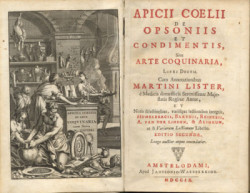
An error of 19th c. scholarship attributed the work API CAE to an "Apicius Coelius", but modern scholarship shows that the name is almost certainly Marcus Gavius Apicius.

An error of 19th c. scholarship attributed the work API CAE to an “Apicius Coelius”, but modern scholarship shows that the name is almost certainly Marcus Gavius Apicius.

We can assume that the first person to ever cook something (let’s face it… most likely a woolly mammoth or something equally as strange) probably did it completely accidentally – perhaps by dropping their meat on an open flame and deciding to eat it anyway. Lo and behold! It’s so much better when it isn’t dripping blood on you! (Unless it’s steak tartar, which I highly doubt cave men had, but what do I know?) The first cookery book and collection of recipes known to man is a work falsely attributed to Marcus Gavius Apicius (falsely, as the surviving copy dates from the 4th or 5th century AD, and Apicius lived in the 1st, but that’s a whole different can of worms and I don’t really feel like going into it), a Roman gourmet and lover of food in the time of the Emperor Tiberius. Though impossible to prove his connection to the cook book “Apicius” (yet quite obviously named in his honor), it should be understood that this man was quite possibly the most food-obsessed person in the world. Legend has it that Apicius poisoned himself after realizing with horror that out of his fortune of some hundred million sesterces, he was down to his last million – having spent the majority on lavish feasts and immense amounts of food and drink. With the “prospect of starvation before him,” the Roman gourmet ended his life. Now that is devotion to the art of cookery!

Though M. G. Apicius is not the author of the 4th/5th century work API CAE (a title on the famous manuscript of the cook book), it is said that he did produce cookery recipes in his time, and gave many tips & hints in the art of cooking to those in his inner circle. It is said that Apicius himself developed a way of producing pork liver, in a similar fashion to how goose liver was served at the time. The name “Apicius” has been attributed to several gluttons (I mean “foodies”) since, with at least 3 in Ancient Rome alone.


The Grotesque Middle Ages

In preparing for this blog article, I read Old Cook Books, An Illustrated History by Eric Quayle. It is recommended that everyone read this book, as it is filled to the brim with fun anecdotes about the history of cooking and writing about it. BE WARNED, however, that you shouldn’t read the first few chapters when about to eat, when thinking about eating, or just after eating. Maybe read it when you’re on some kind of juice cleanse. Not only did the recipes included for Grilled Womb, Boiled Parrot & Stuffed Dormice pretty much determine that I was going to be drinking water for dinner after, but Quayle’s description of feasting in the Middle Ages was, to me, positively disgusting.

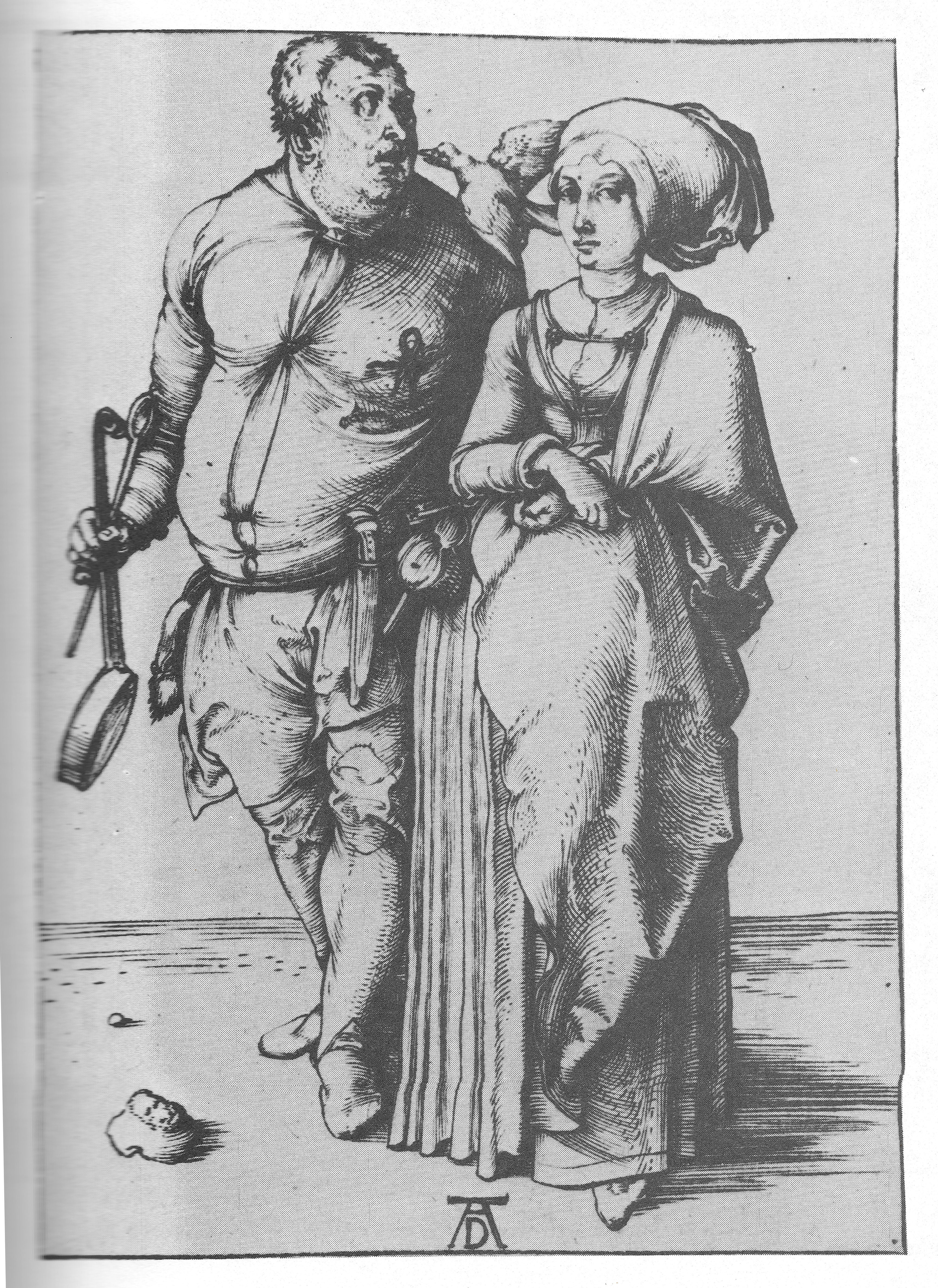
She really loves her life right now.

She really loves her life right now.

Apparently in the Middle Ages everyone was obese and drunk all the time, and it was a competition to see who could walk away from the feasting area without passing out in their dishes. You know what? I’m not doing it justice. Let’s quote some of Quayle’s write-up on Medieval feasts, shall we? (Just remember what I said about not eating at this time, you’ll thank me later). “In Medieval days, the banquets and feasts enjoyed depended for their success almost entirely on the ravenous appetites and unrefined palates of the unwashed mobs that thronged the rough-hewn tables… The over-filling of empty bellies and the immediate allaying of pangs of hunger… were the prime objectives of the sweating cooks and minions who dished out the helpings… Anything even remotely edible had been tossed into these same cauldrons… in the background, the spits turned with their heavy carcasses, dripping with fat, before glowing fires of heaped-up logs. When the revels commenced, immense quantities of food and strong drink were consumed at a single sitting, the plates being scooped clean in greasy handfuls as each new course arrived… The less stalwart were the first to go, as many collapsing across the tables as slid beneath them. Great pride was taken in being the last to submit” (Quayle, Ch. 2). In translation… everyone was plastered and unsightly in the Middle Ages and it wasn’t half as sexy as TV makes it out to be.

This quote had basically nothing to do with this blog subject, it simply pleased me to force you all to share my current pain. Let us return to the matter at hand. It was in the Middle Ages that the first work of cookery in English is known to have been printed. The Boke of Cokery, printed by Richard Pynson in 1500, is known in only 1 copy throughout the world (at the Library of the Marquess of Bath). This work not only gives the reader recipes for use at feasts or in an aristocratic household, but is a historically significant work. Pynson, possibly with the help of others, details many royal feasts that allow us 21st century minions to know exactly what was served to King Henry IV with the Spaniards and Frenchmen as they jousted in Smyth Felde! This noteworthy work, the first of its kind in the English vernacular, opened a door for publishing English-language recipe books – a genre that has remained popular ever since.


Cook Books in the United States when it was Not the United States Yet

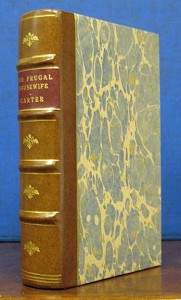
Our 1796 edition of the states' early work, "The Frugal Housewife."

Our 1796 edition of the states’ early work, “The Frugal Housewife.”

The idea of printing recipes in a book only grew in popularity with this publication from Pynson in 1500. Once printing for the masses became commonplace, cookery books entered the fray same as political broadsides and religious prayer books. The earliest American Cookery Book (to our knowledge) was printed in 1742, before the United States had broken away from our meat pie loving friends (Still bitter about this… I love meat pies). This book, entitled The Compleat Housewife; or, Accomplish’d Gentlewoman’s Companion was printed in Williamsburg and was a publication of the original British work printed in 1727 of the same name. Other early cookbooks were to follow, in 1762 with The Cyder-Maker’s Instructor, Sweet-Maker’s Assistant, and Victualler’s and Housekeeper’s Director and The Frugal Housewife, or Complete Woman Cook in 1772 (which, oh, we happen to have a copy of for sale!). These books have, in actuality, exceedingly long titles (as was common for books – see Eleanor Lowenstein’s Bibliography of American Cookery Books 1742 – 1860 to view full write-ups) that describe the multitude of foods whose recipes you will find inside their volumes (pastries, soups, stews, creams… even methods of roasting, boiling, frying, potting, preserving, candying and pickling). These all-around instruction manuals were important to the ladies of early American households, as help with recipes or household chores could be difficult for some early communities to find when in remote areas.


Charitable Cooks in the later 19th and early 20th Centuries

Let’s skip ahead a few hundred years (because continuing down this road will only ensure that you will all end up passing out on top of your desks… or under them, apparently), to the 19th and 20th centuries of “Charitable” Cooks and their publications. Cook Books began to be readily available to the average civilian in the later 19th century, as the literacy rate grew and cook books were written for chefs in average households, not purely for aristocratic or wealthy ones. In America in the 1860s, the first fund-raising “receipt books” were compiled and sold at Sanitary Fairs held to raise money for military casualties and their families during the Civil War. This idea of publishing cook books to raise money for the war effort spread like wild-fire. After the war came to an end, the Ladies’ Aid Societies around the country found a myriad of other local charities to devote their efforts to – hospitals, churches, schools, temperance organizations, etc. Throughout the United States, benefit cookery books continued to be printed well into the 20th century. As Margaret Cook states in her foreword to America’s Charitable Cooks: A Bibliography of Fund-Raising Cook Books Published in the United States, “Though the recipes in early locally-published cookery books are often amateurish, they reflect the cooking fashions of the period in various parts of the United States more accurately than the standard works by professional authors… the great fascination of these early regional cookery books for collectors and local historians is their elusiveness” (p. 7). Charitable cook books in California alone make up the 359 titles in Liselotte & William Glozer’s compilation California in the Kitchen – proving their immense popularity as the hundreds of titles extend merely from 1870 to 1932. Seldom copy-righted, these amateur cook books present a window in time to the average American household fare – and ought to be cherished as such!

Tavistock Books has just issued a Cookery List, full of Charitable Cook Books, Cookery Advertisements, Pamphlets, Brochures, Cookery Education – the whole nine yards – to a handful of cookery customers. If you would like to receive this list privately, please contact Margueritte at msp@tavbooks.com. We promise… there are no recipes for Grilled Womb anywhere in those titles.

(However, if you’d like us to scan that recipe and send it to you, that is a definite possibility – and we promise not to tell TOO many people what you’re having for dinner.)

The same recipe can be used for flamingos?!?! Well why didn't you say so before??

The same recipe can be used for flamingos?!?! Why didn’t you say so before??

Share

Selling, Socializing & Getting Served in Sacto

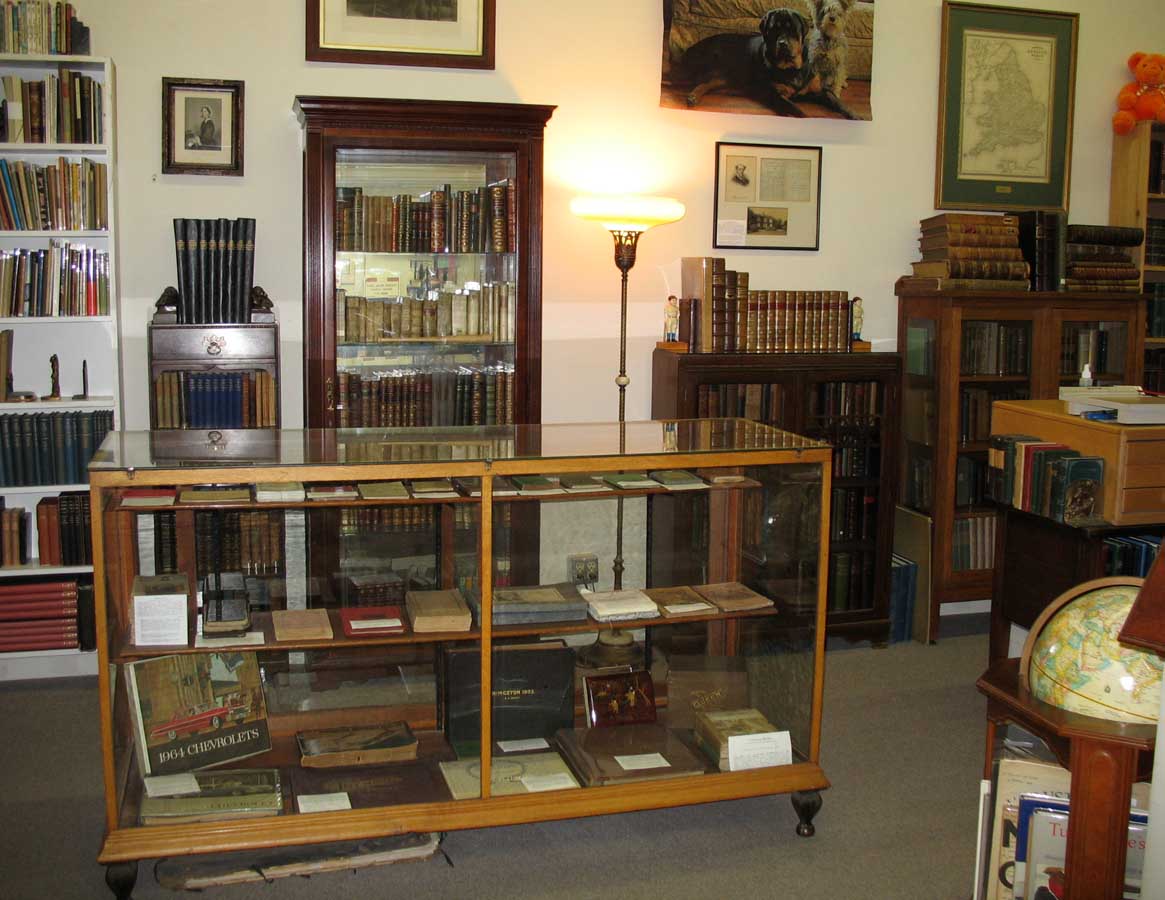
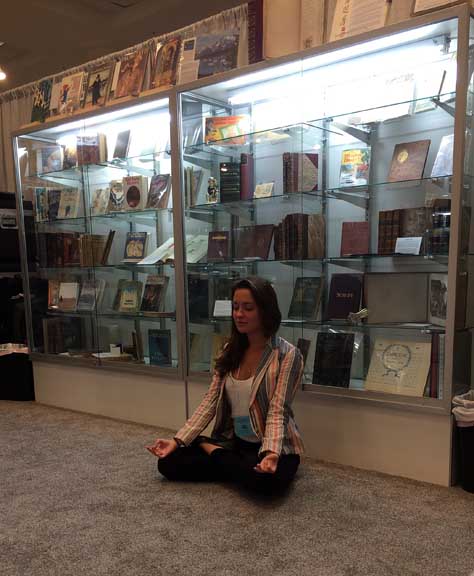
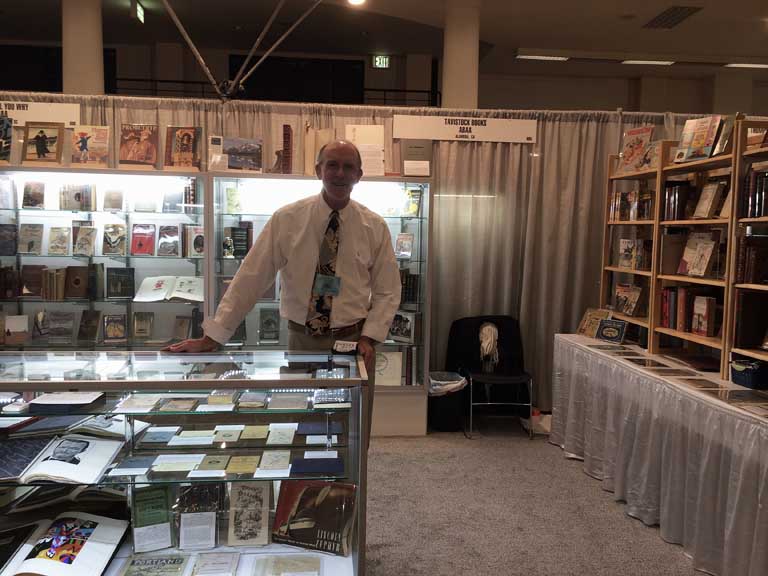
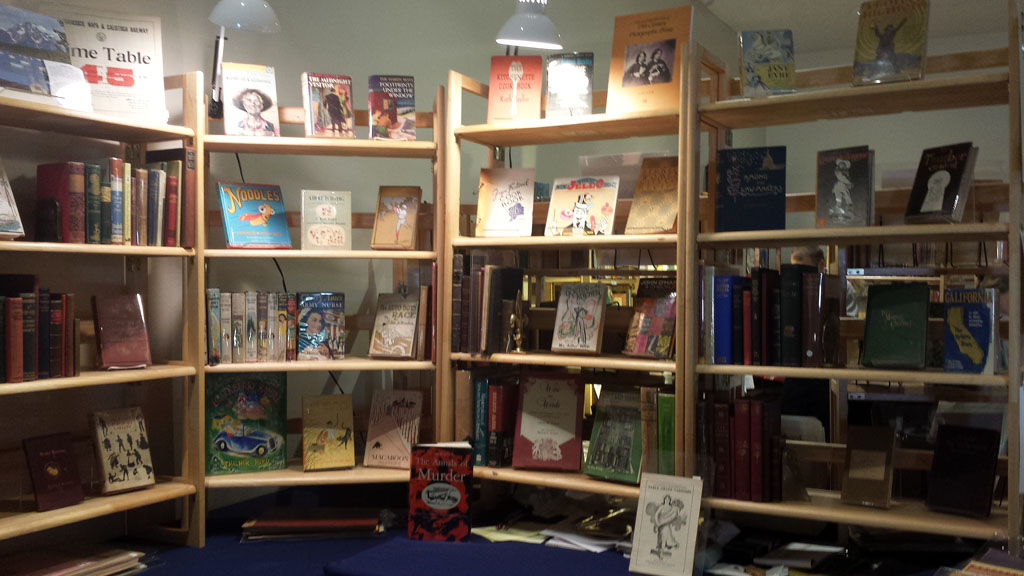
The bookcases at the stupendous Tavistock Books booth

The bookcases at the stupendous Tavistock Books booth.

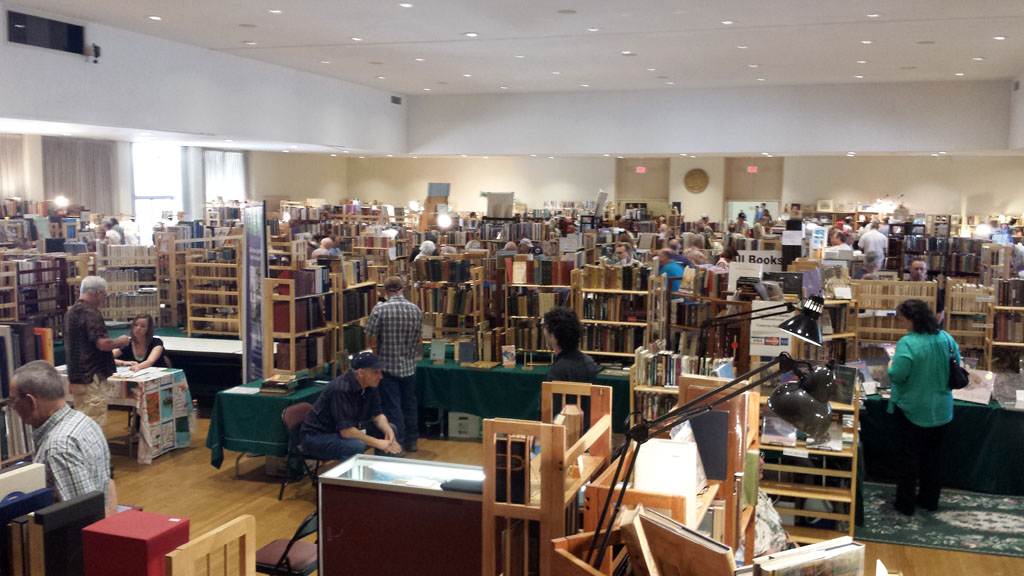
The Sacramento Antiquarian Book Fair is a bookseller’s fair. I’m not sure that you’ll know what I mean when I say that (hell, I’m not even sure what I mean when I say it), so I shall explain as best I can. It seems to me that the Sacramento fair is catered, all-around, to the bookselling trade. It is marketed extremely well, the load-in and take down is the simplest I’ve experienced so far, the management kind and accessible, the food amazing… it is a great local fair for booksellers to congregate at and socialize, but it is also a great fair for buying. Notice I did not state that it is always a great fair for selling. Not through any bookseller or promoter’s fault, it is not always a joy to crunch the numbers on returning home and see red writing all over your legal pad. For buying though? Many booksellers will attest to the great finds made over the years at this small local fair.

The Sacramento Antiquarian Book Fair

The Sacramento Antiquarian Book Fair

This is not to say that the fair is not also made accessible to the public (the civilians who are not us alien-life-forms of the book trade). What I’m trying to say is this… the Sacramento Antiquarian Book Fair is a wonderful weekend activity, whether you are a bookseller or a non-alien life form.

That all being said, let’s gossip.

Every time I get handed an invoice for something my boss found the day before and I write a check, I get very scared. I feel nervous that it’s for something really weird, as it feels as though I’m being served with some kind of lawsuit. This is completely unwarranted, seeing as Vic has been in this trade for quite a while and obviously knows what he’s doing. It is also absolutely ridiculous seeing as I’m the one that tells perfect strangers that I like to look at books on the dead (the more grotesque the images, the better).

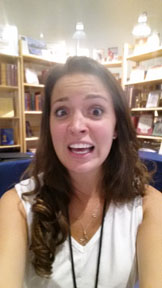
My parents are super proud right now.

My parents are super proud right now.

That fear aside, my favorite thing to do at the Sacramento fair is to make strange faces at random people passing by our booth. I would never do such a thing at an ABAA fair where I’m mainly worrying about how much my feet hurt having stood in heels for 7 hours and trying to come across as extremely serious and mature. This says nothing against either fair, merely that the general public who attend the Sacramento fair seem to be easily amused and ready to smile, and when they catch me at my game, there are laughs and they move on (or, I mean, hopefully come into our booth to see what the weirdo is selling). As I said, it is a very easy, jovial local fair.

This time around, there were a couple new booksellers exhibiting for the first time, most notably Kim Herrick of The Book Lair. Many sellers returned for another weekend (no matter how poorly or magnificently they did at the last Sacramento fair… which in my opinion shows the dedication and patience exhibited by so many of our trade). A few sellers not exhibiting were to be found wandering the aisles and scouting, and many repeat customers could be located due to the loud exclamations akin to “Bob! How have you been? How’s Susan?” In my opinion, the attitude of the masses at the Sacramento fair (and don’t be fooled, just because it is a local fair and the selling is not always a selling-point… pun intended… it gets quite a crowd) is one to be admired. An easy-going few hours of bookselling, book-buying, drinking, finding that specific something that you didn’t know you needed but now cannot possibly live without… a weekend like that is certainly something to be cherished.

Socializing in Sacramento

Socializing in Sacramento

(Even if you spend your day making cross-eyed fish faces to people you don’t know and breaking out in a sweat every time you see an invoice.)


Share

On Identifying Photographic Prints and the History of Early Photography

 Photographic Prints in an Antiquarian Bookshop

Without a doubt, every antique store and flea market from California to New York somewhere has a box of photographs – black and white, early Kodaks, or even tintypes… often warped, mirrored, faded – if you are reading this blog it is assumed that at some point or another your interest in antiquarian books and materials has drawn you to such an establishment, and you have at least fingered through a box of photographs labeled “.10 each or 15 for $1.00”. Why is it, then, that those photographs are (seemingly) worthless, while there are photograph albums offered by booksellers with the same types of prints for thousands of dollars? As with all things antiquarian – provenance, condition and interest levels dictate the differences between a bin full of late 19th century silver-gelatin prints and an album full of un-faded, unaltered albumen photographs.


Photography in the Early 19th Century

William Henry Fox Talbot in 1864

William Henry Fox Talbot in 1864 by Moffat.

The name William Henry Fox Talbot is known throughout the world as a British inventor, author and photographer of great significance. Talbot claimed experiments in photography as early as 1834, and in 1841 announced his invention of the calotype (also called the Talbotype) process, a process that reflected the work of many of Talbot’s predecessors, such as John Herschel and Thomas Wedgwood. One of Talbot’s main contributions to this fledgling art included creating a photographic image through the use of a negative from which a positive print could be made (though those terms were previously coined by Herschel, Talbot demonstrated the technique with ease). Talbot’s early discoveries culminated in his pioneer finding that silver chloride was the silver compound “most suitable for photographic printing, and to discover how to use it most effectively” (O’Reilly, p. 1). Talbot’s negative to positive printing could also be said to be one of the most important inventions in the field of photography as it allowed the photographer to create numerous prints off of a single negative, simply by exposing more paper to the image. As you will see later, other early forms of photography (such as the popular Daguerreotype process), were not able to form several images from a single exposure.

Now, the art of photography has developed significantly since Talbot began his experiments in rural England. If this blog were to describe every type of photographic print process and the differences and nuances between them all, we would quickly lose the followers we have so far gained. Suffice to say, the history of photographic prints is as diverse and intricate as any popular invention might be. Unfortunately, identifying photographic prints is particularly difficult for the untrained eye as even the slightest changes in the process (and in the final product) can be difficult to observe if you are not sure what to look for.


Identifying Photographic Prints in the Late 19th and Early 20th Centuries

Photography in this time falls into two distinct categories, True Photographs and Photomechanical Prints. Photomechanical Prints are images not formed directly from exposure to light or from a negative, and are rather more often “mass-produced.” These mechanical techniques include Halftone Illustrations (which some may recognize by their dotted appearance when viewed with a scope) and Photogravure, among others. These prints, while still able to be artistic and popular in their own right, are not usually as desirable as True Photographs when it comes to collectors and institutions. True Photographs encompass many other types.

Evidence of Silver Mirroring is seen in the darker portions of this image (IPI).

Evidence of Silver Mirroring is seen in the darker portions of this image (IPI).

True Photographs include, as stated, many other processes. Some of their results may sound familiar, some not so much. Salted Paper Prints, Cyanotypes, Platinotypes, Albumen Prints, Gelatin and Collodion Printing-Out Papers, Gelatin Developing-Out Papers… all of these, despite their somewhat extreme differences, are examples of True Photographs. They are placed into categories depending on characteristics such as the appearance of their paper fibers, their hues, and, most interestingly, their condition. Signs of fading, mirroring (the slight silvery hue to the darker areas of the photograph due to silver oxidation), warping and cracking can all contribute to telling the difference between the many types of “true” photography.


Curious about an image you have? Try http://www.graphicsatlas.org/ to help you identify your items.


Photography as a Popular Pastime
A typical Albumen Cabinet Card

A typical 19th century Albumen Carte-de-Visite.

The Daguerreotype studio boomed early in the photographic print age in the mid 1800s. Other early photographic processes included the Salted Paper Print and the Albumen Print. Albumen Prints were quite possibly the most popular type of photographic process, as they are the most widely found today. Around the 1860s and 1870s a certain type of photographic style emerged, a Carte de Visite (quite literally, a Visiting Card) that was traded between friends and family, and most notably took the place of the general “Calling Card” that social guests would deliver to households they stopped in to see. Along with these Cartes de Visite and their cousins “Cabinet Cards”, photography moved into an age of cabinet cards and other studio portraits. Silver gelatin and Matte Collodion Printing-Out Papers and Developing-Out Papers (whose main differences lie in the process by which the image appears – DOP images appear during chemical development, whereas POP images appear on their exposure to sunlight) were quite popular as forms of portraiture, and were also some of the most popular forms of photography for the average civilian to produce at home.


Photography in Books

The first book ever to be illustrated through the photographic process was produced by none other than William Henry Fox Talbot, with his book The Pencil of Nature, published in 1844 with his own calotypes pasted into the book. The text within the book details Talbot’s calotype process used for each individual photograph. Each photograph within Talbot’s work were laid in and pasted by hand, not to mention taken and developed by the inventor as well. Though the book was less popular than Talbot expected, it paved the way for an idea that (eventually) became a bit of a phenomenon – illustrating books with photographic prints. Despite the fact that many “jumped on the bandwagon” and illustrated works with photography in mid-to-late 19th C, “in many traditional libraries the illustrations to a book, and its illustrator, were often placed in a role secondary to the author – even in situations when the illustrations were the dominant concern of that work” (Johnson, Nineteenth-Century Photography). This is no longer so. The book trade often sees works collected solely for the photographer or the images represented within a work, the text often being of little to no concern to such a collector.

One of the photos included in Talbot's "Pencil of Nature", published in 1844

One of the photos included in Talbot’s “Pencil of     Nature”, published in 1844.

Photograph albums, on the other hand, can be a different story. Eugenia Parry Janis writes “A love of subject matter leads the bookseller to photographs. He is satisfied to present photographic discoveries which have engaged his attention as they act in collaboration with needs of descriptive science, exploration, documentation or poetic evocation. It is a special quality of photographs to be able to enter into reciprocal relationships with words… The most discriminating private collections of photographs today owe much to booksellers’ at times obsessive, and even indiscriminate salvaging and rescuing of photographs destined for the incinerator. Photographs were not saved because they necessarily conformed to prevailing standards of beauty; they were saved for the richness of what they presented.” (Charles B. Wood III, Catalogue 37). Therefore, when looking through photographic albums, individual photographs, and books illustrated with photographs, it is a great find when the photos are in impeccable condition. However, more often than not, photographs are collected for what they represent – a moment in history, a fashion style, an area of the world, a political event – rather than because of their condition and artistic beauty.

In a catalogue later this month we will offer examples of all of the above – individual photographs, photo albums, and books illustrated with true photographs. Featuring a wide range of subjects, from military bases to train catalogues to family vacations, there is certain to be something of interest to everyone.

*The only reason we at Tavistock Books know any of this information on Photographic Prints is from taking James M. Reilly and Ryan Boatright’s course on these processes at University of Virginia’s Rare Book School. A fair warning – this has been a highly condensed and extremely terse outline in comparison to their course, a course officially endorsed by Tavistock Books!

Photo-WHFTalbot


Share

Tavistock Books’ Almost-Annual Reference Book Workshop

There is a significant difference between booksellers who advertise their wares with professional descriptions, a clear understanding of the item in question, an honest assessment with regard to the item’s condition… and your typical eBay/Amazon blasters: “FREE SHIPPING! May or may not have highlighting and/or missing pages.” The pride in being a Good (or VG+) bookseller comes from the ability to sell something about which you are knowledgeable and which is priced confidently and accurately.

Oftentimes, as booksellers, we hear the question “Why?” Why is this book worth $495? Why would I pay that much for a book which Joe Shmoe, Bookseller offers for $29.99? There is no shame in asking these questions. Even booksellers can look at their colleagues’ wares and stare confusedly at the screen while waiting for the computer to sprout tiny-computer legs and giggle, while simultaneously erasing that last 0 or two. All that being said, however…. what can give booksellers the ability to price confidently and describe accurately? Two words.

Reference Books.Reference Books

If you are reading this blog, there is a good chance you have looked at listings of antiquarian books before and have noticed some crazy notations in our write-ups. What is a BAL11092? Or a Gabler G2390? An average person has a good chance of not particularly understanding what the numbers mean. Heck, another bookseller might not even have a clue to what you are referring. A good bookseller will know, however, that the inclusion of those small jumbles of letters and numbers beyond their edition statements represent the dedication and honesty of the person offering the item. They have gone to the trouble of understanding what they hold in their hands, so that their customer can have the guarantee and peace-of-mind that they are buying a 1st/1st, a 1st edition thus, or a reprint. What allows a reference book to (sometimes) up the price or (often) lower the price? Well… I guess you’ll just have to take the Tavistock Books’ Reference Book Workshop to find out!

This year’s course took place this past Saturday, the 23rd of August. The day-long course consists of an intense look at different genres of reference books, their scope, and their usefulness to the book-selling, book-collecting and book-cataloguing trades. Sections covered include Literature (do the acronyms NUC or NCBEL mean anything to you? Here’s where you will find them explained!), Americana (with an emphasis on Western Americana & California… can you say Kurutz three times fast?), Children’s Books, Early Printed Books, and Online Reference Tools. This course is a fast-paced survey, useful for any bookseller, collector, or librarian interested in understanding the tools booksellers use to identify and price their books.

Workshop 2014

This year’s workshop was attended by 4 booksellers (some new, some slightly seasoned), two librarians, and a lover of all things book-related. Intelligent questions were asked, anecdotes shared, and quite a bit of knowledge imparted on these smiling (though, by the end of the day, slightly haggard) faces. Due to the limited amount of space in the shop (where the workshop is held), we cap the number of “pupils” at 7 per year. Should you be interested in attending, please email msp@tavbooks.com and ask to be included on our mailing list, so that when the reminder comes about next spring to sign up, you can be first on the list!

The workshop truly is helpful to those dealing with the book-trade, and the Tavistock Books Reference Collection of over 3,000 reference volumes alone are worth the trip to see! And, as per tradition, lunch is on us at a great sushi place on our charming island of Alameda, CA. Interested in attending a workshop one day? Let us know!


Share

Charles Dickens and the Impenitent Prostitute

Charles Dickens, in many ways, stands for Victorianism; indeed it’s impossible to think of the era without him, and he defined the period in many ways. Yet we cannot assume that Dickens represents his contemporaries in all things. His own upbringing shaped his sense of social justice in ways that did not always reflect the common views of the era. One such topic on which Dickens thought differently than his contemporaries was that of prostitution. Dickens firmly believed that women could (and should want to) reform. Not everyone agreed—including a few women who were prostitutes themselves!

An Ambitious New Endeavor

Angela_Burdett_Coutts

Angela Burdett-Coutts

In May 1846, Angela Burdett-Coutts approached Dickens about starting a home for the redemption of prostitutes. Coutts came into her wealth unexpectedly and resolved to use it for the common good. She’d gotten Dickens’ council before on her Ragged School and believed that they had similar perspectives. Coutts, the daughter of radical MP Sir Frances Burdett, had been raised to take a pragmatic approach to philanthropy. She was liberal with others, but held herself to high standards of performance—much like Dickens.

Dickens did not immediately embrace the idea of an “asylum” for prostitutes, and he initially tried to dissuade Coutts from the idea. But eventually he warmed up to the concept and jumped directly into logistical planning. In a letter to Coutts on May 23, 1846, Dickens discusses the layout of the house, suggesting that the interior be divided into two portions, with one for new residents on probation, and another for residents who had already proven their capacity for and willingness to reform. He found Urania Cottage, in Lime Grove, that same month. The home was “retired, but cheerful,” he said, and the taxes were low.

Dickens was quite emphatic that the women not be constantly reminded of their sin, arguing that “she is degraded and fallen, but not lost, having the shelter; and that the means of Return to Happiness.” He also proposed the use of Captain Maconnochi’s Mark System, which rewarded marks for positive behaviors and deducted them for inappropriate ones. Dickens noted that “the goal of this institution should be ‘the formation of habits of firmness and self-restraint.’”

Urania_Cottage

Urania Cottage

Coutts agreed with Dickens on all these counts, though the two could not reach consensus on whether the women should be given colorful garments—Coutts believed that all aspects of the women’s appearance should be somber and reserved, while Dickens didn’t see the damage that could be caused by cheerfully colored dresses. Despite this tiny matter, they moved forward with the project, planning gardens and determining that there should be a piano for the ladies in the parlor. The idea of entertainments for fallen women shocked the literary community, and Dickens responded by satirically announcing that there would actually be a piano for every woman in her quarters!

Dickens Closely Monitors His Social Project

Charity_Charles_Dickens

Published by the Bibliophile Society, this edition of ‘The Charity of Charles Dickens’ was limited to only 425 copies. It details his involvement with Urania Cottage.

Meanwhile the issue of prostitution seemed to worsen daily. That summer, famine struck Ireland, sparking migration to England and a new wave of women entering the oldest profession. Numerous other reformatories sprung up. However, the vast majority were harsh places, where women were treated stringently and often reminded of their “fallen” status. Many believed that these women would only be “reformed” through rigorous discipline. Coutts and Dickens on the other hand, thought that these women could be rehabilitated, and they ambitiously predicted a full return to society…though not in England. After the women were deemed ready, they would be sent off to the Colonies to find domestic work and, with any luck, find husbands who had no inkling of their sordid past.

In 1849, Dickens wrote “An Appeal to Fallen Women.” Distributed in the prisons, the pamphlet was intended to recruit women to be residents. It worked to some extent, and Urania Cottage (known euphemistically as a “Home for Homeless Women”) was rarely short on prospective inmates, whom Dickens often interviewed himself. Indeed, he remained incredibly active in the daily operations of Urania Cottage. He closely supervised the staff and monitored finances.

Coutts and Dickens were generally pleased with their work. In 1853, Dickens wrote positively of the home in Household Words: “Of these fifty-six cases, seven went away by their own desire during their probation; ten were sent away for misconduct in the home; seven ran away; three migrated and relapsed on the passage out; thirty (of whom seven are now married) on their arrival to Australia or elsewhere, entered into good service, acquired a good character and have done so well every since to establish a strong prepossession in favor of others sent out from the same quarter.”

A Mortifying Letter to the The Times

One such woman who was sent away was Sesina Bullard, whom Dickens called “the most deceitful minx in this town—I never saw such a draggled piece of fringe on the skirts of all that is bad. She would corrupt a Nunnery in a fortnight.” Bullard’s friend Isabella Gordon was not much better. After fabricating a story about a house matron, Gordon was given a half-crown and directions to another charity. While awaiting her punishment, Gordon reportedly sashayed up the stairs with her skirts up, mocking the gentility of house staff and Coutts herself. Still another woman, Jemima Hiscock, broke into the beer cellar and got herself “dead drunk.”

John_Thadeus_Delane

Albumen Print of John Thadeus Delane by Ernest Edwards (National Portrait Gallery)

By February 1858, there were approximately 80,000 sex workers in London alone, and prostitution qualified as a pandemic problem. Always on the lookout for women to help, Coutts was excited to read a column in The Times that month. It was penned by an “Unfortunate” who had become a prostitute. Coutts wanted the woman’s name, so Dickens wrote to Times editor John Thadeus Delane to solicit the letter writer’s identity and explain his benevolent motive. Delane clearly thought highly of the letter writer, exclaiming, “What an admirable letter it was! Except Currer Bell [Charlotte Bronte] and Mrs. Gaskell, I know of no woman who could have sustained such a tone through nearly two columns.”

Neither Dickens nor Coutts, unfortunately, had bothered to read all the way to the end of those two columns. The child of drunks, the author had entered the profession of her own accord at the age of fifteen. She made a good living, educating herself and sending her brothers to apprenticeships. She paid her debts and even had enough income to be “charitable to her fellow-creatures.” Often such a tale of success would end with a sudden fall, reinforcing popular notions that prostitution could never really pay. In this case, however, the author takes a different tack: she castigates the public for looking down on her. “You, the pious, the moral, the respectable, as you call yourselves,” she writes, “Why stand you on your eminence shouting that we should be ashamed of ourselves? What have we to be ashamed of, we who know not what shame is?”

The letter writer differentiated between “born prostitutes” like she was, and had entered the profession of their own volition, and “poor women toiling on starvation wages, while penury, misery, and famine clutch them by the throat and say ‘Render up your body or die.’” The author went on to blame immigrants for London’s prostitution epidemic, pointing out the growing number of French prostitutes on the street. She also reminds readers that while prostitution is itself a social ill, its antecedents rest in other social ills: “If I am a hideous cancer in society, are not the causes of the disease to be sought in the rottenness of the carcass?”

When Coutts finally read the end of the column, she was absolutely mortified. Dickens again wrote to Delane on Coutts’ behalf, admitting that Coutts is “immensely staggered and discomfited by the latter part [of the column], and is even troubled by its being seen by the people in her household. Therefore I think the writer should had best remain unknown to her.” Dickens himself suspected that Delane or another Times writer had actually penned the letter, and he wasn’t alone. The Times had to publish a note that the letter was not a “cunningly executed literary imposture,” and Delane continued to insist that the letter was authentic.

The scandal of Dickens’ affair with Ellen Tiernan and the subsequent estrangement between Dickens and his family caused a rift between Coutts and Dickens. Like Elizabeth Gaskell and William Makepeace Thackeray, Coutts thought that such public display of one’s personal problems was just as horrible as the separation itself. Coutts stopped funding Urania Cottage, and it was finally closed down in 1862.

Share

(Mostly) California Wine & Viticulture: A Short List

Oliver Goldsmith has been quoted as saying, “I love everything that’s old… old friends, old times, old manners, old books, old wine.”

We here at Tavistock Books couldn’t agree more, especially with the latter two, and this month offer a list of old books [et al] that deal with old wines. or at least wine produced decades, if not a centuries, ago. Many of the 44 items on the list are ephemeral in nature, since the list’s genesis comes from buying a small cache of California wine ephemera from one in the business prior to WWII.

Speaking of which, indulge me an aside, wherein I puff our state’s viticultural products even though wine came to California with the Spaniards in the eighteenth century; Sonoma & Napa didn’t enter the game until 1857 and 1859 respectively. And they didn’t get any international respect until 1976, when California wine swept the competition at “The Judgement of Paris” in 1976. The rest, as they say, is “vintage” history.

On perusing the list, you’ll see diverse references cited. These refer to:

(1) James Gabler. WINE INTO WORDS. A History and Bibliography of Wine Books in the English Language. 2nd Ed [2004].
(2) Maynard Amerine & Axel Borg. A BIBLIOGRAPHY On GRAPES, WINES, OTHER ALCOHOLIC BEVERAGES, And TEMPERANCE [1996].
(3) Lavonne Axford. ENGLISH LANGUAGE COOKBOOKS, 1600-1973. [1976].
(4) Katherine Bitting. GASTRONOMIC BIBLIOGRAPHY. 1939 [2004].
(5) Bob & Eleanor Brown. CULINARY AMERICANA.
(6) William Cagle & Lisa Stafford. AMERICAN BOOKS On FOOD & DRINK 1739 – 1950. A Bibliography. [1998].
(7) William & Liselotte Glozer. CALIFORNIA In The KITCHEN. [1960].
(8) National Union Catalogue.

So enjoy the bouquet, have a sip and let us know how you like our vintage selections. Below you’ll find a few selected titles from the list.

How to Wine Friends and Affluent People

Loeb_Wine_Friends_Affluent_People“In case some ‘gourmet-monger’ discouraged you with some obsolete ‘wine-ology’ such as: ‘Unless you serve the correct wine with the correct food… in the correct glass… at the correct temperature, you’d best stick to your old hosting habits…’ FORGET THAT – and him too!”

It seems as though this fun and colorful pamphlet (advertising the Petri Wine Co.) was the predecessor to the 1965 book published under the same name. It’s quite rare; none are found on OCLC, nor as we write this do we find any other copy on the market. Details>>

Annotated Bibliography of California Viticulture

Annotated_Bibliography_California_Viticulture“This bibliography represents an effort to list the various sources of information regarding California Viticulture. It is necessarily a selected list… an attempt has been made to arrange the data in a logical manner. A general point of view has been followed in the selection of the material, and if the layman becomes aware oft he multiplicity of factors imporant to the California Viticulturist, this compilation will have served the purposed for which it is primarily intended. This is the first work of its kind on California viticulture…”

Research suggests that this bibliographical work, compiled “under the auspices of the Works Progress Administration, District #8 (Official Project #65-3-4225, Symbol #1874), was never formally published. The Project Director & author was prolific, and wrote many works about California, including “Russian California 1805-1841,” “The Story of Japanese Farming in California,” and “Pre-Marshall Gold in California.” We were unable to find information on the “Researcher” D. Wainwright. Only one other archival copy is known [Bancroft], per OCLC. Details>>

Health’s Highway to Longevity

Healths_Highway_LongevityProbably published in the early 1930’s Health’s Highway to Longevity bears the drop title “A House Without Wine is Like a Body Without a Soul.” The book’s color pictorial stiff paper printed wrappers are tied with a gold cord. This copy has some evidence of biopredation, particularly on the rear wrapper. Otherwise, there is only modest wear to the wrappers, making this withal a good example. The title is rare in the trade. Details>>

The Bordeaux Wine and Liquor Dealers’ Guide

Bordeaux_Wine_Liquor_Dealers_GuideThis book was written for a group of ‘chemists’ involved with the adulteration and imitation of wines and liquors. It is prefaced: ‘In this book not one article in the smallest degree approximating to a poison is recommended, yet it teaches how Cognac, Brandy, Scotch and Irish Whiskey, Foreign and Domestic Rum, all kinds of wines from the choicest to the commonest, can be imitated to the perfection that the best judges cannot detect the method of manufacture.” (Gabler). This copy has modest wear to the binding, and the front end-papers are age-toned and stained. The front fly-leaf bears a previous owner’s inscription. Rare in the trade. Details>>

“Home Brewed” Wines and Beers and Bartenders Guide

Home_Brewed_Wines_Beers“A generation or two ago every house-wife who prided herself on her catering ability had a choice of home-made wines and cordials in her cellar, and she was always able to offer her friends one or other of her special delicacies. Of late years, however, the custom of making wine at home has to a large extent died out, and to those living in towns without fruit gardens, and only a limited amount of space for storage purposes, the occupation is hardly a feasible one… Home-made wines are particularly good and wholesome, and with a reasonable amount of care their manufacture is not difficult. The secret of success lies in using good materials, in measuring accurately, in observing strict cleanliness in every detail, and in not trying to hurry the process.”

“Home Brewed” Wines and Beers includes recipes for beverages such as Cider Champagne, Black-Currant Wine, Monongahela Whiskey, Dandelion Wine, Walnut Mead, Tomato Wine, Sloe Gin, Beef Tea, Potass Water & Port Wine Punch. In addition to the many interesting wine, beer & liquor recipes, this handy booklet includes directions for making “cement for the mouths of corked bottles”, “wax putty for leaky cans, bungs”, etc., and how to “restore wine that has turned sour or sharp”. P. 31 begins the conclusion of the booklet with a poem titled “Toasts for All Occassions”. We find no listings of this title on OCLC, nor the NUC. Not found in Gabler, nor Simon. Rare. Details>>

Grape Syrup

Grape_Syrup“It has only been within the past two or three years that any particular attention has been given to the production of grape syrup in California in considerable commercial quantities…. There are many wine makers in California who have rigged up machines of one sort or another, to make syrup, either for wine making, or as, in the last two or three years, for table purposes.”

This title comprises Appendix A to the Annual Report of the Board of State Viticultural Commissioners for 1893.Chapters include: Properties of grape sugar, Apparatus for making syrup, Vacuum pans, American Concentrated Must Company’s Works, Yaryan system, Sanders’ syrup machine, Open pan and tub processes. Rare in the trade. OCLC records eight institutional holdings of this single volume. Details>>

Viticulture and Viniculture in California

Viticulture_Viniculture_CaliforniaThis small text contains a wealth of information regarding California viticulture and the defense of the wine-making community. For example: “Viticulture, in professing to fulfill all the proper demands of the people as a progressive industry, conducive to public prosperity, happiness, and civilization, bases its claims for popular recognition, and State and National encouragement and protection, on the principles comprised in the foregoing general propositions. It has its enemies among political economists, who do not rightfully share our happy conditions of progress; and among reformers, whose notions of political power would lead them, if successful, to add to their present follies the religious intolerance of the past… In the near future the wine dealers may prepare also to provide a market for clarets of high Medoc character, true high class Burgundy, true Sauternes, and Cognac types that will rival the best produced and surpass any in general commerce… It is to the physicians and scientific students of life, who do not expect any millennium, that society should look for the reform of alcoholic abuses; and to the wholesome restraints and discipline of youth in homes that permanent progress in social growth and healthfulness must be traced. As to criminal acts committed during alcoholic excesses, we may assume that intemperance is the result of criminal conditions of the mind, which sets no restraints upon ambition and desire. As to insanity, who can tell whether it is not the insane disposition that leads to alcoholism? …Our industry is forced to a consideration of these questions, not only in self-defense against erratic and impractical reformers, but also because our success largely depends upon the general good and prosperity of the people.”

Subject headings include Viticulture Considered Industrially from the Standpoint of National Importance, the Growth and Present Condition of Viticulture in California, the Question of Over Production, Shipping Grapes and Raisins, Extent of Possible Viticulture in California, Select Locations for Viticulture, the Chemical Constituents of Soils & Suggestions Concerning the Development of Commerce in Viticultural Products in the United States (Prepared Especially for this Edition). An important California wine item for dedicated collectors and institutions. Rare in the trade. Details>>


Thanks for reading! Love our blog? Subscribe via email (right sidebar) or sign up for our newsletter--you’ll never miss a post.

Share

Charles I and the Undoing of the Vintner’s Company

On September 29, 1639, the Red Bull players found themselves on the wrong side of the law. They’d recently performed The Whore New Vamped, whose author has since faded into obscurity. The play satirically alluded to the new duties on wine, which were instigated by Charles I but supported by few members of the Vintner’s Company of London. In a government statement, the players were accused of having “in a libellous manner traduced and personated some persons of quality and scandalised and defamed the whole procession of proctors belonging to the court of the civil law.”

William_Abell

Willam Abell

The New Whore Vamped pokes fun at William Abell, an alderman of London and Master of the Vintner’s Company of London. Abell spearheaded the effort to move the Vintner’s Company from an autonomous, self-governing entity to a royal monopoly. The move rankled not only Vintner’s members, but also members of the general public. This play would not be the first to call Abell to task; indeed, the war against Abell and his co-conspirators raged in print even before the infamous Long Parliament took up the issue.

An Influential and Privileged Organization

Though the exact date of the first English guild’s establishment is unknown, a number of livery companies had been established in London by the medieval period. People who practiced the same trade lived in the same area, and they often organized themselves to influence the market for their products and services. These groups had immense power: they influenced not only the economy and politics, but also social institutions and even religion. It’s no wonder, then, that the groups came to be known as guilds, a word that derives from the Anglo-Saxon word for “to pay.”

Vintners_Coat_Arms_1633

The Vintner’s Coat of Arms, circa 1633

The vintner’s guild seems to have been well established by the 1200’s; there was already record of “lawful merchants of London” fixing the price of wine. The Vintner’s Company received its first official charter on July 15, 1363. The charter was actually more like a grant of monopoly on trade with Gascony. A far-reaching document, the charter gave the guild duties of search and the right to buy cloth and herring to trade with the Gascons. Over the next century, wine would become vital to England’s economy. From 1446 to 1448, wine comprised almost a third of England’s entire import trade, and the Vintner’s Company was the eleventh most important of livery companies in London.

In the sixteenth century, the Vintner’s Company lost some of its prestige, along with its duties. Edward VI drastically limited the company’s country-wide right to sell wine in 1553. The company managed to regain some of its previous favor with the early Stuarts. Unfortunately a fateful alliance with Charles I would tarnish the Vintner Company’s reputation.

An Unsavory Arrangement with the King

When Abell took office as Master of the Vintner’s Company, the organization was a self-governing organization whose members oversaw all aspects of the wine business in London. But in June 1638, Willam Abell struck a deal with the king. He used the organization’s seal to sign a four-part indenture that transformed the Vintner’s Company into a royal monopoly. Under the contract, any profit or power derived from the wine trade went into a common “farm” that the company would purchase from Charles’ courtiers each year for the not-so-paltry sum of £57,000. While the arrangement might have been profitable for the company—and certainly for the king—many members saw it as far from ideal. As a royal monopoly, the organization was now much more susceptible to the whims of a monarch—and to transitions of power.

Then thanks to the Bishops’ Wars, Charles was forced to call Parliament to meet in 1640. He needed them to pass finance legislation to fund his war. But the MP’s hardly bent to the monarch’s wishes. They passed an act stating that the session of Parliament could not be dissolved until the members agreed to do so. They would not officially end the session until twenty years later, earning the nickname the Long Parliament. The Parliament moved to strip Charles I of the powers he’d accrued since ascending the throne, effectively ensuring that he would never again be an absolute ruler. They also freed everyone held in the Star Chamber and passed the Triennial Act of 1641, sometimes called the Dissolution Act, which stipulated that no more than three years would elapse between sessions of Parliament.

The Long Parliament also launched an investigation of Abell’s agreement with the king. They swiftly threw Abell and his co-conspirators in jail, but it took them ten months to work through the rest of the affair. In August 1641, Parliament took aggressive action, declaring forty importers delinquent for taking part in the wine contract. These merchants, too, were thrown in prison. Clearly Parliament stood not with the Crown-supported merchants, but with the city shopkeepers.

A War Waged with Pamphlets

Meanwhile on April 21, 1640, members of the Vintner’s Company had formed a committee to consider the wine sellers’ grievances with Abell’s contract. They made less than satisfactory progress, however, as the members could agree on little. Around this time, many vintners started refusing to pay tax on wine. And when Parliament convened, they delivered a petition without approval from company leaders.

All this time, a war was being waged with the printing press. From 1640 to 1642, countless pamphlets were printed by both Abell’s defenders and the Vintner’s Company. The Abell contingent claimed that the deal struck between Abell and the court represented the apotheosis of two years’ discussion among Vintner’s Company members. They said that the decision to become a royal monopoly had the full support of the membership, and had even passed when put to a vote.

Abell’s opponents claimed that Abell had achieved agreement only by threatening members with “many promises and persuasions,” some of which took the form of “divers and fearful threatenings.” By 1642, eminent parliamentary pamphlet printer Henry Parker had taken up the vintners’ cause, rushing to defend the company’s “own Reputation to the World.”

Cromwell Undermines the Company

The Long Parliament would sit from 1640 to 1648, when the membership was purged by the New Model Army. Remaining members were called the Rump Parliament. When Oliver Cromwell effectively took complete control of England in 1653, he sent all the MP’s home. A Puritan, Cromwell believed that extraneous entertainments should be eliminated. Women could no longer wear make-up or colorful dresses. The theaters were shut down. Cromwell even outlawed Christmas.

Act_Limiting_Prices_Wines_CromwellThough Cromwell’s rules were stringent, he did facilitate a number of important improvements, including stimulating the British economy. On September 17, 1656, Cromwell issued an Act for Limiting and Setling (sic) the Prices for Wines limiting the prices of Spanish and French wines. The act was a direct hit to the Vintner’s Company. Such a move from Cromwell should hardly surprise anyone; he actively and loudly supported the execution of Charles I and sought to undo as much damage from the former monarch as he possibly could. Charles II and James II similarly restricted the company’s influence. The Vintner’s Company took another hit with the Great Fire of London in 1666, when Company Hall and other properties were destroyed.

William and Mary restored some of the privileges that had been stripped away by their predecessors, but the Vintner’s Company would never regain its former dominance in the British wine trade. In 1725, the duty of search was finally abandoned, and membership dropped off. Yet the Vintner’s Company has survived to this day, a testament to the evolution of the wine trade.

The Abell-Kilvert controversy is merely one episode in the rich history of grape cultivation and wine making. Today there is little controversy over the statement that California has become one of the premier producers of quality wines. Next Tuesday Tavistock Books will issue a 40+ item FS list, with wine as its focus, and California looming large in this offering. Please watch for it.

Related Posts:
Au Paris: Food, Wine, and Rare Books!
Temperance, Prohibition, and the WCTU
George Cruikshank: “Modern Hogarth,” Teetotaler, and Philanderer

Thanks for reading! Love our blog? Subscribe via email (right sidebar) or sign up for our newsletter--you’ll never miss a post.

Share

William Page, Dandified Highwayman

William_Page_Narrative

We’ve long been fascinated with the exploits of criminals, so much so that an entire genre of literature has blossomed out of our curiosity. In the eighteenth century, a staple of true-crime literature was the confession, in which a convicted criminal shared his life story, detailed the sordid details of his crimes, and repented of his sins. These stories were often published as broadsides or pamphlets—and distributed to the audience who gathered to witness the criminal’s execution. Longer accounts sometimes appeared after the fact.

Henry_Fielding

Henry Fielding

One criminal who shared his story has an interesting connection to none other than Henry Fielding. Also a magistrate, Fielding sentenced famous highwayman William Page to death for his crimes. Page was hanged in 1758, but an account of his life survives in A Genuine Narrative of the Life and Surprising Robberies and Adventures of William Page. Page has often been likened to Fielding’s character Tom Jones, though Fielding penned that eponymous novel before ever encountering Page.

Page was born in 1730 to a working class family. His father died early, so his mother sent him to be an apprentice to a relative, who was a haberdasher. Page hardly had a taste for the work, but he did develop a penchant for fashion and frippery. Alas, a haberdasher’s apprentice hardly earned much income. To fund the fashionable lifestyle he desired, Page undertook his first crime: he robbed his own employer. Likely because of the family connection, Page faced no criminal charges.

Next Page managed to secure a position as a footman to a gentleman, no easy feat given that he had no references. The position gave Page another taste of society life. One day while Page was traveling with his master, the carriage was ambushed by highwaymen. No one was injured, but the robbers made off with a small fortune in a matter of minutes. Page resolved to seek his fortune as a “gentleman of the road.”

After acquiring a horse and pistols, Page immediately committed a series of robberies at Highgate Hill and Hampton Court. Then he held up a Canterbury stage coach on the road from London to Kent. Aware that this early success was thanks to luck, Page decided to take some time and plan future robberies. Posing as a law student, he took lodgings at Lincoln Inn. He traveled extensively around London, creating intricate road maps and scoping out ideal spots for future robberies. Page found a number of suitable locations within about twenty miles of London.

Page also decided that he should assume a disguise to reduce suspicion. He would set off from London dressed as a gentleman driving a phaeton and a pair. Page would find an isolated spot near his intended ambush point, shed his fine attire, and put on old clothes and a wig. After perpetrating his heist, Page would then return to the phaeton and change back into his everyday clothes.

William_Page_Highway_Robbery

In one instance, Page’s plot went awry. While Page was holding up a carriage, a couple of haymakers stumbled upon his phaeton. Assuming it was abandoned, they took it to the closest village. Page returned to find his carriage—and his fine clothing—had disappeared. He correctly assumed that the thieves would go to the next town and immediately headed there. Page found his phaeton parked outside the local inn. Thinking quickly, Page stripped down to his underwear and threw his clothes down a well. He burst into the inn and announced that he’d been robbed of his carriage and clothes and thrown into a ditch. The innkeeper helped to detain the haymakers till the authorities. Later, Page simply refused to testify against the men.

Over the course of the next three years, Page would commit approximately 300 robberies. All the while, he enjoyed a life of luxury and privilege. Then his accomplice and childhood friend John Darwell made a fatal error. Darwell held up a carriage on his own, and the majority of the men inside were armed. They easily captured Darwell, who then offered to give up Page in exchange for his own release.

Page was apprehended at the Golden Lion in Grosvenor Square. Despite having been captured with a black wig and a detailed map of London in his possession, Page was acquitted due to lack of evidence, but found himself immediately sent to Maidstone Gaol on other charges. Fielding presided over the case and sentenced Page to death. He was hanged on April 6, 1758.

A Genuine Narrative of the Life and Surprising Robberies and Adventures of William Page was originally sold for one shilling. Today it’s a much more valuable record of the era’s attitudes toward crime, punishment, and justice.


Related Posts:
A Brief History of True Crime Literature
Charles Dickens’ Debt to Henry Fielding
Charles Dickens and Capital Punishment


Thanks for reading! Love our blog? Subscribe via email (right sidebar) or sign up for our newsletter--you’ll never miss a post.

Share

John Barnard Davis, Skull Collector

After John Barnard Davis passed away on May 19, 1881, his obituary appeared in the British Medical Journal.  Davis was lauded as a “venerable practitioner and eminent anthropologist.” But today, what most people remember about Davis is his extensive collection of human skulls.

An Incredible Collection of Crania

By 1867, Davis had amassed a collection of 1,474 skulls from various parts of the world. Truly, Davis’ collecting of skulls was quite obsessive (though we suspect many a collector of antiquarian books can empathize with his mania). Davis used his political connections and wealth to obtain skulls that were highly coveted in Britain. For example, he managed to amass a great number of skulls from Tanzania, which were quite difficult to procure. And though Davis had never been to New Zealand himself, he invested heavily there and used his financial sway to get more specimens.

Davis_Thurnam_Crania_Britannica

A plate from ‘Crania Britannica’

Why such an obsession with crania? Davis firmly believed that one could glean extensive racial information, including the degree of an individual’s racial hybridity, from the measurements of the individual’s skull. Davis wrote extensively on the topic, and his works were soon used as central texts for craniologists and racial scholars. Davis primarily focused on comparing “aboriginal” skulls from Britain with “aboriginal” skulls in other parts of the world.

In 1865, Davis produced his magnum opus with fellow physician John Thurnam. Crania Britannica is an absolutely exhaustive work, including over 60 plates. The work would later receive a rather glowing recommendation in Anthropological Review (Vol 6, No 20, 1868): “Never before, certainly, had representations of skulls been produced that would vie, in beauty and accuracy, with the sixty that form the text on which the authors so lovingly and learnedly discourse.” The reviewer also noted that Davis and Thurnam had a few significant differences of opinion, and that Davis clung too tightly to the accidental variations among skulls.

The Evolution of Craniometry

Yet Davis was hardly an outlier in the scientific community; the nineteenth century saw a veritable explosion of interest in human measurement, and especially in craniometry. In 1812, the Edinburgh Encyclopedia defined craniometry as “the art of measuring the skulls of animals so as to discover their specific differences.” The concept itself was not altogether new; doctors and scientists had long paid attention to variations in physical form. Hippocrates, considered a pioneer in physical anthropology, made multitudinous descriptions of different skulls, though he never actually measured them.

That began in the fifteenth century. Leonardo da Vinci  is probably one of the earliest people of note to apply a theory of skull measurement; he used a number of lines related to specific structures in the head to study the human form  more closely. Albrecht Durer’s 1528 treatise on cranial measurements represented the first published attempt to apply anthropometry to aesthetics. Adrian van der Spigel made the first truly scientific attempt at measuring the cranium, defining four lines: the frontal, sinciptal, facial, and occipital. Spigel also argued that the lines of well-proportioned skulls would all be the same length.

Then in 1699, a Cambridge doctor took measurements of a chimpanzee skull.  His data prompted Edward Tyson to suggest that there was an intermediate animal between humans and monkeys. Tyson called this animal a “pygmy.” Unfortunately for Tyson, his “pygmy” skull later turned out to be…another chimpanzee skull. Nevertheless, the idea of an intermediate animal persisted.  From that time on, the practice of craniometry blossomed. Countless systems of skull analysis emerged, each with its own idiosyncrasies.

Camper_Facial_Angles

As the eighteenth century unfolded, practitioners of craniometry became increasingly interested in correlations between various physical measurements and intelligence. It was quite common to use these measurements to “demonstrate” that people of their own race were intellectually superior to others. Pieter Camper introduced the concept of “facial angle” in his Dissertation sur les varietes naturelles de la physionomie, published posthumously in 1791. He noted that the ideal facial angle was the same as that used by famous Greek sculptors. Though Camper’s survey was limited to a very small number of skulls, his idea fascinated physicians and scientists. They applied it to skulls from people of both European and African descent, attributing the differences in facial angle to natural superiority of Europeans.

Craniometry to Justify Racism

Camper’s chief opponent, Johann Friedrich Blumenbach, rejected the theory of lines and angles. He argued for much closer examination of the skull, particularly the maxillary and frontal bones.  In 1795, Blumenbach also suggested a standardized method of positioning the skull so that measurements could be standardized and reproduced. But it was Paul Broca who would institute an accurate, precise technique for measuring skulls. His goal was to obtain sufficient data to be able to authoritatively determine the race of a skull’s owner by its measurements, thereby creating a set of racial “types” for skulls.

Meanwhile, there was a marked shift from using skulls to determine only racial identity, to using skulls to determine supposedly innate differences between the moral and mental capacities of various races. In addition to skull measurements, scientists also relied on a given race’s technological advancements and ability to master Western tools as further gauges of intellect. This paradigm began to shift a bit in the early nineteenth century; whereas the eighteenth-century view of race was more fixed in terms of racial attributes and divisions; the new century viewed race as more fluid.

This was especially true as theories of evolution emerged. Yet the skull remained a central focus, and researchers continued to seek ways to quantify intellectual capacity. The actual capacity of the skull even became a focus; Samuel Morton first filled skulls with white peppers, and later with lead gunshot, to measure how much it would hold. Friedrich Tiedemann used millet seed.  Camper’s angle came under fire as anatomists like Anders Retzius and George Combe proposed closer examination of the proportions of different parts of the brain and skull.

George Combe’s Theory of Phrenology would prove incredibly influential—and pernicious. Though the practice of phrenology was often mocked, it also heavily influenced any number of policies and institutions during the nineteenth century, from education to criminal reform. Leading thinkers like GWF Hegel and Thomas Edison were attracted to the pseudoscience, as were illustrious authors like George Eliot, Honore de Balzac, and the Bronte sisters. Even Queen Victoria dabbled in phrenology.

By the time Davis and Thurnam published  Crania Britannica in 1865, phrenology had already fallen out of scholarly favor, though it remained in the public’s consciousness as a popular fad. Craniometry remained a strong interest in the medical and scientific community, not least because it reinforced racist ideology. However, toward the end of the 1800’s, even these theories wore thin. Today, craniometry still has some applications, though it’s practiced much differently than it was in Davis’ day. While Davis’ theories have been discarded, his incredible skull collection survives relatively intact, and his Crania Britannica offers an incredible window into the attitudes, knowledge, and methodology of his time.

Related Books and Ephemera

Crania Britannica

Davis_Thurnam_Crania_Britannica

Davis and Thurnam’s work bears the drop title “Delineations and Descriptions of the Skulls of the Aboriginal and Early Inhabitants of the British Islands: with Notices of Their Other Remains.” Volume I contains the text, while Volume II includes plates and descriptions. It’s bound with “Osteological Contributions to the Natural History of the Chimpanzees (Troglodytes) and Orangs (Pithecus). No. IV. Description of the Cranium of an Adult Male Gorilla from the River Danger, West Coast of Africa, … ” by Professor Owen (1851). This work was published for subscribers and contains 67 lithographic plates, while this particular copy includes five additional plates illustrating the Owen article. It bears unobtrusive ex-lib markings. Though the joints are rubbed, this is overall a solid Very Good copy. Details>>

Phrenology Exemplified and Illustrated, with Upwards of Forty Etchings

Johnson_Phrenology_Exemplified_IllustratedDavid Claypoole Johnson was known as “the American Hogarth,” and this work, in Scraps No 7 (1837) offers a satirical look, both textually and graphically, at the “science”of phrenology.” By this time, phrenology had fallen out of favor–though it would eventually reemerge as a sort of parlor entertainment in the 1860’s and 1870’s. This is the second edition, which doesn’t appear in American Imprints. It’s bound in buff paper wrappers. With light extremity wear and minor foxing, it’s withal a Very Good+ copy. Details>>

A Glance at Philosophy, Mental, Moral, and Social

Parley_Glance_PhilosophyAmerican author Samuel Griswold Goodrich was better known by his pseudonym, Peter Parley. His Peter Parley Cabinet Library was quite popular at the time, and this title, published in 1845, was #14 in the series. The first part begins with a discussion of phrenology. It’s uncommon to find this title as presented here, in the original pink printed wrappers with a series advertisement on the rear wrapper. Overall, this is a Very Good set. Details>>

Phrenology Known by Its Fruits Being a Brief Overview of Doctor’s Brigham’s Late Work, Entitled “Observations on the Influence of Religion Upon the Health and Physical Welfare of Mankind”

Reese_Phrenology_Known_FruitsPsychiatrist Amariah Brigham was one of the founding members of the professional organization that was the precursor to the American Psychiatric Association and served as the first director o the Utica Psyciatric Center. Brigham and others in the psychiatric community used phrenology to justify exempting the mentally ill from criminal punishment, and he ardently campaigned to excuse William Freeman from the gallows after he was convicted of murdering John G Van Nest. Prior to that incident, however, David Meredith Reese published Phrenology Known by its Fruits, an exploration of Brigham’s philosophy. Reese, himself a physician, served as physician-in-chief at Bellevue Hospital and published a number of works. Square and tight, this volume was professionally rebacked, with about 90% of the original spine cloth laid-down. It displays the usual bit of foxing but is overall a Very Good to Very Good+ copy. Details>>

Share

Temperance, Prohibition, and the WCTU

Nast_Harpers_Bar_Destruction

The above cartoon by Thomas Nast appeared in Harper’s Weekly on March 21, 1874. The following page bore another temperance cartoon by Michael Angelo Woolf called “The Social Juggernaut.” The issue also included a story of a temperance demonstration at a New York bar and an illustrated poem called “Like Father, Like Son,” which tells the story of a father and son who both fall into alcoholism. The back page cartoon depicts a bottle of rum in prison for “manslaughter in the greatest degree.”

Interest in temperance and prohibition continued to grow over the next several decades, culminating in the ratification of the 18th Amendment on January 16, 1919. By this time, the temperance movement had been around for over a century. In 1784, Benjamin Rush wrote An Inquiry into the Effects of Ardent Spirits Upon the Human Body and Mind. His treatise blamed alcohol for a wide range of physical and psychological problems. By 1789, a group of Connecticut farmers formed a temperance association and applied Rush’s work, banning the production of whiskey in their county. By 1800, Virginia also had a temperance association, and New York followed in 1808.

Most activists at this time supported moderation, rather than complete abstinence. But as the movement grew, leaders tried to use their increased audience to promote other issues like attending church on Sundays. That approach backfired. The movement splintered and fell apart completely by 1820. Despite a lack of cohesive support, the idea of temperance had taken hold. Many states, counties, and cities were dry. That didn’t mean that alcohol consumption had waned; in fact, from 1800 to 1830, per capita alcohol consumption reached its highest level in American history. It was three times today’s rate, and most of that consumption was hard liquor drunk undiluted. One historian actually labeled the US at this time the “alcoholic republic.”

To garner support, temperance leaders modeled their rallies after religious revivals. They primarily relied on moral and religious arguments, and some began lobbying for the regulation and/or prohibition of alcohol. In 1826, the American Temperance Society was founded, lending the movement new momentum. By 1838, the organization had over one million members and more than 8,000 local groups. This time, there was a definitive split between moderates (who supported drinking in moderation) and radicals (who believed in complete prohibition of all alcohol).

The radicals were, predictably, much more vocal and soon dominated the movement. By the early 1850’s, thirteen states had banned the manufacture and sale of alcohol. Alcohol consumption had fallen significantly, and more people were opting for beer instead of hard liquor–a preference that some culinary historians attribute in large part to the influx of German immigrants.

But the Civil War derailed the temperance movement completely. Both the North and the South struggled to fund the war, and they turned to distillers and brewers for financial support. Drinking also became a sort of bonding activity for soldiers, who were away from their wives and families. Support for temperance and prohibition dried up.

After the war ended, the nation experienced an explosion in the retail liquor industry. The number of dealers went up 17% between 1864 and 1873…even though the population grew only 2.6%. It wasn’t until the end of the Reconstruction that prohibitionism gained steam again. First, it took root in the South; the ideals of prohibition and protecting the home dovetailed with “traditional Southern values,” such as traditional gender roles and even racial stereotypes.

Soon prohibitionism had entered politics. Most temperance advocates were Republicans, but leaders of both parties tried to distance themselves from the most divisive issues. Ultimately prohibition advocates decided that neither political party adequately represented their interests, and the Prohibition Party was born. The party still exists today and has nominated a presidential candidate for every election since 1872. Though it faded into obscurity with the repeal of Prohibition in 1933, the Prohibition Party is the oldest third political party in the United States.

Unfortunately, women were still excluded from politics, so they sought other ways to support the movement. The Women’s Christian Temperance Union all began with Dr. Dio Lewis. A prominent proponent of temperance, Dr. Lewis traveled the country for decades, telling a story about how his mother and other women had inspired local business owners to turn away from alcohol sales with prayer and scripture.

Inspired by Dr. Lewis in December 1873, a group of women banded together to take direct action against saloons and liquor sales in what came to be known as the Women’s Crusade of 1873-1874. At first, women would gather at saloons and drop to their knees-for pray ins. They would sing hymns and demand that the establishment stop serving alcohol. With these grassroots demonstrations, they managed to halt alcohol sales in 250 communities. Then in the summer of 1874 at a pre-organizational meeting in Chautauqua, members decided to hold a national convention in Cleveland, Ohio.

Wittenmyer_Under_GunsIn Cleveland, Annie Wittenmyer was elected the first president of the WCTU. Wittenmyer had been a nurse during the Civil War and would go on to author Under the Guns about her experience. Under her guidance, the WCTU took up temperance as a “protection of the home.” The organization’s watchwords were “Agitate-Educate-Legislate.” Local chapters were called unions, and they were largely autonomous. The WCTU quickly became the largest women’s organization in the country.

The WCTU’s protest against alcohol was ultimately much more than that: it was a means of protesting women’s lack of civil rights. At the time, women couldn’t vote. Domestic abuse and rape cases almost never found their way to prosecution. Women had no right to property or custody of their children if they got divorced. And in some states, the age of consent was still as low as seven. Meanwhile, most political meetings were held in saloons, which informally excluded women from participation in politics.

WCTU_Banner_Placer_County_California

A banner from the now defunct Placer County, California chapter of the WCTU

In 1879, Frances Willard became president of the WCTU. Her personal motto was “Do everything,” and she believed that the organization should expand its scope to address a full range of social problems, which were, after all, interconnected. Use of substances like drugs and alcohol was really just a symptom of greater societal ills. By 1894, the WCTU had taken up the cause of women’s suffrage and had become one of the first organizations to keep a professional lobbyist in Washington, DC.

The WCTU undertook a number of initiatives to promote temperance. People often opted to drink beer or liquor because there was no access to clean drinking water. So the WCTU advocated the installation of public drinking fountains. And in cooperation with Mary Hunt, the WCTU established a curriculum for formal temperance instruction in classrooms across the nation. Their goal: “teach that alcohol is a dangerous and seductive poison; that fermentation turns beer and wine and cider from a food into poison; that a little liquor creates by its nature the appetite for more; and that degradation and crime result from alcohol.”

When the 18th Amendment was finally ratified, the WCTU continued to advocate temperance, but shifted its focus to other social issues. The repeal of the amendment sparked another shift in focus. Today, the WCTU addresses the abuse of alcohol, drugs, and tobacco, along with gambling and pornography.

Related Books

The Prohibition Songster
Stearns_Prohibition_SongsterCompiled by John Newton Stearns, The Prohibition Songster was intended for “Prohibition Campaign Clubs, Temperance Organizations, Glee Clubs, Camp  Meetings, Etc, Etc.” It was first published in 1884 by the National Temperance Society and Publication House. Such items were frequently produced for use during political campaigns, and the National Temperance Society says of this particular publication, “This is a new collection of words and music for Temperance Gatherings, with some of the most soul-stirring songs ever published. Music by some of the best composers, and words by our best poets.” One hundred copies could be purchased for $12. OCLC records five institutional copies. Details>>

Autograph Album-Leeds Town Hall (1861-1895)
Leeds_Town_Hall_AutographThis rare album contains the autographs of visitors to the Leeds Town Hall. The album was owned by a J. (or F.) N. Dickinson who has signed the ffep and added the date Oct 9th 1861. Each of the 59 pages (beginning on the verso of the ffep) contain numerous autographs, primarily of musicians who we assume were performing there on the dates noted. Among the dignitaries to sign the autography book are Charles Dickens, Charles Stratton (aka, Tom Thumb), Scottish explorer John MacGregor (better known as Rob Roy). Lady Isabella Somerset, former president of the British Women’s Temperance Association, also signed. All in all it’s a truly fascinating artifact. Details>>

Captain Jack Crawford, “The Poet Scout,” in His Wonderful Entertainments, “The Camp Fire and the Trail” 
Captain_Jack_CrawfordJohn Wallace “Jack” Crawford was an American adventurer, educator, and author known as one of the most popular performers in the late nineteenth century. His daring actions to carry the news the 350 miles to Ft. Laramie in six days of General George Crook’s victory in the Battle of Slim Buttes during the Great Sioux War made him instantly famous. After his stints in Buffalo Bill’s Wild West Show and “General Crook’s Horsemeat March,” Crawford served as a special agent for the US Department of Justice, spending four years investigating illegal liquor traffic and fighting alcoholism on Indian reservations. During his work for the US Government, he began his career as an entertainer in 1893 which continued until 1898. He wrote poetry and held “lectures” across the United States where he told of his many adventures in the Wild West, and where he asked his audiences to be careful and foreswear liquor in order to lead a more fulfilled life. He was a prolific writer and published seven books of poetry, wrote more than one hundred short stories and copyrighted four plays. In fact, his poem “Only a Miner Killed” has been said to be the basis for Bob Dylan’s song “Only a Hobo”. Only one institutional holding is found on OCLC. Details>>

Dealings with the Dead
Sargent_Dealings_DeadThis volume includes collected commentary by noted antiquary and temperance advocate Lucius Manlius Sargent on Boston society (among other things), as was initially published in a series of Boston Evening Transcript articles. Per the DAB, “though he showed enthusiasm for the past, his efforts were generally directed towards blasting something offensive to him out of existence.” This, the first book edition, was published in two volumes in 1856. OCLC records just four copies of this work in institutional hands. Details>>

Back from the Mouth of Hell
Abbe_Back_Mouth_HellThis book’s drop title reads “Or The Rescue from Drunkenness. The Causes, Progress and Results of Intemperance, with the Possibility and Effectual Methods of Accomplishing Permanent Reform.” It was published anonymously in 1878 “By a Former Inebriate.” But this copy bears the an inscription on the ffep from the author, James E. Abbe. The title does not appear in Amerine & Borg. It’s still bound in the publisher’s original half-sheep binding with marbled paper boards and pale peach colored endpapers. Though it has some modest binding wear, mostly to the extremities, it’s withal a Very Good+ copy. Details>>

Poems for the Times: Devoted to Woman’s Rights, Temperance, Etc
Rowley_Poems_Times_SuffrageThe author, Frances A Rowley, notes that her purpose is to “touch upon the most, if not all of the great evils of the day, and have placed the language in the poetic form, thinking that perhaps in this way I might reach the minds of those of my sex that would not be as well pleased with the practicabilities in prose…” Poems for the Times is a somewhat uncommon work addressing women’s suffrage, etc. It was first published in 1871. This first edition is bound in the original publisher’s purple cloth with gilt stamping and bevelled edges. The spine is sunned, but otherwise this is a square and tight Very Good+ volume. Details>>

Arlington WCTU Cookbook, in Memory of Mother Wilkins
Arlington_WCTU_CookbookThe last page of this cookbook concludes with a recipe for ‘Husbands’: “One of the lectures before the Baltimore Cooking School recently gave this recipe for cooking husbands. A good many husbands are utterly spirited by mismanagements. Some women go about it as if their husbands were bladders, and blow them up. Others keep them constantly in hot water. Others let them freeze by their carelessness and indifference… Tie him in the kettle by a strong silk cord called Comfort, as the one called Duty is apt to be weak. Make a clear, steady fire out of Love, Neatness and Cheerfulness. Set him as near this as seems to agree with him. If he sputters and fizzes, do not be anxious – some husbands do this till they are quite done… Do not stick any sharp instrument into him to see if he is becoming tender. Stir him gently, watching the while, lest he lie to flat and close to the kettle; and so become useless. If thus treated you will find him very relishable, agreeing nicely with you and the children: and he will keep as long as you want, unless you become careless, and set him in too cold a place.” This item is rare in the trade; OCLC records five institutional holdings. Details>>

Related Posts:
Three Pioneering Authors Who Used Pseudonyms
George Cruikshank: “Modern Hogarth,” Teetotaler, and Philanderer

Thanks for reading! Love our blog? Subscribe via email (right sidebar) or sign up for our newsletter--you’ll never miss a post.

Share