Category Archives: 19th-Century Literature

Edgar Allan Poe: Creator of Enduring Terror and Literary Masterpieces

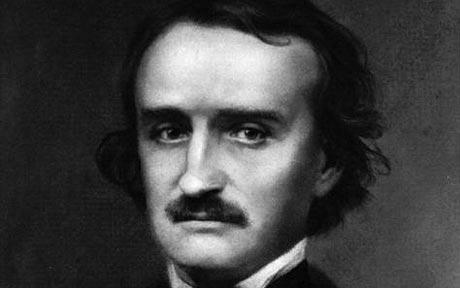
Edgar-Allan-Poe

Edgar Allan Poe was the first American writer to earn a living completely by his pen–though that living wasn’t always enough to live on. The legendary author redefined the genre of horror and is rightly called the father of the modern detective novel. But these legacies are the result of a more visceral one: Poe’s ability to evoke an all-encompassing terror that springs not from without, but from within.

Poe’s Incredible Influence

It’s well known that Sir Arthur Conan Doyle used Poe’s C. Auguste Dupin as a model for his own detective, Sherlock Holmes, and that Doyle’s short stories (“Hound of the Baskervilles” in particular) owe a tremendous debt to Poe. Indeed, Doyle once rhetorically asked, “Where was the detective story until Poe breathed life into it?” But Poe’s influence reached beyond the worlds of horror and mystery. He has long been a beloved figure in literature, one whose power has not waned with the passage of many generations.

Poe and Washington Irving exchanged admiration for one another via correspondence. Irving noted that “the graphic effect [of “Fall of the House of Usher”] is powerful.” Poe responded by sending Irving a copy of “William Wilson,” which he considered his best work. Poe admitted that the story had been inspired by Irving himself, particularly Irving’s “An Unwritten Drama of Lord Byron.”

Robert Louis Stevenson said of Poe, “He who could write ‘King Pest’ has ceased to be a human being.” Stevenson found Poe’s stories absolutely gripping, and was undoubtedly flattered when critic Andrew Lang said that Stevenson was “like Poe with the addition of moral sense.”

Meanwhile Oscar Wilde ranked Poe’s poetry as more important than that of Walt Whitman, Ralph Waldo Emerson, and Henry Wadsworth Longfellow. Wilde emulated elements of Poe’s style in The Picture of Dorian Gray–which wasn’t lost on Walter Pater, who ardently praised Wilde’s efforts to evoke Poe’s style in the novel. Wilde’s colleague and defender George Bernard Shaw, often an unforgiving critic, was downright effusive about Poe, saying that the American author “constantly and inevitably produced magic where his greatest contemporaries produced only beauty. [His tales are] a world record for the English language: perhaps for all languages.”

Allen Ginsberg argued that “everything leads to Poe….Burroughs, Baudelaire, Genet, Dylan,” and Jorge Luis Borges contended that “contemporary literature would not be what it is” without Whitman and Poe. TS Eliot, however, was not initially convinced of Poe’s genius. He excluded Poe from both American and European literary traditions, calling Poe a “displaced European.” Eliot later acknowledged that he’d underestimated Poe’s talent.

Vladimir Nabokov included multiple allusions to “Annabel Lee” in his masterpiece, Lolita. It appears that Nabokov was indeed deeply interested in Poe; he meticulously mapped the area around Poe’s home and sketched the manifestations of soul in The Strange Case of Dr. Jekyll and Mr. Hyde (which he taught within the context of Poe). Both documents are currently on view at the Morgan Library’s excellent exhibit, Edgar Allan Poe: Terror of the Soul.

Later on, novelist and screenwriter Terry Southern, author of Dr. Strangelove, was deeply influenced by Poe, especially The Narrative of A Gordon Pym. Southern wrote an appreciation of Poe, called “King Weirdo,” which was published posthumously. And Stephen King has frequently borrowed archetypal themes from Poe’s works for his own horror novels. The Shining reminds us of both “Masque of the Red Death” and “Fall of the House of Usher.”

Collecting Edgar Allan Poe

Edgar Allan Poe makes a fascinating focus for a single-author collection and also fits wonderfully into nineteenth-century American literature and horror literature libraries. Poe’s works weren’t actually that popular during his lifetime, so they were issued in relatively small print runs. The first edition of Tamerlane and Other Poems (1827) is famously scarce; only twelve copies are known to exist. (Three are currently on display together at the Morgan Library!)

Even if Tamerlane is out of reach, there are countless other desirable editions and volumes. For example the Poetical Works of Edgar Allan Poe, published by George Robertson in 1868, was the first edition of Poe’s works to appear in Australia. It differs significantly from the British and American editions.

No illustrated editions of Poe’s works were published during his lifetime. The first, Tales of Mystery, Imagination and Humor; and Poems (1852) was illustrated by artists unknown, as they were not given credit for their work. Famous illustrators Edouard Manet, Aubrey Beardsley, Harry Clarke, Edmund Dulac, and Arthur Rackham; first editions of Poe’s works illustrated by these artists are highly desirable.

Poe’s works often showed up in serially issued collections. One of these is The Gift, A Christmas and New Year’s Present for 1842. This compilation includes Poe’s “Eleonora,” along with items from Howard Huntley, Catherine Beecher, and Park Benjamin. The volume also includes an uncollected piece by Lydia Sigourney, “The Village Church.”

Irving-Offering-Lizzie-Leigh-Gaskell

The Irving Offering for 1851

When Elizabeth Gaskell first published “Lizzie Leigh,” the story was initially ascribed to Charles Dickens–whose byline meant big bucks for publishers. “Lizzie Leigh” appears under Dickens’ name in The Irving Offering: A Token of Affection for 1851, which also include’s Poe’s “A Descent into the Maelstrom.” The edition is fairly scarce: OCLC records none west of the Mississippi.

Though Edgar Allan Poe enjoys special attention around Halloween, collectors of rare books appreciate his works year round. If you’re looking for a specific item for your Poe collection, please don’t hesitate to contact us! We’re happy to help.
 

Share

Oscar Wilde, Dickens Detractor and “Inventor” of Aubrey Beardsley

“I’ll be a poet, a writer, a dramatist. Somehow or other I’l be famous, and if not famous, I’ll be infamous.” –Oscar Wilde

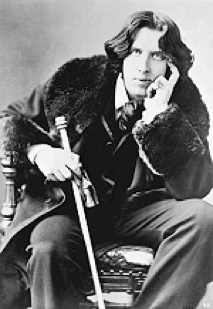
Oscar-WildeBorn on October 16, 1854 in Dublin, Ireland, Oscar Wilde is perhaps remembered more for his sparkling wit, larger-than-life personality, and historic trial than for his literary achievements. But the author made his mark on the literary world not only through his prolific career as a journalist, novelist, and dramatist, but also through his sometimes bizarre relationships with other literary figures. These interactions make collecting Wilde an even more engaging pursuit.

Love Lost between Wilde and Bram Stoker

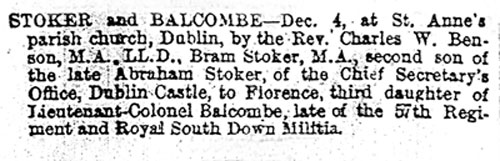
Wilde’s mother, Lady Jane, was a formidable author in her own right. She often kept literary company, and her circle of friends soon came to include Bram Stoker. Stoker soon met Florence Balcombe, a legendary beauty who had previously been involved with Wilde. Accounts of Balcombe’s relationship with Wilde vary; he claimed the two had been engaged. At any rate, Wilde was less than pleased when he learned that Stoker had proposed to Balcombe. He wrote to Balcombe, stating that he would never return to Ireland again. Wilde mostly kept to his word, returning to Ireland only for brief visits.

Bram-Stoker-Wedding-Announcement

But Stoker and Wilde’s relationship stretched beyond this inopportune love triangle. The two had gone to school together; Stoker even recommended Wilde for membership into the university’s Philosophical Society. And after Stoker and Balcombe had been married and Wilde had had sufficient time to lick his wounds, Stoker reinitiated the relationship. After Wilde was convicted of sodomy, Stoker even visited him. Yet Stoker also fastidiously removed all mention of Wilde from his published and unpublished texts, and it’s only recently that critics have begun to see Wilde’s influence in Stoker’s great novel Dracula.

Wilde Rejects Dickens’ Legacy…Or Does He?

Old Curiosity Shop-Little NellWilde heaped praise upon Matthew Arnold, Robert Browning, and Elizabeth Barrett Browning. He even called Aurora Leigh “the greatest work in our literature.” But he was less than complimentary when it came to the great Charles Dickens; Wilde is famous for saying of Charles Dickens The Old Curiosity Shop, “One would have to have a heart of stone to read the death of Little Nell and not to dissolve into tears…of laughter.” Wilde found Dickens overly sentimental and wished to separate himself from this aspect of Dickens’ Victorian England. Yet he never fully succeeded in escaping Dickens’ shadow (indeed, few authors of the century did).

Critics have pointed to similarities in the ways that Wilde and Dickens portray London, and Wilde even makes allusions to Dickens’ works–most notably Little Dorritt. Little Dorritt’s Mrs. General repeats the phrase “Papa, potatoes, poultry, prunes, and prism” to her young charges, and the phrase “prunes and prism” soon became closely associated with her character. Is it any coincidence, then, that Wilde chooses the name “Ms. Prism” for the proper governess in The Importance of Being Earnest? Even though Wilde didn’t subscribe to Dickens’ sentimental style, it’s likely that he had great respect for Dickens, as Wilde himself aspired to the same international acclaim that the Inimitable One had achieved.

An Outlandish Claim Spurred by Public Rivalry

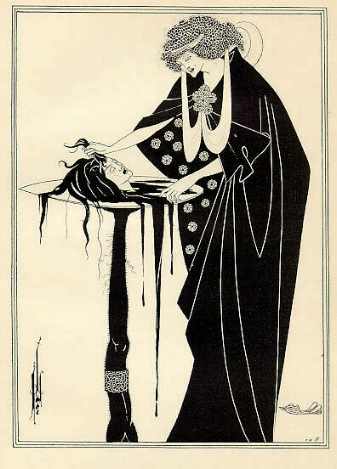
Beardsley-Salome-WildeIn April 1893, an up and coming artist was moved by the French publication of Oscar Wilde’s Salome. He drew Salome with St. John’s head, and the illustration became one of several that would accompany Joseph Pennell’s article on him in the first number of The Savoy. The artist, Aubrey Beardsley, contacted Wilde about illustrating the translation of Salome. Wilde responded in kindness, sending Beardsley an inscribed edition that read “For Aubrey: for the only artist who knows what the dance of seven veils is, and can see that invisible dance. Oscar” It wasn’t outright rejection, but it wasn’t an enthusiastic invitation, either.

Then Beardsley was contracted to illustrate Lord Alfred Douglas‘ English translation of Salome. Wilde initially called Beardsley’s illustrations for the work “too Japanese,” pointing out that the work was more Byzantine. Wilde then took his criticism a step further, saying that Beardsley’s art resembled “naughty scribbles a precocious boy makes on the margins of his copybook.” The rivalry exploded; Beardsley published caricatures of Wilde, and Wilde made the preposterous claim that he had “invented Aubrey Beardsley.” In reality, Wilde had simply worried all along that Beardsley’s brilliance would overshadow his own.

Mutual Admiration from a Distance

In November 1879, George Bernard Shaw met Oscar Wilde at Lady Jane’s London home. The two had trouble interacting, though Wilde clearly had good intentions toward Shaw. A few years later, on July 6, 1888, Wilde attended a meeting of the Fabian Society, likely at Shaw’s invitation. Artist Walter Crane spoke on “The Prospects of Art under Socialism,” which soon moved Wilde to write The Soul of Man under Socialism. Meanwhile over the years Shaw and Wilde maintained a pleasant relationship, albeit from a distance. They frequently exchanged books and letters and openly complimented each other’s works.

Shaw frequently defended Wilde against his critics, and he again rallied to Wilde’s defense when he was arrested for sodomy. Shaw was adamant that “never was there a man less an outlaw” than Wilde. Shaw and other writers put together a petition for Wilde’s early release, but it found surprisingly little support and was eventually dropped. As public opinion turned against Wilde and eventually forgot him entirely, Shaw still insisted on reminding people of Wilde’s greatness. He regularly mentioned him in drama reviews and remained fascinated with Wilde’s work for the rest of his life. When Frank Harris undertook his (somewhat controversial) biography of Wilde, Shaw edited it with the assistance of Lord Douglas.

Collecting Oscar Wilde

For collectors, Oscar Wilde is the ideal case study in how a single-author collection can–and should–come to include materials by a variety of other authors. A comprehensive Oscar Wilde collection would encompass the works of Wilde, not only his major literary pieces, but also the articles he penned as a journalist and critic. And a truly comprehensive collection would have a second layer: other authors’ reactions to and interactions with Wilde. For example, Shaw’s reviews mentioning Wilde are scarce because they were printed in periodicals on cheap paper, making them a challenging item for collectors to acquire. And Aubrey Beardsley’s caricatures of Wilde are sought after by both Beardsley and Wilde collectors alike, making them a desirable addition to an Oscar Wilde collection.

Oscar Wilde certainly left his mark on the world as an author and public figure. He will undoubtedly remain a popular figure among rare book collectors for generations to come.

Share

Maurice Boutet de Monvel and His Ingenius ‘Jeanne d’Arc’

Maurice-Boutet-Monvel

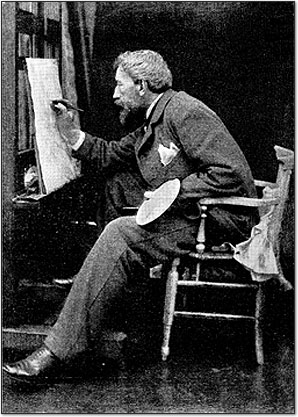
Boutet at work in his studio

Born into a “family of gilt-edged artists,” it’s no wonder that Maurice Boutet de Monvel eventually established himself as a premier portrait painter and watercolorist. When the artist turned his attention to illustrating children’s books to support his family, his illustrations were magnificent enough that he’s considered one of the great figures of the Golden Age of children’s literature, alongside Kate Greenaway and Randolph Caldecott.

Boutet spent the majority of his childhood in Paris. In early 1870, he began studies at the École de Beaux Arts, but his studies were interrupted by the Franco-Prussian War. He joined the French Army, and though he returned from the war relatively unscathed, he would forever after be particularly vulnerable to respiratory illness.

Next Boutet continued his art studies at the Julian Academy under the tutelage of Gustave Boulanger and Jules Lefèbvre. In 1873, he displayed his first canvas at Le Salon and earned two medals over the next few years. Boutet greatly admired the works of José de Ribea and emulated Ribea’s dark style, using only chiarscuro. But he also recognized the need to lighten that heavy palette, which led him to work under Carolus Duran, whose light watercolors were considered revolutionary at the time.

Jeanne-dArc-Boutet

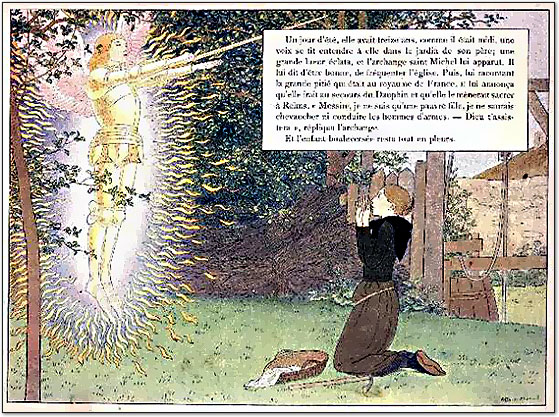
From ‘Jeanne d’Arc’

Then in 1876, Boutet went to visit his brother in Algiers. The light of the foreign landscape was a complete surprise to Boutet, and the artist drastically altered his style thereafter. He adopted a primary palette of oranges and blues, using the latter mostly to create shadows. Boutet made two subsequent trips to Algiers, in 1878 and 1880.

Boutet’s life would change again in 1879 with the birth of his first child. He’d been married in 1876, but a child resulted in extra pressure to generate income and support his family. That was the impetus to venture into illustration. He began in 1881 with Les pourquois de Mademoiselle Suzanne (Miss Suzanne’s questions) by Emile Desbeaux and the reading book La France en Zig-Zag (Zigzagging across France) by Eudoxie Dupuis. Both were published by Charles Delagrave.

Delagrave was so pleased with Boutet’s work, he invited the artist to illustrate Saint Nicolas: Journal illustré pour garçons et filles (Saint Nicolas: A comic book for boys and girls). That endeavor was incredibly successful, so Boutet undertook Vieilles chansons et danses pour les petits enfants (Old songs and dances for young children) in 1883 and Chansons de France pour les petits Français (Songs of France for French Children) the following year.

Boutet-Jeanne-dArc

From ‘Jeanne d’Arc’

Yet Boutet was reluctant to give up his career as a “serious” artist. In 1885, he submitted an obviously royalist canvas for exhibition. “L’apothéose de la canaille, ou le triomphe de Robert Macaire” (“The apotheosis, or the triumph of Robert Macaire”) was so controversial, the Deputy Secretary of State for Fine Art pulled it just before the exhibition opened. Now publicly disgraced, Boutet resigned himself to a life outside the art world.

Luckily his friend Edouard Detaille had just founded the Society of French Watercolorists and invited Boutet to exhibit there. He submitted a portrait of a girl dressed in Renaissance clothing, and the work was so well received that Boutet found himself quite occupied as a portrait artist. Yet he to illustrate children’s books and serials, contributing to Saint Nicolas until 1890.

Boutet also created illustrations for Quand j’étais petit (When I was young) by Lucian Briart in 1886, and La farce de Maître Pathelin (The farce of Master Pathelin; 1887), a comedy from the Middle Ages adapted for modern verse by Georges Gassies de Brulies. He would go on to design and illustrate La civilité puerile et honnête raconté pour l’Oncle Eugene (Puerile, honest civility recounted by Uncle Eugene), a manners book for children. In 1890, Boutet illustrated Ferdinand Fabre’s novel Xavière. The illustrations were reproduced using a new photoengraving technique that produced incredibly high-quality images.

Boutet-Jeanne-Arc

It’s quite rare to find Boutet’s ‘Jeanne d’Arc’ in its dust jacket.

Six years later, Boutet would complete the work that brought him lasting fame as a legendary children’s book illustrator. Published by Plon, Nourrir, et Cie, Jeanne d’Arc was masterfully illustrated in watercolors. Zincotype, a technique that blends etching with colored inks, was used to reproduce Boutet’s breathtaking images.

Following the 1896 publication of Jeanne d’Arc, Boutet enjoyed international acclaim. He heavily influenced the young school in Vienna and was invited to tour the United States. He was commissioned for numerous portraits and projects while he was in America. but was unable to complete the most ambitious: a series of large panels based on the illustrations of Jeanne d’Arc.

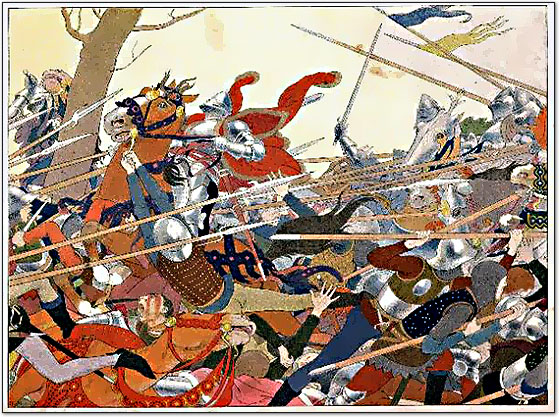
Boutet later said of the book’s muted palette, “It’s not color, really, it is the impression, the suggestion of color.” He was clearly influenced by the light and shadow modeling of Fra Angelico and the battle scenes of Paolo Uccello. Children’s literature critic Selma G. Lanes

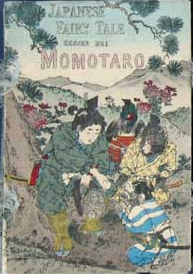
Japanese-Fairy-Tales

The Japanese style of illustration was popular in Boutet’s day.

noted that the “illustrations have a nobility and grandeur akin to the great church frescoes of the Renaissance. Their pleasingly flat renderings, combined with a sophisticated use of design elements….owe a great deal to the Japanese prints so popular in the artist’s day.”

It’s obvious from the beauty and subtlety of Jeanne d’Arc that Boutet was truly inspired by his chosen subject matter. Boutet had been born in Orléans, a town that Joan of Arc had liberated from the British in 1429. But more importantly, France was still reeling from its loss in the Franco-Prussian War. Boutet wished to remind children of France’s past glory. Thus he opens the book with an admonishment to children to “open this book with reverence…in honor of the humble peasant girl who is [the books’ subject].”

The works of Boutet represent an ideal intersection of art and literature for discerning collectors. The multitude of serial and individual publications to which he contributed are fruitful ground for building a fascinating collection.

Share

Chapbooks: Short Books with Long History

Scholars debate over the etymology of the term “chapbook.” Some argue that “chap” is derived from “cheap,” surely an accurate description of chapbooks, since they were indeed cheap little publications. But the more widely accepted explanation is that “chap” comes from the Old English “céap,” meaning “barter” or “deal.” Peddlers came to be known as chaps, and they were the primary purveyors of chapbooks. Whatever the origin of their name, chapbooks became a vital tool for dissemination of information and promotion of literacy. As publishing and readers’ tastes evolved, chapbooks also provided an ideal means of addressing an increased demand for children’s literature.

Since the Middle Ages, traveling peddlers provided many necessary wares to rural communities–and that included the news. They would often regale their customers with the latest in politics, entertainment, and gossip. Then in 1693, England repealed the Act of 1662, which had limited the number of Master Printers allowed in the country. The number of printers exploded. Meanwhile, charity schools emerged, making education and literacy more accessible to the poor. The demand for cheaply printed reading materials drastically increased as a result, and all the new printers were happy to supply their needs.

By 1700, chapmen regularly carried small books–usually about the size of a waistcoat pocket–on virtually every topic imaginable. The books were generally coverless, and their illustrations were made of recycled (and irrelevant) woodcuts from other publications. In the absence of copyright laws, printers would steal illustrations or even large chunks of text from other chapbooks and reproduce them in their own editions. Early chapbooks weren’t even cut; the purchaser would cut apart the pages and either pin or stitch the book together to read.

Dr Watts-Divine SongsChapbooks grew into an incredibly powerful tool for disseminating new ideas. When Thomas Paine published The Rights of Man, he suggested that the second edition be made available in chapbook form. The book went on to sell over two million copies, an incredible feat in those days, when the average publishing run might be only a few hundred or thousand copies. Religious organizations used the form to publish religious tracts, nicknamed “godlinesses” or “Sunday schools.” There were even chapbooks for the chapmen themselves, containing information about different towns, dates for local fairs, and road maps.

The Industrial Revolution, however, brought a revolution in the printed word as well. People flocked to the cities, reducing chapbooks’ role in news delivery. Newspapers had also become cheaper to produce, so they were no longer relegated to the upper class. And chapbooks’ days seemed numbered when public solicitation was outlawed and peddlers could no longer distribute them. Meanwhile people’s tastes were changing. As the decades of the 1800’s passed, the novel was emerging as a new, preferred form, and in terms of “cheap” literature, chapbooks eventually gave way to “penny dreadfuls,” the dime novel, and other such low-brow forms.

But changing reading habits and higher literacy rates also meant an increased demand for children’s literature. From around 1780, most booksellers offered a variety of children’s chapbooks, which included ABC’s, jokes, riddles, stories, and religious materials like prayers and catechism. Thanks to improved printing techniques, this generation of chapbooks was printed with relevant illustrations and attached colored paper or card wrappers.

Juvenile-Pastimes-Baseball-Chapbook

Though we think of chapbooks as a distinctly British form, they emerged in various forms around the world. Harry B. Weiss writes in A Book about Chapbooks, “The contents of chapbooks, the world over, fall readily into certain classes and many were the borrowings, with of course, adaptations and changes to suit particular countries.” And despite their variant forms and culturally specific content, chapbooks consistently served as a democratizing force in the dissemination of ideas.

Collectors may build entire collections around chapbooks, or they may find that certain chapbooks fit in well with their collections. For example, the 1849 edition of Juvenile Pastimes includes a rare early pictorial depiction of baseball, making it an ideal addition to a collection of baseball books. Collectors of erotica may enjoy Dumb Dora: Rod Gets Taken Again, an adult chapbook with suggestive, but not pornographic, illustrations. The variety of chapbooks means there’s a little book for everyone!

This month’s select acquisitions are a short list of delightful chapbooks. Please peruse them and contact us if you have any inquiries. As cataloguing chapbooks is quite the endeavor, we’ve also put together an article about the resources used to catalogue the items on the list, which includes our bibliographic sources at the end.

Share

George Cruikshank: “Modern Hogarth,” Teetotaler, and Philanderer

On September 27, 1792, George Cruikshank was born in London. His father, Isaac, was a leading caricaturist of the 1790’s. Both George and his older brother, Isaac Robert would enter that profession as apprentices and assistants to their father. George Cruikshank would come to be known as a preeminent artist of his time, and as a stern, moral Victorian. That image crumbled, however, following his death.

George-Isaac-Robert-Cruikshank

From ‘The Cruikshankian Momus’ by the three Cruikshanks

An Outspoken Artist

Cruikshank established himself as an overtly political artist early on. He experienced his first success with William Hone’s The Political House that Jack Built, a play on the popular nursery rhyme “This Is the House that Jack Built.” The rhyme had a long history of being adapted for satire and parody. Samuel Taylor Coleridge wrote a self-parody under the name Nehemiah Higginbotham in 1797 using the rhyme as his foundation; in the Rolliad’s “Political Miscellanies,” “This Is the House that George Built” criticizes George Nugent Grenville, Duke of Buckingham, for supporting William Pitt the Younger.

Gent-No Gent-Regent-George Cruikshank

“Gent, No Gent, and Regent,” in which Cruikshank lampoons the irresponsible Prince Regent

From that point forward, Cruikshank’s career would be marked by a willingness to address politics, and his views weren’t always admirable. Cruikshank was very patriotic and openly racist.He followed The Political House that Jack Built with the anti-abolitionist New Union Club, satirizing an abolitionist dinner party with black guests. He also didn’t shy away from attacking the royal family and leading politicians. His commentary was so scathing that in 1820, he received a bribe to pledge “not to caricature his majesty in any immoral situation.”

Partnership with Charles Dickens

By the 1830’s, Cruikshank had reached the height of his career. John Marcone, a short-term editor of The Monthly Magazine, invited Cruikshank to do a series of illustrations for an up and coming author, Charles Dickens. Cruikshank’s first partnership with Dickens was for Sketches by Boz (1836). Three years later, Chapman and Halls issued an enlarged edition, for which Cruikshank enlarged all but one of his original illustrations and completed thirteen more. He also completed the Cheap Edition’s frontispiece, which was eventually immortalized on the cover of Dickens Quarterly.

Sketches by Boz-Cruikshank-Dickens

From ‘Sketches by Boz’

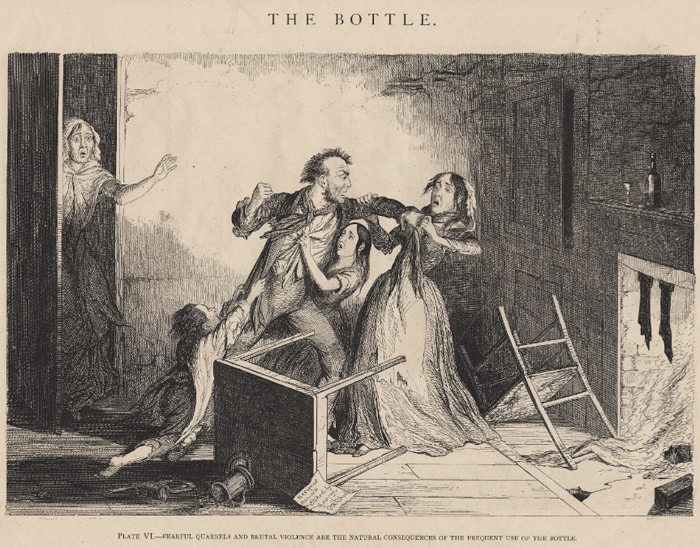
Cruikshank again worked with Dickens when Oliver Twist was published in Bentley’s Miscellany (Feb 1837-Apr 1839). He also illustrated Dickens’ Memoirs of Joseph Grimaldi (1838) and “The Lamplighter’s Story” in The Pic-Nic Papers (1841). By this time, however, Cruikshank’s politics had already begun to complicate his relationship with Dickens. Cruikshank, formerly a heavy drinker, had become a complete teetotaler. Dickens disapproved of the overbearing attitude of Cruikshank’s temperance works like The Bottle, and he also didn’t appreciate Cruikshank’s moralistic emendations to a volume of fairy tales.

Hop-o-my-thumb-George-Cruikshank-Charles Dickens

A Letter from Hop-O’-My-Thumb to Charles Dickens, Esq

Cruikshank and Dickens’ conflict came to a head when Dickens satirized Cruikshank in “Frauds on the Fairies” in Household Words (1 Oct 1853). Cruikshank published his own response pseudonymously, “A Letter from Hop-o-My-Thumb to Charles Dickens, Esq” in his magazine, arguing “when you wrote your criticism, you knew little or nothing of that history you so strongly condemn our friend for altering.”

Oliver Twist-Cruikshank illustrations

This edition offers wonderful facsimile of Cruikshank’s color illustrations in ‘Oliver Twist.’

Following Dickens’ death, Cruikshank audaciously asserted in a letter to The Times (30 Dec 1871) that he’d thought of most of Oliver Twist’s plot. Cruikshank wasn’t the first illustrator to make such a claim; Robert Seymour had made a similar one about The Pickwick Paperswhich Dickens vigorously denied in the preface to the 1867 edition. Dickens’ friend and biographer John Forster answered Cruikshank’s claim with evidence from Dickens’ correspondence, though admitted that Cruikshank’s intimacy with London’s underworld had been instrumental.

A Hidden Life

Cruikshank had always been regarded as a moral Victorian, and this view was enhanced by his work for the temperance movement. Cruikshank worked tirelessly to promote both the National Temperance Society and the Total Abstinence Society. Thanks to his efforts, he eventually served as Vice President of the National Temperance Society. After Cruikshank passed away on February 1, 1878, his eulogy in Punch magazine read, “There never was a more proper, simpler, more straightforward or altogether more blameless man. His nature had something childlike in its transparency.”

George Cruikshank-The Bottle

From ‘The Bottle,’ a work that firmly established Cruikshank as teetotaling, upright Victorian

Soon after, however, it became evident that Cruikshank had been something less than the upstanding Victorian everyone had assumed. His dying words, “Oh, what will become of my children?” puzzled his wife; the couple were childless, as had been Cruikshank and his previous wife. Soon it came to light that Cruikshank had had an affair with his maid, Adelaide Attree. When his wife had discovered the pregnancy, Attree refused to identify the father and was removed from the household accordingly. But Cruikshank simply moved her to a home close by, and she took the married name “Archibold.” The two had a total of eleven children together; the youngest was conceived when Cruikshank was 82!

While this revelation certainly dimmed his peers’ estimation of Cruikshank’s character, it did little to quell admiration for his work. To this day, Cruikshank remains a celebrated illustrator, with over 10,000 prints, plates, and illustrations to his credit. His works appear in numerous museums, and his works are highly sought after among collectors both of Charles Dickens and of nineteenth-century illustrations.  Collectors of Cruikshank rely upon Albert Cohn’s bibliographical catalogue of Cruikshank’s printed work, among other numerous available resources.

Share

A Brief History of True Crime Literature

True crime literature is unique because, in the words of Joyce Carol Oates, the genre has “always been enormously popular among readers…[and] appeals to the highly educated as well as the barely educated, to women and men equally.” The popularity of true crime literature extends to the rare book world.

Daniel Defoe

Daniel Defoe

The literature of true crime dates all the way back to the Elizabethan era, but the genre didn’t enter the mainstream until the late seventeenth and early eighteenth centuries. It its earliest form, true crime literature included biographies of prisoners before and after executions. In some cases, these accounts were factual, but they were just as often completely fictionalized–and almost always sensationalized. These gave rise to fictional criminal autobiographies, notably The Fortunes and Misfortunes of the Famous Moll Flanders (1721) by Daniel Defoe. Domestic dramas such as George Lillo’s The London Merchant; or, The History of George Barnard (1731).

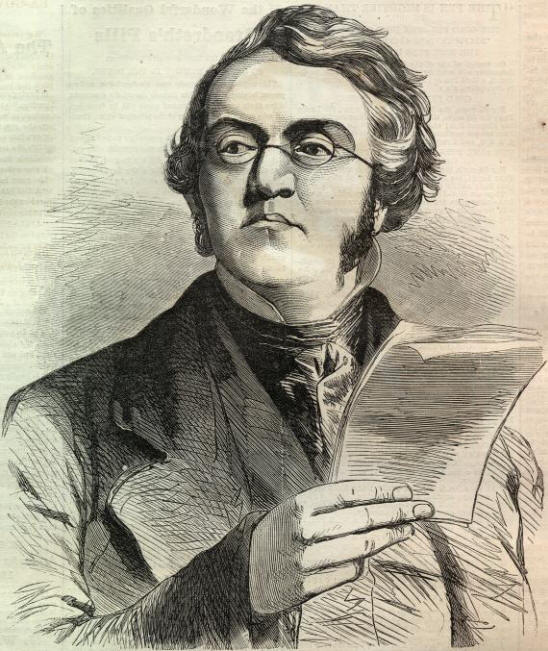
William Makepeace Thackeray

William Makepeace Thackeray

The second half of the eighteenth century saw a sharp decline in crime literature, but the genre reasserted itself in the nineteenth century. Factual reporting, in the style of Francis Kirkman’s The Counterfeit Lady Revealed (1673), again came into vogue. The Newgate Calendar published criminal biographies starting in 1773, and it was periodically published before finally being compiled in 1841. In the United States, the National Police Gazette was launched in 1845 and remains in publication today. Meanwhile leading literary figures also began to address issues of crime and punishment. Charles Dickens included studies of Newgate and the Old Bailey in his Sketches by Boz, and William Makepeace Thackeray wrote “Going to See a Man Hanged” (1840).

Perhaps the most influential was “On Murder Considered as One of the Fine Arts,” two essays Thomas de Quincey published in Blackwood’s Magazine (1827 and 1839). De Quincey explored the Radcliffe murders of 1811, which were presumably committed by mariner John Williams. He delved into the psychology of the murderer, victims, and witnesses in a way that no other author had attempted before. Oscar Wilde followed suit in “Pen, Pencil, and Poison” in 1889, when he argued that Thomas Griffith’s creativity improved when he began taking out life insurance policies on relatives, whom he then poisoned with strychnine. These seminal works paved the way for modern works like Truman Capote’s In Cold Blood (1966).

Crime in fiction had taken a turn for the low brow; starting in the 1820’s the so-called “Newgate novel” romanticized the lives of criminals, depicting highwaymen as heroes–even when their exploits ended at the gallows. Thackeray would parody Newgate novels in several of his works and publicly attach their authors, but the works still flourished. GWM Reynolds, for example, published Mysteries of London from 1845 to 1848, with sequels to 1856. The books, which sold for one cent, came to be known as “penny dreadfuls.”

Sherlock Holmes

The iconic Sherlock Holmes

The 1830’s saw the development of the modern police force–with detectives to investigate crime and constables to enforce order–in both England and the United States. For this we can thank, among others, author and magistrate Henry Fielding. Soon these men of the law popped up as characters in fiction: Inspector Bucket in Dickens’ Bleak House (1853) and Sergeant Cuff in Collins’ The Moonstone (1868), respectively based on real-life Scotland Yard detectives Charles Field and Jack Whicher. Poe invented a more complex detective in his C. Auguste Dupin character, and Sir Arthur Conan Doyle debuted Sherlock Holmes in 1887. Four years later the detective began making regular appearances in Doyle’s Strand Magazine.

In the last century there has been a markedly decreased overlap of true crime and literature. But the genre of true crime writing remains quite popular, and many rare book collectors build entire collections around the genre. There are plenty of interesting items for collectors of true crime literature and ephemera.

The Confessions of Jesse Strang

Originally from Putnam County, New York, Jesse Strang deserted his wife when he suspected that she’d been unfaithful. After a stint in Ohio, Strang made his way to western New York–where he faked his own death in the spring of 1826. Strang ended up in Albany, where he used the alias of “Joseph Orton.” He saw Elsie Whipple in an Albany bar and was immediately interested in the spirited young woman. Elsie was the daughter of a wealthy family in Albany, and Strang managed to get hired as a handyman at the family’s estate, Cherry Hill–where Elsie lived with her husband, John. But that didn’t stop Strang from pursuing Elsie, and the two were soon exchanging love letters with the assistance of other members of the household.

Cherry Hill-Jesse Strang

Cherry Hill as it looked at the time of the murder

Elsie, known for being moody and tempestuous, decided that the lovers should kill John and run away together. Strang was reluctant, but ultimately supplied Elsie with arsenic to poison John. But she didn’t administer enough poison, and John merely suffered an upset stomach. The lovers clearly needed a more foolproof plan, and Elsie urged Strang to shoot John. Eventually he acquiesced, climbing onto the roof and shooting John through a window into the couple’s quarters. Elsie had removed the curtain to give Strang a clear shot. Strang rushed to a local store to give himself an alibi, then returned and even helped the doctor remove the bullet from John’s body. But the police ruled that Strang had enough time to commit the murder and make it to the store, so he was arrested. He immediately confessed and implicated Elsie.

Strang desperately asked his lawyer to plant papers at Cherry Hill implicating Elsie as the mastermind of the plot, arguing that Elsie would receive a lighter sentence because she was a woman. His lawyer refused, but Strang was correct. While he was convicted of murder and sentenced to death by hanging, Elsie was found not guilty on all charges. Between 30,000 and 40,000 people came to watch Strang’s execution on August 24, 1827. Among the crowd were peddlers hawking pamphlets containing Strang’s confession. Strang himself promoted the pamphlet from the scaffold, saying, “This contains a confession of the great transaction for which I am about to die, and every single word that it contains, tot he best of my knowledge, is true; if there is a single word in i t that is not true, it has been inserted by mistake, not by design.” Strang’s hanging was botched, and his neck did not break. He hung for half an hour before suffocating. It was the last hanging in Albany.

Official Report of the Trial of Laura D Fair

On November 3, 1870, Laura D Fair followed Alexander Parker Crittendon onto a ferry, where he was meeting his family. Fair shot Crittendon in the chest with a pepperbox pistol and fled to the ship’s saloon, where she immediately confessed to her crime. Fair believed that she was defending her own name; Crittendon had represented himself as single when he began courting Fair, and when she discovered that he was married, Crittendon promised to divorce his wife. When he failed to follow through, Fair decided to exact revenge.

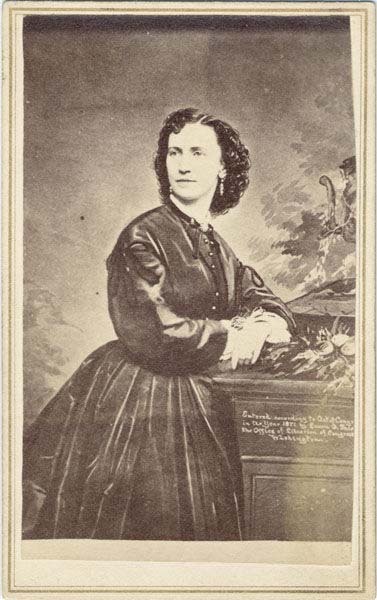
Laura D Fair

Laura Fair

The ensuing trial was a national sensation. Fair’s defense argued that Fair had experienced delayed menstruation (in part because she assumed a masculine role by running her own business), which resulted in temporary insanity. Suffragists like Elizabeth Cady Stanton and Susan B Anthony took up the cause, noting that “female hysteria” had long been used to subjugate women to men. Prosecutors also focused on gender, portraying Fair as a man-hungry murderess whose temporary insanity could also have been caused by sexual excess. Fair was convicted of murder and sentenced to death, but the trial was overturned because evidence had been incorrectly admitted. After a second trial, Fair was acquitted.

The case remained in the headlines intermittently from June 1871 to January 1873. Mark Twain and his collaborator Charles Dudley Warner would incorporate the case into Twain’s first novel, The Gilded Age: A Tale of To-Day, published in December 1873: Laura Hawkins bears a striking similarity to Laura Fair. Twain also incorporated another famous trial; the Senate investigation of Senator Dilworthy for vote buying parallels the real trial of Kansas Senator Samuel C Pomeroy. Both critics and historians agree that these sensational elements greatly contributed to the novel’s success.

Ruth Snyder’s Own True Story

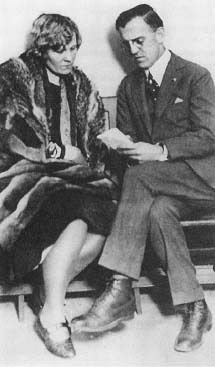
Ruth Snyder

Snyder and Judd Gray conferring during a break in the trial

In 1925, housewife Ruth Brown Snyder began an affair with married corset salesman Henry Judd Gray. She soon began planning her husband, Albert’s murder, with only reluctant support from Judd Gray. Snyder reportedly made seven attempts to kill her husband. Finally, she and Judd Gray garrotted Albert, shoved chloroform soaked rags up his nose, and staged a burglary. Their ploy fell apart under only the slightest scrutiny, and they were both convicted of murder and sentenced to death. Ruth would be the first woman executed at Sing Sing since 1899, and the first ever to be executed by electrocution.

The murder trial was covered by a number of prominent journalists, but only one was granted an interview: Jack Lait, who would provide Ruth the typewriter she used to record her memoir. Ruth Snyder’s Own True Story (1927) proved a poignant and candid account of Ruth’s experience–and a useful bit of propaganda for Lait. In the preface, he writes that Ruth “bristles with courage, she has poise, assurance, no end of intelligence…she loves like fire and hates like TNT.” (With such a portrayal, it’s perhaps no wonder that Ruth received 107 marriage proposals before her execution!) At Ruth’s execution, Chicago Tribune photographer Tom Howard captured her final moment with a miniature camera strapped to his ankle. The image, now famous, was emblazoned on the front page of the New York Daily News the next day.

Our interest in rare books about true crime shows no evidence of fading, especially since the genre so frequently intersects with the worlds of history and literature. How has true crime crept into your book collection?

Share

The Two Endings of Charles Dickens’ ‘Great Expectations’

Charles-Dickens

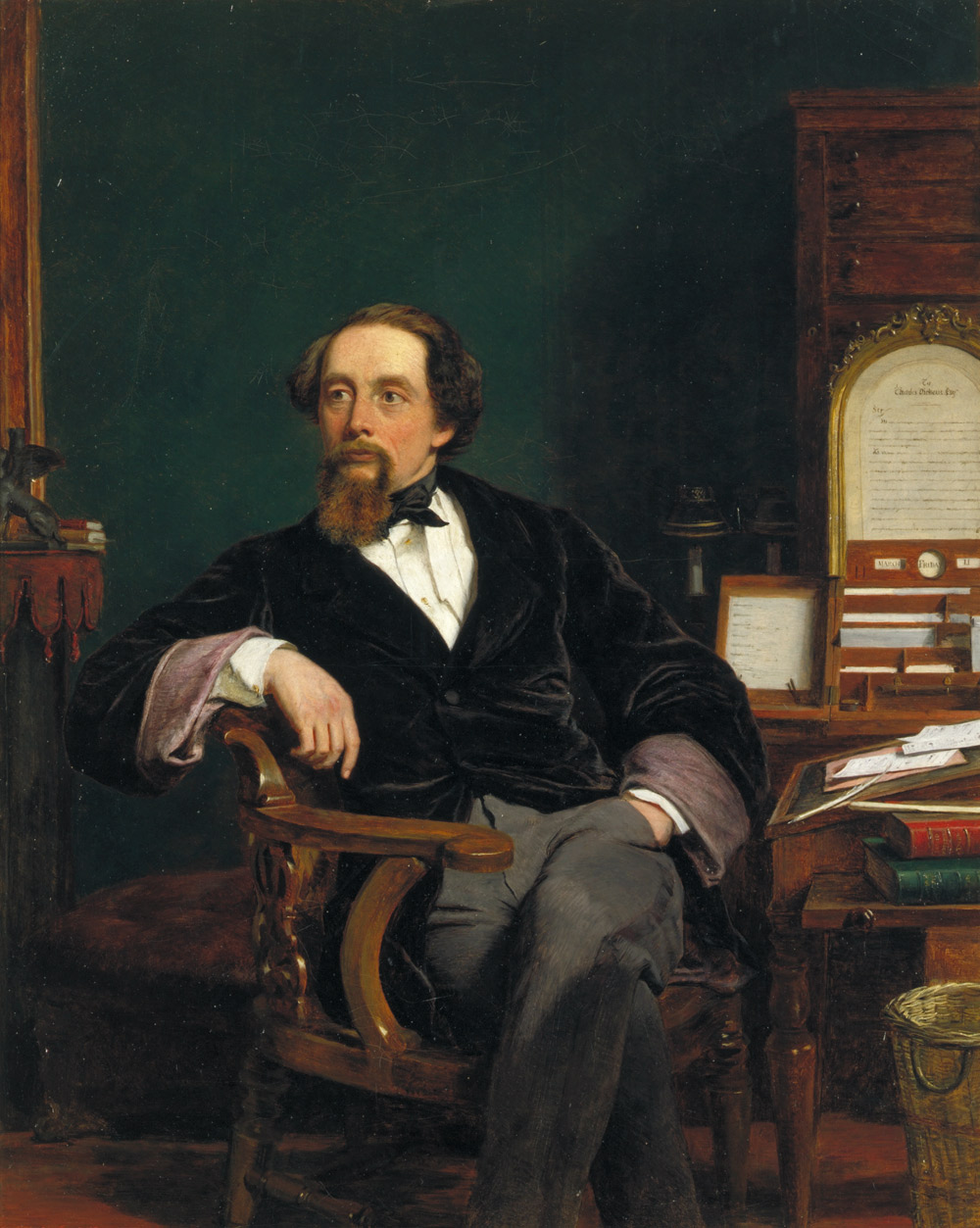
Charles Dickens, oil painting, William Powell Frith, 1859. (Victoria & Albert Museum)

Surely Charles Dickens took many secrets to his grave, but one of those secrets didn’t last long. Dickens made a significant change to the ending of Great Expectations–and in the nick of time! He’d already sent his manuscript off to the publisher when he decided on the change. Dickens’ indecision means that collectors have a few different editions of this great novel to add to their personal libraries.

A Considerable Emendation

It was relatively common for authors to change their work, sometimes even between printings. Henry James, for instance, was notorious for updating his drafts multiple times. So Dickens’ last-minute emendation to Great Expectations isn’t entirely unheard of–he, like James, actually made such changes with relative frequency.

However, Dickens had also originally promised that Great Expectations would be lighter fare than its predecessor, Tale of Two Cities. In an October 1860 letter to John Forster, Dickens wrote “You will not have to complain of the want of humor as in Tale of Two Cities. I have made the opening, I hope, in its general effect exceedingly droll.”* The novel took a different turn, and Dickens’ original ending was melancholy indeed.

“I was in England again–in London, and walking along Piccadilly with Little Pip–when a servant came running after me to ask would I step back to a lady in a carriage who wished to speak to me. It was a little pony carriage, which the lady was driving; and the lady and I looked sadly enough on one another.

‘I am greatly changed, I know, but I thought you would like to shake hands with Estella too, Pip. Lift up that pretty child and let me kiss it!’ (She supposed the child, I think, to be my child.)

I was very glad afterwards to have had the interview; for, in her face and in her voice, and in her touch, she gave me the assurance, that suffering had been stronger than Miss Havisham’s teaching, and had given her a heart to understand what my heart used to be.”

Edward-Bulwer-Lytton

Edward Bulwer-Lytton

Dickens submitted Great Expectations with this ending in 1861 and went to visit his friend and fellow author Edward Bulwer-Lytton. Lytton was a popular figure in his own right as a writer of crime historical and crime novels. He was also a man of privilege, and it’s likely that Dickens respected Lytton as both an author and as a gentleman. Probably on these grounds, Dickens shared the Great Expectations manuscript with Lytton.

He may have been surprised with Lytton’s reaction. Rather than wholeheartedly praising Dickens’ latest novel, Lytton urged Dickens to rewrite the ending completely. Dickens intimated that “Bulwer was so very anxious that I should alter the end…and stated his reasons so well, that I have resumed the wheel, and taken another turn at it.” What Dickens came up with has been the standard ending since 1862:

“‘I little thought,’ said Estella, ‘that I should take leave of you in taking leave of this spot. I am very glad to do so.’

‘Glad to part again, Estella? To me, parting is a painful thing. To me, the remembrance of our last meeting has been ever mournful and painful.’

‘But you said to me,’ returned Estella, very earnestly, ‘”God bless you, God forgive you!'”And if you could say that to me then, you will not hesitate to say that to me now–now, when suffering has been stronger than all other teaching, and has taught me to understand what your heart used to be. I have been bent and broken, but–I hope–into a better shape. Be as considerate and good to me as you were, and tell me we are friends.’

‘We are friends,’ said I, rising and bending over her, as she rose from the bench.

‘And will continue friends apart,’ said Estella.

I took her hand in mine, and we went out of the ruined place; and, as the morning mists had risen long ago when I first left the forge, so the evening mists were rising now, and in all the broad expanse of tranquil light they showed to me, I saw no shadow of another parting from her.

In his manuscript, the final line reads “I saw the shadow of no parting from her, but one.” And the first edition offers yet another variation of that closing line: “I saw the shadow of no parting from her.” Dickens was clearly ambivalent about the novel’s ending. But his eye for the market probably led him to write an ending that can be interpreted as Estella and Pip “walking off into the sunset” together. If he’d wanted that, wouldn’t he have made the ending more obviously happy, as he did in Bleak House, Little Dorrit, and David Copperfield?

Complications for Dickens Critics and Collectors

Critics have been rehashing the endings of Great Expectations since the book was published. The dual endings also create a bit of a complication for collectors; ordinarily the first edition of a work is enough for a collector to “check something off the list.” In the case of Great Expectations, however, true Dickens collectors will want a few more items.

Because Dickens slightly changed the wording of the ending after the first edition, most collectors look for both the first edition and the 1862 edition, which was the first to include the now-ubiquitous ending. Forster’s biography, where the alternate ending made its first appearance in print, is also a highly desirable volume. And finally, Dickens’ original ending did not appear alongside the text of Great Expectations until 1937, when George Bernard Shaw included it in his preface for the Limited Editions publication of the novel.

This is one example of an instance where collectors would seek both a first edition and subsequent editions for a complete collection of an author’s oeuvre. It also shows us the value of basic bibliographic resources that can identify and elucidate these kinds of circumstances, along with working with an expert professional bookseller who can guide your collecting efforts.


*This letter is apparently not currently extant, though we know of it through Forster’s Life of Dickens (vol 3, p 329). 

Share

The Millerites and the Great Disappointment

William-Miller

William Miller

The Seventh-day Adventist Church rose from what most would consider an epic failure. William Miller predicted the return of Christ–inaccurately, and his followers broke into multiple sects, of which the Seventh-day Adventist Church was one. The literature and ephemera of the Millerite community offers a fascinating look at religion and spirituality in the mid-1800’s.

A Brief History of Millerism

The early 1800’s saw a resurgence in millenarianism, the belief that a major event or movement would cause a drastic transformation in society. Specifically, millenarianists believed in the prophecy of Revelation, which predicts that God’s kingdom on Earth will last 1,000 years after Jesus’ return. Thus, the ground was fertile for the theology of William Miller, for whom Millerism is named.

Miller started out as a farmer in upstate New York. He was also a lay preacher in the Baptist church. He embarked on an exhaustive study of the prophecies of Daniel. A subscriber to the year-day method of prophetic interpretation, Miller believed that a “day” in the Scripture represented a year of real time–meaning that we could predict the exact date of Jesus’ return. By September of 1822, Miller had published his conclusions in a twenty-point document, though he shared the document with very few people.

Miller began sharing his ideas more openly among his inner circle. Initially, he met with disinterest. He said, “To my astonishment, I found very few who listened with any interest. Occasionally one would see the force of the evidence, but the great majority passed it it by as an idle tale. But when Miller began lecturing publicly in 1831, he began to gain a following. The following year, he submitted 16 articles to the Baptist paper Vermont Telegraph. Soon he was unable to personally address all the correspondence and speaking requests he received as a result of the articles.

To remedy that problem, Miller published a 64-page tract that summarized his predictions. At this point, he still had not specified a date for Jesus’ return; instead, he suggested that the Advent would occur in 1843 or 1844. As the years passed, Miller gained more and more attention–in large part due to Millerite publications. Miller’s campaign got a significant bump when Joshua Vaughan Himes, a preacher and publisher, began printing the fortnightly paper Signs of the Times. The first issue was published on February 28, 1840, and the periodical is still published by the Seventh-day Adventist Church.

Battle-Great-Day-Thomas-Williams

“The Battle of the Great Day”

As Miller’s ideas gained ground, numerous items in the Millerite tradition were published. One such item was a broadside called “The Battle of the Great Day.” Based on Revelation 16: 12-21, the broadside was published by prolific preacher Thomas Williams around 1838. Though several works by Williams are recorded in UMI’s “Millerites and Early Adventists,” this item is not. The OCLC lists only one other institutional holding, at Brown University.

By 1843, there were at least 48 Millerite publications. Meanwhile, Miller had narrowed down his dates at the urging of his followers. Now he offered a year-long window: March 21, 1843 to March 21, 1844. When March 21, 1844 came and went without incident, most Millerites maintained their faith. They briefly adopted a new end date of April 18, 1844, based on the Karaite calendar rather than the Rabbinic one. When that date also passed, they believed they’d entered “tarrying time,” a period of waiting mentioned in both the books of Daniel and Habakkuk. This idea sustained them through July of 1844.

In August of that year, Samuel S. Snow presented a new theory at a meeting in Exeter, New Hampshire. Known as the “seventh-month message,” Snow’s prediction was still based on the 2300 prophecy of Daniel, which stated that Jesus’ return would occur on the tenth day of the seventh month. Again using the Karaite calendar, Snow calculated that October 22, 1844 as the date of the Advent. When Snow, too, proved incorrect and nothing happened on October 22, the Millerites experienced what has since been called the Great Disappointment. The movement soon fell apart as the Millerites struggled to reconcile their beliefs with reality. Multiple sects emerged, one of which was the Seventh-day Adventist Church.

The Cartography of Faith

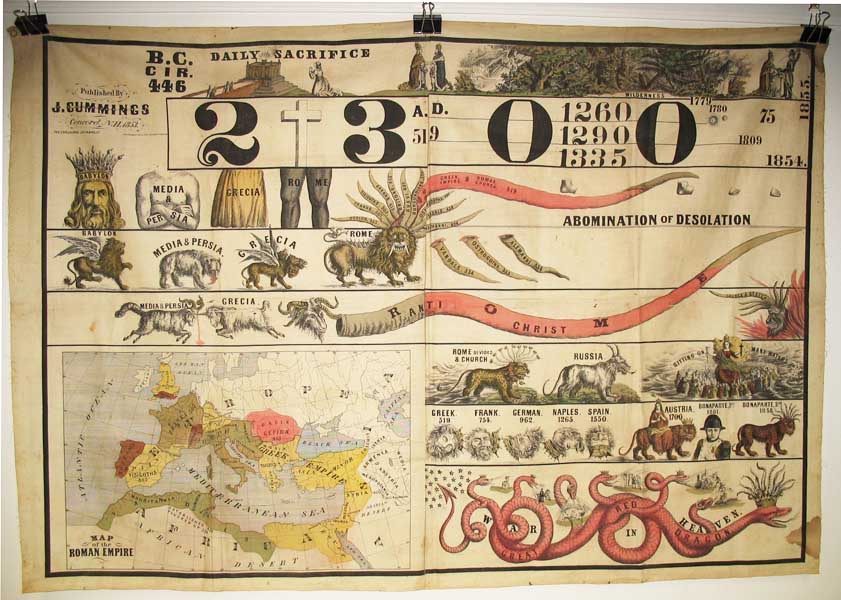
Many Millerites turned to Scripture, hoping to find an error in Miller and Snow’s calculations. One of these was Jonathan Cummings, a farmer who’d become a preacher in 1830. Cummings wrote a lengthy letter to Himes, which was published in the Advent Herald on November 2, 1852. He offered new insight on the chronology. Cummings also produced a fascinating banner-size chart (pictured below and recently sold) that identifies 1854 as the year for the Second Coming. He also printed An Explanation of the Prophetic Chart and Application of the Truth to accompany the banner.

Joseph-Cummings-Advent

While Cummings was not the only Millerite to recalculate the date of the Second Coming, his unusual chart is featured and discussed in both Cartographies of Time and the Encyclopedia of American Folk Art. The OCLC records only five institutional holdings of the banner, making it an exceptionally rare publication to be found on today’s market.

The Millerite movement certainly fueled the publication of many fascinating rare books and ephemera. Tavistock Books is always interested in acquiring items like Cummings’ chart and Williams’ broadside. Please contact us if you would like more information about what we’re looking for, or if you have an item of interest.

Share

Kate Greenaway: Legendary Illustrator of Children’s Books

Kate-Greenaway

“May Day”

One of the few artists to gain true celebrity from illustrating children’s books, Kate Greenaway was one of the most influential illustrators of her age. Greenaway, along with Randolph Caldecott and Walter Crane, revolutionized illustration. Popular in both Europe and the United States, Greenaway has remained highly sought after, even among contemporary children’s book collectors.

Greenaway’s Early Rise to Fame

Born on March 17, 1846, Greenaway was an only child. Her father was a draughtsman, while her mother was a seamstress who owned a tailoring shop. Both parents encouraged their daughter’s artwork, and in 1867 Greenaway completed her first accompanying illustrations for Infant Amusements, or How to Make a Nursery Happy by William Kingston. The following year, Greenaway began exhibiting watercolors in London’s Dudley Gallery.

Kate-Greenaway-Christmas-Card

Christmas card by Greenaway

Over the next twelve years, Greenaway would illustrate over 30 children’s picture books. She also created Christmas cards and bookplates, which were both incredibly popular. Greenaway’s singular style differed considerably from other illustrators of the day; her pictures were simple and elegant, and they captured a quiet innocence. Greenaway always depicted happy, well loved children in natural scenes, which resonated with people of all ages.

A New Venture

Kate-Greenaway-Under-Window

“Beneath the Lilies” from ‘Under the Window’

Though Greenaway gained considerable notoriety doing illustrations for other authors’ works, she also longed to write her own book. In 1879, Greenaway made her debut as an author with Under the Window. Like her illustrations, Greenaway’s verses were simple, elegant, and charming. The book was an instant success, selling approximately 150,000 copies. Both French and German editions of the book were published. Subsequent titles were equally successful, and Greenaway received a tidy sum for her works. She also published yearly almanacs from 1888 to 1897 (excepting 1896).

Greenaway’s publisher, George Routledge & Co, had earned prominence for publishing yellowbacks, that is, colorful, eye-catching and less costly, glazed-paper volumes, which, to a very large degree, helped make literature more accessible to people of more modest income levels. Famous engraver Edmund Evans, known for his significant artistic contribution to the genesis of the yellowback phenomena, used chromoxylography to reproduce the images for Greenaway’s books.

Trendsetting in Illustration–and Fashion

Likely because her mother was a seamstress, Greenaway paid particular attention to the clothing of her characters. Rather than stick to the fashion of the time, she chose instead to depict characters in clothing from the early 19th century. Though unconventional, the choice proved instrumental in influencing Victorian fashion.

As Greenaway’s books gained international renown, they also attracted the attention not only of book lovers, but also the fashionable set in London. Parents began to dress their children in outfits that could have come straight out of Greenaway’s illustrations. Liberty of London, a well known department store in Britain, even adapted her “looks” for a line of children’s clothing.

A Sterling Reputation among Artists and Collectors

Kate-Greenaway-Painting

“The Rainstorm”

While Greenaway stayed quite busy illustrating and publishing children’s books, she still found time to contribute to the art world. In 1890, she was elected to the Royal Institute of Painters in Water-colour. Greenaway’s work captured the attention of legendary figures like John Ruskin and Arsne Alexandre, and she was compared with Stothard, Reynolds, and even Botticelli.

The variety and beauty of Kate Greenaway’s work have made her a perennial favorite among collectors of children’s books. Her books, greeting cards, book plates, and other art offer limitless potential for building an interesting and dynamic collection.


Share

Happy Birthday, Washington Irving!

April 3 marks the birthday of Washington Irving, American author, historian, and diplomat. Though best known for his short stories “Legend of Sleepy Hollow” and “Rip Van Winkle,” Irving was a prolific writer who also penned several historical fiction books and biographies.

Washington-IrvingChildhood and Education

Irving was born the same week that Britain’s ceasefire ended the American Revolution, and his joyful parents decided to name their new son after George Washington. Young Irving got to meet his namesake when Washington was inaugurated president in 1789, an event that Irving would later commemorate with a watercolor painting. Irving was an unenthusiastic student; by age fourteen, he was already skipping evening classes to attend the theater. Luckily for him, his older brothers were successful merchants who would later support his budding career as a writer.

Irving began submitting pieces to the New York Morning Chronicle in 1802, when he was nineteen years old. Published under the pseudonym Jonathan Oldstyle, the articles focused on New York’s theater and social scenes. They were quite an impressive debut: Aaron Burr, then the magazine’s co-publisher, snipped several of the articles to send to his daughter Theodosia. And Charles Brockden Brown journeyed from Philadelphia to New York to convince Oldstyle to write for Brown’s literary magazine.

Shortly thereafter his brothers sent him to Europe–only to be disappointed that Irving skipped all the “high spots.” He concentrated instead on accumulating an impressive social circle. The charismatic young man soon earned a reputation for congeniality and was a much sought after dinner guest. Irving also forged a close friendship with Washington Allston, who almost convinced him to give up writing for a career as a painter.

Authorial Success

Irving returned to New York, where he founded “The Lads of Kilkenny,” a group of young literati from the city. In 1807, he founded the literary magazine Salmagundi with his brother William and fellow Lad James Kirke Paulding. Even though Irving again wrote under pseudonyms, the magazine helped spread his name outside of New York. And it was in the November 11, 1807 issue of Salmagundi that Irving referred to New York as “Gotham.” Anglo-Saxon for “Goat’s Town,” the nickname wasn’t intended to be flattering. But for some reason it stuck, and Gotham has been used to refer to New York ever since.

Two years later, Irving perpetrated what was one of the greatest literary hoaxes of his time. He placed a series of missing person advertisements in the local papers, asking for information about the whereabouts of historian Diedrich Knickerbocker. Irving also fabricated a notice from a hotel proprietor, threatening to publish the manuscript that Knickerbocker left behind in the hotel room, if the historian failed to surface and pay his bill. The ploy was so effective that New York officials actually considered offering a reward for Knickerbocker’s safe return.

Irving published A History of New-York from the Beginning of the World to the End of the Dutch Dynasty by Diedrich Knickerbocker on December 6, 1809. The book was an instant success. “It took with the public and gave me celebrity, as an original work was something remarkable uncommon in America,” Irving commented. Over time the name “Knickerbocker” became a name for New Yorkers in general; it has since been shortened to “Knicks,” for which the city’s basketball franchise is named.

Financial Struggles and International Copyright Battles

Despite Irving’s fame, he still struggled financially. For a time Irving was editor of Analectic Magazine, where he wrote biographies of naval war heroes. He was among the first to reprint Francis Scott Key’s “Defense of Fort McHenry,” now famous as “The Star-Spangled Banner.” Then the War of 1812 destroyed his family’s finances, and he went to England to keep the family trade business afloat. Irving would remain in Europe for the next seventeen years.

Irving declared bankruptcy and had trouble finding a job. In the meantime, he kept writing at a furious pace. In summer of 1817, he penned “Rip Van Winkle” during an overnight stay with his sister and her husband in Birmingham. By spring of 1819, Irving had sent a set of short stories to his brother Ebenezer. These would become the first installment of The Sketchbook of Geoffrey Crayon, Gent. It met with instant success, and Irving published seven more installments in New York. The stories were reprinted in two volumes in London.

Irving’s bi-continental reputation introduced a significant challenge: literary bootleggers, who would republish his works without permission, particularly in England. Like Charles Dickens, Irving spoke out about the need for international copyright law, but made little progress. Dickens and Irving corresponded on the topic, and Dickens would stay with Irving during his 1842 American tour. But they still grappled with international copyright issues on both sides of the pond. Irving’s stopgap solution: he hired London publisher John Murray to distribute his books in England and made sure to release all his works concurrently in both the US and Britain.

Travel to Spain

Thanks to an invitation from Alexander Hill Everett, the American Minister to Spain, Irving found himself in Spain in 1826. Many manuscripts regarding the Spanish conquests in America had recently gone public, and soon Irving was working on multiple books simultaneously. He wrote The Life and Voyages of Christopher Columbus (1828; his first work not published using a pseudonym); Chronicles of the Conquest of Granada (1829); and Voyages and Discoveries of the Companions of Columbus (1831). These books were historical fiction, rather than biography or history. Irving made one mistake; he helped to perpetuate the myth that scholars of the Middle Ages thought the world was flat. But he wasn’t alone; other authors who promoted this misconception were John William Draper and Andrew Dickson White.

Irving soon moved into the Alhambra, where he expected to finish several writing projects. Instead he was appointed to the American Legation in London. He returned to England to serve as an aide-de-campe to American Minister Louis McLane. Irving helped to negotiate a trade agreement between the US and the British West Indies. He resigned from the post in 1832, returning to the States to publish Tales of the Alhambra.

Western Exploration

That same year, Irving accompanied US Commissioners for Indian Affairs Henry Leavitt Ellsworth and Charles la Trobe, along with his friend Count Albert-Alexandre de Pourtales to survey Indian Territory. The expedition inspired A Tour of the Prairies. Irving also met fur magnate John Jacob Astor during the trip, and Astor convinced Irving to write his biography. Astoria was published in February 1836. Meanwhile Irving encountered Benjamin Bonneville and, fascinated with his tales, convinced Bonneville to sell his maps and notes for $1,000. Irving used these as the basis for The Adventures of Captain Bonneville (1837).

Irving undertook these works, often called his Western series, for a few reasons. First, he was broke. Second, he’d been criticized for becoming a more European writer. Both James Fenimore Cooper and Philip Freneau thought he’d turned his back on America. Fortunately for Irving, the books were received well in the States, though predictably less so in Britain.

After a stint as the American Minister to Spain, Irving returned to his Tarrytown, NY property, called Sunnyside, in 1846. He worked on the “Author’s Revised Edition” of his works for publisher George Palmer Putnam. Irving also turned his attention to biographies, writing about Oliver Goldsmith, the Islamic prophet Muhammed, and George Washington. His biography of Washington was released in five volumes, and Irving died within months of its completion.

Share