Category Archives: History

Louisa May Alcott: Abolitionist, Suffragette, and Mercenary

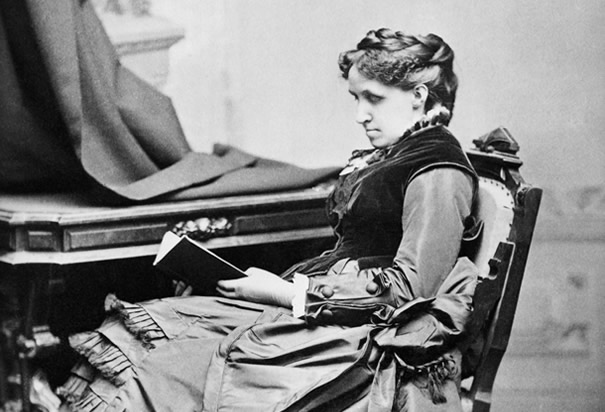
Louisa_May_AlcottWhen Louisa May Alcott published Little Women in 1868, she immediately found the fame and fortune she’d sought since childhood. The legendary author is best remembered for this and other children’s books, but her true authorial passion was for writing cheap thrillers. Unbeknownst to most of her adoring readers, Alcott undertook her now classic novels only as a means to support her family. Indeed, Alcott has proven a much more complex individual than most of us would guess.

A Childhood of Privation

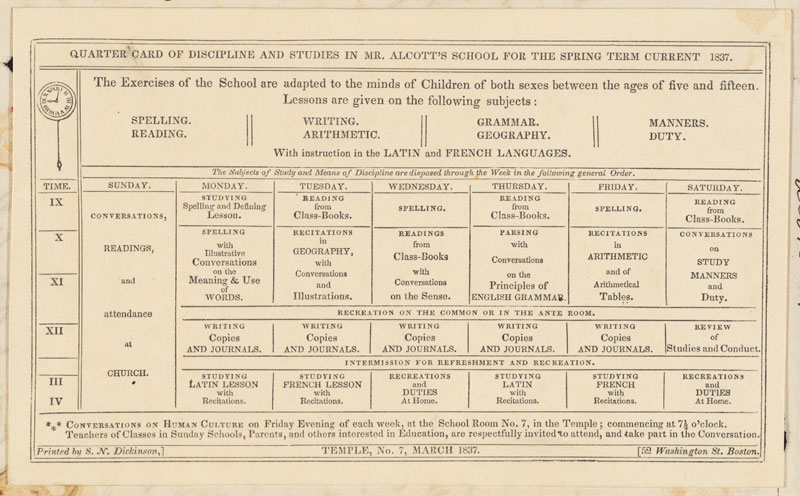
Born on November 29, 1832, Louisa May Alcott was the second of four daughters. Her mother, Abigail May Alcott, hailed from a distinguished Boston family. Her father, Amos Bronson Alcott, was a farmer who’d educated himself in philosophy. The members of the Alcott family were quite progressive for their time. In 1834, Bronson set up a school with a controversial co-ed curriculum. He managed to find students, but the community was soon turned off by his disciplinary tactics and frank discussion of religion. The final straw was when Bronson refused to dismiss a black student he’d admitted. White parents withdrew their children from the school, and Bronson was forced to shut down.

Temple_School_Bronson_Alcott

The progressive curriculum at Bronson Alcott’s Temple School

The family remained ardent abolitionists, participating in the Underground Railroad. When she was seven years old, Alcott opened an unused stove to discover a former slave hiding inside. The man was initially terrified that he’d been discovered, just as Alcott was frightened to find a man in the oven. Alcott taught the man to write his letters. This experience and others would eventually compel Alcott to serve in the Civil War so that she could contribute to ending slavery.

Among the family’s closest friends were Ralph Waldo Emerson and Henry David Thoreau. Alcott grew up with their mentorship, studying in Emerson’s library and getting botany lessons from Thoreau. Despite this rich intellectual life, the Alcotts were quite poor. Bronson worked hard, but didn’t pay much attention to actually earning a living. His family often subsisted on nothing but bread and water, and they frequently moved–by the time they settled at Orchard House in 1858, the family had had around thirty temporary homes, and they could afford the home only with the support of relatives and Emerson, who wished Alcott’s sister Beth to pass her last days in comfort and security.

Fruitlands_Alcott_Lane

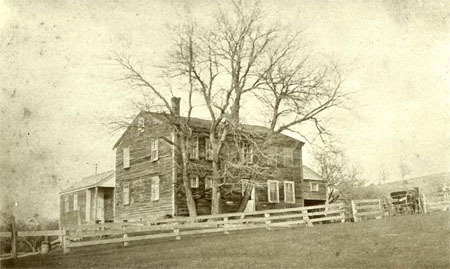
Fruitlands was strictly vegetarian. Residents were not even supposed to till the soil, as they might injure a worm.

When Alcott was ten years old, the family undertook a radical experiment. Bronson co-founded the utopian community of Fruitlands with English reformer Charles Lane. Their goal was to survive without animal products or any commodities that had been generated by slavery, including coffee and tea. After only six months, the project had obviously failed. The Alcotts were completely destitute, and Bronson was on the brink of suicide. Alcott resolved that she would one day be rich and famous. At first she wanted to be an actress, and she soon began writing, directing, and acting in plays.

Early Financial Responsibility

Alcott began keeping a journal when she was eight years old, and she wrote her first novel at age seventeen. Heavily influenced by Charlotte Bronte’s Jane Eyre, the novel would not be discovered and published until over a century later. Though Alcott wrote prolifically in her off time, she also worked hard as a teenager to help support her family. She had a series of jobs: teacher, governess, laundress, and even household servant. Her mother took work with an unemployment agency, and the family encountered women who had to take the roughest jobs. Moved by the plight of these illiterate immigrant and African American women, Alcott, her mother, and her sister Anna offered free reading and writing instruction.

Bronson, on the other hand, did little to support the family. He embarked on a long speaking tour–only to return with a single dollar in his pocket. The family, it seemed, would never escape poverty. The family’s dire straits gave Alcott a unique vantage point as a female author; most women writers of the era came from much more privileged backgrounds. It also hardened Alcott’s resolve “to turn my brains into money by stories.” In her early twenties, Alcott began writing romances for local papers. She rapidly learned how to tailor her writing for different markets and to experiment with different genres.

A Scandalous Little Writing Habit

Alcott also knew that writing such sensational stories would tarnish her own reputation, and she was not confident in the quality of her writing. She wrote these stories either anonymously or pseudonymously, thus protecting her own reputation. Harriet Reisen, author of Louisa May Alcott: The Woman Behind ‘Little Women,’ noted in an interview with NPR, “Louisa made herself a brand. She suppressed the fact that she had written pulp fiction that included stories about spies and transvestites and drug takers.”

It wasn’t until after her death that the full breadth of Alcott’s work was revealed. But Alcott found writing such potboilers quite thrilling, admitting that when she wrote them she slipped into a kind of “vortex” where time, food, and sleep simply didn’t exist. Scholars hypothesize that these stories were also an excellent outlet for Alcott, who never married and spent much time worrying about her family’s well-being.

Heeding the Call to Duty

Then the Civil War broke out in 1861. Alcott reported to the Concord town hall, where she sewed uniforms and made bandages. As soon as she turned thirty, Alcott entreated family friend Dorothea Dix to let her become a field nurse even though she wasn’t married. Dix relented, and Alcott went to Washington, DC, where she ministered to soldiers after the Battle of Fredricksburg. Alcott fell prey to pneumonia and typhoid fever, cutting short her tenure as a nurse. Her treatment included doses of calomel, which contained mercury. It left Alcott weak and sickly for the rest of her life.

Unable to continue serving as a nurse, Alcott decided to support the war effort through her writing. She adapted her letters home into Hospital Sketches, and the book immediately became a bestseller. It represented a dramatic departure from Alcott’s other authorial endeavors–and it was published under her real name. The book’s success renewed Alcott’s confidence and resulted in new interest in her writing.

A Parisian Affair

Alcott had always wanted to travel, and in 1866, she had the opportunity to travel to Europe as a companion to an invalid. In Switzerland, she met Ladisas Wisniewski, a Polish freedom fighter who was thirteen years her junior. The pair managed to overcome the language barrier, passing a fortnight together in Paris. Cavorting with a twenty-year-old man without a chaperone certainly raised a few eyebrows, but Alcott dismissed the allegations of impropriety, pointing out that she was 33 years old.

Alcott affectionately called Wisniewski “Laddie,” and he would be one of the inspirations for the character of Laurie in Little Women. The other was Alf Whitman, who was also much younger than Alcott. The two met at the Concord Dramatic Union (now the Concord Players), where they played Dolphus and Sophy Tetterby in Charles Dickens’ Haunted Man. Alcott doted on Whitman, and the two remained friends long after Whitman had married and had children. Alcott wrote to Whitman, “I put you in my story as one of the best and dearest lads I ever knew. ‘Laurie’ is you and my Polish boy [jointly].”

Challenging Gender Stereotypes

Though Alcott would have multiple ambiguous relationships with younger men, she claimed never to have loved them. In an 1883 interview with Louise Chandler Moulton, Alcott said, “I am more than half persuaded that I am a man’s soul, put by some freak of nature into a woman’s body…because I have fallen in love in my life with so many pretty girls and never once the least with any man.”

Alcott’s choice to remain a spinster was an unusual one for the time, even for a woman who had become a caregiver to her family. Yet Alcott had seen how dependent her mother had been on her father–and how poorly her father had provided for the family. “I’d rather be a spinster and paddle my own canoe,” she once wrote. That same sense of independence drove Alcott to campaign tirelessly for women’s suffrage. She attended the Woman’s Congress of 1875 in Syracuse, New York. In 1879, Alcott successfully campaigned for women’s suffrage in the election of the Concord school committee. The men of the town boycotted the vote, and Alcott was one of twenty women to cast a ballot.

Resigned to Writing “Moral Pap”

Alcott returned from Europe to find her family, predictably, in debt. Now able to “earn more from my pen than from my needle,” Alcott decided to write her way into fortune. She wrote in her journal in May, “Father saw Mr. Niles [of Roberts Brothers publishing house] about a fairy book. Mr. N wants a girls’ story, and I began Little Women. So I plod away, though I don’t enjoy this kind of thing. I never liked girls or knew many, except my sisters, but our queer plays and experiences may prove interesting.”

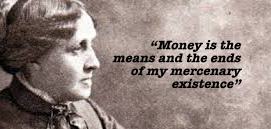
Alcott went about Little Women methodically over the course of a few weeks, with none of the joy she found in her thrillers. The first edition was published in 1868, when Alcott was 35 years old. It met with instant success, and Alcott’s fate as a writer was essentially sealed; she would build her career writing what she considered “moral pap for the young” because that’s what would support her family. Though Alcott was not upset to be “the goose that laid the golden egg,” she took a rather cynical view of her writing: “Money is the means and the ends of my mercenary existence.”

Alcott_QuoteBecause Little Women was so obviously based on Alcott’s own childhood, her family gained celebrity along with her. Bronson was quite fond of the attention. Now wealthy and widowed, he sported fine clothes and toured the country as “The Father of the Little Women.” He started publishing (very verbose) volumes of philosophy. Alcott built him the Concord School of Philosophy, so that he could again enjoy lecturing to an audience. His exploits were curtailed by a stroke, and he was forced to retire to a beautiful home in Louisburg Square, provided by his dutiful daughter, who visited almost every day. Alcott, however, wanted nothing to do with fame–perhaps because she saw so little merit in the books that had made her famous. Tourists shamelessly came calling at Orchard House, and Alcott would often pretend to be her own maid to avoid their attentions.

Then tragedy struck the Alcott family yet again. Alcott’s sister Anna Alcott Pratt had married into a wealthy family. While she was in Europe, her husband died unexpectedly, leaving her with two small children and no income. To ensure their financial comfort, Alcott again put pen to paper, this time writing Little Men. She assigned the royalties to her nephews, who would live with her until she passed away ten years later. When her sister May died in childbirth a few years later, Alcott took custody of the infant, who was named after her. Nicknamed “Lulu,” the child would call Alcott “Mother” and live with her until Alcott’s death.

When Alcott’s own health began to fail, she sought both traditional treatment and explored alternative medicine. In 1888, she went to a Roxbury convalescent home, convinced that proper rest would extend her longevity. That March, she visited her father for what she knew would be the last time. He passed away on March 4, 1888, and Alcott followed two days later.

Share

Thomas Dorr’s Treasonous Stand for Voting Rights

Rhode_Island_Light_Infantry

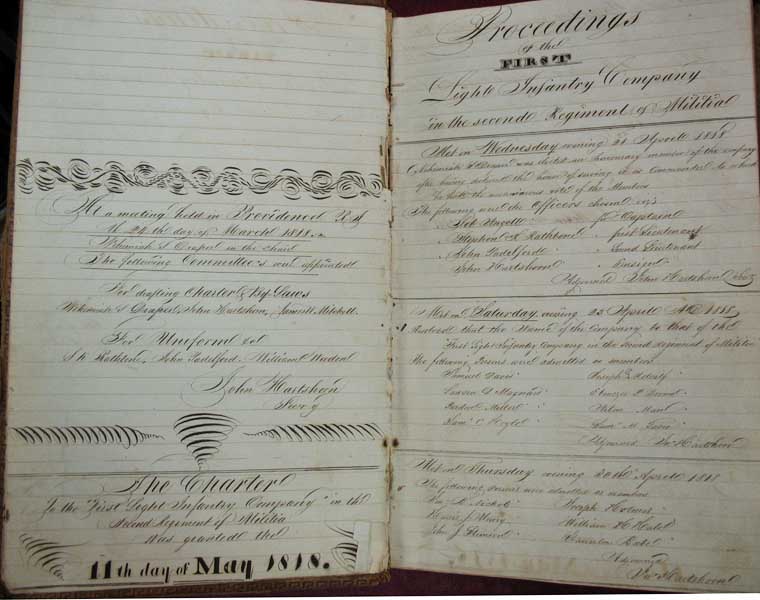
The Rhode Island First Light Infantry Company was formed in 1818 as a state militia company based in Providence. Affiliated with the Second Regiment of the Rhode Island militia, it saw no active duty. Indeed, for the majority of its history the company’s activities were more like those of a social club than of a militia–with a notable exception. The company helped to quell the Dorr Rebellion, even though some of its members actually fought alongside the rebels. Led by Thomas Wilson Dorr, the rebels sought to extend suffrage to the working class. Although Dorr was eventually convicted of treason, his ideas were influential enough that Rhode Island finally revised its archaic voting requirements.

A State Ripe for Revolution

In 1833, Rhode Island’s voting regulations were over 200 years old. Thus the only people who could vote were white, natural born males who owned land. But Rhode Island’s demographics had shifted; the population had grown, but the number of landowners had increased only by a small percentage. Self-educated carpenter Seth Luther was among the first to protest the old voting laws. His “Address on the Right of Free Suffrage” (1833) pointed out that 12,000 working people were at the mercy of Rhode Island’s 5,000 landowners, whom he called “mushroom lordlings, sprigs of nobility…[and] small potato aristocrats.” Luther urged his fellow citizens to stop cooperating with the government, to refuse to pay taxes and serve in the militia.

Peoples_Ticket_Dorr

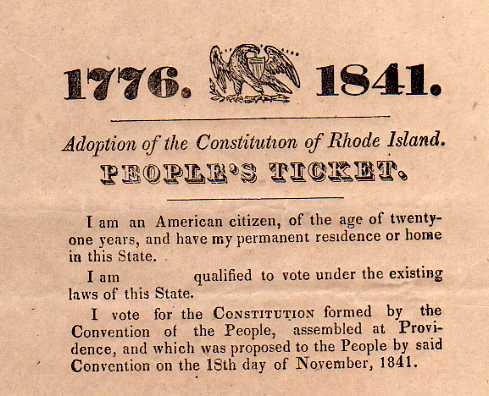
The People’s ticket was designed to connect the Dorr Rebellion with the American Revolution.

As support for voting reform grew, a somewhat unlikely champion for the cause emerged. Thomas Wilson Dorr was an attorney who hailed from a relatively wealthy family. Dorr served in the Rhode Island General Assembly, and in 1834 he attended a convention at Providence to discuss the issue of universal suffrage (then defined as “voting rights for all males.” But the legislature failed to pass any reforms. By 1841, Rhode Island one of only a few states that hadn’t adopted universal suffrage for white males. it was also the only state that had not adopted its own written constitution. That year the Rhode Island Suffrage Association was founded, and the organization sponsored a demonstration on the streets of Providence.

That year, both the Dorrites and the conservatives drew up their own constitutions. The conservative constitution maintained the same voting requirements as the 1663 charter. Meanwhile, at the “People’s Convention,” Dorr and his faction drew up a constitution that permitted all white males to vote. Dorr’s version got approval in referendum, but that was ruled illegal since it hadn’t been called by the government. The government’s constitution was defeated in a separate referendum. It seemed that Rhode Island had reached a stalemate. The Dorrites then decided to put their constitution to a vote. About 14,000 people voted for it, including 5,000 landowners; it won the majority even among only those who were currently allowed to vote. Although the vote was illegal, it did show the government that its citizens supported universal suffrage.

Thomas_Wilson_Dorr

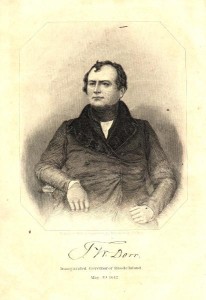
Dorr’s gubernatorial portrait

In 1842, both factions went so far as to hold their own elections, and two separate governments emerged. The conservatives were based in Newport, and the Dorrites established themselves in Providence. Dorr ran for governor unopposed and, with 6,000 votes, was elected in April 1842. Obviously this election was also illegal, and Rhode Island’s rightful governor petitioned President Tyler to intercede. He invoked a clause in the US Constitution that permitted the federal government to provide troops to control local rebellions at the request of the state government.

Undone by Racism

Broadside_Dorr_Rebellion

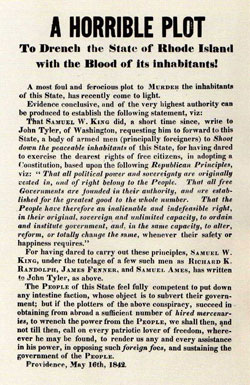
This broadside was published only one day before Dorr staged his rebellion.

Undeterred, the Dorittes held an inauguration ball for Dorr on May 3, 1843. The parade included not only local workers, but even members of the local militia! The parade marched through the streets of Providence. Shortly thereafter, the People’s legislature convened. Dorr’s next move was ill calculated. With the support of many local militia members, Dorr staged an attack on the state arsenal. But it ended quickly and disastrously when a cannon misfired. The government immediately ordered Dorr’s arrest on charges of treason, and Dorr was forced to flee Rhode Island.

And the People’s party had made another terrible move; despite the protests of Dorr and other members, their constitution extended voting rights only to white males. The Rhode Island government used this to its advantage, promising that any new voting legislation would allow blacks to vote. Soon black men were volunteering to join the Law and Order militia, which had been organized to quell the riot and defeat the faction that would deny them the right to vote.

When Dorr came back to Rhode Island, he found that although he had several hundred men ready to fight for his cause, they were far outnumbered by the Law and Order militia. Dorr went back into hiding to regroup. Martial law was declared in Rhode Island. At least 100 rebel soldiers were captured and taken to prison in Providence–after they were put on display, of course.

 Rebellion Leads to Reform

Though it appeared that the rebellion had been quashed, legislators now fully appreciated the support for amending suffrage requirements. They drafted a new constitution. The vote was extended to include not only property owners, but also those who paid a one-dollar poll tax. Naturalized citizens could vote if they held at least $134 in real estate. Then elections were held in 1843. The Law and Order group still met opposition from Dorrites, but used intimidation to get people to vote. The conservatives still lost in industrial areas, but got the votes in more rural zones. Ultimately the Law and Order group won the major offices.

That year Dorr returned to Rhode Island and was arrested on the street in Providence. He soon went to trial for treason, and the judge instructed the jury to put aside all political arguments and to ignore Dorr’s motives. They were to reach a decision only on specific, overt acts. Dorr had, of course, admitted to all his actions, so he was speedily convicted. The judge sentenced him to life in prison and hard labor. But Dorr would spend only twenty months in jail; the new Rhode Island governor thought it wise to pardon him, rather than let him languish in prison as a martyr.

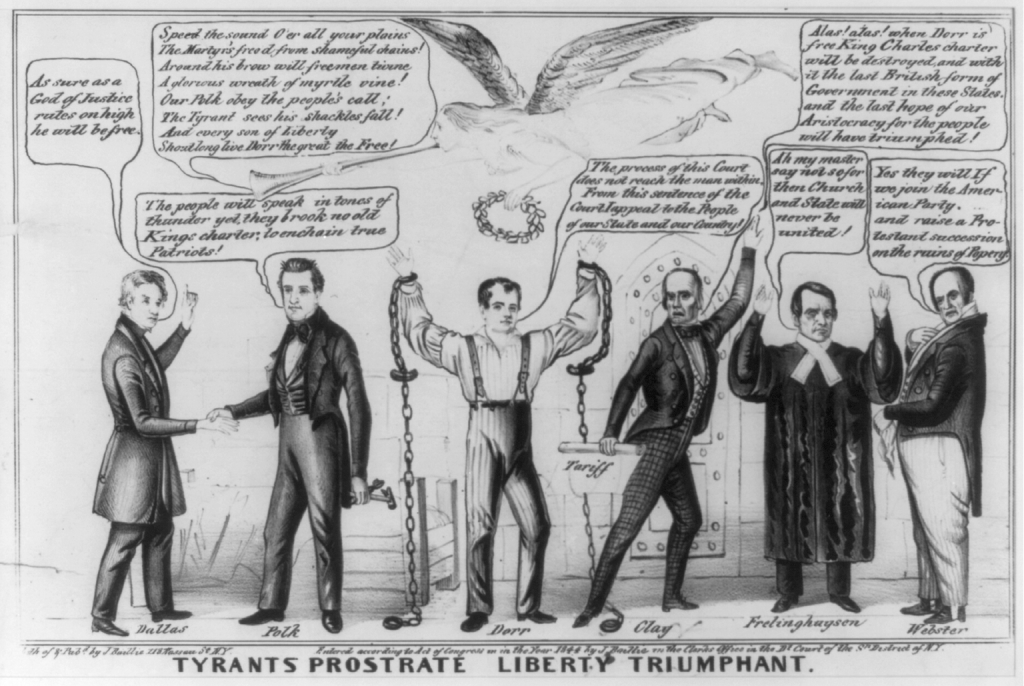
Polemic_Dorrite_cause_1844

The Dorrite cause still had support even after the rebellion had been quashed, as evidenced in this 1844 polemic.

A Last Stand at the Supreme Court

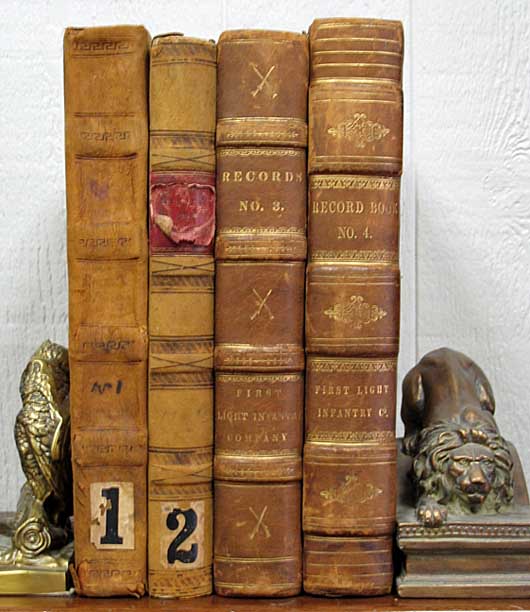
Rhode_Island_Light_Infantry_VolumesThough the Dorrites had been defeated, they remained in public consciousness for many more years, most notably through a landmark Supreme Court case. In Luther v Bordn (1849), Luther made a trespassing suit against the Law and Order militia. He alleged that the People’s government was truly a legitimate, elected government in 1842. Daniel Webster defended the militia, arguing that granting such legitimacy jeopardized the very existence of government and could lead to total anarchy. The Supreme Court ruled that it would defer to the President and Congress in matters of war and revolution, a conservative stance.

This period was certainly a dramatic one in Rhode Island history, particularly for members of the local militia. The company journals of the Rhode Island Infantry Company, which we’re proud to offer, capture these events as they were experienced by militia members at the time. Handwritten by a series of members, the four-volume set of records stretches from 1818 to 1873, providing exceptional context for quite a long era in American and local history.

Related Posts:
Rare Books in History: The Revolutionary War
Charles Dickens the Copyright Confederate
The Millerites and the Great Disappointment

Thanks for reading! Love our blog? Subscribe via email (right sidebar) or sign up for our newsletter--you’ll never miss a post.

Share

Charles Dickens the Copyright Confederate

In 1854, Sigmund H Goetzel arrived in Mobile, Alabama and immediately got to work setting up a bookstore. A German immigrant who’d been naturalized as a US citizen, Goetzel was intent to establish himself as a prominent member of the city and a vital member of the publishing community. During the Civil War, Goetzel’s publishing house would make waves regarding international copyright law–an issue near and dear to Charles Dickens’ heart. That copyright policy likely contributed to Dickens’ decision to support the South during the Civil War.

An Enterprising Publisher

Goetzel set up shop with silent partner Bernard L Tine, who owned a local clothing store. They called their outfit SH Goetzel & Company. Goetzel would drop the “& Company” once he repaid his debt to Tine in 1863, five years after their partnership had actually expired. Though he remained in the business only eight years, Goetzel proved quite industrious, publishing not only maps and broadsides, but also pamphlets and a number of books. Although many of the books were simply reprints of English or northern titles, a significant number were also original titles.

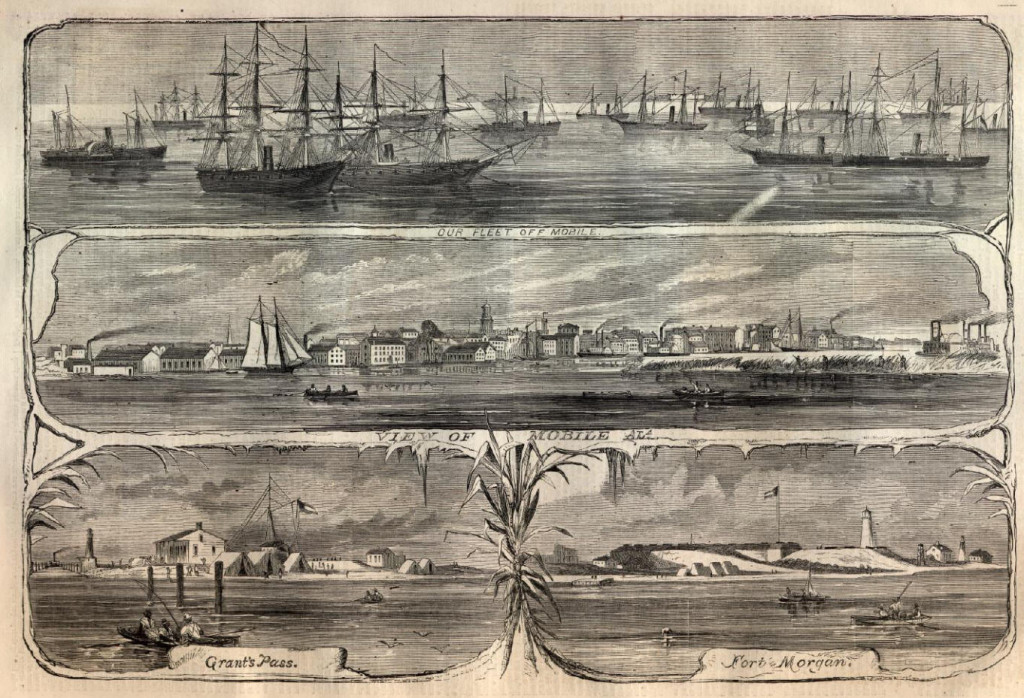
Mobile-Harpers_Weekly

Confederate-era sketches of Mobile, Alabama, from Harpers Weekly

By 1860, the publishing industry in Mobile had grown by leaps and bounds, probably due to increased wealth and an influx of residents. The city was prosperous and cosmopolitan; approximately 50% of its white, male residents were foreign born. Meanwhile in the late 1850’s, Goetzel had consistently garnered praise for the high quality of his publications. SH Goetzel & Company was a thriving part of the Cotton City.

The onset of the Civil War in 1861, however, presented new challenges. Materials, particularly paper and ink, became increasingly difficult to procure from the North, and Union blockades prevented the import of materials from Europe. Goetzel’s main competitor, William Strickland & Company, was driven out of business due to accusations that the firm’s principles were “incendiaries,” that is, abolitionists. By the middle of the war, publishers and printers had either shuttered their shops, or stretched the limits of their ingenuity; thus, wallpaper became a common book covering material when paper and other materials ran out.

Copyright Controversy

Yet Goetzel persevered, anxious to prove to the world that the Southern publishing world would not be undone. His first endeavor was a new edition of William J Hardee’s Hardeen’s Revised and Improved Infantry and Rifle Tactics, which Hardee had revised at the request of Jefferson Davis. Goetzel soon found himself embroiled in a copyright lawsuit, as the work was immediately pirated both in the North and the South. He began printing “THE ONLY COPYRIGHTED EDITION” directly over the title.

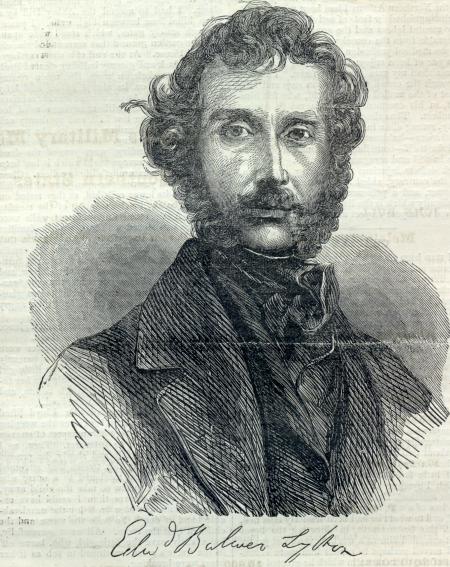
Edward_Bulwer_LyttonThe following year, Goetzel announced that the firm would issue an edition of Sir Edward Bulwer-Lytton’s A Strange Story. Scheduled to start in time for Christmas and New Years, it was issued in numbers. Goetzel published the numbers with such astonishing rapidity, that editors at the Mobile Advertiser and Register noted that the printer’s resources “exceeded expectations.”

By this time, the Confederate States of America had already established a strong stance on international copyright. On May 21, 1861, the CSA Copyright Act was ratified, granting reciprocal copyright and royalties to foreign-born authors. The legislation was a calculated move, designed to appeal particularly to the British, French, and Germans. And it did garner goodwill tin Europe, particularly in England, where Charles Dickens and other authors had been proponents of copyright law reform for decades.

Dickens_Great_Expectations_Confederate_EditionThus Goetzel had indeed written to Bulwer-Lytton to obtain permission to print A Strange Story and offer him a payment of $1,000. But thanks to the blockade, the letter never arrived. Bulwer-Lytton announced that the only royalties he’d received had come from his New York City Publisher, Harper & Company. Goetzel wrote a letter of self-defense to the editor of the Mobile Advertiser and Register, arguing that he’d sent Bulwer-Lytton payment and had only recently received confirmation of its arrival.

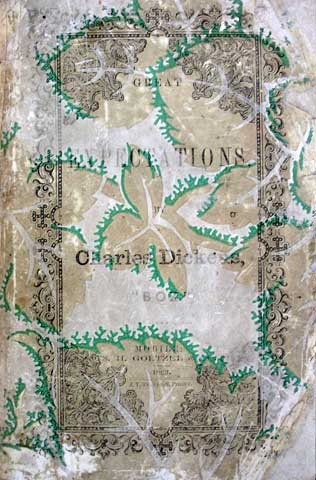
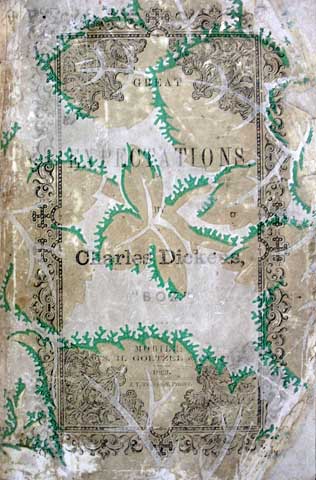
These issues did little to slow Goetzel’s prodigious output. In 1863–the height of the war–Goetzel published five new book-length titles, along with a map, three pamphlets, and a handful of reprints of earlier titles. One of these was an edition of Charles Dickens’ Great Expectations, which was bound in wallpaper. It’s now an incredibly scarce volume. The following year, Goetzel executed six new titles, each about 320 pages.

Dickens’ Sympathies Shift to the Confederates

Dickens_American_NotesThe Civil War had aroused vehement debate in England. Charles Dickens, then the editor of the popular periodical All the Year Round, simply couldn’t remain neutral. Furthermore, Dickens had already taken a decidedly anti-American stance following the debacle of his first visit there. Though American Notes only cast aspersions on the American institution of slavery and the press, Dickens was much more aggressive in Martin Chuzzlewit. The works only served to alienate him further from his American audience.

Dickens personally published on the war in All the Year Round only once, on March 1, 1862. He simply republished a number of controversial passages from American Notes with the following note: “The foregoing was written in the year eighteen hundred forty-two. It rests with the reader to decide whether it has received any confirmation, or assumed any color of truth, in or about the year eighteen hundred sixty-two.” The comment implies disdain for both the North and the South. But it also served to vindicate Dickens’ original (and somewhat unpopular) stance in American Notes.

But All the Year Round saw at least 25 pieces about the Civil War. Ever the attentive editor, Dickens carefully supervised every aspect of his publications. That extended to the publication’s political stances which we know thanks to his public announcement following the mid-war printing of Charles Reade’s serialized novel Very Hard Cash, which attacked the Commissioners on Lunacy (which included Dickens’ dear friend John Forster). Dickens said that he took responsibility for the political stances presented in All the Year Round–with the exception only of noted authors’ serial novels that appeared in the periodical.

Appealing to His Readership

Dickens relied on All the Year Round for a substantial portion of his income and had to consider his readers’ interests to ensure sales. Therefore he leaned toward narratives and “true accounts” of the Civil War, rather than news and political commentary. On December 29, 1860, a summary review of Frederick L Olmstead’s A Journey into the Back Country appeared. The book chronicled the most horrifying aspects of slavery in the Lower Mississippi Valley, the least cultured area of the South. The review descried the South’s purported intention to reopen the slave trade.

An article published on July 13, 1861 denounced the South for commissioning privateers to harass British ships delivering goods to the North. Such interference with foreign trade was simply a barbarous tactic. Then on October 26, 1861, a story about an English doctor who treats a runaway slave appeared. It includes all the usual elements: bloodhounds, sketchy Southerners, and a doctor who notes how “wonderfully” the Southerners’ minds have been warped by slavery. A West Virginian character in the story opines, “I only wish we could have a hand on them philanthropists (abolitionists)…A load of brushwood and a lucifer-match will be about their mark, I calculate.”

Spence the English Confederate

By the end of the year, however, the editorial bent of All the Year Round had become decidedly pro-Southern. What happened to change Dickens’ mind? First, he read James Spence’s The American Union, Its Effects on National Character and Policy with an Inquiry into Secession as a Constitutional Right and the Causes of Disruption. Dickens’ copy is inscribed by Spence himself, and the work would deeply impact Dickens’ view of the war.

Historian of the South Frank Lawrence called Spence’s book “the most effective propaganda of all by either native or Confederate agent.” Spence also became active in agitating for the South among England’s working class. He would organize meetings and rallies to counter those held by the Foster-Bright abolitionist groups. So Dickens wasn’t the only British citizen swayed by Spence; he was simply one of multitudes–but perhaps the only one with such a public platform for endorsing Spence’s views.

Dickens was so anxious to review Spence’s book in All the Year Round, he mentioned it more than once in his letters to his assistant editor. After it finally appeared (in not one, but two issues), he was dissatisfied with it. Written by Henry Morley, the review harshly criticizes the Northern cause and contends that the United States is too large to govern honestly and effectively.

A Change of Heart

Dickens was so taken with Spence’s arguments that he espoused them almost unquestioningly. In a letter to his Swiss friend WF de Cerjat on March 16, 1862, Dickens outlines his own views on the war…which are almost entirely borrowed from Spence. He argued that abolition was merely a pretext for other economic aims and “in reality [had] nothing on earth to do” with the Northern war effort. He went on to say, “Any reasonable creature may know, if willing, that the North hates the Negro, and that until it was convenient to make a pretense that sympathy for him was the cause of the war, it hated the abolitionists and derided them up hill and down dale.”

Spence grounds his arguments in the tariff debated that had gripped America even before the South had seceded from the Union. The Morrill tariff, passed on March 2, 1861, replaced the Tariff of 1857, which strongly favored Southerners. The Morill tariff, in contrast, gave preference to industrial workers and placed the South at a considerable disadvantage (hardly a surprise, given that by the time of its ratification, the Southern representatives had left Congress). It also impeded trade with Europe. Two subsequent tariffs during the Civil War helped raise necessary funds for the war.

While Dickens openly adopted Spence’s views, there’s another reason he may have shifted his allegiance: international copyright law. After all, his perspective shifted after the CSA’s Copyright Act had been ratified. And Dickens had long advocated stronger international copyright law; indeed, his first visit to the United States was spoiled because he refused to dismount his copyright law hobby horse and act graciously toward his American hosts and interlocutors. Instead, Dickens pushed his agenda at every opportunity, even using a dinner in his honor as a platform to galvanize fellow authors to his cause.

This issue would have been an emotional one for Dickens, but not one that would garner him much empathy from readers. Better, then, to repeat other, more popular arguments. Thus, it’s quite possible that Dickens privately sympathized with the South because the South seemed to sympathize with his own cause. Whatever his motives, the Confederate imprint of Great Expectations remains a work that will undoubtedly continue to evoke questions and enrapture collectors.

Related Posts:
A Collection of Confederate Literature
How the “Dickens Controversy” Changed American Publishing
Charles Dickens Does Boston
The Two Endings of Charles Dickens’ ‘Great Expectations’

Thanks for reading! Love our blog? Subscribe via email (right sidebar) or sign up for our newsletter--you’ll never miss a post.
Share

A Collection of Confederate Literature

On March 11, 1861, delegates from Alabama, Florida, Georgia, Louisiana, South Carolina, and Texas gathered in Montgomery, Alabama. Their purpose: to ratify the Constitution of the Confederate States of America. The document was–not unsurprisingly–similar to the US Constitution, even using some of the same language.

But the Confederate Constitution gave the states much more autonomy and power than the central government. For example, while a presidential item veto existed, states had to consent to the use of any funds or resources by the federal government. The Confederate Constitution also set six-year terms for the president and the vice presidents, and precluded the president from serving two consecutive terms. And slavery was “recognized and protected” in all slave states and territories, while foreign slave trade remained illegal.

Both France and Great Britain considered entering the fray on the side of the Confederates. But they never acknowledged the Confederate States of America as its own independent, autonomous entity, and the Confederate States crumbled in April 1865.

A Selection of Confederate Literature

For collectors of Americana, the Civil War is a perennially popular area of focus. Within that specialization, the depth and breadth of material available makes it possible to further specialize in a sub-section of Civil War literature. The works and records of the Confederacy offer a fascinating, enlightening, and sobering look into one of the bloodiest periods in American history. Even this sub-specialty has incredible scope, stretching to include works written both before and long after the war itself.

The Italian Bride

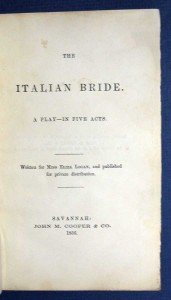
Levy-Italian_brideSamuel Yates Levy wrote this play in honor of Eliza Logan and had it printed for private distribution in 1856. Logan was a popular actress in the mid-nineteenth century, and her father, Cornelius Logan, acted as her manager until his death in 1853. Though Logan was born in Philadelphia, she made her name in the antebellum South, with many lucrative engagements in cities like Savannah. Meanwhile, Levy would go on to become a Confederate officer during the Civil War, slightly unusual because he was Jewish. Research indicates that this volume’s recipient was a fellow officer from Georgia. Details>> 

Great Expectations

Dickens_Great_Expectations_Confederate_EditionDickens’ first visit to America ended less than well. The legendary author returned to Britain and published two American Notes, which criticized the United States, most notably for permitting the institution of slavery. (He further alienated American readers with Martin Chuzzlewit.) Dickens’ strong opposition to slavery and his keen sensitivity to social injustice made him an unlikely ally of the Confederacy. But after a close reading of James Spence, who was not only a writer for the London Times, but also a pro-South merchant, Dickens revised his opinion. In All the Year Round, he spoke out in defense of the South on the subject of the Morrill Tariff, noting that the ariff had “severed the last threads that bound the North and South together.” This first Confederate edition of Great Expectations is exceedingly rare in the trade, with no copies having come to auction in the past thirty years. Details>>

Carrie Bell

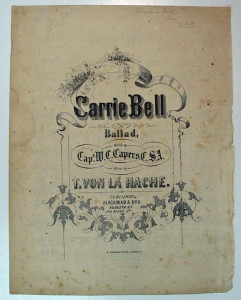
Carrie_BellCaptain MC Capers wrote the lyrics to the Confederate tune “Carrie Bell,” while T. Von La Hache composed the musical accompaniment. Capers was formerly of the “Macon Volunteers” and had also participated in the Indian Wars in Florida (1836). During the Civil War, Capers was in command of Company G, 1st LA Heavy Artillery Regiment of the CSA. In July 1863, he was promoted to major, seeing service at Vicksburg and elsewhere in the South. Details>>

A Legal View of the Seizure of Messrs Mason and Slidell

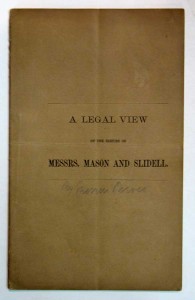
Legal_View_Seizure_Mason_SlidellThough this pamphlet was published under the pseudonym “Pro Lege,” it’s thought to be the work of Virginia statesman Francis Rives. He delves into the issues regarding seizure at sea during the US Civil War. The matter came the the forefront when Captain Wilkes, acting on his own cognizance, boarded the British vessel Trent and took two individuals, Mason and Slidell, captive. The two were acting as Confederate diplomats. Wilkes’ bold move was locally applauded, but the British were indignant and on the verge of entering the war against the Union forces. Seward released the two gentlemen and told the British that Wilkes had erred and acted without proper authority. Published in 1861, this pamphlet looks at the diverse international maritime legal issues and the ramifications of Wilkes’ act. Details>>

General Orders No 30

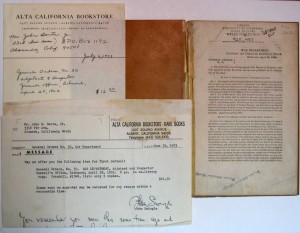
General_Orders_No_30Containing “An Act to Organize Bands of Partizan (sic) Raiders” and “An Act to Further Provide for the Public Defence,” this document was published in April 1862 by the Confederate War Department. It authorized the president “to call out and place in the military serve of the Confederate States, for three years, unless the war shall have been sooner ended, all white men who are residents of the Confederate State, between the ages of 18 and 35 years old.” Details>>

Life of General Stand Watie

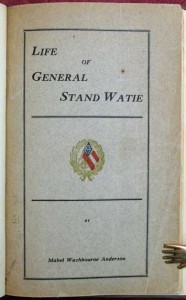
Life_General_Stand_WatieThe only Indian brigadier in the Confederate Army and the last Confederate general to surrender, Stand Watie was no stranger to conflict. Long before the war, Watie and his brother, Elias Boudinot, had published the Cherokee Phoenix. Watie also acted as a signatory to the 1835 Treaty of New Echota, which called for the removal of the Cherokee people from Georgia to “Indian Territory” (which eventually became Oklahoma). During the Civil War, Watie consistently distinguished himself in battle, refusing to surrender until June 23, 1865. His grandniece wrote the biography Life of General Stand Watie. The first edition is rare in the trade; only one other copy has come to market in the last fifteen years. Details>>

The Princess of the Moon: A Confederate Fairy Story

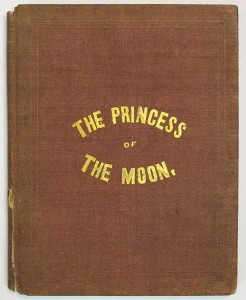
Princess_Moon“‘I am the Fairy of the Moon,’ said she, ‘and having witnessed your grief I desire to serve you. What would you have?'”

The Princess of the Moon is a relatively scarce juvenile with strong fantasy elements. The bias of the author, Cora Semmes Ives, is obvious, and she clearly wanted the Civil War to end differently. Published in 1869, this volume illustrates that Confederate sympathies certainly didn’t dissolve with the Confederacy. OCLC records three institutional holdings, though we found a few additional ones. Details>>

John Brown and Wm. Mahone

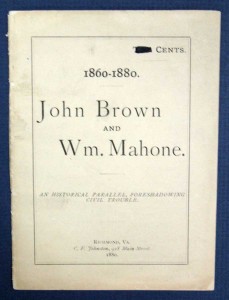
John_Brown_William_MahoneWritten by George W Bagby in 1880, this pamphlet’s half-title is “An Historical Parallel, Foreshadowing Civil Trouble.” The political tract, anti-Grant and anti-Malone, was issued during Malone’s 1880 run for US Senator for Virginia. Bagby proposes an odd connection among Grant, Mahone, and Confederate guerilla John S Mosby. He also predicts a civil war worse than that of the early 1860’s. “Miserable South!…despised by all the world, and for no crime but that you Christianized a race of savages thrust upon you by mercantile greed–how sad is your fate!” Details>>

The James Boys in Arkansas; or, After Confederate Gold

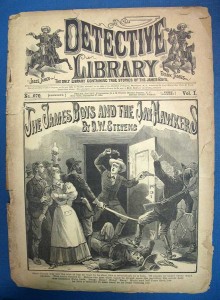
James_Boys_JayHawkers_Confederate_GoldThe concept of Confederate plunder was a popular one that survived the end of the Civil War. It inspired this 1895 dime novel, which plays on the notion that Confederate rebels had hoarded ill-gotten wealth. According to Bragin’s Dime Novels Bibliography, author Frank Tousey “practically revolutionized the dime novel field…[and here in the Detective Library was] the finest James Boys stories. The second title proves but a teaser, comprising only three pages of text and informing readers that the entire tale can be found in Issue No. 671. This is considered a scarce title of outlaw fiction; OCLC records only one institutional holding. Details>>

Share

A Brief History of Propaganda

The term “propaganda” has come to have a negative connotation in much of the English-speaking world. But in some places, the word is neutral or even positive. Why this difference? The reasons can be traced through the word’s etymology and the way that this strategy of communication has evolved over the centuries.

Roots in the Catholic Church

The use of propaganda began much earlier than most people would imagine. The Behistun Inscription, from around 515 BCE, details Darius I’s ascent to the Persian throne and is considered an early example of propaganda. And ancient Greek commander Themistocles used propaganda to delay the action of–and defeat–his enemy, Xerxes, in 480 BCE. Meanwhile, Alexander put his image on coins, monuments, and statues as a form of propaganda. Roman emperor Julius Caesar was considered quite adept at propaganda, as were many prominent Roman writers like Livy.

But it was the Catholic Church that both formalized the use of propaganda and gave us the word itself. Pope Urban II used propaganda to generate support for the Crusades. Later, propaganda would become a powerful tool for both Catholics and Protestants during the Reformation. Thanks to the printing press, propaganda could be disseminated to a much wider audience.

Centenario_Propaganda_Fide

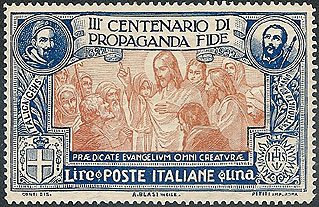
The 300th anniversary of the Congregatio de Propaganda Fide was commemorated on Italian currency.

In 1622, Pope Gregory XV established the Congregatio de Propaganda Fide (Congregation for Propagating the Faith) for the purpose of promoting the faith in non-Catholic countries. The group’s name was often informally shortened to “propaganda,” and the name stuck. As literacy rates grew in subsequent centuries, propaganda became a more and more useful tool around the world. Thomas Jefferson and Benjamin Franklin were both considered adept propagandists during the American Revolution.

Literacy Propagates…Propaganda

All_About_California_1870

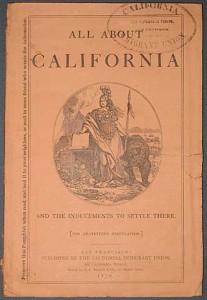
“All About California” is a propaganda piece designed to encourage settlement in the state.

By the nineteenth century, propaganda had finally emerged in the form we think of it today. Because most people were literate and had more than passing interest in government affairs, politicians found it necessary to sway public opinion. They turned to (sometimes unscrupulous) propaganda to get the job done.

A notorious propaganda campaign of the 1800’s was that of the Indian Rebellion in 1851. Indian sepoys rebelled against the British East India Company’s rule. The British grossly exaggerated–and sometimes completely fabricated–tales of Indian men raping English women and girls. The stories were intended to illustrate the savagery of the Indian people and reinforce the notion of “the white man’s burden” to rule, induce order, and instill culture in less civilized peoples who could not be trusted to rule themselves.

Abolitionists in both the US and Britain also aggressively used propaganda to support their cause. Certainly the conditions of slavery were heinous, but they often exaggerated or eroticized transgressions, making them more lurid. These efforts were complemented by freed slaves who traveled to speak at public events. The speakers generally made arguments against slavery based on moral, economic, and political grounds. The combination of emotional and rational arguments proved an excellent combination for winning supporters to the abolitionist cause.

Meanwhile another powerful form of communication was emerging in the nineteenth century: the political cartoon. Though illustrated propaganda had been used in the past, the form of the political cartoon was significantly refined during the second half of the century. Thomas Nast is considered one of the forerunners of this format.

Global Conflict Gives Propaganda New Power

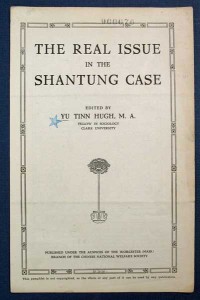
Real_Issue_Shantung_Case

This 1919 propaganda publication assails the Shantung settlement incorporated in the Treaty of Versailles.

World War I saw the first large-scale, formalized propaganda production. Emperor Wilhelm of Germany immediately established an unofficial propaganda machine with the creation of the Central Office for Foreign Services. One of the office’s primary duties was to distribute propaganda to neutral countries.

After the war broke out, however, Britain immediately severed the undersea cables that connected Germany to the rest of the world; Germany was limited to using a powerful wireless transmitter to broadcast pro-German news to other nations. The country also set up mobile cinemas, which would be sent to the troops at the front lines. The films emphasized the power, history, and inevitable victory of the German Volk.

Meanwhile, the British propaganda machine was regarded as an “impressive exercise in improvisation.” It was rapidly brought under government control as the War Propaganda Bureau. Journalist Charles Masterson led the organization. On September 2, 1914, Masterson invited Britain’s leading writers to a meeting to discuss potential messaging. Attendees included Sir Arthur Conan Doyle, GK Chesterton, Ford Madox Ford, Thomas Hardy, Rudyard Kipling, and HG Wells. Winnie-the-Pooh author AA Milne would later be recruited to covertly write propaganda.

The propaganda of World War I was frequently based on complete exaggeration or misinformation. For example, nurse Edith Cavell was executed for treason after using her position as a nurse to help soldiers escape from behind German lines. The episode was used to exaggerate German atrocities, and it was even made into a movie. (Read more here.) Indeed, by the end of the war, people had begun to tire of propaganda.

Yet the British propaganda machine was quite effective. It is frequently credited with persuading the United States to enter the war in the first place. Adolf Hitler actually studied British propaganda after the war, declaring it both brilliant and effective. He would later enlist Joseph Goebbels to help with propaganda during World War II, and the two proved an indomitable team. They masterminded multiple campaigns to justify eugenics programs, extermination of target populations, and other atrocities. The Allies countered with propaganda that vilified the Germans.

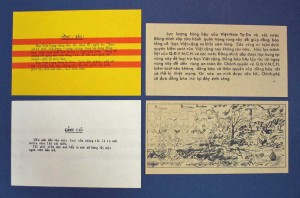
South_Vietnam_GVN_Propaganda

This collection of South Vietnamese GVN propaganda were probably air drop leaflets. Though usually dropped in mass quantities, few survive.

When the true horrors of Nazi Germany came to light, the extreme power of propaganda was terribly apparent. The word “propaganda” soon developed a negative connotation, one that it still carries to this day in the English-speaking world. Airdrop leaflet campaigns during unpopular engagements like the Korean War and Vietnam War often brought the communication even lower.

Now it’s common for a government authority to regulate propaganda, and it may be used for more innocuous purposes like public health and safety campaigns. But in non-democratic countries, propaganda continues to flourish as a means for indoctrinating citizens, and this practice is unlikely to cease in the future.

Related Posts:
Edith Cavell: Nurse, Humanitarian, and Traitor? 
AA Milne: Legendary Author and Ambivalent Pacifist

Thanks for reading! Love our blog? Subscribe via email (right sidebar) or sign up for our newsletter--you’ll never miss a post.
Share

A Look Back at Long-Lost Manuscripts

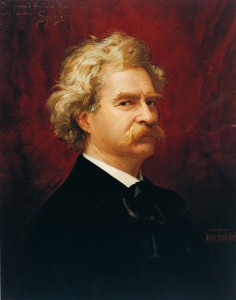
MarkTwainOn February 13, 1991, Sotheby’s made an incredible announcement: the auction house had Mark Twain’s long-lost manuscript of The Adventures of Huckleberry Finn. The manuscript bore edits in Twain’s own hand and had scenes not included in the published novel. The discovery and subsequent authentication sparked an argument over who had rights to the manuscript.

The recovered manuscript was unearthed in a set of trunks sent to a Los Angeles librarian after her aunt, a resident of upstate New York where Twain once lived, passed away. It constitutes the first half of the Huckleberry Finn manuscript. The second half had been in the possession of the librarian’s grandfather James Gluck. Gluck had solicited the manuscript directly from Twain for the Buffalo and Erie Library. At the time, Twain had been unable to find the first half of the manuscript, and it was presumed lost.

A “custody battle” ensued among the librarian and her sister; the library; and the Mark Twain Papers Project in Berkeley, California. They finally agreed that the library would take the papers, but that all three would share publication rights. The manuscript was published by Random House in 1995.

The discovery of such a document generates excitement among scholars and rare book collectors alike. The Huckleberry Finn manuscript was but one of many such documents to turn up unexpectedly.

Corroborating Robert Hooke’s Claim to an Invention

Robert_HookeRevered scientist Robert Hooke was one of the original fellows of the Royal Society and the curator of the group’s experiments. He was also responsible for recording the organization’s minutes from 1661 to 1682. The minutes make for fascinating reading, not least because of Hooke’s own asides and commentary. They recount many seminal moments in science, including the earliest work with a microscope and the first sightings of sperm and micro-organisms. This fascinating 500-page document didn’t show up until 2006, when it was discovered in a dusty cabinet.

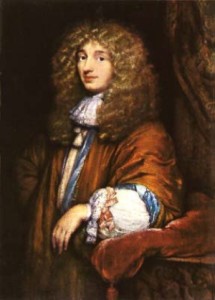
The minutes from December 1679 detail correspondence between Hooke and Sir Isaac Newton regarding the design of an experiment to confirm the rotation of the earth. Hooke recorded a suggestion from Sir Christopher Wren, which required shooting bullets into the air at precise angles to see if they fell in a circle. But perhaps even more interesting is that the document finally elucidates a feud between Hooke and Dutch physicist Chistiaan Huygens.

Huygens announced that he’d invented a watch that would keep its own time for several days and would make it possible to measure longitude, which infuriated Hooke. He claimed that he’d showed the Royal Society the same invention five years earlier, and that someone must have leaked the design. Hooke embarked on a mission to prove he’d invented the watch first. He painstakingly combed through years of Royal Society minutes, looking for proof of his own invention. Ironically, he’d ripped out the notes about the invention itself and taken them home for safekeeping–only to misplace them. In this newly discovered document, Hooke exonerates himself: he records a quote from his predecessor, Henry Oldenberg, about Hooke’s presentation of the invention–five years earlier than Huygens, just as Hooke had alleged.

A First Look at Yellowstone

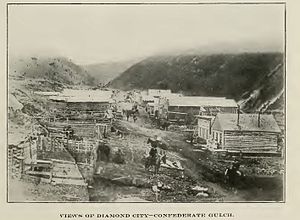
Diamond_City_1870

Diamond City ca 1870

By 1869, prospectors’ accounts of their finds at the Diamond City gold camp were both outlandish and persistent. Incredulous, thirty-year-old mining engineer David E Folsom decided to investigate for himself. In September of 1869, he undertook a treacherous expedition with friends Charles Cook and William Peterson. The group’s military envoy had canceled, and other would-be adventurers backed out, unwilling to venture into hostile territory unescorted.

During the four-week expedition, the group witnessed and documented the natural wonders of the area. They also took numerous measurements of the land, even using a rock on a string to measure the height of waterfalls. Folsom recorded their experiences and tried to sell his account to a number of prominent national magazines. They all turned him down because the tales seemed too fantastic to be real. Finally a small Chicago paper called Western Monthly ran the story. Folsom’s account contributed to the deployment of both the Washburn-Doane-Langford expedition (1870) and the Hayden expedition (1871)–which subsequently led Congress to make Yellowstone the first national park.

Folsom’s great-grandson David A Folsom found the original manuscript, written in pencil on lined paper. Two other manuscript copies had been destroyed in two separate fires, and had previously been the only extant copies. The younger Folsom gave the manuscript to Montana State University’s Renne Library Special Collections, where it still resides today.

Truman Capote, Kathryn Graham, and a Little Hashish

Ever the journalist, Truman Capote wasn’t known for glossing over his acquaintances’ secrets (or character flaws). Many a New York socialite fell victim to his pen–with one notable exception. Kathryn Graham never seemed to appear in Capote’s work. That all changed with the discovery of an unpublished story, “Yachts and Things” among Capote’s papers at the New York Public Library.

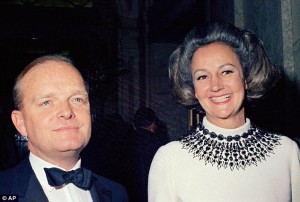
Capote_Graham

In the story, the narrator (presumably Capote) recounts a cruise along the Turkish coast with a “distinguished” and “intellectual” woman called Mrs. Williams. Their hosts have been called away due to a death in the family, and another guest has just passed away. One evening, the two invite some Turks aboard and smoke hashish for the first time. Though the hosts aren’t named, the deceased companion is named Adlai Stevenson.The researchers who discovered the story conjectured that the woman in the story was actually Graham because of her well-documented relationship with Stevenson, and they didn’t do much further research.

But a look at Graham’s own autobiography, Personal History, yields a more definitive answer. Graham, Capote, and Stevenson were invited on the trip by Gianna and Marcella Agnelli, who were unable to join their guests because of a death in the family. Graham and Capote stopped in London, and Graham coyly tells how Stevenson stayed with her (and forgot his tie and glasses in the morning). Stevenson died of a heart attack the next day. Graham and Capote decided to go on the cruise anyway, and Graham says they passed the time discussing Capote’s soon-to-be-published In Cold Blood.

Manuscripts like these will always be beloved because they seem to offer us a greater intimacy with the author. They illustrate the author’s own writing process, essentially illuminating the process of creating great history and literature.

Related Posts:
Three Pioneering Authors Who Used Pseudonyms

Thanks for reading! Love our blog? Subscribe via email (right sidebar) or sign up for our newsletter--you’ll never miss a post.
Share

Jane Bigelow, the First Celebrity Stalker?

Charles_Dickens

Can we really blame Bigelow for being obsessed with this guy? We are!

When Charles Dickens arrived in Boston for the first time, he was greeted with incredible fanfare. He would fall in love with the city and be lured back there in 1867. By this time, Dickens had established himself as a preeminent author of the age, and he undertook a whirlwind reading tour. His fans’ adulation had not abated in the past decades, and Dickens found himself once again the center of attention.

One woman gave Dickens a bit too much attention–Jane Bigelow. Jane was a descendent of the Poultney family of England, a lineage that included a three-time mayor of London and an Earl of Bath. When she married John Bigelow on June 11, 1850, she was 21 years old and he was 33. The couple would have nine children together. John Bigelow was already managing editor and co-owner of the New York Evening Post, and he had a promising political career ahead of him. He would eventually serve as President Lincoln’s consul general and later as the minister to France.

Although John took well to political life, his wife was not quite so suited for it. She managed to offend the Prince of Wales by slapping him on the back, and she sent her servants to sit in the imperial opera box in Germany. It’s rumored that John was denied further diplomatic posts because of his wife’s crass behavior, to which Charles Dickens would unfortunately find himself privy.

A Chance Acquaintance at the Parker House

November, 1867 found both the Bigelows and Dickens at the Parker House. Dickens had made the hotel his home base during this second American tour, and he often dined there with publisher James T. Fields. The Bigelows dined with Fields, Dickens, and his manager George Dolby. The group played parlor games together, as was common for genteel hotel guests at the time. Jane Bigelow soon proved herself a rather tiresome companion; she frequently showed herself to have little grasp for polite manners or common courtesies.

Dickens’ own wife had proven unequal to the task of running a household–let alone keeping up with Dickens’ tireless publicity and authorial efforts, and Dickens could empathize with John Bigelow’s plight. Fields’ wife, Anne observed in her journal that Dickens had “deepest sympathy for men who were unfitly married and has really taken an especial fancy I think to John Bigelow…because his wife is such an incubus.” Jane Bigelow figured in Anne’s journal frequently enough that Anne took to calling her “Mrs. Bigs.” When the Bigelows finally returned to New York, Dickens was likely grateful to escape Jane’s irksome company.

An Unexpected Encounter Turns Violent

But then he traveled to New York himself and encountered Jane under more peculiar circumstances. Dickens was doing a reading at the Westminster Hotel, and the hotel manager asked him to meet with “a little widow” named Mrs. Hertz. She was a great admirer of Dickens and was thrilled to meet him privately. But when Mrs. Hertz left Dickens’ rooms, she found herself face to face with none other than Jane Bigelow! Jane attacked Mrs. Hertz and berated her for being “daring” enough to enter Dickens’ rooms alone. For the rest of the tour. Dolby had to place guards outside Dickens’ quarters to prevent interlocutors, most notably Jane, who tried to see Dickens on several subsequent occasions.

Dickens took the whole incident in stride, but he was struck with the oddity of the situation. He wrote to a friend, “How queer it is that I should be perpetually having things happen to me with regard to people that nobody else in the world can be made to believe.” Though a few other literary figures like Oliver Wendell Holmes had achieved celebrity status as authorial rock starts, such status was still relatively uncommon. It was certainly unusual for an adoring, possibly crazy fan to attack an old widow outside one’s hotel room!

Though Dickens’ encounter with Jane Bigelow was out of the ordinary, it illustrates the magnitude of his fame. Beloved in his time, Charles Dickens remains a major figure in world literature and a favorite among rare book collectors.

Related Posts:
How the “Dickens Controversy” Changed American Publishing
Charles Dickens Does Boston
Irving and Dickens: The Authors Who Saved Christmas
Why Did Charles Dickens Write Ghost Stories for Christmas?
The Two Endings of Charles Dickens’ ‘Great Expectations
Oscar Wilde: Dickens Detractor and “Inventor” of Aubrey Beardsley

Thanks for reading! Love our blog? Subscribe via email (right sidebar) or sign up for our newsletter--you’ll never miss a post.
Share

How the “Dickens Controversy” Changed American Publishing

Charles_Dickens

“Is it tolerable that besides being robbed and rifled, an author should be forced to appear in any form – in any vulgar dress – in any atrocious company – that he should have no choice of his audience – no controul [sic?] over his distorted text – and that he should be compelled to jostle out of the course, the best men in this country who only ask to live, by writing?”

-Charles Dickens, to Henry Austin (May 1, 1842)

By the time Charles Dickens made his first visit to America, the country was deeply embroiled in a publishing battle with Britain. His repeated pleas for international copyright law would eventually spark the “Dickens Controversy” and bring new accountability to the world of American publishing.

A Legal Loophole

In Dickens’ day, American copyright law provided no protection for non-citizens’ intellectual property. The result hit both British and American authors in the pocketbook: British authors received no royalties on pirated editions of their works, and their authorized editions were hardly appealing at many times to price of the pirated copies. Meanwhile, American authors like Edgar Allan Poe, Washington Irving, and Walt Whitman lost money because American readers would purchase 25-cent pirated British literature instead of one-dollar American books.

While such a publishing problem might seem inconsequential in the grand scheme of foreign relations, it actually caused significant tension. American publishers sent employees to scour the docks of Boston, Philadelphia, and New York, in hopes of intercepting manuscripts from popular authors that were bound for pirated editions. Meanwhile, British officials frequently confiscated as contraband American pirated copies of British books.

Thus Dickens faced quite a copyright conundrum. The pirated editions severely cut into his profits, but they also increased his circulation and popularity, leading to more demand for his work. But ultimately Dickens knew that more rigorous copyright laws would benefit authors on both sides of the Atlantic. He began openly advocating international copyright law. By the time Dickens arrived in the United States for the first time on January 22, 1842, he already planned to enlist American authors to support his cause.

 A Triumphant Arrival in Boston

Dickens’ fans in Boston greeted him like a rock star. He later wrote to a friend, “there never was a king or Emperor upon the Earth, so cheered, and followed by crowds.” Thanks to all those pirated copies of Dickens’ novels, the author had an incredible fan base in the United States. Dickens clearly loved the attention and adulation. He could also identify with the American ideals of democracy, liberalism, and equality. He’d pulled himself from poverty to become a celebrated author, personifying those ideals. And the American press glommed on to Dickens’ story. One paper called him “Boz, the gay personification of youthful genius on a glorious holiday.”

Report_Dinner_Given_Charles_Dickens_Boston

“Report of the Dinner Given to Charles Dickens in Boston, February 1, 1842”

Dickens was received by preeminent scholars and authors of Boston, including Oliver Wendell Holmes, Richard Henry Dana, and Daniel Webster. On February 1, 1842, Dickens was the guest of honor at a “Young Men of Boston” dinner. He used the event to give his first speech to an American audience on the subject of international copyright law. This move proved poorly calculated; while Dickens had expected to receive support from fellow authors, he instead encountered resistance. America’s economy was flagging, and authors were reluctant to come across as demanding more money from the reading public.

Public Opinion Turns for the Worse

British_Lion_America_Nast_Dickens

This caricature, often attributed to Thomas Nast, illustrates the reaction of the American press.

Dickens had also underestimated the power and priorities of the American press. Countless newspapers filled their pages with free British content, so international copyright law posed a significant threat to their profits. The newspapers immediately accused Dickens of being a “hired agent” for Britain, a mercenary out to fleece the American public. Dickens’ reputation was quickly tarnished.

Even Walt Whitman, who’d always been fascinated with Dickens, got in on the action, publishing “Boz’s Opinion of Us” in the New York Evening Tattler, where he was the editor. The paper ran a forged letter, supposedly from Dickens, outlining the “dark spots of American character.” Even though Whitman actually defended Dickens’ words, praising passages of the letter, the whole episode deeply damaged Dickens’ image. The editor of one New York newspaper reprinted the letter and said, “it will ruin Mr. Dickens’ personal popularity altogether with us.”

Dickens Strikes Back

Dickens_American_Notes

“American Notes for General Circulation”

Although Dickens was initially quite taken with the United States, his account of the trip, “American Notes,” was relatively dry. He was harsh, however about slavery and the “abject state” of the American press. It was with Martin Chuzzlewit that Dickens really lashed out. The eponymous protagonist, a young man, travels to America to seek his fortune, only to be disappointed with American customs, manners, and publishing. Martin Chuzzlewit was published (unauthorized, of course) by the very papers that Dickens insulted in the novel.

Soon after, Dickens gave up lobbying for international copyright law. He realized it was a lost cause. But he didn’t give up his position entirely. Dickens stopped negotiating with American publishers for advance sheets of his novels, effectively removing their advantage of printing his books first. While this refusal wasn’t controversial, it was extremely unusual for the time period.

Finances Spur a Return

By the 1860’s, Dickens was an established celebrity. By all accounts, he should have been quite comfortable financially. But after much marital strife, Dickens’ wife, Catherine had been removed from the Dickens’ Rochester estate. A divorce would have sullied Dickens’ image, so he settled for relocating his wife to London and giving her a monthly stipend. And Dickens was still supporting his adult children–all six of his surviving sons were still receiving support from him by the mid-1860’s, despite being of age to support themselves.

Dickens’ resources were stretched thin. He wrote to his sister-in-law Georgiana, “Expenses are so enormous, that I begin to feel myself drawn towards America, as Charles Darnay in Tale of Two Cities is drawn toward Loadstone Rock, Paris. He believed enough time had passed that the American public would have forgotten about the publicity debacle of his first visit to the States.

Meanwhile, Dickens had perfected his readings, and British audiences flocked to see him perform. American theatre managers promised a second American tour would be even more lucrative than the first. They were correct. Dickens made £38,000 for 76 readings. His managers strutted around with paper bags full of cash. When Dickens passed away, the profits from this American tour constituted a full twenty percent of his estate.

An Unexpected Move

Mystery_Edwin_Drood_Charles_Dickens

‘The Mystery of Edwin Drood’

In 1867, Dickens made a bold proclamation. He announced that Fields, Osgood, and Co, the publishers who’d sponsored his tour, would have exclusive rights to his next novel, The Mystery of Edwin Drood. This was a truly unprecedented maneuver, and it spurred discussions that have since become known as the “Dickens Controversy.” Dickens knew that he would never stop piracy of his works altogether, but he made an impassioned moral plea to the American public to buy authorized editions.

The tactic–perhaps surprisingly–worked quite well. Even the most notorious pirating firms were forced to reconsider their practices in light of Dickens’ campaign. Alas, Dickens passed away before finishing The Mystery of Edwin Drood, and the changes he promoted for international copyright law weren’t adopted until 1891. But Dickens contributed to a new era of cultural balance between Britain and the United States.

Related Posts:
Charles Dickens Does Boston
Irving and Dickens: The Authors Who Saved Christmas
Why Did Charles Dickens Write Ghost Stories for Christmas?
The Two Endings of Charles Dickens’ ‘Great Expectations
Oscar Wilde: Dickens Detractor and “Inventor” of Aubrey Beardsley

Thanks for reading! Love our blog? Subscribe via email (right sidebar) or sign up for our newsletter--you’ll never miss a post.
Share

Collecting Antiquarian Diaries, Journals, and Correspondence

In this age of electronic communication, the practice of keeping a journal or diary has largely fallen by the wayside, as has the art of letter writing. But in past centuries, keeping a diary was the only means of creating a written record of one’s life, the only way to look back at one’s personal past. In bygone days, farmers may have recorded observations about crops, livestock, and weather in a journal. Soldiers recorded strife,while ordinary men and women simply recorded the simple details of their daily lives. And written correspondence was the primary method for maintaining long-distance relationships.

Looking back at these documents can give us tremendous insight into the aspects of life that history books often omit. They may reveal facts about the diet, customs, or etiquette of the time period. They sometimes shed light on genealogy and local history. Journals and correspondence may even reveal the real motivations behind historic events or explain the nuanced relationships among important individuals.

Tips for Collecting Diaries, Journals, and Correspondence

For many collectors, diaries and journals are appealing because each volume is an absolutely unique manuscript. Such a document is quite a treasure, indeed. Collectors should keep a few tips and hints in mind.

  • Look for complete sets, rather than individual volumes of journals and diaries. Faithful diarists will often have produced a number of volumes over the course of their lifetimes. Stay away from individual volumes that have most likely been removed from a set.
  • Decide whether you’ll digitize your collection. This will require the assistance of a skilled archivist or conservator. Digitizing these items is an investment, but it will enhance your ability to enjoy the content of your collection–and to share it with scholars if the content proves significant.
  • Be gentle! Old paper can be quite brittle, while covers may be fragile. Handle them with care, and consider professional conservation or preservation to extend the life of your collection.
  • Don’t overlook ephemera. Journals frequently contain extra items, which can range from dried flowers to vacation souvenirs. These items damage the pages on either side. A conservator may recommend carefully documenting each item’s location and storing it separately in an archival envelope.
  • If correspondence is still contained in the original envelopes, consult a conservator about the best means to preserve both the envelopes and the letters inside. Chemical interactions between materials–even between two sheets of the same or similar papers–can hasten breakdown.

A Selection of Diaries and Journals

Journal Across the Atlantic

Journal_Across_AtlanticOriginal mss journals such as this are quite rare in commerce. An unidentified male passenger recorded the details of his 1785 transatlantic journey from London to Philadelphia. He records the names and nationalities of the crew and passengers, along with the daily minutiae of life aboard the ship. Events include the sighting of a “grampus whale,” an encounter with a Spanish ship, and a lively debate over how moths and butterflies came to be aboard the ship. Details>>

Notes from Lectures of Professor Alonzo Clarke for 1848-1849

Almon Mitchell Orcutt attended the College of Physicians and Surgeons in New York. The first 136 pages of his journal consist of notes he took during the lectures of Alonzo Clarke, a noted physician and professor at the college. Clarke was often quoted in medical journals and association reports. He famously said, “All of our curative agents are poisons; and, as a consequence, every dose diminishes the vitality.” He was correct, indeed, given the “medicines” and treatments commonly used at the time. John Harvey Kellogg quotes Clarke in his Home Hand-Book of Domestic Hygiene (volume 2, 1880) in a discussion of the smallpox vaccination. Orcutt’s notes include the semester’s lectures, while the last 68 pages contain financial records. Details>>

Department of the Interior, US Geological Survey

US_Geological_Survey_Notes_JournalThis workbook started out as a record of levels and other data, kept by Allen T Paine, the survey crew levelman. But Paine also used the book as a photo journal. Many of the photographs are captioned. While many show family, friends, and colleagues, a good number also document the buildings of Concord, New Hampshire, along with the survey crew’s work and environs. Details>>

Family Trip Photo Diary/Journal

This period photo journal of a visit to the 1915 Panama Pacific Exposition in San Francisco begins in Albuquerque, New Mexico. It includes 45 images, eight of which clearly depict portions of the journey to San Francisco. One image, for example, shows part of the Salt Lake; another, the Grand Canyon. Fourteen of the images have handwritten captions. Details>>

 Archive of Shuman Family Letter Correspondence, August 1862-September 1866

Shuman_Family_Correspondence_Civil_WarJohn Shuman was in his early twenties when he volunteered for service in the 88th Regiment of the Indiana Volunteers to fight for the Union in the American Civil War. His letters illustrate his confidence in the decision and that he believed the war would be short-lived. It lasted longer than Shuman expected, and he lost his life in battle, not due to wounds, but due to dysentery. The Shumans’ correspondence offers a unique snapshot of a soldier’s life during the war. Details>>

Eleven Manuscript Diaries

Manuscript_DiariesThe author of these diaries, William Antrim Flowers, was born on March 21, 1832 in Champaign County, Ohio. He begins his memoir with his birth and then goes back to the birth of his father in 1804. The memoir is a rich storehouse of family genealogy and history, following his family and relatives as they moved abou tthe Midwest in the early nineteenth century. Flowers also documents his own life, during which he worked variously as a teamster, a wagon driver, a teacher, and a dairy farmer. He saw the first McCormick reaper in 1855 and enlisted to serve in the Civil War. Flowers records descriptions of his own experiences in the war, along with a description of the 114th Colored Regiment Infantry and the 44th Colored Regiment; and the death of Abraham Lincoln. Details>>

Related Posts:
Flights of Fancy: Collecting Vintage Airline Posters
Of Sammelbands and Sheet Music
A Brief History of Broadsides


Thanks for reading! Love our blog? Subscribe via email (right sidebar) or sign up for our newsletter--you’ll never miss a post.
Share

Randolph Caldecott, Legend of Children’s Literature

Randolph_CaldecottYesterday the winners of this year’s Newbery and Caldecott Awards were announced. The latter was named for Randolph Caldecott, an accomplished painter and sculptor whose various attainments are often eclipsed by his brilliant carer as an illustrator. Along with figures like Kate Greenaway and Walter Crane, Randolph Caldecott was truly one of the most gifted illustrators of the Victorian era.

Caldecott was born in Chester on March 22, 1846. He was third child by his father’s second wife and would eventually be one of thirteen children. From the time he was young, Caldecott frequently spent his free time sketching and modeling his surroundings. But when Caldecott left school at fifteen years old, it wasn’t to pursue a career in art. He took a position at the Whitchurch branch of the Whitchurch & Ellesmere Bank. Caldecott settled in a nearby village, and he often took time to capture the country scenes that stretched out before him as he traveled to visit clients.

A lover of riding, Caldecott naturally took up hunting. His collected works include, therefore, a huge number of hunting scenes, along with myriad sketches of animals. Caldecott’s first published drawing was of neither; it was of a disastrous fire at the Queen Railway Hotel. Caldecott wrote an account of the blaze for the Illustrated London News. When Caldecott moved to Manchester six years later to work at the Manchester & Salford Bank, he took the opportunity to take night classes at the Manchester School of Art. Soon after, his drawings began appearing in local and London periodicals.

Randolph_Caldecott_MilkmaidThen in 1870, Caldecott’s friend Thomas Armstrong, a painter in London, introduced Caldecott to Henry Blackburn of London Society. Blackburn and Caldecott got along famously, eventually traveling together. For a time, Caldecott even lived in a cottage at Blackburn’s estate. Blackburn published a number of Caldecott’s illustrations in the magazine, and in 1872 Caldecott decided to move to London and pursue illustration full time. He was 26 years old.

Within two years, Caldecott found himself a prominent magazine illustrator working on commission. His opus is varied, ranging from children’s books to travel illustrations and caricatures. His illustrations for Washington Irving’s Old Christmas and Bracebridge Hall (1875) had made his name in the illustration world. Caldecott also illustrated works by Oliver Goldsmith, notably Elegy on the Death of a Mad Dog. Caldecott’s illustration of the poem would be used in a World War I parody, in which the head in his original illustration was replaced by the head of the Kaiser of Germany.

Caldecott_Farmer_BoyCaldecott settled in the heart of Bloomsbury. He was surrounded by artists and literati, regularly encountering figures like Dante Rosetti, George du Maurier, and Frederic Leighton. Lord Leighton would go on to hire Caldecott to design four peacock capitals for the Asia room of Leighton House in Kensington; Walter Crane would design a peacock frieze for the same room.

In 1877, accomplished engraver Edmund Evans ended his relationship with illustrator Walter Crane. Evans found Caldecott’s illustrations “racy and spontaneous,” so he invited Caldecott to replace Crane. The first project: two Christmas books. Caldecott took on the work, illustrating The House that Jack Built and the William Cowper poem The Diverting History of John Gilpin. These books were so successful that Caldecott produced two more each Christmas for the rest of his life. Caldecott chose all the stories and rhymes, sometimes even composing them himself.

Caldecott_Song_SixpenceCombined sales of the Christmas books hit 867,000 during Caldecott’s lifetime. The artist was internationally famous. Caldecott’s publisher, George Routledge & Sons, took Caldecott’s works quite seriously. They took great pains to reproduce the colors exactly as Caldecott had intended. When the books were reissued by Frederick Warner & Co after Caldcott died, they brightened the colors but lost much of the subtlety imbued by Caldecott.

Not all Caldecott’s works, however, were commercially successful. In 1883, he undertook an edition of Aesop’s fables. He invited his brother Alfred to translate the tales from the original Greek, but later overruled Alfred’s accuracy. Caldecott’s goal was to make Aesop’s fables, which were often used for instruction, more accessible to children. He illustrated each of the tales he selected with Victorian human behavior. Usually comical, the illustrations illuminated the veracity of Aesop’s teachings. But the book was still too complicated for children, and it did not sell well.

Caldecott’s 1885 edition of The Great Panjandrum Himself fared much better. The nonsense poem by Samuel Foote had become quite the rage among university students, who would try to memorize the lines and recite them to one another. (Generations later, students would take up Winnie-the-Pooh, by AA Milne, with the same fervor; the story was even translated into Latin by one undergraduate.)

Meanwhile, Caldecott’s health was ever precarious. He frequently traveled to warmer climates. It was on one of these trips, in 1886, that he passed away. Caldecott and his wife had arrived in St. Augustine, Florida during a particularly cold February. Caldecott succumbed to the cold, and his memorial still stands in St. Augustine.

Related Posts:
AA Milne: Legendary Children’s Author and Ambivalent Pacifist
Kate Greenaway: Legendary Illustrator of Children’s Books
Maurice Moutet de Monvel and His Ingenious ‘Jeanne d’Arc’

Thanks for reading! Love our blog? Subscribe via email (right sidebar) or sign up for our newsletter--you’ll never miss a post.

Share