Category Archives: 19th-Century Literature

L Frank Baum’s Forgotten Foray into Theatre

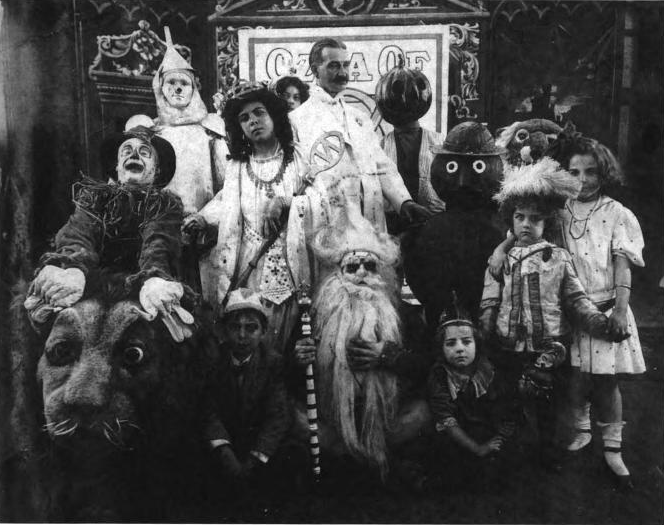
Baum_Fairylogue_Radio_Plays

Baum with the cast of ‘Fairylogue and Radio-Plays’ (1908)

Though L Frank Baum is best known as the author of The Wonderful Wizard of Oz, the famed author had a rich and varied career. His accomplishments include trade magazines and newspapers, along with an oft-forgotten play based on his sequels to Wizard of Oz.

Early Literary Aptitude

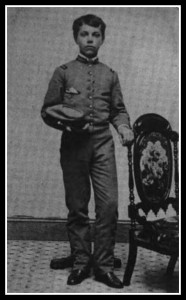
L_Frank_Baum_CadetBorn on May 15, 1856, Lyman Frank Baum was a sickly child. Particularly fond of fairy tales and British authors like Charles Dickens, Baum spent much of his time reading. But Baum found fault with fairy tales because they were so often frightening and gruesome. He would later note, “One thing I never liked then…was the introduction of witches and goblins into the story. I didn’t like the little dwarfs in the woods bobbing up with their horrors.” Thus, from an early age, Baum resolved to write a different kind of fairy tale.

But his first literary exertions weren’t fairy tales: Baum started his own newspaper, The Rose Lawn Home Journal with a printing press purchased by his father. Baum took the publication quite seriously, writing news pieces and editorials, along with poetry, word games, and fiction. The young man’s paper did quite well, and a number of local businesses purchased advertising space in its pages. In 1873, Baum launched two more papers, The Empire and The Stamp Collector.

Meanwhile it had become quite fashionable to breed chickens and other fowl. Baum took up breeding Hamburgs and won several awards with his birds. He also launched The Poultry Record, a magazine devoted to breeding and raising poultry. The publication was rather successful. Then in 1886, Baum published his first book, The Book of the Hamburgs: A Brief Treatise upon the Mating, Rearing, and Management of the Different Varieties of Hamburgs.

A Love for Theatre

Baum_Holcomb_Maid_Arran

Baum as Hugh Holcomb in ‘The Maid of Arran’

Baum also found time to nurture his interest in theatre. He frequently memorized passages of Shakespeare and even founded a Shakespearean troupe with his father’s financial backing. The elder Baum had made a fortune in the family business and purchased a number of opera houses in Pennsylvania and New York. He entrusted their management to his son in 1880. Baum proved quite adept, even delving into writing his own plays. The Maid of Arran, considered Baum’s first major literary work, met with immediate success.

But with the decline of the Baum’s father’s health and two unlucky episodes with swindling employees, Baum was left virtually penniless. His wife, Maud, suggested that the family move West. They settled in Dakota territory, where Baum opened a general store called Baum’s Bazaar. Soon Baum had made a reputation for two things: storytelling and extending credit. Thanks to Baum’s generous spirit and a drought that left most of his customers destitute, the bank foreclosed on Baum’s Bazaar in 1890, only two years after it opened. Baum established The Aberdeen Saturday Pioneer, acting as reporter, printer, and salesman all in one. But that, too, failed in 1891.

Return to Authorship

That year, Baum decided to move his family to Chicago. The World Columbian Exposition was there, so employment opportunities were plentiful. First Baum worked as a reporter for the Evening Post, but the paltry pay was hardly enough to support a family. Next he went into sales for the china company Pitkin & Brooks. He was often on the road. His mother-in-law, noted feminist Matilda Gage, moved in to help with the Baum children. It was she who encouraged Baum to write down the fairy tales he spun for his children and their young friends.

Baum frequented the Chicago Press Club when he wasn’t traveling. It’s been conjectured that Baum met illustrator Maxfield Parrish, resulting in Mother Goose in Prose (1897). But so far as we know, the two never actually met; Chauncey Williams of Way and Williams negotiated for Parrish’s illustrations in the children’s book. Williams also served as publisher of The Show Window when the journal was launched in 1897. The magazine gave Baum an opportunity to make a living without traveling as a salesman.

A Serendipitous Acquaintance

L Frank Baum

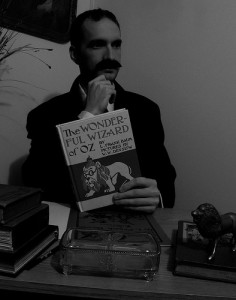
This photograph considered a fake, merely an actor holding a facsimile version of the 1st edition.

Soon Baum made the acquaintance of William W Denslow. Though the two had disparate personalities, they decided to collaborate on a companion to Mother Goose in Prose. Together they published Father Goose, His Book in 1899. The beloved book spurred Songs of Father Goose. The pair worked on a few more project, most notably The Wonderful Wizard of Oz. Baum had originally submitted the story with the title The Emerald City, which publishers Hill and Company rejected. They finally agreed on a new title, and the first edition appeared in May, 1900.

Two years later, Baum collaborated with Paul Tietjens and Julian P Mitchell on an adult musical adaptation of Wizard of Oz. A major success, the production toured all over America. The country was absolutely infatuated with the land of Oz and its whimsical characters. Baum published a total of thirteen Oz books and six short Oz stories and came to be known as the “Royal Historian of Oz.” The Ozmapolitan, a promotional piece, was issued in 1904 to help Reilly & Britton advertise The Marvelous Land of Oz, which was the new firm’s first publication. Occasional later versions of The Ozmapolitan were also issued.

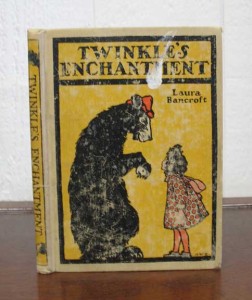
Baum_Bancroft_Twinkles_EnchantmentThough he indulged his audience with all these tales of Oz, he longed to delve into other projects. Baum often used pseudonyms for these endeavors, so that he didn’t have to worry about their critical reception. One notable project was Aunt Jane’s Nieces, a series for teenage girls Baum published under the pen name Edith Van Dyne. He also wrote under the names Laura Bancroft, Floyd Akres, Captain Hugh Fitzgerald, Suzanne Metcalf, and John Estes Cooke.

Baum also launched a traveling show called “Fairylogue and Radio Plays.” The show featured live actors costumed as characters from several of Baum’s fantasy books, a live orchestra, motion-picture clips, and colored lantern slides. Baum traveled with the show as master of ceremonies. The endeavor proved a commercial failure.

Return to the Stage

In 1913, The Tik-Tok Man of Oz made its debut on the stage. Producer Oliver Morosco inserted three songs he wrote (with music composed by Victor Schertzinger). Billed as “a companion play to The Wizard of Oz, The Tik-Tok Man of Oz met with great success in Los Angeles, but didn’t resonate with other audiences. Chicago critics were particularly unimpressed. Though the show made money, Morosco decided not to keep producing it.

Only an early manuscript of the musical is extant, and the play probably would have faded into obscurity were it not for the published music and advertisements. Promotional materials for the production have proven exceedingly rare; a survey of auction records and other online sources indicate only two extant playbills. One, from December 2, 1913 at the Babcock Theatre in Billings, Montana, comes from the collection of Fred M Meyer and can be viewed at the International Wizard of Oz Club website. The other, from the play’s opening night in San Francisco on April 21, 1913, is pictured here. We’re proud to offer this item as one of this month’s select acquisitions, which features a diverse collection of broadsides.

We invite you to peruse the entire list! Should you have a question about any item, please feel free to contact us.

Many thanks to our esteemed friend Peter E Hanff for his contributions to this article. The Deputy Director of the Bancroft Library at the University of California, Berkeley, Hanff is a great scholar of L Frank Baum. He collaborated with Douglas G Greene on Bibliographia Oziana, the main bibliographic record and resource on Oz literature. 

Share

The Magic Ring: A Forgotten Inspiration for JRR Tolkien

When The Magic Ring was published in 1813, it met with instant success. Its author, Friedrich Heinrich Karl Freiherr de la Motte Fouqué, has largely faded from popular awareness, remembered occasionally for Undine (1811). But JRR Tolkien owes an extraordinary debt to Fouqué for his portrayal of the One Ring and his pioneering work in fantastic fiction.

A Soldier Author

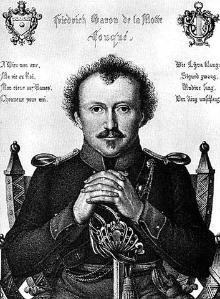
friedrich_baron_de_la_motte_fouquetBorn on February 12, 1777, Fouqué was a descendent of French Huguenots. His grandfather was a general for Frederick the Great, and his father was a Prussian officer. Fouqué himself didn’t intend to have a military career. Instead, he went to Halles. But in 1794, he left school to join the army and participate in the Rhine campaign. Fouqué would again see battle in 1813, during the uprising against Napoleon. By this time, nationalism had taken deep root in Germany, and these sentiments came to influence Fouqué’s writing.

Following that first stint of military service, Fouqué decided to pursue his literary interests, which were split between medieval romance and northern mythology. In 1806 he versified a sixteenth-century medieval romance. Fouqué was also the first to dramatize the Nibelung legend, combining both Icelandic sources (such as the Volsunga Saga) with Middle High German legend. This play and its sequels were published as a single volume in 1811 and immediately brought Fouqué public attention.

The following year, Fouqué published Undine. The novel includes elements not only of fantasy, but also of religious allegory, Gothic horror, and historical romance, so it appealed to a wide audience. The book has also received praise from critics in all corners. In “The Fantastic Imagination,” George MacDonald says, “Were I asked, what is a fairytale? I should reply, Read Undine: that is a fairytale….of all the fairytales I know, I think Undine the most beautiful.” MacDonald’s love of Fouqué was clear in both his fiction and non-fiction, which would later inspire both CS Lewis and Tolkien.

From 1810 to 1815, Fouqué managed to churn out plays, novels, and epics at an incredible pace. But by 1820, his reputation had faltered; unable to adapt to changing times and tastes, Fouqué still clung to Romanticism. His rivals dubbed him the “Don Quixote of Romanticism.” Fortunately Frederick William IV of Prussia granted Fouqué a pension, so he passed his last years in relative comfort.

Fouqué’s Invisible Influence

Fouqué influenced multiple authors, from Robert Louis Stevenson and Louisa May Alcott, to Edgar Allan Poe and HP Lovecraft. But the most important of these were undoubtedly William Morris and JRR Tolkien. Morris, widely regarded as the father of modern fantasy, opened the door for Tolkien later on.

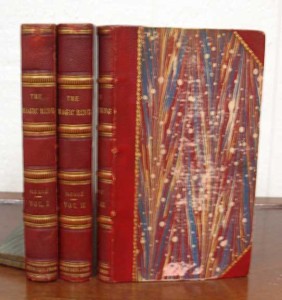
Motte_Fouque_Magic_RingTolkien scholar Amy H Sturgis notes that The Magic Ring (1813) is a sort of “missing link in the story of Tolkien’s One Ring.” The legend began several centuries ago with the Siegfried story of Norse legend. It also appears in the Nordic Sagas and Eddas, along with the Middle High German Nibelundenlied. Over time the legend evolved, but Fouqué’s adaptation proved incredibly influential. It was taken up by Richard Wagner in his Ring Cycle and by JRR Tolkien in the Lord of the Ring series.

So why has Fouqué fallen by the wayside? His work was tossed aside during his own lifetime as preferences changed. That alone is often enough to relegate an author to the sidelines of history. But as Tolkien has again gained more attention. readers and collectors are rediscovering figures like Fouqué. Which authors have you been most excited to (re)discover?


Thanks for reading! Love our blog? Subscribe via email (right sidebar) or sign up for our newsletter--you’ll never miss a post.

Share

The Rare Books of Valentine’s Day

Valentine’s Day is upon us. If this day of hearts, candy, and warm fuzzies isn’t exactly your cup of tea, you’re not alone! Here’s a look at our three best less-than-romantic rare books for the holiday.

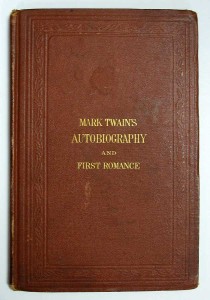
Mark Twain’s (Burlesque) Autobiography and First Romance

Twain_Autobiography_First_RomanceThe title of this work is quite misleading; the events have no relevance to Twain’s life. The book, published by Sheldon & Co in 1871, contains two separate stories: “A Burlesque Autobiography,” which first appeared in Twain’s Memoranda contributions to The Galaxy; and “First Romance,” which was originally published in The Express in 1870. They were not Twain’s favorites; indeed, two years after the book was published, he bought the printing plates and destroyed them.

The short stories do feature characters who are supposedly related to Twain. Twain ends the story abruptly, saying only “The truth is, I have got my hero (or heroine) into such a particularly close place, that I do not see how I am ever going to get him (or her) out of it again—and therefore I will wash my hands of the whole business, and leave that person to get out the best way that offers—or else stay there. I thought it was going to be easy enough to straighten out that little difficulty, but it looks different now.”

Just as the story has no real connection to Twain’s life, the illustrations also have no connection to the text. They use illustrations of the children’s poem The House that Jack Built to criticize the Erie Railroad Ring and its participants.

Revi-Lona: A Romance of Love in a Marvelous Land

Cowan_Revi_LonaWhere romance and science fiction intersect, you’ll find Revi-Lona: A Romance of Love in a Marvelous Land by Frank Cowan. The novel is set in Antarctica and includes all the expected elements, such as prehistoric creatures and super science. Though Bleiler dates the novel’s publication to 1879, other sources simply place the novel “circa 1880’s.”

Though Cowan published a number of works, he’s probably better known for being Andrew Jackson’s personal secretary for managing land patents. Cowan was appointed to the position in 1867 and remained in the post until Jackson was succeeded by Ulysses S Grant. That same year, Cowan perpetrated a major literary hoax with his friend Thomas Birch Florence, who owned a failing Georgetown newspaper.

In an effort to bolster sales, Cowan and Florence came up with a fantastic story; they reported that the body of an Icelandic Christian woman who’d supposedly died in 1051 had been found under the Great Falls of the Potomac River. The body proved that other settlers had reached America a full five centuries before Christopher Columbus. Though the story did bolster sales, Cowan and Florence were eventually found out.

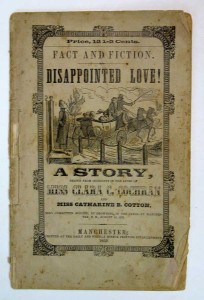
Fact and Fiction! Disappointed Love! A Story

Disappointed_Love_Cochran_CottonThe drop title of this work is “Drawn from the lives of Miss Clara C Cochran and Miss Catherine B Cotton, Who Committed Suicide, By Drowning, in the Canal at Manchester, N. H., August 14, 1853.” The two young women worked and roomed together at the Manchester Corporation and had “frequently expressed a purpose to drown themselves.” But their housemates thought little of it and paid the girls no heed.

Then on August 14, 1853, Cochran and Cotton “proceeded hand-in-hand, with great apparent cheerfulness, to the bridge crossing the upper canal…and together leapt into the water.” A few people witnessed the event. The women had obviously premeditated their demise, as both left letters to loved ones and put their affairs in order. Cochran, only nineteen years old at the time of her suicide, stood to inherit a large sum on her 21st birthday, which made her motives even more inscrutable to her contemporaries.

What are your favorite obscure or eccentric tales of love? And what rare book would you most like to receive for Valentine’s Day yourself?

Related Posts:
A Look Back at Long-Lost Manuscripts
Courtship, Romance, and Love…Antiquarian Style

Thanks for reading! Love our blog? Subscribe via email (right sidebar) or sign up for our newsletter--you’ll never miss a post.
Share

Jane Bigelow, the First Celebrity Stalker?

Charles_Dickens

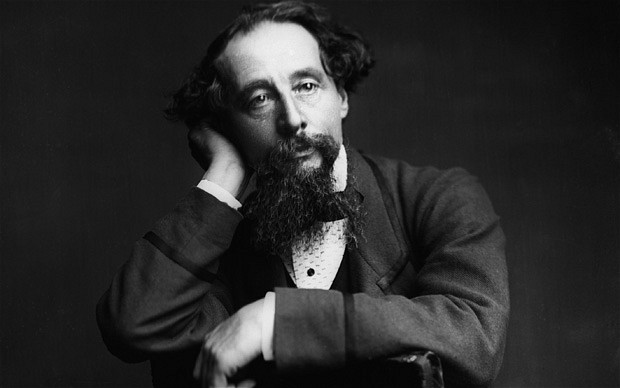
Can we really blame Bigelow for being obsessed with this guy? We are!

When Charles Dickens arrived in Boston for the first time, he was greeted with incredible fanfare. He would fall in love with the city and be lured back there in 1867. By this time, Dickens had established himself as a preeminent author of the age, and he undertook a whirlwind reading tour. His fans’ adulation had not abated in the past decades, and Dickens found himself once again the center of attention.

One woman gave Dickens a bit too much attention–Jane Bigelow. Jane was a descendent of the Poultney family of England, a lineage that included a three-time mayor of London and an Earl of Bath. When she married John Bigelow on June 11, 1850, she was 21 years old and he was 33. The couple would have nine children together. John Bigelow was already managing editor and co-owner of the New York Evening Post, and he had a promising political career ahead of him. He would eventually serve as President Lincoln’s consul general and later as the minister to France.

Although John took well to political life, his wife was not quite so suited for it. She managed to offend the Prince of Wales by slapping him on the back, and she sent her servants to sit in the imperial opera box in Germany. It’s rumored that John was denied further diplomatic posts because of his wife’s crass behavior, to which Charles Dickens would unfortunately find himself privy.

A Chance Acquaintance at the Parker House

November, 1867 found both the Bigelows and Dickens at the Parker House. Dickens had made the hotel his home base during this second American tour, and he often dined there with publisher James T. Fields. The Bigelows dined with Fields, Dickens, and his manager George Dolby. The group played parlor games together, as was common for genteel hotel guests at the time. Jane Bigelow soon proved herself a rather tiresome companion; she frequently showed herself to have little grasp for polite manners or common courtesies.

Dickens’ own wife had proven unequal to the task of running a household–let alone keeping up with Dickens’ tireless publicity and authorial efforts, and Dickens could empathize with John Bigelow’s plight. Fields’ wife, Anne observed in her journal that Dickens had “deepest sympathy for men who were unfitly married and has really taken an especial fancy I think to John Bigelow…because his wife is such an incubus.” Jane Bigelow figured in Anne’s journal frequently enough that Anne took to calling her “Mrs. Bigs.” When the Bigelows finally returned to New York, Dickens was likely grateful to escape Jane’s irksome company.

An Unexpected Encounter Turns Violent

But then he traveled to New York himself and encountered Jane under more peculiar circumstances. Dickens was doing a reading at the Westminster Hotel, and the hotel manager asked him to meet with “a little widow” named Mrs. Hertz. She was a great admirer of Dickens and was thrilled to meet him privately. But when Mrs. Hertz left Dickens’ rooms, she found herself face to face with none other than Jane Bigelow! Jane attacked Mrs. Hertz and berated her for being “daring” enough to enter Dickens’ rooms alone. For the rest of the tour. Dolby had to place guards outside Dickens’ quarters to prevent interlocutors, most notably Jane, who tried to see Dickens on several subsequent occasions.

Dickens took the whole incident in stride, but he was struck with the oddity of the situation. He wrote to a friend, “How queer it is that I should be perpetually having things happen to me with regard to people that nobody else in the world can be made to believe.” Though a few other literary figures like Oliver Wendell Holmes had achieved celebrity status as authorial rock starts, such status was still relatively uncommon. It was certainly unusual for an adoring, possibly crazy fan to attack an old widow outside one’s hotel room!

Though Dickens’ encounter with Jane Bigelow was out of the ordinary, it illustrates the magnitude of his fame. Beloved in his time, Charles Dickens remains a major figure in world literature and a favorite among rare book collectors.

Related Posts:
How the “Dickens Controversy” Changed American Publishing
Charles Dickens Does Boston
Irving and Dickens: The Authors Who Saved Christmas
Why Did Charles Dickens Write Ghost Stories for Christmas?
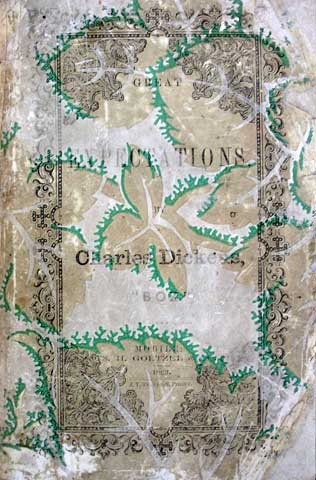
The Two Endings of Charles Dickens’ ‘Great Expectations
Oscar Wilde: Dickens Detractor and “Inventor” of Aubrey Beardsley

Thanks for reading! Love our blog? Subscribe via email (right sidebar) or sign up for our newsletter--you’ll never miss a post.
Share

How the “Dickens Controversy” Changed American Publishing

Charles_Dickens

“Is it tolerable that besides being robbed and rifled, an author should be forced to appear in any form – in any vulgar dress – in any atrocious company – that he should have no choice of his audience – no controul [sic?] over his distorted text – and that he should be compelled to jostle out of the course, the best men in this country who only ask to live, by writing?”

-Charles Dickens, to Henry Austin (May 1, 1842)

By the time Charles Dickens made his first visit to America, the country was deeply embroiled in a publishing battle with Britain. His repeated pleas for international copyright law would eventually spark the “Dickens Controversy” and bring new accountability to the world of American publishing.

A Legal Loophole

In Dickens’ day, American copyright law provided no protection for non-citizens’ intellectual property. The result hit both British and American authors in the pocketbook: British authors received no royalties on pirated editions of their works, and their authorized editions were hardly appealing at many times to price of the pirated copies. Meanwhile, American authors like Edgar Allan Poe, Washington Irving, and Walt Whitman lost money because American readers would purchase 25-cent pirated British literature instead of one-dollar American books.

While such a publishing problem might seem inconsequential in the grand scheme of foreign relations, it actually caused significant tension. American publishers sent employees to scour the docks of Boston, Philadelphia, and New York, in hopes of intercepting manuscripts from popular authors that were bound for pirated editions. Meanwhile, British officials frequently confiscated as contraband American pirated copies of British books.

Thus Dickens faced quite a copyright conundrum. The pirated editions severely cut into his profits, but they also increased his circulation and popularity, leading to more demand for his work. But ultimately Dickens knew that more rigorous copyright laws would benefit authors on both sides of the Atlantic. He began openly advocating international copyright law. By the time Dickens arrived in the United States for the first time on January 22, 1842, he already planned to enlist American authors to support his cause.

 A Triumphant Arrival in Boston

Dickens’ fans in Boston greeted him like a rock star. He later wrote to a friend, “there never was a king or Emperor upon the Earth, so cheered, and followed by crowds.” Thanks to all those pirated copies of Dickens’ novels, the author had an incredible fan base in the United States. Dickens clearly loved the attention and adulation. He could also identify with the American ideals of democracy, liberalism, and equality. He’d pulled himself from poverty to become a celebrated author, personifying those ideals. And the American press glommed on to Dickens’ story. One paper called him “Boz, the gay personification of youthful genius on a glorious holiday.”

Report_Dinner_Given_Charles_Dickens_Boston

“Report of the Dinner Given to Charles Dickens in Boston, February 1, 1842”

Dickens was received by preeminent scholars and authors of Boston, including Oliver Wendell Holmes, Richard Henry Dana, and Daniel Webster. On February 1, 1842, Dickens was the guest of honor at a “Young Men of Boston” dinner. He used the event to give his first speech to an American audience on the subject of international copyright law. This move proved poorly calculated; while Dickens had expected to receive support from fellow authors, he instead encountered resistance. America’s economy was flagging, and authors were reluctant to come across as demanding more money from the reading public.

Public Opinion Turns for the Worse

British_Lion_America_Nast_Dickens

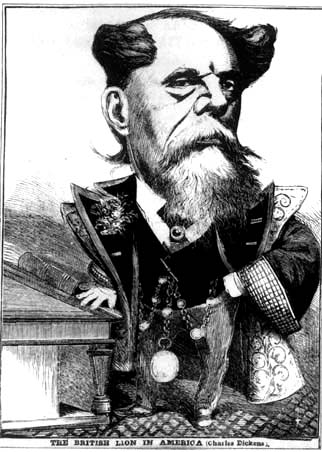
This caricature, often attributed to Thomas Nast, illustrates the reaction of the American press.

Dickens had also underestimated the power and priorities of the American press. Countless newspapers filled their pages with free British content, so international copyright law posed a significant threat to their profits. The newspapers immediately accused Dickens of being a “hired agent” for Britain, a mercenary out to fleece the American public. Dickens’ reputation was quickly tarnished.

Even Walt Whitman, who’d always been fascinated with Dickens, got in on the action, publishing “Boz’s Opinion of Us” in the New York Evening Tattler, where he was the editor. The paper ran a forged letter, supposedly from Dickens, outlining the “dark spots of American character.” Even though Whitman actually defended Dickens’ words, praising passages of the letter, the whole episode deeply damaged Dickens’ image. The editor of one New York newspaper reprinted the letter and said, “it will ruin Mr. Dickens’ personal popularity altogether with us.”

Dickens Strikes Back

Dickens_American_Notes

“American Notes for General Circulation”

Although Dickens was initially quite taken with the United States, his account of the trip, “American Notes,” was relatively dry. He was harsh, however about slavery and the “abject state” of the American press. It was with Martin Chuzzlewit that Dickens really lashed out. The eponymous protagonist, a young man, travels to America to seek his fortune, only to be disappointed with American customs, manners, and publishing. Martin Chuzzlewit was published (unauthorized, of course) by the very papers that Dickens insulted in the novel.

Soon after, Dickens gave up lobbying for international copyright law. He realized it was a lost cause. But he didn’t give up his position entirely. Dickens stopped negotiating with American publishers for advance sheets of his novels, effectively removing their advantage of printing his books first. While this refusal wasn’t controversial, it was extremely unusual for the time period.

Finances Spur a Return

By the 1860’s, Dickens was an established celebrity. By all accounts, he should have been quite comfortable financially. But after much marital strife, Dickens’ wife, Catherine had been removed from the Dickens’ Rochester estate. A divorce would have sullied Dickens’ image, so he settled for relocating his wife to London and giving her a monthly stipend. And Dickens was still supporting his adult children–all six of his surviving sons were still receiving support from him by the mid-1860’s, despite being of age to support themselves.

Dickens’ resources were stretched thin. He wrote to his sister-in-law Georgiana, “Expenses are so enormous, that I begin to feel myself drawn towards America, as Charles Darnay in Tale of Two Cities is drawn toward Loadstone Rock, Paris. He believed enough time had passed that the American public would have forgotten about the publicity debacle of his first visit to the States.

Meanwhile, Dickens had perfected his readings, and British audiences flocked to see him perform. American theatre managers promised a second American tour would be even more lucrative than the first. They were correct. Dickens made £38,000 for 76 readings. His managers strutted around with paper bags full of cash. When Dickens passed away, the profits from this American tour constituted a full twenty percent of his estate.

An Unexpected Move

Mystery_Edwin_Drood_Charles_Dickens

‘The Mystery of Edwin Drood’

In 1867, Dickens made a bold proclamation. He announced that Fields, Osgood, and Co, the publishers who’d sponsored his tour, would have exclusive rights to his next novel, The Mystery of Edwin Drood. This was a truly unprecedented maneuver, and it spurred discussions that have since become known as the “Dickens Controversy.” Dickens knew that he would never stop piracy of his works altogether, but he made an impassioned moral plea to the American public to buy authorized editions.

The tactic–perhaps surprisingly–worked quite well. Even the most notorious pirating firms were forced to reconsider their practices in light of Dickens’ campaign. Alas, Dickens passed away before finishing The Mystery of Edwin Drood, and the changes he promoted for international copyright law weren’t adopted until 1891. But Dickens contributed to a new era of cultural balance between Britain and the United States.

Related Posts:
Charles Dickens Does Boston
Irving and Dickens: The Authors Who Saved Christmas
Why Did Charles Dickens Write Ghost Stories for Christmas?
The Two Endings of Charles Dickens’ ‘Great Expectations
Oscar Wilde: Dickens Detractor and “Inventor” of Aubrey Beardsley

Thanks for reading! Love our blog? Subscribe via email (right sidebar) or sign up for our newsletter--you’ll never miss a post.
Share

Irwin and Erastus Beadle, Innovators in Publishing Popular Literature

Toward the middle of the nineteenth century, the story papers started giving way to a new publication format: the dime novel. Though a number of American publishers capitalized on the trend, Irwin and Erastus Beadle were likely the most successful. The fruits of their publishing company include numerous series, constituting a unique category of collecting.

Erastus Flavel Beadle was born on September 9, 1821 in Oswego County, New York. Five years later, his brother, Irwin Pedro Beadle, was born. After various apprenticeships, the brothers eventually set up their own stereotype foundry in 1850. The following year, Erastus teamed up with engraver Benjamin Vanduzee to publish the youth magazine The Youth’s Casket. Though Vanduzee would leave the project a few years later, publication continued until 1856. Meanwhile, in 1855, Erastus started his next project: The Home: A Fireside Companion and Guide for the Wife, the Mother, the Sister, and the Daughter.

New City, New Venture

Beadles_Metta_Victoria_Fuller_VictorThe following year, however, Erastus decided to head west. He hoped to take advantage of the land boom in Kansas and Nebraska. It’s likely that his former apprentice Robert Adams took over publication until his return in 1857. Then in 1858, both Beadle brothers and Adams relocated to New York City. Erastus continued publishing The Home from there, and he brought on Metta Victoria Fuller Victor as the new editor in December, 1858. Victor would become a notable author of several Beadle’s dime novels, including The Dead Letter and Maum Guinea. Her husband would also become an editor for the publishing house for several years.

The late 1850’s also saw a new interest in sheet music and popular songs. Irwin capitalized with the Dime Song Book (1859), a paper-bound set of ballads that had previously been published separately. The book sold quite well, so Irwin undertook a series of dime booklets on a wide variety of subjects, from cookery to baseball. At the end of that year, Irwin and Adams formed Irwin P Beadle & Co. Though Irwin would come up with the innovation of publishing dime novels serially, it would be Erastus who got most of the credit–and the profit.

Beadle's Singer's Library-I'm the Boy That's Bound to Blaze1860 saw the inception of the first Beadle novel series. It kicked off with Ann Stephens’ Maleaska, the Indian Wife of the White Hunter, which had first appeared in Ladies’ Companion magazine (February-April 1839). The story was advertised as “a dollar book for a dime.” In dime novel form, Stephens’ work sold more than 65,000 copies in the first few months. Erastus would later estimate that the eighth novel, Edward Sylvester Ellis’ Seth Jones, sold over twice that, though some experts believe he exaggerated. At any rate, the dime novels, with their orange paper wrappers and patriotic stories, were popular sellers.

The Civil War temporarily slowed sales of Beadle’s Dime Novels, but the Union troops were soon reading them as voraciously as ever. Nevertheless, in 1861, Beadle’s American Library was launched in London. It mostly included reprints from the American editions and lasted for five years. In 1862, Erastus and Adams actually bought out Irwin. They didn’t rename the firm Beadle & Adams until 1870, four years after Adams had died and his two brothers, David and William Adams, had assumed his ownership. In the meantime, publications would be issued under several subsidiary names: Frank Starr & Co; Adams, Victor, & Co; and Adams & Co.

Irwin tried his hand at publishing dime novels on his own, but he couldn’t match the efforts of his brother. He gave up the endeavor in 1868. But 31 more novel series would be published, many of these reprints of earlier publications.

Beadle’s New York Dime Library

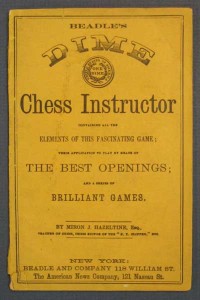
Beadles_Dime_Chess_InstructorThe longest running of these was Beadle’s New York Dime Library. The series actually began as Frank Starr’s New York Library, and Numbers 1 through 26 were were originally published under this title. Then Number 27 appeared on February 18, 1878 with the title Beadle’s New York Dime Library. When Numbers 1 through 26 ran out, they were reprinted with the new name. Now, it’s almost impossible to find printings with the original name, though occasionally a copy will surface with the new title pasted over the old one. In advertisements, the “New York” was often omitted from the name, likely because it was considered rather insignificant.

Stories in Beadle’s Dime Library generally hadn’t been published anywhere else first, except for a few serials from story papers. The content was largely the same: stories of adventure, of pioneers and cowboys, of criminals and war heroes. An occasional tale of the sea would be included (notably the pirate stories of the two Ingrahams), but for the most part this genre was considered past its prime. In the late 1870’s and 1880’s, stories of street boys who made their way in the world became increasingly popular. Horatio Alger, Jr was a frequent contributor of these.

Beadle’s Half-Dime Novels

Just five months after Beadle’s Dime Library was launched, Beadle & Adams started the Beadle’s Half-Dime Library. It was geared toward children, who couldn’t always get a dime, but could often scrape together five cents. Experts believe that the first Number most likely appeared on Monday, October 15, 1877, which is actually the same day that the advertisement stating that the series was “coming soon” appeared in Beadle’s Dime Library.

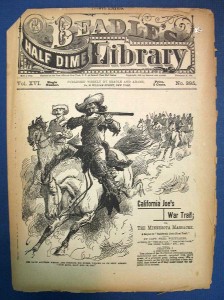
Beadles_California_Joes_War_TrialBeadle’s Half-Dime Library was published twice a week until the end of 1877. Starting in 1878, the publication appeared once a week, on Tuesdays, so long as Beadle remained publisher. Some early Numbers have multiple illustrations. For the most part, however, they are illustrated with a single woodcut on the front page. Beadle also squeezed quite a bit of text on each page–often twelve lines of type per inch.

Earlier Half-Dime stories were of adventurers, backwoodsmen, trappers, and hunters. The majority of the stories ran as series. These included Broadway Billy and Joe Phoenix. Deadwood Dick was probably the most successful of these, continuing for over 100 Numbers.

The End of an Era

In 1891, two other similar libraries emerged: Nick Carter Library and Gem Library. Then 1893 saw the establishment of the Bob Brooks Library. And the Tip Top Library and the Diamond Dick Library both started in 1896. But these would be short lived in comparison to Beadle’s Dime Library, which continued a few more years, until 1905. By the end of the 1930’s the dime novel had mostly given way to the pulp magazine.

A Selection of Beadle’s Dime and Half-Dime Publications

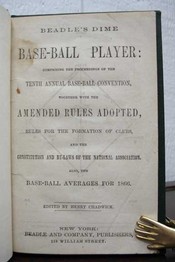
Beadles_Dime_Baseball_PlayerBeadle’s Dime Base-Ball Player (1867)

Beadle’s Dime Base-Ball Player was published as a continuous series from 1860 to 1881 (none were issued in 1861 or 1863). This is the sixth example. Author Henry Chadwick, is generally regarded as the first sports writer in the US. According to DAB, “the rules of baseball are largely his work.” The series gave rise to the many iterations and laborious study that baseball fans still love today. All of these guides are quite scarce; OCLC shows only one listing of the seventh issue for the nine editions through 1870, and none have come to auction in the last three decades. Details>>

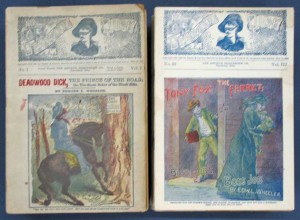
Deadwood_Dick The Deadwood Dick Library

Published in 64 issues, the Deadwood Dick series was penned by Edward Lytton Wheeler. The eponymous protagonist, whose real name is Edward Harris, is considered the quintessential dime-novel hero. Written from 1877 to 1895, the series began publication in Beadle’s Half-Dime Library and was later republished multiple times. This Westwood set is quite rare because it’s complete. Details>>

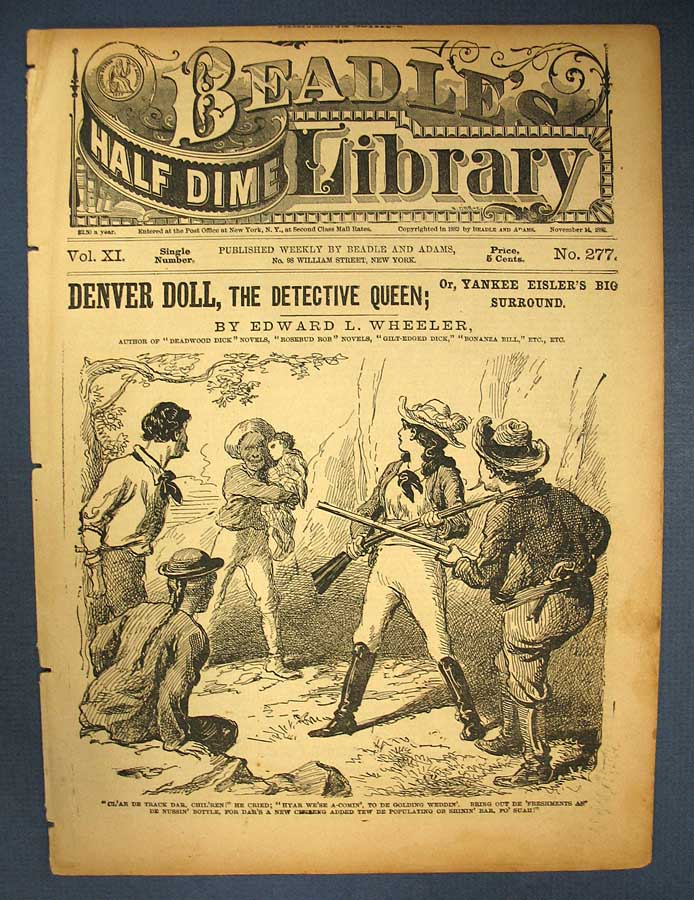
Beadles_Denver_DollDenver Doll, the Detective Queen

Our research indicates that the “Denver Doll” was one of the earliest female detective characters in American fiction. Wheeler (also responsible for the Deadwood Dick series, above) describes her as “a splendid specimen of young womanhood.” Despite the protagonist’s charm, the series failed to capture the attention of Beadle’s Half-Dime Library readers. The fourth, and last, part of the series was published in March 1883. The series’ short life-span has undoubtedly contributed to its current scarcity. Indeed, even avid mystery collectors are unaware of the Denver Doll and believe that Katherine Green’s Amelia Butterworth (The Affair Next Door, 1897) is the first female detective in US literature. This is the first of the Denver Doll series and can be said to be quite rare. Details>>


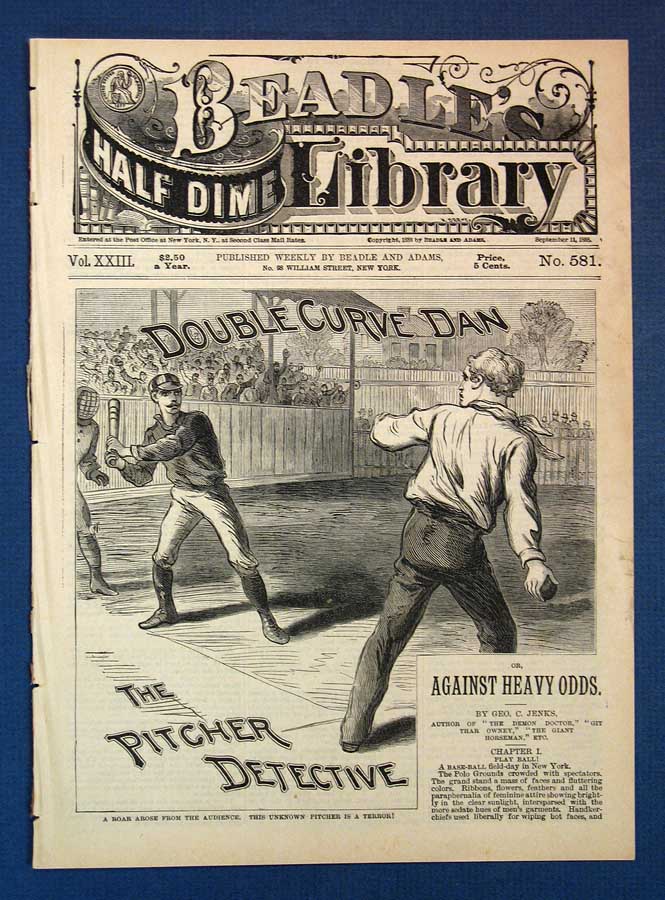
Beadles_Double_Curve_Dan_Pitcher_DetectiveDouble Curve Dan, the Pitcher Detective

George Jenks penned three stories for the Double Curve Dan series. This is the first in the series. OCLC shows only three institutional holdings, and no copies have been at auction in the past thirty years. This copy shows evidence of previous binding, but is otherwise a very good copy of a quite fragile item. Details>>


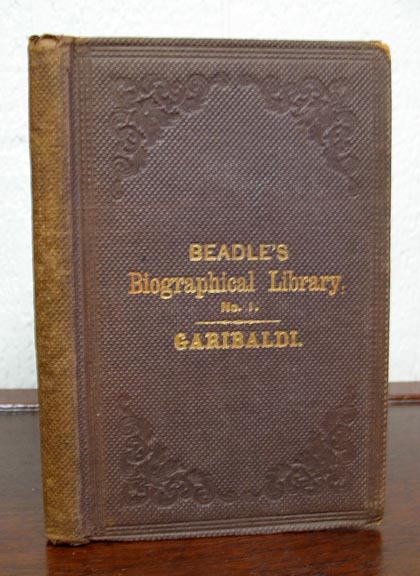
Beadles_Biographical_GaribaldiThe Life of Joseph Garibaldi, the Liberator of Italy

In addition to the popular dime novel series, Beadle & Co launched another series in 1860. Beadle’s Dime Biographical Library presented biographies of famous figures from all over the world. This first edition of The Life of Joseph Garibaldi (1860) has proven a quite rare Beadle publication, especially in this cloth binding (which is not mentioned in Johannsen). It includes an engraving of Garibaldi on the frontis. Details>>

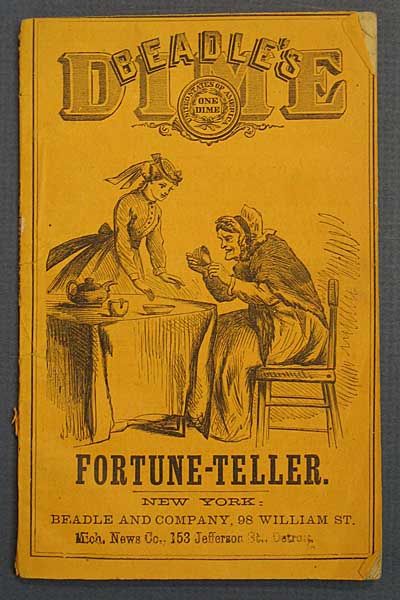
Beadles_Dime_Fortune_TellerBeadle’s Dime Fortune-Teller

The woodcut on the front of this pamphlet depicts an old crone telling the fortune of a young maid. The book promises to demystify dreams and instruct the reader to discern his fortune in everything from tea leaves to egg whites. First published in October 1868, this is an early reprint, circa December 1868. OCLC records just one institutional holding, at NIU. Details>>

Share

Three Pioneering Authors Who Used Pseudonyms

In Shakespeare’s Romeo and Juliet, Juliet says, “A rose by any other name would smell as sweet.” In Numerous authors have taken that sentiment to heart, choosing to publish under pseudonyms for a host of reasons. Charles Dickens famously wrote as “Boz,” and Samuel Clemens is better known as Mark Twain. Here’s a look at three more overlooked authors who also took pen names.

James Mason Hutchings, AKA “Forty Nine”

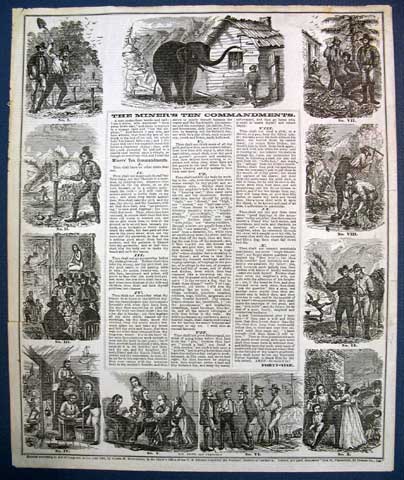
Born in England, James Mason Hutchings immigrated to the United States in 1848. He headed to California to find his fortune during the Gold Rush. In 1853, he published “The Miner’s Ten Commandments” under the pseudonym “Forty Nine.” Though he indeed struck it rich, Hutchings lost everything in a bank failure. He would later rebuild with a career in publishing. However he’s known not for his contributions to publishing, but for his promotion of Yosemite. Hutchings came to the region after reading Lafayette Bunnell’s evocative description of waterfalls in the region.

Hutchings_Miners_Ten_Commandments

The Miner’s Ten Commandments

On July 5, 1855, Hutchings set out on one of the most historic trips to the area: he led the second tourist expedition into Yosemite (the first, led by Robert C Lamon, occurred in 1854, but there’s no known written record). Hutchings had been one of the earliest settlers in the area, and his Hutching’s Illustrated California Magazine did much to publicize the natural wonders of Yosemite. And in 1869, Hutchings hired John Muir–at the time an itinerant sheepherder–to build a sawmill on park land. Muir would become Yosemite’s greatest champion.

When Yosemite was dedicated as a state park in 1864, Hutchings refused to leave his land. Essentially a squatter, he alleged that preemption laws meant he was entitled to 160 acres of land in the valley. The case dragged on for years and went all the way to the US Supreme Court, which was unswayed by Hutchings’ argument. He would not get his land, though he did get a generous payment from the state. That satisfied him only temporarily. Hutchings continued to push legal limits, constantly challenging the prohibition of constriction of buildings on public lands. By 1875, Hutchings’ demands and arguments had worn thin; he was banished from Yosemite Valley altogether.

Metta Victoria Fuller Victor, AKA “Seeley Regester”

Dead_Letter_Victor_Beadles

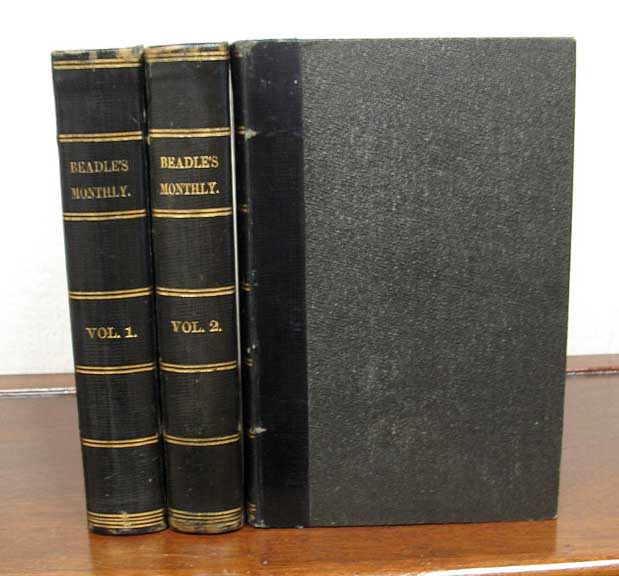
‘The Dead Letter’ as serialized in ‘Beadles Monthly’

Metta Victoria Fuller Victor, the wife of publishing pioneer Orville James Victor, broke new ground herself with the publication of The Dead Letter (1864). The novel, which Victor published as Seeley Regester, is considered the first detective novel in the United States. Prior to that, Victor had penned Alice Wilde (1860), an early dime novel. And her abolitionist novel Maum Guinea, and Her Plantation “Children” was read and enjoyed by Abraham Lincoln himself. Victor frequently used pseudonyms, including Corrine Cushman, Eleanor Lee Edwards, Walter T Gray, and Rose Kennedy.

Victor proved an extremely prolific author, writing poetry, fiction, short stories, social issue novels, and even cookbooks. She’s notable for her adaptability; while other writers would fall out of fashion, Victor would adapt her style or genre to remain relevant. Thus, her earlier works are more sentimental, but she happily made her stories more sensational as public demand shifted. Her inventiveness drew attention from The New York Weekly, which offered Victor a $25,000 contract for the exclusive rights to her stories for five years. Such an income was quite impressive for the time period–consider, for instance that Henry Wadsworth Longfellow, a rockstar of his time, earned about $3,000 in eighteen months (between roughly July 1835 and January 1837).

When Victor’s contract with The New York Weekly expired, she worked mostly for Beadle & Adams, still using pen names. Eventually her husband would also work at Beadle & Adams as an editor. He became one of the most respected editors in the dime novel business, making the Victors a true literary power couple of the era. Despite Victor’s multitude of contributions to fiction and literature, she remains relatively unknown today.

William Taylor Adams, AKA “Oliver Optic”

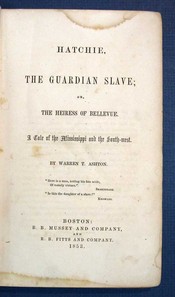
While the majority of authors who adopt pseudonyms prefer to hide their true identities, William Taylor Adams never denied responsibility for his books and stories. On the contrary, Adams frequently used his real name on the title page or at the end of the preface. Though his favorite nom de plume was Oliver Optic, Adams also used Warren T Ashton, Gayle Wintertown, Brooks McCormick, Irving Brown, and Clingham Hunter, MD. By the end of his career, he’d published 126 novels and over 1,000 stories.

Hatchie-Guardian_Slave_Adams

Hatchie the Guardian Slave

When Adams published his first work, Hatchie, the Guardian Slave, in 1853, he’d been teaching in Boston Public Schools for over a decade. The book met with only moderate success, but Adams persevered. His effort paid off two years later with The Boat Club. The book was so successful, Adams decided to expand it into a series of six volumes. From then on, Adams would often write multi-volume series. Adams also acted as editor of Oliver Optic’s Magazine, Our Boys and Girls starting in 1867. It grew to be the most popular juvenile magazine in the United States.

Adams’ works were, for the most part, enthusiastically received by children and critics alike. Both action packed and lively, they still imparted moral lessons. Only Louisa May Alcott openly disapproved, possibly out of jealousy. In her “Eight Cousins,” the character Mrs. Jessie criticizes her son’s reading material for its use of slang and focus on lowlifes like bootblacks and newsboys. She says, “I have read about them…I am not satisfied with those optical delusions, as I call them now.” Adams responded line by line, and the two authors never put aside their animosity for one another.

Unfortunately Adams would later draw ire from the American Library Association. At the annual conventions of 1876 and 1879, the ALA debated the value of “sensational” fiction like that of Adams, and for some time Adams’ works were not allowed in some public libraries. Modern critics and scholars view Adams as a true pioneer in juvenile fiction. When he began writing for children, the usually available stories were the moralistic tales of the Sunday School library, books by Jacob Abbot, and others of that ilk. These tales were hardly appealing to little boys; they lacked relevance and vigor. Adams changed all that, writing stories that were full of action and adventure.

Regardless of what names they affixed to their publications, James Mason Hutchings, Metta Victoria Fuller Victor, and William Taylor Adams all made incredible contributions to the history of American literature.

Related Reading:

The Inimitable Boz and the Delightful Phiz


Thanks for reading! Love our blog? Subscribe via email (right sidebar) or sign up for our newsletter--you’ll never miss a post!.

Share

Irving and Dickens: The Authors Who Saved Christmas

Dickens-Irving

When Clement Clarke Moore published “A Visit from Saint Nicholas” anonymously on December 23, 1823 in the Troy Sentinel, he couldn’t have known that it would become an international phenomenon. But the poem not only gave names to Santa’s eight reindeer. The illustrations of the poem’s reprints significantly impacted our perception of Santa Claus. Caricaturist Thomas Nast would later illustrate jolly old Saint Nick, cementing our concept of him as a jolly. bearded man. And Coca-Cola would eventually be the first to bring us Santa in a red coat. We can thank Washington Irving and Charles Dickens, however, for resurrecting Christmas as a holiday for joyful family celebration.

A Brief History of Christmas

Before Christianity took hold, pagan rituals were routinely honored on the winter solstice. On this day, people would celebrate the triumph of light over darkness. Early church officials, eager to supplant these rites with their own, wisely chose to make Christmas celebrations correspond to these pagan rituals. The strategy had one caveat: the Church couldn’t dictate how people would celebrate Christmas. Thus, Christmas had mostly replaced pagan holidays by the Middle Ages, but holiday observances were usually far from pious. Believers might go to church, but afterward citizens would gather for rowdy festivals similar to Mardi Gras. Each year a student or beggar would be named “Lord of Misrule,” and festival attendants would play the role of his subjects. Meanwhile the poor would go to the homes of the rich to demand food and drink. Non-compliant homeowners risked mischief.

Oliver-Cromwell

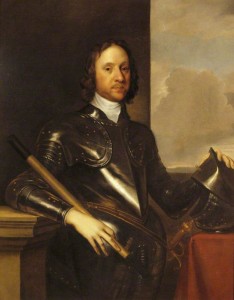
Oliver Cromwell was the original Grinch, canceling Christmas when he took over England in 1645.

But Oliver Cromwell proved to be the original Grinch. A staunch Puritan, Cromwell believed that Christmas was a decadent and unchristian holiday. When he took over in 1645, he vowed to rid England of such indulgences and cancelled Christmas. In 1660 Charles II was restored to the throne by popular demand and reinstated the holiday. But the holiday wouldn’t immediately take hold. By Dickens’ time, the Industrial Revolution had all but destroyed the holiday in Great Britain–for most people, Christmas was still a work day.

Meanwhile the Puritans had left England to settle in the New World. For the most part, Christmas went uncelebrated in the colonies. In Boston the observation of Christmas even bore a five-shilling fine from 1659 to 1681. (Jamestown was a notable exception: Captain John Smith–the first person ever to consume eggnog–reported in 1607 that the settlement happily enjoyed the holiday.) The American Revolution proved a death knell for traditions of British origin, so Christmas again fell out of favor. It would not be declared a national holiday in the United States until June 26, 1870.

Washington Irving, the Real Father Christmas?

When Washington Irving published Knickerbocker’s History of New York (1809) under the pseudonym Dietrich Knickerbocker, New Year’s Eve was New York’s only real winter holiday. The book parodied American life, and Irving satirized the traditions of New York’s Dutch settlers. He poked fun at their patron saint, Nicholas, whom they called “Sanct Claus.” In Irving’s account of Oloffe the dreamer, Oloffe, a prophet and land speculator, dreams of a night where “the good Saint Nicholas came riding over the tops of the trees, in that self-same wagon wherein he brings his yearly presents for children.” Irving’s St. Nicholas not only delivers presents to children in a sleigh; he also smokes a pipe and places the presents in stockings hung by the chimney.

John-Pintard-St-Nicholas

John Pintard’s St. Nicholas isn’t quite the jolly figure we imagine today!

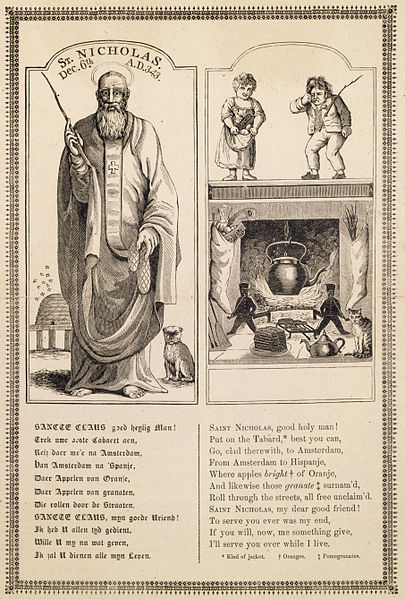
Irving had some unsolicited assistance in St. Nick’s makeover. New York Historical Society founder John Pintard publicized an engraved picture of St. Nicholas–admittedly looking less than merry–as a symbol of New York City. But Americans remained ambivalent about the holiday. Members of different religious denominations had different concepts of what the holiday should be; some saw Christmas as sacred, while others still believed it blasphemous. Observation was spotty at best, though enterprising Boston merchants advertised ritual Christmas gift exchange as early as 1808.

Dickens-Irving-Grolier-Club

A stray leaf from the correspondence of Washington Irving and Charles Dickens

Irving moved abroad in 1815, and it was not until several years later that he would write another bestseller. The Sketch Book of Geoffrey Crayon was published in several installments from 1819 to 1820. Sandwiched in between American classics like “Rip Van Winkle” (first installment) and “The Legend of Sleepy Hollow” (sixth installment), Irving published five Christmas stories in The Sketch Book’s fifth installment on January 20, 1820. He’d spent time at Astor Hall, recently leased from Adam Bracebridge by James Watt and passed the Christmas holiday with the Watt family. Irving was charmed by their Christmas traditions, reinventing Watt as the benevolent “Squire Bracebridge” in “Bracebridge Hall.” In “Christmas,” Irving writes, “But in the depth of winter, when nature lies despoiled of every charm and wrapped in her shroud of shielded snow, we turn for our gratifications to moral sources.” He would later explain the tradition of hanging mistletoe to American readers with a footnote in “Christmas Eve.” Irving believed that America could use a dose of English Christmas tradition, particularly the part where the poor are welcomed into the homes of the wealthy for a meal.

Historians mostly agree that Irving idealized the English country Christmas in The Sketch Book, but the veracity of his accounts wasn’t important to Americans. They embraced Irving’s stories. Then in 1828, the New York City Council had to create its first police force in response to a Christmas riot. The upper class decided it was time to reinvent the holiday, and Irving’s accounts fit the bill. By 1835, New Yorkers had all but abandoned Christmas revelry in favor of more idyllic celebrations at home. Christmas was revived in America.

Charles Dickens Follows Irving’s Footsteps

Charles-Dickens-Boston-Washington-Irving

Report of the Dinner Given to Charles Dickens in Boston (Feb 1, 1842)

Charles Dickens visited the United States in 1842, and Washington Irving hosted a dinner in his honor on February 1 of that year. Numerous luminaries attended, and the event made headlines. When Dickens addressed the audience and thanked his host, he admitted his own devotion to Irving: “I say, gentlemen, I do not go to bed two nights out of seven without taking Washington Irving under my arm upstairs to bed with me.” In The Pickwick Papers, Dickens evokes Irving’s Squire Bracebridge in the character of Mr. Wardle, who merrily reminds his guests that it’s customary to while away the hours of Christmas Eve with games and ghost stories. Dickens again adapts Irving’s presentation of Christmas in A Christmas Carol, placing them in Mr. Fezziwig’s hall and in the home of Scrooge’s nephew, Fred. Thus he takes Christmas out of the country manor and brings it to working class London. Dickens’ Christmas is also centered on family and children, rather than church or community, another paradigm shift that Victorians readily embraced.

Charles-Dickens-Pirate-Christmas-Carol

Dickens brought suit against five defendants for selling a piratical edition of ‘A Christmas Carol.’ Only one fought the charges, and the account makes for interesting reading!

Dickens wrote A Christmas Carol in only six weeks during the autumn of 1843. It was published on December 19, and all 6,000 copies sold out that day. Dickens had chosen to illustrate the book with colored plates, but the expense associated with that method cut into his profits. It would be the first and only book he published with such plates. The illustrations, however, helped to bring Dickens’ Christmas to life and have since inspired a number of talented illustrators–not to mention printers and book binders who have also been taken with the work. A Christmas Carol has never gone out of print, and so many editions exist that the book is the perfect subject for a single-title collection. Dickens would write other Christmas tales, but none of these would have such an influence on the way the holiday was celebrated. Dickens’ exhausting schedule of reading tours–the first of which was for A Christmas Carol– doubtless helped promulgate his vision of Christmas, as well.

Washington Irving and Charles Dickens helped to pave the way for a rich tradition of Christmas literature, ranging from community cookbooks to children’s books. But these contributions are merely one facet of the authors’ incredible legacies.

Related Posts:

Why Did Charles Dickens Write Ghost Stories for Christmas? 
Charles Dickens Does Boston
Charles Dickens’ Debt to Henry Fielding
Happy Birthday, Washington Irving! 

Share

Why Did Charles Dickens Write Ghost Stories for Christmas?

scrooge


Charles Dickens’ A Christmas Carol has become a beloved part of the literary canon–and for many an indispensable part of the holiday season. The story embodies the goodwill associated with the Christmas season–and it has the Victorians’ favorite elements of a good Christmas story: ghosts. Dickens wrote other Christmas tales that also incorporated phantoms and ghosts, as did his Victorian cohorts. But why this obsession with ghosts at Christmastime?

An All But Dead Holiday–With Pagan Roots

By Dickens’ time, Christmas was not much of a holiday. In fact, for most people it was still a work day. The Industrial Revolution meant fewer days off for everyone, and Christmas was considered so unimportant that no one complained. This was thanks to none other than Oliver Cromwell, the Lord and Protector of England in mid seventeenth-century England. Cromwell had toiled to eradicate Christmas altogether because the holiday had no scriptural basis; the Bible mentions no “holy day” other than the Sabbath and certainly doesn’t exhort Christians to celebrate Jesus’ birth on December 25.

Christmas_Forbidden_Cromwell

Furthermore, Cromwell knew that the date of December 25 was shrewdly chosen by early Christian officials who wanted to replace pagan rituals with Christian ones. The day was selected because of its association with two pagan holidays, Yule and Sol Invictus (the birthday of the Unconquered Sun). Both were celebrated in conjunction with the winter solstice, the longest night of the year. On this night, the boundaries between the physical and spiritual worlds were considered particularly permeable. It was believed that spirits would return to Earth to finish unsettled business–exactly what Jacob Marley does in A Christmas Carol.

Spinning a Winter’s Tale

While there’s scant proof that the Christmas ghost tale existed as a consciously undertaken tradition before the Victorian era, there is etymological evidence that the tradition stretches back at least to Shakespeare’s time. In “A Christmas Tree” (1859), Dickens writes, “There is probably a smell of roasted chestnuts and other good comfortable things over time, for we are telling Winter Stories–Ghost Stories, or more shame for us–round the Christmas fire.” That phrase “winter stories” and its variant “winter’s tale” had mostly fallen into disuse by Dickens’ day, but it refers to a fantastical yarn that one would weave to entertain interlocutors around a wintertime fire.

An even more specific connotation for “winter story” or its relative “winter’s tale” notably shows up in Christopher Marlowe’s The Jews of Malta (1589) with a very specific definition: a “winter’s tale” is a ghost story.

Now I remember those old women’s words

Who in my wealth would tell me winter’s tales

And speak of spirits and ghosts that glide by night

Shortly thereafter Shakespeare would play on this meaning with A Winter’s Tale (1623), in which Prince Maximillius says, “A sad tale’s best for winter; I have one/Of sprites and goblins.” Later in Saducismus Triumphatis, Joseph Glanville’s treatise on witchcraft published posthumously in 1681, Glanville admonishes individuals who dismiss the existence of witchcraft as “meer Winter Tales or Old Wives fables.”

Robert Louis Stevenson would later evoke the winter’s tale with The Master of Ballantrae: A Winter’s Tale (1889). Though the story contains no ghosts of the usual sort, the Master cheats death multiple times. He essentially haunts his brother, Henry, who eventually exclaims, “nothing can kill that man. He is not mortal. He is bound upon my back to all eternity–to all eternity!” Later, after the Master’s body has been buried, Henry still does not believe the Master has perished. Henry is incredulous: “He’s not of this world, neither him nor that black de’il that serves him.”

A Victorian Predisposition for the Ghostly

The Victorian Age was one in which spiritual beliefs were constantly being upended by scientific discoveries. It’s no wonder that Victorians turned to spiritualism and other superstitions to distract from that state of uncertainty, or that seances, table rapping, and other fads took hold. Another of these was telling ghost stories, and Dickens was far from the only author to participate. Sir Arthur Conan Doyle was noted for his rather eccentric spiritualism. Edith Nesbitt, Elizabeth Gaskell, and Rudyard Kipling all wrote ghost stories that often get overshadowed by their more famous works. And Henry James uses Christmas ghost storytelling as a frame for Turn of the Screw. Most importantly, Washington Irving had actually presaged Dickens’ A Christmas Carol and The Pickwick Papers’ Gabriel Grub character (a character visited by goblins in Mr. Warble’s Christmas tale) with his own depictions of the Christmas holiday, a relationship that we’ll explore in an upcoming post.
The tradition of telling ghost stories at Christmas stuck. Slightly later, Eton Provost and author Montague Rhodes James would entertain his students with ghostly tales around the Christmas fire. HP Lovecraft’s “The Festival” was written for Christmas. And twentieth-century Canadian author Robertson Davies would spin ghost tales for Massey College students every Christmas season. Though not widely practiced, the winter’s tale lives on as a Christmas tradition.

This month, in anticipation of the Christmas season, we offer select acquisitions of Dickensian Christmas literature. We invite you to peruse the list, which includes 60 items. Should you have a question about any item, please don’t hesitate to contact us!

Share

Charles Dickens Does Boston

Dickens-Public-Reading-1867

Charles Dickens at a public reading in 1867

We’re ready for a cross-country voyage to Boston for the 36th Annual Boston International Antiquarian Book Fair this weekend! Boston is a city steeped in literary tradition, and it was the first city in the New World to emerge as an enclave of authors and publishers. It’s no wonder that Charles Dickens chose it as an important destination when he came to America in 1842 and again in 1867. The confluence of advancements in steam and rail travel, along with new photography technology, contributed to elevating Dickens to celebrity status. The Inimitable was indeed the one of the first in the nineteenth century to achieve such a vaunted position.

Dickens’ First Visit and American Notes

Proclaimed the “first American edition” of Dickens’ ‘American Notes,’ this Brother Jonathan edition actually missed that distinction by mere hours.

On January 3, 1842, Charles Dickens boarded the steamship Britannia and started his first voyage to America. Though he wasn’t yet even thirty years old, Dickens had already attained incredible popularity on both sides of the Atlantic. He planned to take a year off from writing and explore the United States. Dickens, his wife, Kate, and maid Anne Brown faced unusually rough seas on their journey but arrived in Boston relatively unscathed on January 22, 1842.

He’d arrived in Boston only to be mobbed by adoring fans. Noted painter Frances Alexander rescued Dickens and his wife from the melee. Dickens was received in Boston by a number of prominent Bostonians, including Harvard professor Cornelius Felton, abolitionist and Anglophile Richard Henry Dana (himself the bestselling author of 1840 Ten Years Before the Mast), Daniel Webster, Oliver Wendell Holmes, and barrister Charles Sumner. Dickens soon found himself praised in the press as “Boz, the gay personification of youthful genius on a glorious holiday.”

Dickens stayed in Boston a whole month and fell in love with the city. “Boston,” he said, “is what I would like the whole United States to be.” Dickens had a relatively ambitious travel agenda; he planned to start in Boston, then head west and explore the country. He also had another ambitious goal: to introduce the idea of an international copyright law. Dickens’ works were regularly pirated in America, costing Dickens untold sums each year. He reasoned that American authors–whose works were frequently pirated in Europe–would also benefit from international copyright law and would support the idea.

Dickens-Boston-1842

Despite Dickens’ gaffe of introducing the unpopular topic of international copyright law that evening, Dickens enjoyed his dinner with the “Young Men of Boston,” writing to John Forster that “It was a most superb affair and the speaking admirable.”

But such would not be the case. Dickens broached the subject at a “Young Men of Boston” dinner on February 1, 1842. He met resistance from both his fellow authors and the popular press. It would be another fifty years until an international copyright law was implemented. Dickens would, however, eventually manage to forge a relationship with American publisher James T Fields, who held absolute volume rights to Dickens’ novels in America. Not that this mattered to some US publishers, but nevertheless, this provision offered Dickens some modest remuneration for his popularity in the States.

Meanwhile, thanks to tireless introductions from Sumner and Dickens’ own international celebrity, Dickens enjoyed quite the full and varied itinerary. Dickens sat in on sessions of Congress and met President Tyler. He also indulged his fascination with the odd, touring prisons, asylums, reform schools, and schools for deaf and blind children. Dickens also wished to witness slavery firsthand He had planned a trip to Charleston, South Carolina, but due to complications found himself in Richmond, Virginia instead. Dickens was rightfully horrified by the institution of slavery. He would write to William Macready, “This is not the republic I came to see; this is not the republic of my imagination.”

Dickens’ impressions would be published in American Notes, which Dickens completed in only four months. The work painted an unflattering picture of America: Dickens attacks slavery and descries Americans’ general lack of social awareness. He blamed the latter on the press. Dickens further explored the shortcomings of the new republic in Martin Chuzzlewit, when young Martin goes to America. Dickens’ scathing representation of the country temporarily crushed his popularity, but he soon recovered.

An Amended View of America

Dickens-Departure_Boston

A banquet with “upwards of one hundred celebrities” was held in Dickens’ honor before he departed London in 1867. This pamphlet records speeches made by Dickens, Lytton, Russell, Trollope, and others.

In 1867, Dickens finally succumbed to the temptation of another lucrative book tour (and who can blame him, what with so many mouths to feed at home?). By this time, the Civil War had resulted in the abolition of slavery, and Dickens found America much changed. On April 18, 1868 at a dinner in his honor, Dickens alluded to his previous negative impressions of the country and admitted that both he and the United States had evolved. He promised to make appendices to both Martin Chuzzlewitt and American Notes to mitigate his prior views.

That dinner was one of seemingly countless appearances and events that Dickens attended during his second trip to America. He’d considered bringing his mistress, Ellen Ternan, with him for the tour. But tour manager George Dolby, who’d arrived in Boston early, learned that bringing Ternan would be a serious faux pas. Dickens would travel, then, only with his staff. By this time his health was failing; he’d spent many previous weeks unable to walk without assistance. But he’d been guaranteed £10,000 from a consortium of Boston dignitaries, with his publisher Fields leading the initiative.

Boston had little else to occupy itself during Dickens’ visit; the lack of crisis or election left them plenty of time to indulge in Dickens mania. Dickens did his best to avoid the throngs of adoring fans, passing his down time in his rooms at the Parker House. He still managed to meet members of Boston’s intelligentsia, such as illustrators Sol Entinge, Jr and Thomas Nast, scholar Charles Eliot Norton, and science writer Louis Aggasiz.

Christmas Carol-Charles Dickens

This first US edition of ‘A Christmas Carol’ is, in our experience, offered much less frequently than the first UK edition.

Dickens pushed himself through a grueling schedule of readings and other events during this visit. He found that ticket scalpers had become terribly aggressive; for example, when Dickens read at Harvard on December 2, 1867, not a single student was able to obtain a ticket. That day, Dickens read from A Christmas Carol, much to the pleasure of his adoring audience.
On November 30, 1868, the Saturday Club met at the Parker House to hear Dickens read. The author was noted for his elaborate dress and stage set-up, and this event was no exception. In front of a massive maroon backdrop, and atop a maroon carpet, sat a custom designed reading desk. The desk held a variety of gas pipes designed to provide proper lighting for different moments in the reading. Dickens delivered a 2.5-hour program with only a ten-minute intermission.

Dickens was himself a member of the Saturday Club, which also included colleagues like Oliver Wendell Holmes and Henry Wadsworth Longfellow. Though Dickens generally dined with Fields at the Parker House, he joined Longfellow for a traditional Thanksgiving meal. The meal was surely a sober affair. Longfellow had recently been made a widower. His second wife, Frances Appleton, had been immolated in an accidental fire. Longfellow wore a beard to cover the disfiguring scars he’d incurred trying to save her. Then in New York from December 25, 1867 to January 4, 1868, Dickens enjoyed a traditional Christmas holiday with Fields.

Afterward he continued to push himself past his own limits–both professionally and personally. On February 29, 1868, Dickens participated in what he jokingly called the “Great International Walking Match,” a competition more suitable for a man used to walking up to twelve miles a day, rather than a man of Dickens’ careworn constitution. The weather that day was terrible, but Dickens and his friendly competitors persisted. In a letter to his daughter, Dickens called himself the “Gads Hill Gasper” and said, “As the subtitle of the famous broadside said, ‘the origin of this highly exciting and important event cannot be better state than in the articles of agreement subscribed by the parties.” Following this athletic exertion, Dickens required a full rubdown before he could attend dinner–and he fell into his own bathtub, fully clothed, later that same evening.

Dickens would depart from Boston on April 10, 1868. He quietly traveled to Westminster, New York, where he stayed until sailing back to England on April 22, 1868. Thanks to the adulation of Dickens’ American readers, the author became one of the first modern celebrities.

Share