Category Archives: Collecting

A Brief History of Propaganda

The term “propaganda” has come to have a negative connotation in much of the English-speaking world. But in some places, the word is neutral or even positive. Why this difference? The reasons can be traced through the word’s etymology and the way that this strategy of communication has evolved over the centuries.

Roots in the Catholic Church

The use of propaganda began much earlier than most people would imagine. The Behistun Inscription, from around 515 BCE, details Darius I’s ascent to the Persian throne and is considered an early example of propaganda. And ancient Greek commander Themistocles used propaganda to delay the action of–and defeat–his enemy, Xerxes, in 480 BCE. Meanwhile, Alexander put his image on coins, monuments, and statues as a form of propaganda. Roman emperor Julius Caesar was considered quite adept at propaganda, as were many prominent Roman writers like Livy.

But it was the Catholic Church that both formalized the use of propaganda and gave us the word itself. Pope Urban II used propaganda to generate support for the Crusades. Later, propaganda would become a powerful tool for both Catholics and Protestants during the Reformation. Thanks to the printing press, propaganda could be disseminated to a much wider audience.
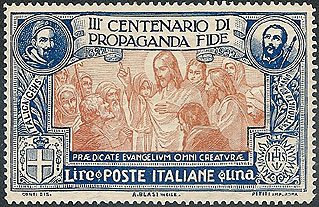
Centenario_Propaganda_Fide

The 300th anniversary of the Congregatio de Propaganda Fide was commemorated on Italian currency.

In 1622, Pope Gregory XV established the Congregatio de Propaganda Fide (Congregation for Propagating the Faith) for the purpose of promoting the faith in non-Catholic countries. The group’s name was often informally shortened to “propaganda,” and the name stuck. As literacy rates grew in subsequent centuries, propaganda became a more and more useful tool around the world. Thomas Jefferson and Benjamin Franklin were both considered adept propagandists during the American Revolution.

Literacy Propagates…Propaganda
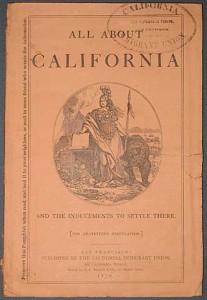
All_About_California_1870

“All About California” is a propaganda piece designed to encourage settlement in the state.

By the nineteenth century, propaganda had finally emerged in the form we think of it today. Because most people were literate and had more than passing interest in government affairs, politicians found it necessary to sway public opinion. They turned to (sometimes unscrupulous) propaganda to get the job done.

A notorious propaganda campaign of the 1800’s was that of the Indian Rebellion in 1851. Indian sepoys rebelled against the British East India Company’s rule. The British grossly exaggerated–and sometimes completely fabricated–tales of Indian men raping English women and girls. The stories were intended to illustrate the savagery of the Indian people and reinforce the notion of “the white man’s burden” to rule, induce order, and instill culture in less civilized peoples who could not be trusted to rule themselves.

Abolitionists in both the US and Britain also aggressively used propaganda to support their cause. Certainly the conditions of slavery were heinous, but they often exaggerated or eroticized transgressions, making them more lurid. These efforts were complemented by freed slaves who traveled to speak at public events. The speakers generally made arguments against slavery based on moral, economic, and political grounds. The combination of emotional and rational arguments proved an excellent combination for winning supporters to the abolitionist cause.

Meanwhile another powerful form of communication was emerging in the nineteenth century: the political cartoon. Though illustrated propaganda had been used in the past, the form of the political cartoon was significantly refined during the second half of the century. Thomas Nast is considered one of the forerunners of this format.

Global Conflict Gives Propaganda New Power
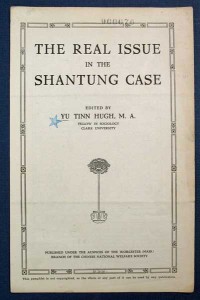
Real_Issue_Shantung_Case

This 1919 propaganda publication assails the Shantung settlement incorporated in the Treaty of Versailles.

World War I saw the first large-scale, formalized propaganda production. Emperor Wilhelm of Germany immediately established an unofficial propaganda machine with the creation of the Central Office for Foreign Services. One of the office’s primary duties was to distribute propaganda to neutral countries.

After the war broke out, however, Britain immediately severed the undersea cables that connected Germany to the rest of the world; Germany was limited to using a powerful wireless transmitter to broadcast pro-German news to other nations. The country also set up mobile cinemas, which would be sent to the troops at the front lines. The films emphasized the power, history, and inevitable victory of the German Volk.

Meanwhile, the British propaganda machine was regarded as an “impressive exercise in improvisation.” It was rapidly brought under government control as the War Propaganda Bureau. Journalist Charles Masterson led the organization. On September 2, 1914, Masterson invited Britain’s leading writers to a meeting to discuss potential messaging. Attendees included Sir Arthur Conan Doyle, GK Chesterton, Ford Madox Ford, Thomas Hardy, Rudyard Kipling, and HG Wells. Winnie-the-Pooh author AA Milne would later be recruited to covertly write propaganda.

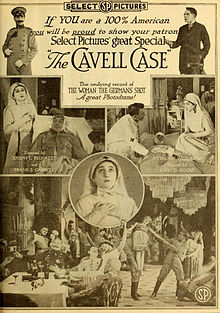
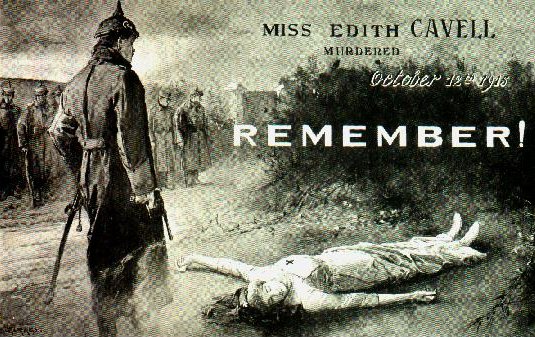
The propaganda of World War I was frequently based on complete exaggeration or misinformation. For example, nurse Edith Cavell was executed for treason after using her position as a nurse to help soldiers escape from behind German lines. The episode was used to exaggerate German atrocities, and it was even made into a movie. (Read more here.) Indeed, by the end of the war, people had begun to tire of propaganda.

Yet the British propaganda machine was quite effective. It is frequently credited with persuading the United States to enter the war in the first place. Adolf Hitler actually studied British propaganda after the war, declaring it both brilliant and effective. He would later enlist Joseph Goebbels to help with propaganda during World War II, and the two proved an indomitable team. They masterminded multiple campaigns to justify eugenics programs, extermination of target populations, and other atrocities. The Allies countered with propaganda that vilified the Germans.
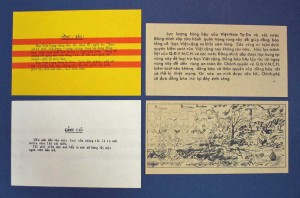
South_Vietnam_GVN_Propaganda

This collection of South Vietnamese GVN propaganda were probably air drop leaflets. Though usually dropped in mass quantities, few survive.

When the true horrors of Nazi Germany came to light, the extreme power of propaganda was terribly apparent. The word “propaganda” soon developed a negative connotation, one that it still carries to this day in the English-speaking world. Airdrop leaflet campaigns during unpopular engagements like the Korean War and Vietnam War often brought the communication even lower.

Now it’s common for a government authority to regulate propaganda, and it may be used for more innocuous purposes like public health and safety campaigns. But in non-democratic countries, propaganda continues to flourish as a means for indoctrinating citizens, and this practice is unlikely to cease in the future.

Related Posts:
Edith Cavell: Nurse, Humanitarian, and Traitor? 
AA Milne: Legendary Author and Ambivalent Pacifist

Thanks for reading! Love our blog? Subscribe via email (right sidebar) or sign up for our newsletter--you’ll never miss a post.

Share

A Look Back at Long-Lost Manuscripts

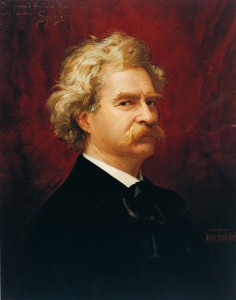
MarkTwainOn February 13, 1991, Sotheby’s made an incredible announcement: the auction house had Mark Twain’s long-lost manuscript of The Adventures of Huckleberry Finn. The manuscript bore edits in Twain’s own hand and had scenes not included in the published novel. The discovery and subsequent authentication sparked an argument over who had rights to the manuscript.

The recovered manuscript was unearthed in a set of trunks sent to a Los Angeles librarian after her aunt, a resident of upstate New York where Twain once lived, passed away. It constitutes the first half of the Huckleberry Finn manuscript. The second half had been in the possession of the librarian’s grandfather James Gluck. Gluck had solicited the manuscript directly from Twain for the Buffalo and Erie Library. At the time, Twain had been unable to find the first half of the manuscript, and it was presumed lost.

A “custody battle” ensued among the librarian and her sister; the library; and the Mark Twain Papers Project in Berkeley, California. They finally agreed that the library would take the papers, but that all three would share publication rights. The manuscript was published by Random House in 1995.

The discovery of such a document generates excitement among scholars and rare book collectors alike. The Huckleberry Finn manuscript was but one of many such documents to turn up unexpectedly.

Corroborating Robert Hooke’s Claim to an Invention

Robert_HookeRevered scientist Robert Hooke was one of the original fellows of the Royal Society and the curator of the group’s experiments. He was also responsible for recording the organization’s minutes from 1661 to 1682. The minutes make for fascinating reading, not least because of Hooke’s own asides and commentary. They recount many seminal moments in science, including the earliest work with a microscope and the first sightings of sperm and micro-organisms. This fascinating 500-page document didn’t show up until 2006, when it was discovered in a dusty cabinet.

The minutes from December 1679 detail correspondence between Hooke and Sir Isaac Newton regarding the design of an experiment to confirm the rotation of the earth. Hooke recorded a suggestion from Sir Christopher Wren, which required shooting bullets into the air at precise angles to see if they fell in a circle. But perhaps even more interesting is that the document finally elucidates a feud between Hooke and Dutch physicist Chistiaan Huygens.

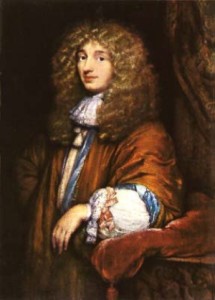
Huygens announced that he’d invented a watch that would keep its own time for several days and would make it possible to measure longitude, which infuriated Hooke. He claimed that he’d showed the Royal Society the same invention five years earlier, and that someone must have leaked the design. Hooke embarked on a mission to prove he’d invented the watch first. He painstakingly combed through years of Royal Society minutes, looking for proof of his own invention. Ironically, he’d ripped out the notes about the invention itself and taken them home for safekeeping–only to misplace them. In this newly discovered document, Hooke exonerates himself: he records a quote from his predecessor, Henry Oldenberg, about Hooke’s presentation of the invention–five years earlier than Huygens, just as Hooke had alleged.

A First Look at Yellowstone

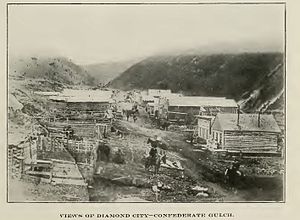
Diamond_City_1870

Diamond City ca 1870

By 1869, prospectors’ accounts of their finds at the Diamond City gold camp were both outlandish and persistent. Incredulous, thirty-year-old mining engineer David E Folsom decided to investigate for himself. In September of 1869, he undertook a treacherous expedition with friends Charles Cook and William Peterson. The group’s military envoy had canceled, and other would-be adventurers backed out, unwilling to venture into hostile territory unescorted.

During the four-week expedition, the group witnessed and documented the natural wonders of the area. They also took numerous measurements of the land, even using a rock on a string to measure the height of waterfalls. Folsom recorded their experiences and tried to sell his account to a number of prominent national magazines. They all turned him down because the tales seemed too fantastic to be real. Finally a small Chicago paper called Western Monthly ran the story. Folsom’s account contributed to the deployment of both the Washburn-Doane-Langford expedition (1870) and the Hayden expedition (1871)–which subsequently led Congress to make Yellowstone the first national park.

Folsom’s great-grandson David A Folsom found the original manuscript, written in pencil on lined paper. Two other manuscript copies had been destroyed in two separate fires, and had previously been the only extant copies. The younger Folsom gave the manuscript to Montana State University’s Renne Library Special Collections, where it still resides today.

Truman Capote, Kathryn Graham, and a Little Hashish

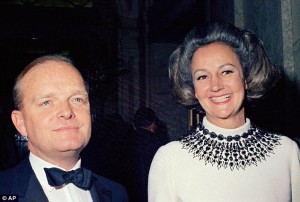
Ever the journalist, Truman Capote wasn’t known for glossing over his acquaintances’ secrets (or character flaws). Many a New York socialite fell victim to his pen–with one notable exception. Kathryn Graham never seemed to appear in Capote’s work. That all changed with the discovery of an unpublished story, “Yachts and Things” among Capote’s papers at the New York Public Library.

Capote_Graham

In the story, the narrator (presumably Capote) recounts a cruise along the Turkish coast with a “distinguished” and “intellectual” woman called Mrs. Williams. Their hosts have been called away due to a death in the family, and another guest has just passed away. One evening, the two invite some Turks aboard and smoke hashish for the first time. Though the hosts aren’t named, the deceased companion is named Adlai Stevenson.The researchers who discovered the story conjectured that the woman in the story was actually Graham because of her well-documented relationship with Stevenson, and they didn’t do much further research.

But a look at Graham’s own autobiography, Personal History, yields a more definitive answer. Graham, Capote, and Stevenson were invited on the trip by Gianna and Marcella Agnelli, who were unable to join their guests because of a death in the family. Graham and Capote stopped in London, and Graham coyly tells how Stevenson stayed with her (and forgot his tie and glasses in the morning). Stevenson died of a heart attack the next day. Graham and Capote decided to go on the cruise anyway, and Graham says they passed the time discussing Capote’s soon-to-be-published In Cold Blood.

Manuscripts like these will always be beloved because they seem to offer us a greater intimacy with the author. They illustrate the author’s own writing process, essentially illuminating the process of creating great history and literature.

Related Posts:
Three Pioneering Authors Who Used Pseudonyms

Thanks for reading! Love our blog? Subscribe via email (right sidebar) or sign up for our newsletter--you’ll never miss a post.
Share

Collecting Antiquarian Diaries, Journals, and Correspondence

In this age of electronic communication, the practice of keeping a journal or diary has largely fallen by the wayside, as has the art of letter writing. But in past centuries, keeping a diary was the only means of creating a written record of one’s life, the only way to look back at one’s personal past. In bygone days, farmers may have recorded observations about crops, livestock, and weather in a journal. Soldiers recorded strife,while ordinary men and women simply recorded the simple details of their daily lives. And written correspondence was the primary method for maintaining long-distance relationships.

Looking back at these documents can give us tremendous insight into the aspects of life that history books often omit. They may reveal facts about the diet, customs, or etiquette of the time period. They sometimes shed light on genealogy and local history. Journals and correspondence may even reveal the real motivations behind historic events or explain the nuanced relationships among important individuals.

Tips for Collecting Diaries, Journals, and Correspondence

For many collectors, diaries and journals are appealing because each volume is an absolutely unique manuscript. Such a document is quite a treasure, indeed. Collectors should keep a few tips and hints in mind.

  • Look for complete sets, rather than individual volumes of journals and diaries. Faithful diarists will often have produced a number of volumes over the course of their lifetimes. Stay away from individual volumes that have most likely been removed from a set.
  • Decide whether you’ll digitize your collection. This will require the assistance of a skilled archivist or conservator. Digitizing these items is an investment, but it will enhance your ability to enjoy the content of your collection–and to share it with scholars if the content proves significant.
  • Be gentle! Old paper can be quite brittle, while covers may be fragile. Handle them with care, and consider professional conservation or preservation to extend the life of your collection.
  • Don’t overlook ephemera. Journals frequently contain extra items, which can range from dried flowers to vacation souvenirs. These items damage the pages on either side. A conservator may recommend carefully documenting each item’s location and storing it separately in an archival envelope.
  • If correspondence is still contained in the original envelopes, consult a conservator about the best means to preserve both the envelopes and the letters inside. Chemical interactions between materials–even between two sheets of the same or similar papers–can hasten breakdown.

A Selection of Diaries and Journals

Journal Across the Atlantic

Journal_Across_AtlanticOriginal mss journals such as this are quite rare in commerce. An unidentified male passenger recorded the details of his 1785 transatlantic journey from London to Philadelphia. He records the names and nationalities of the crew and passengers, along with the daily minutiae of life aboard the ship. Events include the sighting of a “grampus whale,” an encounter with a Spanish ship, and a lively debate over how moths and butterflies came to be aboard the ship. Details>>

Notes from Lectures of Professor Alonzo Clarke for 1848-1849

Almon Mitchell Orcutt attended the College of Physicians and Surgeons in New York. The first 136 pages of his journal consist of notes he took during the lectures of Alonzo Clarke, a noted physician and professor at the college. Clarke was often quoted in medical journals and association reports. He famously said, “All of our curative agents are poisons; and, as a consequence, every dose diminishes the vitality.” He was correct, indeed, given the “medicines” and treatments commonly used at the time. John Harvey Kellogg quotes Clarke in his Home Hand-Book of Domestic Hygiene (volume 2, 1880) in a discussion of the smallpox vaccination. Orcutt’s notes include the semester’s lectures, while the last 68 pages contain financial records. Details>>

Department of the Interior, US Geological Survey

US_Geological_Survey_Notes_JournalThis workbook started out as a record of levels and other data, kept by Allen T Paine, the survey crew levelman. But Paine also used the book as a photo journal. Many of the photographs are captioned. While many show family, friends, and colleagues, a good number also document the buildings of Concord, New Hampshire, along with the survey crew’s work and environs. Details>>

Family Trip Photo Diary/Journal

This period photo journal of a visit to the 1915 Panama Pacific Exposition in San Francisco begins in Albuquerque, New Mexico. It includes 45 images, eight of which clearly depict portions of the journey to San Francisco. One image, for example, shows part of the Salt Lake; another, the Grand Canyon. Fourteen of the images have handwritten captions. Details>>

 Archive of Shuman Family Letter Correspondence, August 1862-September 1866

Shuman_Family_Correspondence_Civil_WarJohn Shuman was in his early twenties when he volunteered for service in the 88th Regiment of the Indiana Volunteers to fight for the Union in the American Civil War. His letters illustrate his confidence in the decision and that he believed the war would be short-lived. It lasted longer than Shuman expected, and he lost his life in battle, not due to wounds, but due to dysentery. The Shumans’ correspondence offers a unique snapshot of a soldier’s life during the war. Details>>

Eleven Manuscript Diaries

Manuscript_DiariesThe author of these diaries, William Antrim Flowers, was born on March 21, 1832 in Champaign County, Ohio. He begins his memoir with his birth and then goes back to the birth of his father in 1804. The memoir is a rich storehouse of family genealogy and history, following his family and relatives as they moved abou tthe Midwest in the early nineteenth century. Flowers also documents his own life, during which he worked variously as a teamster, a wagon driver, a teacher, and a dairy farmer. He saw the first McCormick reaper in 1855 and enlisted to serve in the Civil War. Flowers records descriptions of his own experiences in the war, along with a description of the 114th Colored Regiment Infantry and the 44th Colored Regiment; and the death of Abraham Lincoln. Details>>

Related Posts:
Flights of Fancy: Collecting Vintage Airline Posters
Of Sammelbands and Sheet Music
A Brief History of Broadsides


Thanks for reading! Love our blog? Subscribe via email (right sidebar) or sign up for our newsletter--you’ll never miss a post.

Share

Of Sammelbands and Sheet Music

Confederate_Sheet_Music_See_Feet_Suppliant_One

“See at Your Feet a Suppliant One” As Sung By Miss Ella Wren, In Balfe’s Grand Opera of the Bohemian Girl. An example of Confederate sheet music

Music has always played a powerful role in cultures around the world. Now sheet music provides a glimpse at people’s daily lives and illustrates changes in fashion, dress, and even behavioral expectations. Collecting sheet music isn’t just for music lovers; it’s an engaging pursuit that frequently intersects with history and literature.

The first music to appear in a printed volume was in the Codex spalmorum (1457). But the work didn’t include the actual notes; instead the text was printed with blank space to manually add the music to each manuscript! It wasn’t until 1473, with the publication of the Constance gradual in Germany, that music appeared fully printed. Three years later, Ulrich Hahn published Missale secundum consuetudinem curie romane, which included music printed with woodcuts. He claimed to be the first to print music, but most experts agree the Constance gradual was the true first. Soon after, missals, graduals, and other religious texts began popping up all over Europe, and many contained printed music.

The difficulty with printing music is that it generally requires multiple print runs: one to print the staff lines, and another to print the actual notes and notations. Hahn and his successors got around this issue by using woodcuts. Eventually, however, new printing technologies–namely moveable type and lithography–were adopted for music as well. (Famous revolutionary and publisher Isaiah Thomas was the first to use moveable type to print music in the United States. More on him later this month!)

Climbin-Those-Stairs_Bohemian_Club

Illustrations and themes of antiquarian sheet music can be an uncomfortable reminder of the past. This item, from the Bohemian Club, is quite rare with none listed in OCLC.

By the 1820’s, however, the most common method for printing music was engraved plates. This has produced numerous bibliographic obstacles for collectors and scholars today. First, not all sheet music bore copyright information in the first place. Next, publishers would often store the plates for long periods of time and simply use them, unaltered, for later reprints whenever they needed to replenish their stock. And sometimes they sold these plates to other publishers, who didn’t bother emending copyright information when it did exist. Sometimes the plate numbers can be used to determine an approximate date, but that’s largely based on how much is known about the particular engraver or publisher. Collectors of nineteenth-century sheet music, then, must put their detective skills to the test on a regular basis–and be comfortable with some uncertainty about publication information.

While many antiquarian book collectors would shy away from works that are not definitive first editions, this factor is less important with sheet music. These items were printed with the intention of being ephemera, and of being used. They often bear the marks of use, such as tears, smudges, wear, and mending with tape or sewing thread. Music printed in the early nineteenth century and earlier tends to be more durable than later sheet music because it was printed on paper made of rag rather than wood pulp. Meanwhile, during the heyday of American sheet music, it was common to print sheet music as newspaper supplements. These items, printed on thin, cheap paper, are often quite fragile if they survived at all. Collectors must be quite mindful of preservation issues to extend the longevity of their sheet music.

Highlights from Our Sheet Music Collection

A Complete Dictionary of Music

Complete_Dictionary_Music_Thomas_BusbyThomas Busby, author of A Complete Dictionary of Music, began his musical career at a young age. After being rejected as too old to be a chorister by Westminster Abbey organist Benjamin Cooke, he went on to study under Samuel Champness, Charles Knyvett, and Jonathan Battishill. Busby’s first musical venture was music to accompany William Kenrick’s play The Man the Master. This remained incomplete during his lifetime. His next pursuit, an oratorio for Alexander Pope’s Messiah, occupied Busby intermittently for several years. He published a musical dictionary with Samuel Arnold in 1786, along with a serial called The Divine Harmonist. Busby also published the first music periodical in England, The Monthly Musical Journal. His A Complete Dictionary of Music went through several editions during his lifetime.

A Sheet Music Sammelband

Sheet_Music_SammelbandOccasionally also called a nonce-volume, a sammelband is a collection of works that were originally published separately and have since been bound together. A musician or music enthusiast might assemble a sammelband of favorite pieces, while music teachers might put them together to teach students specific skills in a set progression. This particular sammelband contains 43 pieces, ranging from waltzes and quadrilles to country dances, sonatas, and operas. It includes a handwritten “Contents” at the front. Much of the music was composed for the piano forte, so the original owner likely played this delightful instrument.

“Carrie Bell”

Carrie_Bell_Confederate_Sheet_MusicCaptain WC Capers, who wrote the words to “Carrie Bell,” was formerly of the “Macon Volunteers” and had served in the Florida Indian Wars (1836). During the Civil War, he commanded Company G, 1st LA Heavy Artillery Regiment of the CSA. In July 1863, Capers was promoted to Major. He saw service at Vicksburg and elsewhere in the South. Confederate sheet music such as “Carrie Bell” was much more frequently published via lithography instead of engraved plates because metal was such an important commodity during the war–it simply wasn’t available for making engraved plates.

“The Ivy Green”

Ivy-Green-Charles-DickensThough “The Ivy Green” makes its first appearance in Chapter Six of The Pickwick Papers, Kitton informs us that the piece wasn’t written expressly for the novel. The favorite setting for the piece was by veteran Henry Russell, who said he received the whopping sum of ten shillings for the composition. Dickens frequently incorporated popular music into his works. He also occasionally wrote his own pieces, such as the satirical ballad “The Fine Old English Gentlemen,” which he penned for The Examiner and said should be sung at all conservative dinners. Meanwhile, Dickens’ extraordinary popularity meant that his novels often took on lives of their own, and people also composed their own musical pieces based on Dickens’ works.

Share

Looking Back at 2013, and Looking Forward to 2014!

Happy_New_Year

This year has been a terrific one here at Tavistock Books, and we have you to thank for that! We appreciate your being a part of our community, and we look forward to building that community with you in the coming year. To that end, here’s a look back at the ten most popular blog articles of 2013. It came as no surprise that Charles Dickens was a favorite, as were William Shakespeare and articles about collecting rare books:

  1. Why Did Dickens Write Ghost Stories for Christmas?
  2. Happy Birthday, William Shakespeare!
  3. The Two Endings of Charles Dickens’ Great Expectations
  4. Meet Dr. Erin Blake, Curator of Art and Special Collections at the Folger Library!
  5. Alexander Pope’s Legacy of Satire and Scholarship
  6. Edgar Allan Poe: Creator of Enduring Terror and Literary Masterpieces
  7. A Brief History of True Crime Literature
  8. A Brief History of Broadsides
  9. Charles Dickens Does Boston
  10. The Benefits of Bibliography

Other favorites were recaps of events in the antiquarian world, such as intrepid assistant and Tavistock Books’ scholarship recipient Travis Low’s recap of Rare Book School. We’ll be sure to keep the updates coming, starting with with the two California book fairs: San Francisco (February 1-2) and Pasadena (February 7-9). Watch our website and blog for more information.

What’s Ahead for 2014

Many of you have graciously and thoughtfully offered blog article suggestions and other feedback. Therefore you’ll soon be seeing articles about a wide variety of bookish topics, from early American bindings to the history of nursing, from tips on collecting sheet music to a look back at Mark Twain’s Adventures of Huckleberry Finn.

Have an idea for a blog post or a question about rare books? We can’t wait to hear it! You’re invited to share it in the “Comments” section of any blog or to contact us via phone or email. You’ll also find us on Facebook and Twitter.

Share

Irving and Dickens: The Authors Who Saved Christmas

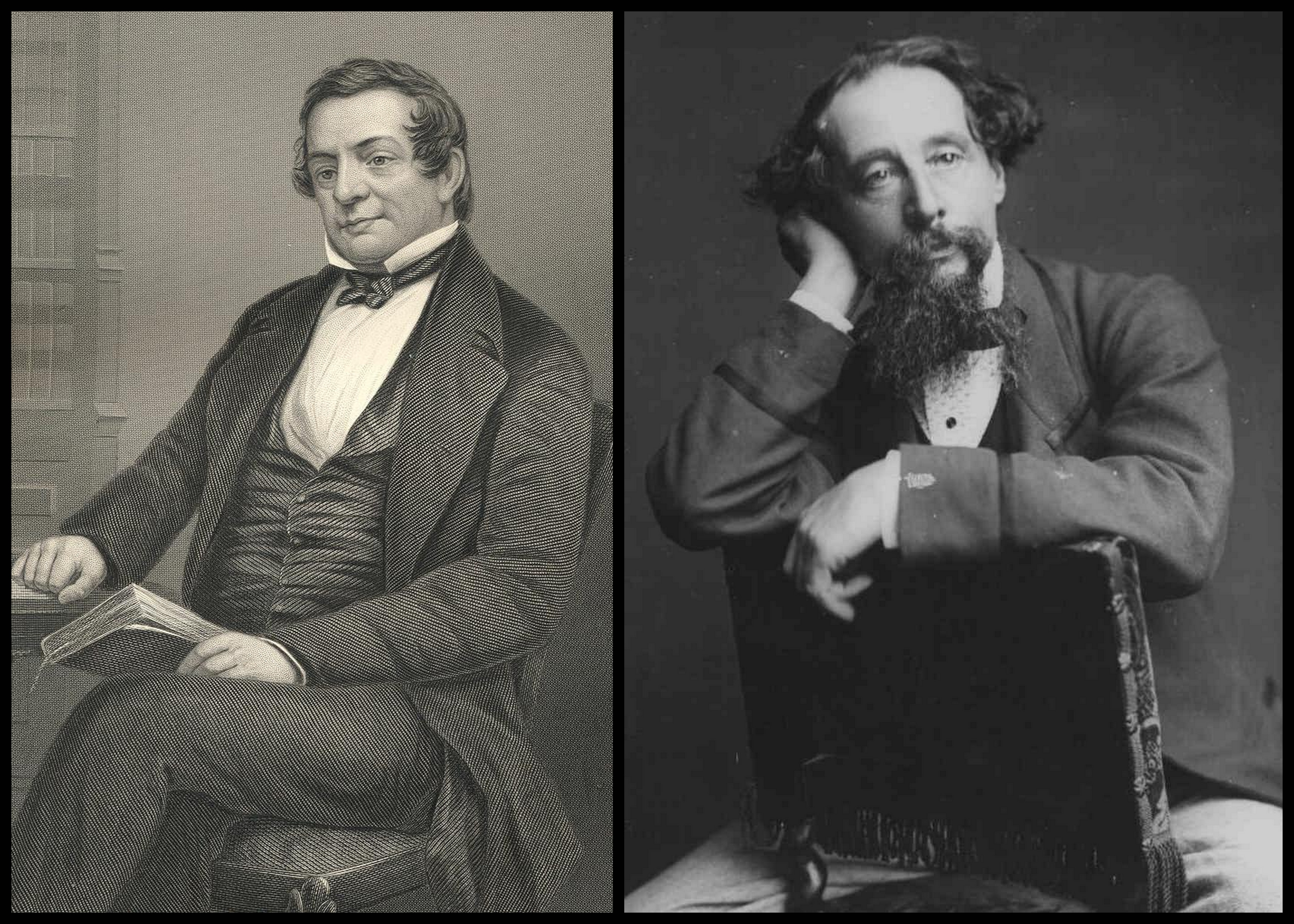
Dickens-Irving

When Clement Clarke Moore published “A Visit from Saint Nicholas” anonymously on December 23, 1823 in the Troy Sentinel, he couldn’t have known that it would become an international phenomenon. But the poem not only gave names to Santa’s eight reindeer. The illustrations of the poem’s reprints significantly impacted our perception of Santa Claus. Caricaturist Thomas Nast would later illustrate jolly old Saint Nick, cementing our concept of him as a jolly. bearded man. And Coca-Cola would eventually be the first to bring us Santa in a red coat. We can thank Washington Irving and Charles Dickens, however, for resurrecting Christmas as a holiday for joyful family celebration.

A Brief History of Christmas

Before Christianity took hold, pagan rituals were routinely honored on the winter solstice. On this day, people would celebrate the triumph of light over darkness. Early church officials, eager to supplant these rites with their own, wisely chose to make Christmas celebrations correspond to these pagan rituals. The strategy had one caveat: the Church couldn’t dictate how people would celebrate Christmas. Thus, Christmas had mostly replaced pagan holidays by the Middle Ages, but holiday observances were usually far from pious. Believers might go to church, but afterward citizens would gather for rowdy festivals similar to Mardi Gras. Each year a student or beggar would be named “Lord of Misrule,” and festival attendants would play the role of his subjects. Meanwhile the poor would go to the homes of the rich to demand food and drink. Non-compliant homeowners risked mischief.

Oliver-Cromwell

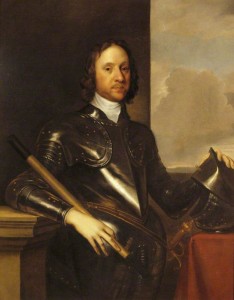
Oliver Cromwell was the original Grinch, canceling Christmas when he took over England in 1645.

But Oliver Cromwell proved to be the original Grinch. A staunch Puritan, Cromwell believed that Christmas was a decadent and unchristian holiday. When he took over in 1645, he vowed to rid England of such indulgences and cancelled Christmas. In 1660 Charles II was restored to the throne by popular demand and reinstated the holiday. But the holiday wouldn’t immediately take hold. By Dickens’ time, the Industrial Revolution had all but destroyed the holiday in Great Britain–for most people, Christmas was still a work day.

Meanwhile the Puritans had left England to settle in the New World. For the most part, Christmas went uncelebrated in the colonies. In Boston the observation of Christmas even bore a five-shilling fine from 1659 to 1681. (Jamestown was a notable exception: Captain John Smith–the first person ever to consume eggnog–reported in 1607 that the settlement happily enjoyed the holiday.) The American Revolution proved a death knell for traditions of British origin, so Christmas again fell out of favor. It would not be declared a national holiday in the United States until June 26, 1870.

Washington Irving, the Real Father Christmas?

When Washington Irving published Knickerbocker’s History of New York (1809) under the pseudonym Dietrich Knickerbocker, New Year’s Eve was New York’s only real winter holiday. The book parodied American life, and Irving satirized the traditions of New York’s Dutch settlers. He poked fun at their patron saint, Nicholas, whom they called “Sanct Claus.” In Irving’s account of Oloffe the dreamer, Oloffe, a prophet and land speculator, dreams of a night where “the good Saint Nicholas came riding over the tops of the trees, in that self-same wagon wherein he brings his yearly presents for children.” Irving’s St. Nicholas not only delivers presents to children in a sleigh; he also smokes a pipe and places the presents in stockings hung by the chimney.

John-Pintard-St-Nicholas

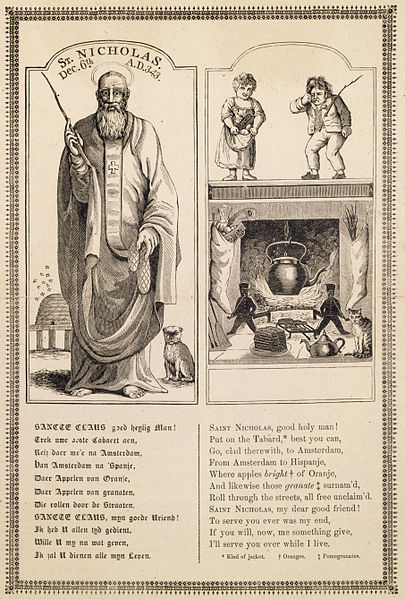
John Pintard’s St. Nicholas isn’t quite the jolly figure we imagine today!

Irving had some unsolicited assistance in St. Nick’s makeover. New York Historical Society founder John Pintard publicized an engraved picture of St. Nicholas–admittedly looking less than merry–as a symbol of New York City. But Americans remained ambivalent about the holiday. Members of different religious denominations had different concepts of what the holiday should be; some saw Christmas as sacred, while others still believed it blasphemous. Observation was spotty at best, though enterprising Boston merchants advertised ritual Christmas gift exchange as early as 1808.

Dickens-Irving-Grolier-Club

A stray leaf from the correspondence of Washington Irving and Charles Dickens

Irving moved abroad in 1815, and it was not until several years later that he would write another bestseller. The Sketch Book of Geoffrey Crayon was published in several installments from 1819 to 1820. Sandwiched in between American classics like “Rip Van Winkle” (first installment) and “The Legend of Sleepy Hollow” (sixth installment), Irving published five Christmas stories in The Sketch Book’s fifth installment on January 20, 1820. He’d spent time at Astor Hall, recently leased from Adam Bracebridge by James Watt and passed the Christmas holiday with the Watt family. Irving was charmed by their Christmas traditions, reinventing Watt as the benevolent “Squire Bracebridge” in “Bracebridge Hall.” In “Christmas,” Irving writes, “But in the depth of winter, when nature lies despoiled of every charm and wrapped in her shroud of shielded snow, we turn for our gratifications to moral sources.” He would later explain the tradition of hanging mistletoe to American readers with a footnote in “Christmas Eve.” Irving believed that America could use a dose of English Christmas tradition, particularly the part where the poor are welcomed into the homes of the wealthy for a meal.

Historians mostly agree that Irving idealized the English country Christmas in The Sketch Book, but the veracity of his accounts wasn’t important to Americans. They embraced Irving’s stories. Then in 1828, the New York City Council had to create its first police force in response to a Christmas riot. The upper class decided it was time to reinvent the holiday, and Irving’s accounts fit the bill. By 1835, New Yorkers had all but abandoned Christmas revelry in favor of more idyllic celebrations at home. Christmas was revived in America.

Charles Dickens Follows Irving’s Footsteps

Charles-Dickens-Boston-Washington-Irving

Report of the Dinner Given to Charles Dickens in Boston (Feb 1, 1842)

Charles Dickens visited the United States in 1842, and Washington Irving hosted a dinner in his honor on February 1 of that year. Numerous luminaries attended, and the event made headlines. When Dickens addressed the audience and thanked his host, he admitted his own devotion to Irving: “I say, gentlemen, I do not go to bed two nights out of seven without taking Washington Irving under my arm upstairs to bed with me.” In The Pickwick Papers, Dickens evokes Irving’s Squire Bracebridge in the character of Mr. Wardle, who merrily reminds his guests that it’s customary to while away the hours of Christmas Eve with games and ghost stories. Dickens again adapts Irving’s presentation of Christmas in A Christmas Carol, placing them in Mr. Fezziwig’s hall and in the home of Scrooge’s nephew, Fred. Thus he takes Christmas out of the country manor and brings it to working class London. Dickens’ Christmas is also centered on family and children, rather than church or community, another paradigm shift that Victorians readily embraced.

Charles-Dickens-Pirate-Christmas-Carol

Dickens brought suit against five defendants for selling a piratical edition of ‘A Christmas Carol.’ Only one fought the charges, and the account makes for interesting reading!

Dickens wrote A Christmas Carol in only six weeks during the autumn of 1843. It was published on December 19, and all 6,000 copies sold out that day. Dickens had chosen to illustrate the book with colored plates, but the expense associated with that method cut into his profits. It would be the first and only book he published with such plates. The illustrations, however, helped to bring Dickens’ Christmas to life and have since inspired a number of talented illustrators–not to mention printers and book binders who have also been taken with the work. A Christmas Carol has never gone out of print, and so many editions exist that the book is the perfect subject for a single-title collection. Dickens would write other Christmas tales, but none of these would have such an influence on the way the holiday was celebrated. Dickens’ exhausting schedule of reading tours–the first of which was for A Christmas Carol– doubtless helped promulgate his vision of Christmas, as well.

Washington Irving and Charles Dickens helped to pave the way for a rich tradition of Christmas literature, ranging from community cookbooks to children’s books. But these contributions are merely one facet of the authors’ incredible legacies.

Related Posts:

Why Did Charles Dickens Write Ghost Stories for Christmas? 
Charles Dickens Does Boston
Charles Dickens’ Debt to Henry Fielding
Happy Birthday, Washington Irving! 

Share

Announcing 100 for $100 (or Less!)

Fifty Romance Lyric Poems

The holidays are just around the corner. Santa is filling his bag, polishing his sleigh, and ensuring the reindeer are getting plenty of cardio in advance of the big night, December 24th. And perhaps that ‘big gift’ for your loved one(s) is already secreted away in the closet or a drawer, but stocking stuffers, accompaniments and remembrances for friends have yet to be secured.

Why not a book?

And in that vein, Tavistock Books offers our Holiday list, “A 100 for a $100 (or Beyond the Borderless!).” The one hundred books that comprise this list have been individually selected for their interesting & diverse nature, gift quality appearance, and modest price. You’ll find the entire list of select acquisitions online, and we invite you to peruse it. The list may be sorted by various means; just select your preferred option from the upper right.

Should you have queries regarding any of this material, or other listings you The Perfect Present-Haguemay find on our site, please contact usWe thank you for your attention, and we hope you find something of interest while browsing these offerings.

Happy Holidays to All!

Kind Regards,

13 Words-Lemony SnicketVic Zoschak
Principal

Margueritte Peterson
Aide-de-Camp

Share

Edith Cavell, Nurse, Humanitarian, and Traitor?

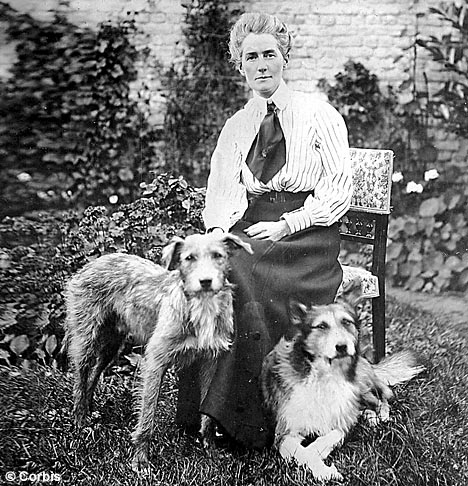
Edith_Cavell

It’s not unheard of for nurses to serve in extraordinary ways, but Edith Cavell went far beyond her nursing duties during World War I. The British nurse and patriot was executed for treason during World War I. Both the British and American governments would propagandize her death to bolster support for the Allied cause.

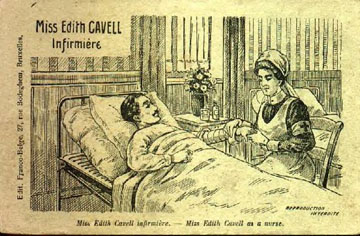
Cavell was born on December 4, 1865. She trained at the London Hospital under Matron Eva Luckes and earned a reputation as a wonderfully capable nurse. In 1907, she was recruited by Dr. Antoine Depage to be matron of the newly established L’Ecole Belge d’Infirmieres Diplomees in Brussels. Cavell flourished there, and by 1910 she “felt that the profession of nursing [had] gained sufficient foothold in Belgium” to warrant a scholarly journal for the discipline. She launched L’infirmiere that same year.

An Accomplished Nurse with a Humanitarian Mission

By 1911, Cavell was the training nurse for three hospitals, 24 schools, and 13 kindergartens in Belgium. When World War I broke out, the Red Cross assumed control of Cavell’s hospitals. Cavell, famous for saying “Patriotism is not enough,” threw herself into her work, saving the lives of countless soldiers on both sides of the war.

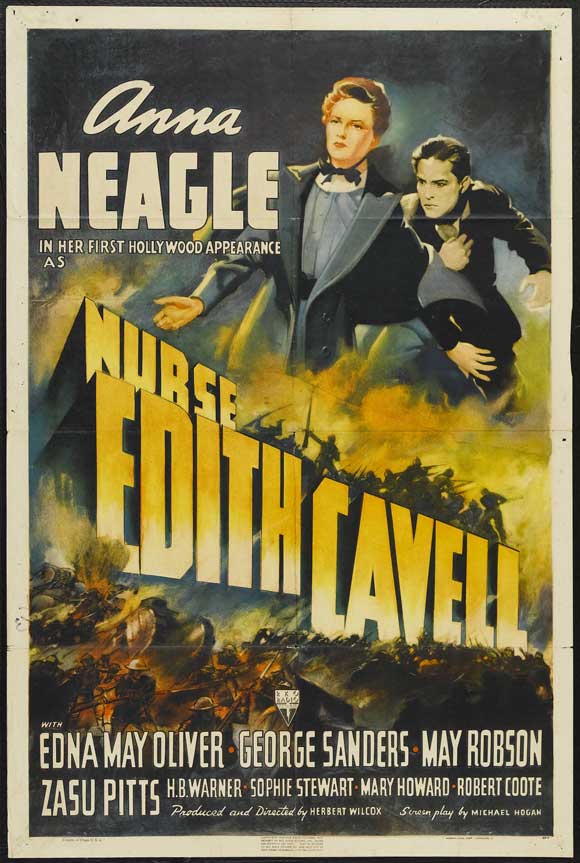
Edith-Cavell-Movie-Poster

The-Cavell-Case

Cavell’s story was adapted for the silver screen, first as propaganda in 1919, and again in 1939 when it revived anti-German sentiments. 

Cavell was one of many nurses recruited by the British Secret Intelligence Service (SIS) to gather intelligence on the Germans. But in November 1914, she put these duties aside to begin funneling British and French soldiers out of Belgium and into neutral Holland. Cavell tirelessly dedicated herself to these efforts, eventually raising suspicion. On August 3, 1915, Cavell was arrested by the Germans.

Although Cavell had indeed committed espionage, the Germans chose to try her for treason. Cavell was incredibly outspoken after her arrest, making no attempt to defend herself. She openly admitted her actions in three separate written statements and multiple verbal interrogations. Unfortunately for Cavell, under the auspices of the first Geneva Convention, the death penalty was a permissible punishment for treason.

Edith-Cavell-NursingThe British claimed that their hands were tied in the matter. The US government did put some pressure on Germany, reminding German officials that the country’s public reputation was already quite tarnished. Only one German intervened on Cavell’s behalf: Baron von der Lancken argued that Cavell should be treated with moderation because she had saved so many German lives. But General von Saubozweig insisted that Cavell be executed swiftly. Of the five people arrested in the case, only Cavell and one other were actually executed; the rest were later released.

Fuel for Allied Propaganda

There are numerous accounts of nursing from World War I, such as Grace MacDougal’s Nursing Adventures: A FANY in France (1917) and Violetta Thurston’s Field Hospital and Flying Column: Being the Journal of an English Nursing Sister in Belgium and Russia (1915). But Edith Cavell would leave a different kind of legacy.

Edith-Cavell-Propaganda

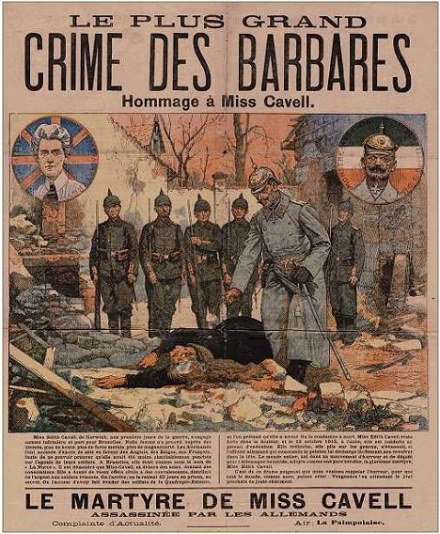
 Rather than leaving an account of her own experiences, Cavell would unwittingly leave her mark on British and American propaganda during World War I. She became the most famous British female Edith_Cavell_Crime_Des_Barbarescasualty of the war. The British government used her story to bolster military recruitment, while the US adopted Cavell to garner favorable sentiment toward the Allied effort–and to demonize the Germans.

Cavell-Propaganda-StampSoon after her death, news reports of questionable veracity emerged. Even the American Journal of Nursing printed a spurious account of Cavell’s execution, in which Cavell had refused to wear a blindfold, fainted in the face of the firing squad, and been shot point blank by a German commanding officer. Eyewitnesses later indicated that this version was false.

Cavell is one of many figures in the history of nursing who have left an indelible mark on the world. She not only made strides as a figure in modern nursing, but also set herself apart as a remarkable humanitarian.

Share

Flights of Fancy: Collecting Vintage Airline Posters

Salvador-Bahia_Brasil-Varig

Summer is long gone, and with it have gone the days of leisurely summer vacations. But collectors can recapture these moments and explore the history of aviation with vintage airline travel posters.

The earliest aviation posters, which date to the mid nineteenth century, did not advertise air travel, but the exploits of hot air balloonists. With the introduction of planes in the early twentieth century, posters were an effective means of advertising exhibitions and air shows. During World War I, aviation posters offered a subtle form of propaganda: the novelty and excitement of air travel attracted new recruits, and the military’s large-scale use of airplanes was an imposing sight unto itself. Commercial airlines began using posters to advertise in the 1920’s, but it wasn’t until the 1950’s and 1960’s that the airlines started producing posters that advertised both the excitement and comfort of air travel.

Collecting Vintage Airline Posters

For collectors, these collectible posters recapture the excitement and romance of air travel. They are also an interesting way to trace the history of aviation. Collectors often build collections around a specific airline, artist, destination, or time period.

Northwest_Orient_747FThe posters from now defunct airlines tend to be more sought after than those from companies that still exist. Pan American World Airways (PanAm) posters, for example, are particularly beloved. The airline started in 1927 with a single route from Key West to Havana, but soon became the leading international airline in the world, a distinction it held till iGolf-Worldwide_Pan_Americants collapse in 1991. Unlike other airlines, PanAm created posters for both its commercial and cargo planes. Smaller regional airlines also hold their own allure. Posters from the relatively obscure Jersey Airways in Britain and from Western Airlines and Northwest Orient Airlines in the US all offer charming travel posters. These airlines often have a relatively short history, so their posters can be more scarce.

Hawaii-United_Airlines

Some collectors focus on existing airlines. Swissair, founded in 1931 after the merger of two Swiss airlines, has long printed beautiful posters. The airline is a favorite among aviation enthusiasts because it consistently stays at the forefront of technology. Swissair was among the first to use DC-2’s, and it claims to be the first airline to employ stewardesses (1935). And United Airlines has also published a plethora of marvelous airline posters. In the early to mid 1970’s the airline produced a well-known series that evokes American history and freedom.

Meanwhile, a love of a specific destination motivates many collectors to create destination-themed galleries. Tropical locales like Hawaii or Tahiti are perennial favorites, as are more exotic destinations like the Philippines, Bahia, and Korea. Similarly, collectors may focus on an individual aircraft. United Airlines advertised its adoption of the 747 with three-dimensional foam boards.

United-Airlines-747

Caring for Vintage and Rare Posters

Collectors often wonder about the best ways to store and protect their rare and vintage posters. It’s actually perfectly fine to display your posters, so long as you take a few precautions. Use UV resistant Singapore_Japan_Airlinesglass or Plexiglass to protect your travel posters from damage from both sunlight and fluorescent lighting. If you decide to matte or back the poster, be sure to use only acid-free, archival quality materials. If you frame the poster without a matte, place a spacer between the poster and the frame, so that the poster and the glass are not touching. Otherwise, humidity can get trapped between the poster and the glass, and the poster will get stuck to the glass. Some posters are linen backed for preservation or restoration purposes. Well-executed linen backing can increase a vintage poster’s value, but it’s best done by professionals.

When your collection exceeds your wall space, you’ll need to store your posters safely. Ideally, posters are stored flat in acid-free sleeves, which will protect them from dust, moisture, and decomposition. It’s best to store each poster in its own sleeve; posters can leach chemicals onto one another, causing discoloration and decay. If flat storage isn’t an option, you can roll posters in acid-free tubes. Over time your posters may begin to curl, so you may have to flatten them if you decide to frame, photograph, or sell them later.

This month we’re pleased to offer a list of airline promotional and travel posters. We invite you to peruse the list! Please contact us if you have inquiries about any item.


Share

Oscar Wilde, Dickens Detractor and “Inventor” of Aubrey Beardsley

“I’ll be a poet, a writer, a dramatist. Somehow or other I’l be famous, and if not famous, I’ll be infamous.” –Oscar Wilde

Oscar-WildeBorn on October 16, 1854 in Dublin, Ireland, Oscar Wilde is perhaps remembered more for his sparkling wit, larger-than-life personality, and historic trial than for his literary achievements. But the author made his mark on the literary world not only through his prolific career as a journalist, novelist, and dramatist, but also through his sometimes bizarre relationships with other literary figures. These interactions make collecting Wilde an even more engaging pursuit.

Love Lost between Wilde and Bram Stoker

Wilde’s mother, Lady Jane, was a formidable author in her own right. She often kept literary company, and her circle of friends soon came to include Bram Stoker. Stoker soon met Florence Balcombe, a legendary beauty who had previously been involved with Wilde. Accounts of Balcombe’s relationship with Wilde vary; he claimed the two had been engaged. At any rate, Wilde was less than pleased when he learned that Stoker had proposed to Balcombe. He wrote to Balcombe, stating that he would never return to Ireland again. Wilde mostly kept to his word, returning to Ireland only for brief visits.

Bram-Stoker-Wedding-Announcement

But Stoker and Wilde’s relationship stretched beyond this inopportune love triangle. The two had gone to school together; Stoker even recommended Wilde for membership into the university’s Philosophical Society. And after Stoker and Balcombe had been married and Wilde had had sufficient time to lick his wounds, Stoker reinitiated the relationship. After Wilde was convicted of sodomy, Stoker even visited him. Yet Stoker also fastidiously removed all mention of Wilde from his published and unpublished texts, and it’s only recently that critics have begun to see Wilde’s influence in Stoker’s great novel Dracula.

Wilde Rejects Dickens’ Legacy…Or Does He?

Old Curiosity Shop-Little NellWilde heaped praise upon Matthew Arnold, Robert Browning, and Elizabeth Barrett Browning. He even called Aurora Leigh “the greatest work in our literature.” But he was less than complimentary when it came to the great Charles Dickens; Wilde is famous for saying of Charles Dickens The Old Curiosity Shop, “One would have to have a heart of stone to read the death of Little Nell and not to dissolve into tears…of laughter.” Wilde found Dickens overly sentimental and wished to separate himself from this aspect of Dickens’ Victorian England. Yet he never fully succeeded in escaping Dickens’ shadow (indeed, few authors of the century did).

Critics have pointed to similarities in the ways that Wilde and Dickens portray London, and Wilde even makes allusions to Dickens’ works–most notably Little Dorritt. Little Dorritt’s Mrs. General repeats the phrase “Papa, potatoes, poultry, prunes, and prism” to her young charges, and the phrase “prunes and prism” soon became closely associated with her character. Is it any coincidence, then, that Wilde chooses the name “Ms. Prism” for the proper governess in The Importance of Being Earnest? Even though Wilde didn’t subscribe to Dickens’ sentimental style, it’s likely that he had great respect for Dickens, as Wilde himself aspired to the same international acclaim that the Inimitable One had achieved.

An Outlandish Claim Spurred by Public Rivalry

Beardsley-Salome-WildeIn April 1893, an up and coming artist was moved by the French publication of Oscar Wilde’s Salome. He drew Salome with St. John’s head, and the illustration became one of several that would accompany Joseph Pennell’s article on him in the first number of The Savoy. The artist, Aubrey Beardsley, contacted Wilde about illustrating the translation of Salome. Wilde responded in kindness, sending Beardsley an inscribed edition that read “For Aubrey: for the only artist who knows what the dance of seven veils is, and can see that invisible dance. Oscar” It wasn’t outright rejection, but it wasn’t an enthusiastic invitation, either.

Then Beardsley was contracted to illustrate Lord Alfred Douglas‘ English translation of Salome. Wilde initially called Beardsley’s illustrations for the work “too Japanese,” pointing out that the work was more Byzantine. Wilde then took his criticism a step further, saying that Beardsley’s art resembled “naughty scribbles a precocious boy makes on the margins of his copybook.” The rivalry exploded; Beardsley published caricatures of Wilde, and Wilde made the preposterous claim that he had “invented Aubrey Beardsley.” In reality, Wilde had simply worried all along that Beardsley’s brilliance would overshadow his own.

Mutual Admiration from a Distance

In November 1879, George Bernard Shaw met Oscar Wilde at Lady Jane’s London home. The two had trouble interacting, though Wilde clearly had good intentions toward Shaw. A few years later, on July 6, 1888, Wilde attended a meeting of the Fabian Society, likely at Shaw’s invitation. Artist Walter Crane spoke on “The Prospects of Art under Socialism,” which soon moved Wilde to write The Soul of Man under Socialism. Meanwhile over the years Shaw and Wilde maintained a pleasant relationship, albeit from a distance. They frequently exchanged books and letters and openly complimented each other’s works.

Shaw frequently defended Wilde against his critics, and he again rallied to Wilde’s defense when he was arrested for sodomy. Shaw was adamant that “never was there a man less an outlaw” than Wilde. Shaw and other writers put together a petition for Wilde’s early release, but it found surprisingly little support and was eventually dropped. As public opinion turned against Wilde and eventually forgot him entirely, Shaw still insisted on reminding people of Wilde’s greatness. He regularly mentioned him in drama reviews and remained fascinated with Wilde’s work for the rest of his life. When Frank Harris undertook his (somewhat controversial) biography of Wilde, Shaw edited it with the assistance of Lord Douglas.

Collecting Oscar Wilde

For collectors, Oscar Wilde is the ideal case study in how a single-author collection can–and should–come to include materials by a variety of other authors. A comprehensive Oscar Wilde collection would encompass the works of Wilde, not only his major literary pieces, but also the articles he penned as a journalist and critic. And a truly comprehensive collection would have a second layer: other authors’ reactions to and interactions with Wilde. For example, Shaw’s reviews mentioning Wilde are scarce because they were printed in periodicals on cheap paper, making them a challenging item for collectors to acquire. And Aubrey Beardsley’s caricatures of Wilde are sought after by both Beardsley and Wilde collectors alike, making them a desirable addition to an Oscar Wilde collection.

Oscar Wilde certainly left his mark on the world as an author and public figure. He will undoubtedly remain a popular figure among rare book collectors for generations to come.

Share