Category Archives: Collecting

Top Ten Blog Posts of All Time

This month has been a big one here at Tavistock Books! We celebrate our 25th anniversary, along with the one-year anniversary of fearless Aide-de-Camp Margueritte Peterson. We’re also proud that this month we hit the 10,000-visitor mark for our blog. To recognize this occasion, we humbly present the top ten blog articles of all time. Hope you enjoy reading!

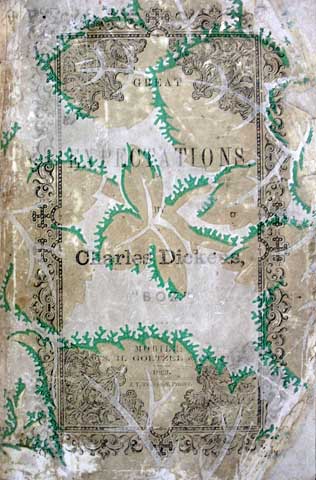
Dickens_Great_Expectations_Confederate_Edition1. The Two Endings of Charles Dickens’ Great Expectations

When Charles Dickens finished Great Expectations and sent it off to his publishers, he was quite pleased with himself. Then he showed a copy to friend and fellow author Edward Bulwer-Lytton, who, according to Dickens, “was so very anxious that I should alter the end…and stated his reasons so well, that I have resumed the wheel, and taken another turn at it.” The book’s dual endings present complications for critics and collectors alike. Read More>>

2. Why Did Charles Dickens Write Ghost Stories for Christmas? 

For the Victorians, Christmas wasn’t complete without a great ghost story! Charles Dickens certainly catered to this preference with his beloved Christmas Carol and a number of other Christmas tales. But why ghost stories? The holiday–once forbidden by Oliver Cromwell–has its roots in pagan rituals, which included telling “winter’s tales,” that is, ghost stories. Read More>>

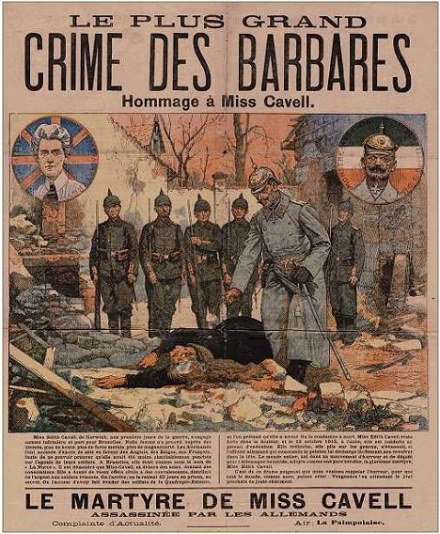
Edith_Cavell_Crime_Des_Barbares3. Edith Cavell: Nurse, Humanitarian, and…Traitor?

Edith Cavell quickly earned a reputation as an excellent nurse, and during World War I she found herself with another set of duties. Along with other nurses, Cavell was recruited by the British Secret Intelligence Service to collect information about the Germans. She eventually put that mission aside, preferring to funnel British and French soldiers to neutral Holland. Cavell raised suspicion, and the Germans arrested her for treason. Cavell was convicted and executed, a move that provided plenty of fodder for British and American propaganda machines. Read More>>

4. Alexander Pope’s Legacy of Satire and Scholarship

History has not always been kind to Alexander Pope, and neither were his contemporary critics. The poet published his earliest extant work at only twelve years old and went on to found the Scriblerus Club alongside celebrated authors John Gay and Jonathan Swift. Thanks to the guidance and support of Swift, Pope was able to do what few authors of the era managed to accomplish: he made a comfortable living with the pen, mostly due to his ingenious translation of Homer’s Iliad. Read More>>

5. A Brief History of Propaganda

Propaganda has existed for ages; the Behistun Inscription, written around 515 BCE details King Darius I’s glorious victory. But the Catholic Church gave us the word itself and formalized the use of propaganda, most notably when Pope Urban II needed to bolster support for the Crusades. The literacy boom of the nineteenth century actually drove the production of more propaganda, as politicians had to sway the opinions of a more informed public. World War I saw the first large-scale propaganda production. Britain even enlisted its best authors, like AA Milne, to create pro-war propaganda. Read More>>

6. Charles Dickens Does Boston

Charles Dickens’ first trip to America began promisingly enough; he was immediately mobbed by adoring fans. Dickens fell in love with Boston, declaring the city “what I would like the whole United States to be.” But the trip turned sour when the young author insisted on addressing the issue of international copyright law at every turn. He was also appalled by the way slavery was practiced in the South and by Americans’ lack of social graces. Dickens documented his impressions of the United States in American Notes, which immediately alienated his Continental readers. Read More>>

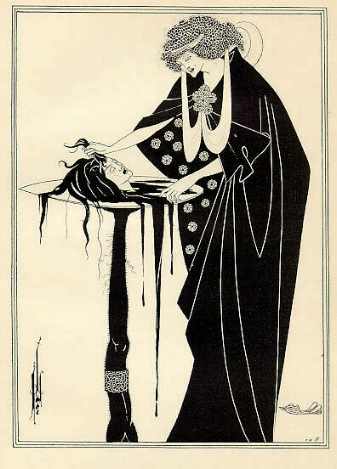
Beardsley-Salome-Wilde7. Oscar Wilde, Dickens Detractor and “Inventor” of Aubrey Beardsley 

We remember Oscar Wilde just as much for his oversize personality as we do for his authorial excellence. Wilde’s ego often led to strange relationships with fellow authors, most notably Bram Stoker, Charles Dickens, and Aubrey Beardsley. Wilde lost a love to Stoker, railed against Dickens’ sentimentality, and claimed that Beardsley had Wilde to thank for his career. For rare book collectors, Oscar Wilde epitomizes the way that single-author collections can (and should) include works by other authors. Read More>>

8. The Six Hoaxes of Edgar Allan Poe

Edgar Allan Poe called his time “the epoch of the hoax,” and the horror writer couldn’t have been happier about it. Poe was a great lover of hoaxes, even attempting several himself. He forged a note from a supposed lunar inhabitant and penned a fake journal from an explorer. Poe even undertook one hoax to dissuade people from going West during the Gold Rush. But Poe’s efforts only proved that he should have stuck to poetry and fiction; he hardly convinced anyone that his hoaxes were real. Read More>>

George-Isaac-Robert-Cruikshank

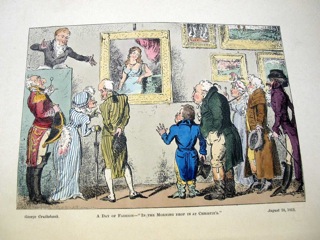
From ‘The Cruikshankian Momus’ by Isaac, Robert, and George Cruikshank

9. George Cruikshank: “Modern Hogarth,” Teetotaler, and Philanderer

George Cruikshank followed in his father’s footsteps, building a reputation as a preeminent illustrator of his time. Political from the beginning of his career, Cruikshank was openly racist and patriotic. He adopted an incredibly moralistic tone about drinking. That uncompromising campaign for temperance ultimately became a wedge between Cruikshank and Charles Dickens. After Cruikshank’s death, however, his wife discovered that he’d been leading a secret life–and had fathered eleven children with the family’s former servant. Read More>>

10. The Millerites an the Great Disappointment

The Seventh-Day Adventist Church arose from a great failure. The nineteenth century saw a revival in millinarianism, the belief that a drastic event or movement would suddenly change the course of society as outlined in the book of Revelation. William Miller stepped forward as a sort of prophet, arguing that Jesus would certainly return in 1843 or 1844. His followers, called the Millerites, embraced his predictions–until the days passed and nothing happened. They broke into a number of different sects, one of which developed into the Seventh-Day Adventist Church. Read More>>


Share

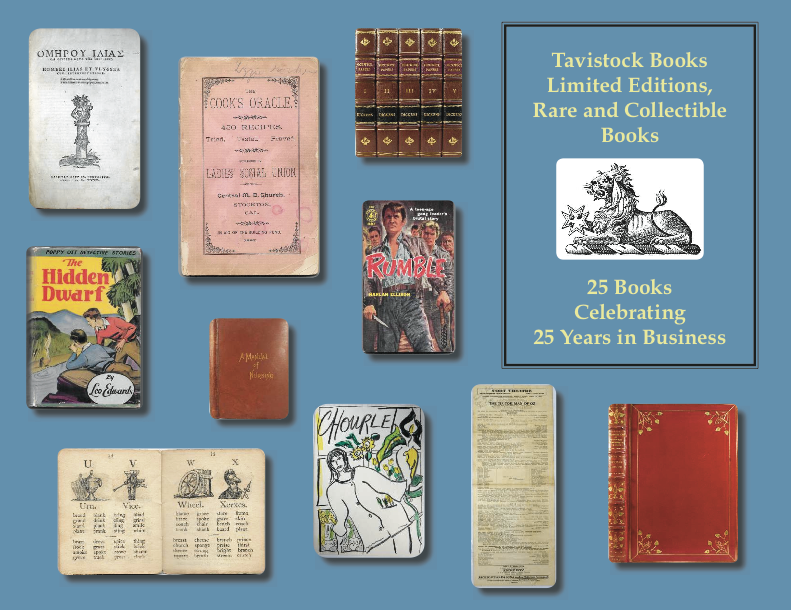
25 Books Celebrating 25 Years in Business

Tavistock_Books_Catalogue_25_Years

25 years ago this month, in May 1989, Tavistock Books came into being-  without capital, without business plan, without significant inventory.  A rather inauspicious debut… and to be honest, one I never really expected to survive 25 months, much less 25 years.  But here we are, in May of 2014, a surviving, if not actually thriving, antiquarian book shop, on Webster Street in Alameda, with a [sometimes] open door, and a decidely lazy shop dog one must step over to browse the shelves.

Also one year ago this month, the firm hired Margueritte Peterson, its first full-time employee, who, by accepting our modest job offer, fulfilled a personal desire to join our quaint trade, and so journeyed from Florida to California to take-on the not-inconsiderable tasks as my Aide-de-Camp.

With these thoughts in mind then, we issue our first full-color pdf catalogue, comprised of 25 items, selected from stock, which represent the firm’s subject specialities, as well as the overall eclectic & diverse nature of the Tavistock Books inventory.

Should you have queries regarding any of these 25, or other items you may find on our site, please don’t hesitate to contact us. We thank you for your attention, and we hope you enjoy browsing our catalogue, and/or the other listings found here on the website.

Share

George Alfred Henty, Controversial Author of Juvenile Fiction

George_Alfred_HentyThe late nineteenth century was truly a golden age in children’s literature. As the concept of childhood evolved, didacticism fell out of style and children’s authors focused more on stimulating their readers’ imaginations with exciting, engaging tales. George Alfred Henty was one of the most popular figures of the era. His historical adventure stories appealed to both children and young adults, but Henty was a controversial figure even in his own time.

From Soldier to Special Correspondent

Henty was born on December 8, 1832 in Trumpington, outside Cambridge. A sickly child, he entertained himself by diving into books and remained an avid reader all his life. Henty attended Westminster School, and then Gonville and Caius College, Cambridge, where he distinguished himself as a sportsman. But Henty left school before earning a degree; he and his brother decided to volunteer for the Army when the Crimean War began. Henty was assigned to the Army Hospital Commissariat. Conditions at the front were horrible, and Henty sent his father detailed letters about the appalling state of affairs. His father submitted the letters to the Morning Advertiser, which published them enthusiastically.

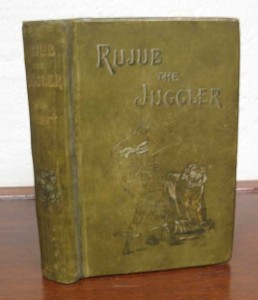
Henty_Rujub_JugglerSeeing little promise of promotion, Henty resigned from the Army in 1859. He married Elizabeth Finucane shortly thereafter, but the union would be a short one; Elizabeth died in 1865 after a long illness. Left with children and unsure of his career path, Henty decided to begin writing for the Standard newspaper. By 1866, he was working as a special correspondent. During his career, Henty would cover the Franco-Prussian War; the Carlist Rebellion in Spain; the Turco-Serbian War; the opening of the Suez Canal; and the Dreyfus Trial.

Meanwhile Henty loved to regale his children with adventure stories at dinnertime. He decided to put the tales on paper and wrote his first children’s novel, Out of the Pampas, in 1868, naming the main characters after his children. Griffith & Farran published the book in 1870 (though the title page lists the year as 1871). Henty went on to write over 100 books, not only children’s fiction, but also adult novels and non-fiction. However, his children’s fiction was most popular, even inspiring other authors to emulate him. Captain Frederick Sadlier, Percy F. Westerman, and Herbert Strang (the pseudonym for George Herbert Ely and Charles James L’Estrange) all tried their hand at juvenile adventure tales in the “Henty style.”

Overt Racism and Imperialism

To research his books, Henty would check out numerous books from his local library. His protagonists were usually intelligent, plucky, and modest young men–and occasionally women who were living through historically difficult times. The books were full of action and drama, appealing to young readers. But they also raised ire among many of Henty’s Victorian contemporaries–after all, Henty was hardly an unbiased author.

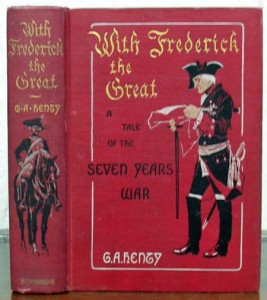
Henty_Frederick_Great_Seven_Years_WarDuring his own lifetime Henty was frequently accused of being xenophobic and racist. An enthusiastic imperialist, Henty also drew criticism for glorifying British imperialism. His In the Reign of Terror (1888) and No Surrender! A Tale of the Rising in La Vendee (1900) were decidedly hostile toward the patriots of the French Revolution, and in True to the Old Flag (1885), Henty took a Loyalist stance regarding the American Revolutionary War. With Lee in Virginia (1890) also raised eyebrows for supporting the “aristocratic” Confederacy of the Civil War.

In the 1990’s, Henty’s books were taken up by conservative Christians and home-schoolers because of their wholesome protagonists. But these stories are also frequently criticized for being jingoist and promoting racism. A Roving Commission,or Through the Black Insurrection at Hayti (1900) is overtly racist, making it an inappropriate text from which to teach that period of history.

Collecting George Alfred Henty Books

Henty has remained a popular figure among book collectors because his stories are so captivating and his works were so prodigious; in total, Henty penned 144 books, myriad short stories, and numerous pieces for several periodicals. Collectors usually rely on the second edition of Peter Newbolt’s GA Henty, 1832-1902 for bibliographic guidance. George Manville Fenn published a biography of Henty in 1907, but the work is generally considered too dispassionate. Thus the Henty Society is publishing a new biography, due out this year.

Henty’s books often have intricately designed bindings, often appealing to collectors in their own right. It’s quite rare to find these books in their original dust jackets, so most collectors settle for jacket-less copies in the best condition possible.

Though George Alfred Henty never became a household name in children’s literature, he nevertheless left an indelible mark on the genre. Henty’s books will continue to delight readers and collectors alike for ages to come.


Share

Californiana: A List for April

The 1848 California Gold Rush represented one of the largest migrations in the history of the Americas. Over 300,000 people flocked to the state, both from elsewhere in North America and from overseas. The population swelled; San Francisco, for example, went from a sleepy town of 200 in 1846, to a bustling port city of over 30,000 in 1852. Meanwhile California would not officially become a state until September 9, 1850, following much heated debate from Congress.

Given the state’s rich history, it’s no wonder that California invites so much fascination from book collectors. The Book Club of California, founded in 1912, published over 100 works, most with some collection to the state. Its first publication was indeed California-centric: Robert Cowan’s A Bibliography of the History of California and the Pacific West (1914, with a second edition in 1933). Robert Greenwood was integral to the publication of two other bibliographies, California Imprints, 1833-1862 and An Annotated Bibliography of California Fictions, 1664-1970, published in 1961 and 1971 respectively. Numerous others come to mind, but we’d be remiss not to mention Gary Kurutz’ The California Gold Rush: A Descriptive Bibliography, 1848-1953. Published in 1997, this is a work of truly enviable scholarship. No other state seems to have garnered so much bibliographic attention.

With this in mind, Tavistock Books presents a list of Californiana, with 100 items related to this state anchoring the “left coast.” While the list has many titles that will cite the bibliographies noted above, this isn’t the list focus. Rather, the list offers printed and visual evidence that California is indeed a state that has long fascinated not only book collectors, but the American populace in general.

Items on the list range from the eighteenth to the 21st century. While many are historical in nature, you’ll also find original art, promotional travel pieces, the first California-published miniature, California fiction, and even on of the first California cookbooks. Prices range from $15 to $3,250.

We invite you to browse the entire list! Should you have queries regarding any of the listings, or other offerings you may find on our site, please contact us.

Selected Californiana

Discovery of California and Northwest America
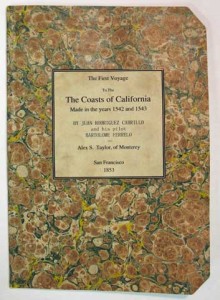
Cabrillo_First_Voyage_Coasts_CaliforniaJuan Rodriguez Cabrillo and his pilot, Bartolome Ferrelo reached what is now San Diego in September, 1540. Cabrillo explored the entire outer coast of the peninsula before heading north to the Channel Islands, Monterey Bay, and Point Reyes. Published in San Francisco in 1853, Discovery of California and Northwest America was the first true work of California history to be published in California. This volume has early marbled paper wrappers (recently added) with a printed title label affixed to the front wrapper. It’s chemised and housed in a custom quarter-leather slipcase. Details>>

A Trans-Continental Newspaper
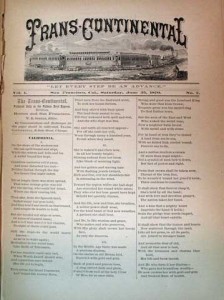
Trans-Continental_PullmanTranscontinental was “Published Daily in the Pullman Hotel Express between Boston and San Francisco.” The twelve issues of Volume I were printed over six weeks, from May 24 to July 4, 1870, while the Boston Board of Trade made the 3,000-mile trek to meet with the San Francisco Chamber of Commerce. They were printed on a Gordon Press in the baggage car, while the newspaper office was in the second car. The paper reported the normal business of the train, along with tidbits such as the Philadelphia Athletics’ victory over the Harvard Baseball Club. The Trans-Continental is generally regarded as the first newspaper printed on a moving train. Details>>

Business Directory of Oakland, Alameda, and Berkeley
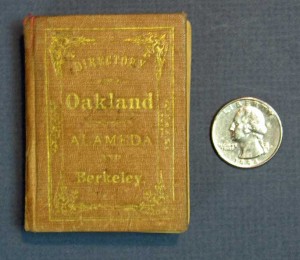
Directory_Oakland_Alameda_BerkeleyPublished in Oakland in 1877, Business Directory of Oakland, Alameda, and Berkeley is not listed in either Norris or Welsh. Extremely rare, this California miniature has the distinction of being the “only known California directory in this format, the first East Bay directory, and the first Berkeley directory of any kind,” according to Quebedeaux, who calls this volume the “first California volume of any kind.” Bradbury refutes this claim, pointing out that Diamond History was also published in 1877 and comprises the latter portion of this volume. OCLC records only three institutional holdings, and there is only one sale record for this item, from PBA earlier this year, of an imperfect copy missing its title page. Details>>

California Recipe Book by Ladies of California
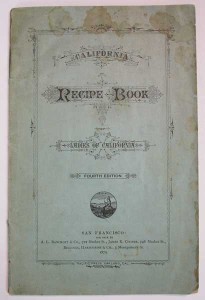
California_Recipe_BookThe first edition thus and the fourth edition overall, this copy of California Recipe Book was published in San Francisco in 1879. It was first issued in 1872. The fourth edition bears a note that the “compiler has added largely to the original edition, and our patrons will find many new and choice recipes.” Indeed, the fourth edition includes sixty recipes not found in the first. OCLC records only three institutional holdings, making this a very scarce edition of a seminal California cookery book. California Recipe Book is regarded as the second cookbook written by Californians and published in the state, vying for the title with How to Keep a Husband; Or, Culinary Tactics, also published in San Francisco in 1872. Details>>

Annual Report of the Inspectors of the State Prison
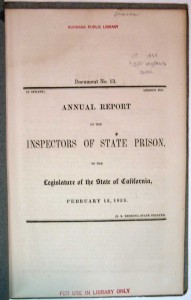
San_Quentin_Annual_Report_Inspectors_State_PrisonMade to the legislature of California on February 15, 1855, this report offers an interesting look at the early days of San Quentin, when the prison was not quite impregnable. It includes sections entitled “Register and Descriptive List of Convicts Under Sentence” and “Transcript of Received, Escaped, and Returned Prisoners Since the Inspection of State Prison Books.” The previous year, 75 of the 250 prisoners in San Quentin had escaped without recapture. The statistic alarmed Governor John Bigler, to write in a letter to the prison staff, “These escapes, permit me to remark, give great force to allegations, daily and publicly made, that the prison building is insecure, and that its management is not such as to fully accomplish the object of its erection, in prevention and punishment of crime.” This work is rare, not being listed in Cowan, Greenwood, or the Library of Congress online catalogue. OCLC and Melvyl record only one copy, and no copies have come to auction in at least 25 years. Details>>

Twelve Years in the Mines of California
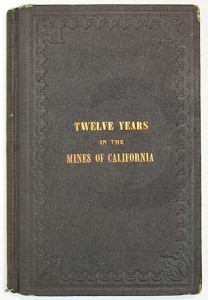
Patterson_Twelve_Years_Mines_CaliforniaLawson B Patterson arrived in California in 1849 during the Gold Rush and was one of the few who stuck around after the rush ended. Patterson stayed to work the mines for a total of twelve years. Kurutz tells us that in addition to recounting Patterson’s own experiences, “much of this book is devoted to the discovery of gold, the gold region, its geology, advice to new miners, and the weather in 1853. Wheat goes a step further, saying that Patterson’s book contains “observations of permanent import.” This volume’s previous owners include JR Knowland of Oakland Tribune fame, and the ffep bears his PO signature. The book itself is square and tight, with bright gilt. Details>>

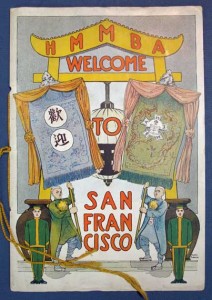
Banquet in Honor of the Hotel Men’s Mutual Benefit Association
Banquet_HMMBAThis 1910 West Coast journey of HMMBA members was well documented by George Wharton James in his commissioned work, “The 1910 TRIP Of The H.M.M.B.A. To CALIFORNIA And The PACIFIC COAST.” Herein, he remarks this dinner at the Palace was “the most unique and costly dinner ever devised for the HMMBA.” The hotel’s banquet room was presented as a “Mandarin garden decorated with a wealth of Chinese articles of art [loaned by the Sing Chow Co. the menu informs us], and enlivened with … the only Chinese actress in America .. a Chinese theatre and thirty pretty Chinese children with their mothers, a full Chinese orchestra, and a bill of fare as distinctively Chinese as the rest of the function, all aided and abetted by the wealthy Chinese merchants of San Francisco.” As to this souvenir menu, James praises it as “the most elaborate affair ever devised fro the association.” No copy of this item is listed in OCLC; it’s certainly rare. Details>>

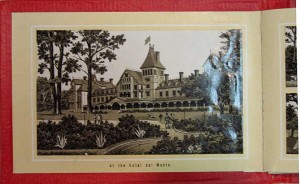
Album of Hotel Del Monte
Hotel_Del_MonteHotel Del Monte was part of a luxury 20,000-acre resort established by railroad magnate Charles Crocker. The first hotel was completed in 1880, with the entire resort including the hotel, polo grounds, race track, tennis courts, parkland and golf course. Immediately popular, the hotel had to deny 3,000 potential guests its first six weeks of operation. Falling on hard times after WWI, the grounds were eventually sold to Samuel Morse, who eventually led to the development of the present day Pebble Beach facility, among others. The hotel itself now serves as an administration building for the Naval Postgraduate School. This album offers a rare photo-view book depicting the original hotel structure (destroyed by fire in 1887) and diverse associated resort grounds and buildings. Details>>

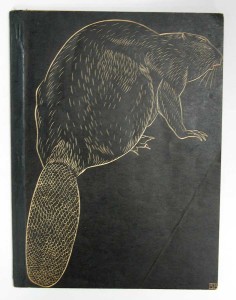
Browny the Golden Beaver
Browny_Golden_BeaverA rare WPA production, Browny the Golden Beaver was published in San Diego in 1938. Belle Baranceanu, who created the cover art, was to achieve some fame as an artist; she painted murals in the La Jolla Post Office and Roosevelt Jr. High School as part of the Public Works of Art Project during the Depression. Baranceanu’s work has been exhibited at the Art Institute of Chicago, Carnegie Institute, Los Angeles County Museum of Art, Denver Art Musuem, among other locations. The book was illustrated with drawings by Beatrice Buckley. Details>>


Related Posts:
The California Gold Rush, Slavery, and the Civil War
Elias Samuel Cooper: Renowned and Controversial Surgeon


Thanks for reading! Love our blog? Subscribe via email (right sidebar) or sign up for our newsletter--you’ll never miss a post.

Share

Au Paris: Food, Wine, and Rare Books!

This month marked the 100th anniversary of Syndicat Nationale de la Librairie Ancienne et Moderne, better known to the rare book world as SLAM. In conjunction with this momentous occasion, SLAM not only hosted the International Antiquarian Book Fair at Paris’ Grand Palais but also followed this by coordinating the 2014 ILAB Congress, April 13 to 16, whereat over 100 colleagues from around the globe gathered to celebrate not only their vocation, but also their avocation. Both the book fair and the Congress were fantastic events where numerous bibliophilic treasures were seen by all that attended. These bookish wonders aside, the collegiality alone would have made the trip worthwhile–though the exceptional food and wine cannot be discounted!

In honor of our Parisian adventure, Tavistock Books is pleased to present a list of books connected to France and French. Should you have a question about any item, please don’t hesitate to contact us.

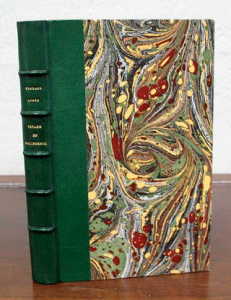
Voyage en Californie par Edouard Auger

Auger_Voyage_CalifornieEdouard Auger spent 1852 and 1853 in California for the Gold Rush. This first edition, published by Librarie Hachette in 1854, is inscribed by the author on the title page. It has a modern green quarter calf binding with marbled paper boards and endpapers. The original green printed wrappers are bound in. Details>>

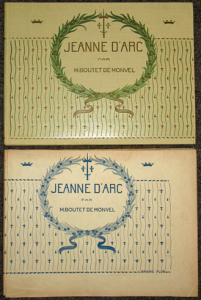
Jeanne d’Arc

Monvel_Jeanne_DArcMaurice Boutet de Monvel published Jeanne d’Arc in 1896. It is his masterpiece, and Silvie calls the work “beautifully printed and exquisitely composed” in Children’s Books and Their Creators. Monvel is considered a leading figure in the Golden Age of children’s literature, alongside Caldecott and Greenaway. It is quite rare to find the book in its original dust jacket, as it is offered here. Details>>

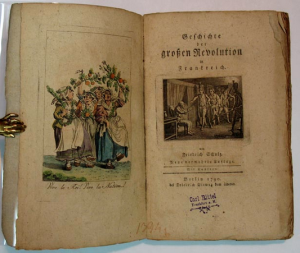
Geschichte der Grossen Revolution en Frankreich

Schultz_Geschichte_Grossen_Revolution_FrankreichPublished in Berlin in 1790, this edition of Geschichte der Grossen Revolution en Frankreich features a hand-colored frontispiece and has the period dark brown plain paper wrappers. There’s a hand-inked title label to the spine. Details>>

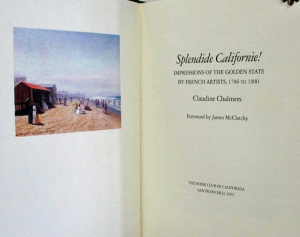
Splendide Californie!

Splendide_CaliforniePublished by the Book Club of California in 2001, Splendide Californie! is truly a stunning item. It features impressions of the Golden State from French artists, ranging from 1786 to 1900. The book was designed and supervised by the Yolla Bolly Press. Details>>

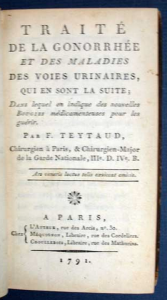
Traite de la Gonorrhee et des Maladies des Voies Urinaires

TeyaudSexually transmitted diseases proved formidable opponents to medical professionals in the eighteenth century. Teyaud’s Traite de la Gonorrhee et des Maladies des Voies Urinaires offers a look at how these conditions were treated at the end of the century. Paris would later become a center for medical study, and American doctors frequently went there to study. Details>>

Theatre des Dames

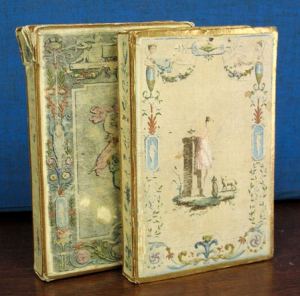
Theatre_des_DamesA compilation of diverse theatrical pieces from 1792 to 1815, Theatre des Dames is bound in beautiful color printed silk onlays affixed to gold boards, with a floral motif panel on the spine. It includes eight copperplate engravings. OCLC records only four copies worldwide, and KVC adds a fifth. Details>>

Almanach de Kate Greenaway

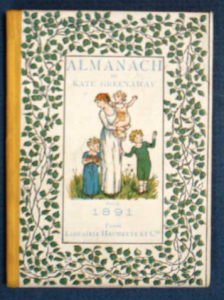
Almanach_Kate_GreenawayA scarce French edition of this popular publication Almanach de Kate Greenaway was published in 1891. It features white glazed paper-wrapped color-pictorial boards with a yellow cloth spine. Color illustrations are by Kate Greenaway, printed by Edmund Evans. KVK shows no holdings at the expected institutions, and OCLC records only two holdings in the US. Details>>

Des Guerres d’Alexandre

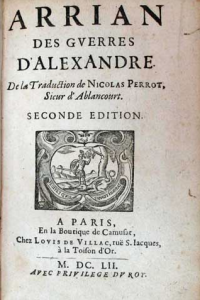
Arrian_Guerres_AlexandreArrian was a public servant, military commander, and philosopher from the second-century Roman period. His account of Alexander’s life is arguably the most complete and most widely read, likely because he was able to use sources that have since been lost. This 1652 edition (the second edition thus) appears to be rather scarce; OCLC records one copy in Germany, and KVK notes another at the Bibliotheque Nationale. Details>>


Share

Select Acquisitions: In Manuscript

Manuscript. “A work written by hand” informs Glaister, synonymous with “holograph.” Or, as is often abbreviated, Ms.

A two-letter abbreviation that can cause the collector’s heart to flutter; the curator’s eye to gleam; the author to despair of ever finishing.

Why this reaction? Is it the unique aspect inherent to the term? A printed book, by its very nature and concept, can be expected to be encountered in multiple copies; not so the manuscript that gave rise to the book. It is, more often than not, expected to be found in no more than one copy, with additional the variant, not the norm.

With this in mind then, Tavistock Books presents our list for March, In Manuscript. It consists of thirty items all created “by hand”: letters, book manuscripts, ledgers, journals, diaries, sketch books,a nd even a few pencil sketches [to round out the numbers].

Temporally, the items range from the 17th century to the 20th. As is our custom and wont, subjects represented are diverse, from rent records, to transatlantic travel, to baseball. Prices range from $125 to $20,000.

We invite you to peruse the list! Should you have any inquiries, please don’t hesitate to contact us. We thank you for your attention, and we hope that you find something of interest while browsing these offerings.

If you’d like to receive email notification of our select acquisitions lists and other bookish news, please sign up for our email newsletter.

Featured Items in Manuscript

Rhode Island Light Infantry Company Records, 1818-1873

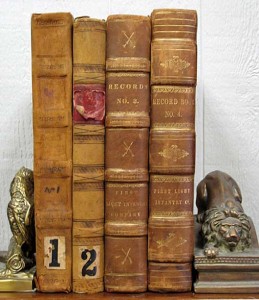
The Rhode Island First Light Infantry Company was formed in 1818 as a state militia company based in Providence, Rhode Island, and was affiliated with the Second Regiment of the Rhode Island militia. It became the First Light Infantry Regiment in 1863. This regiment saw no active duty, with its activities more iRhode_Island_Light_Infantryn consonance with a social club vice a well-trained military unit. However, per the RIHS notes on this organization, the 1st Light Infantry Company did play an important role in providing trained soldiers when circumstances required. The Company helped suppress the Olney’s Lane race riots in 1831, primarily by arresting white rioters.

The Company was also involved in suppressing the Dorr Rebellion, a fomentation and later a short-lived, armed insurrection led by Thomas Wilson Dorr agitating for changes to Rhode Island’s electoral system. In the case of this particular Rebellion, there were militia members on both sides of the fight! Pages 61 through 66 of Volume 2 discuss the events of May 19th, 1842. Many of the Company members also served in the American Civil War in Companies C and D of the First Regiment, Rhode Island Detached Militia.

The activities recorded herein, written in pen and by necessity by many different individuals given the span of time involved, are detailed and informative accounts of the daily, weekly, and monthly meetings of the Company, most often held at the Armory in Providence. Together, these four volumes are the primary source for the history of the First Light Infantry Company, and are invaluable for understanding the inner workings of the Company and their [occasionally] significant role in Rhode Island history. Details>>

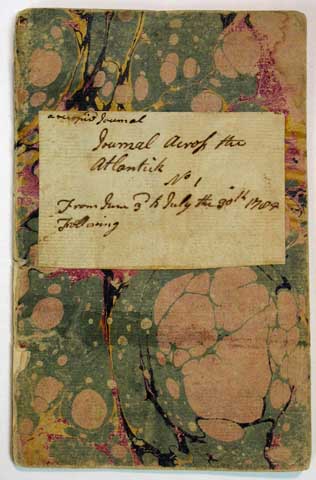
Journal Across the Atlantic

“On Board the Eagle from London to / Philadelphia. / John Ker Captain – Born in Ireland.” So begins this interesting diary recorded by an unidentified male passenger making a transatlantic voyage on this ship. The first written page of the journal records the significant personages of the crew, including their nationality, from Captain Ker to “Sam A Sailor Born in America” and “George. The Cook A Black from Bengall”. Passenger names are noted: four in the passenger cabin, with five more in steerage.

The diary records shipboard life, almost daily, for the next two months, beginning with leaving London for Gravesend, and like many passengers, “On Entering the downs I began to be Sick in the afternoon… … Journal_Across_AtlanticFraser sitting upon the Binacle going down to the Steerage over the Sailors asleep Read with an audible voice a Chapter or two out of the word of God as so unusual affair disturbed the men below who arose in a passion and an uproar ensued whitch Occationed the Interference of the Captain — and where is the wonder! … Saw a Grampus (?) Whale along side of us very near this day and he made his appearances several times as he passed from us. June 20 – 1785. Monday. Saw a sail at a distance. … Tuesday 21 … saw a sail ahead of us.”The ship was Spanish, and the diarist continues with a description of an at-sea meeting between the two vessels.

The diarist continues in such a vein, recording passenger activity – “Fraser and Mark Denison play at Cards until Dark” – and observing crew interaction – “The mate then thought his dignity insulted…” In late July, another vessel rendezvous is recorded .. “They offered us some oranges and fruit…” By this time, the tone of the journal has tended towards patience, with food [“potatoes gone”] and water [“… drink dirty Water”] becoming an issue…. “But I keep as much an Equanimity as possible and more I Flatter myself than any on Board.”

The last entry of the journal is “Saturday morn July 30th”. “A many moths or Small Butterflies came on board – a dispute whether they Bred on board – Cox [steerage passenger] maintains the affirmative but they were never seen coming with the wind it was thought very improbably and tho he supported his theory [?] only it is Carried against him – …” So ends this record of a transatlantic voyage… an illuminating peek into a passenger’s shipboard life while en route the New World. Original mss journals such as this are rare in commerce. Details>>

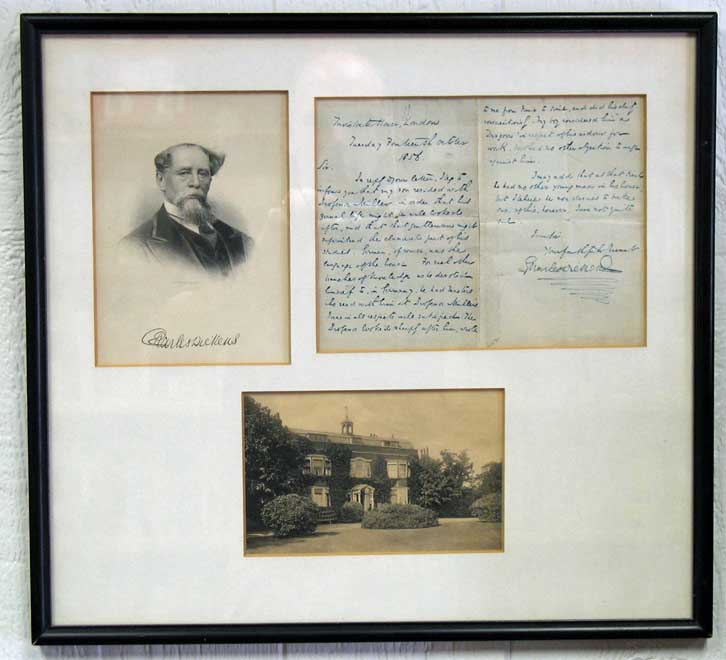
Autograph Letter Signed with Steel Plate Engraving of Charles Dickens and Photograph of Gadshill

This delightful Dickensiana is matted and framed in a simple black, wooden frame. The label on the frame’s reverse appears to be pre-World War II. Charles Dickens, writing to an unknown correspondent, tells of of his son Charley’s stay and schooling in Germany, with one Professor Muller who supervised “the classical part of his studies.” Dickens continues, “I was in all respects well satisfied,” though Charley “considered him ‘a Dragon in respect of his ardour for work.'” This letter is partially published by Storey & Tillotson in Volume 8 [p. 206] of the Pilgrim Letters, with their abbreviated text coming from a 1901 Walter M Hill catalogue. The actual letter, here offered, has a concluding five-line paragraph not previously recorded. Details>>

Dickens_ALS_Gadshill

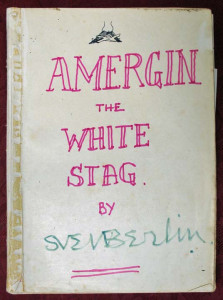
Amergin the White Stag

Sven Berlin was a poet, a painter, a sculptor, a dancer and a writer. His 1962 roman-a-clef novel The Dark Monarch was written with the prime motive of venting his anger over the hypocrisies of an over-close and competitive art St. Ives art colony. It was not well received by his fellow art colony members, who all too Amergin_White_Stageasily recognized themselves within the pages. The book was withdrawn after four successful libel actions.

Contrary to what some writers report, Berlin did not abandon the genre of fiction following the unpleasantness that The Dark Monarch brought. In 1964 he published his novel Jonah’s Dream: A Meditation on Fishing, a volume full of Berlin’s accomplished and sensitive vignettes of fish and fishermen, and in 1971, his knowledge of the gypsy counter-culture emerged in his novel Dromengo: Man of the Road. It would be a full seven years before Amergin appeared. The story is a mystical fable of encounters between a man, a woman, and a stag in “The Great Forest in the South.”

Many of Berlin’s publications drew upon personal experience. Berlin was part of the D-Day invasions of World War II, having rejected his former stance of conscientious objector, but the experience led to a breakdown and he returned to Cornwall to find restitution through his art. From that time on, the redemptive, restorative and spiritual power of art and nature would remain his guiding principle. The same theme runs through his works, including the two volumes of his ‘autosvenography’: The Coat of Many Colours and Virgo in Exile, that being a belief in the abstract and mystical forces that guide both nature and humankind. His writing is rich in imagery and metaphor, exhibiting an often dream-like quality. This manuscript is no exception. Details>>

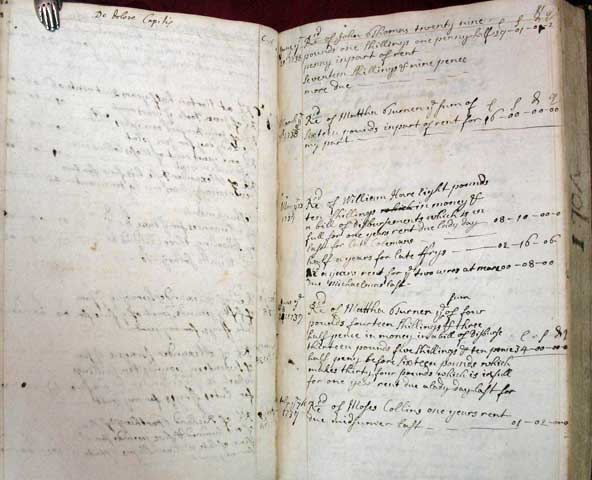
Somerset Mss Rent Book, 1690-1755

Apparently this volume was originally intended and begun as a medical text, to be comprised of thirteen volumes, or chapters. Pages [i-iv] contain the index for the medical entries, in Latin. The pages, corresponding to the entry in the index, are captioned with the appropriate heading. Turning the volume over and beginning with the final unnumbered page and working back to page 457, the text is comprised of accounting entries of amounts paid for things such as bread for orphans, for scavenger, stocker, water, and the parson. There are entries for the window tax, poor tax, the king’s tax for the land lord, lamps, etc.

Rent_Book_Mss

 The year is divided into four quarters: Lady Day Quarter, Midsomer (midsummer) Quarter, Michaelmass Quarter, and Xmass Quarter. The entries in these ten pages are the earliest, dating from 1690 to 1708, and provide a fascinating glimpse into the economy and financial obligations of the citizenry of this time.The volume is then turned over again and the entries pick up at page [v] continuing to page 115 with entries for rents and mortgages collected in the parish of Norton Fitzwarren, Taunton district, Somerset, England.

While many entries are written in the first person — “Then I rec’d the first rent myself” — the identity of the individual or individuals making the entries is not recorded. The financial entries for 1720 on appear to be by a different individual than those of 1690 through 1709.The text as a whole provides a fascinating glimpse into the economy and financial obligations of the citizenry of Norton Fitzwarren, providing important and valuable information as to the cost of living at the end of the seventeenth century to the mid-point of the eighteenth century in one English parish. Many of the same names appear for the 65 recorded years of rents and mortgages, and by consulting parish records one can see the relationships between the citizens through marriages; the life cycle of the parish through births and deaths. Details>>

Robert H Barton Family Correspondence Collection, 1849-1871

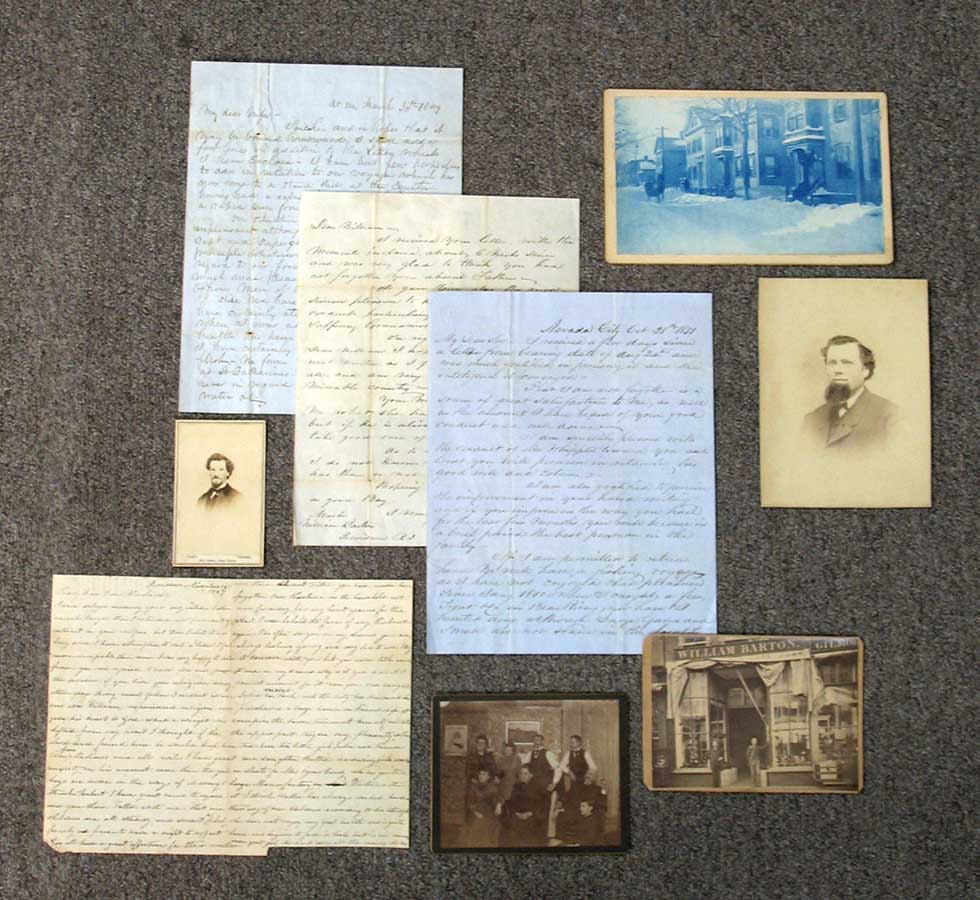
Robert Barton, of Providence, Rhode Island, left his wife Julia Anna Bennett Barton and four children –William, Emily, Harriet, and Julia–in the winter of 1849, headed for the California gold fields. The collection begins with Robert’s departure in 1849, and continues through 1871. Of the 72 letters, six are from Robert –one to his wife, and five to his son. The remainder are to Robert, from divers family members, and even his pastor, all with the common theme of “come home.”

From this correspondence, and the fact Robert Barton is not buried with the rest of his family in the North Burial Ground, Providence, Rhode Island, it is questioned whether the man ever did leave California and return to Providence 9even though the RI census notes his presence). Robert writes to his wife of his good intentions for heading to California, and consistently states “if he is permitted to return home “; however, it is fairly clear that he never intended to do so. In one letter to his son, he says that William should look to a gentleman there in Providence for advice and guidance, discourages him from coming to California, etc.

Barton_Correspondence


And while Robert’s letters contain a smattering of comments on his efforts to find gold, and the account statement from Gregory & Waite Groceries & Provisions gives a glimpse into the daily fare of a ’49er, this collection’s value lies elsewhere than California. The collection does extensively chronicle the history of one Providence, Rhode Island family, their struggles and successes. Herein then lies the richness of the archive, which documents the life of this Providence family, after the “man of the house” succumbs to gold fever. Details>>

The Album of Sarah Knight

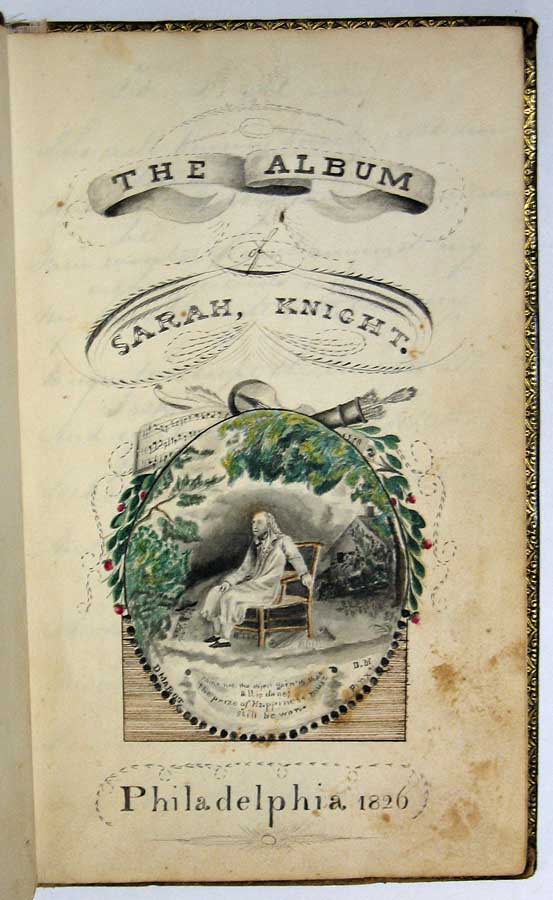
To S. K. —“Deign to accept the boon tis all I ask/And if thou think’st I fall too far behind/Let abler pens hereafter meet the task/And yield thee something suited to thy mind.” From our study of this splendid little volume, it would appear to have been used similar to an autograph album wherein friends would pen a Album_Sarah_Knightpoem, or a snippet from such for the owner. Some of the poems may have been copied by the owner into the album. Several of the entries have been illustrated in watercolor or thinned black ink, by an accomplished hand. The writing is in almost all cases very legible, and penned by those who had obviously received high marks for penmanship.

From the entries we have gleaned that this volume was owned by at least three individuals: Sarah Knight, T. M. Knight, and M.S. Conard, with the latest entry (1860) being penned by Conard. In conducting research, we can find several women named Sarah Knight who lived in Philadelphia and New York. We can also find a G. Coggshall (the presenter of the album), a Sophia Mix, and an Arabella Clark–all names given in the volume–living in either Philadelphia or New York at the same time, but without more to go on, we cannot pinpoint with any certainty the exact identity of these individuals. There was a Sarah Knight, of Philadelphia, who was born around 1804, which would have made her around 21 when this volume was given to her, which would seem fitting. The poems herein are typical for the 1820’s, and the illustrations are exquisite. It’s quite a lovely little example of early 19th Century autograph/ friendship books. Details>>


Related Reading:
A Look Back at Long-Lost Manuscripts
Preserving Antiquarian Photographs and Photo Albums
Collecting Antiquarian Diaries, Journals, and Correspondence

Thanks for reading! Love our blog? Subscribe via email (right sidebar) or sign up for our newsletter--you’ll never miss a post.
Share

A Look Back at Book Censorship

On March 25, 1955, US Customs Department officials seized 520 copies of Allen Ginsberg’s Howl. Printed in England, the book had been deemed obscene by the US government. Poet Lawrence Ferlinghetti, who owned the publishing house and book store City Lights in San Francisco, decided to publish Howl in the autumn of 1956. He was almost immediately arrested on charges of obscenity. The ACLU bailed him out and took the lead in his defense. Nine literary experts testified at Ferlinghetti’s trial, and he was found not guilty. Unfortunately, this episode is only one of many in the history of book censorship.

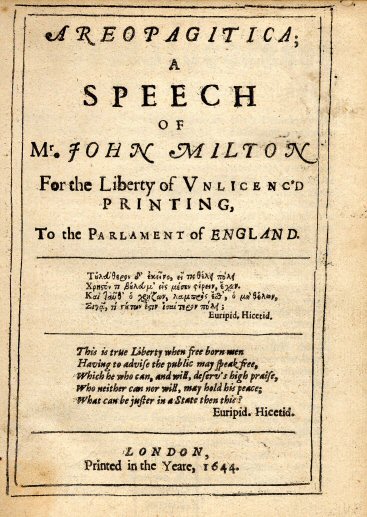
Areopagitica (1644)

Milton_AeropagiticaBy 1644, John Milton had already successfully teamed up with Presbyterians to abolish the Star Chamber. That year, the activist poet turned his attention to the Licensing Act of 1643, which prohibited publication without the permission from the government. In Areopagitica, Milton makes an incredibly eloquent and impassioned plea for an end to government censorship. But he didn’t receive support from Presbyterians, so essentially stood alone in his campaign. The work was banned, and England would not attain freedom of the press until 1695.

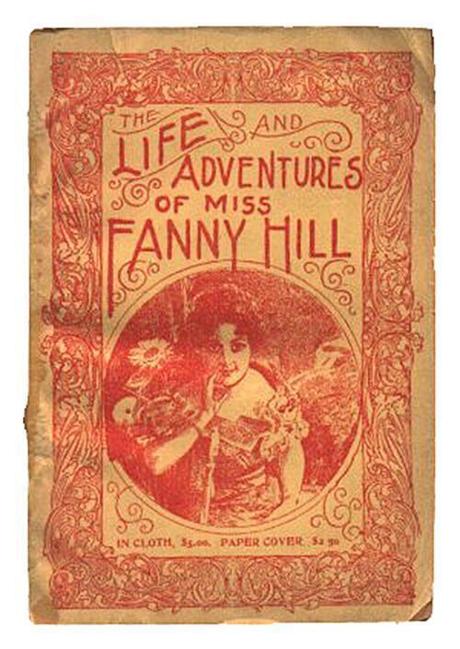
 Fanny Hill (1748)

Fanny_Hill_1910_coverConsidered the first pornographic novel published in English, Fanny Hill is every bit as lurid as one would expect from the fictional memoir of a Georgian prostitute. Even more scandalous: the eponymous protagonist enjoys the work of earning “profit by pleasing.” Author John Cleland and the book’s original publisher were immediately thrown into jail after the book was published. And in America, Fanny Hill was the subject of the country’s very first obscenity trial: in 1821, two men were charged with printing an illustrated version. That edition and subsequent contraband editions became hot collector’s items; even Benjamin Franklin was said to have a copy. The book found its way back to the US Supreme Court in 1963 after Massachusetts banned the book. The Supreme Court found the book lewd–and ruled that it was protected by the First Amendment.

Candide (1759)

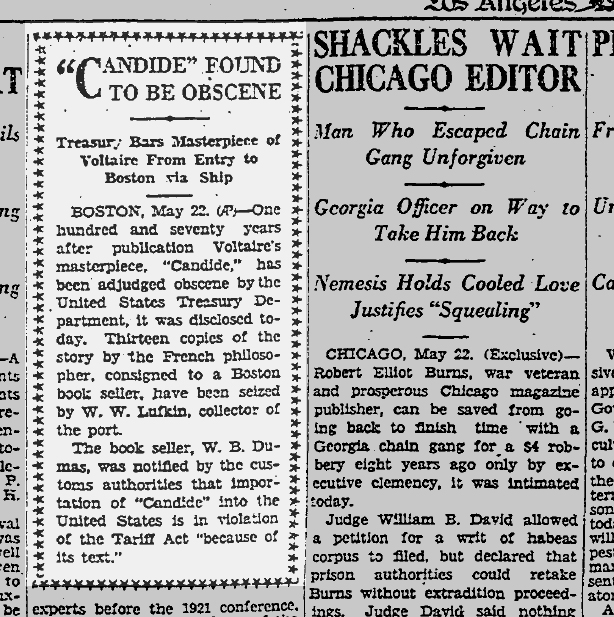
Candide_BannedThanks to the book’s catchphrase “Let us eat the Jesuit, let us eat him up” and myriad other irreverences, Voltaire’s Candide was banned by the Great Council of Geneva and the Parisian government just after the book’s release. But 30,000 copies still sold within a year.–much to the delight of Voltaire. The Comstock Law of 1873, later renamed the Federal Anti-Obscenity Act, forbade the sending of obscene materials by US mail. Under this law, the US Customs Department seized Harvard-bound copies of the book in 1930. In 1944, the US Post Office demanded that Candide be dropped from Concord Books’ catalogue. Chaucer’s Canterbury Tales, Boccaccio’s Decameron (1350-1353) and a host of other literary works would fall prey to the Comstock Law.

The Rights of Man (1791)

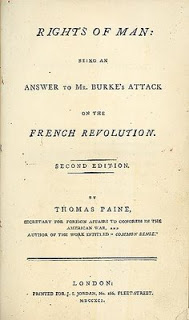
Paine_Rights_ManThomas Paine had already made a name for himself as a dissident with Common Sense (1776) and The American Crisis (1776). In The Rights of Man, Paine vociferously objects to the divine right of kings the inherent right of any family or social class to govern. He also argues that governments should be guided by the will of the people, pointing to France and America as prime examples. The English crown found Paine’s latest work downright treasonous and issued a warrant for his arrest. Paine fled to France, but was found guilty of libel and treason in absentia. He was sentenced to death should he ever enter England again. All copies of The Rights of Man were regularly seized and burned for many years after.

Alice’s Adventures in Wonderland (1865)

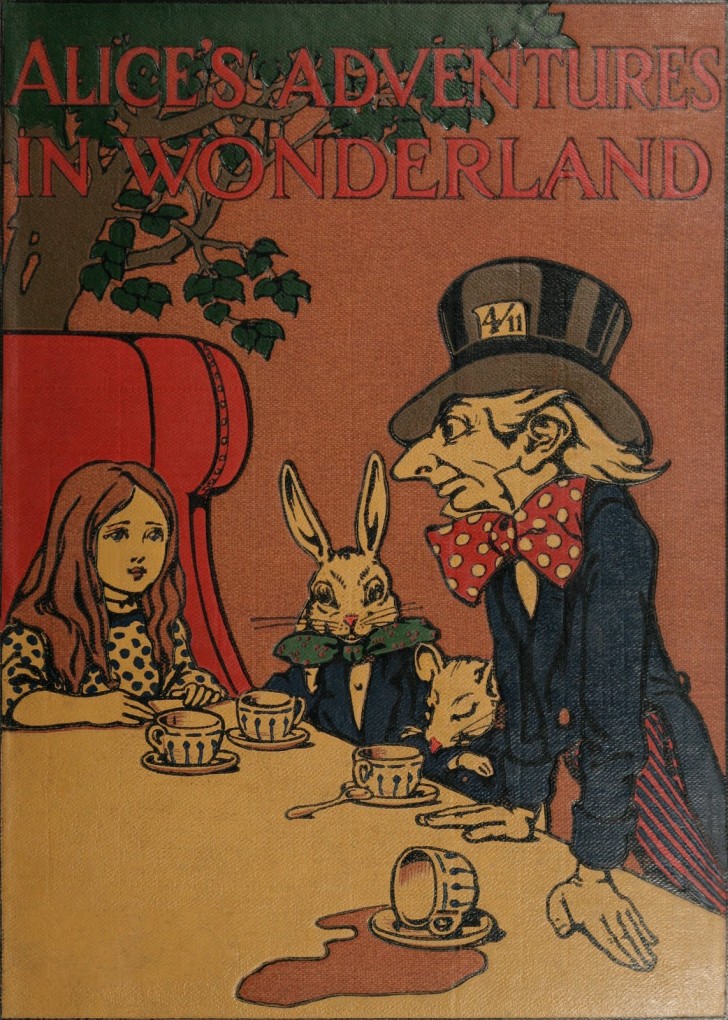
Alices_Adventures_in_Wonderland_CarrollWhat could possibly be offensive about Lewis Carroll’s classic Alice’s Adventures in Wonderland? In 1931, General Ho Chein, governer of the Hunan province of China, decided that the book should be banned because its characters included anthropomorphic animals. The general argued that it was “disastrous to put animals and human beings on the same level.” Surprisingly enough, similar arguments have been used in the United States to justify banning Charlotte’s Web (EB White, 1952) and Winnie-the-Pooh (Milne, 1926).

Grapes of Wrath (1939)

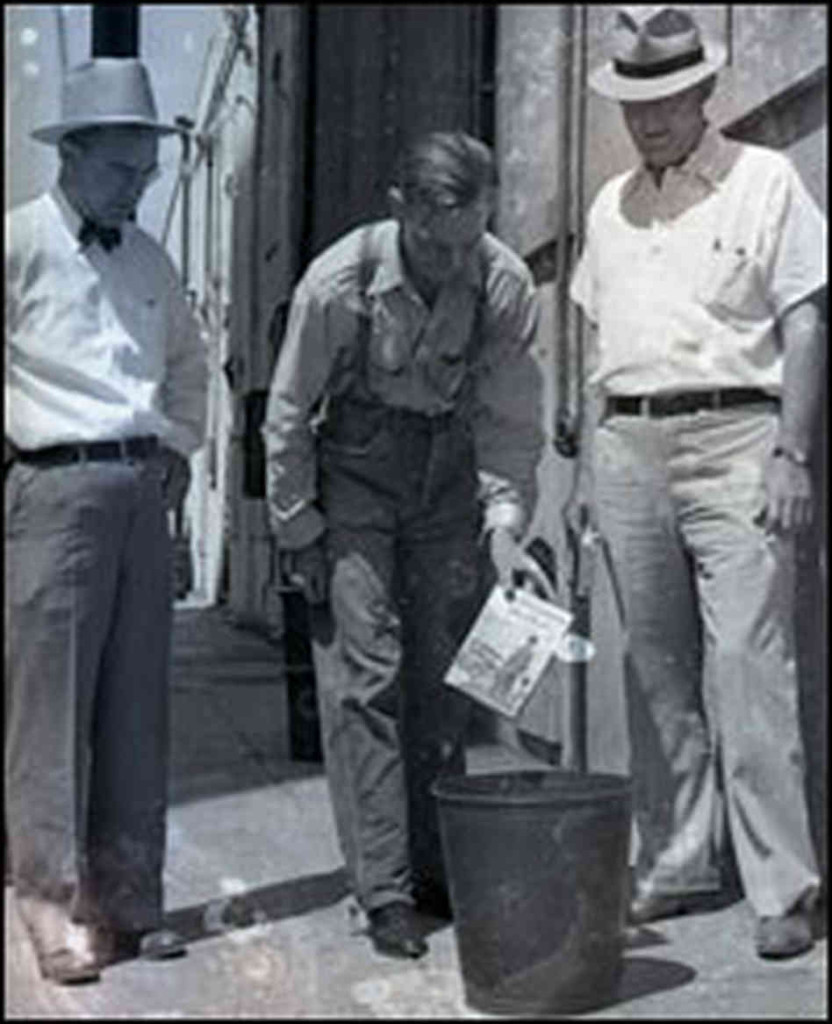
Grapes_Wrath-BurnedOften considered John Steinbeck’s greatest work, The Grapes of Wrath was published to heated outcry. Steinbeck was accused of exaggerating the plight of the poor and unfairly vilifying the wealthy. This reaction was, to some extent, Steinbeck’s intention: he wrote that he wanted to “put a tag of shame on the greedy bastards who are responsible for the Great Depression.” Those who denounced Steinbeck most enthusiastically were the Associated Farmers of California, who called the novel a “pack of lies” and “communist propaganda.” The novel was temporarily banned in parts of the United States–and even burned publicly in some places. The censorship of Grapes of Wrath was pivotal in the creation of the Library Bill of Rights.

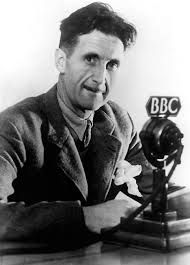
Animal Farm (1945)

George_OrwellAfter George Orwell finished Animal Farm in 1943, it took him two years to find a publisher. The book openly criticized political leadership in the USSR, an important British ally during World War II. After the book was published, it was banned in the USSR and other Communist countries. In 1991, Kenya banned a theatrical adaptation of Animal Farm because it criticizes corrupt leadership. The book was also banned in the United Arab Emirates for containing scenarios and ideas (namely, a talking pig) that conflict with Islamic values. Animal Farm is still banned in Cuba and North Korea, and censored in China.

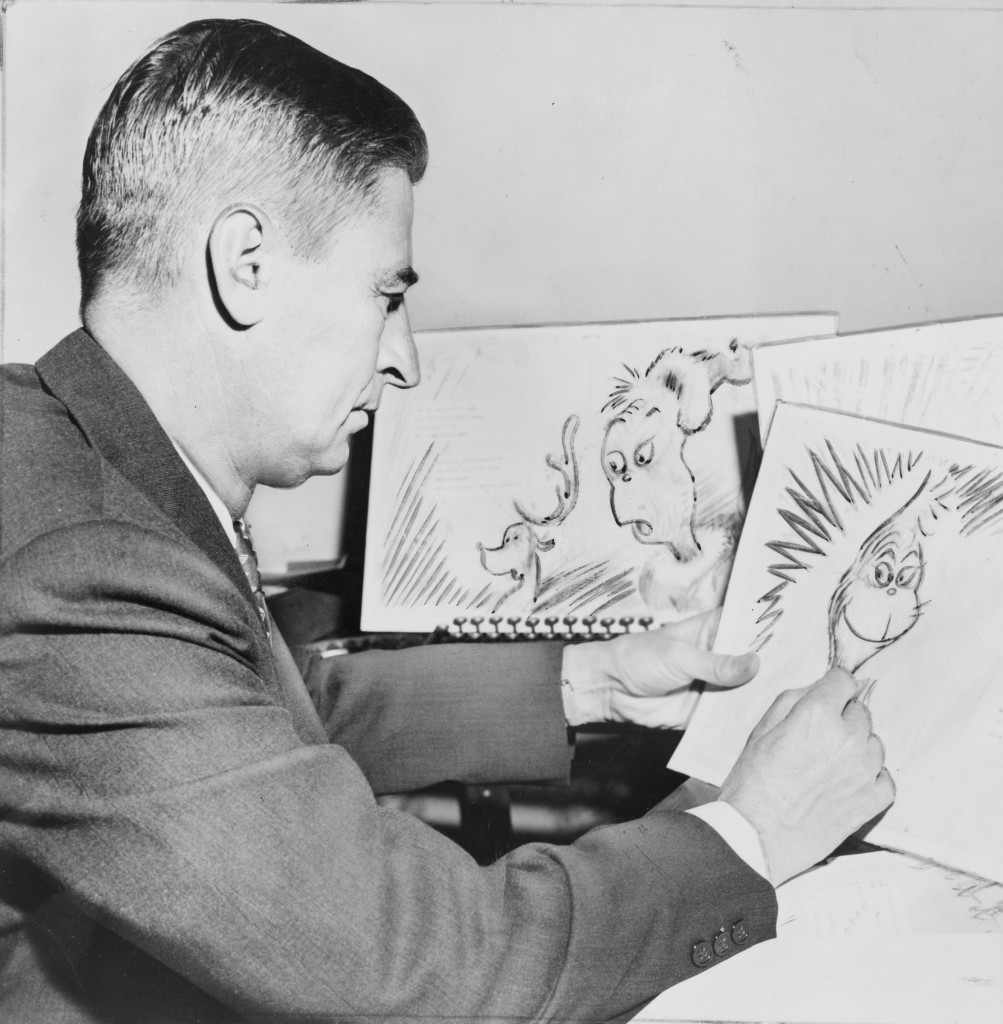
Green Eggs and Ham (1960)

Geisel_SeussTheodore Seuss Geisel, better known as Dr. Seuss, admitted that he was “subversive as hell” and had no desire to write children’s books that simply modeled good behavior. His books show kids how to question their surroundings and explore new things. Green Eggs and Ham is one of Seuss’ best known works…and it was banned in Maoist China in 1965. According to the Chinese government, the book was a portrayal of Marxism. The ban was not lifted until after Geisel passed away. Meanwhile Yertle the Tertle (1958) was removed from schools in British Columbia in April 2012 because of a single line that carries a political message. And The Lorax (1972) earned a ban from a California community for its negative depiction of loggers.

Many of these banned books have become beloved classics for the very reason they were originally banned–they push us to consider uncomfortable ideas that challenge the status quo. Their place in the literary canon has bolstered their desirability among rare book collectors, especially in cases where early editions were frequently confiscated and destroyed.

Related Reading:
AA Milne: Legendary Children’s Author and Ambivalent Pacifist
Fra Paolo Sarpi, Scholar, Priest, and Heretic

Thanks for reading! Love our blog? Subscribe via email (right sidebar) or sign up for our newsletter--you’ll never miss a post.
Share

Preserving Antiquarian Photographs and Photo Albums

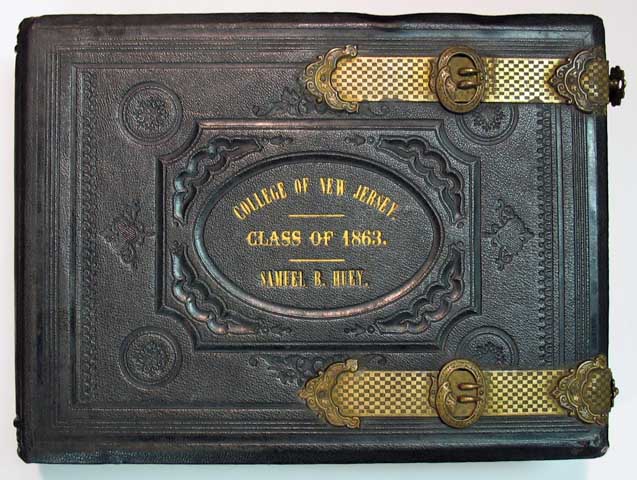
College_New_Jersey_Photo_Album

Collectors of rare and antiquarian books are well aware that they must take specific measures to preserve and protect their collections. Condition directly impacts value, but perhaps more importantly, condition dictates how intimately you can experience the items in your collection; items that have deteriorated cannot be handled and studied with the same freedom as items that have been better protected.

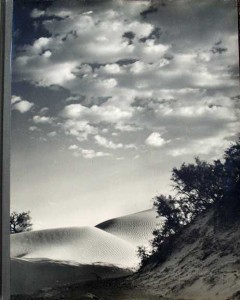
Death_Valley_Floyd_EvansCommon enemies of antiquarian books include direct sunlight, humidity, and vermin, along with substances like adhesives–and even other paper. The same holds true for antiquarian photographs and photo albums. But due to their more complex composition, these items often require even more specialized care.

First and foremost, it’s important to store photographs and photo albums only in archival quality containers. These are made from chemically stable materials, so they won’t contaminate your collection. The picture frames available at most retail shops generally contain high-acid wood pulp, along with polyvinyl chloride. Both of these trigger deterioration, so it’s best to stick with metal frames when possible.

Individual Photographs

If you’re not planning to display your loose photographs, you can store them in polypropylene or polyester sleeves (the most common brand is Mylar), which are considered stable enough for long-term use. For smaller photographs such as cartes de visite, stereo views, or cabinet cards, it’s relatively easy to find the right size sleeves. The photographs should then be placed in an archival quality box.

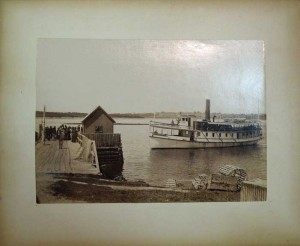
Detroit_Aircraft_Development_Corporation_Trade_CatalogueLarger photographs can be placed into individual polyethylene bags. If you’d prefer to display them, the best approach is to attach each photograph (and the original mounting board, if present) to 100% rag acid-free mat board with a window-mat of the same material hinged to fold over it. You can use acid-free linen tape to hinge the two mats together. This way, the photograph won’t come in contact with the frame’s glass, and you’ll hide the imperfections of the original mat.

Some collectors prefer to place their antique photographs into period photo albums. While this will protect the photos from dust and fingerprints, it won’t protect them from deterioration. Furthermore, most such albums are relatively fragile in their own right, so they won’t stand up to frequent handling.

Gathering_Photographs_Orr_IslandAlbumen prints are a special case. They tend to curl when removed from deteriorating albums. To combat curling, you have a few different options. A number of institutions embrace the practice of hinging albumen prints on all four corners, and this is a perfectly viable option. But the American Photographic Museum uses a different approach: they slip each print into its own clear polyester envelope and attach the envelope to a mat board with a hinged over-mat. Treated this way, the photos can then be framed if desired. This technique can be used with virtually any fragile item, not only photographs but also prints, maps, and ephemera.

Daguerrotypes, ambrotypes, and tin types also necessitate special consideration. These kinds of photos were usually sold originally in folding cases, with glass to protect the delicate surface of the image. But even a seemingly impervious material like glass can succumb to age; it may crack, get dirty, or become cloudy. If you’re tempted to replace the glass, consult a professional! This process requires extreme care; one stray touch can permanently ruin the image. You may also want to think about the impact of replacing the glass on the photograph’s value; many collectors prefer that daguerrotypes have their original seal intact, so replacing the glass could decrease your photograph’s value to potential buyers.

Caring for Antique Photo Albums

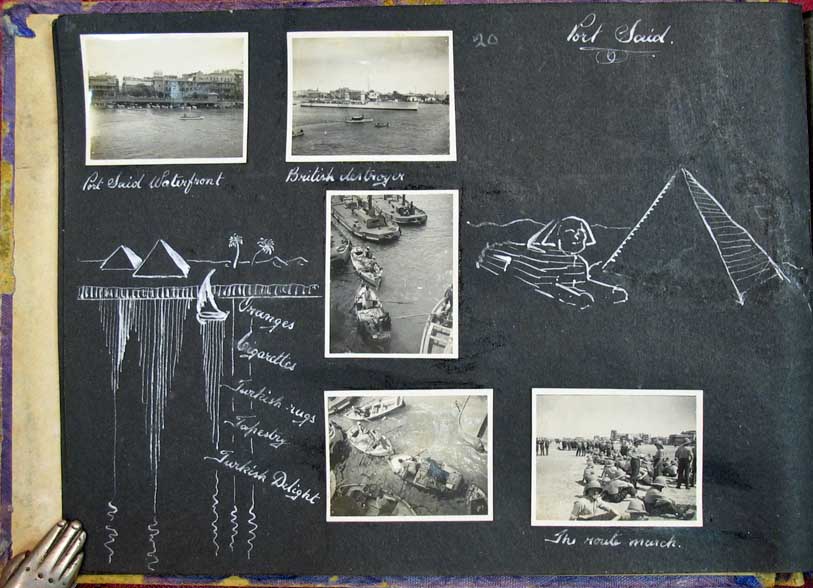
While caring for individual photographs is relatively straightforward, preserving antique photo albums can be a bit more complicated. This is because the various materials used to assemble the album can interact and trigger deterioration. Often antique photo albums will already show signs of damage, but it isn’t always due to these chemical interactions. In fact, damage is more often than not caused by other factors, such as humidity, improper handling, or poor processing.

Therefore, removing individual photographs from an album for preservation should be your absolute last resort, as dismantling the album often means losing the inscriptions, order, and presentation of the album. And you may damage the photographs in your attempt to remove them from the album. Conservators often recommend interleaving photo albums, that is, placing leaves of acid-free paper or plastic sheets between the album’s pages to protect them from each other. The pitfall of interleaving, however, is that it can strain the album’s binding.

Personal_Photograph_Album_Kurdistan

If an expert recommends that you go ahead and disassemble an album to protect the photographs, you can take color photocopies of individual pages to record the album’s order, layout, inscriptions, and captions. In most cases, an experienced conservator should perform the task of removing the photos. With old self-stick albums or those with plastic cover sheets, the adhesive dries up over time, so photographs may fall out on their own.

As with any attempt at conservation or preservation, it’s best to consult an expert before attempting anything on your own. Although the field of photograph conservation is relatively new, there are numerous consummate professionals who will be happy to consult you on the best approach for an item in your collection.

Share

L Frank Baum’s Forgotten Foray into Theatre

Baum_Fairylogue_Radio_Plays

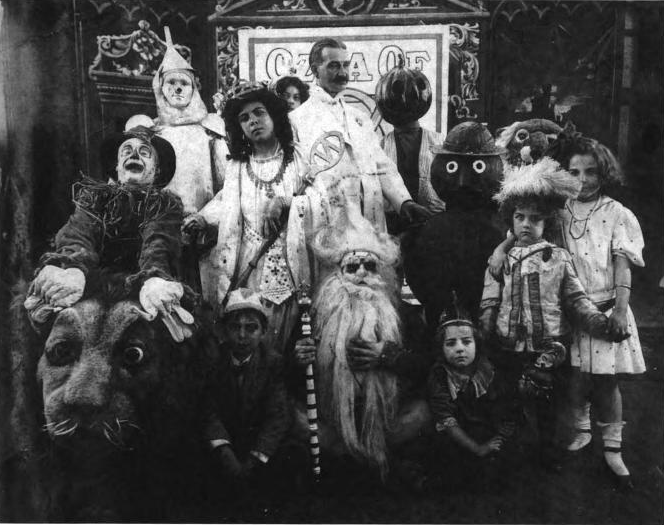
Baum with the cast of ‘Fairylogue and Radio-Plays’ (1908)

Though L Frank Baum is best known as the author of The Wonderful Wizard of Oz, the famed author had a rich and varied career. His accomplishments include trade magazines and newspapers, along with an oft-forgotten play based on his sequels to Wizard of Oz.

Early Literary Aptitude

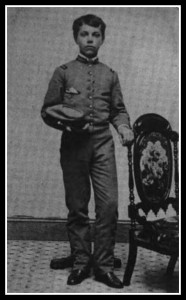
L_Frank_Baum_CadetBorn on May 15, 1856, Lyman Frank Baum was a sickly child. Particularly fond of fairy tales and British authors like Charles Dickens, Baum spent much of his time reading. But Baum found fault with fairy tales because they were so often frightening and gruesome. He would later note, “One thing I never liked then…was the introduction of witches and goblins into the story. I didn’t like the little dwarfs in the woods bobbing up with their horrors.” Thus, from an early age, Baum resolved to write a different kind of fairy tale.

But his first literary exertions weren’t fairy tales: Baum started his own newspaper, The Rose Lawn Home Journal with a printing press purchased by his father. Baum took the publication quite seriously, writing news pieces and editorials, along with poetry, word games, and fiction. The young man’s paper did quite well, and a number of local businesses purchased advertising space in its pages. In 1873, Baum launched two more papers, The Empire and The Stamp Collector.

Meanwhile it had become quite fashionable to breed chickens and other fowl. Baum took up breeding Hamburgs and won several awards with his birds. He also launched The Poultry Record, a magazine devoted to breeding and raising poultry. The publication was rather successful. Then in 1886, Baum published his first book, The Book of the Hamburgs: A Brief Treatise upon the Mating, Rearing, and Management of the Different Varieties of Hamburgs.

A Love for Theatre

Baum_Holcomb_Maid_Arran

Baum as Hugh Holcomb in ‘The Maid of Arran’

Baum also found time to nurture his interest in theatre. He frequently memorized passages of Shakespeare and even founded a Shakespearean troupe with his father’s financial backing. The elder Baum had made a fortune in the family business and purchased a number of opera houses in Pennsylvania and New York. He entrusted their management to his son in 1880. Baum proved quite adept, even delving into writing his own plays. The Maid of Arran, considered Baum’s first major literary work, met with immediate success.

But with the decline of the Baum’s father’s health and two unlucky episodes with swindling employees, Baum was left virtually penniless. His wife, Maud, suggested that the family move West. They settled in Dakota territory, where Baum opened a general store called Baum’s Bazaar. Soon Baum had made a reputation for two things: storytelling and extending credit. Thanks to Baum’s generous spirit and a drought that left most of his customers destitute, the bank foreclosed on Baum’s Bazaar in 1890, only two years after it opened. Baum established The Aberdeen Saturday Pioneer, acting as reporter, printer, and salesman all in one. But that, too, failed in 1891.

Return to Authorship

That year, Baum decided to move his family to Chicago. The World Columbian Exposition was there, so employment opportunities were plentiful. First Baum worked as a reporter for the Evening Post, but the paltry pay was hardly enough to support a family. Next he went into sales for the china company Pitkin & Brooks. He was often on the road. His mother-in-law, noted feminist Matilda Gage, moved in to help with the Baum children. It was she who encouraged Baum to write down the fairy tales he spun for his children and their young friends.

Baum frequented the Chicago Press Club when he wasn’t traveling. It’s been conjectured that Baum met illustrator Maxfield Parrish, resulting in Mother Goose in Prose (1897). But so far as we know, the two never actually met; Chauncey Williams of Way and Williams negotiated for Parrish’s illustrations in the children’s book. Williams also served as publisher of The Show Window when the journal was launched in 1897. The magazine gave Baum an opportunity to make a living without traveling as a salesman.

A Serendipitous Acquaintance

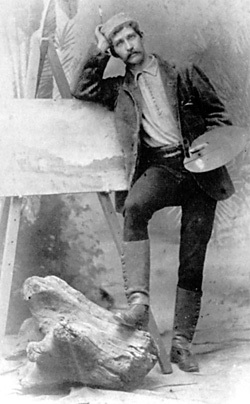
L Frank Baum

This photograph considered a fake, merely an actor holding a facsimile version of the 1st edition.

Soon Baum made the acquaintance of William W Denslow. Though the two had disparate personalities, they decided to collaborate on a companion to Mother Goose in Prose. Together they published Father Goose, His Book in 1899. The beloved book spurred Songs of Father Goose. The pair worked on a few more project, most notably The Wonderful Wizard of Oz. Baum had originally submitted the story with the title The Emerald City, which publishers Hill and Company rejected. They finally agreed on a new title, and the first edition appeared in May, 1900.

Two years later, Baum collaborated with Paul Tietjens and Julian P Mitchell on an adult musical adaptation of Wizard of Oz. A major success, the production toured all over America. The country was absolutely infatuated with the land of Oz and its whimsical characters. Baum published a total of thirteen Oz books and six short Oz stories and came to be known as the “Royal Historian of Oz.” The Ozmapolitan, a promotional piece, was issued in 1904 to help Reilly & Britton advertise The Marvelous Land of Oz, which was the new firm’s first publication. Occasional later versions of The Ozmapolitan were also issued.

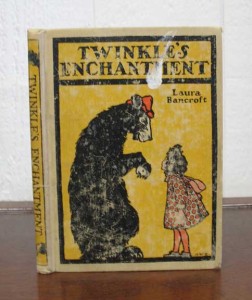
Baum_Bancroft_Twinkles_EnchantmentThough he indulged his audience with all these tales of Oz, he longed to delve into other projects. Baum often used pseudonyms for these endeavors, so that he didn’t have to worry about their critical reception. One notable project was Aunt Jane’s Nieces, a series for teenage girls Baum published under the pen name Edith Van Dyne. He also wrote under the names Laura Bancroft, Floyd Akres, Captain Hugh Fitzgerald, Suzanne Metcalf, and John Estes Cooke.

Baum also launched a traveling show called “Fairylogue and Radio Plays.” The show featured live actors costumed as characters from several of Baum’s fantasy books, a live orchestra, motion-picture clips, and colored lantern slides. Baum traveled with the show as master of ceremonies. The endeavor proved a commercial failure.

Return to the Stage

In 1913, The Tik-Tok Man of Oz made its debut on the stage. Producer Oliver Morosco inserted three songs he wrote (with music composed by Victor Schertzinger). Billed as “a companion play to The Wizard of Oz, The Tik-Tok Man of Oz met with great success in Los Angeles, but didn’t resonate with other audiences. Chicago critics were particularly unimpressed. Though the show made money, Morosco decided not to keep producing it.

Only an early manuscript of the musical is extant, and the play probably would have faded into obscurity were it not for the published music and advertisements. Promotional materials for the production have proven exceedingly rare; a survey of auction records and other online sources indicate only two extant playbills. One, from December 2, 1913 at the Babcock Theatre in Billings, Montana, comes from the collection of Fred M Meyer and can be viewed at the International Wizard of Oz Club website. The other, from the play’s opening night in San Francisco on April 21, 1913, is pictured here. We’re proud to offer this item as one of this month’s select acquisitions, which features a diverse collection of broadsides.

We invite you to peruse the entire list! Should you have a question about any item, please feel free to contact us.

Many thanks to our esteemed friend Peter E Hanff for his contributions to this article. The Deputy Director of the Bancroft Library at the University of California, Berkeley, Hanff is a great scholar of L Frank Baum. He collaborated with Douglas G Greene on Bibliographia Oziana, the main bibliographic record and resource on Oz literature. 

Share

The Ins and Outs of Collecting Serial Fiction for Children

By the 1890’s, dime novels were all the rage. They sold millions of copies each year. Teens and young adults were hardly immune to the allure of the often sensational stories. An ambitious author, Edward Stratemeyer saw an opportunity in publishing inexpensive novels especially for children and young adults. Stratemeyer had been around the publishing industry for years as both an author and an editor. He’d printed his first story at only fourteen years old, and was devoted to the industry from that moment on.

Judy_Bolton_Ghost_ParadeIn 1898, Stratemeyer got his big break: famous author Horatio Alger, Jr was ailing. Alger had already penned more than one hundred novels for boys, but he had a number of unfinished manuscripts. He invited Stratemeyer to complete one of the novels. Stratemeyer went a step further, negotiating for the copyright to four unpublished manuscripts, which he published under Alger’s name.

Stratemeyer published The Rover Boys at School in 1899 under the pseudonym Arthur Winfield. The book was so successful, it became the first of a thirty-book series that sold millions of copies. Stratemeyer founded the Stratemeyer Syndicate expressly to produce new series like The Rover Boys. He would pay writers fixed fees to write books based on his outlines. By the end of the twentieth century, Stratemeyer’s books had sold billions of copies and spawned multiple imitators.

Keene_Nancy_Drew_Tapping_HeelsThe Bobbsey Twins debuted in 1904. Written under the pseudonym Laura Lee Hope, the series was a runaway hit. Stratemeyer followed up with Tom Swift (1910), written under the pen name Victor Appleton. By the time The Hardy Boys series began in 1926 (written under the name Franklin Dixon), about 98% of children named a Stratemeyer Syndicate series book as their favorite. Stratemeyer had truly established a publishing empire. Nancy Drew debuted four years later–and originally outsold The Hardy Boys.

Many of Stratemeyer’s series remain popular among children even today. They’re also favorites among collectors of children’s books because they evoke such nostalgia. Because the books were so popular, they were frequently reissued, but without changes to the copyright or edition information. Some were even updated to keep up with technological advances–again, often without any updated edition information. It’s difficult, then, to identify true first editions. While there are detailed bibliographies for Hardy Boys, Nancy Drew, and Judy Bolton, little information is available on most other series. Collectors should only purchase books from these kinds of series if the seller cites the appropriate bibliography in the description.

Appleton_Tom_Swift_Sky_TrainIf you’re interested in collecting a particular series, don’t let the lack of bibliographic information dissuade you! Enthusiasts find collecting serial fiction particularly satisfying because the ideal contents of the collection are already well defined; the pursuit especially appeals to completists, who are often interested in building a collection whose value as a whole is more than merely the sum of its parts. A common approach is to assemble an entire set without regard to edition. Then you can work toward replacing less desirable editions as you become more confident and knowledgeable.

Share